What Is a Coupling and Why Does It Matter on Offshore Drilling Rigs?
Working Principle of Industrial Couplings in Offshore Drilling Applications

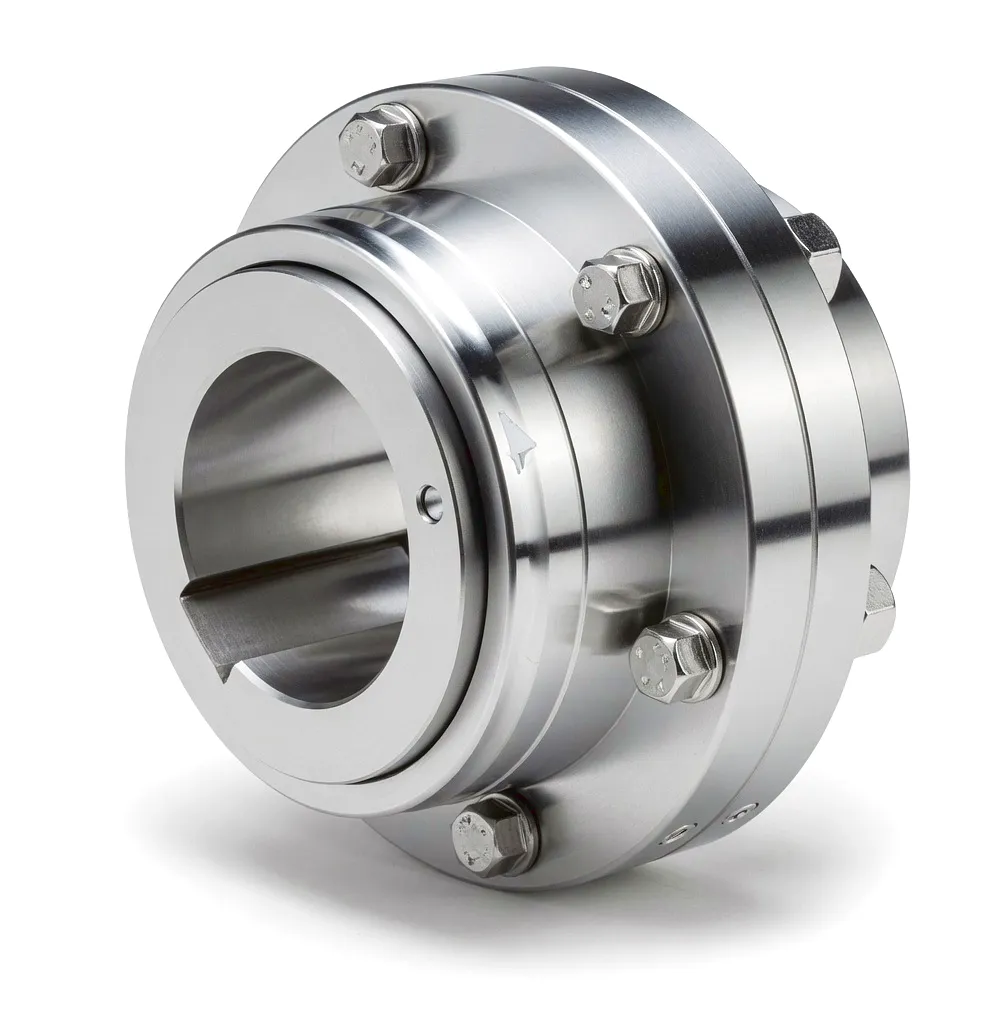
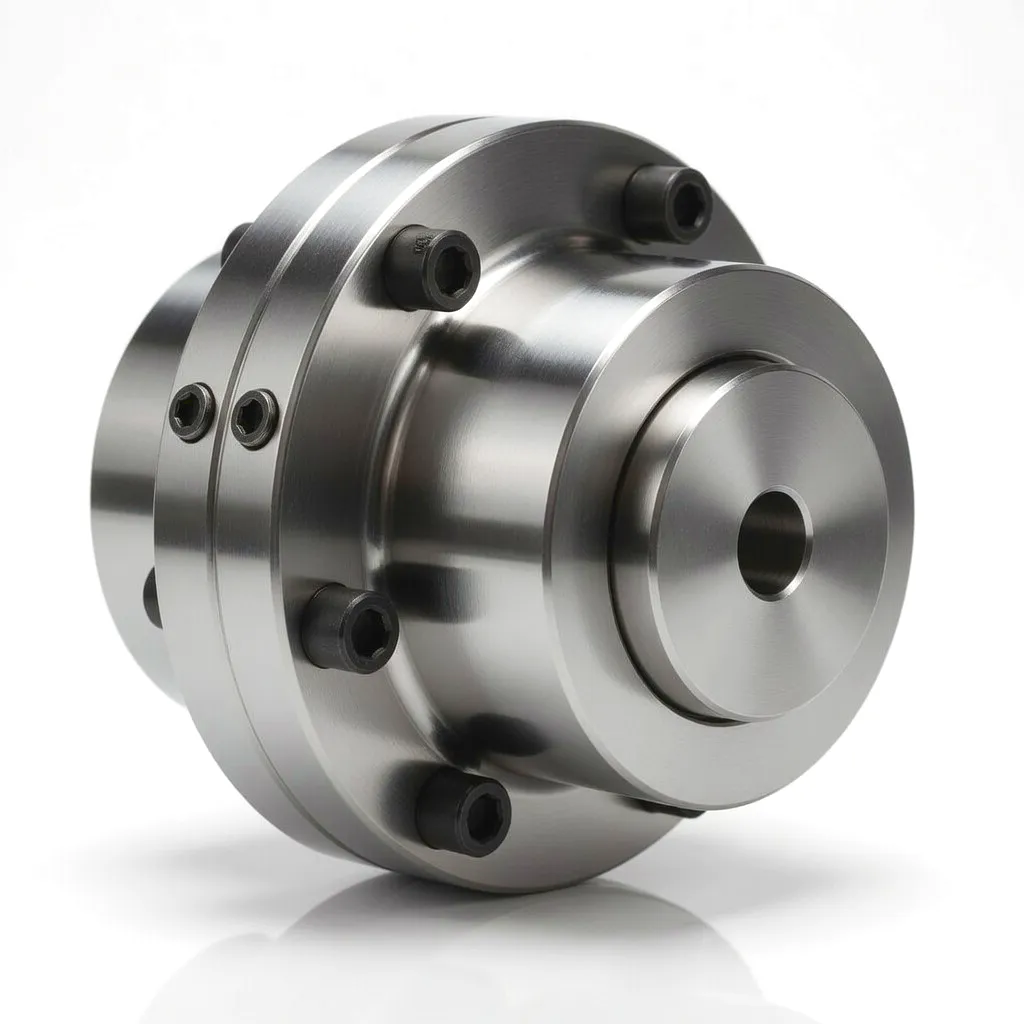
The torque transmission mechanism in a high-performance coupling relies on the geometry of the transmission element combined with the interference or clearance fit between hubs and shafts. In gear-type couplings, two external-toothed hubs mesh with an internal-toothed sleeve. The involute tooth profile on both components allows the gear teeth to rock slightly relative to one another, which is the mechanism by which angular and parallel misalignment is tolerated. Lubrication — typically a lithium or molybdenum disulphide grease — fills the gear mesh cavity and prevents metal-to-metal fretting wear under the continuous micro-motion of misalignment compensation. On an offshore platform, gear couplings are favoured for high-torque applications like drawworks and top drives precisely because the gear mesh provides a rigid, high-efficiency torque path while still tolerating the unavoidable misalignment inherent to large rotating machinery on a floating or semi-submersible structure.
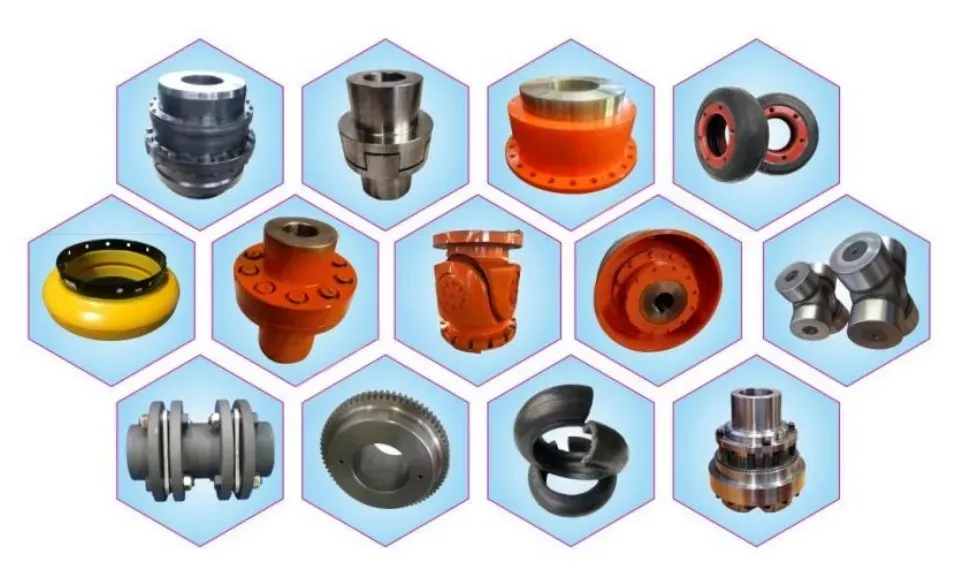
Serpentine spring couplings, sometimes called snake spring couplings, operate on a fundamentally different principle. A sinusoidal steel spring is threaded through alternating slots in two coupling hubs. Under torque, the spring acts in compression across multiple contact points simultaneously, distributing load evenly and providing a progressive torsional stiffness curve that softens initial shock loads before stiffening as torque increases. This characteristic makes serpentine spring couplings particularly effective for applications on drilling platforms where machinery start-up torque spikes — such as a mud pump beginning its stroke cycle — must be absorbed without transmitting the full impulse force to the connected drive motor. Universal joint couplings, or Cardan couplings, extend this by accommodating larger angular misalignment angles and enabling torque transmission between shafts at significant angular offsets, a requirement wherever the spatial geometry of a drilling rig’s machinery arrangement does not allow perfect shaft alignment.
Core Materials Used in Offshore-Grade Industrial Couplings
Alloy Steel (42CrMo4 / 4140)
The backbone of high-torque coupling hubs. Chromium-molybdenum alloy steel offers a tensile strength exceeding 1000 MPa after heat treatment, combined with high toughness and resistance to fatigue crack propagation. On offshore drilling rigs, 42CrMo4 hubs withstand the extreme torque reversals of top drive systems and the cyclic loading of drawworks braking operations. The material’s hardness profile — typically 28–34 HRC after quench and tempering — resists fretting wear at the shaft-hub interface without becoming brittle under dynamic loading conditions common in marine environments.
Stainless Steel (316L / Duplex 2205)
For coupling components exposed directly to the offshore marine atmosphere — such as external sleeves, spacers and hardware — 316L stainless steel and Duplex 2205 provide outstanding pitting corrosion resistance in chloride-rich environments. The North Sea’s high-salinity atmosphere attacks carbon steel at rates that would degrade coupling performance within months of installation. Duplex 2205 adds yield strength typically 70% higher than standard austenitic grades while maintaining corrosion resistance, making it the preferred material for bolt hardware, locking elements and coupling flanges on platform-mounted machinery.
High-Tensile Spring Steel (65Mn / 60Si2Mn)
Serpentine spring elements in snake spring couplings are manufactured from premium spring steel alloys that combine extremely high elastic limit — typically above 1200 MPa — with excellent fatigue endurance under reversed bending cycles. The spring must undergo millions of load cycles throughout a coupling’s service life without taking a permanent set, which is the engineering term for residual deformation. Shot peening of the spring surface introduces compressive residual stress into the outermost material layer, dramatically extending fatigue life in demanding applications such as drilling mud pump drives, where load cycles are continuous and predictable in timing but variable in amplitude.
Engineering Polyurethane & Nylon PA66
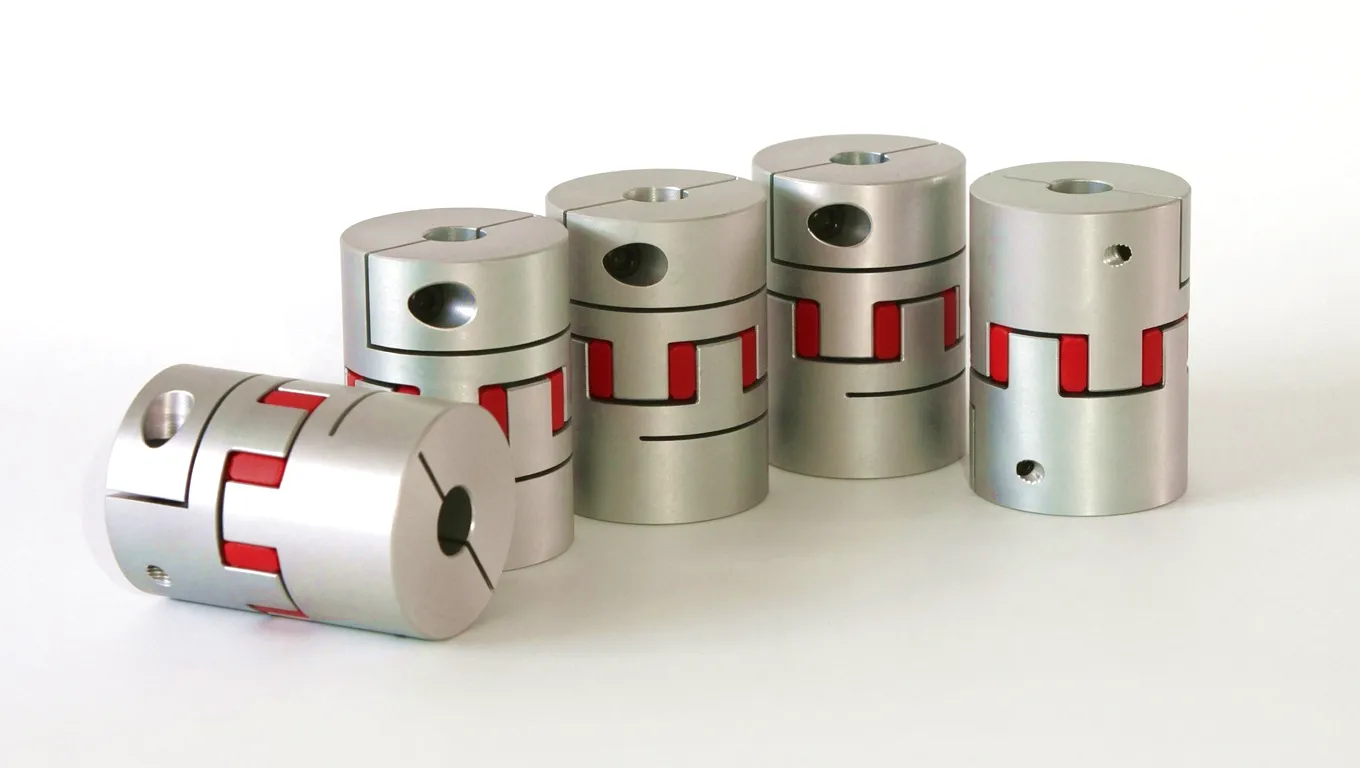
Flexible jaw coupling inserts and spiders used in lower-torque coupling applications on drilling support machinery are frequently manufactured from cast polyurethane or glass-fibre reinforced PA66 nylon. These elastomeric and semi-rigid polymer elements provide electrical insulation between connected shafts — important where stray electrical currents exist on an offshore platform — while absorbing torsional shock and reducing transmission of high-frequency vibration to sensitive instrumentation. Polyurethane inserts are available across a Shore hardness range from 92A to 98A, allowing engineers to tune the coupling’s torsional stiffness to specific application requirements.
Core Technical Advantages of Industrial Couplings for Marine Drilling Platforms
01 — High Torque Density
Modern gear-type and serpentine spring couplings deliver torque-to-weight ratios that allow compact installation footprints even on crowded rig decks where space is at an absolute premium. A well-designed coupling transmits the full rated torque of the connected machinery without parasitic power losses from flexing elements, maintaining drivetrain efficiency above 98% across the full torque range.
02 — Multi-Mode Misalignment Compensation
Offshore drilling machinery is never in perfect alignment. Structural deflection under variable load, thermal growth of machinery frames, and wave-induced platform motion all cause shaft centrelines to deviate from their nominal positions. Premium couplings tolerate angular misalignment up to 1.5 degrees, parallel (radial) offset up to 0.5 mm, and axial displacement across a defined float range simultaneously — all without generating damaging forces in connected bearings or seals.
03 — Shock Load Absorption
Drilling operations generate severe shock events — sudden formation changes, drill string sticking and release (stick-slip), and emergency brake applications all create torque spikes that can reach 3–5 times the rated continuous torque of the drive system. Flexible coupling elements — whether spring steel, polyurethane or elastomeric insert — act as mechanical fuses and shock absorbers simultaneously, protecting drive motors and gearboxes from overload while maintaining power transmission continuity during the transient event.
04 — Maintenance Efficiency
Offshore maintenance windows are costly and logistically complex. Well-engineered couplings are designed for rapid inspection, greasing, and component replacement without disturbing the connected machinery shaft alignment. Spacer-type designs allow the coupling centre section to be removed and reinstalled between live-bearing shafts, eliminating the need to shift heavy pump or motor units for routine service. This design feature is particularly valued by maintenance engineers at Aberdeen-based North Sea operators who work to strict planned maintenance schedules governed by offshore regulatory frameworks.
05 — Torsional Vibration Damping
Drilling rigs generate torsional vibration from multiple sources simultaneously — diesel generator sets, hydraulic power units, variable frequency drives, and the drill string itself. When torsional vibration frequencies coincide with drivetrain natural frequencies, resonance conditions can cause rapid fatigue failure of shafts, gearboxes and couplings. Flexible couplings with defined torsional stiffness values shift system natural frequencies away from excitation sources, providing a predictable and controllable approach to torsional vibration management that rigid couplings cannot offer.
06 — Corrosion & Environmental Resistance
Coatings and surface treatments applied to offshore coupling components extend service life dramatically. Zinc phosphating followed by epoxy priming and topcoating protects exposed steel surfaces, while internal gear cavities are packed with NLGI Grade 2 lithium-complex greases that resist water washout and remain effective across the temperature range typically encountered in offshore machinery rooms — from sub-zero on exposed deck to 80°C adjacent to high-power motors. These treatments ensure coupling longevity in the hostile salt-laden, moisture-saturated atmosphere characteristic of all marine platform environments.
Industrial Coupling Technical & Performance Specification Table
| Параметр | Gear Coupling | Жылан серіппесінің муфтасы | Universal Coupling (SWC) |
|---|---|---|---|
| Номиналды момент диапазоны | 250 N·m – 2,500,000 N·m | 100 N·m – 160,000 N·m | 500 N·m – 3,000,000 N·m |
| Max. Angular Misalignment | 1,5° дейін | Up to 1.0° | Up to 35° |
| Max. Radial Offset | 0.4 – 0.8 mm | 0.5 – 1.2 mm | Compensated by joint angle |
| Operating Speed (max) | Up to 6,000 RPM | Up to 4,500 RPM | Up to 3,000 RPM |
| Хаб материалы | 42CrMo4 / 40Cr Alloy Steel | 42CrMo4 қорытпасынан жасалған болат | 40Cr / 45# Forged Steel |
| Икемді элемент материалы | Alloy steel gear sleeve | 65Mn spring steel | Alloy steel cross journals |
| Ұңғыма диаметрінің диапазоны | 20 mm – 450 mm | 20 mm – 320 mm | 30 mm – 600 mm |
| Жұмыс температурасы | -30°C to +120°C | -40°C to +100°C | -25°C to +150°C |
| Беттік өңдеу | Phosphate + Epoxy coating | Zinc phosphate or painting | Phosphate / Black oxidising |
| Customisation | Bore, keyway, flange, spacer | Hub profile, spring grade | Flange, tube length, OD |
Application Scenario: Marine Offshore Platform Drilling Rig Systems
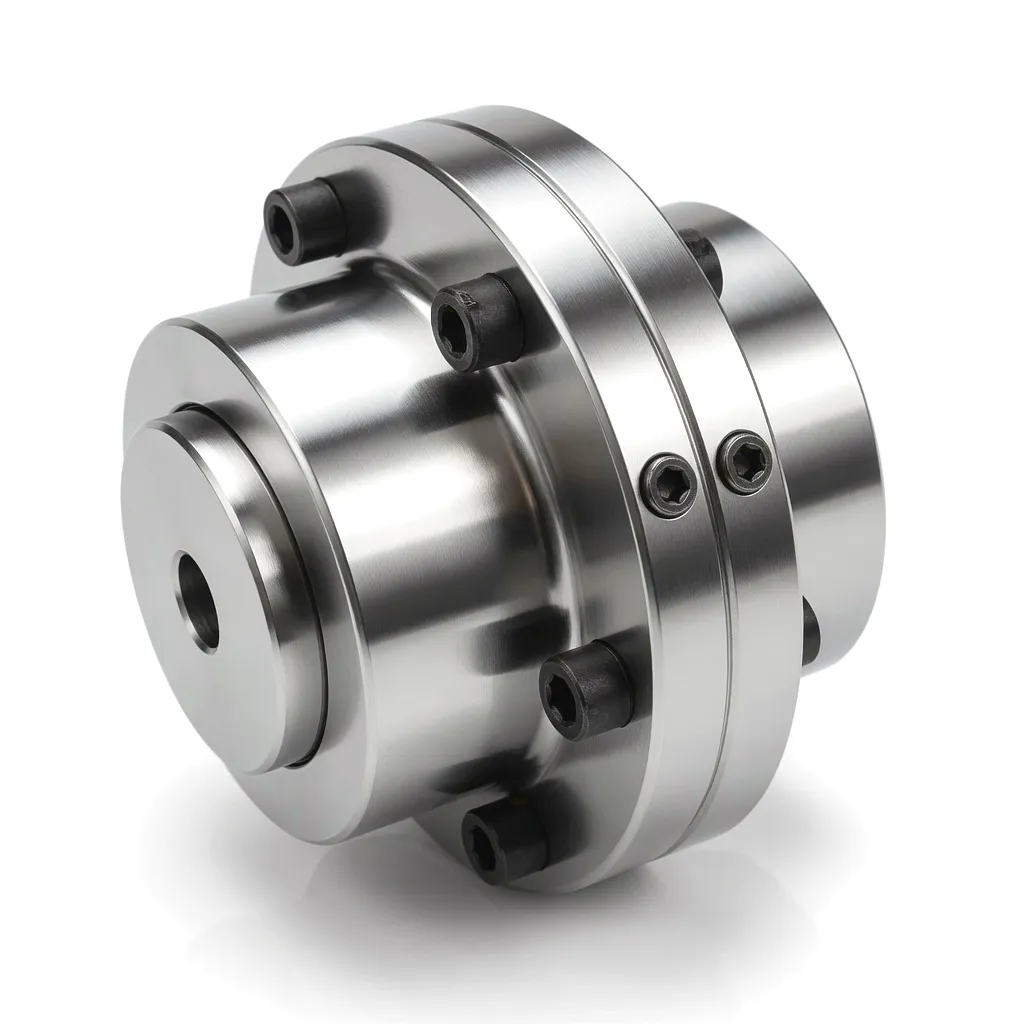 The top drive is the primary rotary and hoisting unit on modern drilling rigs, replacing traditional rotary table systems on most jack-up, semi-submersible and drillship designs. Electric or hydraulic top drive motors generate enormous continuous torques — often exceeding 50,000 N·m — combined with shock torque peaks during drilling through hard interbedded rock formations. The coupling connecting the top drive motor output shaft to the main gearbox input must handle this extreme torque regime continuously while simultaneously accommodating angular misalignment introduced by the swivelling and translating motion of the top drive travelling block system. Industrial gear-type couplings are the industry standard choice for this application: their involute tooth mesh provides a direct, stiff torque path that maintains precise shaft-to-shaft speed synchronisation — essential for directional drilling precision — while their crowned tooth geometry provides the angular accommodation needed to prevent bearing overloading. UK North Sea operators running top drives rated at 1,000 HP or above specify gear couplings with minimum torque ratings of 120% of motor peak torque, providing a genuine safety margin that translates directly into longer service intervals and lower total cost of ownership per operational hour.
 Drilling mud pumps — also called fluid end or circulating pumps — are among the hardest-worked machines on any drilling platform. A typical North Sea rig operates two or three triplex plunger pumps running simultaneously, each driven by motors rated at 1,500 HP or more, maintaining the continuous high-pressure mud circulation that cools the drill bit, carries cuttings to surface and controls wellbore pressure. The drivetrain coupling on a mud pump must handle the highly cyclical, pulsating torque generated by the reciprocating plunger action: three plunger strokes per revolution produce a predictable but unavoidable torque variation that at high speeds excites torsional vibration in the drive shaft. Serpentine spring couplings — the JSA Series from Ever Power being a prime example — are ideally suited to this application because their progressive torsional stiffness curve filters low-frequency pulsation while transmitting high mean torque efficiently. The serpentine spring’s multi-point loading distributes stress evenly, eliminating the stress concentration that would cause premature fatigue failure in a rigid coupling subjected to the same cyclic loading. Aberdeen-based drilling contractors operating in the central North Sea report that properly specified serpentine spring couplings on mud pumps demonstrate maintenance intervals three to four times longer than alternative flexible insert designs in equivalent service conditions.
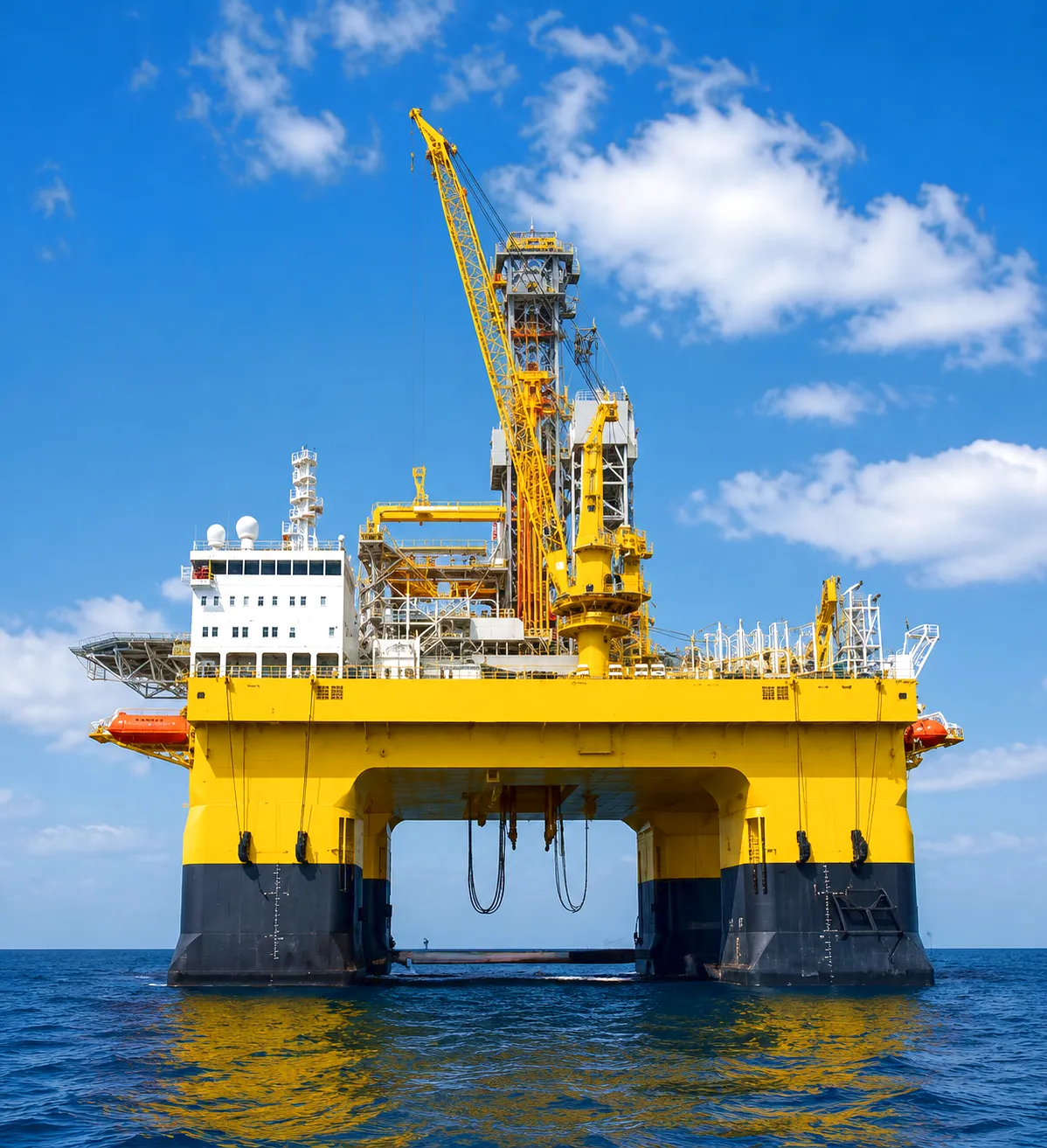 The drawworks is the hoisting engine of a drilling rig — a massive mechanical or electromechanical system that raises and lowers the drill string through thousands of metres of wellbore. Running trips into and out of hole with a fully loaded drill string generates extreme dynamic loading conditions on the drawworks drivetrain, particularly during emergency braking when the kinetic energy of a heavy drill string must be absorbed rapidly. SWC Series universal joint couplings connect drive motors to drawworks gearbox inputs on medium-to-large platform rigs where the spatial arrangement of the machinery deck requires shaft-to-shaft angles that exceed the capacity of standard flexible couplings. The Cardan joint geometry of a universal coupling accommodates working angles up to 35 degrees continuously, enabling machinery designers to route drive power around structural obstructions without compromising torque transmission efficiency. On UK Continental Shelf semi-submersibles — many of which operate from support bases in Aberdeen or Cromarty Firth — drawworks universal couplings are rated for combined continuous torque loads of 300,000 N·m or more, with shock service factors of 2.0 to 3.0 applied to account for emergency brake applications at full hook load.
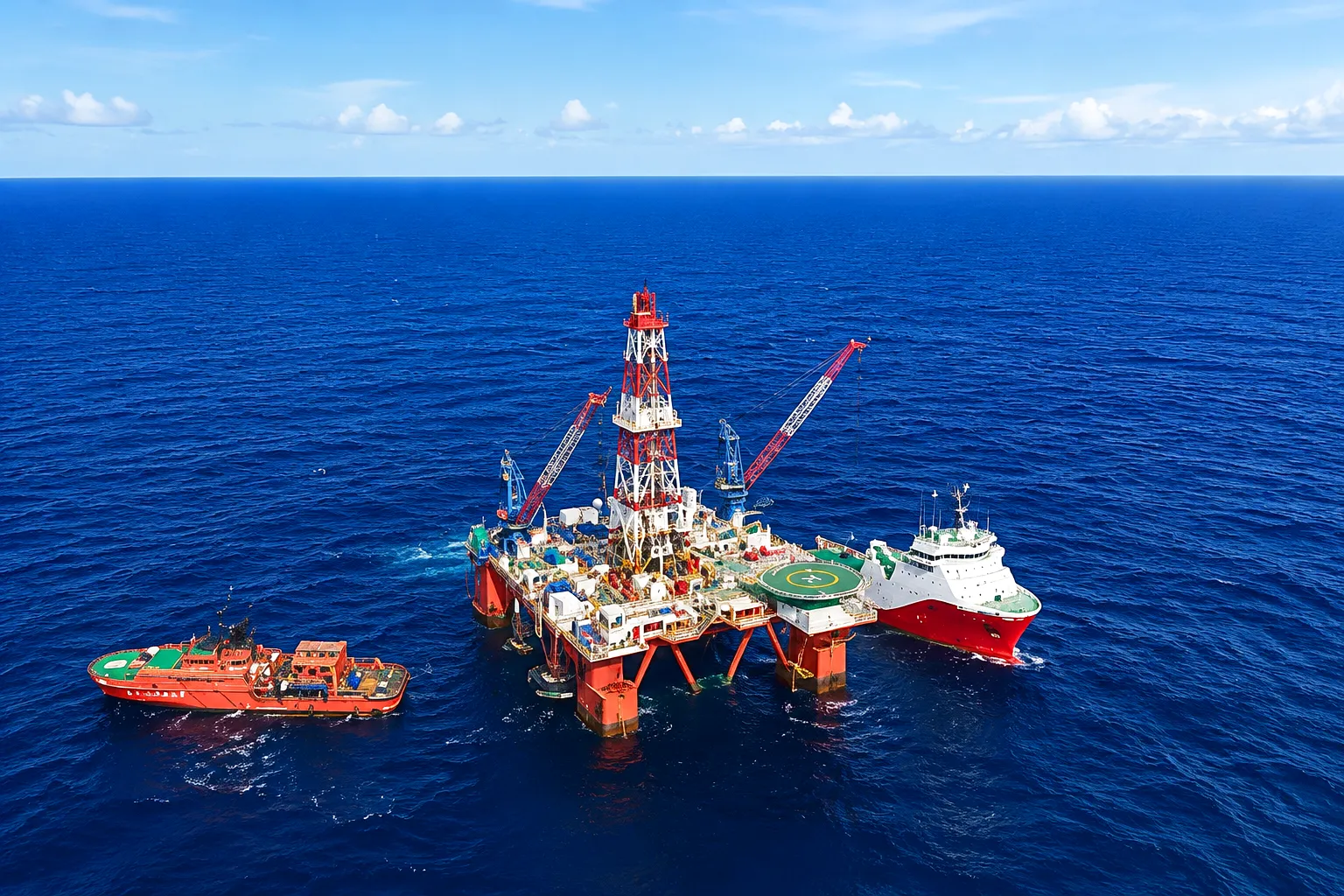 Offshore platforms operate as isolated power islands, generating their own electricity from banks of diesel generator sets or gas turbine generator packages. The coupling connecting each diesel engine to its alternator must handle the torsional irregularity inherent in the reciprocating piston engine firing cycle while transmitting sufficient torque to drive the alternator at constant synchronous speed. Any torsional vibration transmitted to the alternator rotor directly corrupts the quality of generated electrical power, potentially causing frequency instability that trips sensitive variable frequency drives controlling rig motors. Torsionally soft flexible couplings with precisely tuned stiffness values are therefore specified by marine and offshore electrical engineers specifically to isolate the alternator from engine torsional excitation. UK-registered offshore installations governed by MCA (Maritime and Coastguard Agency) regulations and Class Society rules require documented torsional vibration analyses for all generator set couplings, with coupling natural frequency confirmed to be outside all harmonic excitation ranges across the generator set’s operating speed envelope. Ever Power supplies generator coupling systems complete with ISO 10441 compliance documentation for clients operating in UK-regulated offshore environments.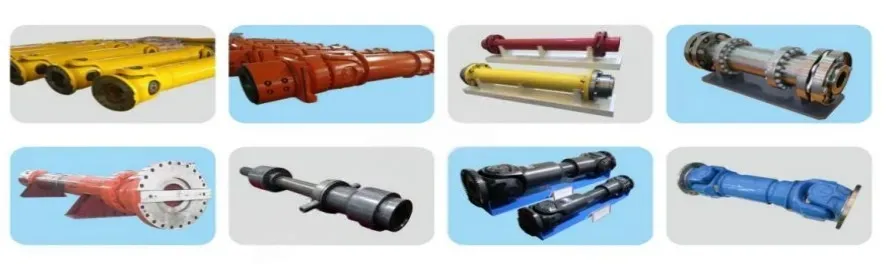
Featured Coupling Products from Ever Power
Two flagship solutions engineered for demanding industrial and offshore environments:
Spring Coupling
JSA сериялы жылан серіппелі муфта
The JSA Series serpentine spring coupling is designed for heavy-duty drivetrain applications where pulsating torque, shock loading and torsional vibration are everyday operating conditions. Its 65Mn high-tensile spring element provides a progressive torque-stiffness curve that protects connected machinery from start-up torques and impact loads. Ideal for drilling mud pump drives, compressors, and marine generator sets. Available in standardised hub configurations with custom bore options to suit all standard and non-standard shaft diameters. Full corrosion protection packages available for offshore service.
Universal Coupling
SWC сериялы әмбебап муфта
The SWC Series Cardan universal coupling delivers continuous torque transmission across shaft angles up to 35 degrees, making it the engineering solution of choice wherever machinery spatial constraints prevent shaft-to-shaft alignment. Widely used in drawworks systems, rotary table drives and rolling mill lines where shaft geometry is dictated by structural and space limitations rather than alignment ideals. Manufactured from high-quality forged alloy steel throughout, with precision-machined cross journal assemblies and sealed needle roller bearings that are accessible for routine inspection and greasing without coupling removal. Custom tube lengths, flange configurations and OD specifications available on request for offshore and heavy industrial projects.
Өндірістік шеберлік
Ever Power — Precision Coupling Manufacturing for Offshore and Heavy Industry
Ever Power operates advanced precision manufacturing facilities with end-to-end capability across coupling design, material sourcing, machining, heat treatment, surface finishing, assembly and quality validation — delivering tailored industrial coupling solutions to UK and global clients in offshore energy, marine, heavy manufacturing and process industries.
Customisation Capabilities
Ever Power’s engineering team works directly with clients at the specification stage to customise coupling bore dimensions, keyway profiles, flange patterns, spacer lengths and surface treatment systems to exact project requirements. Whether a UK subsea equipment manufacturer in Aberdeen needs a one-off coupling for a prototype manifold system, or an offshore contractor in Great Yarmouth requires a batch of matched coupling sets for a rig refurbishment programme, Ever Power’s flexible production model accommodates orders from single units through to production runs of hundreds of units with full dimensional traceability.
Precision Manufacturing Process
CNC turning, gear hobbing, profile grinding and coordinate measuring machine (CMM) inspection are central to Ever Power’s manufacturing workflow. Coupling hubs are rough-turned from certified billet stock, heat-treated to documented hardness specifications, then precision-machined to bore, keyway and flange tolerances using multi-axis CNC machining centres. Final inspection includes dimensional verification using calibrated CMM equipment, with material certificates and inspection reports provided as standard for all offshore and safety-critical applications.
Supply Chain & Delivery
Ever Power maintains strategic stock positions of common coupling hub forgings and spring steel elements to support rapid turnaround on urgent orders. Offshore operators on tight mobilisation schedules — particularly those operating out of Teesside or the Humber — benefit from Ever Power’s ability to deliver custom-bored and balanced coupling sets within compressed lead times where standard catalogue products are not dimensionally compatible with existing shaft arrangements. Full export packing, international freight coordination and UKCA-compliant documentation are available for all UK-destined shipments.
Customer Success Story: North Sea Drilling Contractor, Aberdeen, Scotland
A major independent drilling contractor operating two semi-submersible rigs out of Aberdeen Port was experiencing recurring unplanned downtime on their mud pump drivetrains. The existing coupling arrangement — using a competitor’s elastomeric insert coupling — was failing at the flexible insert after an average service interval of four to five months, far below the twelve-month planned maintenance cycle. Each failure required emergency shutdown of the affected mud pump, reducing active pump capacity on the rig and creating an HSE-reportable event due to the associated reduction in wellbore pressure control redundancy. The operational cost of each failure, including rig standby time during repair, insert procurement and engineering man-hours, averaged approximately £38,000 per incident.
The contractor approached Ever Power for a coupling replacement assessment. Ever Power’s technical team reviewed the pump drivetrain torsional vibration data provided by the rig’s maintenance management system and identified that the existing coupling’s torsional stiffness was too low for the specific triplex pump operating speed range, placing a torsional resonance point within the continuous operating speed band. By replacing the elastomeric coupling with a custom-specified JSA Series snake spring coupling with a precisely calculated spring stiffness value that shifted the system natural frequency above the operating range, the resonance condition was eliminated entirely.
The custom Ever Power JSA Series couplings were installed on both rigs during scheduled maintenance windows. Over the subsequent eighteen months of continuous offshore operation — through two North Sea winters with sea states regularly exceeding 8 metres significant wave height — neither coupling required any unscheduled attention. The contractor recorded zero coupling-related downtime events across both rigs during this period, representing a combined cost avoidance of over £400,000 against the previous failure rate. The planned maintenance interval was extended to fourteen months, reflecting the superior service life of the spring steel flexible element compared to the elastomeric insert previously specified.
Біздің клиенттеріміздің пікірлері
“We had been struggling with premature coupling failures on our mud pump drives for over two years. Ever Power’s engineering team identified the root cause within days and delivered a custom spring coupling solution that has now run eighteen months without a single maintenance call. The torsional analysis support they provided was genuinely impressive — this is a supplier who understands offshore drivetrain engineering at a real technical level.”
— Mechanical Engineering Manager, North Sea Drilling Contractor, Aberdeen
“The SWC series universal coupling Ever Power supplied for our drawworks refurbishment project arrived with full dimensional inspection records and material certificates — exactly what our Teesside maintenance team needed for the certification package. The machining quality on the hubs and cross journals was excellent, and the build quality gave us confidence going into the North Sea season. Delivery was on time despite the short lead time we gave them.”
— Senior Rig Engineer, Offshore Equipment Services, Teesside
“We’ve standardised on Ever Power couplings across our generator set overhaul programme after seeing the performance difference on our first installation. The ability to get custom-bored hubs to our exact shaft dimensions — with corrosion protection coating specified for our North Sea environment — without paying the excessive premium that European suppliers charge has made Ever Power our preferred coupling source for offshore work. Their technical team responds to enquiries quickly and understands exactly what offshore certification requirements entail.”
— Procurement Manager, Marine Engineering Services, Great Yarmouth
Frequently Asked Questions: Industrial Couplings for Offshore Drilling Rigs (UK)
Ready to Specify the Right Coupling for Your Offshore Drilling Project?
Talk to Ever Power’s technical team today. Whether you need a standard coupling delivered quickly or a fully custom solution with offshore certification, we have the engineering expertise and manufacturing capacity to deliver what your project requires.
gzl арқылы өңдеу