Beskrivning
Heavy-Duty Industrial Coupling | UK Supplier
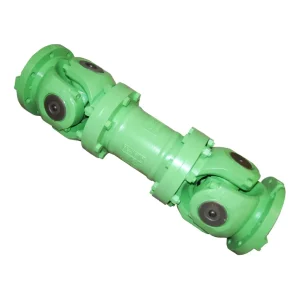
SWC-WF Without Flex Flange Type Universal Joint Coupling
Precision-engineered for British steel mills, mining operations, and heavy manufacturing — nominal torque capacity up to 1,000 kN·m.
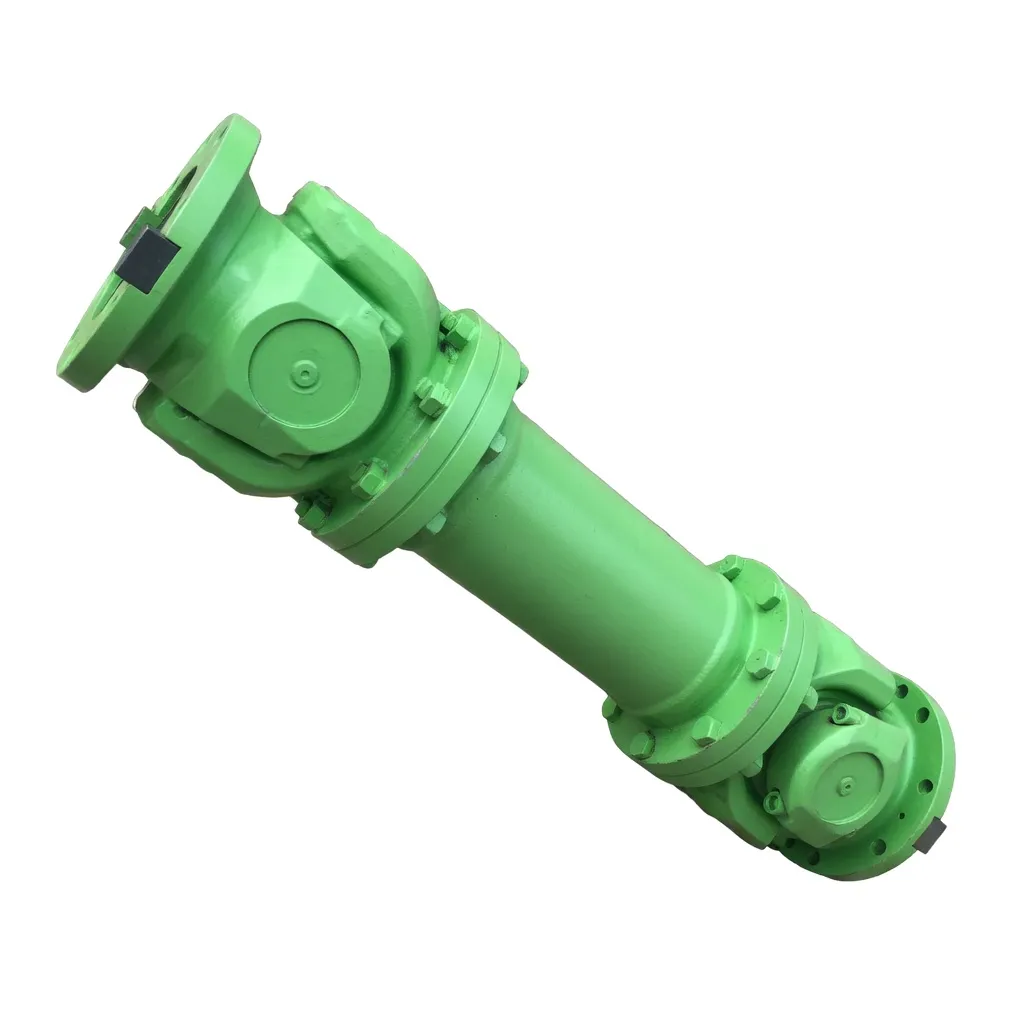 The SWC-WF without flex flange type universal joint coupling stands as one of the most robust and trusted shaft connection solutions deployed across the United Kingdom’s heavy industrial sector. Combining a rigid, without-flex-flange architecture with a proven double-joint Cardan configuration, this coupling delivers continuous, equal-velocity rotation between two shafts operating at significant angular offsets — without the torsional softness that elastomeric intermediate elements can introduce. In rolling mills, crane drives, paper machine production lines, and offshore auxiliary equipment throughout Britain, the SWC-WF series has proved itself under demanding duty cycles where reliability is non-negotiable.
Available in eight standard sizes — from the SWC285WF at 285 mm gyration diameter through to the SWC620WF with a 620 mm gyration diameter and 1,000 kN·m nominal torque — the SWC-WF series covers the full breadth of modern heavy industrial requirements. The absence of a flexible coupling element between the two bending joints results in a mechanically direct power path, an architecture specifically advantageous in high-vibration and high-shock environments such as primary metal processing and underground mining conveyors.
Technical Specifications & Dimensions
The table below presents the complete dimensional and performance data across all standard SWC-WF without flex flange universal coupling models. Torque values are in kN·m; all dimensional data in millimetres. Weight figures correspond to the minimum installation length (Lmin). Procurement engineers at UK plants can use this data directly for drive selection and envelope checks.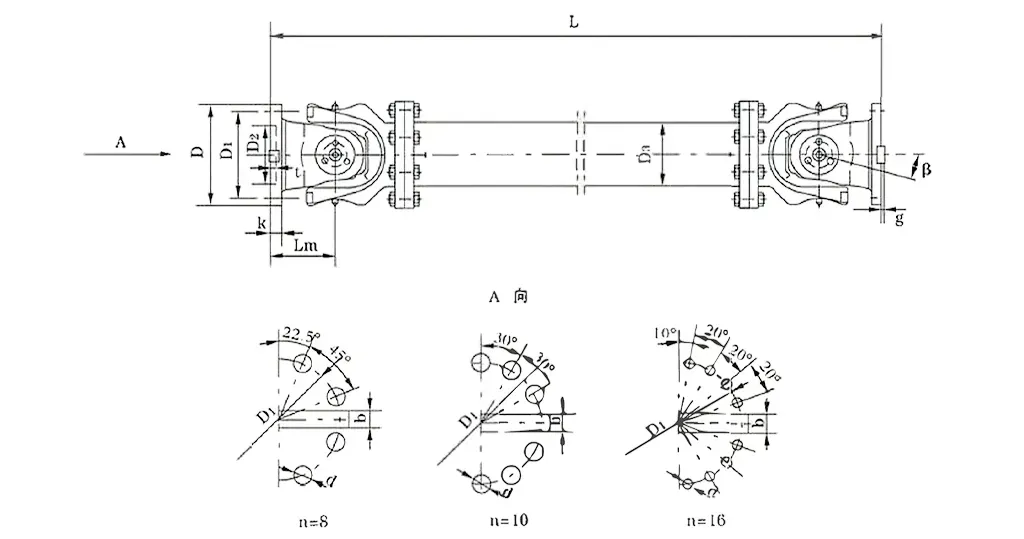
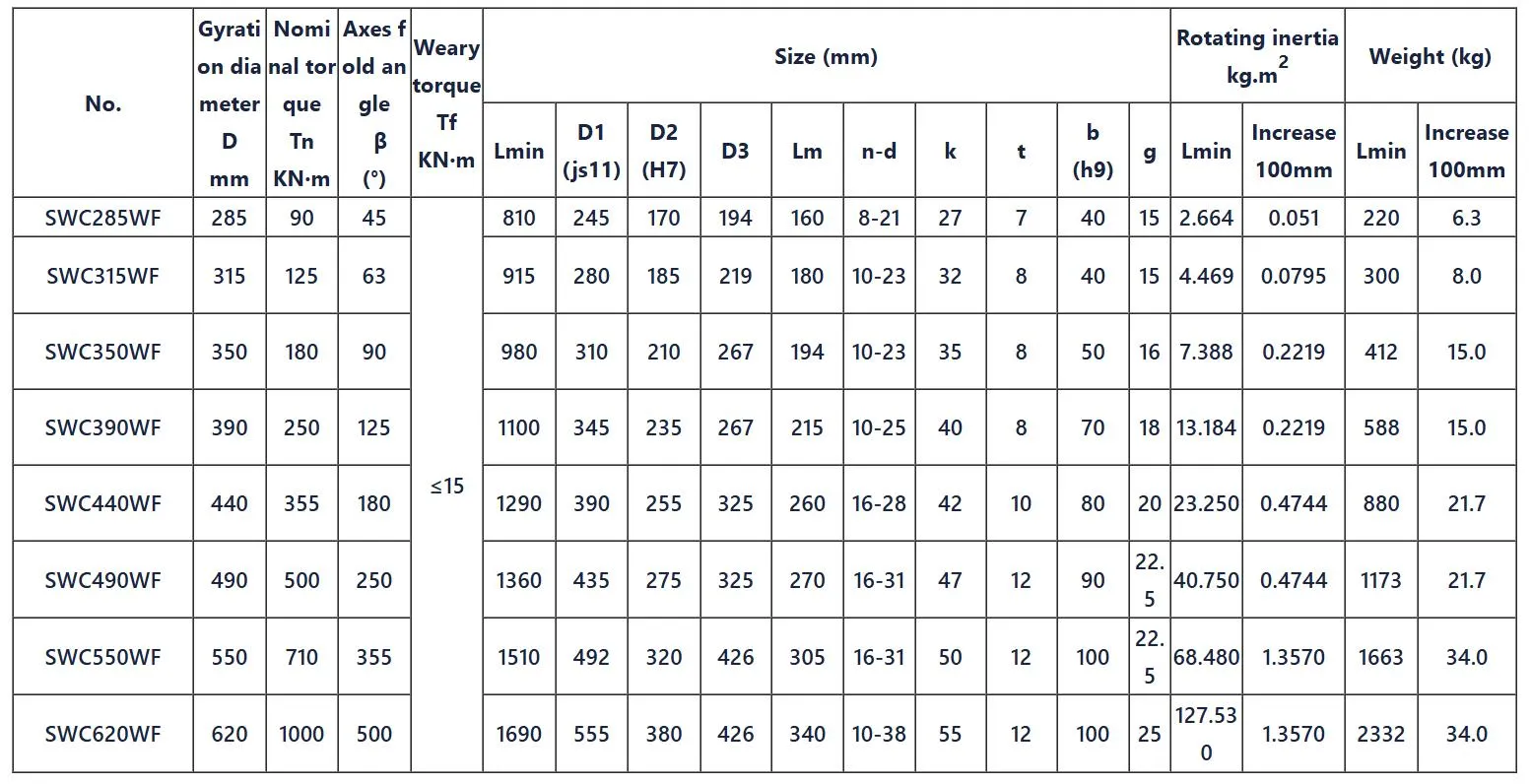
* Tf = permissible fatigue torque under alternating load. D = gyration diameter. Tn = nominal torque. Installation length L is set to application requirement. Rotating inertia data available on request.
Five Core Advantages of the SWC-WF Universal Joint Coupling
The double-joint design of the SWC-WF without flex flange coupling allows reliable power transmission between shafts running at significant angular offsets. This matters greatly in British rolling mills and crane lifting systems where the drive shaft alignment shifts dynamically with each production pass or load change. The double-Cardan geometry cancels the velocity non-uniformity of the first joint at the second joint, producing constant angular velocity at the output — a characteristic that prevents speed pulsations from propagating through downstream gearboxes and driven equipment.
Manufactured from medium-carbon alloy steel — commonly 42CrMo4 or equivalent — and precision-machined to close tolerances, the SWC-WF universal joint coupling withstands continuous exposure to shock loads, vibration, and abrasive environments. The integrated needle-roller bearing assemblies are sealed against contaminant ingress and grease-lubricated to minimise wear rates, extending service intervals in conditions typical of British quarrying, port bulk handling, and primary steelmaking. Multiple UK plant operators have reported mean time between replacement exceeding 24 months under continuous-operation schedules.
The SWC-WF without flex flange universal coupling is designed for straightforward in-situ servicing. Bearing assemblies are reached via grease nipples on each trunnion cap without dismantling the drive train, and the modular yoke design allows partial component replacement rather than full coupling renewal. For UK plants operating 24/7 production schedules — integrated steelworks, chemical process lines, paper mills across the Midlands and Scotland — this arrangement translates directly into shorter planned maintenance windows and meaningfully lower total lifecycle expenditure.
With eight standard models spanning nominal torques from 90 kN·m (SWC285WF) to 1,000 kN·m (SWC620WF), the SWC-WF series addresses everything from medium-duty paper machine drive shafts to the largest primary steelmaking equipment currently operating in the UK. This range eliminates the need for bespoke one-off coupling designs in the vast majority of British heavy industry applications, reducing both engineering lead time and procurement cost without compromising on drive performance.
While the SWC-WF without flex flange universal joint coupling commands a higher initial unit price than simpler single-joint or elastomeric alternatives, the combination of extended service intervals, affordable replacement parts, and minimal unplanned downtime delivers a compelling whole-life cost argument. Procurement engineers at UK manufacturing and processing plants consistently find that the savings in maintenance labour, spare parts inventory, and avoided production loss comfortably outweigh the upfront premium — typically recovering the cost differential within the first 12–18 months of operation.
Material, Operating Principle & UK Application Sectors
Materials & Construction
The coupling body, yoke arms, and cross-shaft are forged from medium-carbon alloy steel — typically 42CrMo4 or an equivalent grade — and heat-treated to achieve the tensile strength and fatigue resistance required for sustained high-torque service. Bearing cups and needle rollers are produced from case-hardened bearing steel to EN ISO standards. Flange faces are precision-ground to ensure consistent bolt loading and concentricity at assembly. Surface treatment combines phosphate conversion coating with a rust-inhibiting oil film suitable for storage and sea freight transit to UK sites, with optional zinc-rich primer or epoxy topcoat available for aggressive on-site environments.
Operating Principle
The SWC-WF without flex flange universal joint coupling uses two Cardan-style bending joints arranged in series on a shared intermediate shaft yoke. When both joints operate at equal and opposite angles — as set during installation — the velocity non-uniformity introduced by the first joint is precisely cancelled at the second, producing constant angular velocity at the output flange. This is the classic double-Cardan principle. In the without-flex-flange variant, the intermediate section is a solid yoke assembly rather than an elastomeric sleeve, giving the coupling its defining torsional stiffness and ability to transmit peak shock torques without buffering.
Industry Applications Across the United Kingdom
The SWC-WF universal joint coupling serves a wide cross-section of UK heavy industry. In the steel and metals sector, it connects roll drives in hot-strip and cold-rolling mills — active in South Yorkshire, South Wales, and Teesside — where offset between gear-stand output shafts and roll neck journals changes with every roll change sequence. In the UK mining industry, it drives longwall shearer loaders and conveyor head drives in collieries across Yorkshire and the East Midlands. Paper and board mills from Scotland through to the Midlands rely on the coupling for wire and press section rolls. Port and bulk handling facilities on the Humber and Mersey deploy it in crane slewing and luffing drives. Rubber and plastics extrusion lines, petrochemical pump drives, and shipbuilding auxiliary equipment represent further sectors where the coupling’s reliability and angular tolerance are indispensable.
Maintenance Best Practices
Monthly Lubrication
Apply lithium-complex EP2 grease to needle roller bearing assemblies via trunnion grease nipples. In high-dust environments — common in UK aggregate processing and quarrying — shorten the lubrication cycle to every two weeks. Always purge degraded grease before refilling to prevent contamination build-up.
Regular Visual Inspection
Inspect coupling flanges, yoke arms, and the intermediate shaft for fretting corrosion, surface fatigue cracking, or impact damage at every planned maintenance interval. Pay close attention to the areas around flange bolt holes and the trunnion bearing seats. Any component displaying crack propagation should be replaced before the next production run.
Shaft Alignment Verification
Although the SWC-WF without flex flange universal coupling tolerates angular misalignment by design, sustained static offset beyond the rated angle accelerates bearing wear significantly. After any rebuild of connected machinery, verify centre-line angles using a dial test indicator or laser alignment system and correct if needed.
Planned Five-Year Replacement
Plan a full coupling replacement at five-year intervals regardless of visible condition, particularly in continuous-operation plants. In integrated steelworks and chemical process facilities across the UK, the cost of an unplanned coupling failure during production far exceeds the cost of a scheduled preventive renewal — a lesson most maintenance teams learn once.
Customer Success Story — UK Steel Industry
Case Study — Rolling Mill Drive Overhaul, South Yorkshire
Eliminating Repetitive Coupling Failures on a Hot Strip Mill Roughing Stand
A major hot strip mill in South Yorkshire was experiencing repeated universal coupling failures on its roughing stand drive lines. The incumbent single-joint coupling design could not accommodate the angular offset changes occurring between pass sequences, leading to fatigue cracking at the yoke bores. Mean time between replacement had fallen to eight months, with each coupling change requiring a minimum 14-hour production shutdown. Downtime costs were running in excess of £80,000 per incident when lost throughput was included.
After a drive train review with our application engineering team, the plant’s maintenance director selected SWC490WF without flex flange universal joint couplings with custom flange-drilling to match the existing gear-stand output flanges. Installation was completed during a planned three-day outage with no additional civil works. The SWC-WF units subsequently operated continuously for 26 months before the first scheduled bearing inspection — exceeding the target mean time between replacement by more than 200%. Annual maintenance cost savings were calculated at approximately £68,000 per drive line, with the investment recovered in under seven months.
“The SWC-WF universal joint couplings transformed our roughing stand reliability. We went from planning coupling changes every few months to genuinely forgetting they were there. That is exactly what you want from a critical drive component.”
— Maintenance Director, Hot Strip Mill, South Yorkshire, UK
What British Industry Professionals Say
“We have sourced SWC-WF without flex flange couplings for our West Midlands paper mill for four years running. Lead times are consistent, documentation meets our BS EN compliance records, and the units simply outlast every alternative we’ve tried over a decade of operation.”
R. Hartley
Engineering Manager, Paper Mill — West Midlands, UK
“The custom shaft bore and keyway machining service saved us weeks compared to sourcing locally. Our SWC440WF units for the port crane luffing drives arrived pre-machined and ready to fit straight from the pallet. Eighteen months of continuous port operations and absolutely no issues.”
T. Ashworth
Plant Director, Bulk Terminal — Humber Estuary, UK
“Pricing was competitive and the technical support is genuinely practical. When we needed to choose between SWC390WF and SWC440WF for a new rubber extruder line, the engineers walked us through the fatigue torque calculation and we got the right model first time. That kind of support is rare at this price point.”
S. Patel
Procurement Lead, Rubber Processing — Lancashire, UK
Manufacturing Capability & Custom Engineering Services
Our manufacturing facility holds ISO 9001-2000 certification and operates a fully integrated production process from forging and rough machining through precision turning, heat treatment, bearing assembly, and final inspection. All dimensional data is managed within a CAD-based design environment linked to an MES quality control system, ensuring complete traceability from incoming raw material to finished SWC-WF universal joint koppling. Standard models in the most frequently ordered size ranges are held in stock, with typical despatch to UK customers within two to five working days.
Where standard catalogue sizes do not satisfy your application, our engineering team provides full custom design and manufacturing. We regularly produce non-standard SWC-WF variants with modified bore diameters, non-standard keyway profiles, alternative flange bolt-circle configurations, extended intermediate shaft lengths, and special surface treatments for offshore or chemically aggressive environments. We also design drop-in replacement couplings engineered to fit legacy coupling envelopes from discontinued European or domestic manufacturers — a service of particular value to UK maintenance teams seeking replacements for obsolete equipment without modifying existing drive structures. Minimum order quantities are flexible; we welcome enquiries for single prototype units through to large series production runs for OEM or MRO supply.
Vanliga frågor
Ready to specify the right SWC-WF without flex flange universal joint coupling for your UK plant? Our application engineers are ready to help.
redigerad av gzl