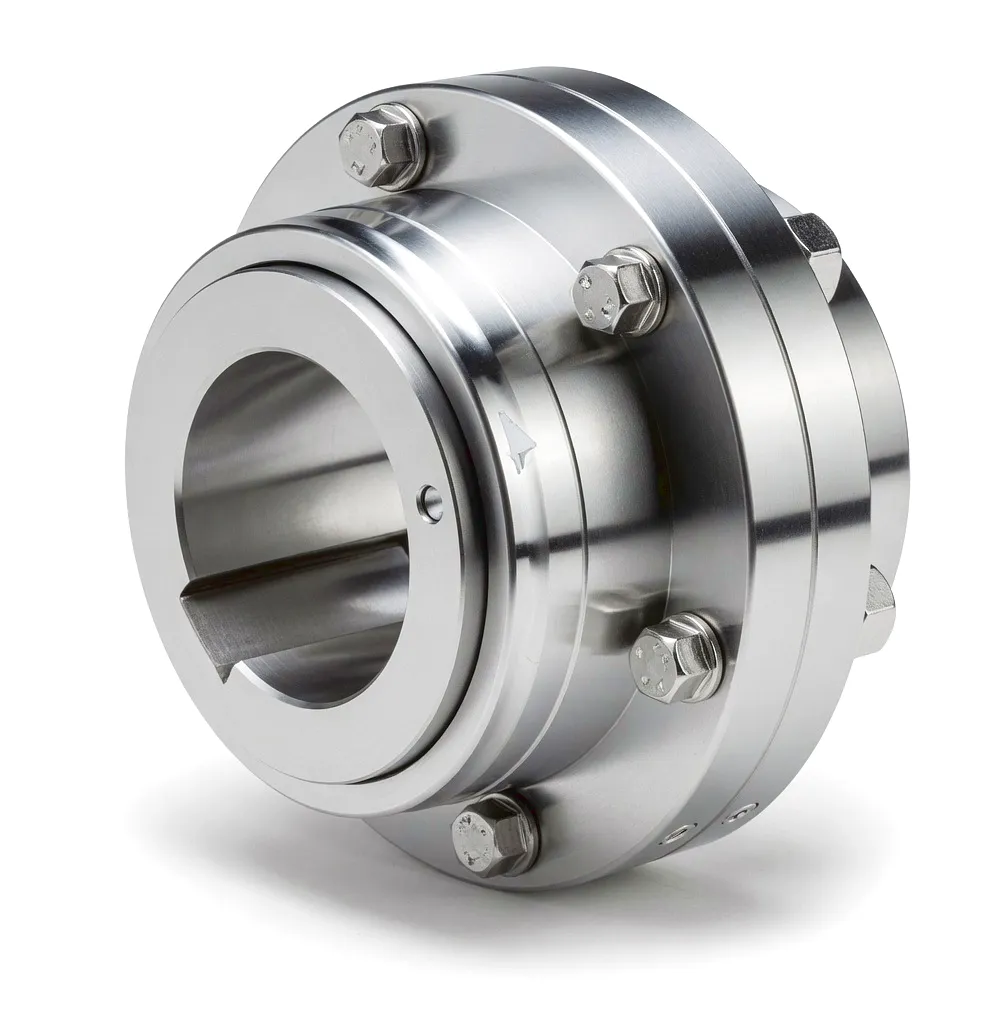
How Couplings Work in Cement Mill Drive Trains
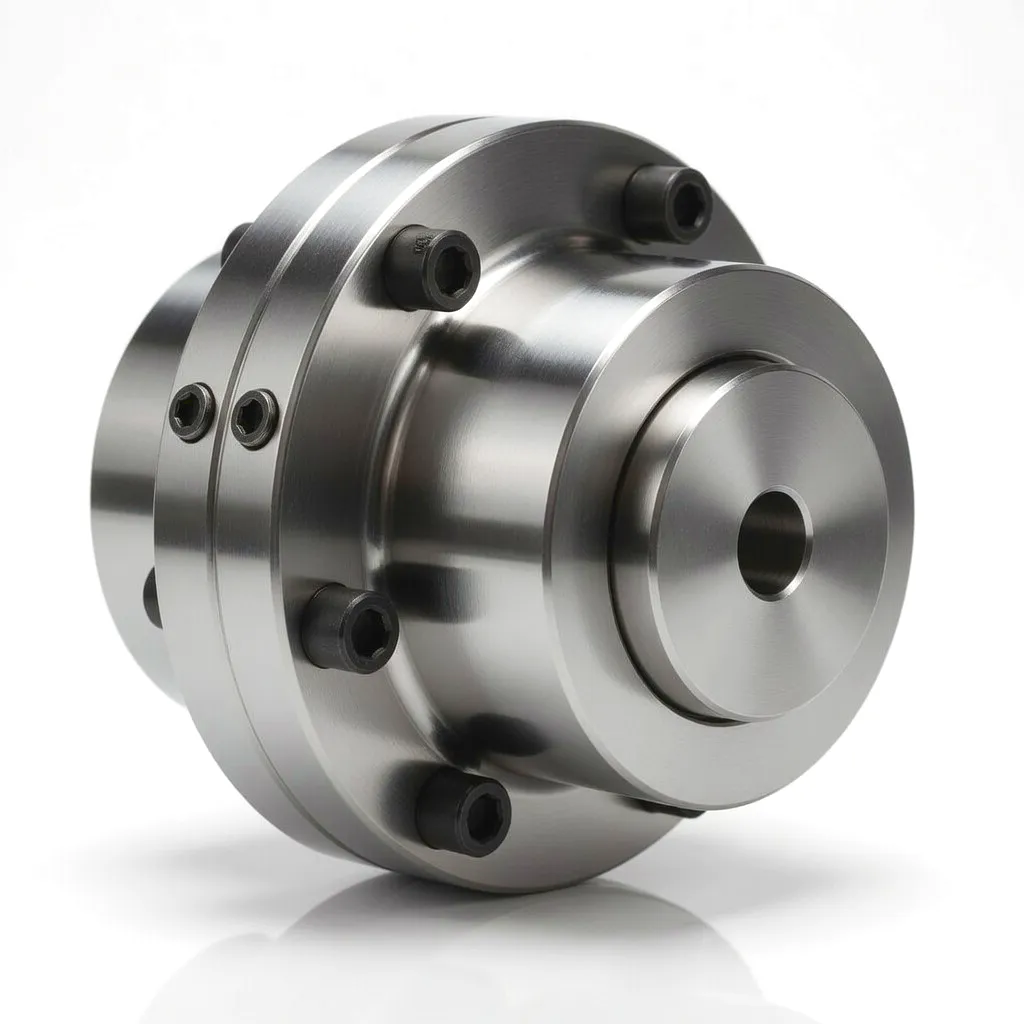
Core Materials Used in Cement-Grade Couplings
The hub bodies and sleeve flanges of heavy-duty gear couplings are manufactured from quenched-and-tempered alloy steels. 42CrMo4 delivers tensile strengths above 1,000 MPa combined with excellent fatigue resistance — essential for components subjected to cyclic torque reversals. In UK cement mills operating in the Midlands or North West, where ambient temperature swings are significant, this steel grade maintains dimensional stability throughout the thermal cycle.
The coupling gear teeth themselves are typically manufactured from carburising-grade steels such as 20CrMnTi, which after carburising and quenching achieve a surface hardness of HRC 58–62 with a core that remains tough and impact-resistant. This combination is particularly valuable in cement mill applications where abrasive dust contamination — even with excellent sealing — can cause minor wear over extended service intervals. The hard tooth surfaces resist adhesive and abrasive wear while the tough core prevents tooth fracture during shock loading events.
Ductile cast iron is widely used for the outer sleeve of gear couplings in medium-power applications, offering a good balance between strength, machinability, and cost. Its natural damping capacity — approximately ten times higher than steel — provides an additional buffer against vibration transmission. For UK cement plants prioritising economical maintenance cycles, ductile iron sleeves offer a lower replacement cost compared to fully forged steel components while still meeting the mechanical demands of the application.
Sealing integrity is arguably the single most critical factor determining coupling longevity in cement environments. Dust-resistant shaft seals and end-cap gaskets are manufactured from nitrile rubber (NBR) or fluoroelastomer (FKM) compounds, selected for their resistance to lubricating greases, elevated temperatures, and the alkaline chemistry of cement dust. FKM seals, in particular, are specified in kiln-area installations where continuous operating temperatures may reach 120 °C or above, ensuring that grease retention remains reliable throughout annual service intervals.
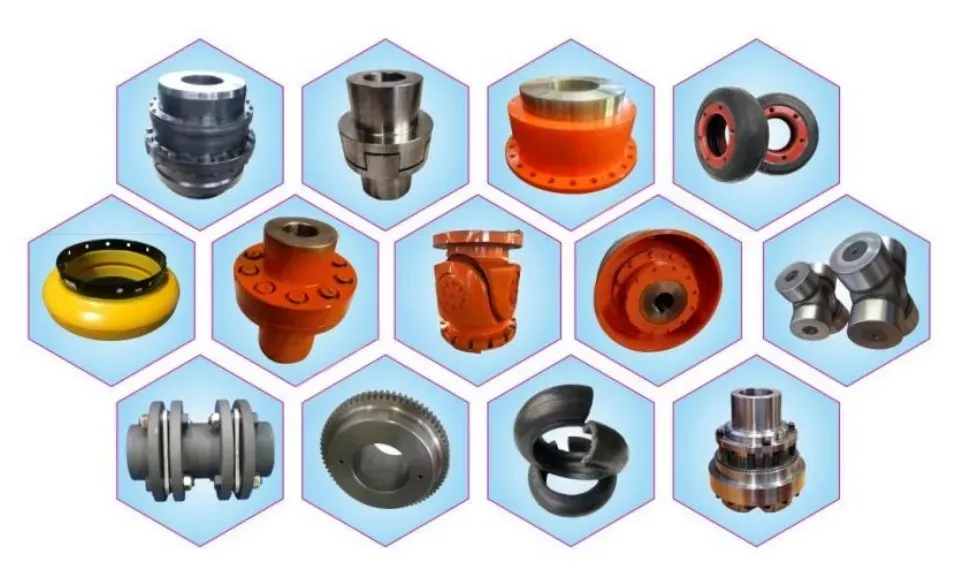
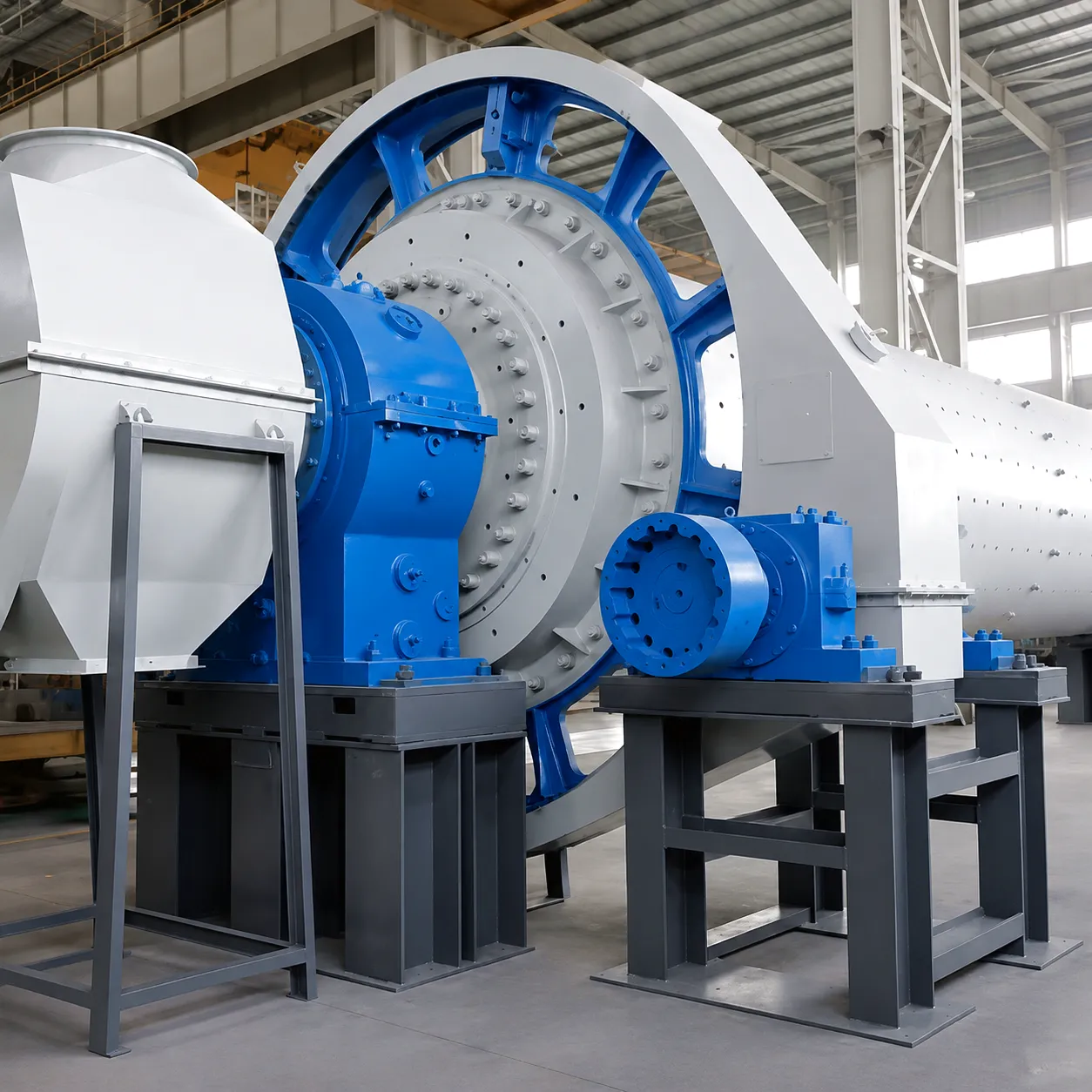
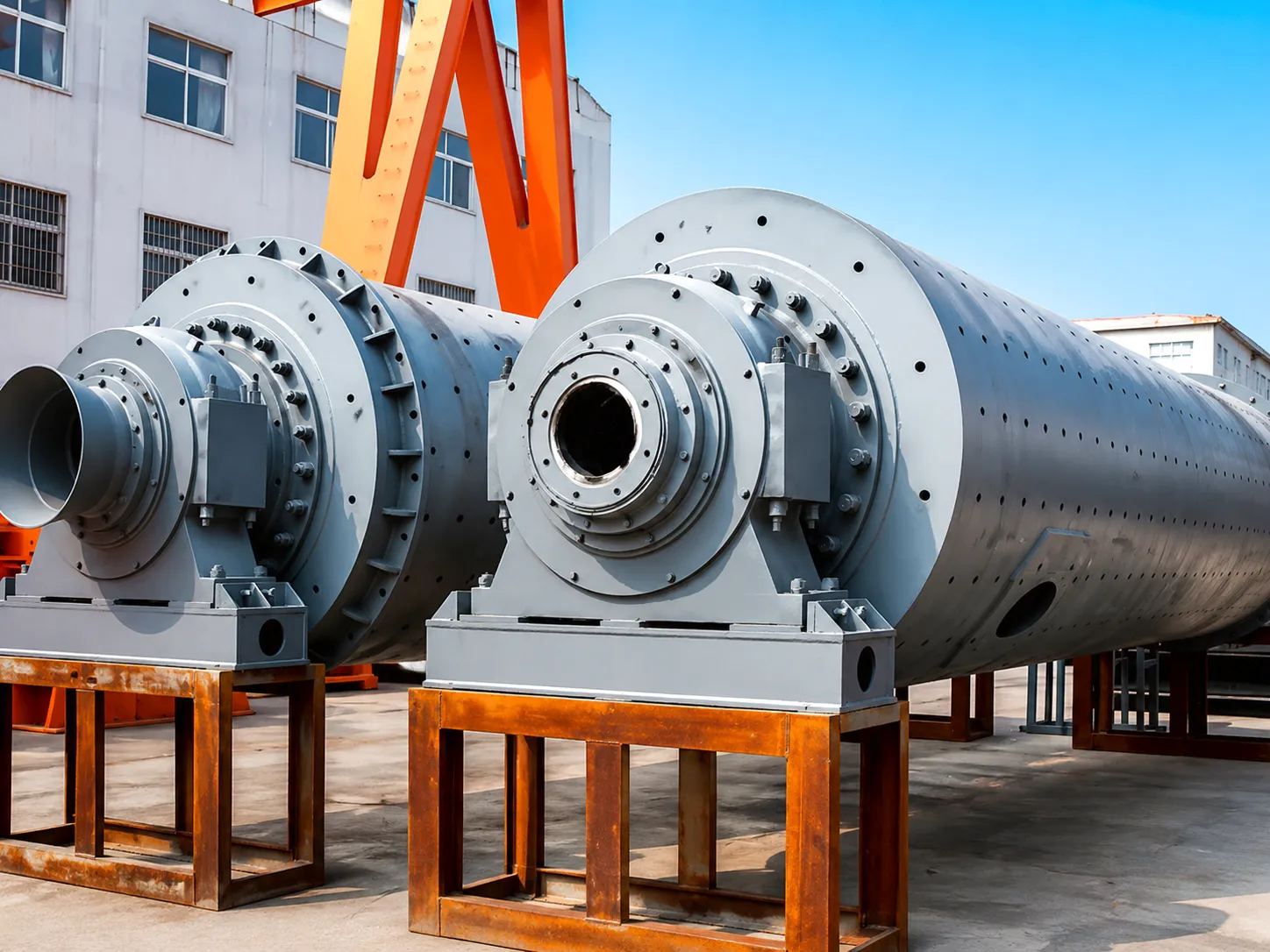
Application Scenario: Cement Mill Drive System
Core Technical Advantages of Industrial Couplings for Cement Applications
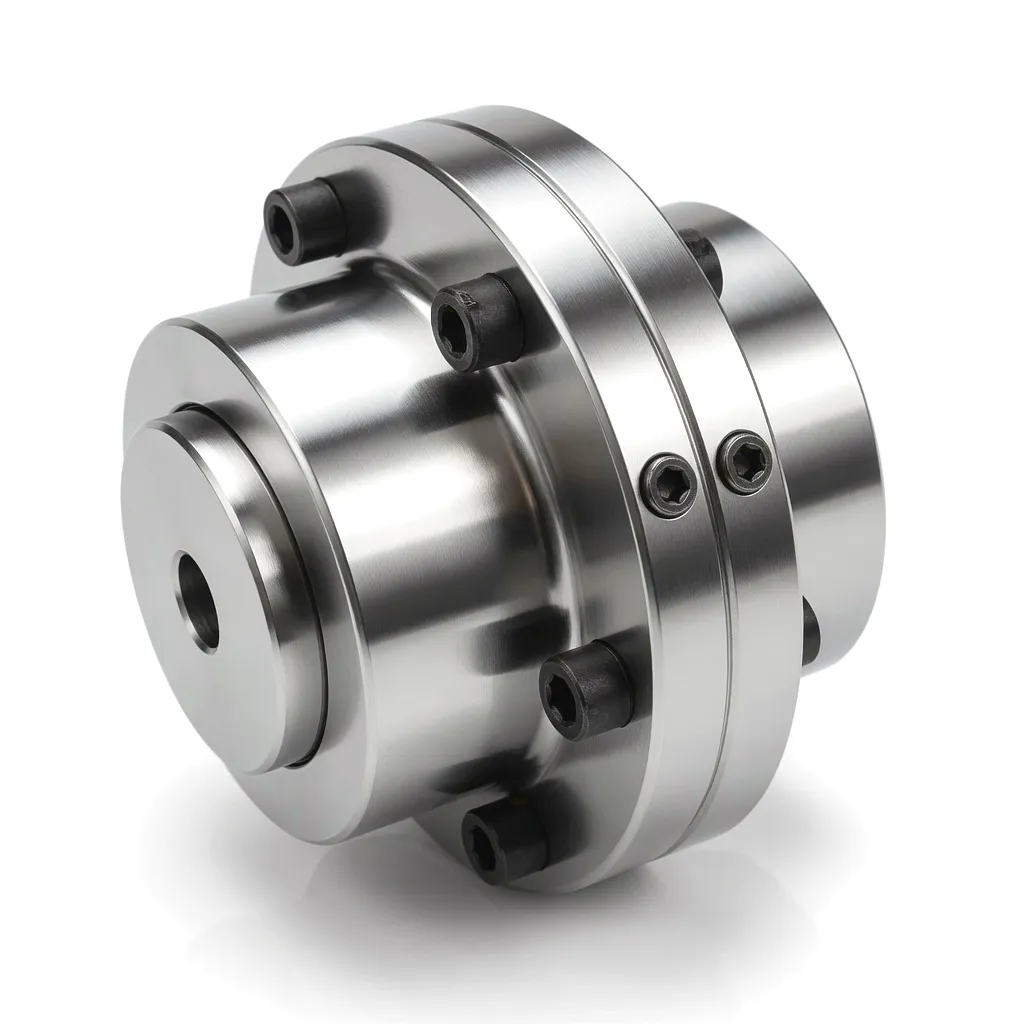
Gear-type couplings transmit torque through multiple tooth contacts simultaneously, achieving exceptionally high torque capacity relative to their physical envelope. This is critical in cement mill retrofits where the coupling must fit within the existing drive house without civil modifications.
Engineered to withstand transient torque peaks of 3–5 times nominal rating during mill starts without plastic deformation, providing a controlled overload margin that protects the more expensive gearbox and motor from shock damage.
Crowned-tooth gear geometry simultaneously handles angular misalignment up to 1.5°, parallel offset, and axial float — reducing bearing loads caused by inevitable shaft misalignment due to thermal growth and foundation settlement in large cement plant structures.
Multi-stage labyrinth seals combined with positive grease retention baffles prevent cement dust ingress into the lubricated gear mesh, extending service intervals from months to years and supporting the annual maintenance cycle common in UK cement production schedules.
Grease-lubricated gear couplings with high-capacity grease reservoirs and positive retention seals operate reliably for twelve to twenty-four months between re-lubrication intervals — ideally aligned with typical UK cement plant annual kiln and mill maintenance shutdowns, minimising production disruption.
Alloy steel construction with controlled thermal expansion coefficients ensures dimensional stability across operating temperature ranges from ambient UK conditions (typically 5–25 °C in drive houses) to elevated temperatures near kiln or clinker cooler equipment, where ambient readings regularly exceed 80 °C.
Product Technical and Performance Parameter Reference Table
The following table provides representative technical parameters for heavy-duty gear-type couplings and universal couplings as applied in cement mill drive systems. Custom configurations are available from Ever Power to match specific mill power ratings, shaft dimensions, and installation constraints.
| Parameter | Gear Coupling (JSA Series) | Universal Coupling (SWC Series) | Enhed / Bemærk |
|---|---|---|---|
| Nominal Torque Range | 500 – 500,000 | 1,000 – 2,000,000 | N·m |
| Peak Overload Torque | Up to 3.5 × Tn | Op til 2,5 × Tn | Times rated torque |
| Vinkelforskydning | Op til 1,5° | Up to 25° | Degrees |
| Aksial forskydning | ±3 to ±15 mm | Variable (per shaft length) | mm |
| Operating Speed Range | 0 – 3,600 | 0 – 1,500 | RPM |
| Navmateriale | 42CrMo4 / 34CrNiMo6 alloy steel | 45# steel / 42CrMo4 | Quench & tempered |
| Gear Tooth Hardness | HRC 58–62 (surface) | HRC 58–62 (yoke pins) | Carburised & quenched |
| Borediameterområde | 20 – 560 mm | 30 – 620 mm | Custom bores available |
| Driftstemperatur | -20 til +120 °C | -30 til +100 °C | FKM seals for high temp |
| Smøretype | High-viscosity lithium grease | Grease / Splash oil | NLGI Grade 2–3 |
| Service Interval | 12 – 24 months | 12 – 18 months | Aligned with plant shutdown |
| Dust Ingress Protection | IP55 equivalent (with seals) | IP44 – IP54 | Cement dust rated |
| Certificering | ISO 14691, CE Mark | ISO 9001, CE Mark | UK PSSR compliant |
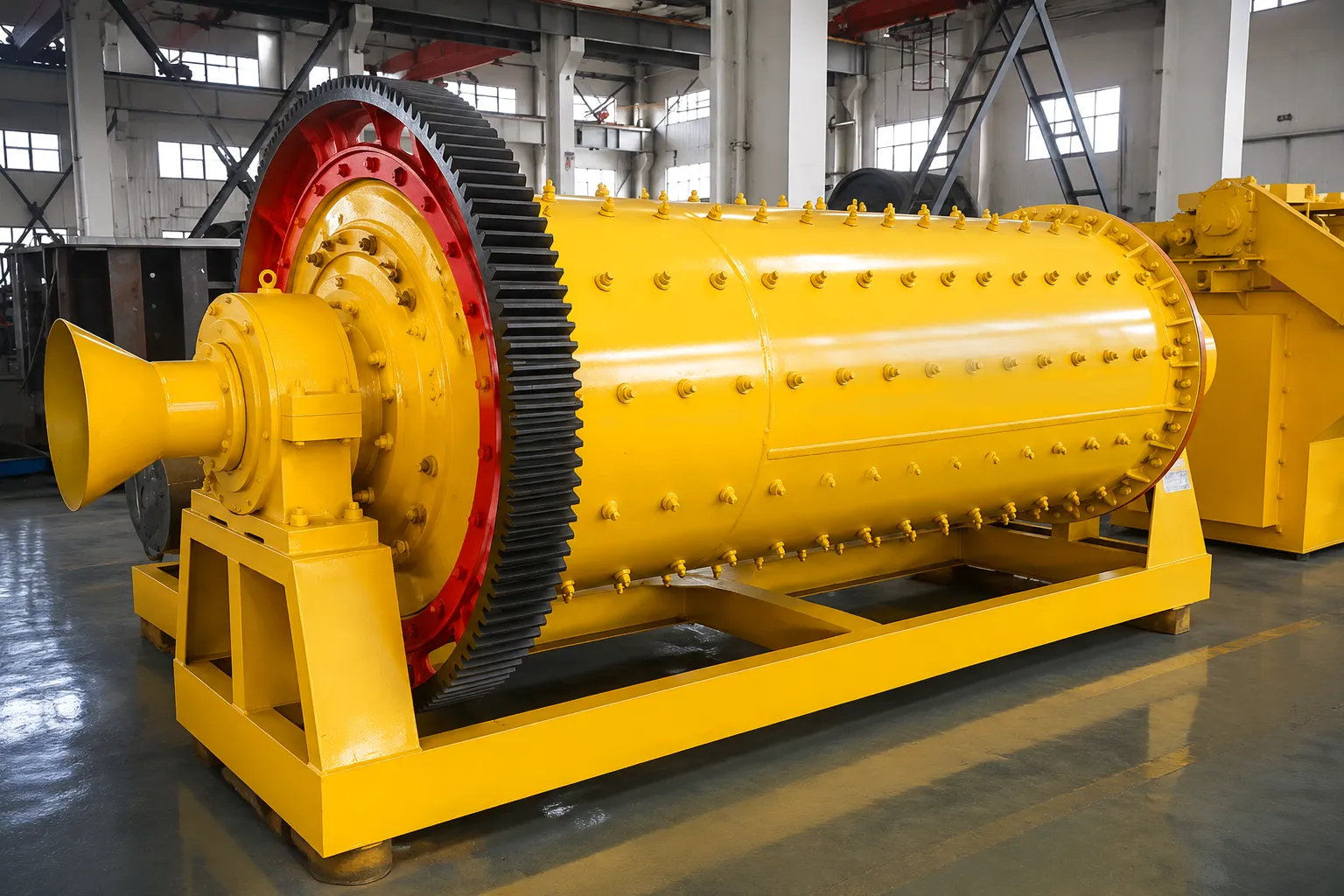
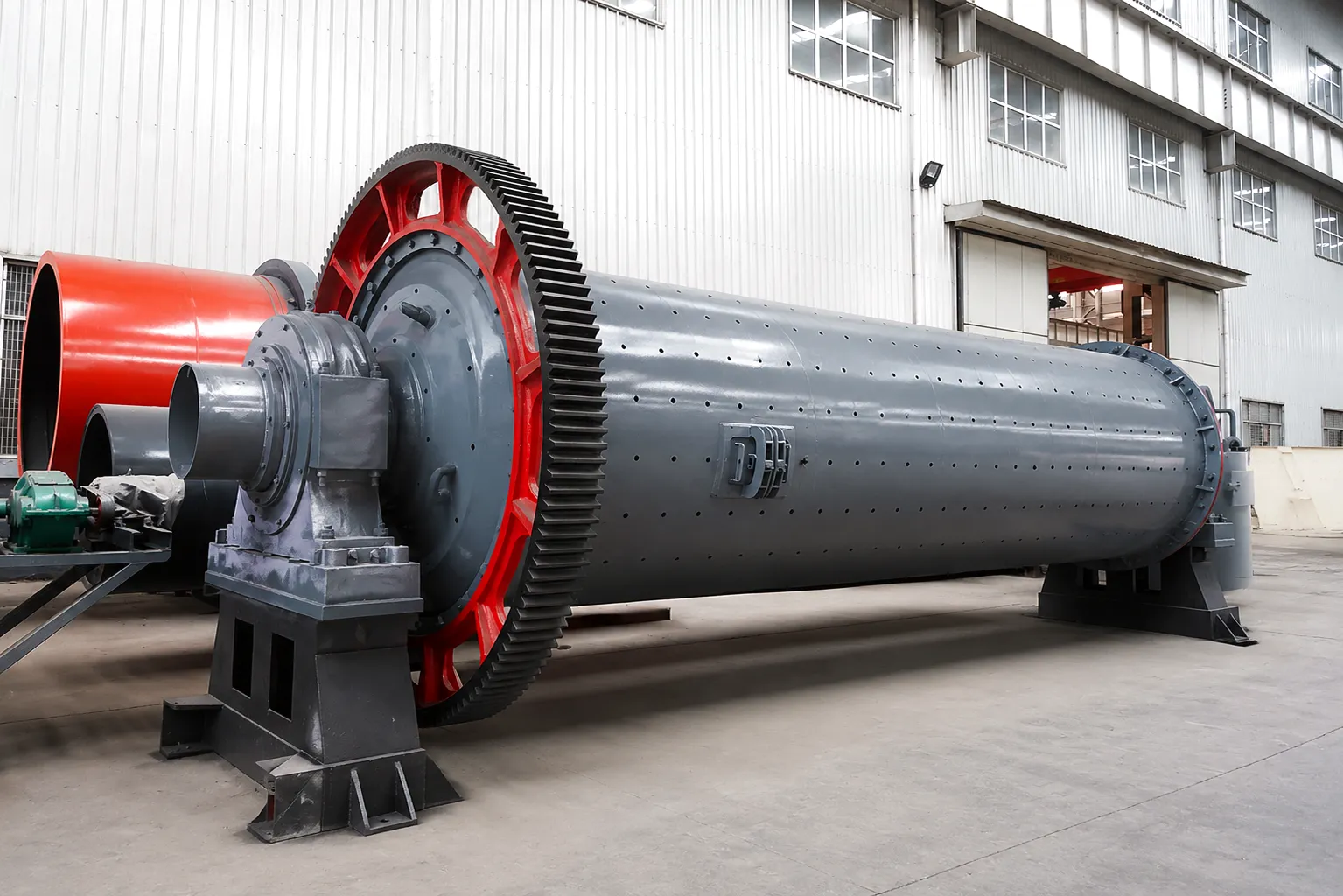
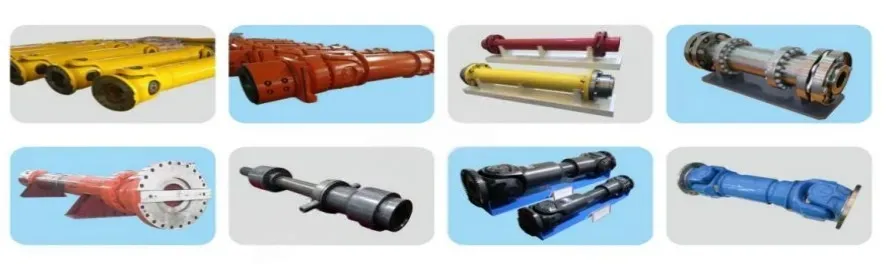
Additional Industrial Application Scenarios for Heavy-Duty Couplings
Every coupling produced at Ever Power undergoes dimensional inspection, material certificate verification, and load-capacity confirmation before dispatch. For UK customers, full CE marking documentation, material traceability certificates, and dimensional inspection reports are provided as standard — meeting the requirements of UK Pressure Systems Safety Regulations and the Provision and Use of Work Equipment Regulations relevant to power transmission components in heavy industry.
Ever Power: Precision Manufacturing & Customisation Capabilities
Ever Power’s coupling manufacturing operation is built around the understanding that no two cement plants are identical. Mill power ratings, shaft centre distances, gearbox flange configurations, and installation clearance constraints vary from site to site — and off-the-shelf catalogue couplings frequently require compromises that reduce reliability margins. Ever Power’s customisation capability addresses this directly: from modified bore sizes and keyway configurations to entirely bespoke hub geometries designed around customer-supplied dimensional drawings, the company’s engineering team works within customer timelines and budget constraints to deliver coupling solutions that are genuinely fit for purpose rather than merely fit for purpose “within catalogue range.”
The manufacturing process begins with raw material procurement from certified steel mills with full material traceability, progresses through forging or casting of hub blanks, precision turning and hobbing of gear teeth to ISO 1328 accuracy grades, carburising and quenching in atmosphere-controlled furnaces, and concludes with CMM-verified dimensional inspection. Surface treatments including black oxide phosphating, zinc phosphate primer, and polyurethane topcoat are applied according to the corrosion environment specified by the customer — a particularly important consideration for UK cement plants in coastal or estuarine locations such as those found along the Thames Estuary or the Humber Estuary.
Supply chain reliability is another area where Ever Power distinguishes itself from competitors. With finished goods stock maintained for standard JSA and SWC series couplings up to 250 kN·m nominal torque, and expedited manufacturing lead times for custom sizes, UK customers can expect delivery windows of two to six weeks for standard configurations and six to twelve weeks for fully custom designs — timescales that align with typical UK cement plant planned shutdown planning horizons. Documentation packages for UK compliance, including CE declarations of conformity, material test certificates to EN 10204-3.1, and dimensional inspection reports, are prepared as standard for all export orders.
Share your shaft drawings and torque requirements — our engineers will specify the optimal coupling configuration within 48 hours.
Featured Coupling Products
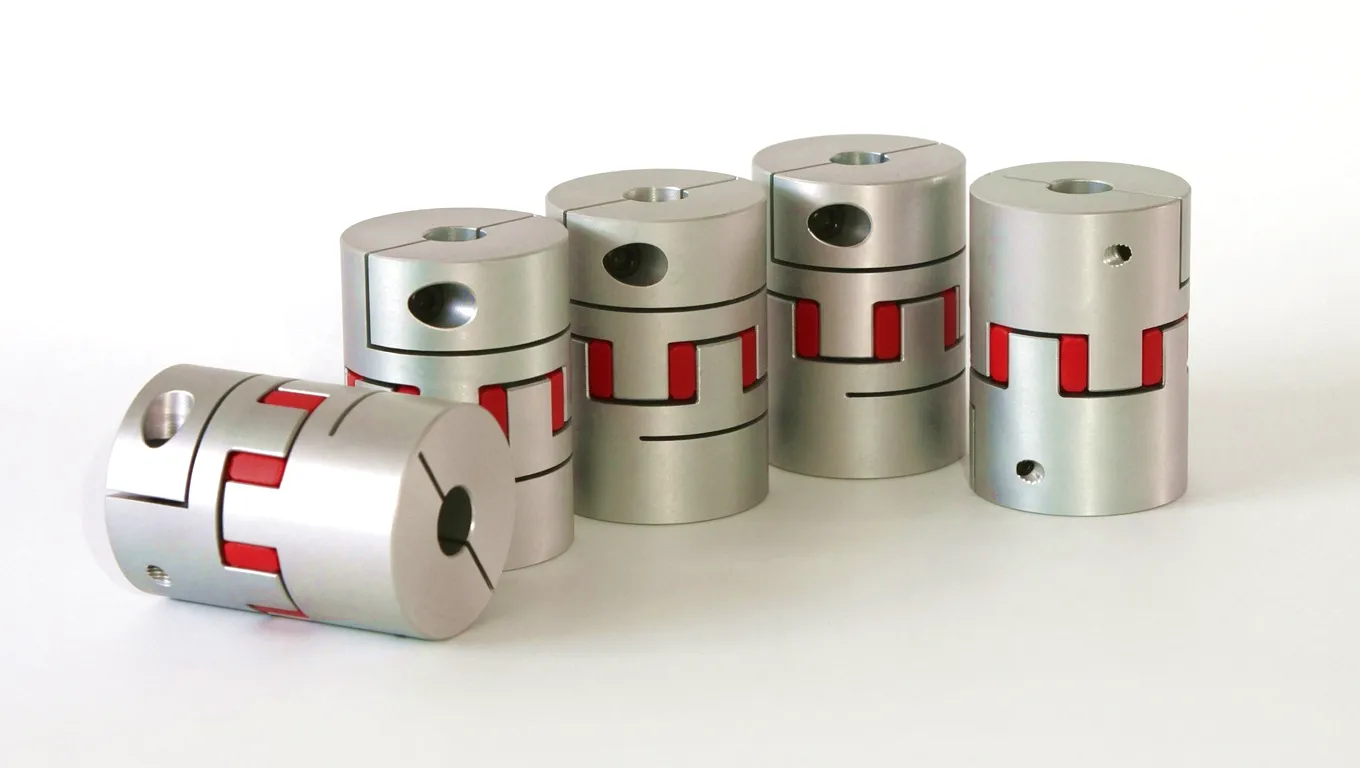
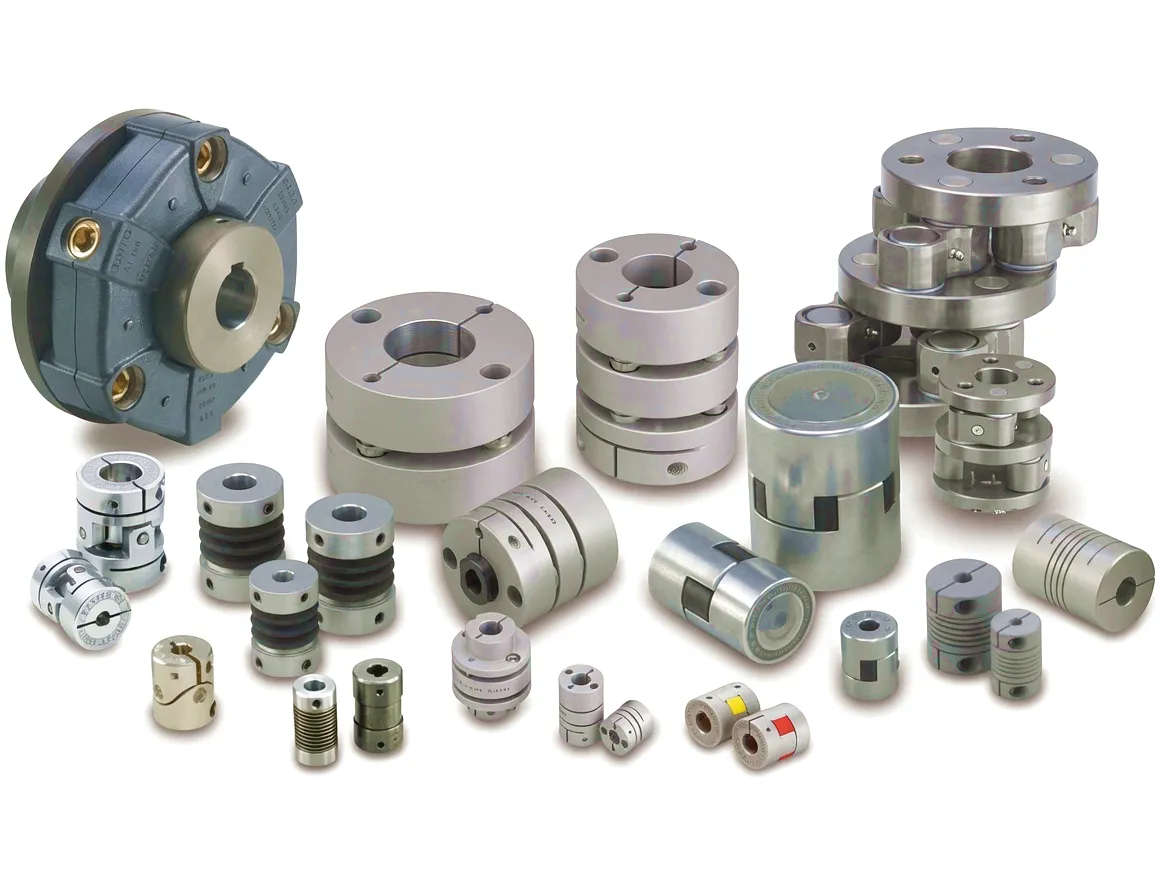
Two flagship solutions from the Ever Power heavy-duty coupling range — engineered for cement, mining, steel, and power generation environments.
Customer Success Story: Birmingham Cement Works
A major cement production facility in the Birmingham metropolitan area — operating two 3.8 MW ball mills producing approximately 180 tonnes per hour of finished cement — had experienced recurring failures of their existing coupling units at the primary motor-to-gearbox interface. The failures were characterised by accelerated seal wear, grease purging from the coupling cavity, and eventual abrasive pitting of the gear teeth due to cement dust contamination. The average service life of each coupling unit was sixteen months, and each replacement required a planned shutdown of thirty-six hours — an unacceptably high operational cost for a plant running three-shift, seven-day production schedules.
The plant’s engineering team approached Ever Power through a technical enquiry detailing the failure mode, the operating environment, and the dimensional constraints imposed by the existing drive house layout. Ever Power’s application engineering team reviewed the site data and proposed a custom-configured JSA series gear coupling with upgraded FKM labyrinth seals, an increased grease reservoir volume, and a modified hub bore to accept the existing motor shaft keyway without modification. The custom configuration was developed within two weeks of the initial enquiry, and prototype units were delivered to Birmingham within six weeks of order placement — meeting the plant’s planned annual shutdown window.
Following installation on both mills, the Birmingham facility completed a full twenty-four-month production cycle without any coupling-related unplanned stoppages — double the previous average service life. Grease sampling at the twelve-month mark confirmed that the FKM sealing system had prevented all measurable cement dust ingress, and gear tooth inspection at twenty-four months showed wear levels approximately sixty percent below those recorded on predecessor units at the same interval. The overall reduction in drive system maintenance costs over the two-year period was calculated at thirty-one percent, representing a payback period of under nine months on the coupling investment. The Birmingham facility has since standardised on Ever Power JSA series couplings across all six of its cement and raw material grinding mills.
“After two years on both mills with zero unplanned stoppages, the FKM seal upgrade Ever Power specified for our Birmingham site has genuinely transformed our maintenance planning. We’ve moved from reactive emergency repairs to true scheduled servicing. The torque capacity data they provided proved accurate right through our annual peak production period.”
“We requested a custom bore modification and a non-standard flange drilling pattern to match our existing gearbox flanges — not something most suppliers will touch without long lead times. Ever Power came back with a complete drawing package within ten days and delivered conforming units in six weeks. The dimensional accuracy was verified on our CMM and matched the drawings perfectly. For a UK-based buyer, this is the supply chain reliability we need.”
“The SWC series universal couplings we specified for our rolling mill in Rotherham have now run through three rolling campaigns without cross-bearing replacement — the previous supplier’s units required bearing changes at every campaign. The price was competitive, the delivery was on schedule, and the EN 10204-3.1 material certificates arrived with the shipment without any chasing. Ever Power is now our preferred coupling source for all heavy-duty applications.”
Ofte stillede spørgsmål
Answers to the questions UK engineering buyers and plant maintenance teams ask most often about industrial couplings for cement, mining, and heavy process applications.
Selecting the correct coupling depends on several factors specific to your cement mill: the motor power rating and nominal speed, the gearbox input shaft diameter and connection standard, the anticipated starting torque multiple, and the available installation space. For ball mills with starting torques up to five times running torque and dusty environments, gear-type couplings with enhanced sealing are the standard recommendation. Contact our UK-experienced technical team to receive a coupling selection report based on your specific mill data.
Pricing for custom-configured cement mill couplings varies significantly based on torque rating, material specification, and customisation complexity. Standard JSA series gear couplings for mill applications in the 100 kN·m to 500 kN·m range are competitively priced and typically shipped within four to six weeks. Fully custom configurations with special bores, non-standard flanges, or enhanced sealing packages carry a premium and require six to twelve weeks. Request a formal quote with your dimensional drawings for an accurate price and lead time commitment from Ever Power.
Ever Power supplies CE-marked coupling assemblies with full CE declarations of conformity, material test certificates to EN 10204-3.1, dimensional inspection reports, and gear accuracy verification certificates as standard documentation for all UK export orders. These documents satisfy the requirements of UK health and safety regulations applicable to power transmission equipment in cement and process industries. Our documentation package is prepared and dispatched with each shipment, eliminating the delays and follow-up communications that are common with less organised suppliers.
When correctly specified and installed, a heavy-duty gear coupling from the JSA series should reliably achieve twenty-four to thirty-six months of continuous service on a ball mill or vertical roller mill in a UK cement plant environment. This assumes that the lubrication specification is observed, that re-greasing is carried out at the scheduled maintenance interval, and that the sealing system is inspected during each annual plant shutdown. Couplings that are under-rated for the mill’s actual starting torque or that lack adequate dust sealing frequently fail within twelve to eighteen months regardless of their manufacturer.
A gear coupling transmits torque through meshing gear teeth and accommodates small misalignment (typically up to 1.5° angular) in a compact, high-torque-density package — ideal for motor-to-gearbox connections in confined drive house spaces. A universal coupling (Cardan shaft) uses cross-and-bearing joints to handle large angular offsets up to 25° and long centre distances — typically specified for kiln drive connections, rolling mill connections, and any application where the drive components cannot be co-axially arranged. On a typical cement ball mill, you might specify a gear coupling at the motor output and a universal coupling assembly in the intermediate drive shaft between the gearbox and the open-gear pinion, where structural offsets are greatest.
Ever Power accepts enquiries directly via email and provides formal quotations — including dimensional drawings, material specifications, and delivery schedules — within forty-eight hours for standard configurations. For custom coupling designs, a preliminary technical proposal is typically issued within five business days. UK buyers can contact the sales team at [email protected] with their shaft dimensional data and torque requirements to receive a fully engineered coupling proposal with competitive pricing and a confirmed six-week delivery option for in-stock and fast-track configurations.
Share your shaft dimensions, torque requirements, and site conditions. Our engineering team will deliver a technically specified coupling solution with full documentation — within 48 hours.