Portal Crane Application Scenario: Drive System Architecture and Operating Loads
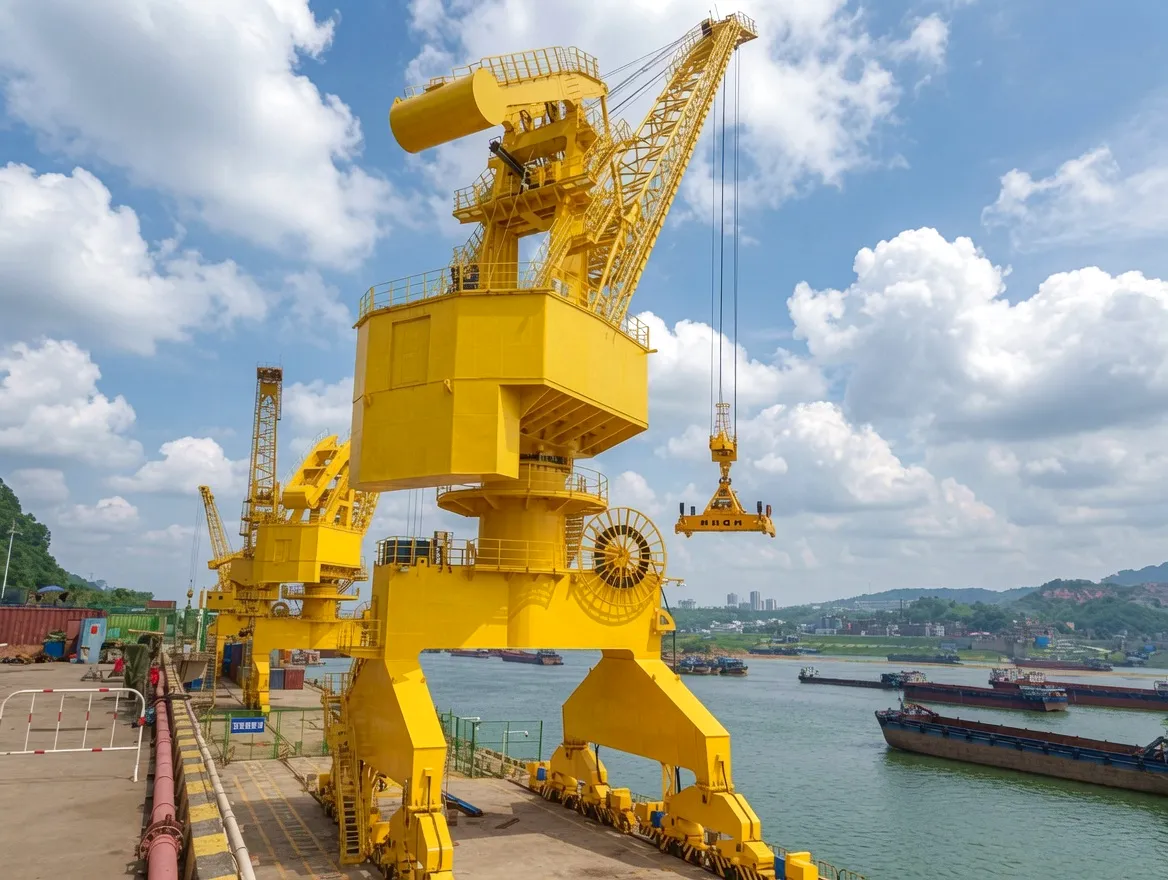
How Couplings Work in Heavy-Lift Portal Crane Drive Trains
The coupling transmits rotational torque from the driving shaft (motor output) to the driven shaft (gearbox input) while maintaining a defined torsional stiffness characteristic. In disc and gear-type couplings, this transmission is nearly rigid, offering minimal angular deflection under load. Flexible element designs introduce a deliberate compliance that filters torque spikes before they propagate into sensitive drivetrain components.
Portal cranes operating in outdoor environments experience thermal expansion of structural steel, track settlement, and foundation movement across seasons. Couplings compensate for the resulting shaft misalignment — angular, parallel (radial), and axial — preventing bearing overload and premature seal wear. The allowable misalignment envelope is a critical selection parameter, particularly for long-travel drive axles in exposed UK dockside environments.
Certain coupling designs incorporate a deliberate mechanical fuse characteristic. When a crane snags a load or jams against an obstruction, the coupling element yields or fractures at a calibrated torque threshold, disconnecting the motor from the drivetrain before gearbox or structural damage occurs. This sacrificial protection function can reduce accident repair costs by orders of magnitude, a benefit that UK crane operators running assets through Lloyd’s Register inspection programs actively specify.
Core Materials in Coupling Manufacturing for Portal Crane Service
Hub and sleeve bodies in portal crane couplings are manufactured from case-hardened alloy steels such as 42CrMo4 or 34CrNiMo6. These grades offer yield strengths exceeding 900 MPa after heat treatment, essential for transmitting the extreme torques encountered in hoist drum applications. Precision machining to ISO tolerance class H7/k6 ensures fit security under dynamic loading cycles that exceed ten million revolutions across a typical crane service life.
The flexible inserts in jaw and spider couplings used on crane auxiliary mechanisms — such as limit switch drives and auxiliary hoist units — are typically polyurethane elastomers with Shore hardness ranging from 64 ShA (soft, maximum damping) to 98 ShA (rigid, maximum torque capacity). Polyurethane outperforms natural rubber in the damp, saline environments characteristic of UK coastal port operations, maintaining its mechanical properties across the −20 °C to +80 °C temperature range encountered between Scottish highland winter conditions and the heat generated by high-cycle electric motors in summer.
Disc pack elements in high-performance disc couplings are stamped from austenitic stainless steel (1.4301 or 1.4310 spring-temper) with thicknesses typically between 0.3 mm and 0.8 mm per leaf. Stacking multiple thin discs creates a flexural element that can accommodate angular and axial misalignment while transmitting torque with near-zero backlash. This is particularly valued in slewing drive applications where positioning accuracy of the crane boom directly affects cargo placement precision.
Gear coupling shells and flanged half-bodies for heavy-duty portal crane applications are frequently produced in spheroidal graphite cast iron (EN-GJS-400 or EN-GJS-600), which combines the casting flexibility needed for complex external geometries with tensile strength adequate for moderate service conditions. Cast iron housings are also appreciably cheaper than forged steel equivalents, an important procurement consideration for UK crane operators managing large fleets across multiple sites.
Core Technical Advantages of Modern Coupling Solutions in Portal Crane Service
Modern flexible couplings reduce peak transmitted torque by 30 to 60 percent compared with rigid flange connections, directly protecting gearbox bearings and gear teeth from fatigue damage in high-cycle crane hoisting service. This translates to extended gearbox overhaul intervals and dramatically lower total maintenance expenditure over a ten-year operating period.
Disc pack and beam-type couplings require no lubrication throughout their service life, eliminating the recurring maintenance tasks and contamination risks associated with traditional gear couplings that demand periodic grease replenishment. For crane operators at busy UK logistics hubs where crane downtime directly impacts throughput revenue, maintenance-free coupling designs offer compelling operational economics.
Coupling designs engineered for portal crane service accommodate angular misalignment of up to 1.5 degrees and parallel misalignment of up to 3 mm, depending on the type selected. This tolerance budget is critical when crane structures flex under eccentric loads, rail joints introduce discontinuities, or seasonal thermal movement shifts motor and gearbox centrelines relative to each other.
Advanced coupling geometries deliver torque capacities exceeding 500,000 Nm within overall axial lengths shorter than equivalent chain or gear couplings of a previous generation. This compact envelope is increasingly important in modernised portal crane designs where machine house dimensions are constrained and every millimetre of shaft length affects overall crane equilibrium calculations.
Elastomeric coupling elements attenuate high-frequency vibration originating in VFD-driven motors, preventing this from propagating into the crane structure and creating noise nuisance issues at port operations near residential areas — an increasingly important compliance consideration under UK noise regulations and local authority planning conditions at port expansion projects in areas like the Thames Gateway.
Couplings deployed at UK coastal port installations are exposed to salt-laden air, condensation cycles, and occasional spray from tidal water. Surface treatments including zinc-nickel electroplating, hot-dip galvanising, and marine-grade epoxy coating extend service life significantly beyond untreated equivalents, ensuring that coupling bodies resist corrosion at fastener interfaces, keyway entries, and disc bolt holes where crevice corrosion damage is most common.
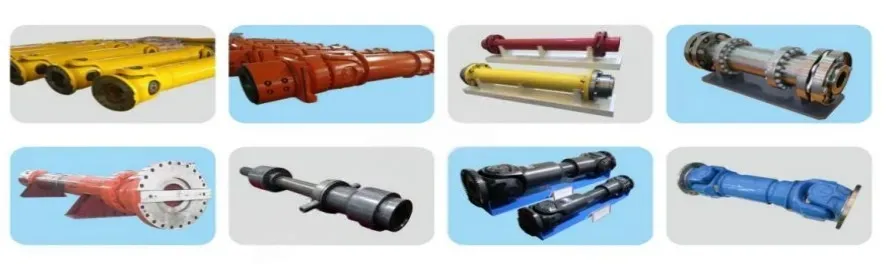
Product Technical & Performance Parameters
Portal crane coupling selection guide — representative data for common crane mechanism classifications
| Parameter | Skivekobling | Fleksibel bjælkekobling | Gear Coupling | Jaw / Spider Coupling |
|---|---|---|---|---|
| Rated Torque Range | 50 – 500,000 Nm | 0.1 – 1,200 Nm | 500 – 2,000,000 Nm | 5 – 12,000 Nm |
| Maks. hastighed (omdr./min.) | Up to 10,000 | Up to 8,000 | Up to 5,000 | Up to 4,000 |
| Vinkelforskydning | Op til 1,5° | Up to 5° | Up to 1.0° | Up to 2.0° |
| Parallel Misalignment | Up to 1.0 mm | Up to 2.0 mm | Up to 3.0 mm | Up to 1.5 mm |
| Axial Misalignment | Up to 2.0 mm | Up to 5.0 mm | Up to 10 mm | Up to 4.0 mm |
| Navmateriale | 42CrMo4 / 34CrNiMo6 | Al 7075 / SS 303 | GJS-400 / 42CrMo4 | GD-AlSi10Mg / PA6 |
| Flexible Element | SS 1.4310 disc pack | Machined beam slot | Involute gear teeth | PU 64–98 ShA |
| Driftstemperatur | −40 to +280 °C | −40 to +120 °C | −30 to +150 °C | −20 to +80 °C |
| Lubrication Required | Ingen | Ingen | Periodic grease | Ingen |
| Torsional Stiffness | High (rigid) | Medium | Very High | Low to Medium |
Industrial Application Scenarios: Couplings in Portal Crane Operations Across the UK
Portal cranes serve a remarkably diverse range of industries throughout Britain. The coupling requirements across these sectors share common mechanical principles but diverge significantly in terms of environmental exposure, duty cycle intensity, and regulatory compliance requirements.
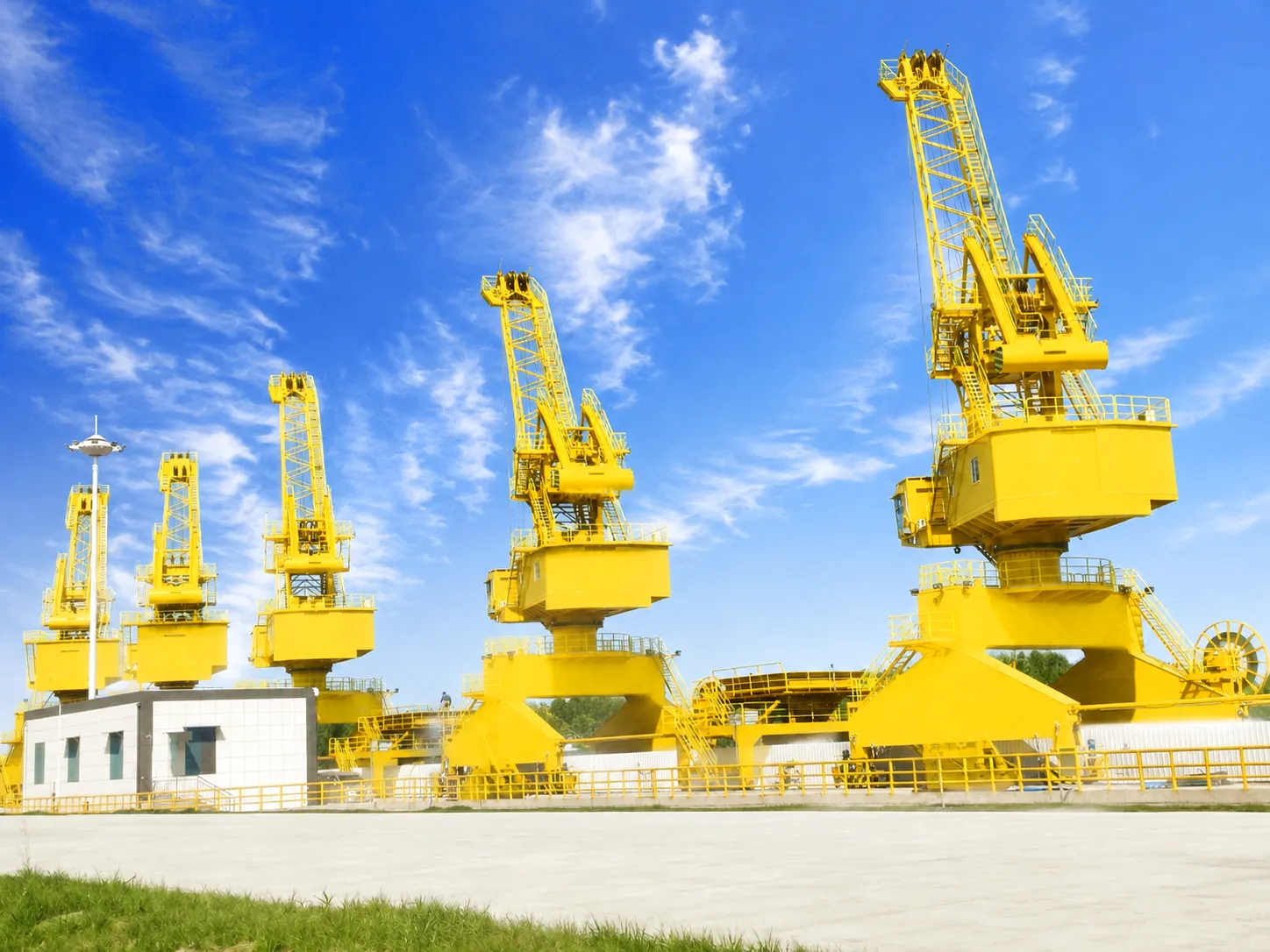 At ports such as Tilbury on the Thames and Immingham on the Humber — two of the UK’s highest-throughput bulk terminal sites — portal cranes unloading iron ore, coal, grain, and fertiliser operate continuously across double-shift and triple-shift patterns. Coupling duty cycles at these sites can exceed 200,000 full load lifting cycles per year. The hoisting coupling must therefore be rated for FEM mechanism group M8 service (the heaviest classification), with documented fatigue life exceeding ten million stress cycles at maximum load. Gear couplings and double-disc couplings dominate this application, offering the torque density and duty-cycle endurance demanded by the relentless operational tempo of British bulk import terminals.
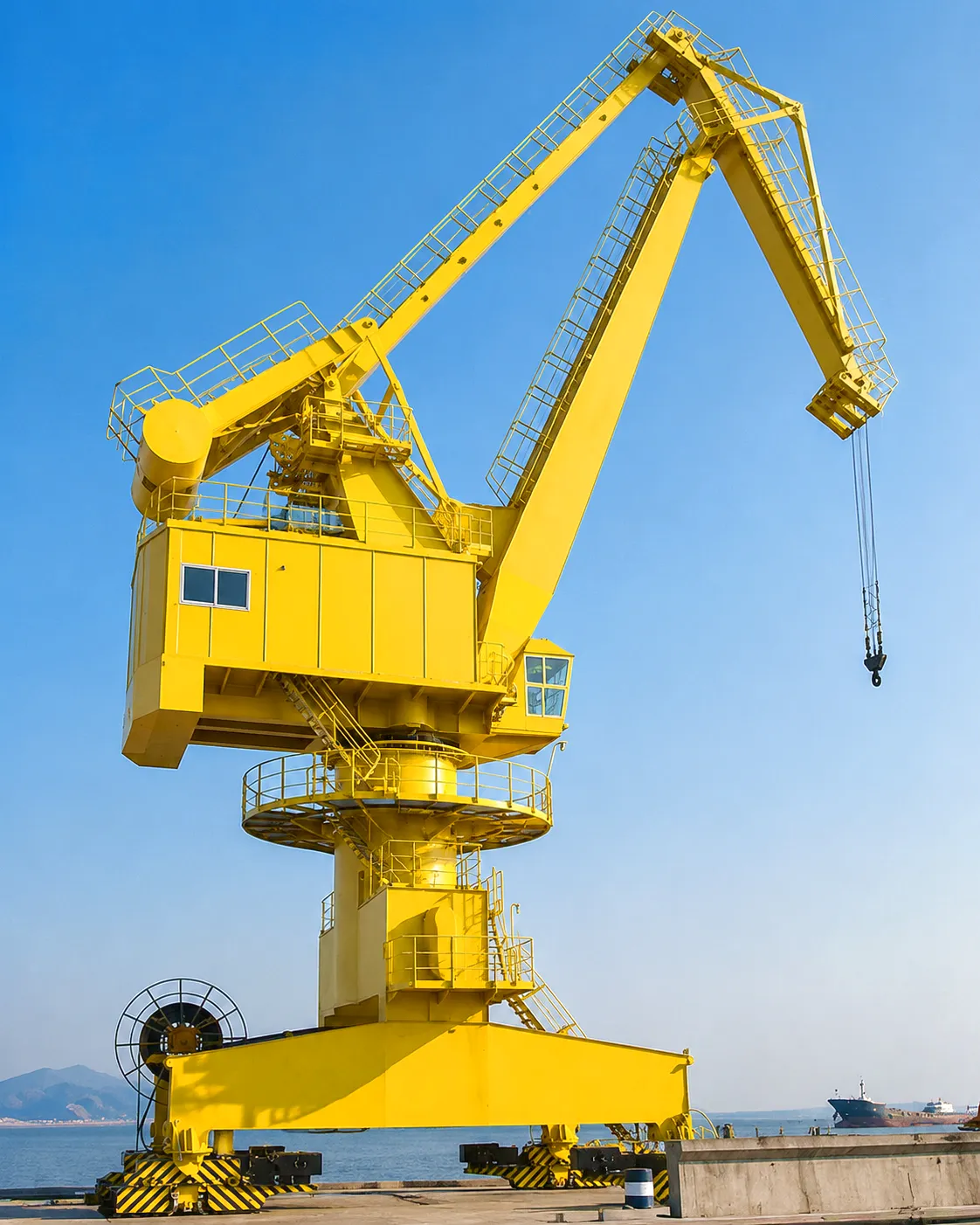 Sheffield’s electric arc furnace steel industry and similar operations at Rotherham and Scunthorpe deploy portal cranes for scrap metal charging, slab and coil movement, and slag pot handling. The thermal radiation environment from furnace operations imposes coupling surface temperatures up to 80 °C in near-furnace positions, immediately ruling out elastomeric elements with limited heat resistance. High-temperature gear couplings or all-metallic disc couplings are standard selections. Additionally, the shock loading profile of scrap metal grabs — where magnetic lifting heads release unpredictably and create violent torque reversals — demands torsional damping characteristics that purely rigid couplings cannot provide. Carefully engineered flexible disc designs with appropriate torsional stiffness tuning represent the engineering optimum for this demanding UK heavy industry scenario.
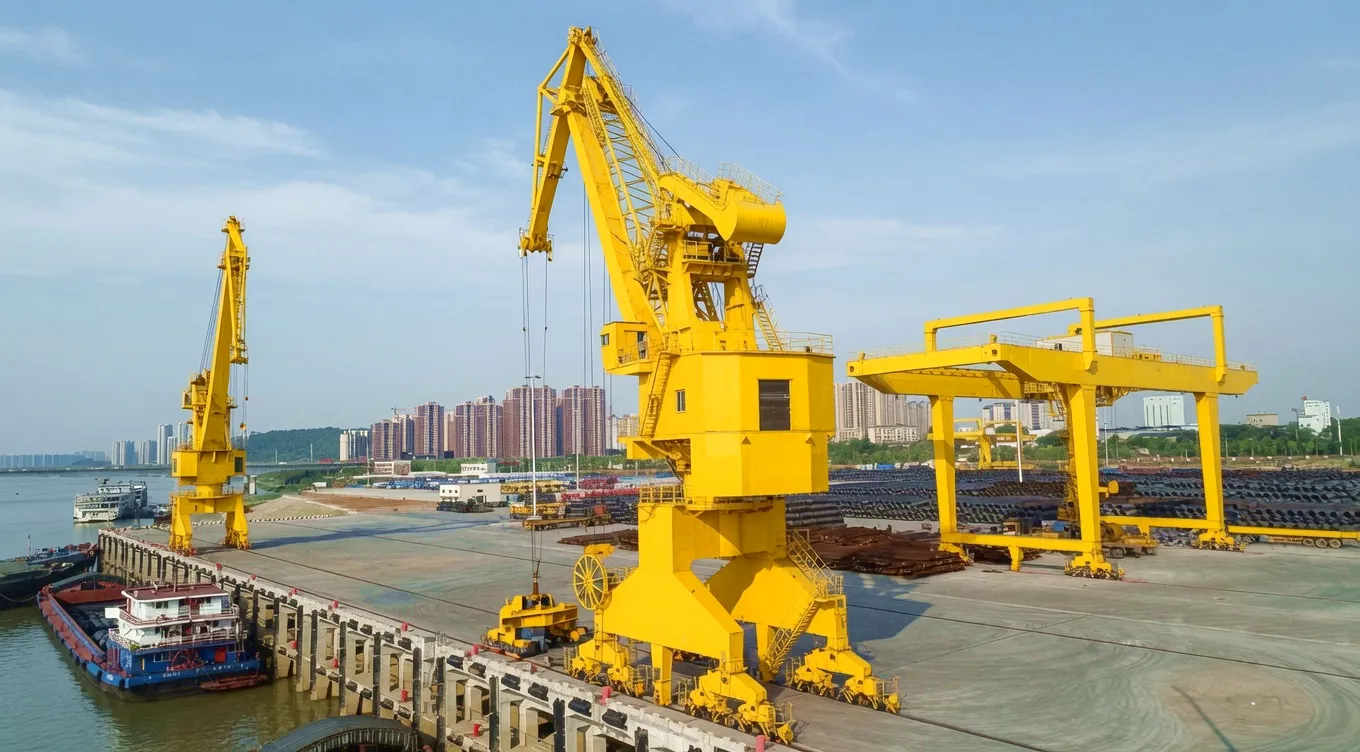 British shipyards at Belfast, Birkenhead, and Falmouth operate portal cranes for hull section erection, engine installation, and dry dock component handling. The extreme salt spray environment at these coastal sites imposes the most aggressive corrosion demands on coupling components. Marine-grade surface treatments and stainless steel hardware throughout are minimum specifications. Equally important, shipyard portal cranes frequently handle very long, slender structural elements such as keel sections and side shell panels, where dynamic load pendulum effects during positioning create sustained oscillatory forces in the hoisting coupling. Couplings with torsional damping characteristics are specified to absorb these resonant loading cycles without fatigue crack initiation in the flexible element, ensuring service intervals of three to five years between flexible element replacement rather than the twelve to eighteen months typical of under-specified installations.
Featured Coupling Products for Portal Crane Applications
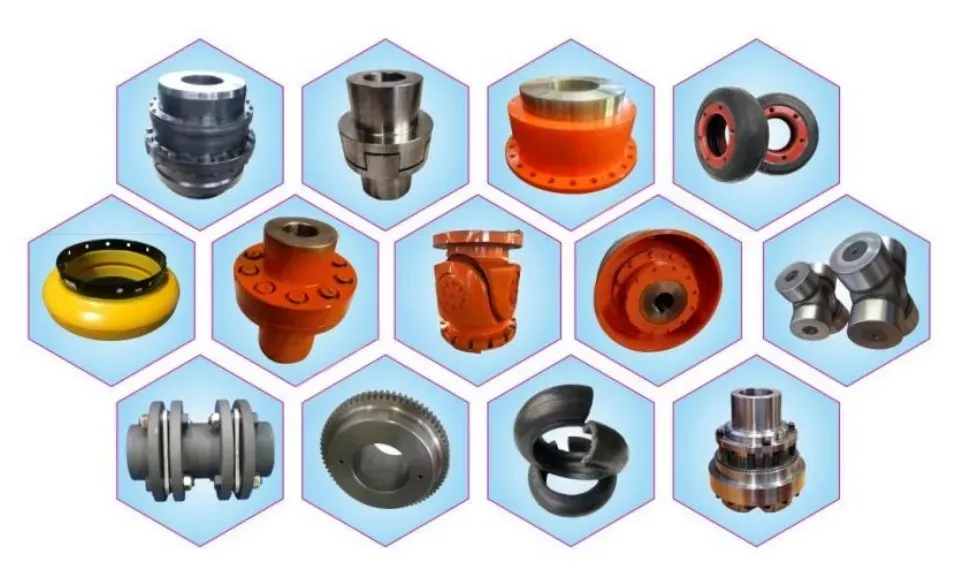
Ever Power’s product range addresses the full spectrum of portal crane coupling requirements, from auxiliary mechanism drives to heavy hoist applications.
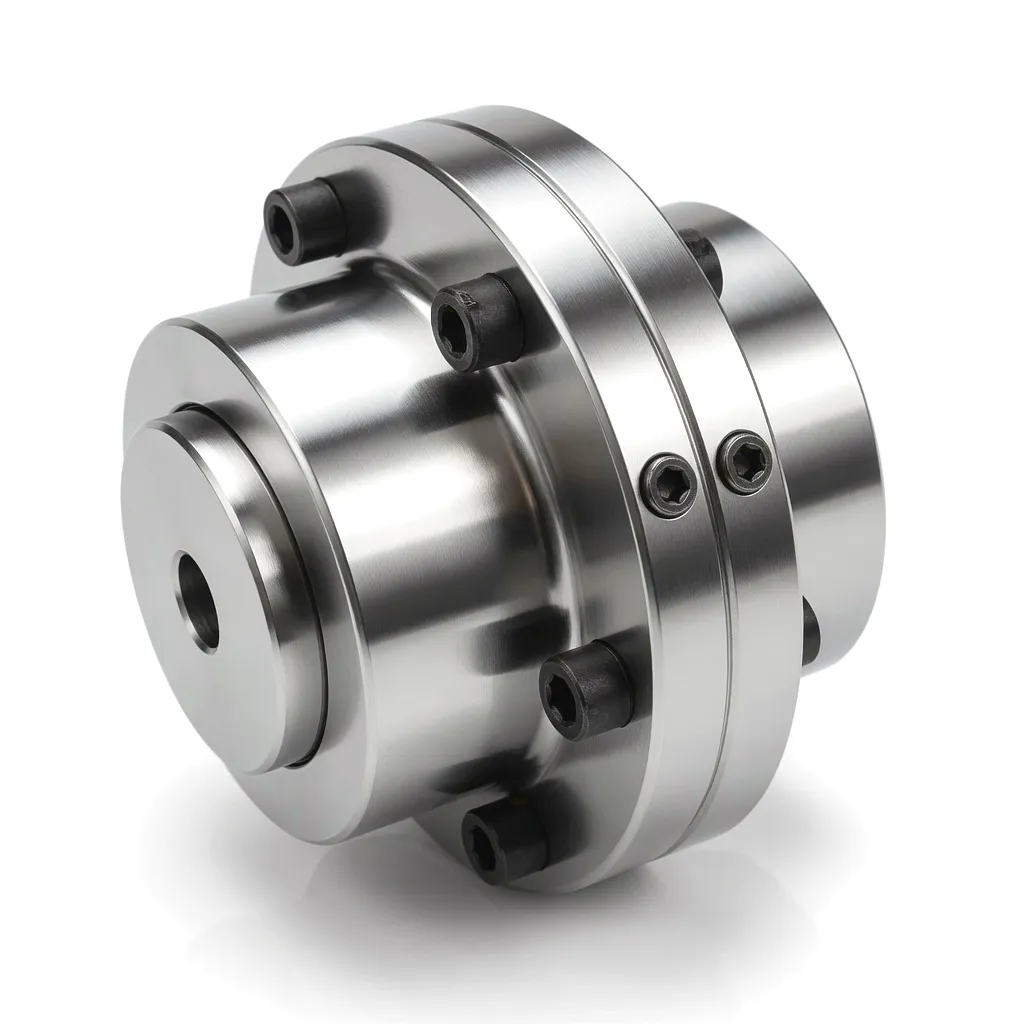
Machined from solid aluminium alloy or stainless steel bar stock, the Flexible Beam Coupling delivers zero-backlash torque transmission with inherent angular and axial misalignment compliance through precision-machined helical beam slots. Ideal for crane auxiliary drives, limit switch actuation systems, and encoder coupling applications where positional accuracy directly influences crane control system performance. The single-piece construction eliminates fastener loosening risk in high-vibration environments characteristic of heavy portal crane machine houses.
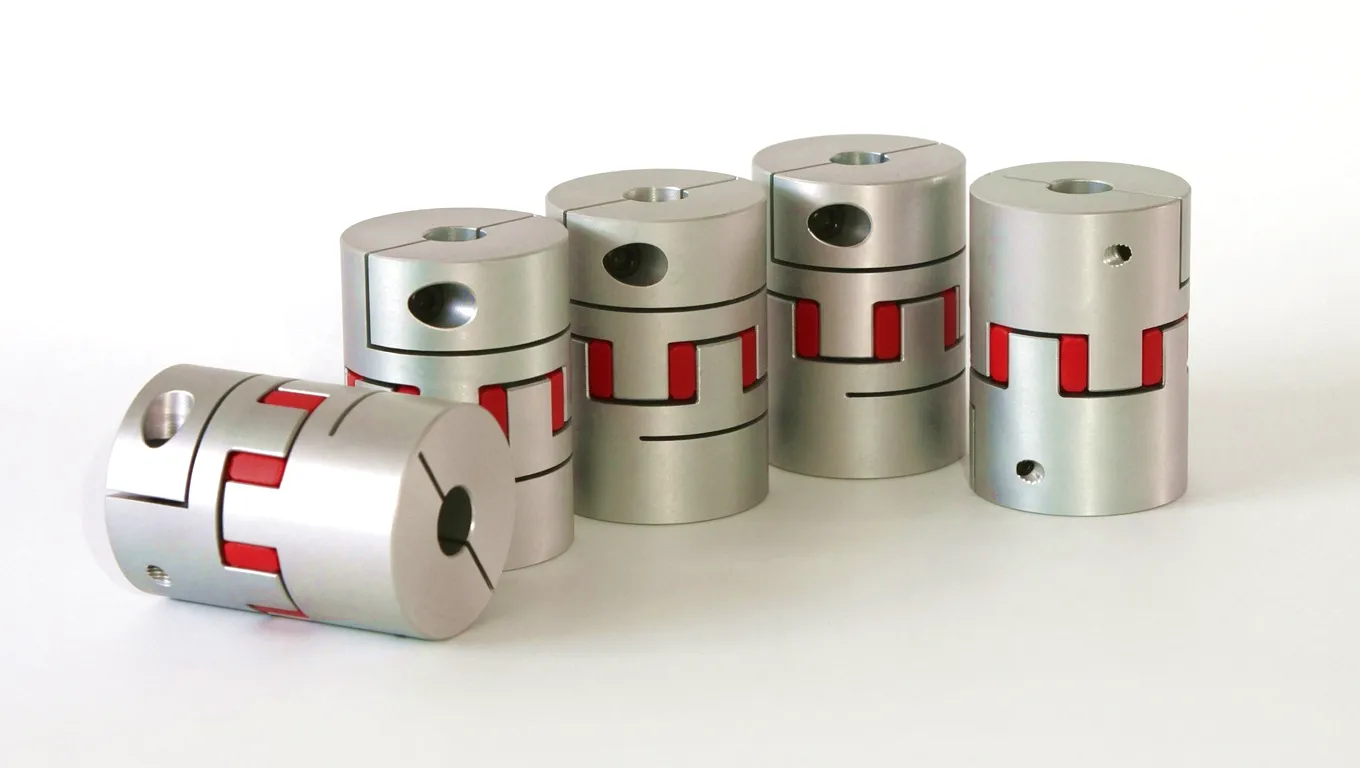
The Disc Coupling employs a multi-laminar stainless steel disc pack as its flexible element, transmitting torque through alternating bolted connections while the disc flexure absorbs misalignment. With no lubrication requirement, no elastomeric wear element, and operating temperature capability extending to 280 °C, the disc coupling is the premium engineering choice for portal crane slewing drives, hoisting mechanisms at M7 and M8 service class, and luffing drives where precise boom angle control demands minimal torsional backlash throughout the full service life of the coupling assembly.
Manufacturer & Customisation Partner
Ever Power: Precision Coupling Manufacturing & Custom Engineering
Ever Power’s dedicated coupling manufacturing facility operates an advanced production environment aligned to ISO 9001:2015 quality standards, with specialised capabilities in precision CNC turning, hobbing, grinding, and heat treatment processes. The engineering team comprises mechanical design engineers with direct experience in crane and lifting equipment drivetrain applications, enabling Ever Power to function not merely as a component supplier but as a technical partner in the application engineering process.
Custom coupling designs developed at Ever Power for portal crane applications have addressed bore diameter requirements from 8 mm through to 380 mm, keyway profiles spanning DIN 6885 standard and customer-specific geometries, and material combinations ranging from standard carbon steel through to duplex stainless steel and high-strength aluminium alloy for weight-critical marine crane applications. Surface treatment options include zinc phosphate, hot-dip galvanising, electroless nickel, and marine-grade epoxy primer, ensuring every coupling delivered is correctly protected for its intended operating environment.
Lead times for standard products are typically two to four weeks ex-works. Complex custom coupling assemblies — including integrated torque-limiting mechanisms, encoder mounting flanges, and marine environmental packaging — are typically delivered in eight to twelve weeks from drawing approval. Ever Power’s global logistics partners provide DDP delivery to UK crane operators and OEMs, with customs documentation and technical certification packages included as standard in every supply.
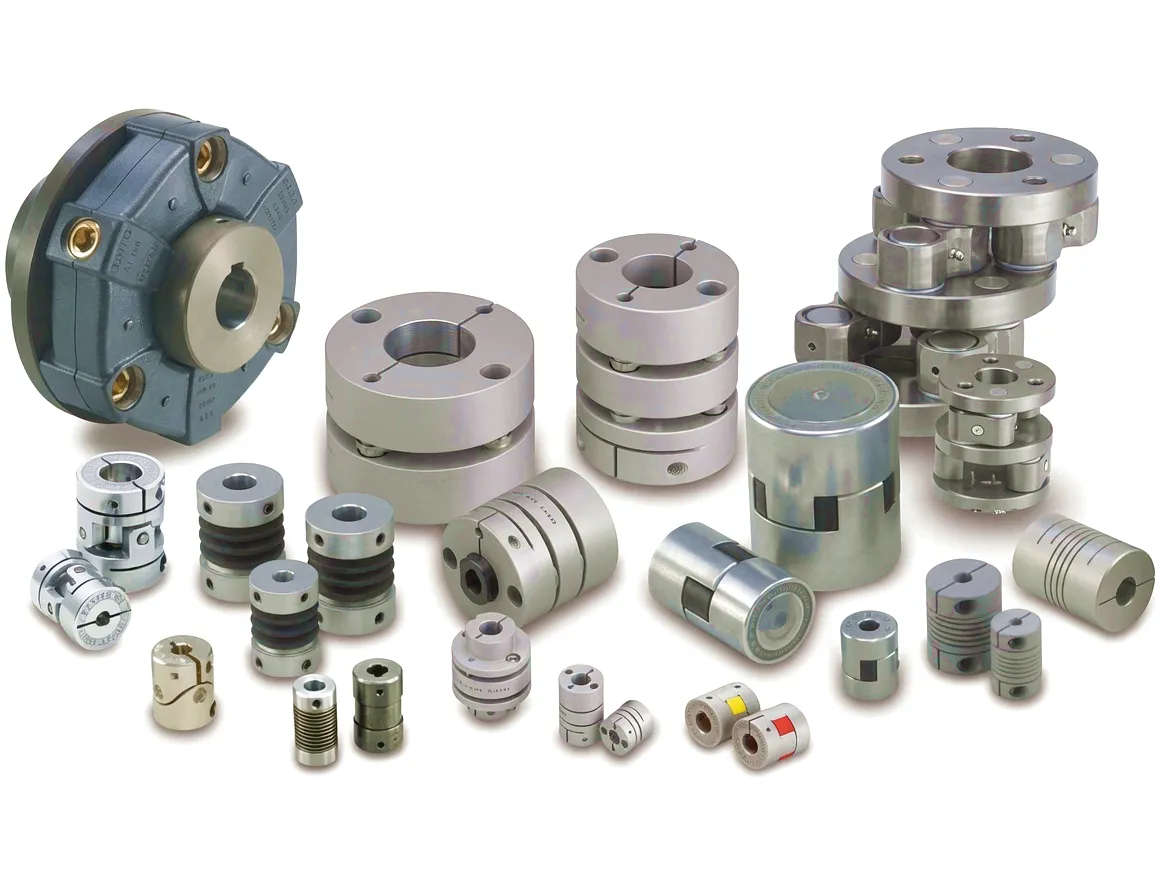
Customer Success Story: Immingham Bulk Terminal, East Midlands Ports, Humber Estuary
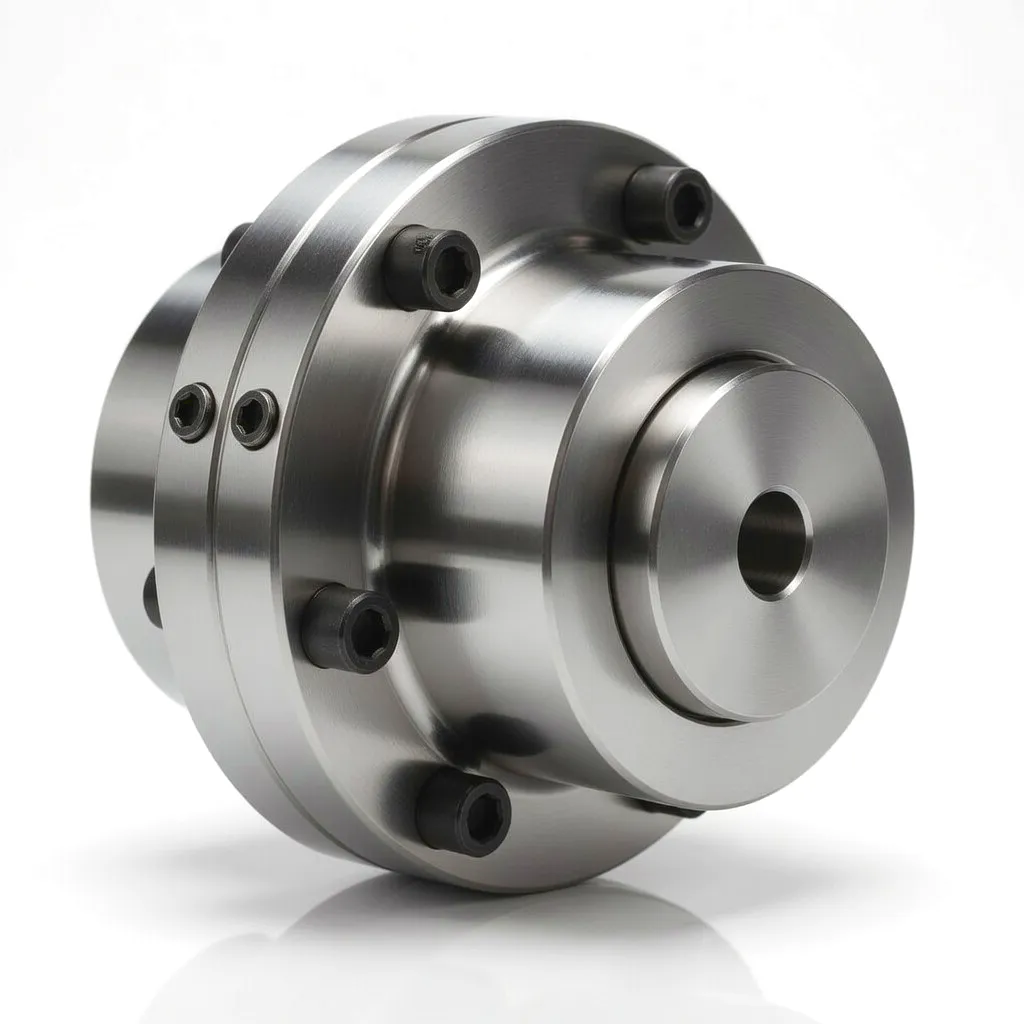 An operator running four Liebherr LHM 600 mobile harbour cranes alongside two older rail-mounted portal cranes at a private bulk terminal on the Humber Estuary approached Ever Power in late 2023 following repeated failures of the hoisting mechanism coupling on the portal cranes. The original installed couplings — elastomeric jaw type dating from the crane’s 1998 manufacture — were experiencing spider element degradation within eight to fourteen months of installation due to the combination of high ambient salt moisture, continuous double-shift operation handling bulk fertiliser, and frequent shock loads from grab release events. Over a thirty-month period, the terminal had recorded eleven coupling-related unplanned outages, each averaging eighteen hours of crane downtime and impacting vessel turnaround schedules.
Ever Power’s application engineering team conducted a detailed drivetrain audit, reviewing motor output characteristics, gearbox input shaft speed and diameter data, and the operating torque profile recorded from the crane’s PLC during a normal lifting cycle. The analysis identified that peak torques during grab release events were reaching 2.8 times the nominal rated torque, substantially exceeding the installed jaw coupling’s dynamic overload rating. The recommended solution was a custom double-disc coupling assembly with 42CrMo4 steel hubs machined to the existing shaft bore dimensions, stainless steel disc packs rated to 3.5 times the nominal torque for dynamic overload, and a marine-grade hot-dip galvanised external surface finish.
Following installation of the Ever Power disc couplings on both portal cranes in January 2024, the terminal completed its first full twelve-month operating period without a single coupling-related unplanned stoppage. The maintenance team confirmed that the couplings showed no measurable wear at the twelve-month inspection, and the terminal subsequently placed an order for matching couplings on the remaining long-travel drive axles, citing the reduction in maintenance overhead as the decisive commercial factor. The estimated annual saving in downtime costs, including vessel demurrage avoided, was calculated at approximately GBP 140,000 compared with the previous jaw coupling maintenance regime.
“We had been through three different coupling suppliers over five years trying to solve the hoisting drive failure problem. The Ever Power disc coupling design was the first product that actually addressed the root cause rather than just replacing the symptom. Twelve months on and both cranes are running without a single coupling-related issue. The technical support during the application engineering phase was genuinely impressive.”
“The custom bore specification and marine surface treatment were exactly what we needed for our shipyard crane environment. Ever Power turned around detailed drawings within 72 hours of receiving our shaft data and delivered the finished couplings within six weeks, which fitted around our scheduled crane maintenance window perfectly. The product quality was clearly evident at installation — machining finish and dimensional accuracy were faultless.”
“We compared three coupling suppliers for our Sheffield scrap yard portal crane refurbishment project and Ever Power offered the best combination of engineering detail in the proposal, competitive pricing, and fastest delivery commitment. The high-temperature disc couplings specified for our furnace-adjacent crane position have now been in service for eight months through a full summer season without any indication of heat-related degradation. We will be specifying Ever Power for our next crane modernisation project.”
Ready to Engineer the Right Coupling Solution for Your Portal Crane?
Ever Power’s engineering team provides application-specific coupling selection, custom manufacturing, and DDP delivery to UK crane operators. Submit your shaft data and operating requirements to receive a detailed technical proposal and competitive price within 48 hours.
✉ Get a Quote — [email protected]
redigeret af gzl