Ready to Source?
Request Coupling Specifications & Pricing
Custom designs, rapid lead times, full technical support for offshore projects
How Couplings Work in Marine Drilling Drivetrains
Core Materials Used in Marine-Grade Coupling Manufacturing
Alloy Steel (42CrMo4)
The primary hub and sleeve material for high-torque gear-type couplings. Quenched and tempered to achieve tensile strengths of 900 MPa to 1,100 MPa, this chromium-molybdenum steel delivers the combination of hardness, fatigue resistance, and machinability demanded by drilling applications where bore tolerances must be held within H7/n6 fits. UK procurement teams sourcing replacement coupling hubs frequently specify BS EN 10083-3 to ensure material traceability.
Stainless Steel 316L
Used extensively for disc packs, external flanges, and fastener sets where salt spray exposure is unavoidable. The molybdenum addition in 316L raises pitting corrosion resistance to levels appropriate for continuous marine exposure, a property quantified by a pitting resistance equivalent number exceeding 24. Disc couplings intended for North Sea installations are routinely manufactured with 316L stainless disc packs to eliminate the need for protective coatings that can mask corrosion during visual inspections.
Polyurethane & Hytrel Elastomers
Elastomeric spiders and inserts for jaw-type and tyre couplings are fabricated from polyurethane or Hytrel thermoplastic elastomers with Shore hardnesses between 60A and 98A, selectable to tune the torsional compliance of the drivetrain. These materials maintain their elastic properties across the temperature range from minus 40 degrees Celsius to plus 100 degrees Celsius, covering the operational envelope encountered on both North Sea surface decks in winter and engine room environments. Oil resistance in accordance with ISO 6945 is a standard qualification for any elastomer used in proximity to drilling fluids.
Carbon Fibre Composite
Emerging in lightweight coupling sleeve and spacer applications aboard floating production platforms where topside weight is a design constraint, carbon fibre reinforced polymer achieves specific stiffness values of 50 GPa per g/cm3, more than ten times that of steel. The non-magnetic and non-sparking properties of carbon fibre composites also make them attractive for Zone 1 ATEX classified areas on gas-handling decks, where metallic couplings with insufficient clearances could create ignition risks.
Technical Advantages of Precision Couplings in Drilling Operations
Moniakselinen kohdistusvirheiden kompensointi
Modern gear-type and disc couplings used aboard offshore rigs accommodate angular misalignment of up to 1.5 degrees and axial displacement of plus or minus 8 mm simultaneously, preventing edge loading on shaft bearings that causes premature fatigue spalling. For a jack-up rig operating in the central North Sea, where substructure flex under wave action generates continuous low-cycle misalignment cycles, this characteristic translates directly into extended gearbox bearing life — often doubling the interval between planned maintenance windows.
Torsional Shock Attenuation
Elastomeric coupling inserts with Shore A hardness in the range of 64A to 80A reduce peak torsional shock transmitted through the drivetrain by 40% to 70% depending on load frequency. In mud pump applications, where piston reciprocation creates a cyclical torque ripple at frequencies between 1 Hz and 6 Hz, the coupling acts as a low-pass mechanical filter, preventing the excitation of resonant modes in the crankshaft assembly. Operators at facilities around Aberdeen report significant reductions in gearbox housing cracking when upgrading from rigid to elastomeric couplings.
Fail-Safe Mechanical Architecture
Many offshore-grade couplings incorporate a torque-limiter or shear-pin element that disconnects the drive train when torque exceeds a pre-set threshold, preventing catastrophic damage to high-value components during bit sticking events. This fail-safe function is mandatory in many UK Health and Safety Executive-approved well control procedures, and its incorporation into the coupling assembly avoids the need for a separate mechanical protection device in the drivetrain layout, reducing both complexity and installation footprint.
Corrosion & Chemical Resistance
High-specification couplings deployed on platforms operating off the Scottish coastline are treated with offshore-grade surface protection: hot-dip galvanising to ISO 1461, thermally sprayed zinc-aluminium coatings, or PTFE-based low-friction coatings that resist hydrogen sulphide degradation in sour gas environments. External sleeve assemblies are sealed with nitrile lip seals rated to IP66 to prevent ingress of the salt-rich marine atmosphere into the lubricated tooth mesh of gear couplings, extending greasing intervals from three months to twelve months or beyond.
Application Scenarios: Where Couplings Make a Critical Difference on Offshore Drilling Platforms
 The top-drive unit is the mechanical heart of a modern offshore drilling rig, providing continuous rotational torque to the drill string while permitting controlled axial movement along the derrick. Couplings between the electric motor output shaft and the top-drive gearbox input must handle rated torques in the range of 50,000 Nm to 120,000 Nm, while simultaneously accommodating the angular deflection introduced by the tension-compression loading of the travelling block. Gear-type couplings with crowned tooth profiles — where each gear tooth is machined with a slight longitudinal curvature — distribute the tooth contact pressure evenly across the tooth face even when operating at 0.5 degrees of angular misalignment, preventing stress concentrations that initiate pitting fatigue. UK-flagged drillships operating under Maritime and Coastguard Agency regulations require third-party witness inspection of coupling installations, and Ever Power’s documentation package includes full material test reports, dimensional inspection records, and static torque test certificates to satisfy these verification requirements without delay during vessel readiness assessments.
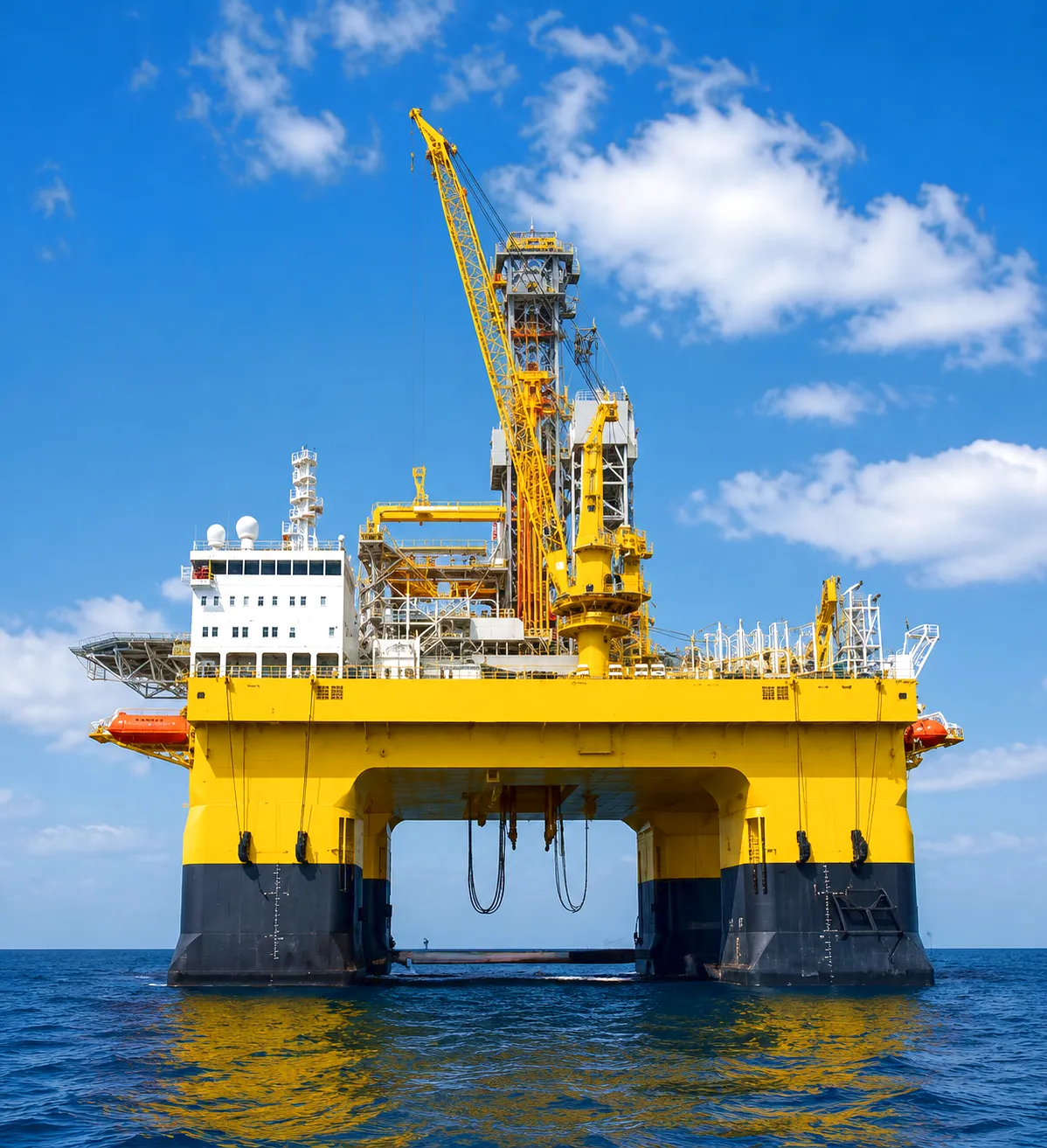 Drilling mud circulation systems use triplex or duplex piston pumps with power ratings between 1,000 kW and 3,000 kW, driven through reduction gearboxes from diesel or electric prime movers. The coupling installed between the prime mover output and the gearbox input is exposed to an exceptionally challenging combination of loads: the intermittent torque ripple from the piston mechanism creates a cyclical load with a peak-to-mean ratio as high as 2.8:1, superimposed on a slow drift in mean torque caused by changing mud weight and pump pressure requirements as the well depth increases. Flexible beam couplings and elastomeric disc couplings have both proven effective in this duty, with the choice depending on the rotational speed — beam couplings favour lower-speed heavy-duty configurations below 500 rpm, while disc couplings are preferred in higher-speed intermediate-shaft positions up to 1,800 rpm. Offshore procurement engineers in Great Yarmouth and Lowestoft, who support the southern North Sea gas field fleet, specify coupling assemblies with blind-assembly capability as standard, because mud pump gearboxes are frequently maintained inside confined drillfloor machinery rooms where visual access to both shaft ends simultaneously is impractical.
Application Scenario 3: Drawworks Hoisting Drive
The drawworks is a massive drum-and-brake assembly that controls the vertical movement of the drill string through the well. Its drive train connects high-power AC variable-frequency drives — typically rated between 2,000 kW and 5,000 kW per unit on a semi-submersible — to the drum shaft through a multi-stage gearbox. Couplings in this application must handle not only the sustained rated torque during tripping operations, but also the transient emergency braking loads when the drawworks is stopped under load, a scenario that can generate instantaneous torque spikes of three to four times the rated value. Gear-type couplings with sleeve flange ratings calculated to ISO 14691 are the standard choice, with safety factors of at least 1.5 applied to the maximum momentary torque rather than the rated operating torque. Ever Power manufactures drawworks coupling assemblies with continuous torque ratings up to 500,000 Nm and supply these with full finite element analysis reports to support DNVGL or Lloyd’s Register class approval submissions, a requirement that is increasingly specified by UK oil company engineering standards for new-build and life-extension projects.
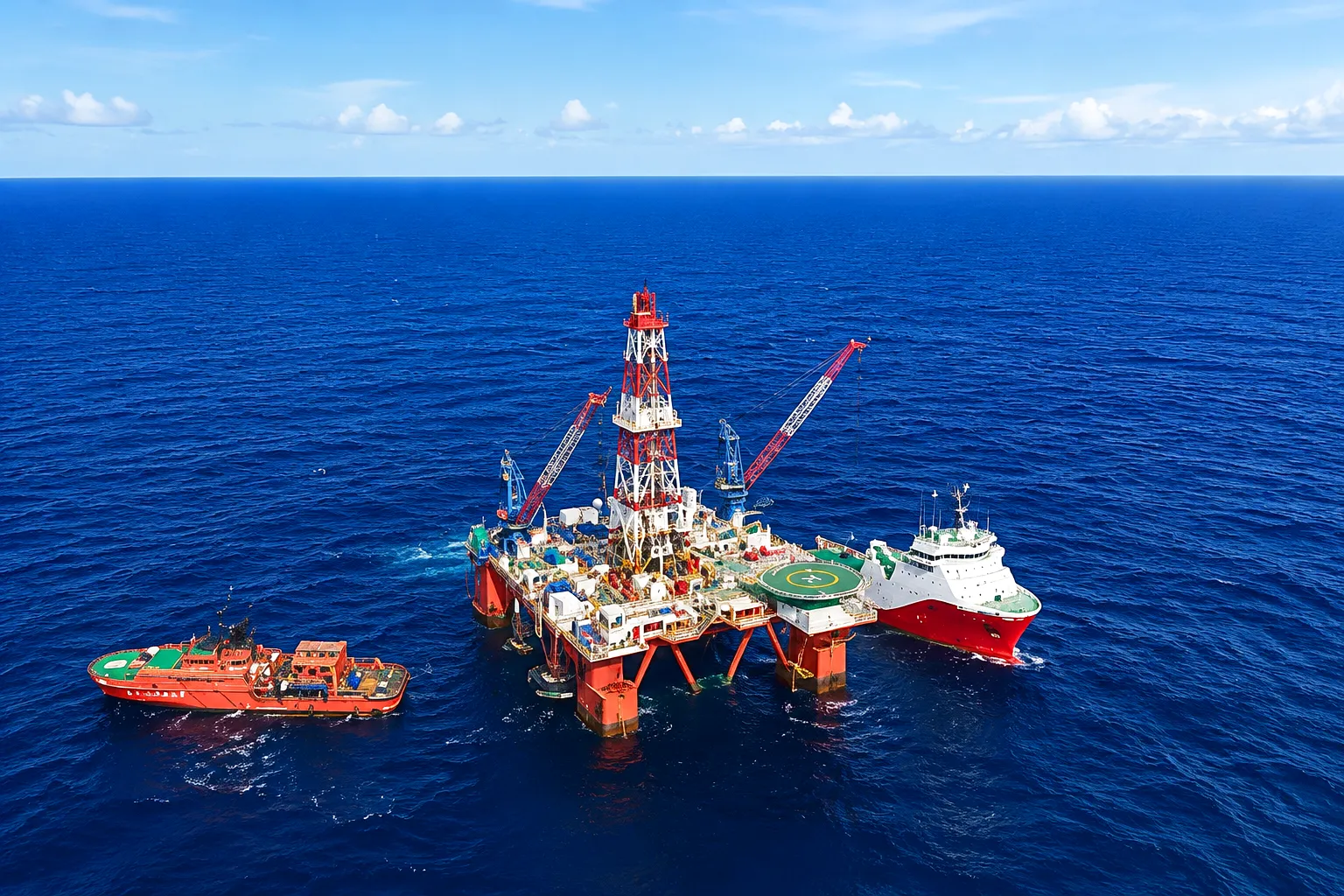 Floating drilling units — drillships and semi-submersibles — maintain station over the wellbore using dynamic positioning systems that drive azimuthing thrusters through vertical or inclined shafting from motor rooms located deep in the hull. The coupling between the frequency-controlled electric motor and the thruster gearbox must tolerate the broad speed range from zero to full rated revolutions per minute that dynamic positioning control algorithms demand, while transmitting torques that vary continuously in response to changing thrust commands. Disc couplings are particularly well suited to this application because their metallic disc packs transmit torque without backlash, which is important when the dynamic positioning control system is making rapid torque corrections, and their torsional stiffness is well-defined and repeatable, simplifying the dynamic modelling required for station-keeping software validation. Ever Power designs disc couplings for thruster applications with a spacer shaft element that permits the thruster gearbox to be withdrawn for maintenance without removing the motor, a feature that reduces planned maintenance downtime by approximately 30% on vessels where three or four thruster maintenance operations are conducted per year.
Product Technical & Performance Parameter Table
| Parametri | Gear-Type Coupling | Levykytkentä | Joustava palkkikytkentä | Leuka / Elastomeeri |
|---|---|---|---|---|
| Rated Torque Range | 500 to 500,000 Nm | 100 to 200,000 Nm | 5 to 500 Nm | 20 to 5,000 Nm |
| Max Speed | Jopa 3 600 rpm | Up to 10,000 rpm | Up to 5,000 rpm | Up to 4,000 rpm |
| Kulmavirhe | Up to 1.5 deg | Up to 1.0 deg | Up to 3.0 deg | Up to 1.0 deg |
| Aksiaalinen siirtymä | +/- 8 mm | +/- 5 mm | +/- 2 mm | +/- 4 mm |
| Navan materiaali | 42CrMo4-seosteräs | 42CrMo4 / 316L SS | 7075 Aluminium | Cast iron / Alloy steel |
| Connecting Element | Crowned gear teeth | 316L disc pack | Machined beam slots | PU / Hytrel spider |
| Operating Temp. Range | -30 to +120 deg C | -50 to +150 deg C | -40 to +120 deg C | -40 to +100 deg C |
| Bore Size Range | 20 to 500 mm | 10 to 350 mm | 4 to 40 mm | 10 to 180 mm |
| Voitelu | Grease (NLGI 2) | Maintenance-free | Maintenance-free | Maintenance-free |
| Offshore Suitability | Excellent | Excellent | Good | Moderate |
Featured Coupling Products for Marine & Industrial Applications
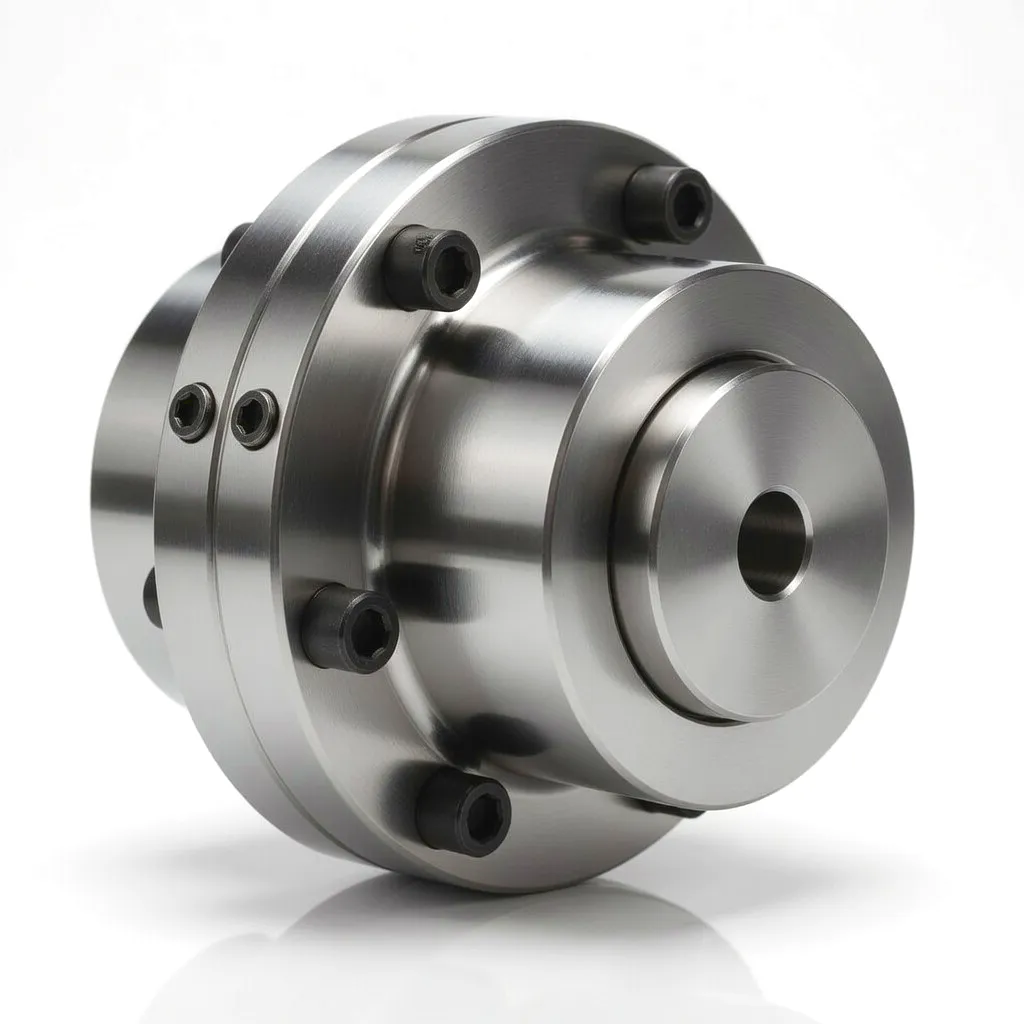
Joustava palkkikytkentä
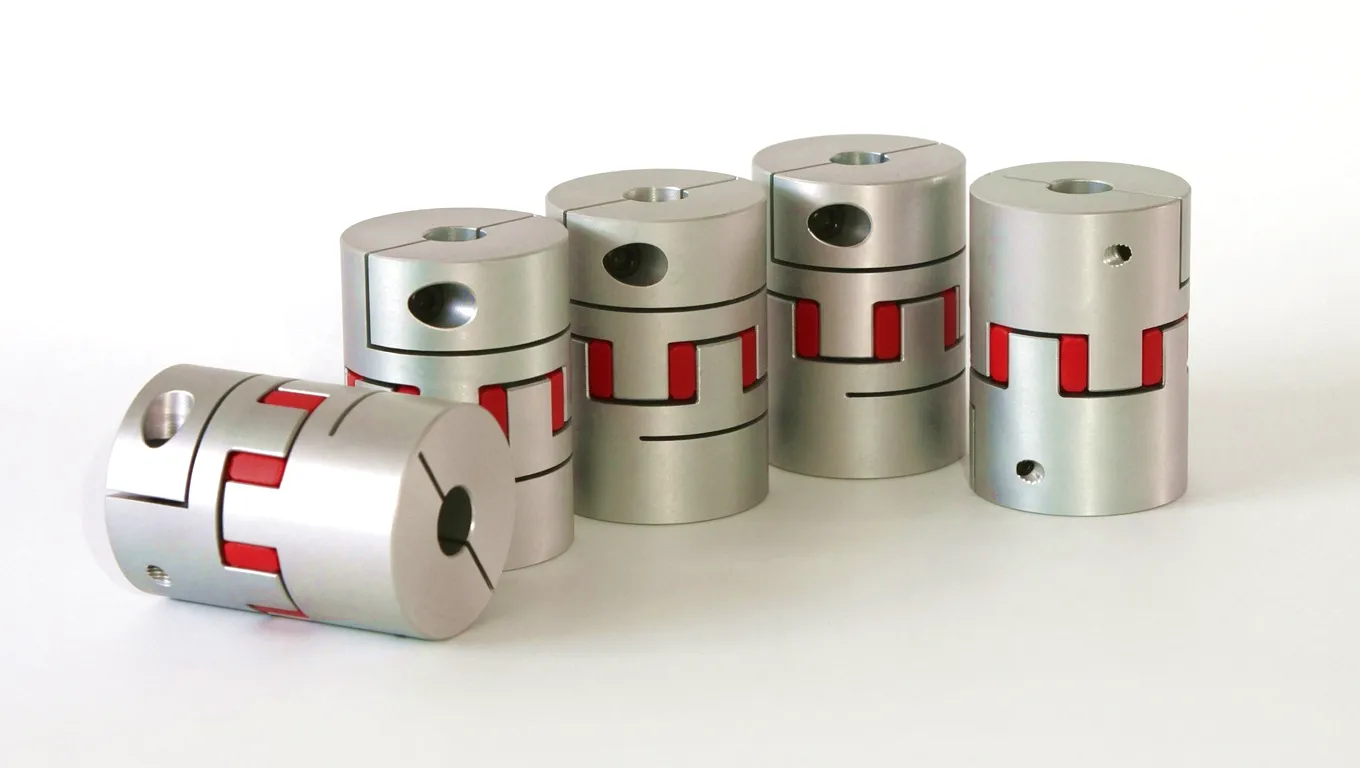
Machined from a single billet of 7075 aluminium or 17-4PH stainless steel, the Flexible Beam Coupling offers zero-backlash torque transmission combined with angular, axial, and parallel misalignment compensation. Its spiral-cut beam geometry provides repeatable torsional stiffness with low restoring forces, making it well-suited to servo motor connections, encoder mounting, and precision metering pump drives aboard offshore control systems. Available in bore sizes from 4 mm to 40 mm with custom keyway and set-screw configurations to suit any motor flange arrangement.
Levykytkentä
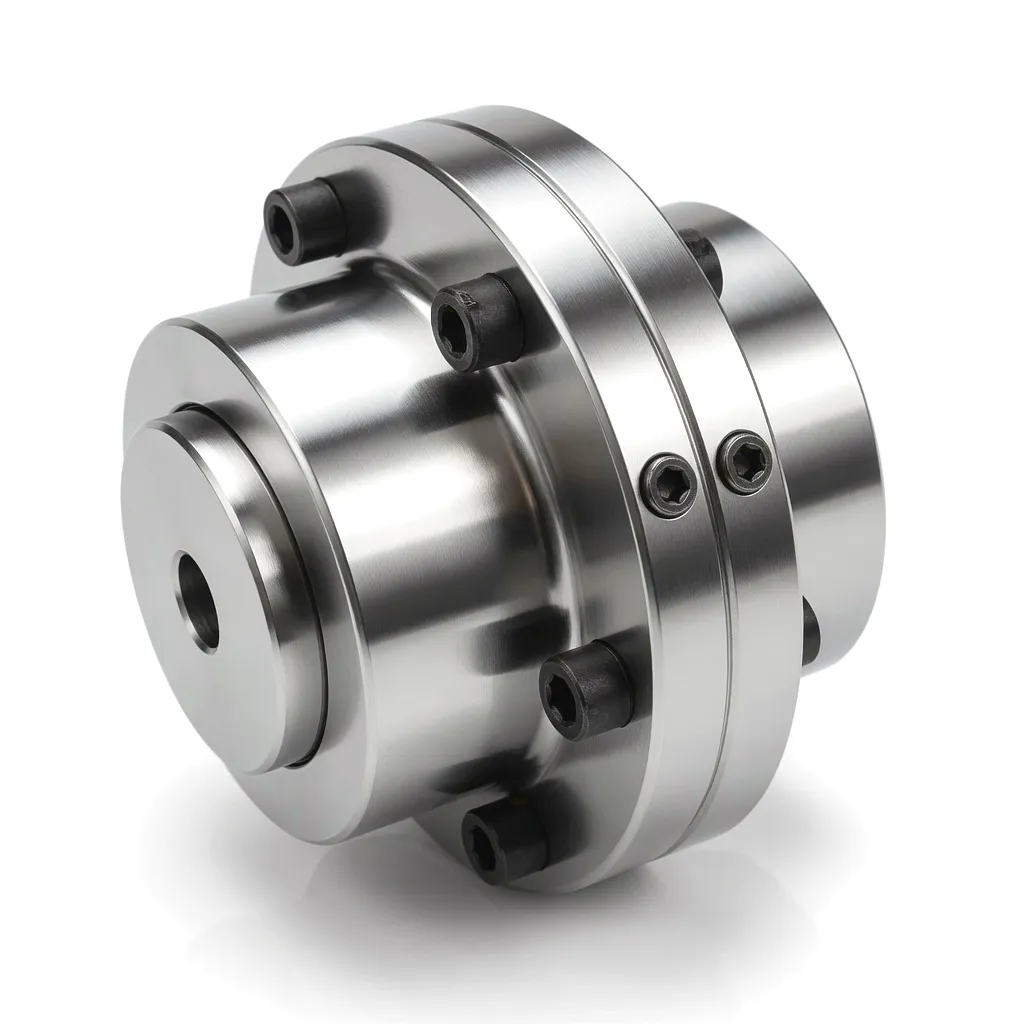
The Disc Coupling combines the high torque capacity of metallic construction with the maintenance-free operating advantage that offshore environments demand. Its 316L stainless steel disc pack flexes to accommodate misalignment while transmitting torque with effectively zero backlash, making it ideal for high-precision applications including dynamic positioning thruster intermediate shafting, top-drive speed measurement coupling sections, and high-speed compressor connections. The disc pack is field-replaceable without moving either connected machine, an attribute that reduces offshore replacement time by up to 60% compared with gear coupling re-engagement procedures.
Customer Success Story: Aberdeen-Based Drilling Contractor Cuts Downtime by 45%
Client Profile
Location: Aberdeen, Scotland
Sector: Offshore oil & gas drilling
Asset: Jack-up drilling rig, central North Sea
Issue: Repeated gear coupling failures on mud pump drive
Haaste
A well-established drilling contractor operating a third-generation jack-up rig from their Aberdeen base experienced three unplanned mud pump coupling failures within an eighteen-month period. Each failure required a helicopter delivery of replacement parts from a UK-based mechanical supplier, incurring costs exceeding sixty thousand pounds per incident when the combined effects of logistics, lost drilling hours, and crewing overtime were accounted for. Investigation revealed that the original gear couplings, specified by the rig builder in the early 1990s, were being subjected to angular misalignment loads two to three times beyond their rated capacity because of progressive structural flex in the rig’s drilling module, which had accumulated over thirty years of North Sea service.
The company’s rotating equipment engineer contacted Ever Power following a technical presentation at the Offshore Europe exhibition in Aberdeen. They needed a coupling solution with significantly higher misalignment tolerance, equivalent torque capacity, and a bore configuration compatible with the existing motor and gearbox shafts — without requiring modifications to the shaft dimensions, which would have triggered a Class-approved change management process estimated to take fourteen weeks.
Ever Power’s Solution
Ever Power’s engineering team conducted a full torsional and misalignment analysis based on the contractor’s provided shaft layout drawings and historical torque monitoring data. The recommended solution was a high-misalignment gear coupling with an extended-barrel sleeve design, machined from 42CrMo4 steel quenched and tempered to 280 HB, with crowned tooth profiles calculated to maintain full contact under the measured 1.2-degree angular misalignment condition. The bore dimensions matched the existing H7 tolerance fits exactly, eliminating any need for shaft modification. A complete documentation package including material test reports, dimensional records, and a static overload test certificate at 150% of rated torque was provided within five working days of the technical clarification meeting, satisfying the client’s change-control requirements without delay.
Two coupling sets were delivered to Aberdeen by road freight within three weeks of order placement, with a third held as an inventory spare at Ever Power’s logistics partner facility in Dyce. The coupling installation was completed by the rig’s maintenance crew during a planned two-day maintenance window, using the step-by-step installation guide and hydraulic mounting torque specifications supplied by Ever Power. No shaft modifications, realignment shimming, or machinery moves were required.
Eighteen months after installation, the contractor reported zero coupling failures and a measured reduction in vibration at the gearbox input bearing of approximately 40%, consistent with the theoretical prediction from the torsional analysis. The annualised saving in unplanned maintenance costs was calculated at just over one hundred and eighty thousand pounds, representing a return on the coupling investment of more than twelve to one.
What Our Clients Say
★★★★★★
“The misalignment tolerance on the Ever Power gear coupling has completely eliminated the recurring failure pattern we had with our previous supplier’s units. Eighteen months in, both couplings are performing without any sign of wear on the tooth mesh, even under the flex loads we experience in heavier weather. The documentation package they supplied made our Class authority review straightforward.”
Rotating Equipment Engineer — Offshore Drilling Contractor, Aberdeen
★★★★★★
“What impressed us most was Ever Power’s willingness to run a full torsional analysis before quoting rather than simply offering a catalogue size. The analysis identified that our original coupling selection had a natural frequency coinciding with our mud pump stroke frequency at a specific pump speed — something the previous supplier had never flagged. The replacement coupling with revised torsional stiffness resolved a gearbox housing crack issue we had been battling for two years.”
Senior Mechanical Engineer — Drilling Equipment Maintenance, Great Yarmouth
★★★★★★
“Delivery to our Aberdeen logistics hub within three weeks, including EN 10204 3.1 certs and a full dimensional inspection report — that level of supply chain reliability is rare for custom bore coupling orders. The Ever Power team followed up proactively at the six-month and twelve-month marks to check on performance, which is the kind of after-sales engagement that builds long-term procurement relationships.”
Procurement Manager — Offshore Equipment Services, Teesside
Frequently Asked Questions: Couplings for Offshore Drilling Platforms
How do I select the right coupling type for a mud pump drive on a North Sea drilling platform?
Mud pump coupling selection for North Sea rigs starts with a torsional analysis of the full drive train, establishing the natural frequency at each operating speed. You then match the coupling’s torsional stiffness to shift any resonant modes away from the pump excitation frequencies generated by piston reciprocation — typically between 1 Hz and 6 Hz. For drive trains where peak-to-mean torque ratios exceed 2:1, an elastomeric or disc coupling with defined compliance is recommended over a rigid or gear coupling. Ever Power’s engineering team provides free torsional analysis support when you submit shaft layout drawings and motor data, ensuring the selected product is correctly tuned to your specific pump configuration.
What is the typical price range for custom offshore-grade gear couplings supplied to UK oil and gas operators?
Custom offshore gear couplings vary significantly in cost depending on size, material specification, and documentation requirements. A compact coupling rated at 5,000 Nm with standard material certs typically costs between £800 and £2,500, while a large drawworks coupling rated at 200,000 Nm with full DNV GL third-party inspection and EN 10204 3.1 material traceability can range from £15,000 to £60,000 or more. Ever Power provides detailed itemised quotations with clear breakdowns of manufacturing, surface treatment, testing, and documentation costs, enabling UK procurement teams to evaluate total cost of ownership rather than unit price alone. Contact the team at [email protected] for a project-specific quote tailored to your application data.
Which coupling supplier in Aberdeen or Scotland can deliver marine-grade disc couplings with DNV GL class approval and short lead times?
Ever Power works with logistics partners in Aberdeen and Dyce to maintain fast delivery capability to Scotland and the wider North Sea region. Custom disc couplings with DNV GL product approval certificates, EN 10204 3.1 material test reports, and dimensional inspection records are typically dispatched within three to four weeks of technical data confirmation. For emergency replacement requirements, Ever Power can expedite production and deliver critical components by air freight to Aberdeen International Airport within ten to fourteen working days from order, depending on the specific bore size and torque rating needed.
How often do gear couplings on offshore drilling rigs require greasing and what lubricant specification is recommended for UK North Sea environments?
Standard gear couplings on offshore rigs typically require re-greasing every three to six months when using an NLGI Grade 2 lithium-complex grease with a dropping point above 250 degrees Celsius and good water washout resistance in accordance with ASTM D1264. For North Sea applications where temperatures routinely fall below five degrees Celsius during winter operations, a semi-fluid NLGI Grade 00 or Grade 0 grease is often preferred to ensure adequate coverage of the tooth mesh at low ambient temperatures. Ever Power recommends specific lubricant types in the installation manual supplied with each coupling, and can advise on extended lubrication interval programmes when integrated with condition monitoring using oil analysis or vibration trending.
What are the signs that a coupling is failing on a top-drive unit and when should I get a replacement quote from a specialist UK supplier?
Coupling degradation on a top-drive manifests in several characteristic ways: an increase in lateral vibration measured at the motor or gearbox housing above a pre-defined baseline, audible metallic knocking at low speeds that indicates tooth clearance loss in a worn gear coupling, grease leakage past the sleeve seals suggesting seal deterioration or internal pressure build-up from deteriorating lubricant, and an increase in motor current draw at constant rotational speed indicative of increased mechanical drag within the coupling. If any two of these symptoms are observed simultaneously, the coupling should be inspected during the next planned downtime window, and a replacement quote should be requested immediately so that the replacement component can be in transit before the shutdown commences. Send your application data to Ever Power at [email protected] to receive a prioritised response.
Where can UK-based offshore engineering companies source ATEX-rated couplings for Zone 1 and Zone 2 classified areas on gas drilling platforms?
ATEX-compliant couplings for Zone 1 and Zone 2 environments on UK gas drilling and production platforms require non-sparking external surfaces, effective electrostatic discharge paths to prevent static charge accumulation on elastomeric elements, and surface temperature classifications appropriate to the gas group and temperature class of the installation. Ever Power designs ATEX-rated coupling variants using non-sparking aluminium alloy or bronze sleeve materials, with integrated earthing provisions and temperature rise calculations validated through thermal testing. UK customers requiring ATEX documentation should contact the Ever Power sales team with the installation zone classification, gas group, temperature class, and drive power data to initiate the technical review process.
How long does it typically take to receive a custom coupling quotation from Ever Power when I contact the team about an offshore drilling application in the UK?
For standard configurations where bore size, torque rating, and shaft material specification are provided at the point of enquiry, Ever Power’s applications engineering team typically responds with a technical proposal and commercial quotation within 24 to 48 hours. Applications requiring a full torsional analysis, custom material specifications, or Class authority submission documentation are quoted within three to five working days following receipt of the full data package including shaft layout drawings, motor performance curves, and operational duty cycle data. Customers in Aberdeen, Sheffield, and Teesside with urgent requirements can request a priority review by emailing [email protected] with “URGENT OFFSHORE” in the subject line to ensure immediate engineering allocation.
Start Your Project Today
Need Couplings for Your Offshore Drilling Platform?
Share your application requirements with Ever Power and receive a fully engineered coupling solution — with material certs, torsional analysis, and Class approval support — within 48 hours.
gzl:n muokkaama