 A rotary kiln is one of the most mechanically uncompromising pieces of rotating equipment in any industrial facility. A steel shell that may stretch beyond 70 metres in length, weighing several thousand tonnes, turning at less than two revolutions per minute while transmitting torques that would shatter ordinary mechanical components — this is the reality that maintenance engineers at cement plants across Derbyshire, South Wales, the Peak District, Yorkshire, and the Thames Estuary face every single day. In that environment, the gear type coupling connecting the main gearbox output shaft to the kiln drive pinion shaft is not a commodity component. It is the critical link that either holds the entire production line together or — when it fails — brings 1,500 tonnes of clinker production to an unplanned standstill at a cost that quickly reaches five figures per hour.
Over more than eighteen years of fieldwork in gear coupling specification, installation, and failure analysis across heavy process industries, the engineering team at Ever Power has accumulated detailed application knowledge from more than 300 rotary kiln drive installations globally — a substantial number of which are at cement, lime, and minerals processing facilities throughout the United Kingdom. That experience makes one conclusion unavoidable: when the application demands reliable high-torque transmission, continuous accommodation of thermal growth misalignment, and resilience against shock loads from material build-up events inside the kiln shell, there is no viable substitute for a properly engineered, correctly specified gear type coupling.
This article examines what makes rotary kiln drives so demanding, how gear type coupling design addresses those demands, what material and engineering choices determine long-term performance, and what UK plant engineers should consider when specifying or replacing a kiln drive coupling — whether the kiln in question was commissioned last year or forty years ago.
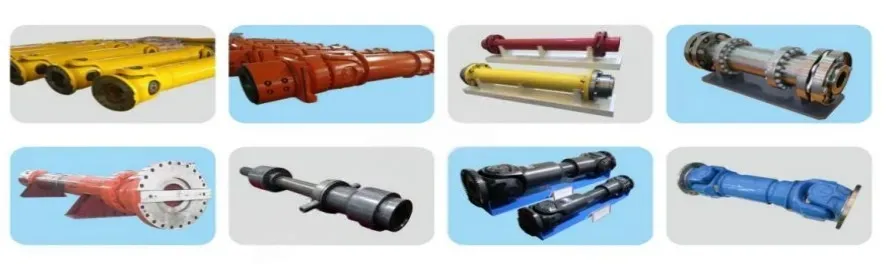 Ever Power 42CrMo4 alloy steel gear type coupling — kiln drive grade, rated to 4,000,000 N·m, designed for UK cement plant rotary kiln main drives
What Is a Gear Type Coupling — and Why Is It the Only Sensible Choice for a Kiln Drive?
 A gear type coupling — also referred to in British industrial practice as a gear coupling, toothed coupling, or gear flex coupling — transmits torque between two shafts through the meshing of crowned external gear teeth on the hubs with matching internal gear teeth cut into the outer sleeves. The word “crowned” describes the critical feature: the flanks of the external hub teeth are not straight but curved in the longitudinal direction. When the driving and driven shafts are slightly misaligned — whether angularly, in parallel offset, or axially — the contact point between the crowned external tooth and the straight internal tooth shifts along the tooth face, allowing the misalignment to be absorbed without generating bending moments that would otherwise be transferred into adjacent bearings. The entire tooth face width remains in load-sharing contact, which is why the torque density of a gear coupling is fundamentally superior to that of jaw, spider, disc, or donut couplings of equivalent outer diameter.
In a rotary kiln drive train, the practical meaning of those engineering characteristics is significant. The kiln shell sits on riding rings that are supported by trunnion rollers positioned along the kiln’s length. As the kiln heats from ambient temperature to operating conditions — with internal gas temperatures exceeding 1,450°C in a modern dry-process precalciner kiln — the shell expands both radially and axially by measurable amounts. In a 70-metre kiln, axial thermal growth at the shell can reach 60 to 80 millimetres from cold to hot condition. The drive pinion shaft and gearbox output shaft, positioned on fixed foundations adjacent to the kiln, do not move with the kiln shell. Without a coupling that accommodates this thermal differential positional change as a normal operating condition rather than an overload condition, the misalignment forces transmitted into the gearbox output bearing and the pinion bearing escalate rapidly during every heat-up cycle. The result — premature bearing failure, shaft fretting, or coupling tooth damage — is expensive to rectify and entirely preventable.
The gear type coupling absorbs that thermal movement continuously and silently, maintaining full torque transmission capacity throughout the kiln’s operating cycle. That is the core value proposition, and it is why the gear coupling has been the dominant drive coupling technology in cement kiln drives worldwide for more than six decades.
Technical Performance Parameters — Ever Power Kiln-Grade Gear Type Couplings
* Kiln Drive Grade specifications apply to custom-engineered couplings. Contact Ever Power engineering for application-specific sizing and service factor confirmation.
Six Engineering Advantages That Cement Gear Type Coupling as the Kiln Drive Standard
Each advantage represents a direct response to a real operational challenge encountered in UK cement plant kiln drive applications.
Poikkeuksellinen vääntömomenttitiheys
The involute crowned tooth geometry enables torque transmission capacities that far exceed comparably dimensioned disc, jaw, or bellows couplings. For kiln main drives where output shaft torques routinely exceed 500,000 N·m, the gear type coupling delivers the required capacity within a package that remains compatible with existing gearbox and pinion shaft arrangements — eliminating the need for costly structural modifications to accommodate a larger coupling housing.
Continuous Thermal Misalignment Accommodation
As a rotary kiln heats from cold to operating temperature, the shell expands axially and the drive shaft train moves out of its cold-alignment position. The crowned gear teeth in our couplings accommodate this thermal movement continuously without interrupting torque transmission and without generating the bearing-overload forces that would otherwise shorten the life of the gearbox output bearing and kiln drive pinion bearing — both of which are expensive and time-consuming to replace on an operating kiln.
Shock Load and Peak Torque Resilience
Rotary kilns are vulnerable to ring build-up events and partial blockages that create sudden, large increases in rotational resistance. The resulting shock torques propagate through the drive train and can strip gearbox gear teeth, crack shafts, or damage motor couplings if the coupling in the drive chain is not designed to distribute that energy over the full tooth face width. A properly rated gear type coupling with an appropriate service factor — typically 2.0 to 2.5 for UK cement kiln applications — absorbs these peaks without damage, protecting the far more expensive components surrounding it.
Long Service Life, Minimal Maintenance Demand
When manufactured from 42CrMo4 alloy steel with case-hardened, post-hardening ground gear teeth, a correctly specified kiln-grade gear type coupling will typically deliver five to eight years of uninterrupted service on a rotary kiln main drive. The only regular maintenance requirement is grease replenishment — a task that takes less than two hours and can be performed during normal scheduled shutdown periods, avoiding production loss. The comparison with elastomeric couplings, whose element replacement cycles on kiln drives often fall inside two years, makes the economics straightforward.
Lower Total Cost of Ownership
The acquisition cost of a kiln-grade gear type coupling is higher than a standard industrial coupling. Calculated over a five-year horizon, however, the economics consistently favour it. When the avoided bearing replacement costs, the production hours recovered through elimination of unplanned stoppages, and the extended lubrication intervals are factored together, UK cement plant maintenance managers who have made the switch report total cost savings of 25 to 40% compared with lighter-duty or alternative technology couplings on the same kiln drives.
Direct OEM Retrofit Compatibility
Ever Power engineers routinely supply replacement gear type couplings dimensionally matched to OEM units from Falk, Rexnord, Dodge, David Brown, and Flender — manufacturers whose couplings are common on legacy kilns throughout the UK. This means UK plants can replace a worn or damaged coupling during a scheduled shutdown without modifying the gearbox output arrangement, pinion shaft dimensions, or existing coupling guards, reducing shutdown duration and eliminating the engineering risk associated with drive train redesign.
Engineering Principle and Material Architecture: What Makes a Kiln Drive Coupling Different
The operating principle of the gear type coupling is mechanically elegant. The external hub teeth are crowned — their flanks curved in the longitudinal direction rather than straight. When the coupling operates under misalignment, contact between the crowned external teeth and the straight internal teeth of the outer sleeve shifts progressively along the tooth face, permitting the angular or offset displacement to be accommodated without generating lateral forces. Load is distributed across multiple teeth simultaneously. This distributed load sharing is precisely why gear coupling torque density is fundamentally higher than that of any elastomeric coupling of equivalent diameter.
Lubrication in a kiln drive gear coupling must be treated with the same seriousness as lubricant selection for the kiln gearbox itself. Ever Power recommends lithium complex grease with EP (extreme pressure) additives and a base oil viscosity appropriate for the temperature range encountered at the drive zone, which for kilns positioned close to the girth gear can see elevated ambient temperatures exceeding 60°C during summer months at UK cement plants. The grease must maintain adequate film strength across this temperature range throughout the service interval without oxidising or separating, both of which destroy the protective film at the tooth contact zone and initiate wear that is impossible to detect visually from outside the coupling sleeve.
Sealing deserves specific attention in UK cement plants. Cement dust is highly abrasive, and fine dust particles suspended in the air around the kiln drive zone will penetrate any inadequately sealed coupling and act as a grinding compound against the lubricant film on the gear teeth. Ever Power’s kiln-grade gear type couplings incorporate a labyrinth plus O-ring sealing system using Viton seals rated for the elevated temperatures encountered near the kiln — a combination that consistently prevents cement dust ingress through the extended service intervals specified for kiln applications.
Heat-treated to 900–1,100 MPa tensile strength. Gear teeth carburised, case-hardened to 55–62 HRC, and profile-ground post-hardening to ISO Grade 6 accuracy. Core toughness maintained to resist impact from kiln shock events.
Induction-hardened internal tooth flanks. Two-piece split sleeve design available for kiln drive retrofits where restricted access prevents removal of complete shaft assemblies. Split face precision-machined and dowelled for accurate reassembly.
Dual-barrier sealing against both grease egress and cement dust ingress. Centrifugal force during rotation actively improves seal effectiveness at speed. Viton compound rated to 120°C continuous for kiln-zone ambient temperatures.

Where Gear Type Couplings Are Applied Across the UK Cement Plant — Beyond the Main Kiln Drive
The rotary kiln main drive is the most demanding application, but every major rotating drive in a cement plant benefits from the same gear coupling engineering principles. Raw mill and cement mill drives transmit comparable torque levels through drive trains subject to both grinding shock loads and progressive foundation settlement misalignment. Vertical roller mill table drives are particularly sensitive: the gearbox in a modern VRM is integrated with the mill table, and the coupling between the motor and gearbox input must absorb vibration transmitted from the grinding rollers back through the table shaft without those vibrations being reflected into the motor bearings. Clinker cooler reciprocating drives impose cyclic loading profiles that require service factors of 2.0 or higher on the coupling. In each of these applications, a properly rated gear type coupling selected with the operating conditions explicitly considered — not simply picked from a torque capacity table — delivers the service life and reliability that UK cement plant operations require.
Raw Ball Mill Drive
High torque at low speed with repetitive ball charge impact. Gear coupling isolates gearbox from shell bearing misalignment caused by mill body deflection under grinding load.
Vertical Roller Mill (VRM)
Motor-to-gearbox coupling on VRM drives. Absorbs grinding roller vibration, protecting integrated gearbox internals from high-frequency cyclic loads in flour-like cement dust environments.
Clinker Cooler Drive
Reciprocating grate drives with cyclic loading and thermal shock near the kiln hood. Service factors of 2.0–2.5 applied to manage peak loads from uneven clinker bed resistance.
Cement Finish Mill
Continuous high-torque duty with variable grinding media charge levels. Gear coupling selected for proven performance on both open and closed circuit finish mill drive configurations.
ID / PA Fan Drives
Large induced draught and primary air fans throughout the plant. Gear coupling accommodates soft-foot and foundation settlement misalignment — a common root cause of premature fan bearing failure on UK plant concrete structures.
Preheater Tower Drives
Cyclone fan and meal distribution screw drives in precalciner preheater towers. Gear coupling isolates drive motors from structural vibration transmitted through the tower steel at elevated heights above grade.
Customer Success: Ending Repeated Kiln Drive Coupling Failures at a 1.8 Mtpa Derbyshire Cement Plant
From Three Unplanned Stoppages in 18 Months to Zero Coupling Failures in 26 Months
A 1.8 million-tonne-per-annum integrated cement plant in Derbyshire, England, had experienced three unplanned kiln shutdowns within an 18-month period, all directly attributable to premature failure of the OEM gear coupling on the main drive of its 5-metre-diameter, 68-metre-long wet process kiln. Each stoppage incurred approximately £80,000 in combined lost production, emergency maintenance labour, and specialist mobile crane hire to access the drive coupling within the existing coupling guard structure. The plant’s engineering director contacted Ever Power following a referral from the mechanical engineering manager at a sister site in South Wales, where an Ever Power kiln coupling had been operating without issue for four years.
Ever Power conducted a comprehensive drive train assessment that included thermal growth measurement of the kiln shell across a complete cold-start to full operating temperature cycle using laser alignment instrumentation, torsional vibration analysis of the complete motor-gearbox-coupling-pinion drive chain under various kiln loading conditions, and metallurgical examination of the three failed coupling sets under the guidance of a qualified materials engineer. The root cause was identified as a combination of chronic angular misalignment during thermal cycling — 0.4° above the OEM coupling’s rated misalignment capacity — and a lubrication interval that had been extended from the manufacturer’s recommended six months to ten months due to staffing reductions. The extended interval was allowing the grease to oxidise and lose its EP additive protection before replenishment.
The replacement solution engineered and supplied by Ever Power was a custom gear type coupling in 42CrMo4 steel with a tooth face width 30% wider than the failed OEM unit, rated to 1,200,000 N·m nominal torque and specified with a service factor of 2.2 for the kiln’s operational profile. The crowned tooth geometry was optimised for the specific misalignment envelope measured during the thermal audit, and Viton seals were specified to protect against the elevated ambient temperatures encountered at that kiln’s drive position. Installation was completed within a planned 72-hour maintenance window. Over the subsequent 26 months of continuous operation, the plant recorded zero unplanned coupling-related stoppages — a result that translated to production savings exceeding £240,000 compared with the preceding 18-month period.
What UK Rotating Equipment Engineers Say About Ever Power Gear Couplings
“We’d been fighting that kiln drive coupling for two years before Ever Power got involved. Their team looked at the entire drive system rather than just selling us a replacement part. The unit they supplied has been running without a single issue for over two years. The technical support and documentation were genuinely outstanding — exactly what we needed for our maintenance records.”
Integrated Cement Plant, Derbyshire, UK
“Pricing was competitive, delivery arrived ahead of schedule, and the documentation package matched exactly what our engineering records require for rotating equipment on the kiln. We’ve since standardised on Ever Power gear couplings across both our UK cement works. Having a supplier with proper application knowledge behind the product makes a very real operational difference.”
Aggregates & Cement Group, South Wales, UK
“The thermal growth measurement Ever Power carried out before recommending a specification was considerably more thorough than what we typically see from coupling suppliers. The final product has been in service for 16 months on our clinker cooler drive with no issues. I’d strongly recommend them to any UK cement or lime production facility looking for a reliable, long-service gear coupling solution.”
Lime & Cement Manufacturer, Peak District, UK
Gear Type Coupling Supply, Technical Assessment, and Specialist Support for UK Cement and Minerals Operations
The United Kingdom’s cement sector operates in some of Europe’s most challenging conditions for outdoor rotating equipment. Plants in the Peak District and Derbyshire face wide seasonal temperature swings — from below -10°C in harsh winters to over 35°C ambient near kiln drive zones during summer — that place real demands on coupling sealing systems and lubricant performance. South Wales plants contend with high humidity and salt-laden coastal air at some locations. Northern Ireland operations combine wet conditions with older plant infrastructure on kilns that have been in continuous service for decades. In each of these environments, the margin for error in coupling specification is narrow: an underspecified coupling on a kiln drive at any of these locations will fail before the next annual planned shutdown, with all the production and cost consequences that follow.
Ever Power serves UK cement, lime, and minerals plant operators with the combination of in-depth application knowledge, full manufacturing traceability, and responsive technical communication that UK maintenance engineers require. Quotations that include bore-specific dimensional drawings, material certificates, and service factor calculation summaries are provided as standard — not as premium options.
UK Regions Served
Peak District · Derbyshire · South Wales · Thames Estuary · Yorkshire · East Midlands · Northern Ireland · North East England · Scotland
Delivery Timelines to UK
Catalogue sizes: 4–6 weeks · Custom kiln-grade couplings: 10–14 weeks from confirmed drawing review · Urgent assessments contacted individually
Documentation Standard
Material traceability · Mill certificates · Dimensional inspection reports · FEA analysis (on request) · CE marking where applicable · ATEX variants available
OEM Cross-Reference
Direct retrofit matching for Falk, Rexnord, Dodge, David Brown, Flender, and other OEM kiln coupling brands · Provide OEM part number for rapid cross-reference
Custom Engineering Capability: Gear Type Couplings Designed Around Your Exact Kiln Drive Specification
No two rotary kiln drive trains are dimensionally or operationally identical. Kiln diameters range from under three metres to over six metres. Gearbox output shaft diameters vary from under 200 mm on older smaller kilns to over 450 mm on the largest modern installations. Shaft-to-shaft distances, coupling guard envelope dimensions, and the available access space during installation differ from plant to plant and kiln to kiln within the same plant. The torque, speed, and service factor requirements vary with the kiln’s diameter, length, process type (wet, dry, semi-dry), and age of the drive system. Selecting a gear type coupling from a standard catalogue page without explicitly verifying that the selected unit fits every one of these parameters is one of the most reliable ways to end up back where the plant started — with a coupling failure during the next heat-up.
Ever Power’s product customisation capability addresses this directly. Custom bore diameters and keyway configurations, non-standard hub lengths to suit specific shaft-to-shaft distances, flanged or bolted half-coupling arrangements for non-standard shaft end configurations, split sleeve designs for restricted access installations, integral torque-limiting devices, modified tooth profiles for extreme misalignment envelopes, and material upgrades including stainless steel or high-alloy specifications for aggressive environments — all of these are part of the routine custom engineering work that Ever Power undertakes for UK cement plant customers as standard practice, not as exceptional requests requiring lengthy negotiations.
Every custom order is subject to dimensional verification against customer-supplied drawings or field measurements before manufacture begins. First-article inspection documentation covering all critical dimensional parameters and material test results is provided as part of the standard supply package. For UK cement plants maintaining quality management systems under ISO 9001 or equivalent, this documentation satisfies the traceability requirements for critical rotating equipment without requiring additional requests or supplementary charges.
Non-standard bore diameters & keyways
Split-sleeve design for restricted access
Modified shaft-to-shaft distances
Integral torque-limiting features
Stainless / high-alloy material grades
OEM retrofit matching — all major brands
ATEX-rated variants for hazardous zones
Full first-article inspection documentation
📩 Request a Custom Gear Coupling Quote
Send bore dimensions, shaft spacing, torque requirements, and shutdown schedule to [email protected] — technical proposal within 48 hours
Usein kysytyt kysymykset
Gear Type Coupling for Rotary Kiln Drives — UK Cement & Minerals Industry
Ready to Specify the Right Gear Type Coupling for Your UK Kiln Drive?
Send us your shaft dimensions, torque requirements, operating conditions, and planned shutdown schedule. Our engineering team will respond with a fully reviewed technical proposal within 48 hours.
📩 Contact Ever Power Engineering
[email protected] | Ever Power Transmission Group | edit by gzl