Зубчатые муфты в приводных системах машин непрерывного литья: полное инженерное руководство для применения в сталелитейной промышленности Великобритании.
In the relentless environment of a continuous casting machine — where steel billets are drawn through water-cooled moulds at temperatures exceeding 1,500 °C, where drive rollers must maintain precise tension under enormous frictional resistance, and where hydraulic spray mist saturates every mechanical component within metres — the choice of coupling is not a procurement footnote. It is a decision that determines whether a £2 million casting line runs at rated capacity for three years or suffers an unplanned shutdown within the first quarter. Across steelworks from Sheffield to Scunthorpe, plant engineers who have lived through both outcomes will tell you the same thing: gear type couplings are the industrial-grade answer to the continuous caster’s most demanding transmission challenges.
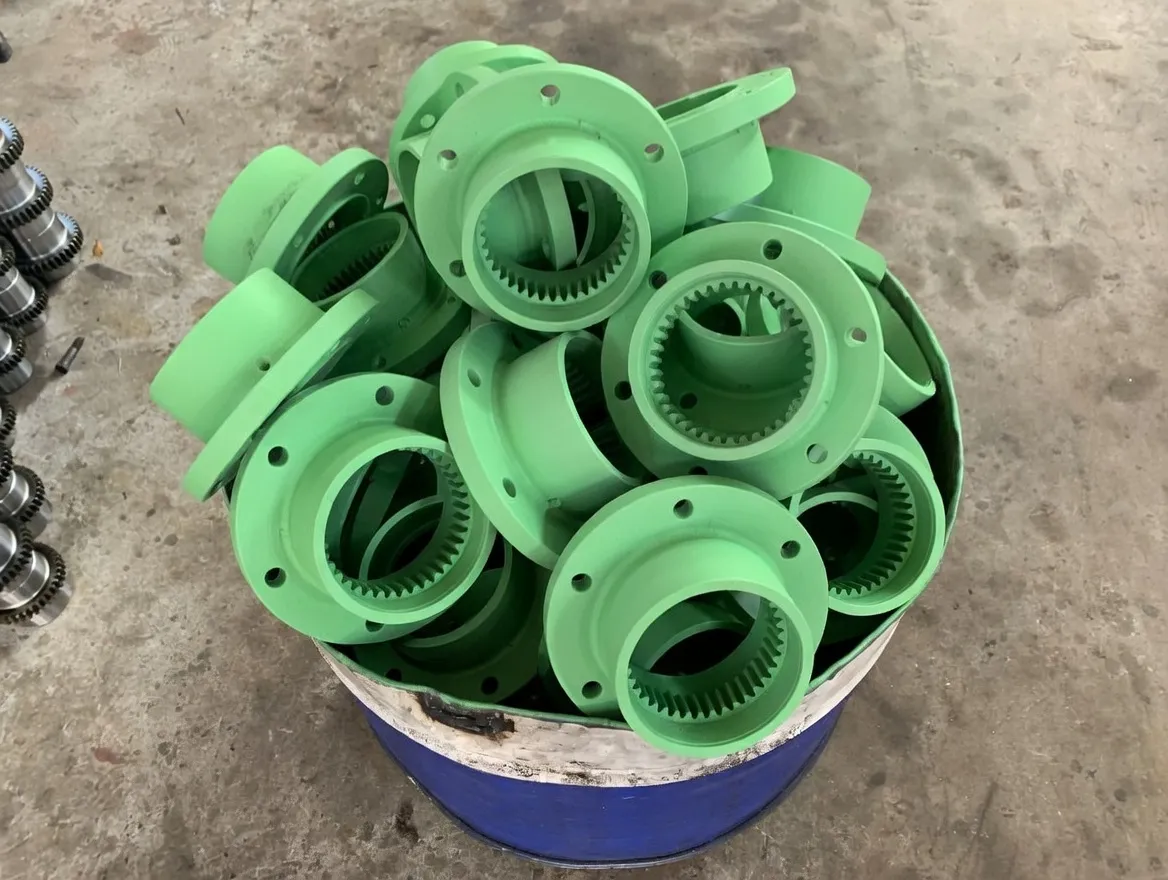
Ever Power gear type coupling in service on a continuous casting strand drive — rated for high torque, misalignment compensation, and severe thermal environments.
Why the Continuous Casting Drive Environment Is Unlike Any Other
A continuous casting machine (CCM) is one of the most mechanically punishing environments in heavy industry. The strand drive section alone subjects every rotating component to a combination of stresses that would individually be considered severe in most industrial applications — but here they arrive simultaneously and without respite. The withdrawal and straightening unit must pull solidifying steel billets weighing hundreds of tonnes per hour, generating resistive torques that spike unpredictably whenever surface cracks or inclusion build-up increases frictional drag on the roller surfaces. At the same time, the rollers themselves expand thermally as radiant heat from the strand raises their surface temperature, creating axial and angular misalignment between connected shafts that can reach several millimetres under full operating load.
Cooling water is applied in industrial volumes — both to the strand itself and to surrounding equipment — meaning that any coupling operating in the secondary cooling zone is permanently wetted. Scale particles, iron oxide dust, and lubricant-stripping steam mist all contribute to an environment that degrades seals, abrades surfaces, and accelerates corrosion on any component that is not engineered specifically for the conditions. Flexible disc couplings, elastomeric jaw couplings, and many types of diaphragm couplings simply do not survive the combination of high torque, thermal shock, and contamination that a CCM strand drive delivers as standard. Gear type couplings, with their crowned tooth profiles, robust alloy steel construction, and positive-retention grease lubrication, are the engineering-validated solution that major steelmakers in the United Kingdom and worldwide have relied upon for decades.
The Engineering Principle Behind Gear Type Coupling Performance in CCM Applications
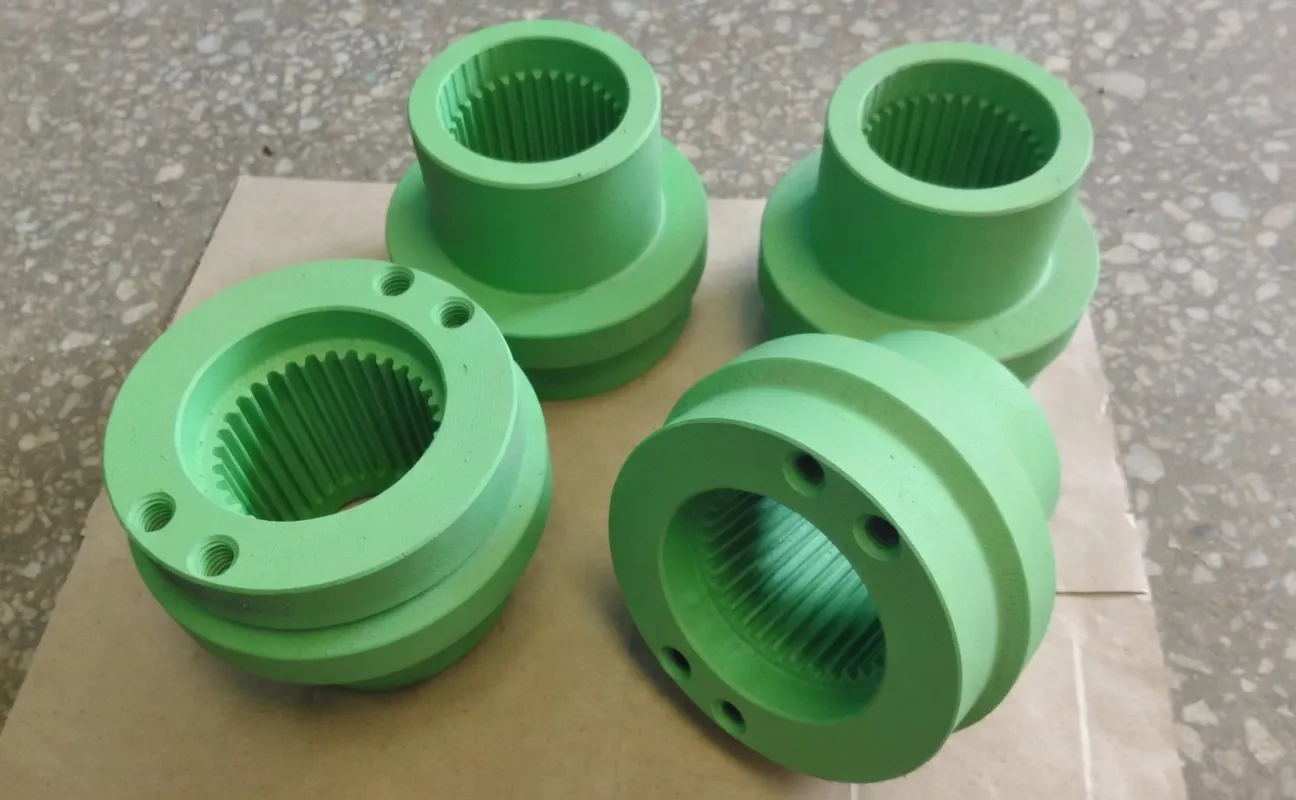
At the core of every gear type coupling is a pair of internally and externally toothed sleeves — the outer sleeve carries the internal gear, while the hub carries the external gear, with a crowned (barrelled) tooth profile that is the defining feature of this coupling family. The crowning — a carefully calculated convex curvature applied along the tooth’s axial length — is what gives the gear coupling its unique ability to transmit torque continuously while simultaneously accommodating angular misalignment of up to 1.5° per mesh and axial displacement of several millimetres. Unlike a rigid flanged coupling, which transfers misalignment stress directly into connected shaft bearings, a gear coupling absorbs misalignment within the mesh itself, distributing load across the full tooth contact area rather than concentrating it at a single point.
In a strand drive application, this matters enormously. When a withdrawal roller expands thermally during the first hour of a casting heat, its shaft centreline shifts relative to the gearbox output shaft by a measurable amount. A rigid coupling would transmit this misalignment as a bending moment into both bearings, accelerating fatigue and ultimately causing premature bearing failure or shaft fracture. The gear type coupling simply rocks within the mesh, maintaining full torque transmission without generating penalty loads on the connected machinery. The same principle applies to the mould oscillation drive, where the coupling must accommodate the reversing motion of the oscillation mechanism — typically 60 to 300 strokes per minute — while transmitting the dynamic torque needed to accelerate and decelerate the mould mass at each stroke reversal.
Materials, Construction, and Surface Treatment
Ever Power gear type couplings used in continuous casting drives are manufactured from medium-carbon alloy steel — typically 42CrMo4 (equivalent to BS EN 10083-3 grade) for both the hub and outer sleeve. This material delivers a yield strength of 650–900 MPa after quench-and-temper heat treatment, sufficient to handle the peak torque spikes that occur during strand breakout events or roller jam conditions without plastic deformation. Gear tooth flanks are carburised and case-hardened to a surface hardness of HRC 58–62 and a case depth of 0.8–1.5 mm, providing the wear resistance necessary for continuous operation in an environment where fine abrasive particles are omnipresent.
Sealing is achieved through a combination of O-ring face seals and labyrinth end covers, retaining the high-viscosity grease (NLGI Grade 1 or 2 with EP additives) required to maintain a continuous lubricant film across the tooth mesh under the centrifugal forces generated at operating speed. The outer sleeves are phosphate-treated and coated with a corrosion-inhibiting primer as standard, with optional stainless steel fasteners and additional epoxy topcoats available for particularly aggressive water-chemistry environments — a consideration relevant to several British steelworks where recycled water with elevated chloride content is used in the secondary cooling circuit.
Technical Performance Parameters — Ever Power CCM Series Gear Type Couplings
Key Application Zones Within the Continuous Casting Machine
Withdrawal and Straightening Unit (WSU)
The WSU is the primary torque consumer in a CCM strand. Multiple driven roller segments must synchronise their speeds while each coupling independently absorbs the misalignment generated by thermal growth of the roller table frame. Gear type couplings with enlarged tooth crowning radius are specified here to allow up to 1.5° angular offset without inducing bearing overhang loads. Peak torques during a strand jam can reach 250% of rated load — the gear coupling’s metallic construction gives it the overload capacity that elastomeric alternatives simply cannot match. High-pressure water jets are used directly above this zone, making the robust labyrinth seal arrangement of a precision gear coupling essential for sustained grease retention.
Mould Oscillation Drive
Mould oscillation is the source of the highest fatigue demands on any coupling in the CCM. The mechanism reverses direction between 60 and 300 times per minute, meaning the coupling experiences tens of millions of torque reversals per year. The crowned tooth profile of a gear type coupling acts as a natural shock absorber during each reversal, reducing the impulsive load transmitted to the eccentric drive mechanism. Anti-fatigue shot-peening of the tooth root fillets is specified as standard on Ever Power mould oscillation couplings, extending service life beyond 100,000 operating hours under standard oscillation parameters — a performance level verified in long-term field trials at European billet caster installations.
Flame Cutter and Shear Drive
The travelling flame cutter or hydraulic shear at the CCM runout table must synchronise with the moving strand, engaging and disengaging at high speed. The drive system sees repeated start-stop cycling superimposed on the base speed, generating inertia torque spikes at each engagement. Gear type couplings in this position serve a secondary function as torsional buffers, absorbing acceleration energy through the elastic deformation of the tooth mesh. The compact envelope of modern gear couplings — significantly shorter and lighter than equivalent-rated chain or grid couplings — also simplifies the mechanical integration of the cutter drive within the confined space available between successive strand guide segments.
Six Reasons Plant Engineers in UK Steelworks Specify Gear Type Couplings
Unmatched Torque Density
Gear couplings transmit the highest torque per unit weight and unit diameter of any flexible coupling type — critical when fitting into the restricted envelope of a CCM segment drive.
Generous Misalignment Tolerance
The crowned tooth mesh accommodates angular, parallel, and axial misalignment simultaneously — protecting gearboxes and motor bearings from thermally-induced shaft displacement loads.
High-Temperature Durability
All-steel construction with high-temperature EP grease means performance is maintained even when ambient temperatures near the strand can reach 200 °C, where elastomeric elements degrade rapidly.
Overload and Impact Resistance
Rated peak torque capacity typically 2× the nominal rating, with momentary overload to 300% achievable — essential for surviving strand breakout shock loads without coupling failure.
Ease of Maintenance
Split outer sleeve designs allow relubrication and tooth inspection without disturbing connected machinery — a significant operational advantage during a planned campaign maintenance window.
Custom Geometry Available
Non-standard bore dimensions, spline interfaces, extended spacer configurations, and bespoke flange bolt patterns are all available from Ever Power — no tooling surcharges for retrofit replacement projects.
Ever Power Manufacturing and Custom Engineering Capability
Ever Power operates dedicated gear coupling production lines with CNC gear hobbing, profile grinding, and induction hardening equipment. Our engineering team provides full custom design and engineering services for CCM replacement and new-build projects. We supply to steel plant maintenance teams, OEM CCM builders, and engineering procurement contractors across the United Kingdom — including projects in the Midlands, Yorkshire, South Wales, and the North East — with full material certification to EN 10204 3.1 and dimensional inspection reports as standard. Lead times for standard sizes run 3–6 weeks ex-works; expedited 2-week service is available for critical shutdown replacements.
Our customisation capability extends to non-standard tooth module designs, asymmetric tooth profiles for unidirectional drive applications, integrated torque-limiting features, and surface coating systems tailored to your plant’s specific water chemistry or scale abrasion conditions. Every custom coupling is documented with a detailed engineering calculation pack and FEA stress verification report — giving your site engineering team the technical confidence needed for safety-critical CCM approvals. If you are replacing a competitor-brand coupling and need a certified interchange, our team can reverse-engineer from drawings or direct measurement of the original part.
Customer Case Study: Tata Steel UK — Port Talbot Billet Caster Drive Renewal
Фон: The No. 3 billet caster at a major integrated steelworks in South Wales had been experiencing recurring coupling failures on the withdrawal and straightening unit, averaging one coupling replacement every 11 weeks per strand. Root cause analysis identified a combination of inadequate misalignment capacity in the originally-specified disc couplings and accelerated corrosion of the stainless disc packs due to the high-chloride content of the cooling water at that location. Unplanned downtime was running at approximately 38 hours per year across the four strands, with direct production loss calculated at roughly £820,000 annually.
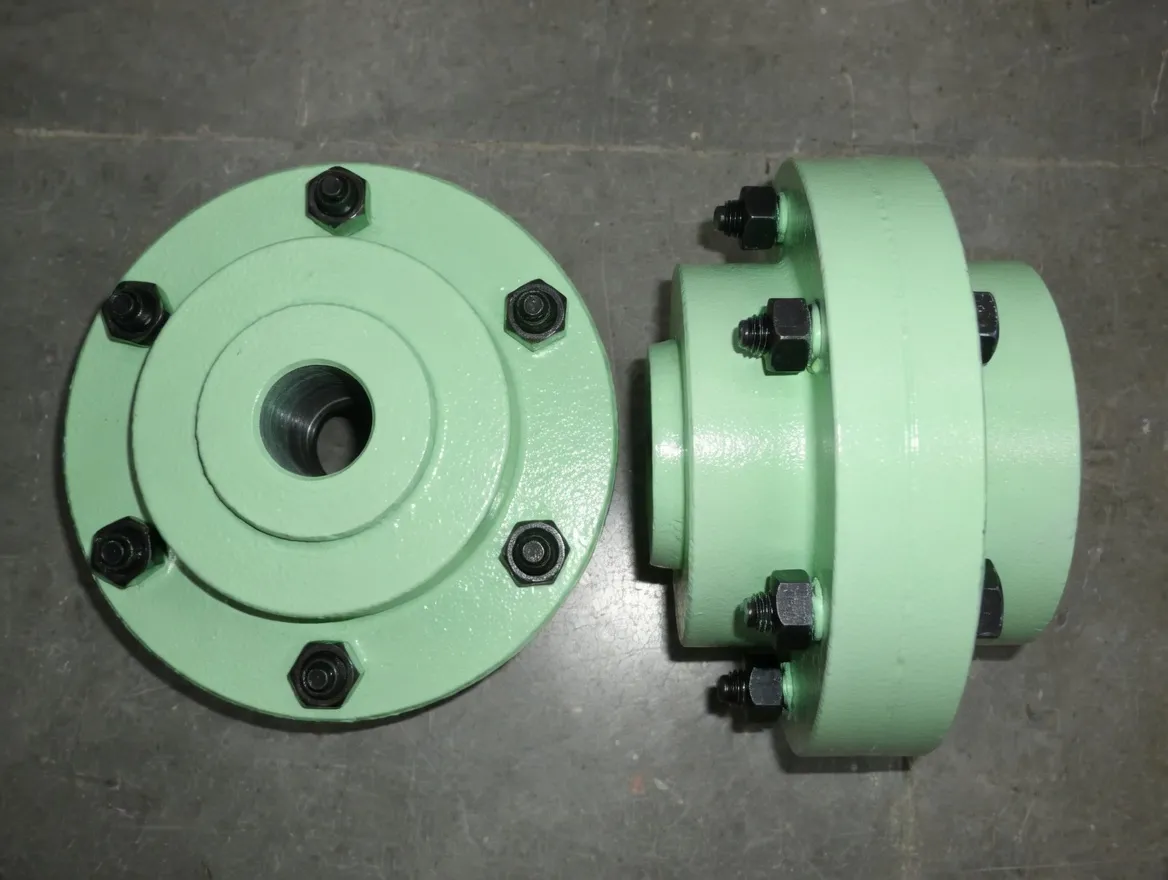
Решение: Ever Power was engaged to supply gear type couplings sized to the same shaft envelope as the existing disc couplings, with a custom floating-spacer configuration to accommodate the roller table thermal growth without requiring re-alignment of the gearbox motor sets. The couplings were manufactured in 42CrMo4 with a duplex corrosion protection system and EP high-temperature grease pre-filled under factory conditions. The installation was completed during a scheduled 72-hour maintenance campaign across all four strands.
Results after 18 months: Zero coupling failures on all four strands. Planned relubrication intervals extended from 6 to 14 weeks. Bearing replacement frequency on adjacent gearboxes reduced by an estimated 60%, consistent with the elimination of misalignment-induced bearing loads. The production recovery and maintenance cost reduction generated a full return on the coupling investment within the first three months of operation.
What UK Steel Plant Engineers Say
“We switched three of our CCM strand drives to Ever Power gear couplings after years of fighting with disc-pack failures near the secondary cooling zone. The difference in mean time between interventions is dramatic — we are now at 14 months and still running. The custom floating-spacer geometry they designed for our thermal growth clearance was a real engineering solution, not an off-the-shelf compromise.”
— Senior Mechanical Engineer, Integrated Steelworks, Rotherham, South Yorkshire
“The speed of the technical response from Ever Power was impressive — we had a coupling drawing and torque calculation pack back within two working days of sending our dimensions. For a planned shutdown with a fixed maintenance window, that kind of responsiveness is worth as much as the product quality itself. The couplings went in without modification and have not been touched since commissioning.”
— Maintenance Manager, Billet Caster Facility, Scunthorpe, Lincolnshire
“We specified gear type couplings from Ever Power for the mould oscillation drives on our new bloom caster installation. The anti-fatigue tooth profile treatment and the high-temperature grease specification were both exactly what we needed for the oscillation frequency we run. After 22 months of continuous production, we have not had a single coupling-related unplanned stop.”
— Project Engineering Lead, Electric Arc Furnace Steelworks, Sheffield, South Yorkshire
Часто задаваемые вопросы
For CCM strand drives in the United Kingdom, Ever Power is a specialist supplier offering custom-engineered gear type couplings sized to your exact shaft dimensions and torque requirements. Pricing depends on bore size, torque rating, and material specification — a standard CCM strand drive gear coupling in the 50–200 kN·m range typically starts from £1,200 to £4,500 per coupling unit ex-works, with full material certification. Contact [email protected] with your shaft dimensions and nominal torque for a detailed quotation.
Gear type couplings manage thermal misalignment through the crowned (barrel-shaped) tooth profile on the external gear hub. As the roller table frame expands and the shaft centreline shifts relative to the gearbox, the crowned tooth mesh rocks angularly — accommodating up to 1.5° of angular offset and several millimetres of axial float without generating bending moments on connected bearings. In high-thermal-growth applications, Ever Power also supplies extended floating-spacer configurations that provide additional axial accommodation specifically for CCM withdrawal and straightening drives.
For mould oscillation drives running at 200 strokes per minute or higher, the recommended specification is a зубчатая муфта with shot-peened tooth root fillets (anti-fatigue treatment), carburised case-hardened teeth to HRC 58–62, and a high-viscosity EP grease with good mechanical stability under reversing shear. The Ever Power MO Series is specifically designed for oscillation duty — the anti-fatigue surface treatment extends service life to over 100,000 operating hours under standard oscillation conditions. Contact our technical team with your oscillation frequency, stroke length, and torque data for a precise recommendation.
Ever Power provides a dedicated rapid-response service for UK steel plant maintenance teams with planned shutdown deadlines. Email your shaft dimensions, torque rating, and preferred material standard to [email protected] and our application engineers will return a full technical proposal and commercial quotation within 2 working days. For critical replacement orders, our expedited 2-week manufacturing service is available for in-scope sizes, delivered to UK mainland with standard DDP Incoterms.
In a CCM secondary cooling zone where the coupling is exposed to constant water spray and elevated ambient temperatures, a relubrication interval of 8–14 weeks is typical for gear type couplings using NLGI Grade 1 EP grease with a drop point above 200 °C. Couplings fitted with enhanced labyrinth seals can extend this to 16 weeks. Ever Power factory pre-fill uses a high-temperature lithium-complex EP grease specified for wet and thermally cycled applications. Always inspect tooth wear and grease condition visually at each relubrication event, looking for signs of grey or metallic contamination that would indicate accelerated wear.
Yes. Ever Power’s engineering team routinely produces certified interchange replacements for competitor-brand gear type couplings on CCM and other metallurgical plant drives. We require either original OEM drawings or a dimensional measurement report from the existing coupling. We then produce a custom coupling dimensionally matched to your existing shaft and gearbox interfaces, eliminating the need for realignment or spacer modifications. Full EN 10204 3.1 material certificates and dimensional inspection reports are supplied with every custom order as standard. Send your drawings or measurements to [email protected] to begin the interchange assessment.
Ready to Solve Your CCM Coupling Challenge?
Send us your shaft dimensions and torque requirements and receive a full technical proposal within 2 working days. Ever Power serves steel plant maintenance teams and EPC contractors across the UK — Sheffield, Scunthorpe, Port Talbot, Rotherham, and beyond.
отредактировано gzl