 Wind energy has undergone a remarkable transformation across the United Kingdom over the past two decades. Today, turbines rated at 5 MW to 15 MW dot the coastlines, moorlands, and offshore platforms from the Humber Estuary to the Orkney Islands. At the mechanical heart of every wind turbine drivetrain sits one of the most critically engineered components in renewable energy infrastructure: the gear-type coupling. Unlike the visible blades and towers that define a turbine’s silhouette, gear couplings operate invisibly within nacelles and gearbox assemblies, yet their performance determines whether a turbine runs efficiently for twenty-five years or faces costly downtime within the first decade of operation.
How Gear Couplings Work: The Mechanical Principle
Internal Gear Mesh Architecture
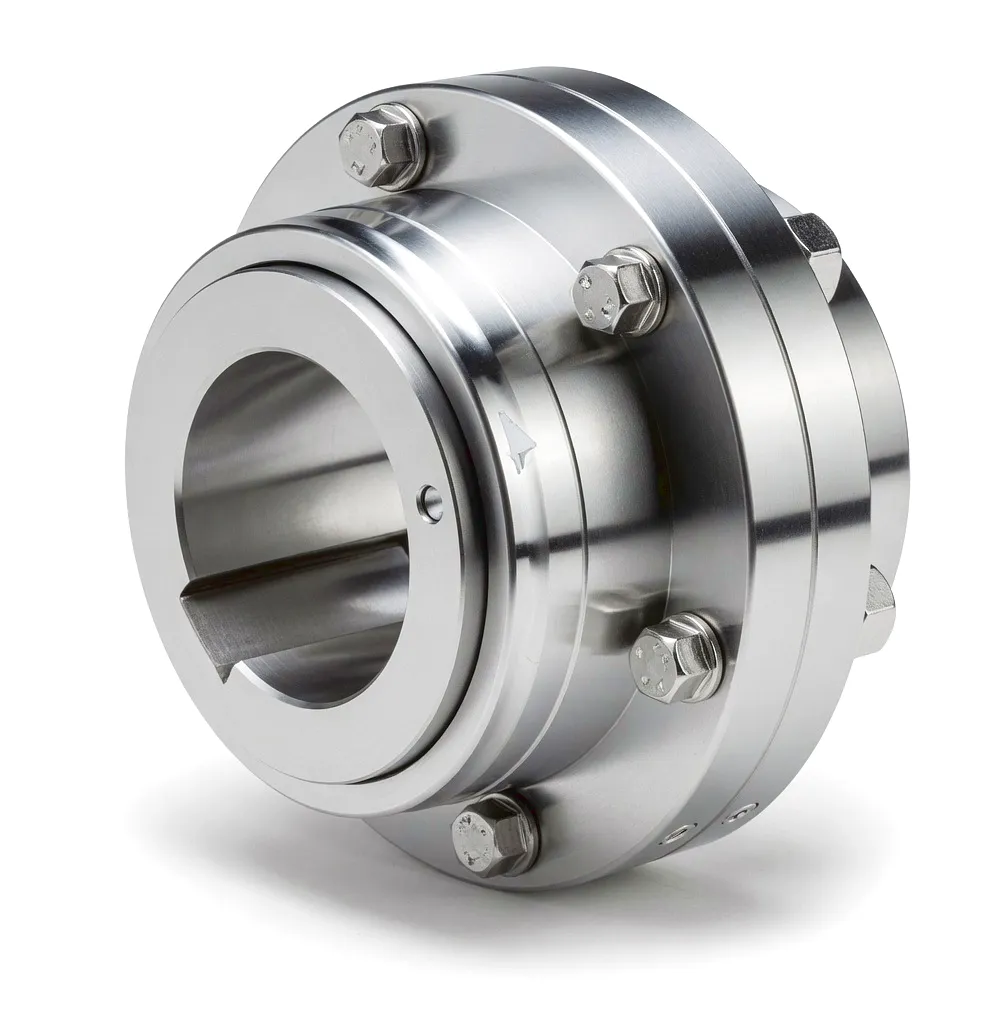
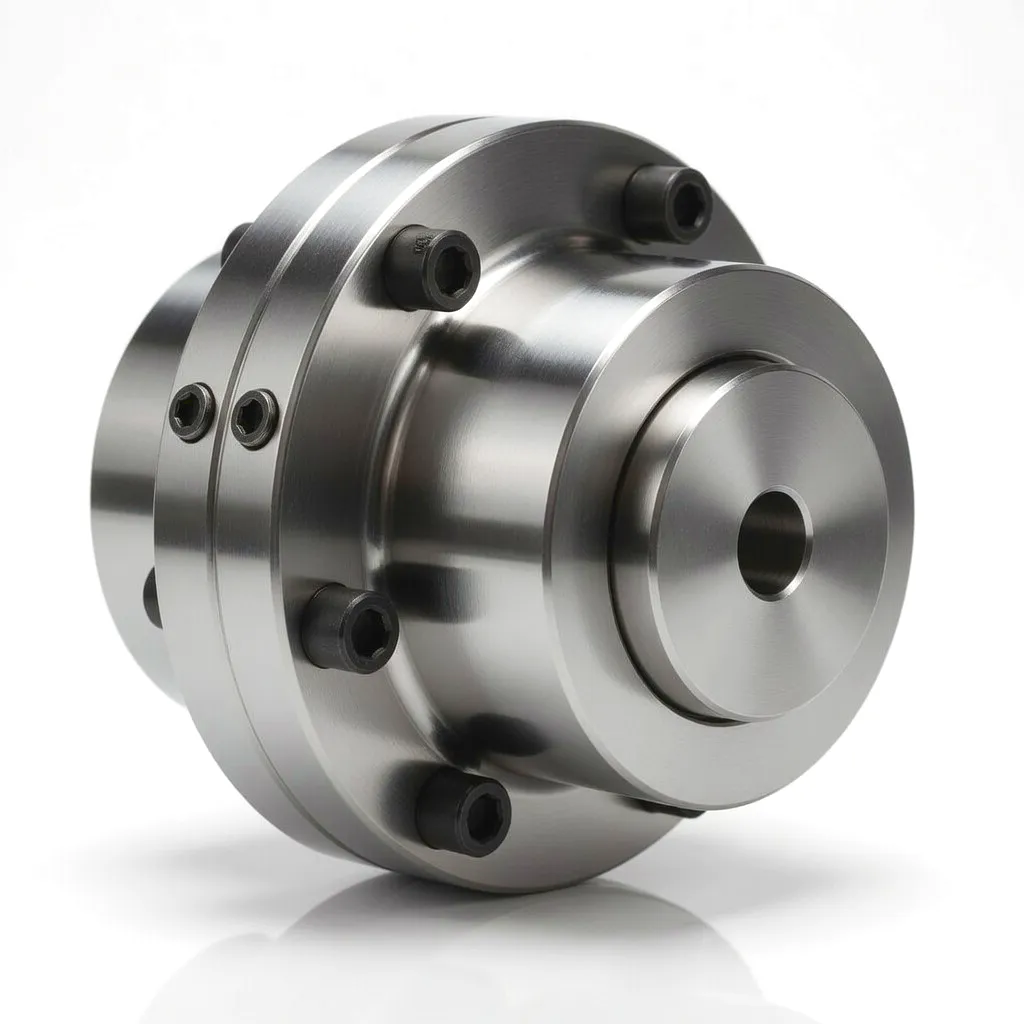
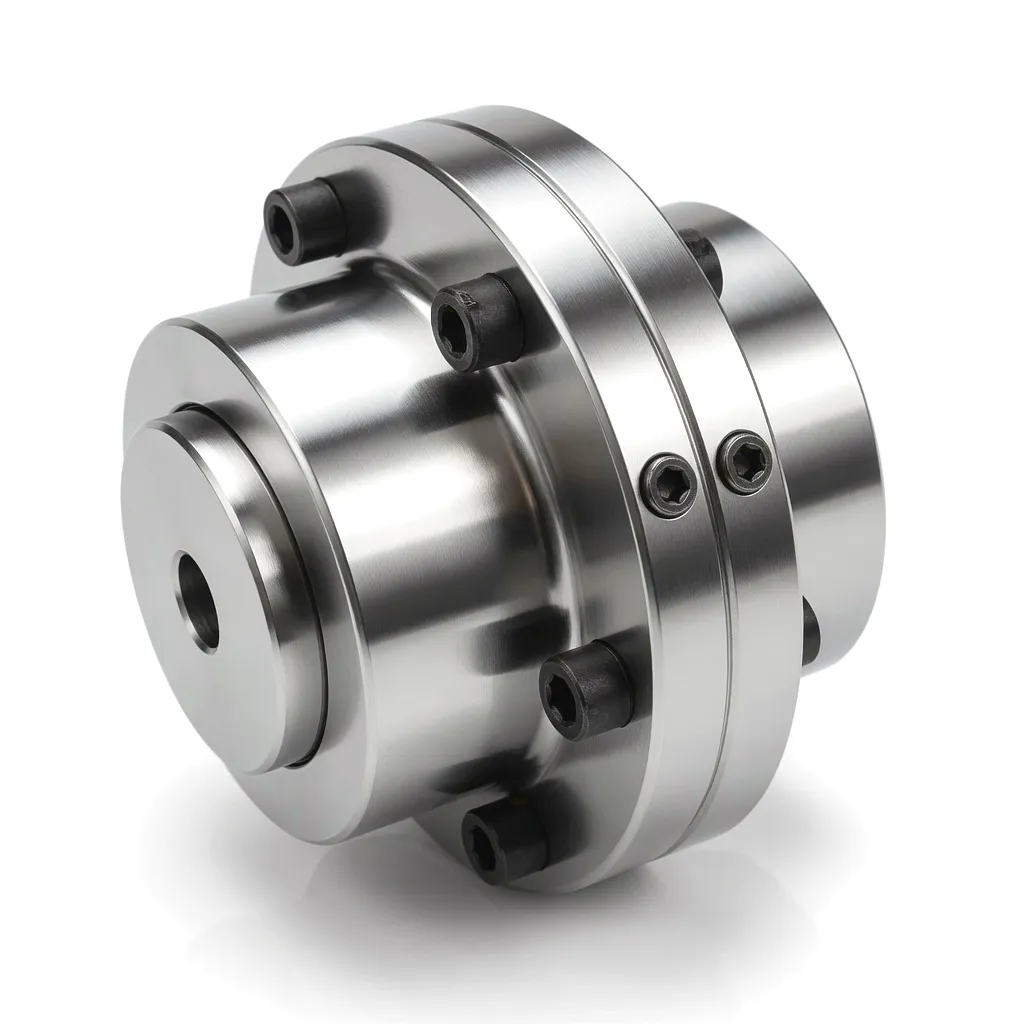
A gear coupling consists of two outer hubs — each machined with external gear teeth along their circumference — and an inner sleeve (or two half-sleeves) with matching internal teeth. When the hubs seat inside the sleeve, the meshing teeth form a rigid yet flexible torque transmission path. The tooth profile, typically involute with a crowned geometry, permits angular misalignment of up to 1.5° per coupling half without generating destructive bending moments at the shaft connection points. Under wind turbine operating conditions, this crowned tooth geometry is the critical design feature that allows continuous power transmission even as the nacelle structure deflects under gusting loads reaching 50 m/s in North Sea storm conditions.
Torque Transmission Under Variable Loads
Wind turbine drivetrains are characterised by highly variable torque inputs. As wind speed fluctuates between cut-in velocity (typically 3–4 m/s) and rated wind speed (12–14 m/s), the mechanical torque transmitted through the drivetrain swings dramatically. Gear couplings accommodate these transient loads through the distributed contact of multiple gear teeth working simultaneously — typically 24 to 64 teeth per hub — which distributes load across a large contact area and avoids the stress concentrations that would arise in a single-element connector such as a jaw coupling or rigid flange. The sleeve’s ability to shift axially also absorbs thermal growth along shaft centrelines, which in a large nacelle can reach 2–4 mm over a temperature range spanning -15°C winter conditions offshore to +60°C summer nacelle ambient temperatures.
Lubrication and Sealing Systems
The sliding action between internal and external teeth requires continuous lubrication — typically a high-viscosity gear oil or lithium-complex grease rated for the operating temperature range. In wind turbine applications, the coupling is often packaged with labyrinth seals or lip seals machined directly into the sleeve flanges to retain lubricant and exclude water ingress and contamination from fibreglass composite dust generated by blade erosion. For offshore turbines operating within the saline spray zone — installations such as those in the Hornsea Project series and the Beatrice Offshore Wind Farm — gear couplings are specified with stainless steel sealing components and corrosion-inhibiting grease formulations that extend service intervals from the standard 12-month cycle to 24 or 36 months, materially reducing vessel dispatch requirements and operational costs.
Core Manufacturing Materials
Core Technical Advantages of Gear Couplings
Gear-type couplings achieve torque capacities up to 4,000,000 N·m in large wind turbine formats, with a torque-to-weight ratio that outperforms equivalent disc or diaphragm couplings by a factor of two or more. This compact, high-capacity characteristic is particularly valuable in nacelle environments where weight budgets and spatial envelopes are tightly constrained by structural and crane lift limitations.
Crowned involute gear teeth compensate simultaneously for angular misalignment (up to ±1.5°), parallel offset (up to 0.25 mm), and axial displacement (±10 mm depending on design), allowing wind turbine drivetrains to operate through the continuous micro-movements introduced by tower and nacelle flexure during operation — movements that would rapidly fatigue rigid coupling alternatives.
With hardened, precision-ground gear teeth and an effective lubrication system, gear couplings in wind turbine service routinely achieve 100,000+ hours of operational life between major overhauls — aligning with a 25-year turbine design life without requiring mid-life coupling replacement. This durability dramatically reduces the overall lifecycle cost, a critical consideration for UK project developers working within Contracts for Difference strike price frameworks that reward low operational expenditure.
Unlike elastomeric couplings that introduce torsional compliance into the drivetrain, gear couplings transmit torque with minimal angular windup — typically less than 0.05° across the full rated torque range. This torsional rigidity is essential in wind turbines where generator control systems rely on accurate rotor position feedback to maintain grid synchronisation; excessive windup introduces phase lag that disrupts power quality and can trigger protection relay trips.
Steel-bodied gear couplings operate across temperature ranges from -40°C to +150°C without degradation in mechanical properties, and their all-metal construction provides inherent immunity to the UV radiation, ozone exposure, and fatigue cracking that progressively weaken polymer coupling elements. The distributed tooth contact also provides natural vibration damping at higher frequencies — a benefit in turbines where gearbox mesh frequencies can excite structural resonances in the nacelle bedplate.
Standardised bore dimensions and flanged connection geometries make gear couplings compatible with IEC motor frame standards and ISO shaft tolerancing, meaning that UK operations and maintenance teams can hold a minimal stock of coupling sleeves and replace hubs across multiple turbine models from the same coupling programme — reducing warehouse inventory costs and simplifying procurement through a single supplier relationship such as Ever Power.
Product Technical & Performance Parameters
The following parameter ranges represent Ever Power’s standard gear coupling programme as applicable to wind turbine drivetrains. Custom configurations beyond these ranges are available on request.
Application Scenario: Wind Turbine Drivetrain Systems
Main Gearbox to Generator High-Speed Shaft Connection
 The highest-criticality application for gear couplings within a wind turbine drivetrain is the connection between the main gearbox high-speed output shaft and the generator input shaft. In a typical three-stage gearbox configuration — as used on the majority of the UK’s onshore fleet from turbine models installed across East Yorkshire, Northumberland, and the Scottish Borders — the gearbox converts rotor speed from approximately 10–20 RPM to generator shaft speeds of 1,200–1,800 RPM at rated output. The gear coupling at this interface must transmit rated torques of 50,000 N·m to 500,000 N·m depending on turbine class, while simultaneously accommodating the angular and parallel misalignment that arises from gearbox ring gear planet carrier deflections under varying rotor aerodynamic loads.
 Beyond the primary power transmission path, gear-type couplings serve a critical role in the auxiliary electromechanical systems that control turbine orientation and blade pitch angle. Active yaw systems — the mechanism that rotates the entire nacelle assembly to track wind direction — typically use four to eight electric yaw drive motors, each connected through a reduction gearbox to a pinion engaging the yaw ring gear mounted at the tower top. Each motor-to-gearbox connection is typically a compact gear coupling or a spline coupling of similar gear-mesh design, rated for the repeated start-stop cycling and reversing torque that yaw operation imposes. In the UK’s frequently changing wind direction environment, driven by Atlantic frontal systems passing across the country throughout the autumn and winter seasons, yaw drives operate several hundred cycles per day, making coupling durability at this application point directly proportional to turbine availability and annual energy yield.
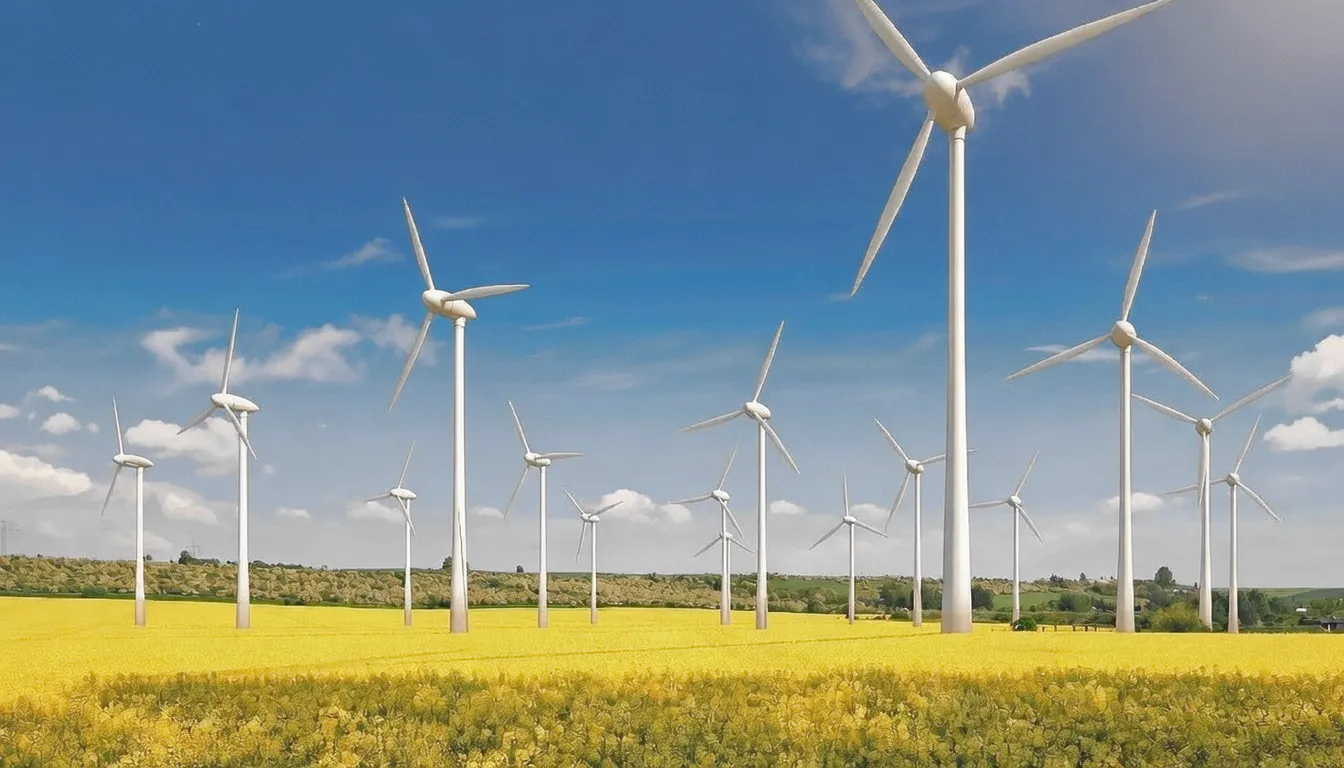 A growing proportion of wind turbines installed across the UK operate on direct-drive or hybrid drivetrain architectures — notably the Siemens Gamesa SG 14-236 DD and GE Haliade-X platforms being deployed in the current round of offshore lease areas. While these turbines eliminate the main gearbox and its associated high-speed shaft coupling, gear couplings remain essential at the nacelle drivetrain test bench facilities used to validate drive system components before offshore installation. Test centres such as those operated by Offshore Renewable Energy Catapult in Blyth, Northumberland — one of Europe’s foremost offshore wind research facilities — use large gear couplings rated above 10 MN·m to connect turbine drivetrain assemblies to regenerative load motors during acceptance testing.
Offshore Cable Installation Vessel Thrusters and Deck Machinery
 The UK’s offshore wind construction supply chain encompasses a fleet of cable-laying vessels, jack-up platforms, heavy-lift ships, and crew transfer vessels that support turbine installation and ongoing maintenance operations across the North Sea, Irish Sea, and English Channel. These specialist maritime assets rely extensively on gear couplings throughout their propulsion and deck machinery systems — in azimuth thruster motor connections, winch drive gearboxes, and dynamic positioning system power trains. Cable-laying vessels servicing the Eastern Regions of the UK’s offshore network — deploying export cables for projects like East Anglia THREE and the Norfolk Vanguard development — operate their deck tensioner and carousel drive systems with gear couplings rated for continuous duty in a marine environment, demanding the same corrosion-resistant specification required for the turbine nacelle components themselves. Ever Power’s stainless-sealed gear coupling range covers both the turbine nacelle and the marine support vessel market within a single product family, simplifying procurement and spares management for UK offshore wind operators managing complex multi-asset supply chains.
Ever Power: Precision Manufacturing & Custom Gear Coupling Solutions
 Ever Power has built its reputation as a precision gear coupling manufacturer serving the global industrial sector, with a growing client base across the UK’s wind energy, power generation, and heavy manufacturing industries. Operating from a modern manufacturing complex equipped with CNC gear hobbing machines, profile grinding centres, CMM-based quality assurance stations, and dedicated heat treatment lines, Ever Power engineers each gear coupling to the dimensional and mechanical tolerances demanded by the wind turbine drivetrain sector — tolerances that are consistently tighter than the ISO 14691 standard baseline.
Ever Power’s customisation capabilities extend from bore diameter and keyway specification — which the team adapts to any IEC motor frame or bespoke shaft geometry — through to tooth profile modification, surface treatment selection, and material certificate provision. For UK wind turbine operators managing ageing fleets installed between 2000 and 2015, Ever Power’s reverse engineering service produces drop-in replacement gear coupling hubs and sleeves that are dimensionally identical to the original equipment manufacturer’s component but manufactured to updated metallurgical specifications that extend operational life by 30–50% compared to the original part. This service is particularly valued by operations teams managing turbine portfolios across Birmingham-based energy companies, Sheffield-headquartered engineering contractors, and Bristol and Edinburgh-based wind farm asset management firms who need reliable MRO supply chains independent of OEM supplier constraints and lead times.
Ever Power’s supply chain management capability supports fast-track delivery programmes for both planned maintenance windows and emergency replacement scenarios. Recognising that unplanned downtime on a 5 MW offshore turbine can cost a UK operator in excess of £80,000 per day in lost revenue and vessel standby costs, Ever Power maintains strategic stock of the most commonly specified gear coupling sizes and can despatch emergency replacement parts via air freight within 48 hours of order confirmation. For large-volume orders — such as the coupling kits required for a fleet-wide scheduled maintenance campaign across 50+ turbines — Ever Power’s manufacturing capacity can deliver complete coupling assemblies on a rolling monthly call-off basis aligned to the maintenance programme schedule.
Ready to discuss a custom gear coupling solution for your wind turbine drivetrain or renewable energy project?
Featured Ever Power Coupling Products
Customer Success Story: Sheffield Energy & Industrial Group
Sheffield Energy & Industrial Group (SEIG) manages a portfolio of 68 onshore wind turbines installed across the Pennine uplands of South Yorkshire and the Peak District fringe of North Derbyshire. The fleet — predominantly turbines from the 850 kW to 2.3 MW class, installed between 2004 and 2014 — entered a critical maintenance window in 2022 as the original OEM drivetrain components approached the end of their designed service intervals. The most pressing component category was the high-speed shaft gear couplings, where spalling of the case-hardened tooth surfaces had begun to generate metallic debris detected in the scheduled oil sampling programme.
SEIG’s procurement team contacted Ever Power after being introduced through a recommendation from a Birmingham-based drivetrain engineering consultancy. The requirements were demanding: 68 pairs of gear coupling hubs plus replacement sleeves, dimensionally reverse-engineered to match three different OEM coupling designs across the fleet, delivered in a phased call-off programme aligned to the maintenance campaign’s seasonal access schedule — with access restricted to the spring and autumn wind speed lows to minimise lost generation during replacement windows. Material certifications to EN 10204 3.1 standard were mandatory to satisfy SEIG’s insurance underwriter requirements.
Ever Power’s engineering team completed dimensional reverse engineering of all three coupling variants within three weeks of receiving the original samples, confirmed material specifications against the OEM data sheets, and proposed an upgraded 42CrMo4 alloy with ion nitriding surface treatment in place of the original through-hardened C45 material — a substitution that SEIG’s engineering team accepted based on Ever Power’s fatigue life calculation package. The phased delivery programme ran across five quarterly tranches between Q1 2023 and Q1 2024, with zero delivery failures against the committed call-off schedule. Post-installation vibration monitoring data showed a measurable reduction in nacelle vibration amplitude at the gearbox-generator interface across the refurbished turbines, and the SEIG fleet achieved its highest recorded annual availability figure (96.8%) in the twelve months following completion of the gear coupling replacement programme.
Müşterilerimiz Ne Diyor?
“Ever Power’s reverse-engineered gear coupling hubs met our dimensional requirements exactly and the ion nitriding specification has delivered noticeably better wear resistance compared to the original OEM parts. After eighteen months of operation across our South Yorkshire fleet, we’re seeing clean oil samples with no metallic debris — exactly the result we needed to hit our availability targets.”
“The phased call-off delivery programme was exactly what we needed — coupling our maintenance campaign schedule to a reliable supply chain without holding excessive stock ourselves. Ever Power’s technical team responded to our engineering queries within 24 hours and the EN 10204 3.1 certificates arrived with each delivery batch without us having to chase. That level of reliability is genuinely rare in the industrial component supply market.”
“We specified gear couplings from Ever Power for a 12-turbine extension project in the East Midlands, with a custom bore and keyway configuration to match our generator supplier’s shaft geometry. Ever Power turned around the custom hub drawings for our approval in under a week, and the first article inspection results were within tolerance on all measured parameters. For a procurement team managing multiple simultaneous project couplings, that level of technical responsiveness saves significant time and cost at the critical pre-commissioning stage.”
Sıkça Sorulan Sorular
Ready to Source Precision Gear Couplings for Your Wind Turbine Project?
Whether you need a single replacement coupling or a fleet-scale supply programme, Ever Power’s engineering team is ready to help. Get in touch today.
gzl tarafından düzenlendi