Marine Engineering ▪ Gear Type Coupling ▪ UK Propulsion Systems
Зубчасте зчеплення в головних морських рушійних системах: надійність інженерії для суден Великої Британії та офшорних операцій
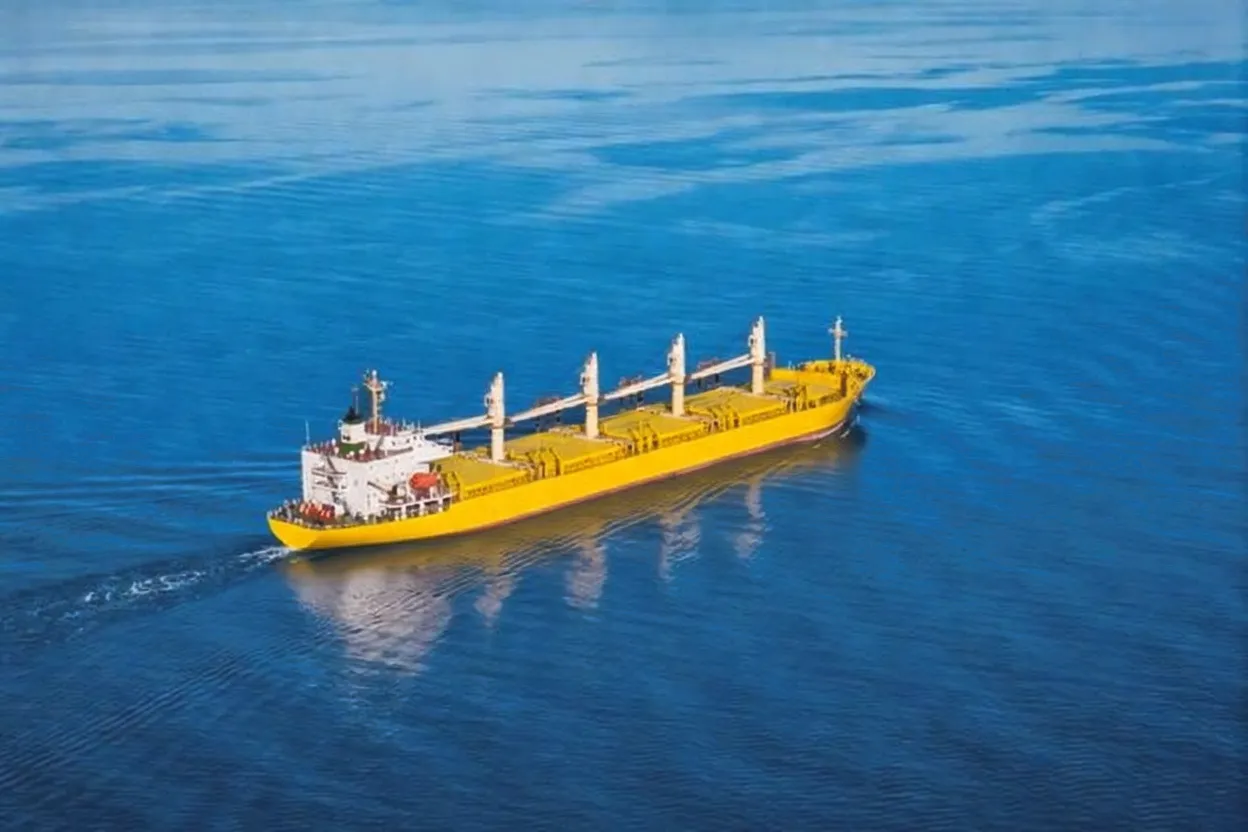 From North Sea platform supply vessels operating out of Aberdeen to RoRo ferries crossing the English Channel, the gear type coupling sits at the mechanical heart of every reliable ship propulsion drivetrain. When a 12,000-tonne cargo vessel pushes through five-metre North Sea swells, the connection between engine crankshaft and propeller shaft must absorb angular misalignment, compensate for hull hogging and sagging, and transmit torques that can exceed 3,000 kNm — all without a single mechanical failure. That unsung mechanical interface is, more often than not, a precision-engineered gear type coupling. This guide examines in technical depth how these components function within marine main propulsion systems, why they are uniquely suited to the ocean environment, and what British shipbuilders, naval architects, and vessel operators need to know when selecting, specifying, and sourcing them for UK-registered vessels.
Ever Power EP-M series marine gear type coupling — engineered for the most demanding ship propulsion and offshore applications
Why Marine Propulsion Places Extraordinary Demands on Gear Type Couplings
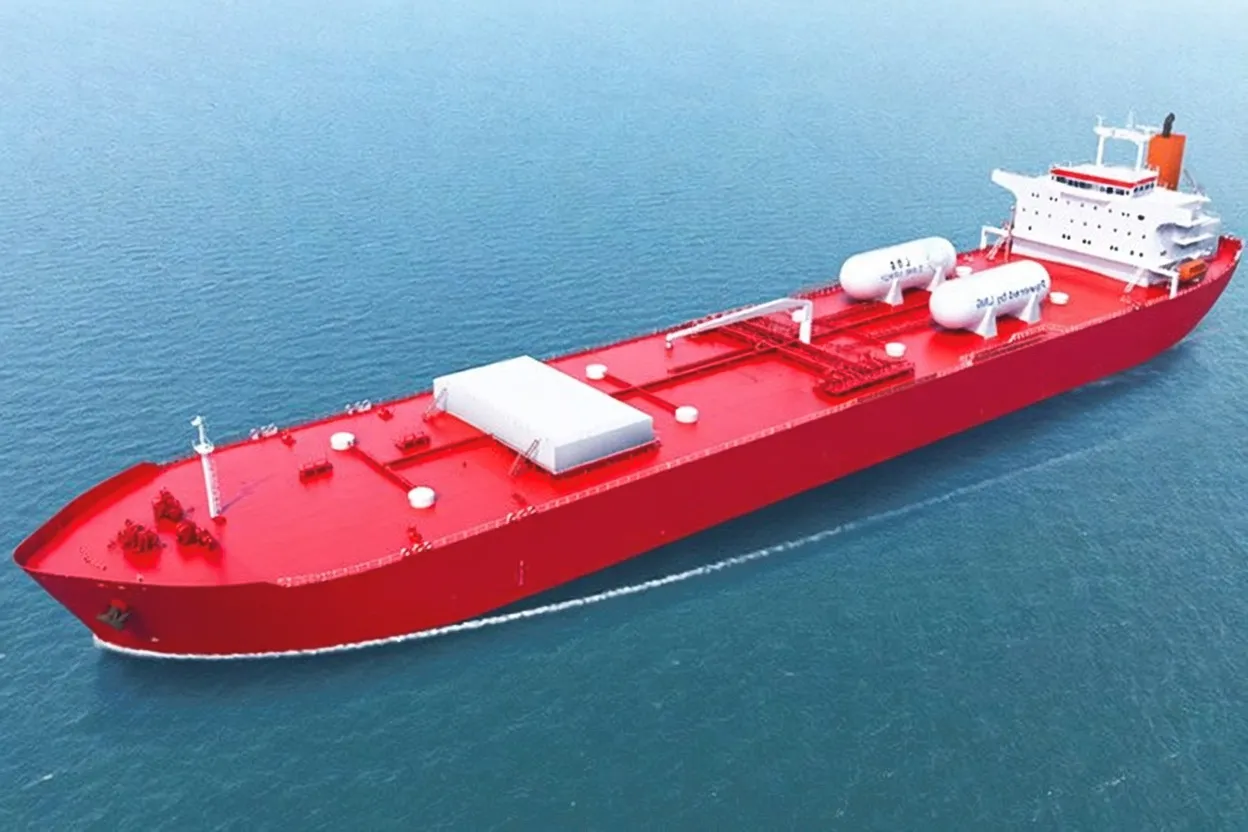 A conventional diesel-mechanical propulsion arrangement in a commercial vessel — whether a bulk carrier calling at Tilbury Docks, a cross-Channel ferry out of Dover, or a platform supply vessel operating in the Northern North Sea — presents a combination of mechanical loading conditions that is almost unmatched in industrial machinery. The main engine, typically a medium-speed diesel turning at 500–900 rpm or a slow-speed two-stroke at 80–120 rpm, generates high torque with an inherent cyclic firing impulse on every power stroke. This torque must travel through an intermediate shaft or directly to the reduction gearbox, and then onward via the propeller shaft to drive the fixed-pitch or controllable-pitch propeller against the resistance of the sea. Across every metre of this drivetrain, the ship’s hull is simultaneously bending, twisting, and thermally expanding in ways that continuously shift the relative alignment of each shaft section. A rigid coupling in this environment would transmit every misalignment-induced bending moment directly into the shaft flanges, gearbox bearings, and engine mounting structure — accelerating fatigue failure and generating maintenance costs that can quickly run into hundreds of thousands of pounds on UK-operated commercial vessels.
The gear type coupling resolves this problem through an elegantly simple mechanism: its crowned external gear teeth, meshing with matching internal teeth in the sleeve, allow angular deflections of up to 1.5°–2.0° per coupling half while continuing to transmit full rated torque at efficiencies exceeding 99%. The axial float — typically 4 to 20 millimetres depending on size — accommodates thermal shaft elongation and the natural axial movement generated as a propeller shaft reacts to changing thrust loads. Beyond these purely mechanical functions, the marine environment adds a third layer of challenge: unrelenting exposure to high-humidity, high-salt-content air that will initiate corrosion on unprotected steel surfaces within weeks. A gear type coupling in a ship’s engine room must remain structurally intact and properly lubricated across intervals of 5,000 to 8,000 running hours between scheduled dry-dock inspections — demanding a level of corrosion engineering discipline that goes far beyond standard industrial practice.
⚙
Misalignment Compensation
Crowned involute tooth geometry allows angular misalignment up to 1.5° per half-coupling and axial float up to ±20 mm on large assemblies, absorbing hull deflection, engine movement, and thermal expansion without transmitting destructive bending loads to adjacent shafts and bearings.
💧
Sealed Marine Lubrication
Multi-lip labyrinth seals retain NLGI 2 or NLGI 3 extreme-pressure marine grease under centrifugal force during rotation while blocking seawater and salt-spray ingress. Sealed assemblies achieve 5,000–8,000 hr regreasing intervals aligned with Lloyd’s Register Class survey schedules on UK-flag vessels.
⚡
Висока щільність крутного моменту
Multi-tooth simultaneous engagement achieves torque transmission efficiency above 99% with a compact OD-to-torque ratio that fits the confined machinery spaces aboard commercial vessels, delivering more rated torque per kilogram than equivalent flexible disc or elastomeric coupling designs.
How a Gear Type Coupling Functions in a Ship Propulsion Drive Train
At its mechanical core, a gear type coupling consists of two hub assemblies — each carrying precision-ground external crowned gear teeth — engaging with a pair of outer sleeve members fitted with matching internal teeth. In a conventional main propulsion arrangement, one hub bolts directly to the engine flywheel or intermediate shaft flange, while the opposing hub connects to the gearbox input shaft or, on smaller vessels, directly to the propeller shaft. The crowned tooth profile is the defining feature that sets the gear type coupling apart from spline or jaw couplings: the teeth are formed to a barrel or spherical curvature so that as the two shaft centrelines diverge under angular misalignment, the contact stress is distributed across the full tooth face width rather than concentrating at one edge. This controlled rocking action simultaneously accommodates axial displacement as the teeth slide longitudinally along their faces in response to thermal or load-induced shaft movement.
In large-scale main propulsion applications — for instance, a 4,500 kW medium-speed diesel driving a controllable-pitch propeller on a Humber Estuary bulk carrier — the coupling assembly will typically also incorporate a torsionally flexible element, such as a membrane pack or elastomeric disc, between the gear coupling halves. This provides the additional torsional compliance needed to protect the gearbox from the intense torque spikes generated at engine start, during astern manoeuvres in confined port approaches, and when the propeller enters cavitation in following seas. The ability to combine angular misalignment compensation and torsional damping in a single compact component package is precisely why the gear type coupling remains the default choice of naval architects and marine engineers who specify Lloyd’s Register-approved drivetrains for commercial vessels built or operated in the United Kingdom.
01
Engine Output
Crankshaft transmits torque to hub flange
02
Crowned Teeth Mesh
External hub teeth engage internal sleeve teeth; barrel crown enables angular float
03
Offsets Absorbed
Angular and axial offsets compensated — no bending stress transmitted to shafts
04
Propeller Driven
Clean, high-efficiency torque reaches the propeller at rated power
Materials and Surface Treatment: Built for Salt Air, Heavy Seas, and Long Intervals
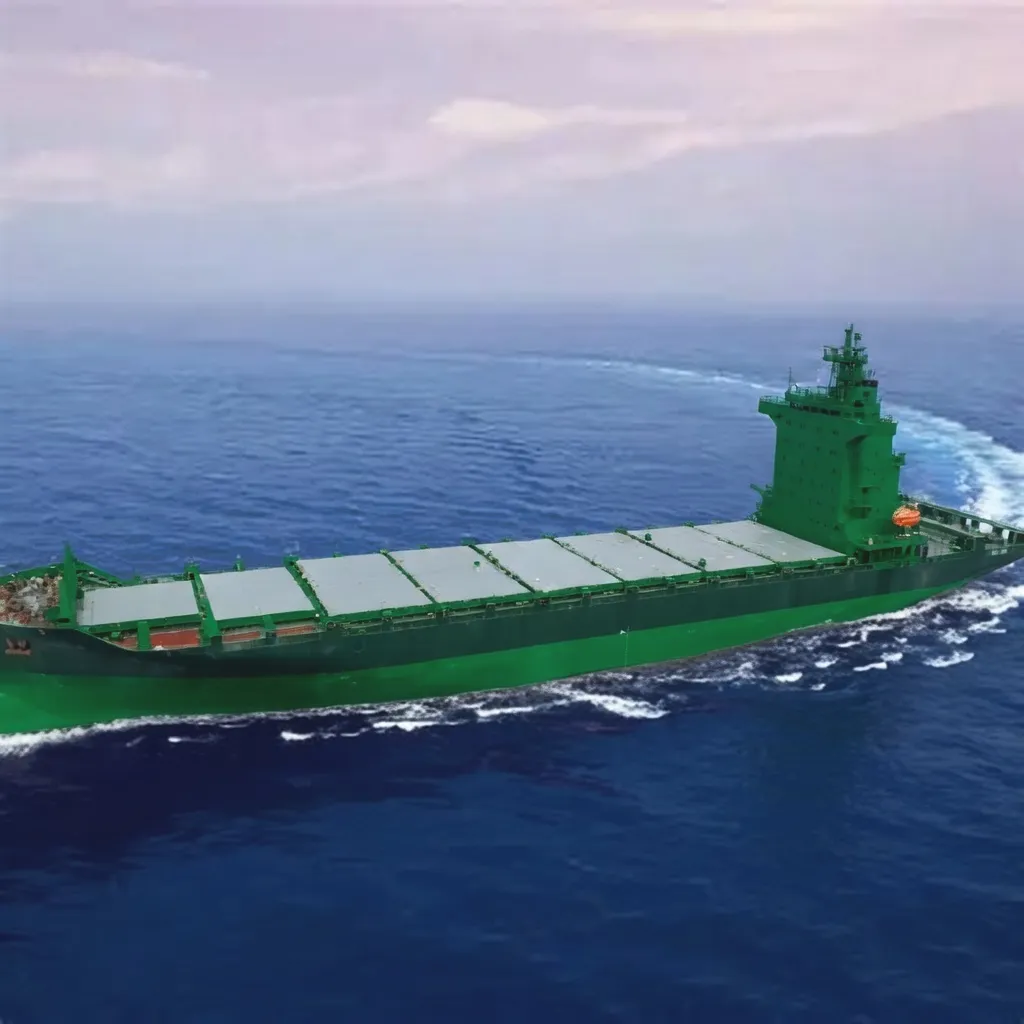 Selecting the correct base material and surface protection for a marine gear type coupling is as much a corrosion engineering decision as a mechanical one. In the North Sea, the English Channel, or the Irish Sea, even the controlled environment of a ship’s engine room exposes unprotected steel surfaces to salt-laden humid air that can initiate electrochemical pitting within weeks. Gear coupling hubs and sleeves for main propulsion service are manufactured from medium-carbon chromium-molybdenum alloy steels — most commonly 42CrMo4 (equivalent to AISI 4140) for bore sizes up to approximately 280 mm, and 34CrNiMo6 for larger assemblies where higher toughness and fatigue resistance under cyclic torsional loading are mandatory. These grades offer tensile strengths of 900–1,200 MPa combined with the ductility needed to resist crack propagation under the impulse torque loads characteristic of diesel propulsion. For the most demanding North Sea offshore applications, duplex stainless steel (grade 2205) is available for external sleeve flanges, sacrificing some fatigue strength in return for elimination of the corrosion maintenance burden in particularly aggressive environments.
Surface protection is applied in a defined sequence at our manufacturing facility. Gear tooth flanks receive a phosphate conversion coating as a base layer, providing both corrosion inhibition during storage and a lubricant-retentive microstructure that reduces fretting during slow-speed manoeuvring. External flange and sleeve surfaces are prepared by grit blasting to Sa 2.5 per ISO 8501-1, then primed with a two-component zinc epoxy primer and topcoated with a high-build polyurethane paint to a minimum dry film thickness of 120 micrometres — a specification that satisfies NORSOK M-501 System 1 requirements as recognised by Lloyd’s Register for North Sea service. For sealed grease-lubricated assemblies, the internal gear cavity is packed with NLGI 3 marine grease containing extreme-pressure and anti-corrosion additive packages compliant with IP 278 test procedures. Optional internal PTFE-impregnated tooth coatings can further extend greasing intervals and protect tooth flanks against the fretting corrosion that can occur during periods of prolonged low-speed operation.
Base Alloy
42CrMo4 / 34CrNiMo6
900–1,200 MPa tensile; excellent fatigue resistance under cyclic torsional and impulse loads
Corrosion Protection
Zinc Epoxy + PU Topcoat (DFT 120 µm)
Sa 2.5 blast prep; NORSOK M-501 System 1 compliant; LR-recognised for North Sea service
Marine Lubrication
NLGI 3 Marine EP Grease (IP 278)
Factory-sealed; 5,000–8,000 hr intervals on sealed designs; labyrinth seal rated to IP66
Optional Upgrade
Duplex 2205 / PTFE Tooth Coat
For extreme-salinity offshore service; PTFE tooth impregnation extends maintenance intervals and reduces fretting risk during prolonged slow-speed ops
Technical Specifications: Ever Power EP-M Marine Gear Coupling Series
The table below provides representative parameters across the Ever Power EP-M marine propulsion coupling range. Ratings are given at nominal steady-state conditions. Final selection for any specific vessel application must incorporate a service factor (Ks) determined from engine type, start frequency, propeller type (FPP vs CPP), and predicted torque fluctuation data from a torsional vibration analysis. British customers requiring Lloyd’s Register, Bureau Veritas, or DNV-GL type approval documentation — including material certificates to EN 10204 3.1 or 3.2, balancing records, and dimensional inspection reports — should contact our engineering sales team at the address below for full certified calculations and drawings.
ⓘ Custom bore, keyway geometry, flange PCD, and Class certification on request — [email protected]
Application Scenarios: Where Gear Type Couplings Are Critical in Marine Operations
A gear type coupling is not deployed at a single point in a marine drivetrain — it appears at multiple critical interfaces across the propulsion system and in auxiliary machinery throughout the vessel. Understanding the specific mechanical demands at each installation point allows naval architects and marine engineers to select the appropriate coupling series, lubrication system, and corrosion protection strategy for maximum service life and minimum whole-life cost. The four scenarios below represent the most common and most mechanically demanding applications encountered aboard UK commercial and offshore vessels.
🚢
Main Engine to Reduction Gearbox
The highest-loaded point in any diesel-mechanical drivetrain, this coupling position must absorb engine firing impulses, thermal expansion offsets between engine and gearbox mounting structures, and any residual angular error from initial alignment. A correctly specified gear type coupling at this point protects the gearbox input shaft from bearing-load reversals and gear micropitting fatigue, directly reducing gearbox overhaul frequency on ferries operating Dover–Calais or Harwich–Hook of Holland routes and cargo vessels working the Thames Estuary.
⚓
Gearbox Output to Propeller Shaft
Between gearbox output flange and the intermediate or propeller shaft, the gear type coupling compensates for the natural hogging and sagging deflection of the vessel hull as it moves through waves. On a 150-metre bulk carrier calling at Immingham or Grimsby, hull deflection can introduce several millimetres of vertical offset along the shaft line — exactly within the axial and angular tolerance of a correctly sized gear coupling, maintaining stern-tube seal integrity and extending tailshaft bearing replacement intervals.
⚡
Marine Auxiliary Generator Sets
Diesel-driven generator sets powering propulsion thrusters, hotel loads, and deck machinery on passenger vessels, cruise ships, and ro-pax ferries operating from Southampton or Portsmouth depend on gear type couplings to isolate the alternator from diesel vibration and mounting misalignment. Alternator bearings are particularly sensitive to misalignment-induced radial pre-loading — a gear coupling prevents this loading, reducing unscheduled electrical failures and the significant commercial cost of a vessel going off-charter for electrical repairs.
🏘
Offshore Wind Service Operation Vessels
The rapidly expanding UK offshore wind sector — with major fields off Yorkshire, Norfolk, and the Bristol Channel coast — has created sustained demand for robust gear type couplings aboard Service Operation Vessels (SOVs) and Crew Transfer Vessels (CTVs). Dynamic positioning operations create the precise cyclic torque variation profiles that gear couplings are engineered to withstand, and the coastal North Sea service environment demands exactly the corrosion engineering standards described throughout this article.
Why UK Marine Engineers Specify Ever Power Gear Type Couplings
A propulsion coupling failure at sea is not a scheduled maintenance event — it is a maritime emergency with potential safety, environmental, and commercial consequences. The decision to fit an undersized or incorrectly specified gear type coupling to a vessel’s main propulsion system can result in an unplanned loss of propulsion, a tow to the nearest UK port, and a dry-docking bill that easily exceeds £500,000 for a medium-sized commercial vessel. Ever Power’s marine gear coupling range has been developed over eighteen years of propulsion application engineering to address each specific failure mode and operational demand described in this guide, delivering components that consistently achieve rated service life under real North Sea and coastal UK operating conditions.
✔
Class Society Certified
Lloyd’s Register, Bureau Veritas, DNV-GL type approval available with full material traceability, 3.1/3.2 mill certs, and dimensional inspection records as standard export documentation.
✔
CNC Precision Gear Grinding
ISO 1328 Grade 5–6 tooth accuracy on all marine-grade assemblies; crowned profile precision-formed by CNC grinding to eliminate edge loading at rated angular misalignment throughout service life.
✔
IP66-Rated Sealing
Multi-lip labyrinth seals retain lubricant at speeds to 3,600 rpm, rated IP66 against water jet and salt-spray ingress — validated under accelerated salt-spray testing to 720 hours per ISO 9227.
✔
5,000+ Hour Service Intervals
Sealed grease designs aligned with Class survey schedules, minimising dry-dock maintenance programme cost on UK-flag vessels operating demanding North Sea, Irish Sea, and English Channel routes.
✔
Full Custom Engineering
Non-standard bore, keyway, flange PCD, shaft extension length, or special surface treatment all accommodated — engineered to your drawings, gearbox interface spec, or Class-approved design documentation.
✔
Competitive Price to UK Buyers
Direct factory pricing with GBP quotations available; DDP shipping terms to Southampton, Hull, Tilbury, Aberdeen, Liverpool, Belfast — no hidden distributor margins on any order.
Customer Success: North Sea Platform Supply Vessel — Aberdeen, Scotland
Client: Caledonian Offshore Services Ltd. — Aberdeen, Scotland, UK
Industry: Offshore Oil & Gas Support Vessels (Northern North Sea)
Vessel: 75-metre twin-screw Platform Supply Vessel (PSV), diesel-mechanical propulsion
The Challenge. Caledonian Offshore Services was experiencing recurring intermediate shaft bearing failures on the port propulsion line of their primary PSV, leading to two unplanned dry-dockings within eighteen months at an estimated combined cost of over £320,000 in lost charter revenue and repair costs. Our application engineering team was engaged to review the drivetrain specification. Analysis revealed the original equipment gear type coupling on the port main engine was rated to a service factor of Ks = 1.5 — insufficient for the actual operational profile. The vessel routinely performed full-astern manoeuvres in the confined port approaches at the Forties and Ninian Central platforms, combined with exposure to North Sea Sea State 4 and 5 conditions producing hull hogging deflections of 4–6 mm along the shaft line. Peak instantaneous torque spikes during these operations were estimated at approximately 42% above the coupling’s steady-state rated capacity.
The Solution. Working closely with Lloyd’s Register’s Aberdeen technical office, our team carried out a full torsional vibration analysis and propulsion system service factor calculation. We specified an Ever Power EP-M 280 marine gear type coupling manufactured from 34CrNiMo6 alloy steel, with an extended crowned-tooth engagement length for improved angular capacity and a design service factor of Ks = 2.0. The assembly was sealed with NLGI 3 marine grease and finished with a full NORSOK-compliant epoxy-PU coating system. Complete LR Class certification — including EN 10204 3.1 material certificates, magnetic particle test records, and balance certificate — was delivered within eight weeks of order placement, meeting the client’s scheduled dry-dock window at Dundee.
The Outcome. Following installation, continuous bearing temperature monitoring on the port shaft line showed a 24% reduction in steady-state intermediate bearing operating temperature — a direct confirmation of reduced misalignment-induced radial loading. The vessel subsequently accumulated 14,200 running hours over 29 months of North Sea service without a single propulsion-related unplanned maintenance stop. The estimated maintenance cost saving over this period exceeded £280,000 against the previous bearing replacement pattern. Caledonian Offshore Services subsequently placed an order for an equivalent coupling assembly on the starboard propulsion line during the vessel’s next scheduled Class renewal survey.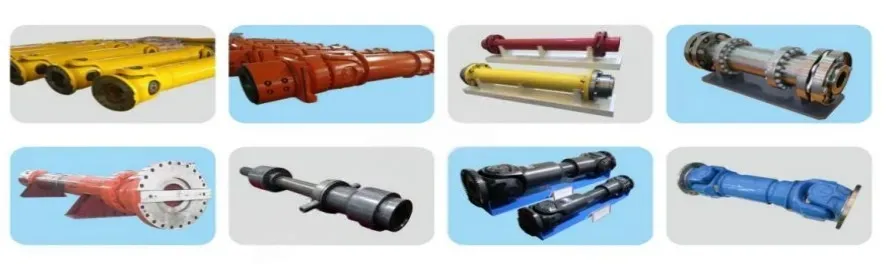
📋 Ever Power EP-M 280 / 34CrNiMo6 / LR Certified — 14,200 hr confirmed service life, Aberdeen, UK
What Marine Engineers and Naval Architects Are Saying
★★★★★
“We fitted Ever Power gear type couplings on three vessels in our fleet on the recommendation of our Class surveyor. The dimensional precision, LR certification documentation, and on-time delivery into Tilbury Docks were exactly as quoted. Eighteen months of service later and not a single propulsion issue — the whole maintenance team is impressed.”
— James H., Chief Engineer
RoRo Ferry Operator, Port of Dover, England
★★★★★
“As a naval architect specifying propulsion systems for offshore wind support vessels based out of Grimsby and Hull, I’ve relied on Ever Power for custom coupling solutions twice now. They matched a non-standard gearbox interface that three European suppliers said couldn’t be done within our project budget, and they delivered on time. Very strong technical support from the application engineers.”
— Sarah T., Naval Architect
Marine Engineering Consultancy, Humber Estuary, UK
★★★★★
“The price quoted for EP-M 160 couplings was substantially more competitive than the OEM spare part price — I was sceptical, but our in-house NDT team verified the quality as fully equivalent. We now have a standing purchase agreement covering our annual dry-dock programme for the South Coast passenger fleet. The direct export delivery to Southampton has been reliable on every order.”
— David M., Procurement Manager
Passenger Vessel Operator, Port of Southampton, England
Ever Power: Marine Gear Coupling Manufacturing and Custom Engineering for UK Clients
At Ever Power, customisation is not an expensive add-on — it is the foundation of how we serve shipbuilders, naval architects, and vessel operators in the United Kingdom. No two propulsion systems are identical, and catalogue standard sizes rarely match the exact bore diameter, flange bolt circle, shaft extension, or service factor that a specific vessel design requires. Our manufacturing facility is equipped with CNC turning centres capable of machining hubs to 800 mm bore, CNC gear hobbing and profile grinding lines calibrated to ISO 1328 Grade 5 tolerances, and in-house induction heat treatment, carburising, and through-hardening capability — all under a single quality management system. Non-destructive testing covering magnetic particle inspection, ultrasonic examination, and dimensional metrology is carried out entirely in-house, with full traceability of each result to the relevant workpiece serial number.
For UK clients, we offer a complete service from initial drivetrain review and service factor calculation through to delivery of a ready-to-install, Class-certified assembly to any named UK port. Our engineering team works routinely from customer-supplied shaft drawings, OEM gearbox interface specifications, or Lloyd’s Register design notes. Clients requiring torsional vibration analysis as part of a new-build specification or propulsion system modification project can commission this service directly through our application engineers. Typical lead times for standard custom sizes are four to eight weeks from drawing approval; expedited manufacturing is available on request for urgent dry-dock windows — a capability that has saved several UK operators from extended port delays. All export documentation for United Kingdom customers — commercial invoice, packing list, material certificates, Class approval records, and export customs paperwork — is prepared as a complete package for immediate use on arrival.
18+
Years Marine Application Engineering
800 mm
Maximum Custom Bore Capability
4–8 wk
Standard Lead Time to UK Ports
LR · BV · DNV
Class Certification Available
✉ Get a Custom Gear Coupling Quote
Email: [email protected] · Response within one working day
Delivering Marine Gear Type Couplings Across the United Kingdom
The United Kingdom’s commercial and offshore maritime sector encompasses some of the most technically demanding vessel operations and deepest shipbuilding heritage in the world. From the naval dry-docks at Rosyth and Devonport to the commercial port complexes at Felixstowe, Tilbury, and the Port of Tyne, UK vessel operators and shipyards consistently demand зубчасте зчеплення suppliers who can meet tight dimensional specifications, strict classification society requirements, and the pressing delivery schedules of scheduled dry-dock windows. Ever Power has built a reliable export supply route to serve UK marine customers, with proven logistics connections to Southampton, Tilbury, Liverpool, Hull, Grimsby, Aberdeen, and Belfast.
British maritime engineering requirements — as defined by Lloyd’s Register technical rules, Maritime and Coastguard Agency (MCA) certification requirements, and the BS PD 5500 pressure vessel and structural design standards referenced in many marine component approvals — are fully addressed within our quality management system. We supply material certification to EN 10204 3.1 as standard, with 3.2 (third-party witnessed) available where specified by the Class surveyor. For vessel operators seeking to reduce procurement lead-time risk ahead of major dry-dock periods, we also offer consignment inventory arrangements through UK-based logistics partners, maintaining pre-machined blank assemblies or finished couplings at UK warehousing locations for same-week despatch against urgent requirements. DDP (Delivered Duty Paid) shipping to named UK port addresses is available on all orders, eliminating import duty and customs administration burden for the buyer.
⚓
South England
Southampton, Portsmouth, Poole, Dover, Folkestone
⚓
East England
Tilbury, Harwich, Felixstowe, Hull, Grimsby, Immingham
⚓
North Sea / Scotland
Aberdeen, Dundee, Lerwick, Port of Tyne, Rosyth
⚓
NW England / NI / Wales
Liverpool, Barrow, Belfast, Milford Haven, Swansea
Frequently Asked Questions: Marine Gear Type Couplings for UK Vessels
Common questions from UK shipbuilders, naval architects, vessel operators, and maintenance engineers.
Start Your Specification
Expert Marine Gear Coupling Support for Your UK Vessel Project
Share your shaft dimensions, rated torque, max speed, and Class requirement with our application team. Competitive GBP pricing, certified quality, delivery to any UK port.
редагування від gzl