📧 Get a Free Quote — Email Our Technical Team
Response within 24 hours • CE-compliant documentation available • UK shipping
How Couplings Work in Portal Crane Drivetrains
Working Principle & Mechanical Function
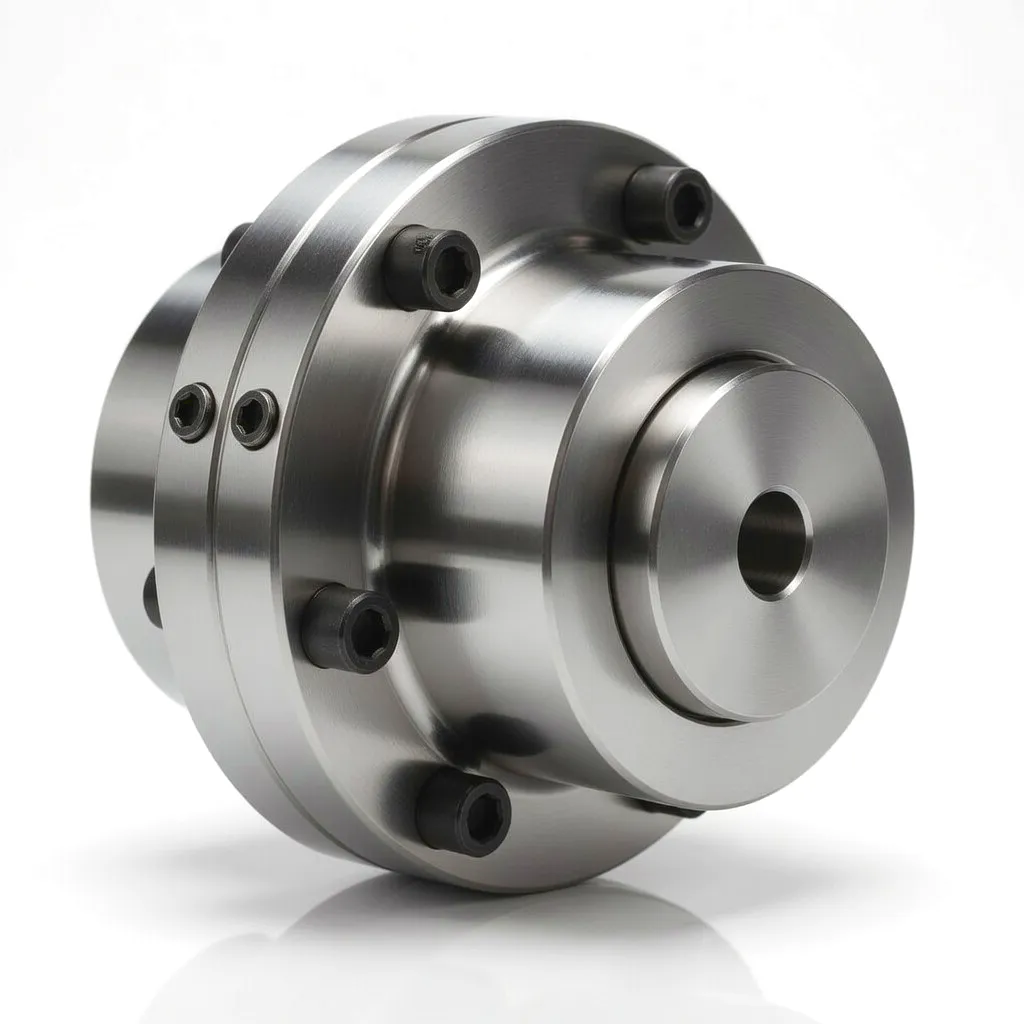
A coupling connects two rotating shafts — typically a motor output shaft and a gearbox input shaft — and transmits torque between them while accommodating the small but inevitable imperfections in shaft alignment that occur during installation, thermal expansion, or structural deflection under load. In a portal crane, multiple coupling points exist throughout the machine: the hoist motor to hoist gearbox, the slewing motor to slewing gearbox, and the travel drive motors to the wheel gearboxes. Each coupling point experiences a different combination of steady-state torque, peak impact torque during load pick-up, and cyclic loading as the crane swings and positions its hook.
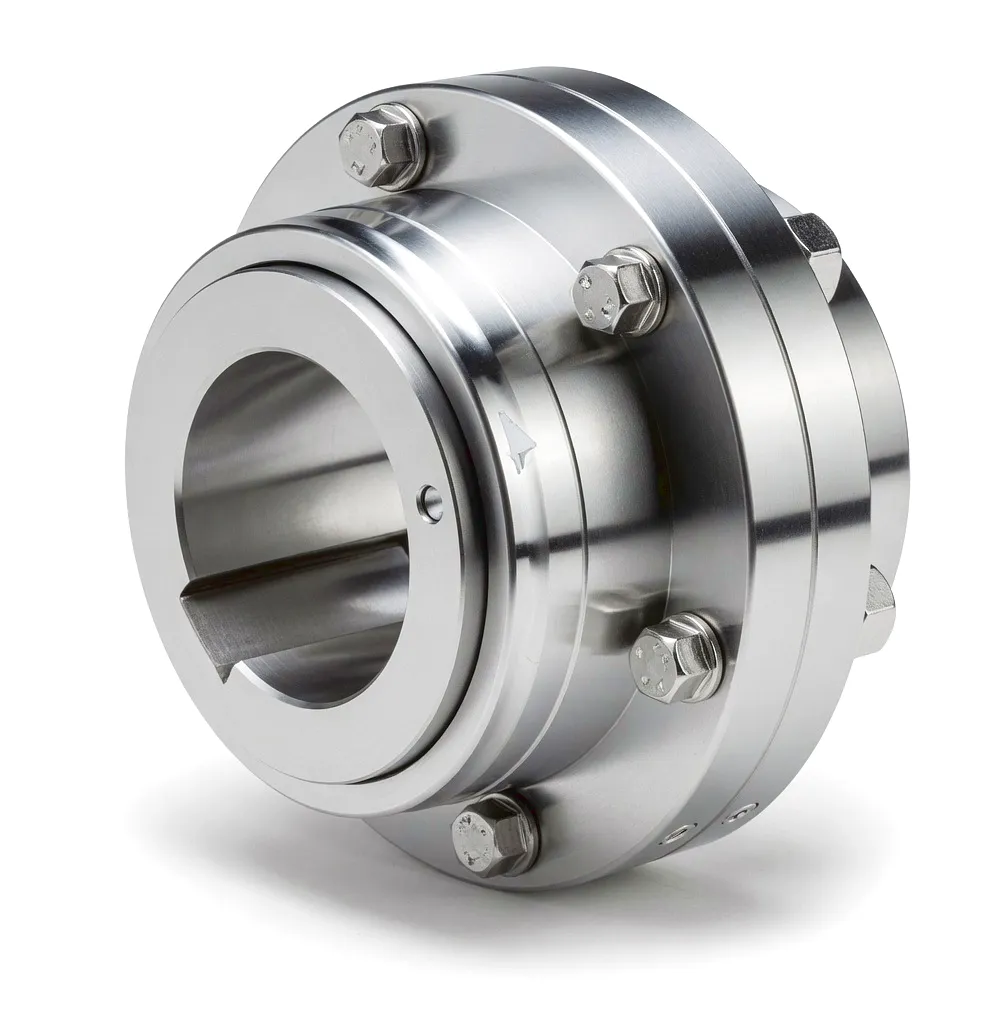
The principle behind all industrial couplings is the same: torque enters through one hub, passes across an intermediate element (which may be teeth, elastomeric elements, metallic discs, or a fluid medium), and exits through the second hub attached to the driven shaft. What distinguishes coupling designs from one another is how that intermediate element handles misalignment, absorbs shock, and maintains torsional stiffness under sustained loading. Portal crane applications demand high torque capacity, robustness against shock loading during emergency stops, and the ability to tolerate the angular and axial misalignments that accumulate as large steel structures flex and settle under working loads that can reach several hundred tonnes.
Key Function Points
- ✓ Torque transmission across shaft gap
- ✓ Angular misalignment compensation
- ✓ Shock and vibration damping
- ✓ Axial float allowance
- ✓ Electrical isolation (elastomeric types)
Core Materials Used in Industrial Couplings
Material Science & Manufacturing Inputs
Alloy Steel (42CrMo4)
Used for hubs, flanges and gear teeth in high-torque portal crane applications. This chromium-molybdenum alloy delivers tensile strength in the range of 900–1100 MPa, excellent fatigue resistance, and reliable performance under the shock loads typical of crane hoist operations. After heat treatment and precision machining, 42CrMo4 hubs maintain dimensional stability across operating temperatures from -20°C to +120°C, which is important for outdoor portal cranes in UK coastal or northern environments where temperature swings can be significant.
Ductile Cast Iron (GGG50)
Selected for coupling housings and intermediate flanges where weight reduction and cost management are priorities without sacrificing toughness. GGG50 spheroidal graphite iron offers tensile strength of approximately 500 MPa with elongation exceeding 7%, giving it the energy-absorbing capacity to survive impact loads. Its excellent machinability also supports the tight bore tolerances (typically H7) required for interference or transition fits on crane drive shafts.
Polyurethane Elastomer (PU)
The flexible element in elastomeric couplings, polyurethane spiders and cushions deliver controlled torsional compliance while withstanding oil, grease, and mild chemical contamination found in crane environments. PU elements rated Shore 92A are the standard choice for crane slewing drives, offering peak shock load absorption without the brittleness of harder rubbers, and service life typically exceeding 20,000 operating hours in moderate-duty applications.
Stainless Steel 316L (Disc Packs)
Disc couplings used in precise, high-speed crane applications — such as encoder drives or variable frequency drive (VFD) motor connections — rely on laser-cut 316L stainless disc packs. These discs flex cyclically to accommodate misalignment without backlash, transmit torque with zero torsional compliance, and resist the salt air and moisture exposure encountered in portside crane installations along the UK coast.
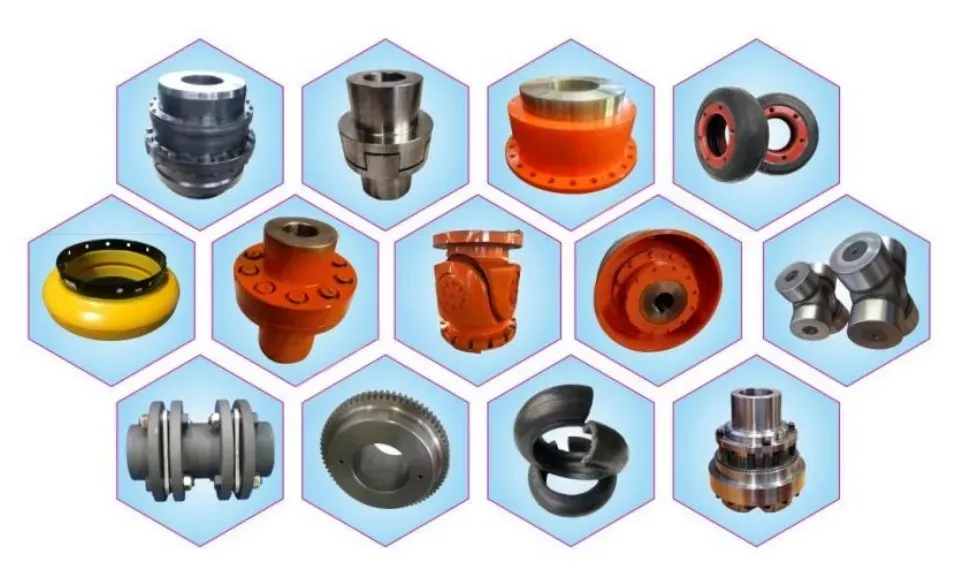
Product Advantages: Why Precision Couplings Outperform in Portal Crane Service
Technical Superiority & Engineering Benefits
⚡
Hohe Drehmomentdichte
Modern gear-type and disc couplings deliver torque ratings from 500 Nm to beyond 500,000 Nm within compact envelope dimensions, making them ideal for retrofitting into existing crane drivetrains where space is constrained but power demands have increased due to productivity upgrades or re-rating the crane for higher SWL.
🔨
Toleranz gegenüber Ausrichtungsfehlern
Portal crane structures are large welded fabrications that settle, deflect under load, and experience thermal movement across shifts. Quality couplings accommodate angular misalignment up to 1.5 degrees and parallel offset misalignment up to 0.5 mm simultaneously, preventing the bearing-destroying shaft bending moments that rigid couplings would impose in the same conditions.
🛡
Shock Load Protection
Crane operations generate momentary torque spikes — at load pick-up, emergency braking, and when loads swing into restraint — that can reach 2.5 to 3 times the rated running torque. Elastomeric couplings and spring-loaded safety couplings with integrated overload protection absorb these spikes and prevent gearbox and motor damage that would otherwise require costly crane downtime.
📈
Lange Lebensdauer
Gear couplings with lubricated tooth engagement are designed for 50,000+ operating hours between rebuilds, vastly reducing life-cycle maintenance costs compared to plain jaw couplings or simple pin couplings. For UK crane operators running multi-shift operations in shipyards, steel plants, and bulk handling terminals, extended service intervals translate directly into higher asset utilisation and lower cost per tonne handled.
🔄
Easy Maintenance Access
Split-hub and half-shell coupling designs allow inspection and element replacement without disturbing motor or gearbox alignment, an important feature when crane maintenance windows are measured in hours rather than days. Modular construction means worn elastomeric spiders or disc packs can be renewed on-site by crane engineers without specialist tooling.
⚓
Corrosion Resistance for Marine Environments
Portal cranes installed in UK ports — from Felixstowe to Aberdeen — operate in salt-laden, humid air. Couplings with hot-dip galvanised housings, stainless disc packs, or specialist marine-grade coatings provide a significant service life advantage over standard unprotected steel components in these aggressive ambient conditions.
Technical Performance Parameters: Portal Crane Coupling Selection Guide
Specifications & Data Table
| Coupling Type | Torque Range (Nm) | Winkelabweichung. | Paralleler Versatz | Speed (rpm) | Nabenmaterial | Best Crane Use |
|---|---|---|---|---|---|---|
| Gear Coupling | 500 → 500,000 | Up to 1.5 deg | Up to 0.5 mm | Up to 3,600 | 42CrMo4 Steel | Hoist main drive |
| Scheibenkupplung | 100 → 200,000 | Up to 0.5 deg | Up to 0.25 mm | Up to 10,000 | 316L Stainless | VFD motor connections |
| Kiefer / Elastomer | 50 → 12,000 | Up to 1.0 deg | Up to 0.4 mm | Up to 4,000 | GGG50 Iron / PU | Slewing drive motors |
| Flexible Beam | 0.5 → 800 | Up to 3.0 deg | Up to 0.5 mm | Up to 15,000 | Aluminium 7075 | Encoder / sensor shafts |
| Fluid Coupling | 2,000 → 2,000,000 | Minimal (rigid) | Minimal | Up to 1,500 | Cast Steel | Very heavy hoist duty |
| Tyre / Donut | 200 → 20,000 | Up to 4.0 deg | Up to 1.0 mm | Up to 2,000 | Steel hub / NR rubber | Travel drive wheels |
Application Scenario: Couplings in Portal Crane Operations
Industrial Application Deep-Dive
⚓ Portside Cargo Handling — Hoist Mechanism Drive
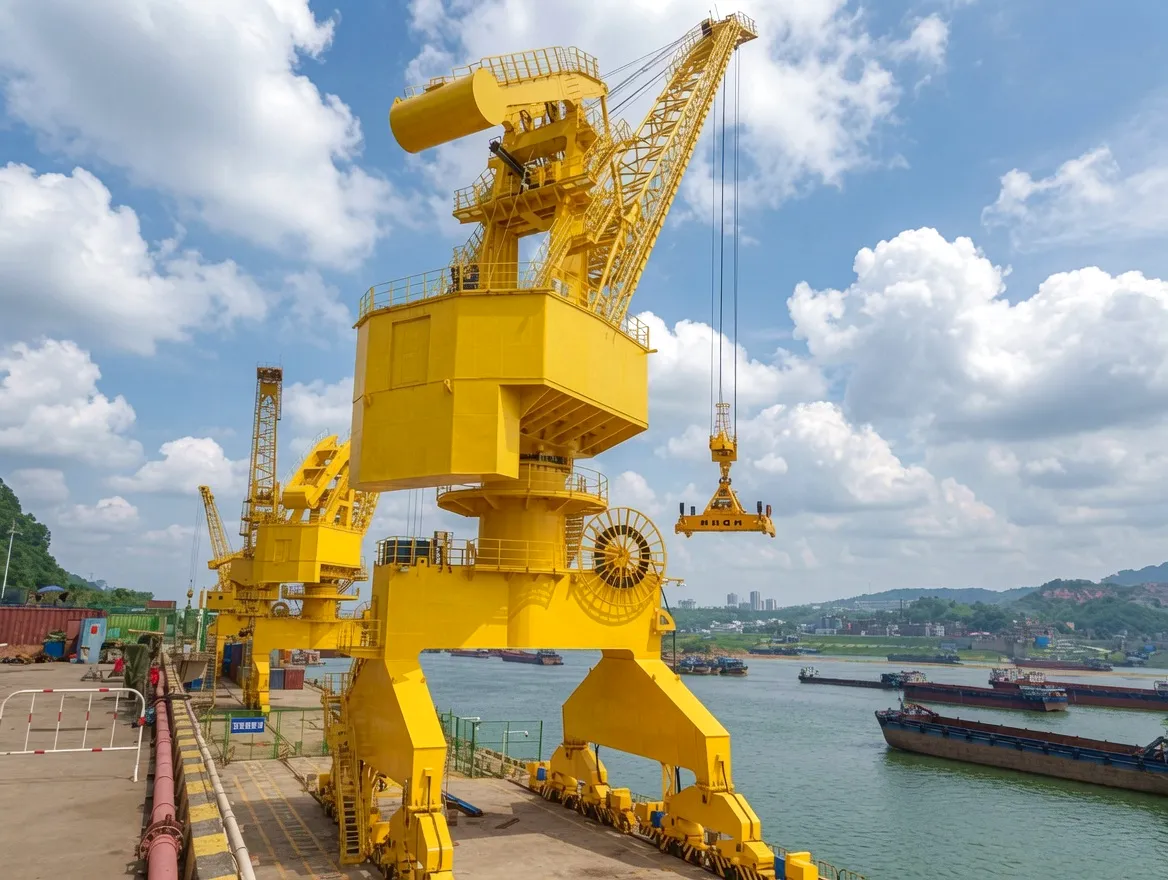
🔄 Slewing Ring Drive — Rotary Motion Control
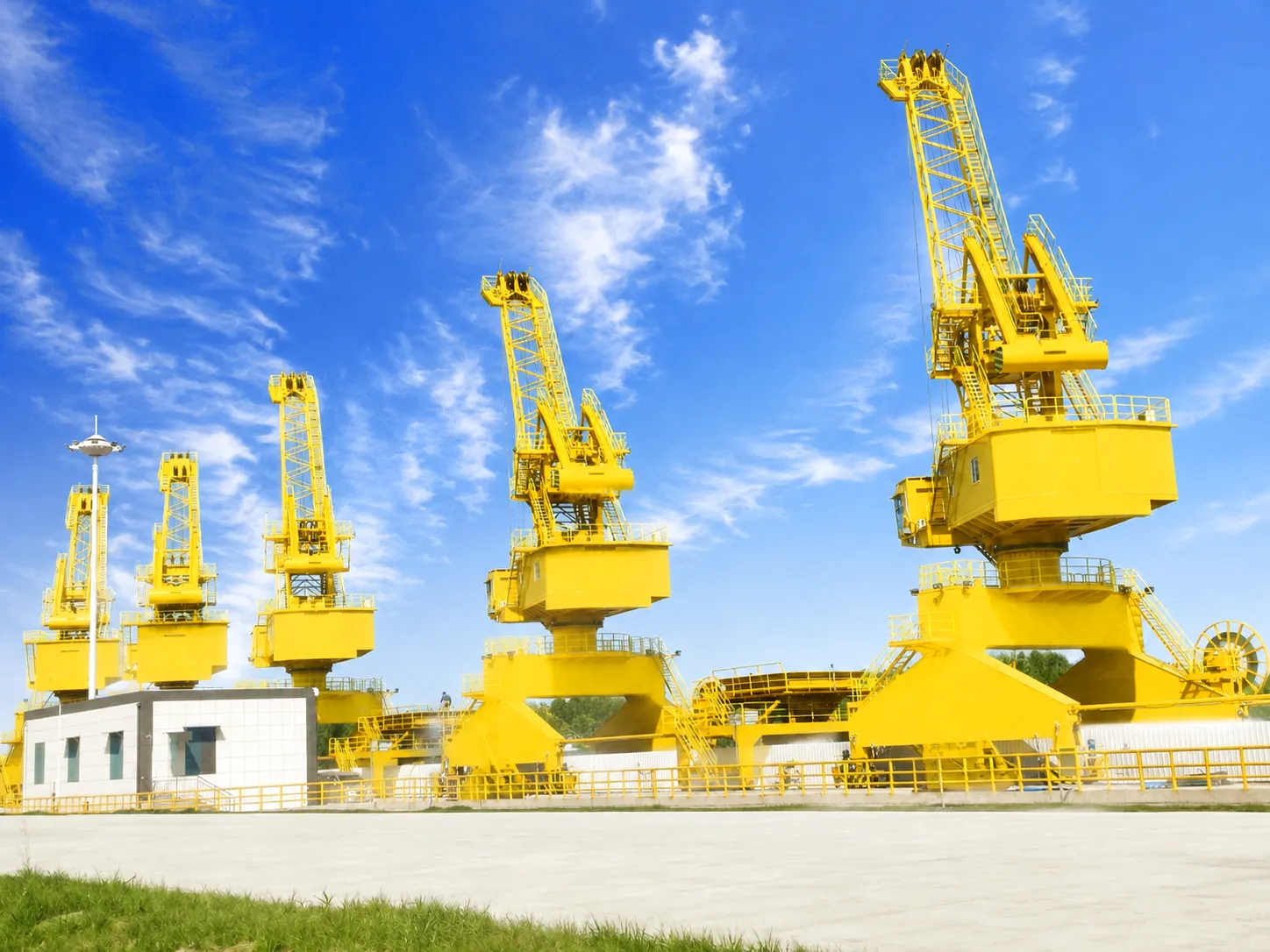
🚘 Travel Drive Mechanism — Rail Motion and Positioning
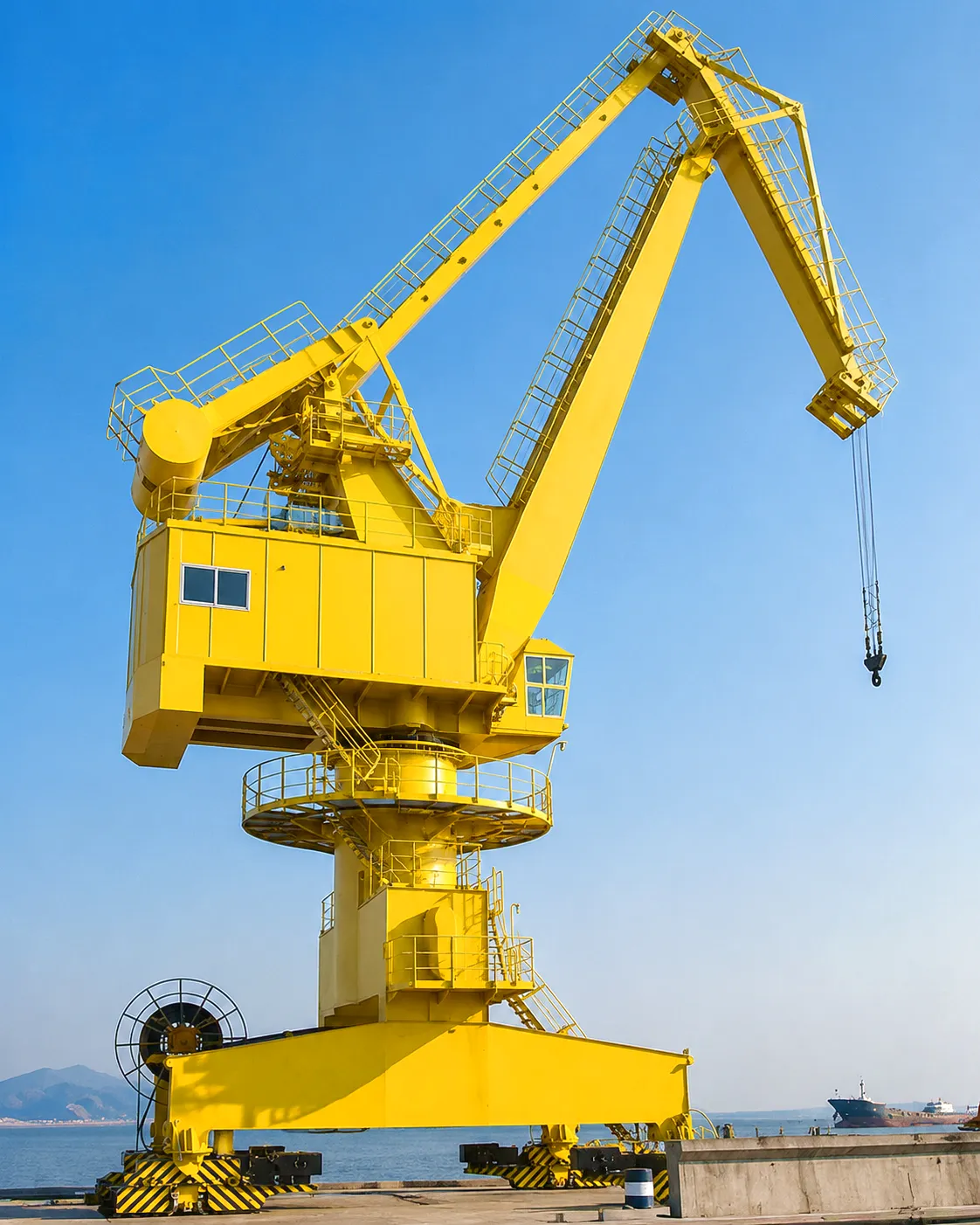
🎮 Grab and Clamp Mechanism Drives
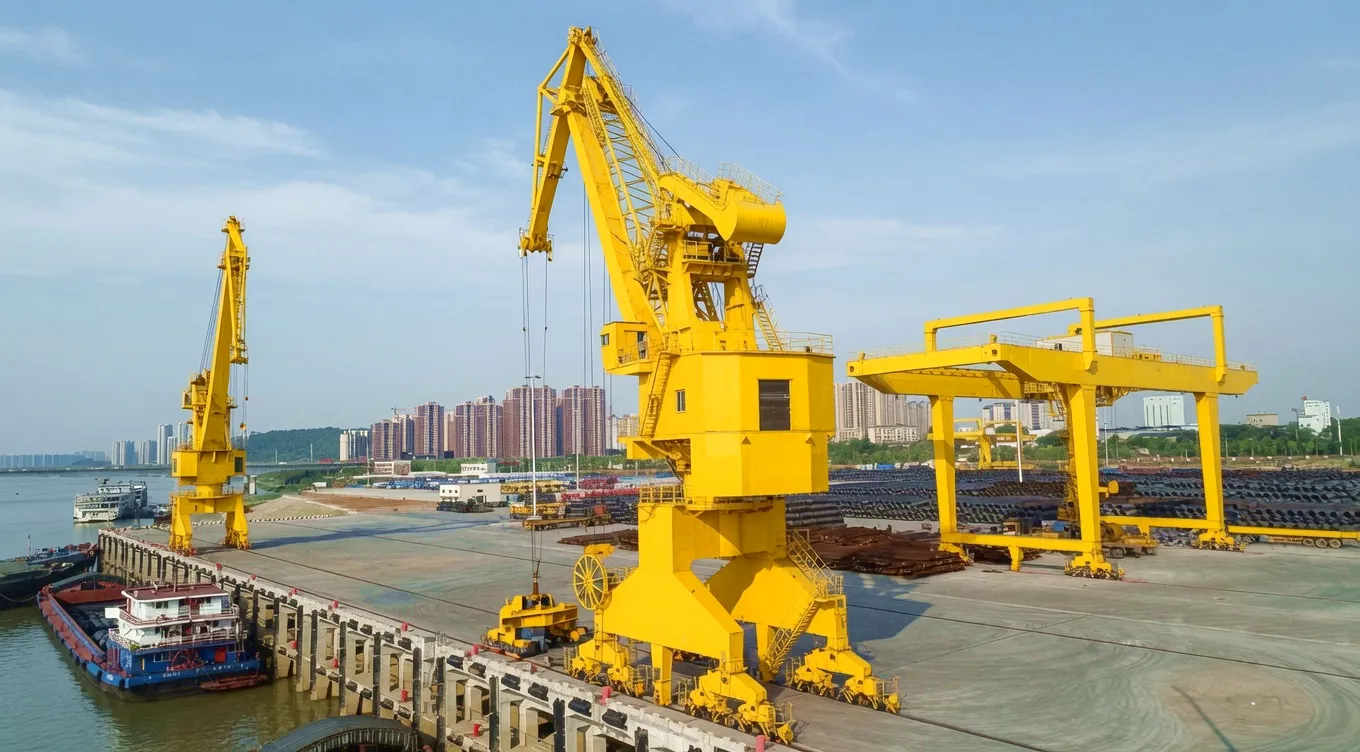
🔮 Shipyard and Offshore Construction Applications
 The UK offshore wind energy sector, centred on manufacturers and assembly facilities along the east coast from Hull to Aberdeen, makes intensive use of large portal cranes for assembling nacelles, positioning monopile foundations, and loading vessels with wind turbine components that individually weigh up to 500 tonnes. Shipyard portal cranes in facilities such as those operated in Appledore, Cammell Laird on Merseyside, and Ferguson Marine in Port Glasgow represent some of the most demanding coupling applications in the entire engineering spectrum, combining heavy loads, variable duty cycles, salt-laden marine atmospheres, and the need for absolute reliability. In this context, every component in the drivetrain is specified conservatively, and couplings are selected with generous safety factors — typically 2.0 to 2.5 over the calculated peak torque — to ensure that normal operational variations never stress the coupling beyond its design range.
Disc couplings are increasingly favoured in the hoist drives of modern shipyard portal cranes fitted with vector-controlled VFD drives, because their zero-backlash torque transmission and torsional rigidity are compatible with the high-speed control loops that these drives employ to provide smooth, controlled load positioning at very low hook speeds. A coupling with backlash or torsional compliance would introduce lag into the speed feedback loop, causing hunting and instability in precision lowering operations — exactly the kind of erratic behaviour that is unacceptable when positioning a 300-tonne turbine blade onto a vessel in a tide-constrained berth.
Featured Coupling Products for Portal Crane Applications
Recommended Product Range
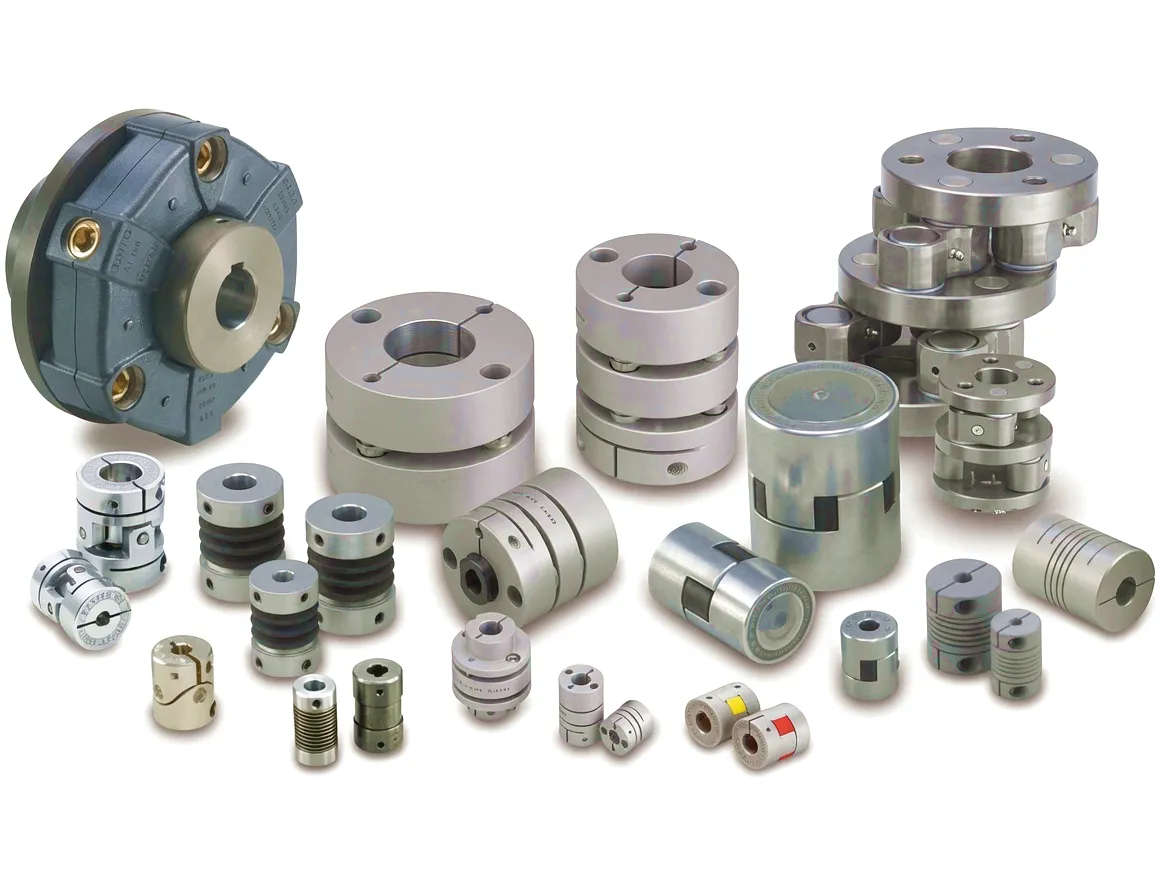
Flexible Balkenkupplung
Precision-machined from aluminium 7075-T6, the Flexible Beam Coupling from Ever Power delivers zero-backlash torque transmission for crane encoder, pulse sensor, and position transducer shaft connections. Its helical beam geometry accommodates up to 3 degrees of angular misalignment and 0.5 mm of parallel offset simultaneously, making it ideal for retro-fitting to existing portal crane control systems where shaft alignment cannot be guaranteed. Available in bore diameters from 3 mm to 45 mm, with custom bore and keyway options available to order.
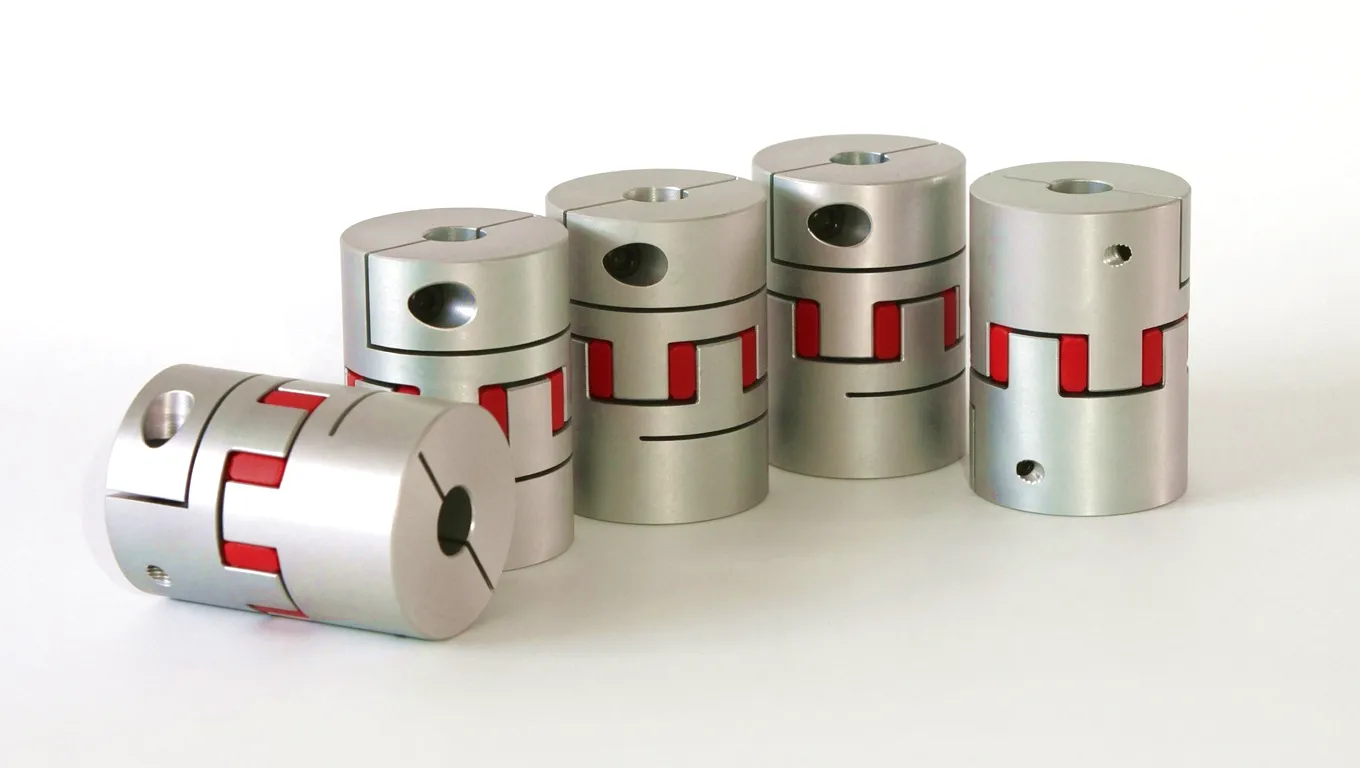
Scheibenkupplung
The Ever Power Disc Coupling uses laser-cut 316L stainless steel disc packs to transmit torque with absolute torsional rigidity and zero backlash, making it the coupling of choice for portal crane hoist drives equipped with modern variable frequency drives. Compatible with shaft diameters up to 200 mm and rated torques up to 150,000 Nm in standard configurations, with extended-length spacer designs available for applications where motor and gearbox flanges must be separated for maintenance access. CE-compliant documentation and material test certificates supplied as standard for UK customers.
Customer Success Story: Grimsby Bulk Terminal Eliminates Hoist Gearbox Failures
Case Study — UK Industrial Application
Standort
Grimsby, Lincolnshire, UK
Industrie
Bulk Cargo Handling
Coupling Supplied
Gear Coupling GC-250 Custom
A bulk terminal operator at the Port of Grimsby was experiencing repeated failures of the main hoist gearbox input shaft coupling on two of its 40-tonne portal grab cranes. The original OEM couplings — a basic rigid flange type — were failing at the bolted connection every 6 to 8 months due to shaft misalignment accumulating as the crane structure settled following a major quay expansion project. Each failure required crane downtime of 3 to 4 days, during which the terminal had to redirect cargo operations, incurring additional handling costs and delaying vessel turnarounds on the Humber Estuary trade routes.
The terminal’s engineering manager contacted Ever Power after a recommendation from the crane’s service contractor in Hull. Ever Power’s technical team conducted a drivetrain analysis using the crane’s original design documentation and measured the actual shaft misalignment in service — which proved to be 0.38 mm parallel offset and 0.6 degrees angular — well outside the tolerance of the original rigid coupling but well within the capability of Ever Power’s GC-250 gear coupling. Custom hubs were machined to match the existing motor and gearbox shaft dimensions and keyway profiles exactly. The new couplings were installed during a scheduled maintenance window and have now operated continuously for 26 months across both cranes without a single coupling-related fault. The terminal estimates that eliminating just two gearbox failures has saved over £120,000 in direct repair and lost productivity costs.
⭐ Customer Reviews
★★★★★
“We had suffered recurring hoist coupling failures for over two years. Ever Power’s gear coupling analysis identified the misalignment issue we had overlooked, and the custom unit they supplied has been completely faultless. The torque capacity and misalignment tolerance specifications they quoted were exactly what we measured in service.”
— Terminal Engineering Manager, Grimsby Port
★★★★★
“The technical documentation Ever Power provided — including the material test certificates and dimensional inspection reports — was exactly what our engineering consultancy required to approve the coupling for our CE-marked crane update. Delivery to our Sheffield fabrication yard was on schedule and the quality was outstanding.”
— Mechanical Engineer, Sheffield Steel Fabrication Ltd
★★★★★
“We needed a replacement disc coupling for our portal crane’s VFD hoist drive on very short notice. Ever Power turned around a custom unit matching our existing bore and bolt pattern in under three weeks, including full inspection paperwork. Their technical team knew exactly what they were talking about when it came to backlash and torsional stiffness requirements for our drive system.”
— Procurement Manager, Aberdeen Offshore Logistics
Frequently Asked Questions About Portal Crane Couplings in the UK
Voice-Search Friendly FAQ
Ready to Upgrade Your Portal Crane Coupling?
Ever Power’s engineering team is ready to specify, manufacture, and deliver the right coupling for your portal crane application anywhere in the UK.
📧 Angebot anfordern — [email protected]
bearbeitet von gzl