Σύνδεσμος τύπου γραναζιού για συστήματα κίνησης και ρολού μηχανών χαρτιού χαρτοποιίας
 Across the UK’s most demanding pulp and paper facilities, where saturated air, splash water, vibration, and round-the-clock torque are the everyday environment, the gear type coupling has long stood as the quiet workhorse linking large drive motors to press rolls, calender stacks, and reel drums. A correctly specified gear type coupling absorbs angular, parallel, and axial misalignment while transmitting tonnes of torque between shafts that move slightly under load and temperature change. For paper machines running at line speeds of 1,200 to 2,200 m/min, that small allowance for misalignment is the difference between a smooth web and an unplanned shutdown. This long-form guide, written by an engineering team with nearly two decades on the workshop floor, walks through how a paper-mill-grade gear type coupling is designed, where it is fitted in a typical machine line, and why mills in Manchester, Aberdeen, Kent, and the Midlands keep specifying it for new builds and retrofits alike.
Why Paper Machines Demand a Gear Type Coupling
 A modern Fourdrinier or twin-wire former is a long, articulated structure. Sections expand and contract with steam, dryer cans elongate over an eight-hour startup, and felt tension fluctuates across the shift. Each drive position therefore presents a small but unavoidable misalignment between motor shaft and roll journal. A rigid bolt-up flange would transmit those errors as cyclic stress, eating bearings and chipping keyways within months. A flexible gear type coupling, by contrast, lets internal crowned teeth rock and slide inside an external sleeve, accepting up to one and a half degrees per hub of angular drift while still passing very dense torque per kilogram of mass. That single capability is why paper machine OEMs across the United Kingdom continue to specify the gear type coupling on press section drives, size press rolls, wire turning rolls, dryer drum lines, calender stacks, and pope reel drums.
Compared with disc-pack and elastomeric alternatives, the gear type coupling carries a higher service factor at the same outer diameter, runs without fatigue-prone flex elements, and tolerates the warm mist, alkaline white-water spray, and felt fibre that surround press and size sections. Properly greased and sealed, it can deliver fifteen to twenty years of duty before the toothed elements need refurbishment.
Six Engineering Advantages of Our Gear Type Coupling
Crowned external teeth meshing with straight internal teeth deliver 35 to 45 percent more torque per kilogram than equivalent disc-pack designs. A 280 mm bore gear type coupling can comfortably transmit over 180,000 N·m, which is enough for the largest press section drives in UK mills.
The double-engagement gear type coupling handles up to 1.5° angular per hub, 3° combined, plus parallel offset and axial float together. Press sections that thermally grow during start-up no longer transfer load into motor bearings.
Twin nitrile O-rings, hardened steel grease cavities, and dust-tight end covers protect the toothed surfaces from white water, fibre, and steam. A relubrication interval of 18 to 24 months suits the typical British paper mill shutdown calendar perfectly.
Split sleeves and hub-puller threads mean an experienced fitter can change a worn gear type coupling during a single overnight shutdown without breaking the line shaft assembly or disturbing the roll bearings.
Every gear type coupling we ship has crowned teeth cut on Klingelnberg gear shapers, case-hardened to 56–62 HRC, and inspected on a CMM. Backlash is held to under 0.04 mm so vibration on coated paper machines stays inside ISO 10816 Zone B.
Our gear type coupling range cross-references major paper-industry standards, so retrofitting an aged unit on a 1990s Voith, Beloit, or Valmet line involves nothing more than confirming bore, keyway, and BSE.
Working Principle, Materials and the Mill Environment
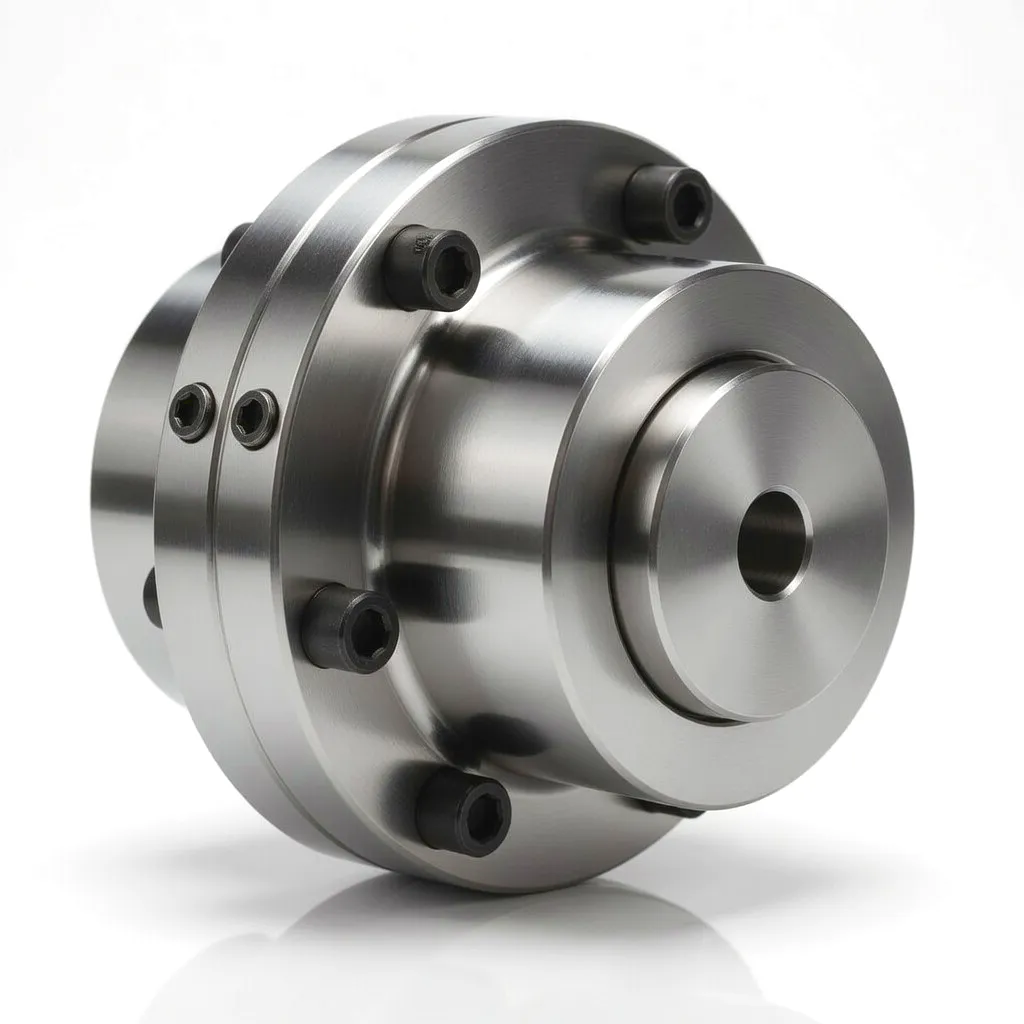
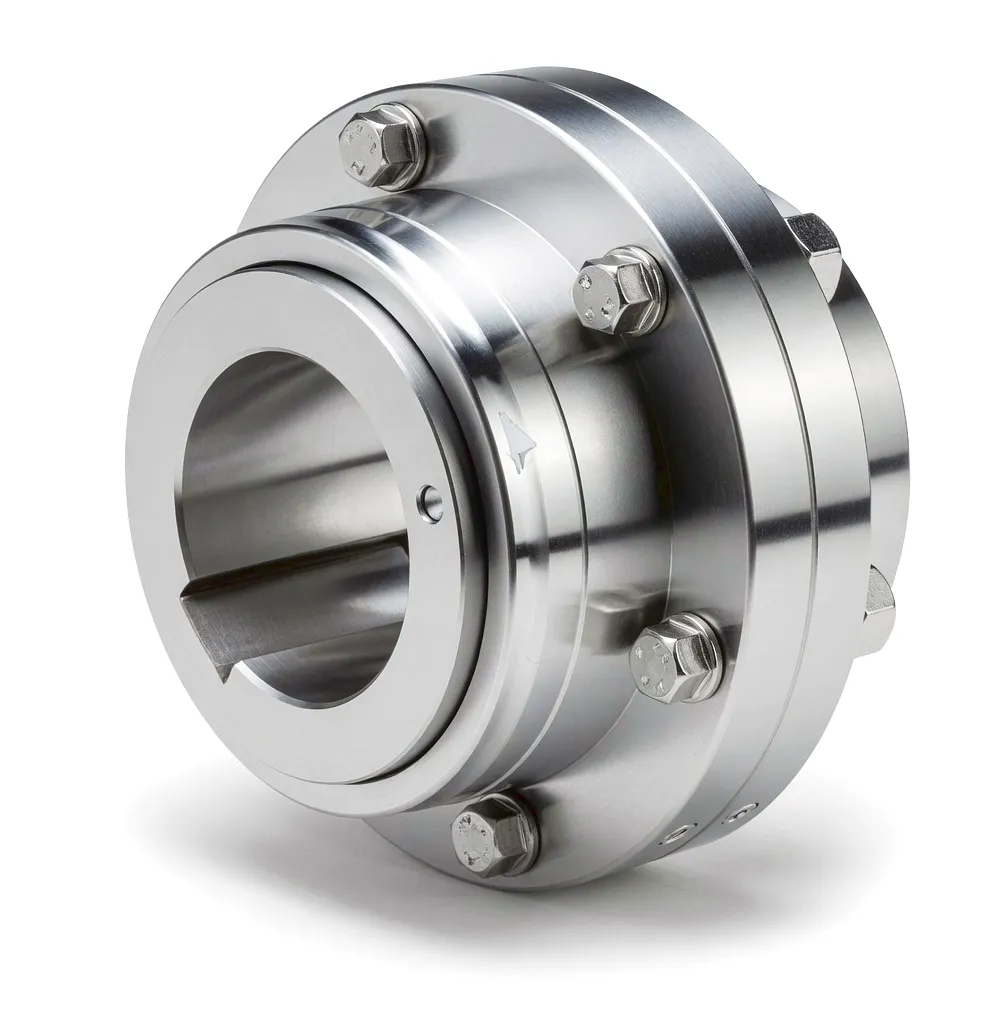
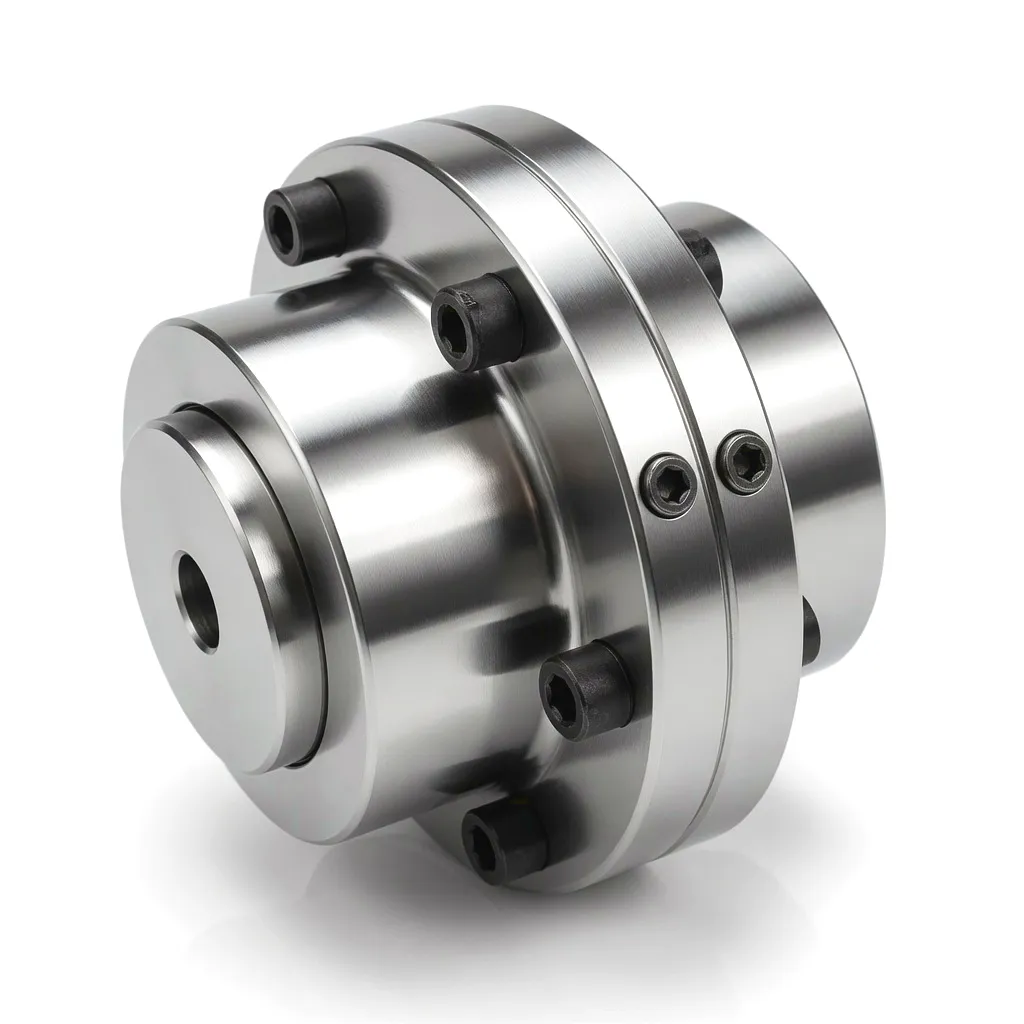
A double-engagement gear type coupling consists of two toothed hubs shrunk or keyed onto the driving and driven shafts and two internally-toothed sleeves bolted together at a flanged joint. The clearance and the crowning of the external teeth allow each hub to articulate independently inside its sleeve. Torque travels through the contact line of every meshing tooth pair simultaneously, which is why a relatively compact gear type coupling moves so much power. Lubricating grease is held in a sealed annular cavity between the hubs, churned gently by rotation and centrifuged outward to coat the engaged teeth.
Material selection is decisive in a paper mill. Hubs are forged from 42CrMo4 (EN 10083-3) or AISI 4140, normalised and oil-quenched to 285–320 HB core hardness. External teeth are induction-hardened or carburised to a 56–62 HRC surface, providing wear life on highly cyclic press-roll duty. Sleeves are produced in cast steel GS-45 or forged C45E depending on torque class, then nitrided on the inner toothed bore. Bolting hardware is grade 10.9 with cadmium-free zinc-flake coating to resist alkaline washdown. For mills handling acidic recovery loops, an AISI 316 stainless-steel option is available on the gear type coupling sleeve and seal carrier.
| Παράμετρος | Size 1 (GICL2) | Size 2 (GICL5) | Size 3 (GICL10) | Size 4 (GICL18) |
|---|---|---|---|---|
| Nominal Torque (N·m) | 3,150 | 10,000 | 37,500 | 180,000 |
| Max Bore (mm) | 75 | 110 | 170 | 280 |
| Μέγιστη ταχύτητα (rpm) | 4,000 | 3,150 | 2,240 | 1,500 |
| Γωνιακή κακή ευθυγράμμιση | 1.5° per hub | 1.5° per hub | 1.0° per hub | 0.75° per hub |
| Tooth Hardness (HRC) | 56–60 | 56–62 | 58–62 | 58–62 |
| Υλικό πλήμνης | 42CrMo4 | 42CrMo4 | 42CrMo4 / 4140 | 42CrMo4 / 4140 |
| Relube Interval | 18 μήνες | 18 μήνες | 24 months | 24 months |
| Weight (kg approx.) | 22 | 68 | 210 | 680 |
Application Map Inside a Paper Mill
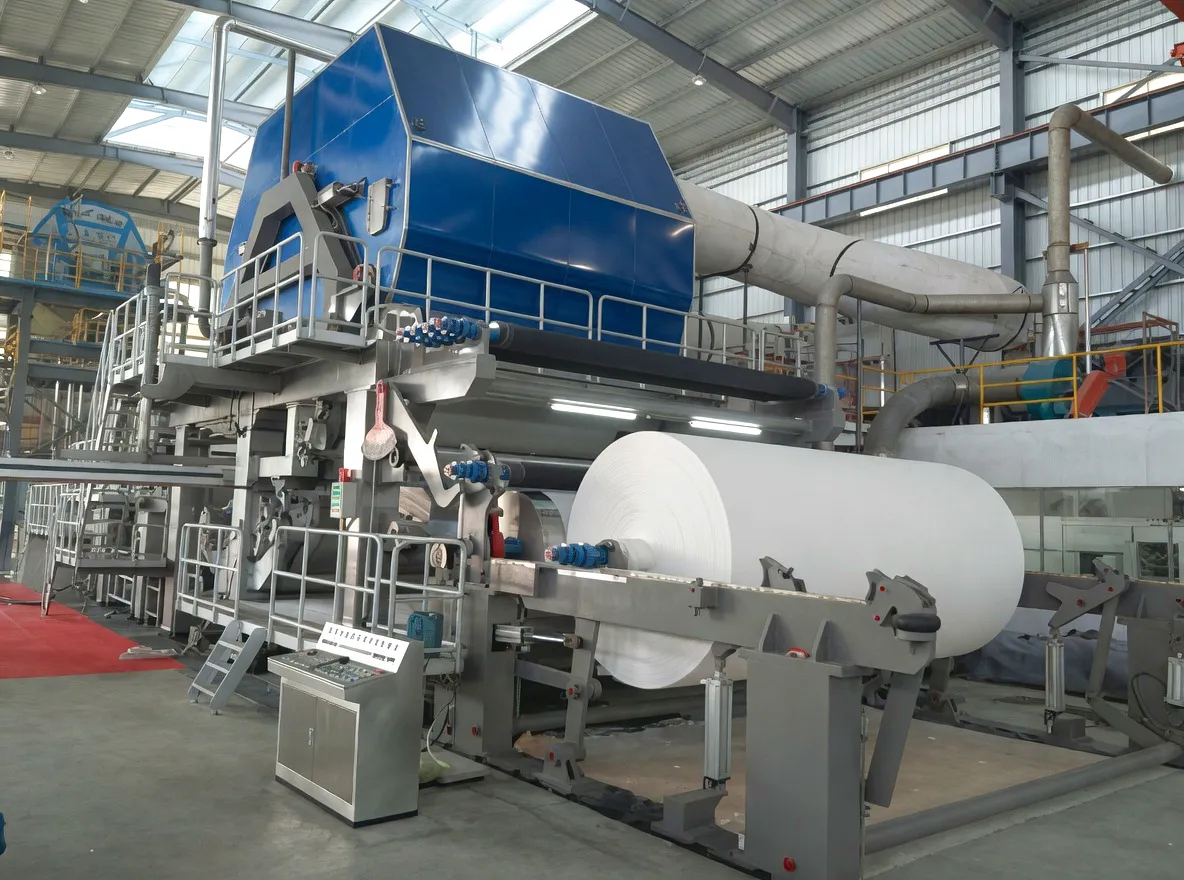
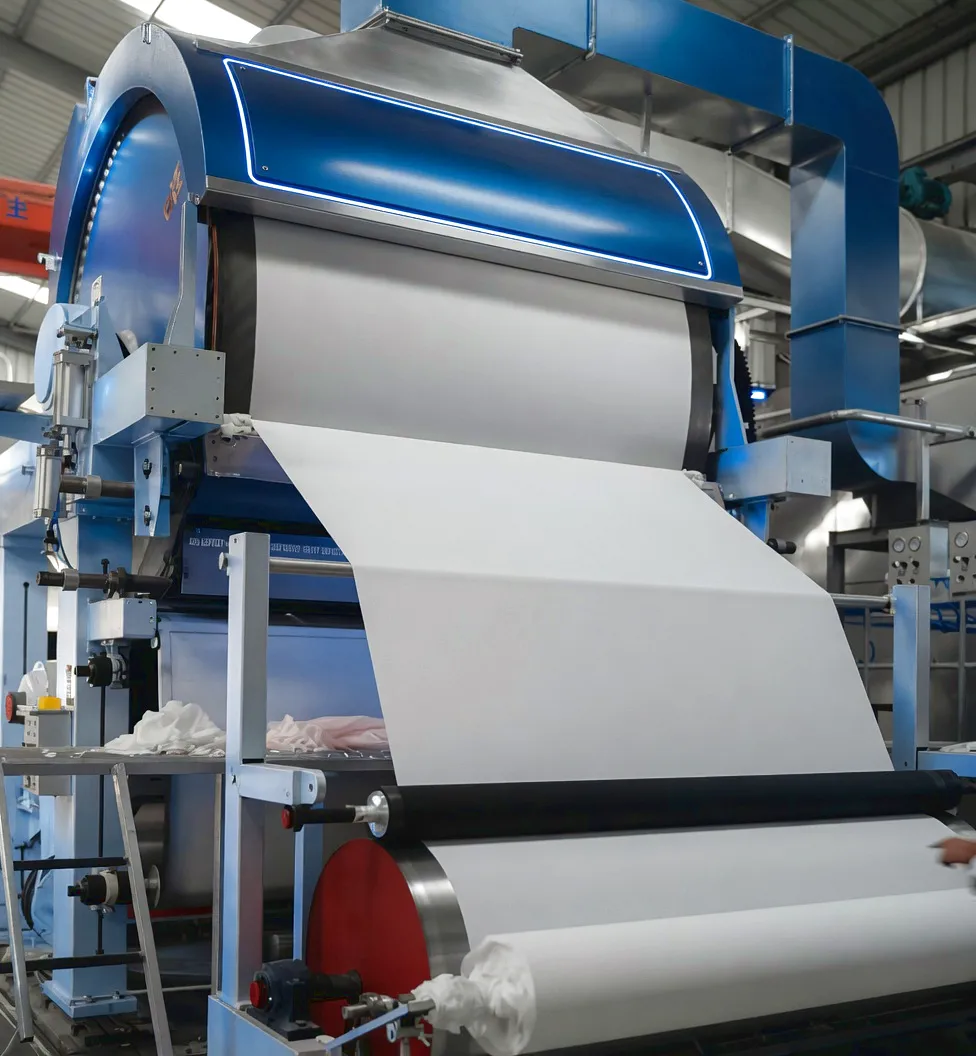
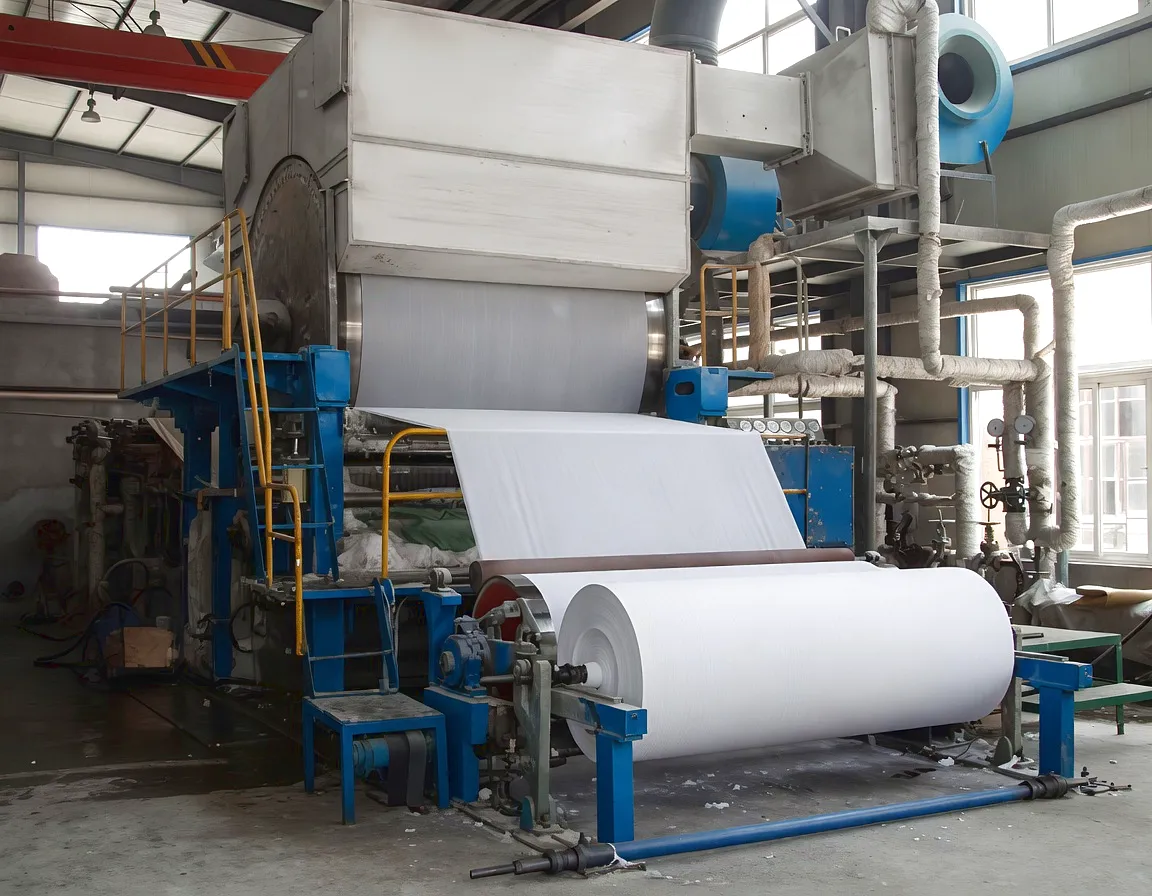
A typical British paper machine line contains between eight and fourteen drive positions where a gear type coupling is installed. Each location places slightly different demands on torque, speed, sealing, and access. Understanding which gear type coupling variant fits which position is the difference between a quick swap and a costly redesign.
Couch rolls and forming-wire turning rolls run at moderate torque but in saturated white-water spray. A sealed gear type coupling with double O-rings keeps lubricant clean for at least 18 months of continuous duty.
Top and bottom press rolls dewatering the web demand the highest torque on the machine. A heavy-duty gear type coupling between gear reducer and roll trunnion handles the load spikes when the felt picks up sheet breaks.
Steam-heated dryer cans expand axially up to 12 mm during heat-up. The axial slip of a gear type coupling accommodates that thermal growth without transmitting thrust into the gearbox.
Precision sizing depends on roll concentricity. A close-coupled gear type coupling with low backlash maintains shaft alignment so that coat weight CV stays inside specification across the full reel.
Soft and hard calender stacks need vibration-free torque transfer. The crowned-tooth gear type coupling keeps coupling-induced excitation below the 5 Hz threshold that would mark coated grades.
Final reel drums experience reversing torque whenever a parent reel is changed. The robust tooth contact of a gear type coupling shrugs off these shock cycles year after year without flex-element fatigue.
Customer Success Story: Lancashire Tissue & Speciality Papers
A long-established tissue and speciality paper producer based in the North West of England operates a 4.2 metre wide crescent former running at 1,900 m/min on lightweight grades. By 2024 the original 1990s-era flex-pin couplings on the Yankee dryer drive and the reel drum were showing fatigue cracks and contributing to two unplanned shutdowns per quarter. Each stoppage cost the mill an estimated £42,000 in lost production and crew-time.
Our engineering team carried out a site survey, measured shaft offsets thermally compensated to running temperature, and proposed a drop-in retrofit using two GICL10 double-engagement gear type coupling units. The bores were machined to the existing shaft journals, keyways matched the original DIN 6885 dimensions, and BSE was held at the OEM value so no driveline rebuild was required. The replacement gear type coupling pair was installed during a single 22-hour planned maintenance window.
Twelve months of operating data showed zero coupling-related stoppages, a 38 percent drop in measured vibration at the gearbox output bearing, and a relubrication cycle that aligned cleanly with the mill’s planned shutdowns. Total cost recovery, including reduced bearing replacement on the gearbox side, was achieved in just over eight months. The mill has since standardised on our gear type coupling for all main drive positions and ordered spares for the press section.
“The retrofit gear type coupling on our Yankee drive has now run for over 8,000 hours with no measurable backlash growth. Vibration trends are flat. Honestly, the best component swap we’ve done in five years.”
“Their technical drawing team got the bore, keyway, and overall length right the first time. Documentation was clean enough that our reliability group signed off without revisions. Delivery to Aberdeen was on schedule.”
“We compared three suppliers. The gear type coupling samples we received were the only ones that passed our magnetic particle inspection on the first attempt. Easy decision.”
Engineered Support for Paper Mills Across the United Kingdom
 British paper producers operate under conditions found almost nowhere else in Europe. North Sea humidity in Aberdeen mills, hard-water mineral content in the Midlands, the legacy 1960s and 1970s Beloit and Walmsley footprints still in service across Lancashire and the South West, and the increasing demand for recycled fibre lines all influence how a gear type coupling needs to be specified. Our application team holds technical files matched to UK-built machines, including original BSE charts, hub overall lengths, and bore tolerances used by Voith Sulzer St Annes, James Cropper, DS Smith, and Sonoco UK installations.
Stocked logistic hubs in continental Europe support next-day forwarding to Felixstowe and Southampton, and our certified inspection documents arrive in UKCA-compliant format ready for your audit trail. Whether your facility sits beside the Mersey, the Tay, or the Thames, the gear type coupling you order is engineered to operate inside the temperature, dust, and washdown envelope your machine actually sees, not a generic textbook average. We coordinate directly with UK-based bearing distributors and gearbox refurbishers so that an upgraded gear type coupling fits straight into the existing maintenance ecosystem.
Inside Our Factory & Custom Engineering Capability
Ever-Power operates a vertically integrated production facility covering forging, normalising, CNC turning, Klingelnberg gear shaping, induction hardening, CMM inspection, and dynamic balancing all under one roof. Our annual capacity for the gear type coupling product family exceeds 18,000 units, supplying paper, steel, cement, mining, marine, and crane industries on five continents. Quality is governed by ISO 9001:2015, ISO 14001, and a documented process FMEA for every torque class.
Custom engineering is a daily activity rather than an exception. Roughly one in three orders shipped from our works involves a non-standard bore, an oversized BSE, a vertical-axis seal configuration, or a stainless-steel sleeve. Send us a hand sketch, a worn part, or a legacy drawing in any condition; our reverse-engineering desk will produce a 3D model, a torque verification report, and a manufacturing drawing within five working days. Every custom σύνδεσμος τύπου γραναζιού we deliver includes material certificates, hardness traverses, balance certification, and an installation guide written in plain English for site fitters.
Need a special coating, a flameproof grease pack, or a barrelled hub for vertical shafts on a hydropulper drive? Talk to our team. The gear type coupling you receive will be tailored to your duty cycle, not pulled from a catalogue.
Συχνές ερωτήσεις
How much does a heavy-duty gear type coupling cost for a UK paper mill press section retrofit?
Price depends on torque class, bore size, and any custom features such as stainless sleeves or a non-standard BSE, but for a typical British press-section retrofit using a GICL5 or GICL10 unit, you should budget between £1,800 and £6,400 per gear type coupling including hub machining, certification, and DDP delivery to a UK postcode. Send your shaft details to our quote desk and we will return a fixed-price offer within two working days.
Which gear type coupling supplier can deliver to a Scottish paper mill within four weeks of order confirmation?
Ever-Power maintains forged hub blanks in stock for the four most common sizes used in UK paper machines. For standard bores and keyways, machining and final assembly take 12 to 16 working days, with sea-air consolidated freight reaching Glasgow or Aberdeen in another 8 to 10 days. End-to-end delivery in 28 calendar days is normal practice for any gear type coupling supplied to a Scottish mill ordering against our pre-engineered range.
What is the recommended relubrication interval for a gear type coupling installed on a tissue machine Yankee drive?
For a continuously running Yankee drive operating at 1,200 to 2,000 m/min with ambient temperatures up to 55 °C, a high-quality EP2 or NLGI 1 grease pack should be renewed every 18 to 24 months. Choose the shorter interval if the gear type coupling is exposed to direct steam plumes. Always clean the cavity, replace the O-rings, and check tooth backlash during each relubrication shutdown.
Where can I get a custom-bored gear type coupling quote for a legacy Beloit machine in Lancashire?
Email a photograph of the worn coupling plus the existing shaft dimensions to [email protected]. Our reverse-engineering team has files for most Beloit, Walmsley, and Bertrams machines built between 1965 and 1995. Within three working days we will issue a manufacturing drawing for your approval and a firm price for a fully custom gear type coupling delivered to your Lancashire site.
When should our maintenance team replace rather than refurbish a worn gear type coupling on a UK reel drum?
Replacement is the right choice once measured backlash exceeds 0.15 mm at the pitch radius, when more than 25 percent of teeth show visible spalling, or whenever the original hardness traverse has been ground below 50 HRC during a previous overhaul. In those cases refurbishing the gear type coupling carries no warranty value and the lifecycle cost of a new precision-cut unit is lower.
Which gear type coupling configuration is best for a vertical-axis pulper agitator in a recycled-fibre plant in Yorkshire?
Vertical pulper drives demand a sealed gear type coupling with a thrust-bearing supported lower hub and a top-fill grease port. Our GICLZ vertical variant integrates a labyrinth seal that prevents grease loss against gravity and includes a stainless top sleeve for splash protection. Specify the agitator torque and the shaft diameter and we will configure the unit accordingly.
Send drawings, photographs, or simply your shaft dimensions. Our application engineers respond within one British working day.
επεξεργασία από gzl