Why the Continuous Casting Machine Is the Most Demanding Environment for Drive Couplings
The continuous casting machine — or concast as it is known across British steelworks — sits at the very heart of modern steel production. From Scunthorpe to Port Talbot, virtually every tonne of long product and flat product manufactured in the UK passes through this remarkable piece of equipment. Inside the machine, molten steel at roughly 1,550 °C is poured into an oscillating copper mould, solidifies partially into a strand, and is then drawn downward through a curved guide frame by a series of pinch rolls and straightener units before being cut to length. Every single stage of this process imposes brutal loads on the mechanical drive components that make it work — and among those components, the gear type coupling is arguably the most mission-critical link in the chain.
Unlike standard industrial duty, continuous casting demands a coupling that handles simultaneous high torque, angular and parallel shaft misalignment caused by thermal growth, radial shock loads from strand camber, reversing torsional impulses in the mould oscillation drive, and persistent exposure to water spray, iron oxide scale, and ambient temperatures well above anything seen in a conventional gearbox room. The gear type coupling meets every one of these demands — and understanding precisely how it does so is the first step toward specifying the right product and extending plant availability across your casting schedule.
How a Gear Type Coupling Actually Works in a Strand Guide Drive
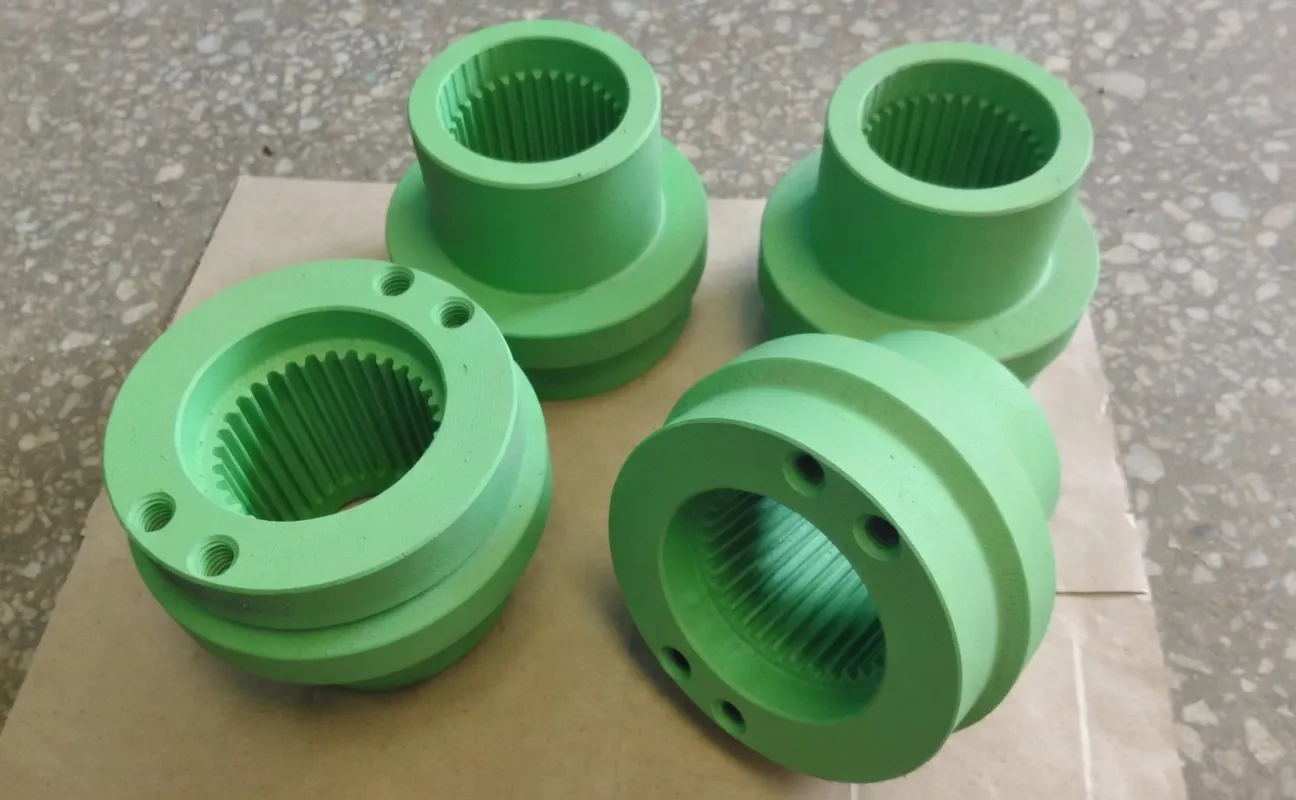
At its core, a gear type coupling transmits torque through two sets of external gear teeth on the shaft hubs meshing with two sets of internal gear teeth machined into the outer sleeve. The teeth are cut with a crowned profile — the flanks of the external gear are convex rather than straight — and this seemingly small detail is what gives the gear coupling its exceptional misalignment tolerance. When the axes of the connected shafts are not perfectly collinear, the crowned teeth rock and slide within the sleeve, redistributing the contact stress across the full tooth face width rather than concentrating it at one edge. The result is a coupling that accommodates up to 1.5° angular misalignment and a measurable degree of parallel offset without imposing destructive bending moments on either shaft.
In a continuous casting strand guide segment, this matters enormously. As the steel frame heats up during a casting sequence, the roll housings expand thermally, the gap between the driven shaft of the reduction gear and the roll journal shifts — in some machines by as much as 3 mm laterally and 0.5° angularly. A rigid coupling under these conditions would impose catastrophic bending into the gearbox output shaft bearing. The gear coupling accommodates that movement silently, continuously, without losing grip on the torque path. The grease-filled sleeve cavity lubricates the teeth throughout the accommodation cycle, and a labyrinth or O-ring seal retains lubricant while resisting the constant ingress of cooling water and scale.
Three Critical Drive Stations Where Gear Couplings Are Non-Negotiable
Strand Withdrawal and Straightening Rollers
The withdrawal and straightener units apply the fundamental pulling force that extracts the partially solidified strand from the mould. Drive torques routinely exceed 15,000 N·m per roll segment in a bloom caster, with instantaneous peaks during strand bridging events reaching two to three times that figure. Gear couplings fitted to these drives must be rated with a generous service factor — typically KA = 2.0 to 2.5 — and specified in alloy steel with induction-hardened tooth flanks to resist fretting fatigue. The crowned tooth geometry prevents edge loading under the cyclic radial loads imposed by strand camber and surface irregularities as the casting passes through the roll gap.
Mould Oscillation Mechanism
The copper mould must oscillate continuously — typically at 60 to 200 cycles per minute with a stroke of 3 to 12 mm — to prevent the solidifying steel shell from sticking and tearing. This means the gear coupling in the oscillation drive reverses direction hundreds of times every minute, every minute of every cast, 24 hours a day. Standard couplings fail rapidly under this reversing fatigue regime. The gear type coupling, when correctly specified with tight tooth backlash and a high-viscosity EP grease, tolerates the reversing shock impulse without plastic deformation of the tooth root, giving service lives measured in years rather than months even on the most aggressive oscillation schedules.
Torch Cutting and Transfer Table Drive
Once the strand emerges from the secondary cooling zone, it is cut to length by a travelling oxygen-fuel torch that must maintain precise synchrony with the moving strand. The drive system for the torch carriage — and for the roller tables that handle the hot billets or slabs immediately downstream — is subjected to repeated start-stop cycles, speed changes, and the radiant heat from pieces running at 900 °C or above. Gear type couplings in this zone must tolerate both the thermal environment and the cyclic torsional loading of repeated acceleration without fretting corrosion in the tooth contact zone. Correct grease selection — typically a high-temperature NLGI 1 or NLGI 2 compound with molybdenum disulphide additive — is essential here.
Materials, Hardness, and Surface Treatment: What Makes a Casting-Grade Gear Coupling Different
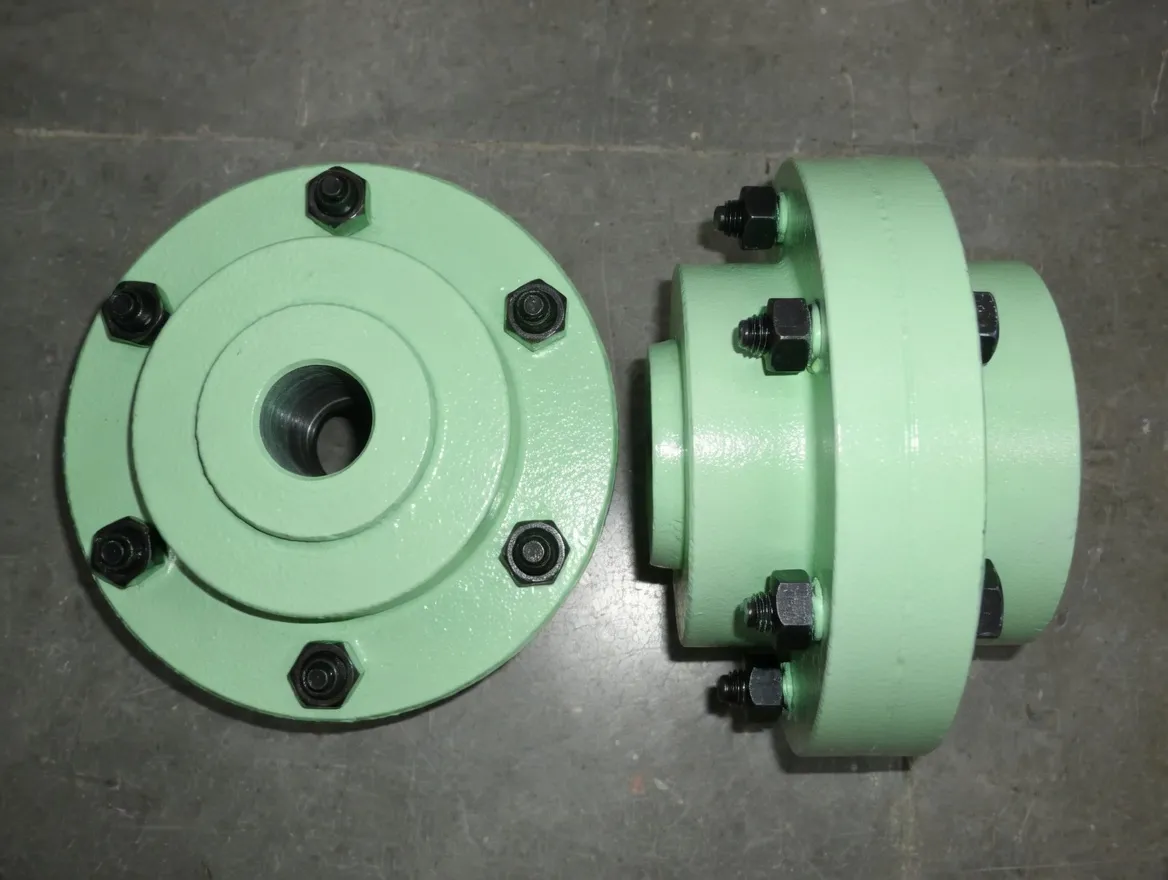
Not every gear coupling that carries an identical bore size and nominal torque rating will survive in a continuous casting environment. The difference lies in material specification, heat treatment, and surface finishing — three areas where an experienced engineering supplier like Ever Power makes decisions that separate a coupling lasting two weeks from one lasting two years. The hub body is typically forged from 42CrMo4 (equivalent to EN19 in the UK) or 34CrNiMo6 alloy steel, providing a tensile strength of 900 MPa or above in the finished state, with adequate impact toughness to absorb the shock loads imposed by strand bridging events or emergency stops.
The external gear teeth on the hub are finish-hobbed to DIN 8 or better, then induction-hardened to a surface hardness of 54–62 HRC with a controlled case depth of 1.5–3.0 mm, leaving a tough, ductile core beneath the hard case to resist crack propagation. The sleeve is manufactured from 40Cr alloy steel, normalised to give good machinability and impact resistance, and the internal gear is broached or shaped to match precisely the crowned external profile. Exterior surfaces that are exposed to the corrosive environment — water spray, scale, steam, and cleaning chemicals — are treated with phosphating plus a high-build epoxy coating, or in premium variants, thermal spray ceramic coating for maximum corrosion resistance in the most aggressive zones of the machine.
| Συστατικό | Υλικό | Κατεργασία με θερμοκρασία | Σκληρότητα επιφάνειας | Key Standard |
|---|---|---|---|---|
| Hub | 42CrMo4 / EN19 | Quench & Temper + Induction Hardening | 54–62 HRC (tooth) | ISO 6336 / DIN 3990 |
| Sleeve | 40Cr Alloy Steel | Normalise + Temper | 241–285 HB (body) | GB/T 3507 / ISO 9001 |
| Seal Ring | Nitrile / FKM | Δ/Υ | 70–90 Shore A | DIN 3761 / ISO 6194 |
| Προφίλ δοντιών | Crowned Involute | Finish ground post-harden | Grade 6 to DIN 3962 | ISO 1328 / AGMA 9009 |
| Surface Coating | Phosphate + Epoxy | Δ/Υ | 120 µm DFT min | ISO 12944 C5-I |
Technical Performance Parameters — Ever Power Continuous Casting Series
The table below covers the primary performance envelope of the Ever Power GC-CC Series gear type coupling range designed specifically for continuous casting duty. All values are referenced to ambient temperature of 20 °C; derate appropriately for elevated ambient duty using the temperature correction factors in our engineering datasheet.
| Παράμετρος | GC-CC 100 | GC-CC 200 | GC-CC 400 | GC-CC 800 |
|---|---|---|---|---|
| Nominal Torque (N·m) | 10,000 | 20,000 | 40,000 | 80,000 |
| Peak Torque (N·m) 2 s | 20,000 | 40,000 | 80,000 | 160,000 |
| Μέγιστη ταχύτητα (rpm) | 500 | 400 | 300 | 200 |
| Angular Misalignment (°) | ± 1.5 | ± 1.5 | ± 1.0 | ± 0.8 |
| Παράλληλη μετατόπιση (mm) | ± 0.5 | ± 0.8 | ± 1.0 | ± 1.2 |
| Αξονική μετατόπιση (mm) | ± 3 | ± 5 | ± 6 | ± 8 |
| Operating Temp. Range (°C) | -20 to +150 | -20 to +150 | -20 έως +120 | -20 έως +120 |
| IP Rating | IP55 | IP55 | IP55 | IP55 |
Six Proven Advantages of Gear Type Couplings in Steel Casting Operations
Extreme Torque Density
The all-metal construction packs far more torque transmission capacity into a given envelope than elastomeric alternatives, making it the default choice where space constraints are tight and torque demand is high — which describes every segment drive on a bloom caster.
High-Temperature Stability
Metal-on-metal tooth contact means no elastomer to degrade, swell, or crack in the radiant heat environment below the strand. With the correct grease, gear couplings operate reliably at continuous ambient temperatures up to 150 °C and intermittent peaks well beyond that.
Αποζημίωση για κακή ευθυγράμμιση
Crowned tooth geometry accommodates angular, parallel, and axial displacement simultaneously, protecting gearbox and motor bearings from destructive bending moments caused by thermal growth of the casting frame during a long production sequence.
Compact and Drop-In Replaceable
The split-sleeve design allows replacement of worn tooth components without disturbing shaft alignment or removing adjacent equipment — a critical maintenance advantage in the congested, narrow-aisle environment of a strand guide frame where down-time is measured in thousands of pounds per hour.
Long, Predictable Service Life
When correctly specified and lubricated, gear type couplings in casting applications achieve overhaul intervals of 12 to 24 months, aligning with planned plant shutdowns. The wear pattern on the crowned teeth is gradual and detectable by lubricant analysis, enabling condition-based rather than time-based replacement.
Full Customisation Available
Ever Power’s engineering team can design and manufacture gear couplings to customer-specific bore sizes, keyway profiles, flange bolt patterns, overall length requirements, and corrosion protection specifications — covering every non-standard application that standard catalogue products cannot address.
Gear Type Couplings in the British Steel Industry: Specific Operating Context
The UK steel industry presents some particular engineering realities that influence coupling specification. British steelworks — including the integrated plants in South Yorkshire, Teesside, and South Wales — tend to operate ageing casting lines that are continuously upgraded rather than replaced wholesale. This means engineers frequently deal with mixed generations of equipment where shaft dimensions, coupling interfaces, and maintenance philosophies vary widely between adjacent drive stations on the same machine.
In this context, the ability to supply gear type couplings to exact dimensional drawings, to manufacture replacement hubs with non-standard tapered bore profiles to match historic roll journal designs, and to provide rapid delivery from finished-goods stock or short-lead production runs is not a luxury — it is a basic commercial requirement. Ever Power’s UK-focused supply chain, with stock held for fast dispatch and a technical team that understands the regulatory context of CE marking and UK Conformity Assessed (UKCA) machinery requirements post-Brexit, offers British steelmakers a genuinely local solution backed by international manufacturing capability.
From the EAF-fed mini-mill casting billets in the North East to the large slab casters supplying automotive and packaging steel in Wales, the specific demands of each plant — cooling water chemistry, ambient temperature profile, planned maintenance window frequency, and local engineering practice — all feed into the final coupling specification. Ever Power’s application engineers work through this checklist with every customer before a single drawing is issued.
Ever Power Manufacturing: Custom Gear Coupling Production for Demanding Applications
Ever Power operates a dedicated precision manufacturing facility equipped with CNC gear hobbing, grinding, and induction hardening lines purpose-built for heavy coupling production. Our tooling and fixture library covers bore sizes from 25 mm to 450 mm, with special-order capacity beyond that range, and our engineering software allows us to model the complete torque-speed-misalignment envelope of any proposed coupling in the context of the specific drive system it will serve — accounting for service factors, dynamic load coefficients, and environmental correction factors before the first chip is cut.
For continuous casting machine operators in particular, Ever Power offers a full custom design-and-supply service that includes: custom bore profiles including tapered, keyless hydraulic, and shrink-fit interfaces; modified overall coupling lengths to fit constrained installation envelopes; special seal arrangements for high-pressure water wash-down duty; optional integrated torque-limiting devices to protect downstream equipment in severe shock events; and full dimensional and material certification to EN 10204 3.1 standard, supporting CE and UKCA machinery compliance documentation.
Custom Capabilities
Customer Success: Real Results in Steel Casting Operations
Three case studies from the metals and heavy industry sector
Strand Withdrawal Drive Coupling Upgrade — Billet Caster, South Yorkshire
A major long product steel producer in South Yorkshire had experienced repeated coupling failures on the withdrawal and straightening unit of their five-strand billet caster. The original couplings — from a European supplier — were failing at 6 to 8 week intervals, primarily through fatigue cracking of the sleeve at the tooth root, attributed to under-rated peak torque capacity and inadequate gear geometry tolerancing. Each failure caused a minimum four-hour unplanned shutdown, representing significant lost production and emergency maintenance costs, with total annual downtime cost from coupling failures alone estimated at over £380,000.
Ever Power’s UK application engineer visited site, reviewed the drive calculations, and identified that the peak torque during strand bridging events was exceeding the rated coupling capacity by approximately 40%. A replacement GC-CC 200 series coupling was specified with an uprated service factor of KA = 2.4 and a modified tooth profile for improved root bending fatigue life. Following fitment across all five withdrawal drives, the plant completed 14 months of continuous production without a single coupling-related shutdown before the units were scheduled for routine inspection — an overhaul interval improvement of approximately 8x compared with the previous supplier’s product.
“We had struggled for years to find a gear coupling that could handle the combination of high torque and the constant water spray in our secondary cooling zone. The Ever Power units have been running for over a year now with no seal failures and no signs of tooth wear on the last inspection. The step up in quality is immediately obvious when you handle the parts.”
Senior Mechanical Engineer, Flat Products Division — Teesside, UK
“The mould oscillation drive on our slab caster has always been a problem area — we were getting through a pair of couplings every few months. Ever Power redesigned the interface with a tighter tooth fit and a better grease specification for our operating temperature, and we have not had a single failure in eleven months. The engineering support during the selection process was thorough and gave us confidence before we placed the order.”
Maintenance Manager, Slab Caster Plant — South Wales, UK
“We needed a non-standard bore size with a specific keyway arrangement to fit our legacy rolling mill coupling interface and didn’t expect a quick turnaround. Ever Power delivered a fully machined and certified custom unit in four weeks, complete with the 3.1 mill cert documentation we needed for our maintenance records. Competitive price and zero compromise on specification — exactly what a busy maintenance team needs.”
Engineering Buyer, Billet Caster & Rod Mill — North East England, UK
Where Else Gear Type Couplings Serve the Steelmaking Process
Ο σύνδεσμος τύπου γραναζιού‘s combination of high torque capacity, misalignment tolerance, and environmental robustness is not limited to the continuous casting machine itself. Across the broader steelmaking and metals processing chain, from the electric arc furnace electrode lifting drives to the coiling mandrel drives of a hot strip mill, the gear coupling appears repeatedly as the preferred solution wherever shaft misalignment is unavoidable, operating conditions are aggressive, and drive reliability is critical to production throughput.
| Εφαρμογή | Κύρια Πρόκληση | Coupling Requirement | Typical Torque Range |
|---|---|---|---|
| Concast Withdrawal Roll Drive | Thermal frame growth, shock loads | High torque, ± 1.5° ang., IP55 | 10,000 – 80,000 N·m |
| Mould Oscillation Drive | Reversing fatigue, 200 cycles/min | Low backlash, high fatigue life | 2,000 – 15,000 N·m |
| Hot Rolling Mill Drive Spindle | Large angular offset, heavy shock | Up to 3° ang., peak TQ ×3 | 50.000 – 500.000 N·m |
| EAF Electrode Hoisting Drive | Vibration, electrical interference | Vibration damping, insulated flange | 5,000 – 30,000 N·m |
| Transfer Table Roller Drive | Radiant heat, start-stop cycling | High temp. grease, ±0.5° ang. | 3,000 – 20,000 N·m |
| Coiler / Decoiler Mandrel Drive | Coil weight variation, fatigue | Torsional rigidity, balanced | 8,000 – 60,000 N·m |
Συχνές ερωτήσεις
Ready to Solve Your Continuous Casting Coupling Challenge?
Send your shaft dimensions and torque data to Ever Power’s engineering team for a free application review and competitive quotation. UKCA/CE certified. EN 10204 3.1 material certs standard. UK-focused supply.
📧 Get a Quote: [email protected]
επεξεργασία από gzl