Σύνδεσμος τύπου γραναζιού θαλάσσιου τύπου για κύρια συστήματα πρόωσης πλοίων
Engineering Reliable Torque Transmission for Vessels Sailing Across UK Waters and Beyond
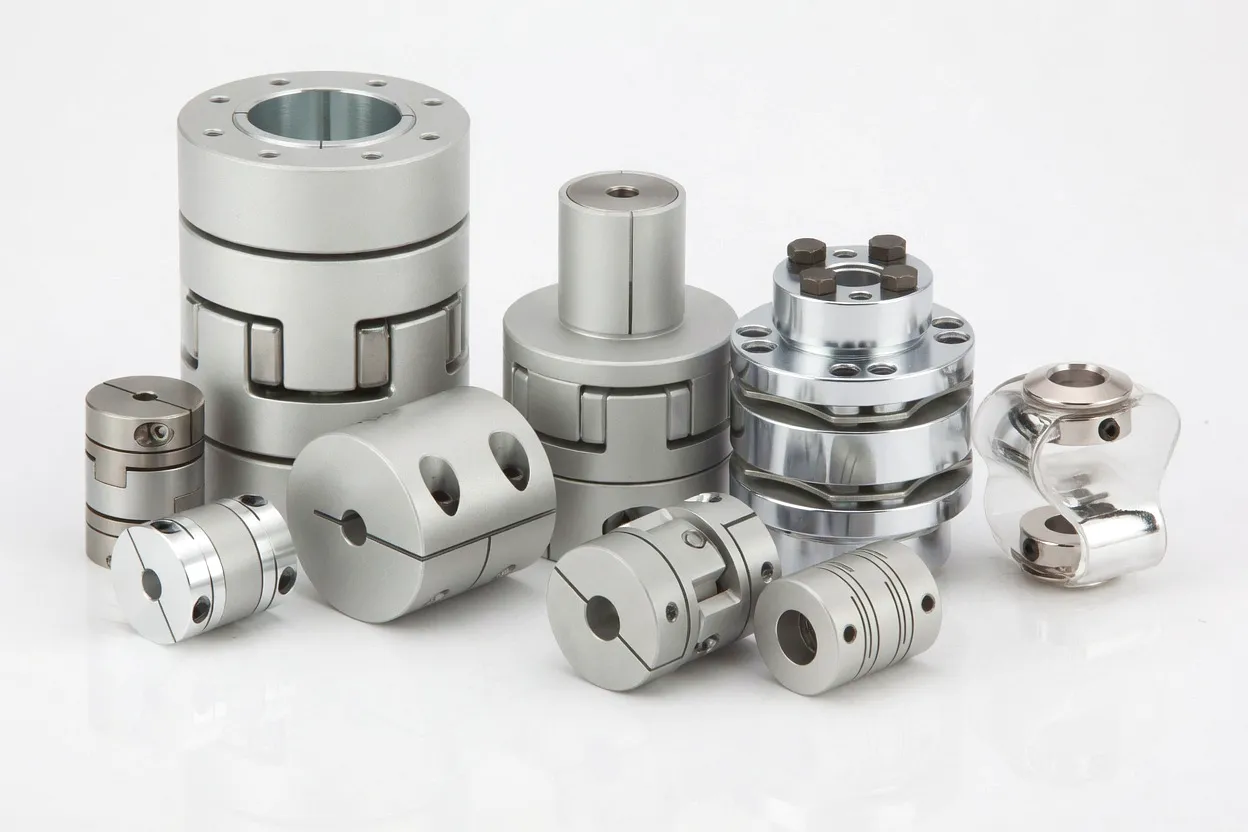 Ship propulsion stands as one of the most demanding mechanical environments on the planet. A vessel cutting through the North Sea, navigating the busy ports of Felixstowe, or undertaking transatlantic voyages relies on a precise chain of rotating components. At the heart of that chain sits the gear type coupling — a deceptively simple but engineering-intensive device that transmits enormous torque from the diesel main engine through the reduction gearbox and onward to the propeller shaft. Without it, modern shipping simply could not exist. This long-read explores how marine-grade gear type couplings are designed, built, and applied in main propulsion systems, drawing on nearly two decades of frontline application engineering work supporting shipyards, retrofit specialists, and marine OEMs throughout the United Kingdom and Europe.
Why Marine Propulsion Demands a Specialised Gear Type Coupling
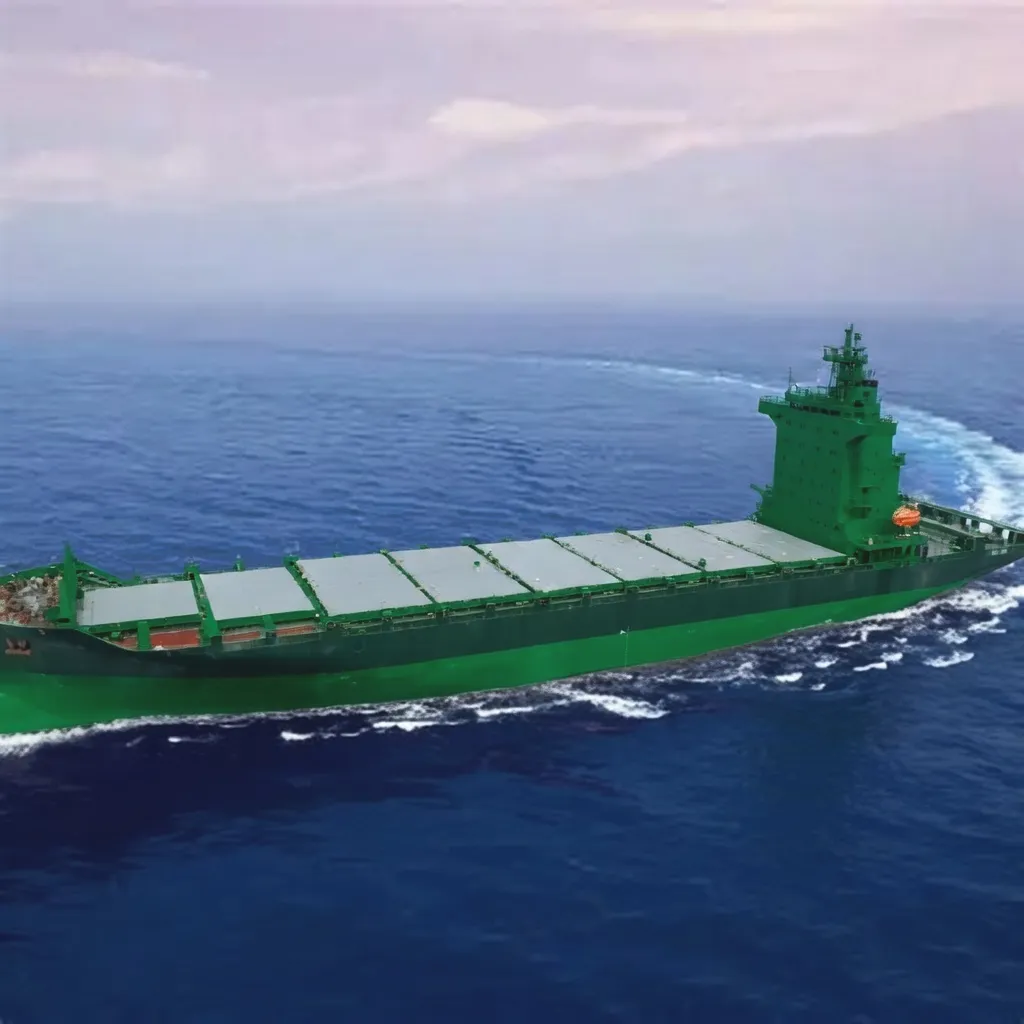
A ship’s hull is never static. As waves strike the bow, as cargo shifts during loading at the Port of London, as thermal expansion alters shaft alignment between cold engine room start-up and full-power running, the propulsion shaft line flexes in ways landlocked machinery never experiences. Standard rigid couplings would fracture within hours under such conditions. A purpose-built gear type coupling absorbs this misalignment through internal crowned tooth geometry, allowing the main engine, the reduction gearbox, and the propeller shaft to remain rotationally locked while accommodating angular and axial offsets generated by hull deformation.
British naval architects and ship operators frequently specify gear type coupling assemblies because they offer the highest torque-to-weight ratio among flexible coupling families. A coupling that can transmit upwards of 500 kNm while compensating for three degrees of angular misalignment and several millimetres of axial float is genuinely irreplaceable in this sector. Add saltwater spray, condensation inside the shaft tunnel, vibration spectra spanning low-frequency engine pulses through high-frequency propeller blade-pass excitations, and you have a duty cycle that punishes anything less than properly engineered marine hardware.
Working Principle and Materials Behind a Reliable Coupling
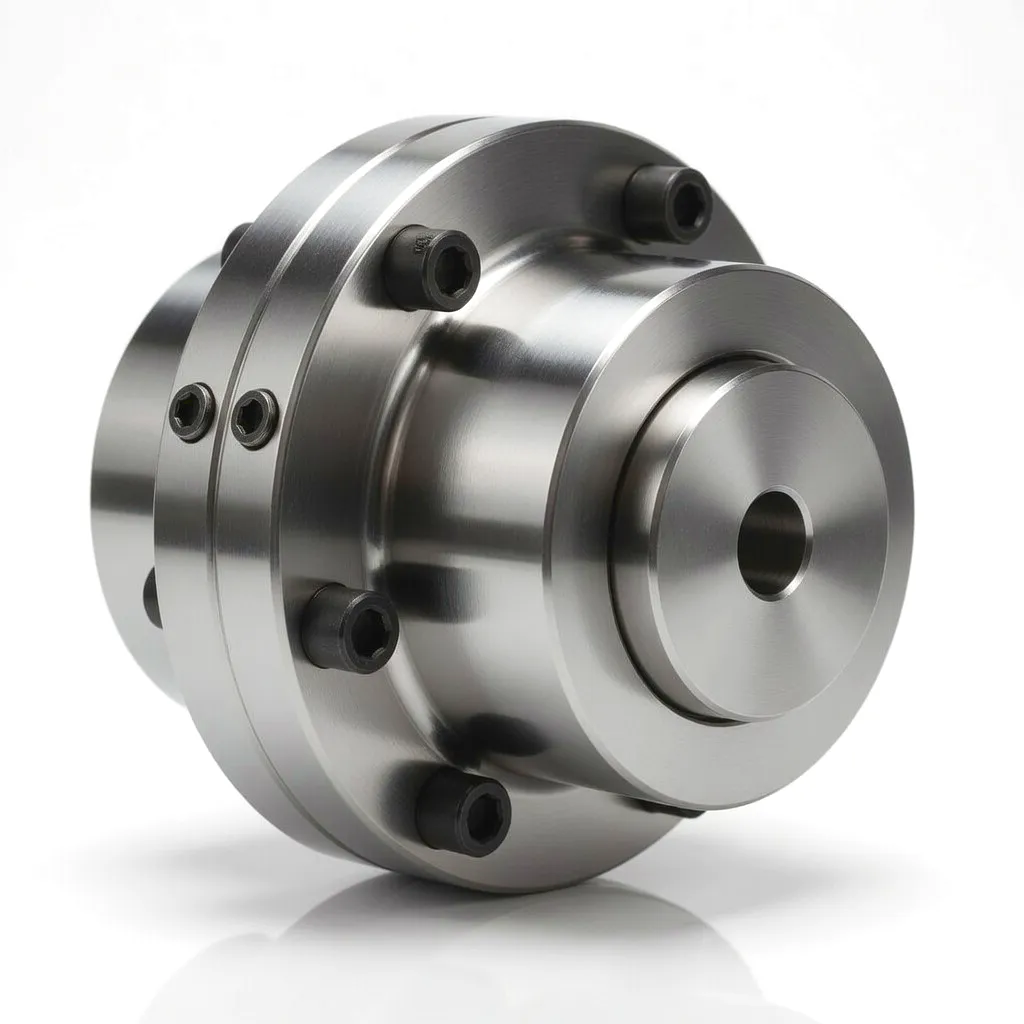
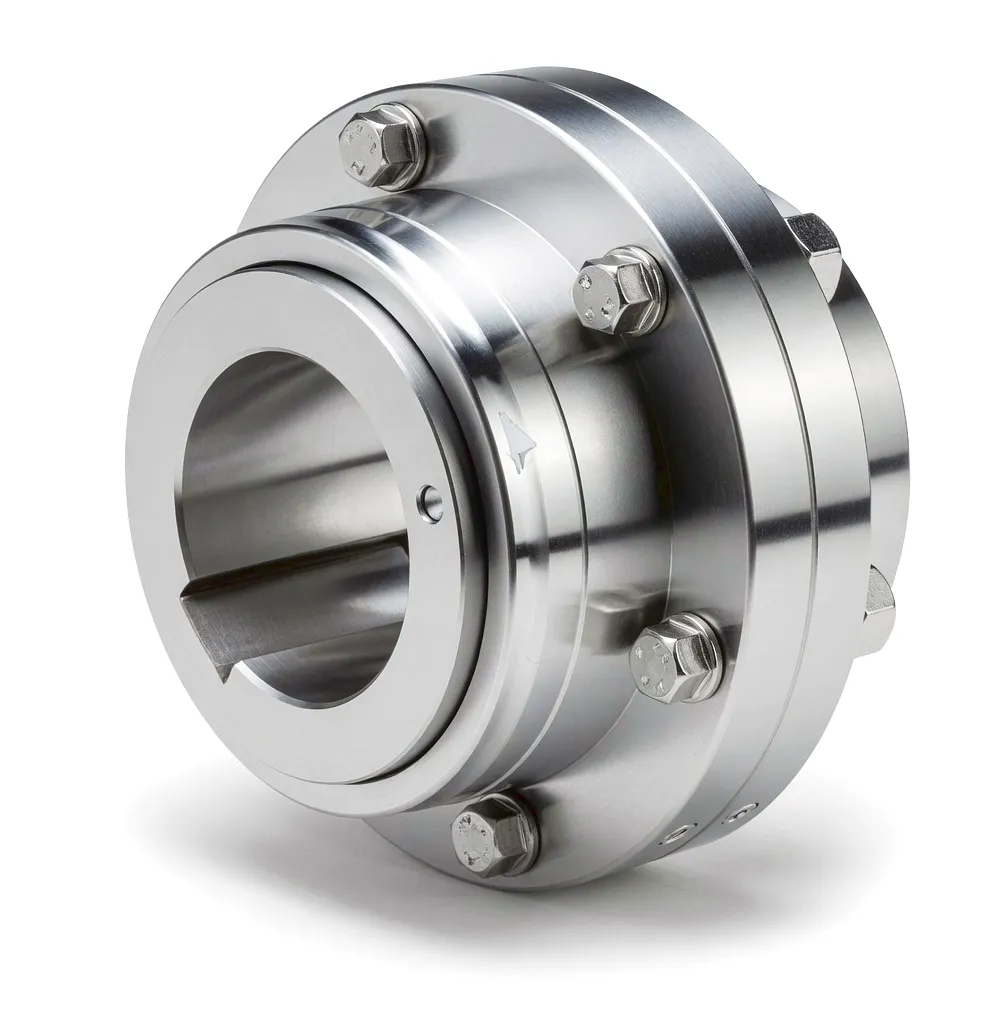 The mechanism is elegant in its directness. Two hubs carrying external gear teeth engage with mating internal gear teeth machined into a pair of sleeves. The sleeves are then bolted together to form the full coupling body. Torque flows from the driving hub, through the teeth, across the sleeve, and out through the driven hub. Because the external teeth are crowned along their length, each tooth can rock slightly within its mating internal tooth without losing contact area. That rocking motion is what permits angular misalignment without generating destructive bending moments.
Material selection drives service life. Marine variants of a gear type coupling are routinely forged from high-strength alloy steels such as 42CrMo4, then carburised, hardened to surface hardness around HRC 55-60, and ground to tight tooth profile tolerances. Internal sleeves typically share the same material but receive a softer through-hardness so the external hub teeth wear preferentially — a deliberate design choice that protects the more expensive sleeves over decades of service. External surfaces receive zinc plating, manganese phosphate conversion coating, or marine-grade epoxy paint depending on whether the coupling will run inside a sealed gearbox housing or be exposed to bilge-water mist. The internal cavity is filled with NLGI Grade 1 or 2 lithium-complex marine grease, chosen for its water-washout resistance and temperature stability up to roughly 150°C.
Technical Specifications at a Glance
| Παράμετρος | Range / Value | Notes |
|---|---|---|
| Ονομαστική ροπή | 1.2 kNm – 1,250 kNm | Up to 2,500 kNm on request |
| Εύρος διαμέτρου οπής | 25 mm – 600 mm | Custom larger sizes available |
| Max Rotational Speed | Up to 8,000 rpm | Speed-balanced grades G6.3 or G2.5 |
| Γωνιακή κακή ευθυγράμμιση | Up to 1.5° per gear mesh | 3° total on double-engagement |
| Axial Float | 3 mm – 25 mm | Size-dependent |
| Υλικό πλήμνης | 42CrMo4 / 34CrNiMo6 | Forged & quench-tempered |
| Σκληρότητα επιφάνειας δοντιού | HRC 55 – 60 | Carburised & ground |
| Θερμοκρασία λειτουργίας | -30°C to +120°C | Synthetic grease for extremes |
| Προστασία από τη διάβρωση | Zinc / Phosphate / Epoxy | Salt-spray tested 720 h |
| Compliance Standards | DIN, AGMA, ISO, Lloyd’s, DNV | Class society certificates on request |
Key Product Advantages
⚙️ Extreme Torque Density
Crowned-tooth geometry packs more torque into a smaller envelope than disc or jaw couplings, freeing up valuable engine room space on tightly built UK coastal tankers and offshore support vessels.
🌊 Salt-Air Durability
Multilayer corrosion protection withstands the punishing humidity of the North Sea. Salt-spray-tested coatings keep flange faces and bolted joints serviceable across 15-year drydock intervals.
🔧 Field-Friendly Maintenance
Grease ports on the sleeve allow lubrication top-ups without dismantling. Wear inspection is straightforward — engineers measure tooth backlash with feeler gauges during quayside checks.
📐 Misalignment Tolerance
Hulls flex, foundations settle, and thermal growth shifts shaft lines. The double-engagement design swallows angular, parallel, and axial offsets without transmitting destructive side loads.
🛡️ Class Society Compliance
Documentation packages aligned with Lloyd’s Register, DNV, Bureau Veritas, and ABS reduce certification headaches for UK shipyards working under MCA oversight.
⚡ Low Reaction Forces
A well-greased gear type coupling generates minimal bearing reaction forces under misalignment, extending the life of nearby gearbox bearings and propeller shaft stern tube assemblies.
Inside a Modern Ship Propulsion Driveline
 Imagine a 7,500 kW medium-speed diesel running at 750 rpm in the engine room of an offshore wind farm service vessel operating out of Grimsby. The crankshaft flange is bolted directly to a torsionally flexible front coupling. From there, power passes into a single-stage reduction gearbox that drops the output to 200 rpm. The gearbox output shaft is then linked to the intermediate shaft via a heavy-duty gear type coupling, before another section drives the controllable-pitch propeller through the stern tube. Each coupling location performs a slightly different mechanical role.
The coupling immediately downstream of the gearbox sees the highest torque density. Vessels operating dynamic-positioning loads see frequent torque reversals when the bridge demands instant thrust changes for station keeping. Repeated load cycling fatigues weaker coupling designs, but a properly sized gear coupling with case-hardened crowned teeth absorbs millions of reversal cycles before any measurable backlash develops. Naval architects in Glasgow and Belfast routinely specify oversized service factors of 1.5 to 2.0 for this exact reason — peace of mind costs less than an unplanned drydock.
Customer Success Story — Southampton Coastal Tanker Retrofit
Client: Solent Marine Engineering Ltd, Southampton, United Kingdom
Βιομηχανία: Coastal Petroleum Tanker Operations
Vessel Type: 4,800 DWT Product Tanker, twin medium-speed propulsion
Project Year: 2025
Solent Marine Engineering approached Ever Power after experiencing repeated tooth pitting failures on the legacy coupling fitted between the port-side gearbox and the intermediate shaft of an ageing tanker servicing UK south coast refineries. Drydock inspections were occurring every 18 months instead of the planned 36, with significant lost-revenue costs each time. After full driveline torsional analysis and shaft alignment review, our engineering team specified a custom gear type coupling with bore diameter of 280 mm, rated continuous torque of 185 kNm, and a service factor of 1.75. The unit was forged from 34CrNiMo6, carburised and ground, then finished with a triple-layer epoxy marine coating.
Outcome: After 14 months of continuous service including 28 transits between Fawley and Milford Haven, tooth wear measurement at the routine quayside inspection showed less than 0.05 mm of backlash increase — well within the 1.5 mm replacement threshold. Projected coupling service life now exceeds the vessel’s full 5-year inspection cycle, eliminating an estimated £180,000 in unplanned drydock costs over the asset’s remaining life.
What Our Marine Clients Say
“The custom gear type coupling Ever Power supplied for our offshore wind crew transfer fleet has performed faultlessly through two North Sea winter seasons. Their engineering team understood our duty cycle from day one.”
— James H., Technical Manager
Aberdeen Marine Services, Scotland
“Documentation was exceptional — Lloyd’s Register accepted the certification package without a single query. Delivery to our Liverpool yard was three weeks ahead of schedule, which saved us a real headache on the build programme.”
— Sarah M., Project Engineer
Mersey Naval Architects, Liverpool
“We retrofitted two coupling assemblies on our Thames passenger ferries. Vibration readings dropped noticeably at the gearbox bearings and our maintenance budget projection looks healthier than it has in years.”
— David C., Fleet Engineer
Thameside Ferries, London
Application Scenarios Across the Marine Sector
🚢 Commercial Cargo Vessels
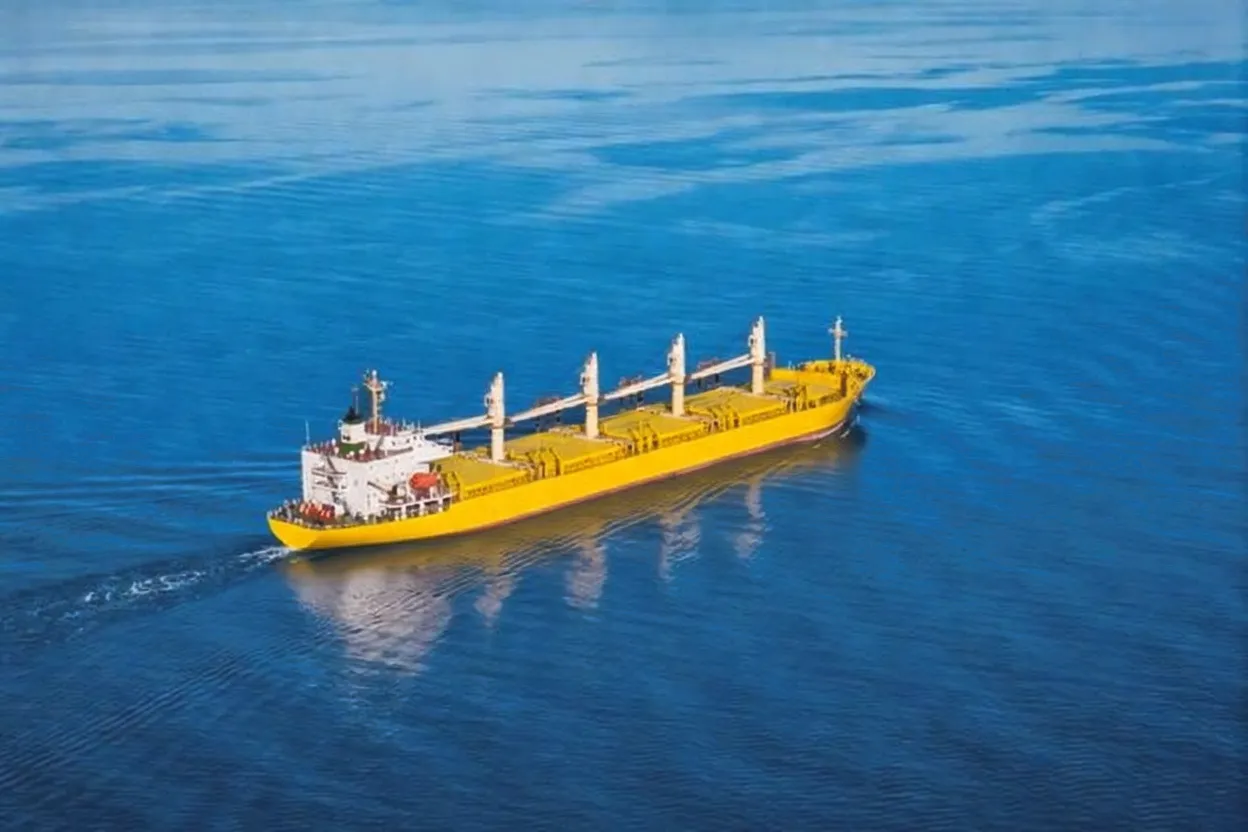
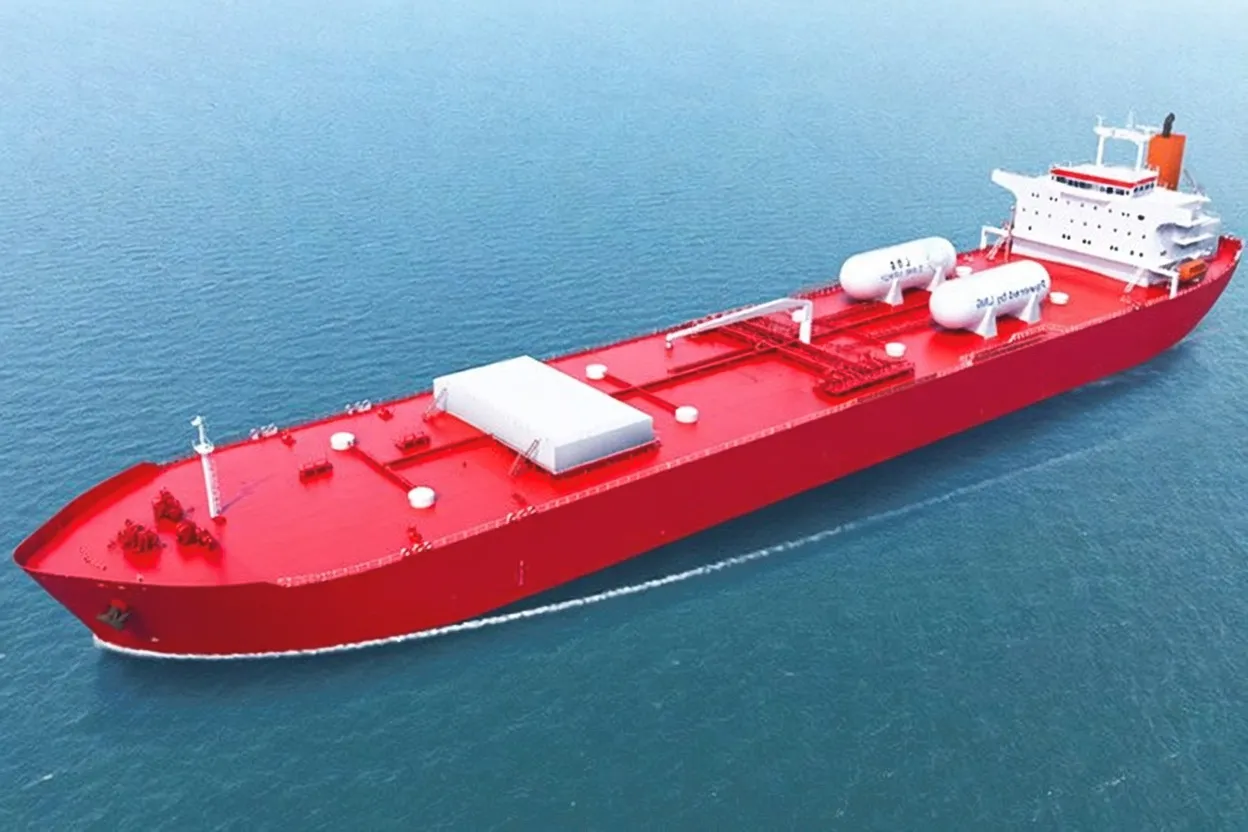
Bulk carriers, container ships, and product tankers rely on heavy-duty couplings between the main engine, reduction gearbox, and propeller shaft. Continuous-duty operation at 80-90 percent maximum continuous rating demands robust torque transmission.
⛴️ Passenger Ferries
Cross-Channel and Scottish island ferries operate hundreds of berthing manoeuvres each year. Frequent torque reversals make a hardened gear type coupling the natural choice for the propulsion line.
🛢️ Offshore Support Vessels
Anchor handlers, platform supply ships, and standby vessels working the UK Continental Shelf experience punishing duty cycles. Robust couplings keep dynamic-positioning systems responsive under any sea state.
🐟 Commercial Fishing Fleets
Trawlers from Peterhead, Brixham, and Hull need couplings that handle sudden shock loads from net deployment. Crowned-tooth designs survive cyclical loading better than rubber-element alternatives.
⚓ Tug Boats and Harbour Craft
Harbour tugs at Felixstowe, Southampton, and Liverpool deliver short bursts of maximum bollard pull. The propulsion driveline must withstand peak loads several times the rated continuous torque.
🚤 Coast Guard and Patrol Boats
High-speed patrol craft demand lightweight, high-torque-density couplings. Compact gear designs deliver the performance without compromising vessel deadweight calculations.
Ever Power — Engineered for the UK Marine Sector
Ever Power operates a vertically integrated manufacturing facility specialising in heavy-industrial coupling assemblies. Our forging shop produces hub and sleeve blanks up to 800 mm diameter. Carburising furnaces deliver tightly controlled case-hardening profiles, and our gear-grinding machines hold tooth profile tolerances to AGMA Quality 10 or better. Every marine-bound coupling undergoes 100 percent magnetic particle inspection on the toothed components, dynamic balancing to ISO 21940-11, and dimensional verification on a coordinate measuring machine before crating.
Customisation sits at the centre of what we do. UK shipyards rarely have identical driveline configurations — bore sizes, keyway specifications, flange-mounted versus shrink-fit hubs, brake disc adaptors, overspeed flanges, and class society documentation requirements all vary by project. Our engineering team works directly with naval architects and propulsion package integrators to deliver drawing-approved couplings inside aggressive build schedules. Standard delivery from order confirmation is six to eight weeks for catalogue sizes; bespoke designs typically ship within ten to twelve weeks with expedited options available.
Beyond manufacturing, we provide torsional vibration analysis, shaft alignment consultation, and on-site commissioning support. Spare parts inventory is held for fast turnaround, and our technical helpline is staffed by engineers who have spent careers in the marine driveline sector — not call-centre operators reading scripts. UK customers benefit from English-speaking technical support during working hours, and our logistics partners deliver to all major ports including Tilbury, Immingham, Felixstowe, and Aberdeen.
Installation and Long-Term Maintenance Guidance
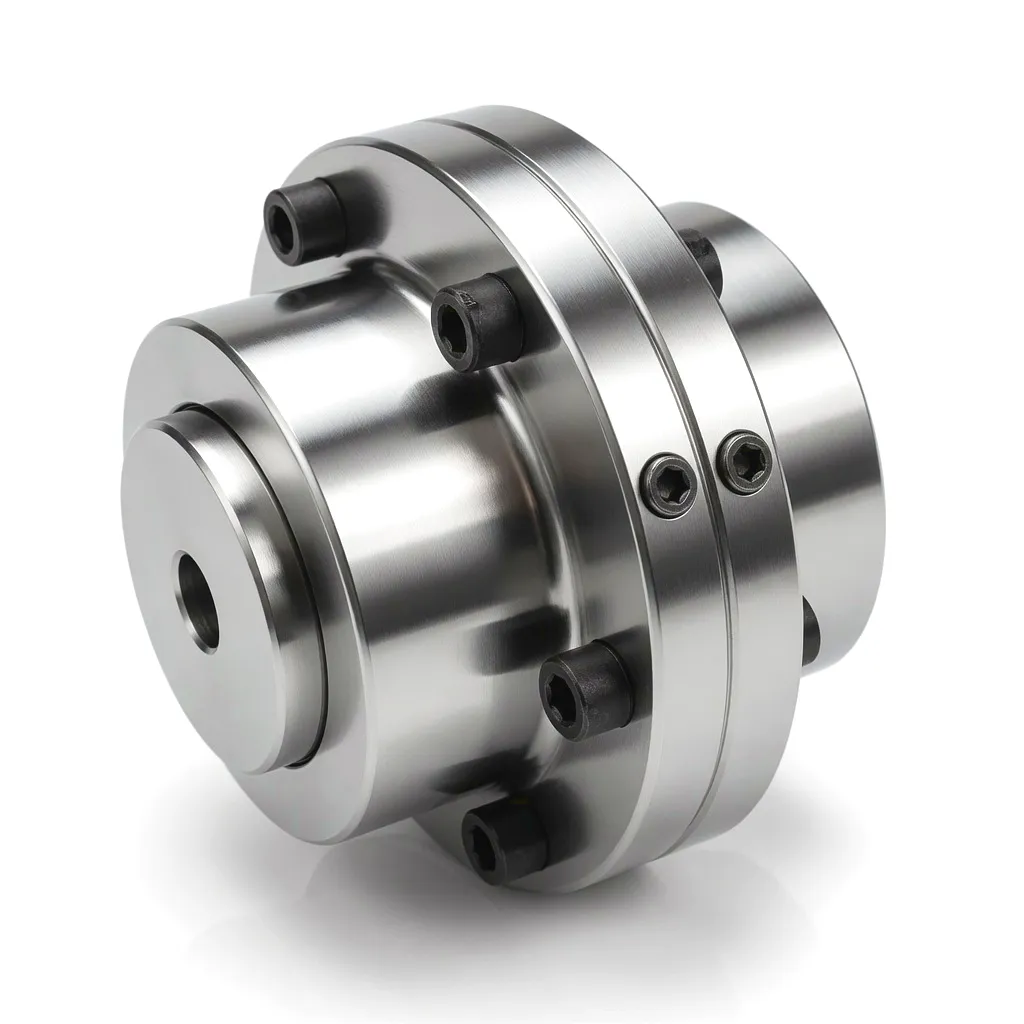 Correct installation starts with thorough shaft alignment. Laser alignment tools deliver the accuracy required for marine drivelines — typical specifications call for parallel offset within 0.05 mm and angular misalignment below 0.03 degrees at the gearbox-to-coupling interface. Engineers torque flange bolts in a star pattern using calibrated hydraulic tensioners, verifying preload values from the certified bolt-tightening schedule supplied with each unit. Grease cavities are filled to 70 percent capacity to allow thermal expansion headroom during operation.
During service, three checks dominate the maintenance regime. Grease replenishment occurs at intervals between 6,000 and 12,000 operating hours depending on duty cycle. Tooth backlash measurement using feeler gauges across diametrically opposite tooth pairs provides early warning of pitting or wear. Flange bolt re-torque is verified annually, with replacement of grease nipple seals and end-cap gaskets at each drydock visit. Following this routine, a quality gear type coupling will easily exceed 15 years of operational service in commercial marine duty.
Συχνές ερωτήσεις
Πόσο κοστίζει ένας σύνδεσμος τύπου θαλάσσιου γραναζιού για ένα έργο ναυπηγείου στο Ηνωμένο Βασίλειο;
Pricing for marine-grade units in the UK typically ranges from around £1,200 for smaller bore sizes up to £45,000 or more for high-torque custom assemblies. The exact quote depends on bore diameter, torque rating, class society certification requirements, and whether keyless shrink-fit hubs are specified. Request a detailed quotation through our sales team for project-specific pricing.
Ποιος τύπος ζεύξης γραναζιών είναι κατάλληλος για εφαρμογή πρόωσης ντίζελ 5.000 kW στη Βόρεια Θάλασσα;
For a 5,000 kW main engine running at typical medium-speed propulsion shaft rpm, a double-engagement gear coupling sized for approximately 240-280 kNm continuous torque with service factor of 1.6 to 2.0 will deliver reliable performance. North Sea operation demands enhanced corrosion protection and synthetic marine grease specification.
Where can UK marine engineers source certified gear couplings with Lloyd’s documentation?
Ever Power supplies certified marine couplings with full Lloyd’s Register, DNV, and Bureau Veritas documentation directly to UK shipyards, repair facilities, and Royal Navy contractors. Standard certification packages include material test reports, hardness profiles, dimensional inspection records, and dynamic balancing certificates.
What is the typical lead time for a custom gear coupling supplier delivering to Glasgow shipyards?
Standard catalogue sizes ship from our facility within six to eight weeks of order confirmation. Fully custom designs requiring bespoke engineering typically take ten to twelve weeks, with expedited delivery available for urgent retrofit projects. Logistics partners deliver to Glasgow, Aberdeen, and other Scottish ports within five working days of dispatch.
How can I find a reliable gear type coupling quote for offshore wind vessels operating off the English coast?
Reach out to our sales team at [email protected] with your driveline specifications, including main engine power, propeller shaft speed, bore diameters, and any class society requirements. We respond to UK enquiries within one working day with technical proposals and indicative pricing.
What maintenance schedule should fishing fleet operators in Hull follow for their gear type coupling assemblies?
Fishing vessels with intermittent peak loads benefit from grease replenishment every 6,000 operating hours, tooth backlash inspection at six-month intervals, and full grease replacement at each drydock cycle. Bolt re-torque should occur annually using a calibrated tensioner per the original installation specification.
When should a tug operator at Southampton port consider replacing the propulsion shaft coupling assembly?
Replacement is indicated when tooth backlash exceeds the manufacturer threshold (typically 1.5 mm for medium-sized couplings), when visible pitting affects more than 20 percent of tooth flank area, or when increased gearbox bearing vibration suggests degraded coupling alignment compensation. Schedule replacement during planned drydock periods to minimise vessel downtime.
Ready to Power Your Next Marine Project?
Reach our marine engineering team for tailored coupling solutions, technical drawings, and competitive UK pricing — built for the way British ships actually sail.
επεξεργασία από gzl