How Couplings Work on Marine Drilling Platforms: The Engineering Principle

Torque Transmission
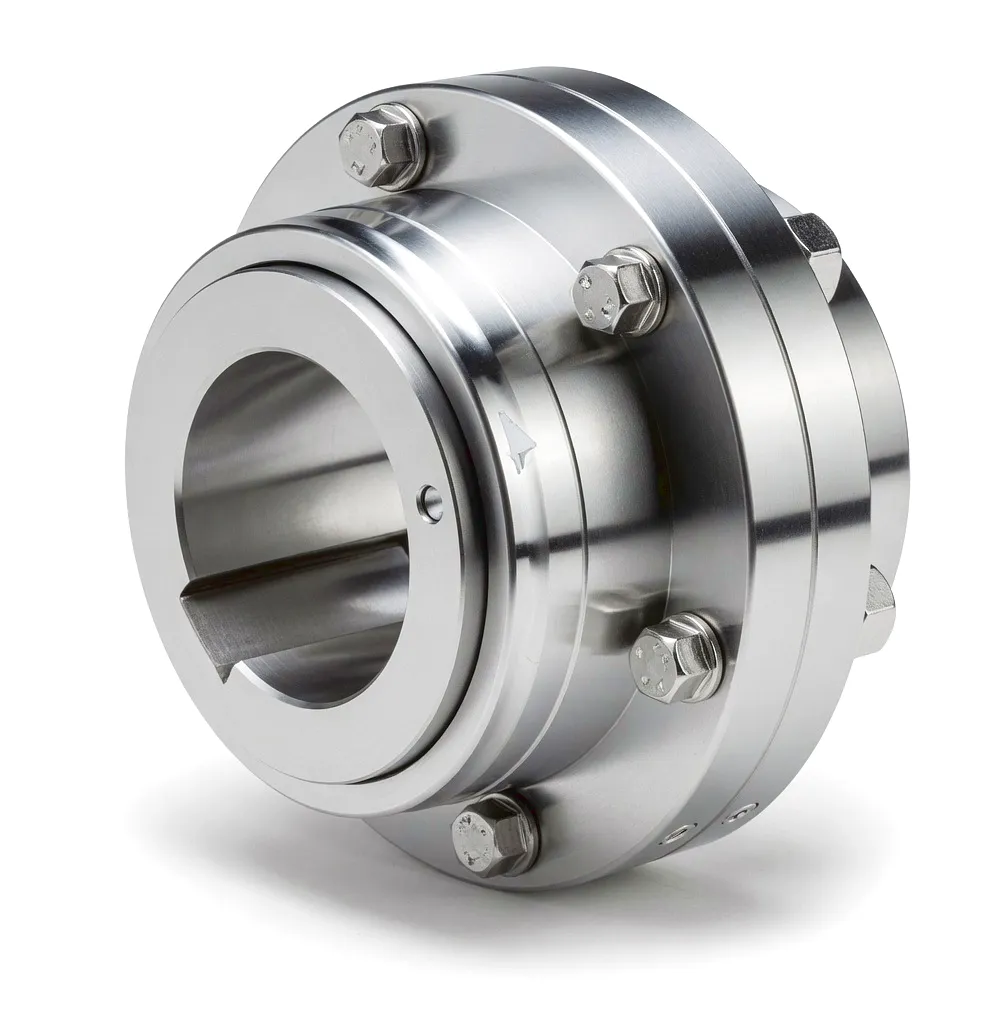
Continuous torque is transmitted through interlocking mechanical elements — gear teeth, spring coils, or flexible discs — engineered to handle rated load plus dynamic overloads without slip or fracture.
गलत संरेखण मुआवजा
Floating platforms introduce continuous angular and parallel misalignment. Flexible coupling elements accommodate these deviations without transmitting corrective forces to shaft bearings or seals.
Vibration & Shock Isolation
Torsional shock from mud pump pressure surges, engine firing impulses, and bit stick-slip events is dampened within the coupling element, protecting gearboxes and driven equipment from fatigue damage.
Core Materials Used in Marine Coupling Manufacturing
Material selection for couplings destined for offshore drilling service is as demanding as any other engineering decision on the rig. The combination of high dynamic loads, saltwater atmosphere, potential hydrocarbon contamination, and wide operating temperature ranges — from the cold North Sea winters familiar to operators working off the Scottish coast to tropical conditions in West African deepwater programmes managed by UK operators — demands materials that go well beyond standard industrial grades.
Alloy Steel (42CrMo4 / 4140)
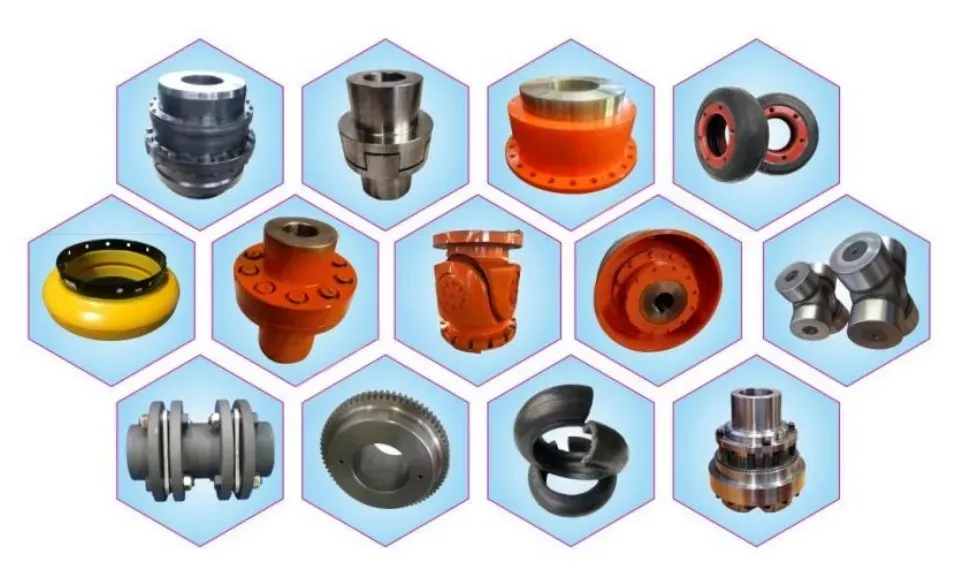
The dominant hub and sleeve material. High tensile strength (up to 1000 MPa), excellent fatigue resistance, and machinability that allows precision tooth profiles. Used in gear hubs, flanges, and intermediate shafts on high-torque mud pump drives.
316L Stainless Steel
Deployed in outer sleeves, flanges, and guard components where salt spray exposure is unavoidable. The molybdenum content provides critical chloride corrosion resistance that standard 304 cannot match in North Sea splash zones and wave-impacted deck areas.
Phosphor Bronze & Nylon
Intermediate sleeve liners in gear couplings are frequently manufactured from phosphor bronze or reinforced nylon composites. These materials self-lubricate under boundary conditions, reduce metal-on-metal contact stress, and extend service intervals between grease replenishment cycles.
Spring Steel (65Mn / SUP9A)
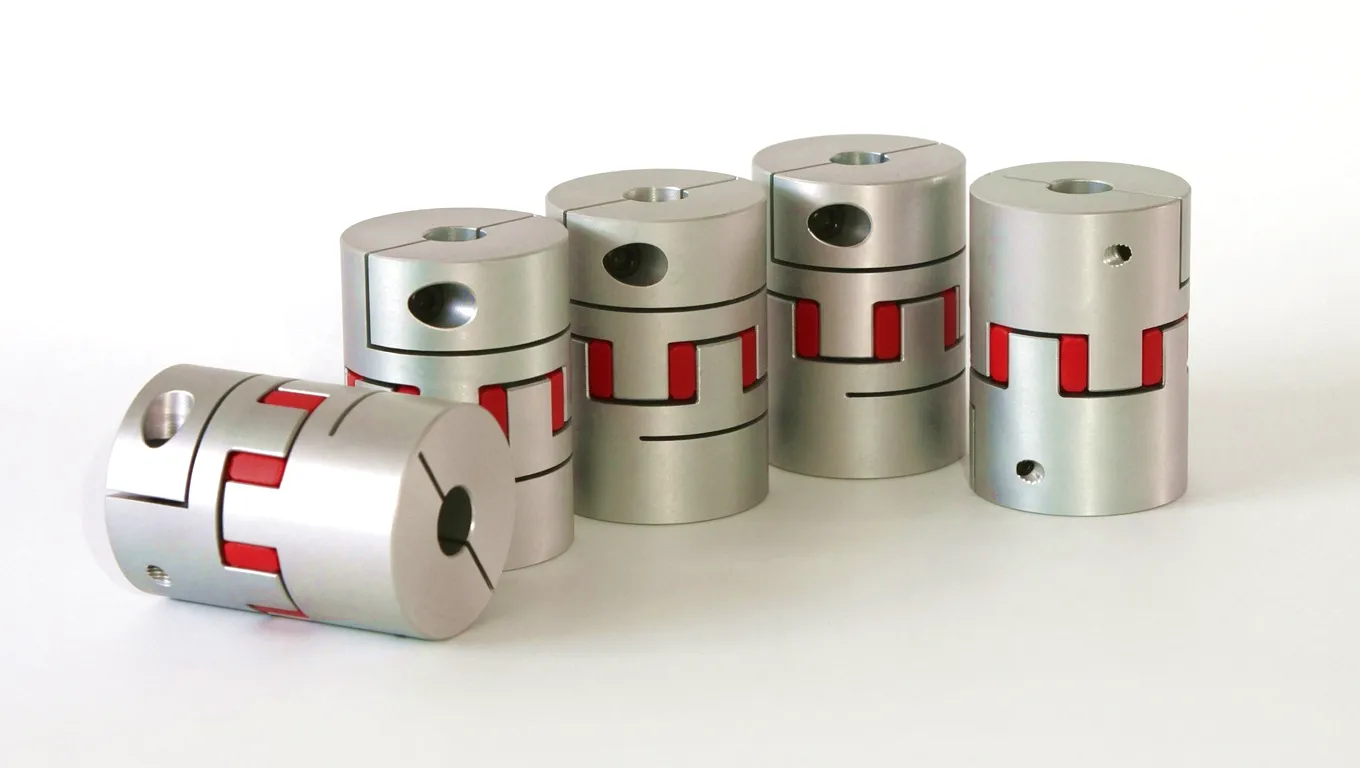
Snake spring coupling elements are formed from high-grade spring steel with controlled hardness between 42–50 HRC after heat treatment. The material delivers outstanding cyclic fatigue resistance, essential when the coupling element must flex millions of times across the rig’s operating life without cracking or taking a permanent set.
Ductile Cast Iron (GGG-40 / GGG-50)
Used for coupling covers, grease-retaining sleeves, and non-critical structural housings. Nodular graphite morphology gives far greater impact resistance than grey iron, while cost and machinability remain favourable for the complex casting shapes that coupling covers typically require.
Core Technical Advantages of Industrial Couplings for Offshore Drilling
High Torque Density with Compact Envelope
Marine drilling environments have severely constrained mechanical room dimensions. Coupling designs optimised for drilling applications deliver rated torques exceeding 50,000 Nm within a radial envelope that fits the close-coupled shaft arrangements common in compact rig machinery skids. This is achieved through carburised and case-hardened tooth profiles with contact ratios above 1.4, ensuring load is distributed across multiple teeth simultaneously rather than concentrated on a single contact point.
Superior Misalignment Tolerance
Unlike rigid flange couplings that demand micrometre-level shaft alignment, flexible industrial couplings designed for offshore service accommodate angular misalignment up to 1.5°, parallel offset up to 2 mm, and axial float of ±5 mm simultaneously. This is not a marketing generalisation — these are values that translate directly to reduced alignment re-work during routine maintenance shutdowns, fewer bearing failures attributable to misalignment loads, and the ability to tolerate platform movement without forcing an emergency shut-in.
Torsional Damping for Drivetrain Protection
The coupling element acts as a torsional filter between the dynamic excitation of diesel-electric prime movers — with firing frequencies and harmonics across a wide speed range — and the sensitive gearboxes, pump crankshafts, and top drive planetary systems downstream. Snake spring and elastomeric coupling types demonstrate torsional stiffness values that can be tuned at the design stage to detune resonance frequencies away from the operating speed range, a feature that has prevented multiple fatigue-related gearbox failures on rigs operating in the Central North Sea.
Maintenance-Friendly Design
On an offshore installation where a weather window for a crane lift might last only a few hours, coupling designs that allow element replacement without disturbing the connected machinery — particularly half-shell designs and axially-split gear couplings — dramatically reduce maintenance exposure time. Some configurations used on North Sea rigs allow the flexible element to be inspected and replaced in under 90 minutes by a two-person team, a significant improvement over designs that require shaft withdrawal or bearing removal.
Corrosion & Marine Environment Resistance
Coupling components for offshore service are subjected to multi-stage surface treatment: zinc phosphating followed by epoxy primer and topcoat for carbon steel components, passivation for stainless elements, and anodising for any aluminium non-structural parts. Grease-packed gear coupling internals benefit from dedicated marine-grade greases with extreme-pressure additives and water-wash resistance, maintaining a protective film even in the presence of the moisture ingress that is inevitable in splash-zone-adjacent equipment rooms.
Balanced for High-Speed Operation
Top drive motor shafts, centrifugal pump drives, and variable speed propulsion systems on semi-submersible rigs can reach rotational speeds above 1500 rpm. At these speeds, even modest residual imbalance in the coupling creates vibration forces that damage bearings, seals, and gearbox housings within weeks. Couplings manufactured for marine drilling service are dynamically balanced to ISO 1940 G2.5 or better as a factory standard, with balance quality verified on precision balancing machines before delivery.

Technical & Performance Parameters — Industrial Couplings for Marine Drilling Rigs
The following table consolidates key performance parameters applicable to coupling types commonly deployed on marine platform drilling equipment across the UK offshore sector. Values represent typical ranges across gear, snake spring, and universal joint coupling configurations used in mud pump, drawworks, top drive, and auxiliary machinery drives.
| पैरामीटर | Gear Coupling | Snake Spring Coupling | SWC Universal Coupling |
|---|---|---|---|
| Rated Torque (Nm) | 500 – 300,000 | 100 – 50,000 | 1,000 – 2,500,000 |
| Peak Torque Multiplier | × 2.0 – 3.0 | × 2.5 – 4.0 | × 2.0 – 3.5 |
| अधिकतम गति (आरपीएम) | up to 5,000 | up to 3,500 | up to 2,000 |
| Angular Misalignment (°) | up to 1.5° | up to 1.0° | up to 15° – 45° |
| Parallel Offset Capacity (mm) | 0.1 – 2.0 | 0.5 – 3.0 | subject to design |
| अक्षीय फ्लोट (मिमी) | ±2 – ±8 | ±3 – ±10 | ±5 – ±50 |
| हब सामग्री | 42CrMo4 / 20CrMnTi | 42CrMo4 / Cast Steel | 35CrMo / 42CrMo4 |
| Flexible Element Material | Carburised steel tooth / nylon liner | 65Mn spring steel | Needle bearing / cross journal |
| Operating Temperature (°C) | -30 to +120 | -40 to +100 | -40 to +150 |
| Balance Grade | आईएसओ 1940 जी2.5 | आईएसओ 1940 जी6.3 | आईएसओ 1940 जी6.3 |
| स्नेहन | Grease-packed (marine grade) | Grease-filled cover | Needle bearing grease |
Application Scenario: Couplings on Marine Platform Drilling Rigs
Marine platform drilling rigs represent one of the most mechanically demanding environments any coupling will ever encounter. Below are the critical sub-systems where couplings play a defining role in operational reliability and safety.
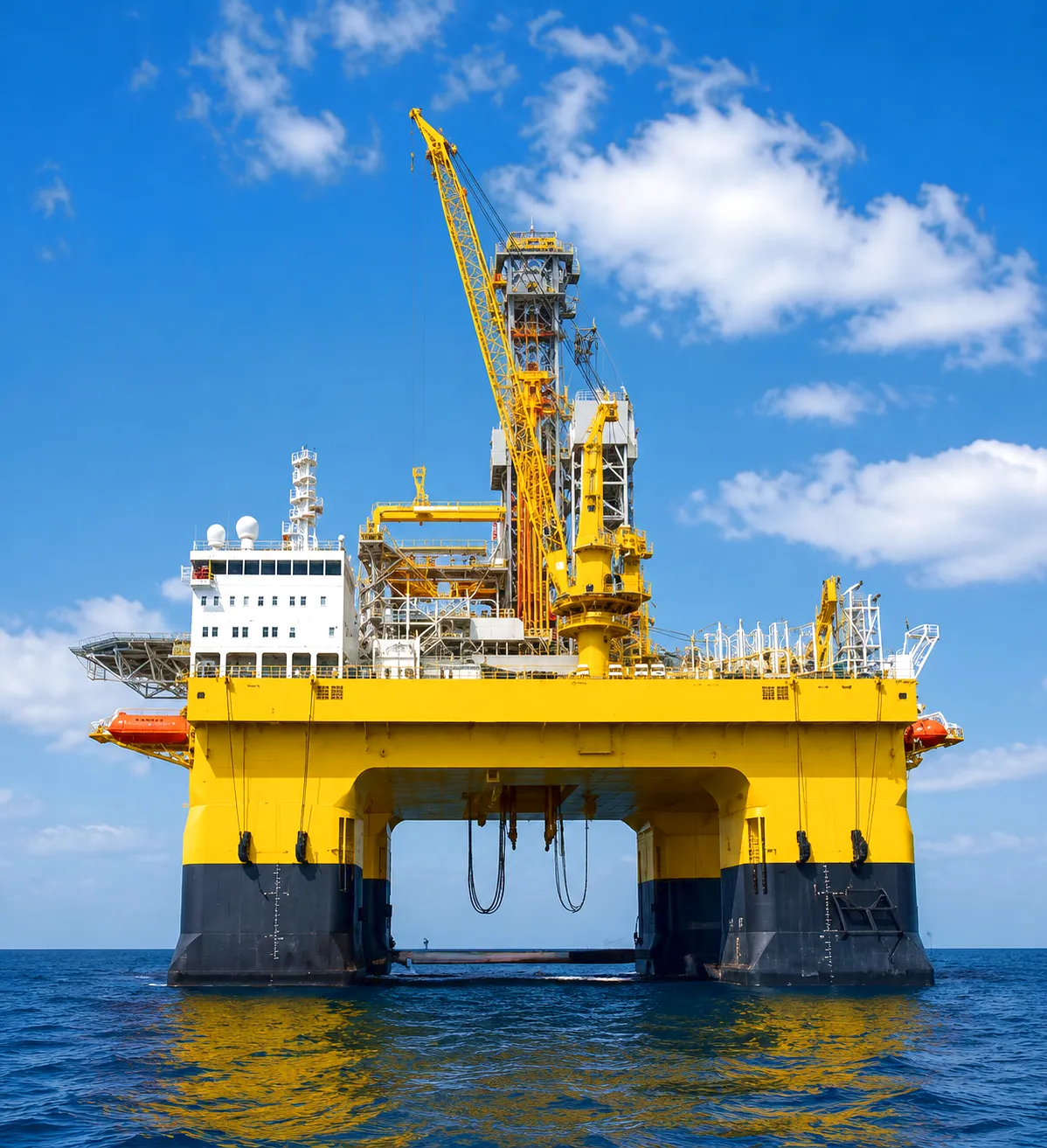 On every rotary drilling rig, the mud pumps are the circulatory system of the operation: they push weighted drilling fluid down the drill string, carry cuttings back to surface, maintain wellbore pressure balance, and cool the bit. Triplex plunger mud pumps operated on rigs servicing UK Continental Shelf (UKCS) licences typically draw between 750 kW and 1,500 kW each, and are driven through coupling-connected gearboxes by diesel engines or large AC electric motors. The torque signature at the coupling is anything but smooth. Each plunger stroke generates a pressure pulse that reverberates back through the crankshaft as a torsional impulse, superimposed on the base drive torque. Across a 24-hour operational day, the coupling on a mud pump drive might experience several million of these impulse events, each with a peak-to-mean torque ratio above 2.0. Gear couplings with carburised tooth flanks and adequate lubrication volume in the intermediate sleeve prove consistently reliable in this service, provided the tooth geometry has been optimised for the specific operating speed and the grease specification matches the operating temperature range typical of enclosed machinery rooms on North Sea installations.
Application Scenario 2 — Drawworks Hoisting Systems
The drawworks is the primary hoisting mechanism on a drilling rig, responsible for raising and lowering the drill string — which on a deepwater well can weigh several hundred tonnes — through the derrick. Modern AC top drive rigs use large variable frequency drives connected through robust coupling assemblies to the drawworks drum shaft. The coupling in this application must handle the full rated brake-out torque when freeing a stuck drill string, which can momentarily reach values four to five times the continuous rated torque of the drive system. Snake spring couplings prove particularly well-suited here: the metallic spring element provides positive engagement with no slip, while its progressive spring rate absorbs the energy of the shock load rather than transmitting it as a rigid mechanical spike. For drawworks on UK-flagged vessels operating under the Offshore Installations (Safety Case) Regulations, coupling torque ratings are verified against both normal operating loads and the worst-case emergency loads defined in the safety case, ensuring that the coupling is never the weakest link in the hoisting chain.
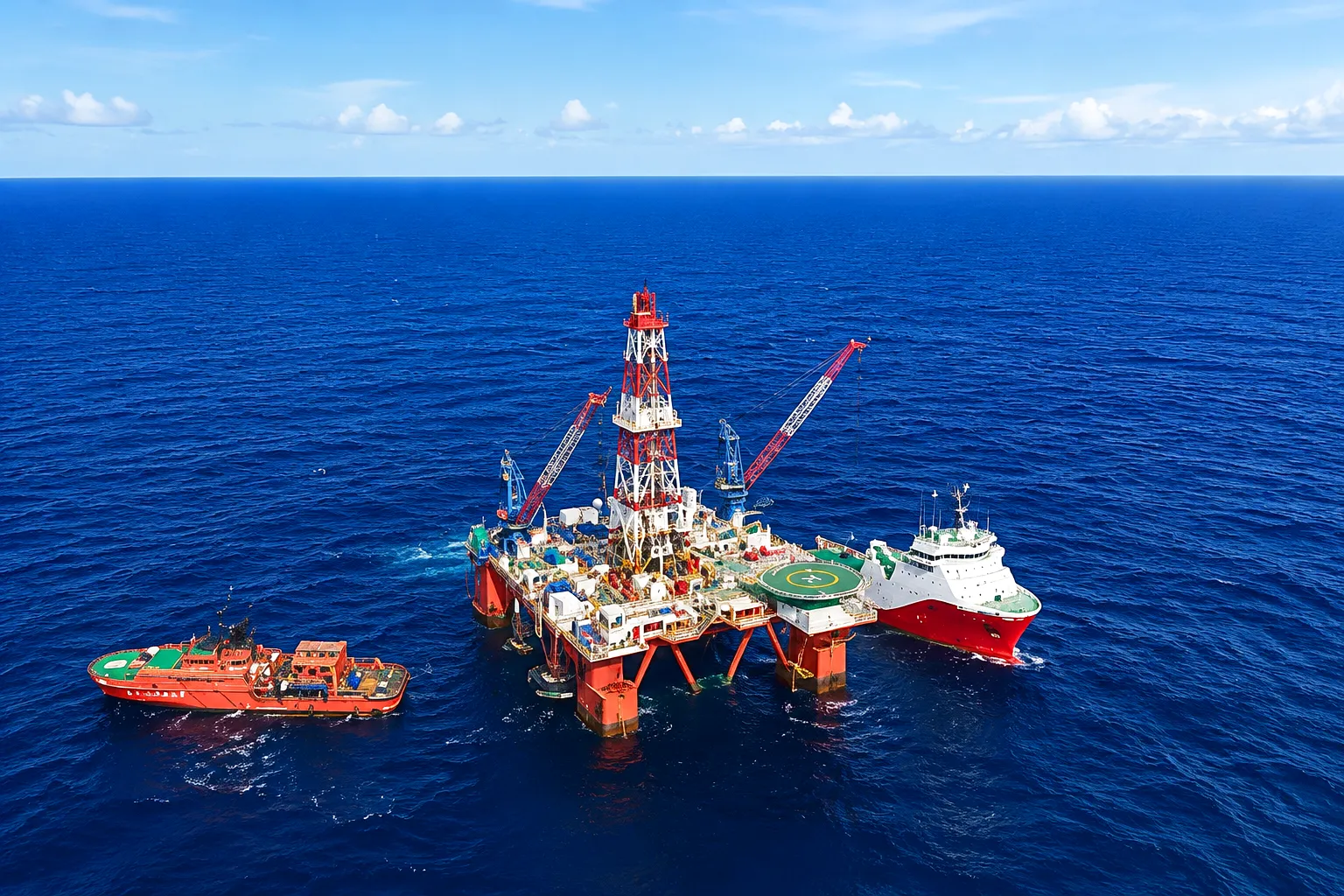 The top drive is the rotating heart of a modern drilling rig, taking over the function of the rotary table and Kelly by directly rotating the drill string from a travelling unit at the crown of the derrick. Top drives used on semi-submersibles and jack-up rigs in the North Sea typically produce output torques between 40,000 Nm and 100,000 Nm, transmitted through internal planetary gearing and then via coupling to the drill string connection. The couplings within the top drive power section must accommodate the continuous oscillatory motion induced by bit-bounce and whirl phenomena — situations where the bottom-hole assembly behaves erratically under high weight-on-bit conditions. Universal joint couplings, including the SWC series configuration, are integral to the mechanical design of top drive swivel and wash pipe assemblies, allowing the rotating string to follow slight deviations in the derrick structure’s alignment while maintaining full power transmission. Engineers at Aberdeen-based rig management companies specifying top drive coupling components routinely request dynamic analysis reports alongside dimensional drawings, a reflection of the sector’s maturity in understanding coupling behaviour beyond static load ratings.
Application Scenario 4 — Diesel Generator and Main Power Package Drives
Marine platform drilling rigs are effectively self-contained power plants, generating all their electrical power from diesel-driven alternators typically arranged in redundant packages of four to six units. Each diesel-alternator set relies on a coupling between the engine flywheel and the alternator shaft to transmit power continuously across operating lifetimes measured in tens of thousands of hours. The coupling specification for this service must address torsional resonance — a phenomenon where the engine’s firing frequency harmonics excite resonant vibration in the drivetrain at certain speeds, leading to catastrophic fatigue failure of shafts and couplings if not properly managed. UK-based rig operators working from bases in Great Yarmouth, which serves as a logistical hub for southern North Sea operations, increasingly request full torsional analysis packages alongside coupling procurement, with lateral critical speed calculations provided for all power generation drivetrain configurations. This service-oriented approach to coupling supply reflects the broader shift in the UK offshore industry toward total cost of ownership rather than initial purchase price as the primary procurement criterion.
Application Scenario 5 — Dynamic Positioning Thruster Drives
Semi-submersible rigs and drillships operating in deepwater UK Atlantic Margin acreage west of Shetland rely on dynamic positioning (DP) systems to maintain station over the wellhead without physical mooring. The azimuthing thrusters that provide position-keeping thrust are driven by large AC motors through shaft systems that include flexible couplings between the motor and the thruster gearbox. In DP service, the coupling must accommodate the continuous small thrust reversals and direction changes that the DP control system commands in response to wind, current, and wave disturbances. The torsional flexibility of the coupling serves here to isolate the motor from the propeller blade-rate vibration frequencies generated as each propeller blade passes the thruster pod structure, a phenomenon known as blade-rate excitation that, unchecked, shortens gearbox bearing life substantially. Couplings selected for DP thruster service on UK Continental Shelf operations are typically required to meet the classification society requirements of Lloyd’s Register, Bureau Veritas, or DNV — all of which have significant UK-based survey operations — adding an independent technical verification layer to the procurement process.
Featured Products for Marine Drilling Applications
Ever Power’s product range includes highly capable coupling solutions engineered for the torque levels, misalignment demands, and reliability expectations of marine and offshore drilling operations.
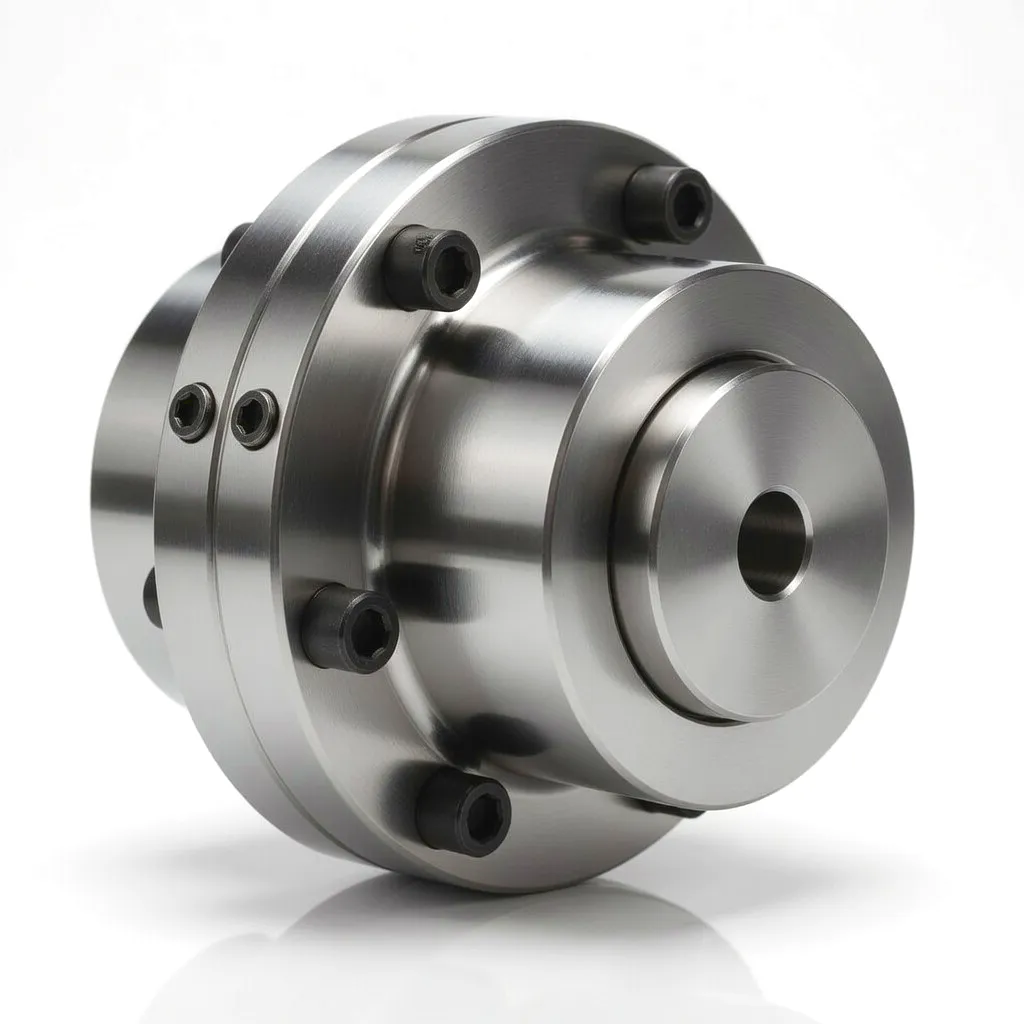
जेएसए सीरीज स्नेक स्प्रिंग कपलिंग
The JSA Series delivers outstanding torsional damping through its precision-wound spring element, making it the preferred choice for mud pump drives and drawworks applications where shock loads and reversals demand a coupling that absorbs rather than transmits impact energy. The spring steel element provides positive torque transmission in both directions with progressive stiffness, protecting gearboxes and motor bearings on marine drilling platforms. Fully enclosed grease-pack design suits the corrosive marine atmosphere encountered on rigs operating throughout the North Sea and Atlantic Margin fields.
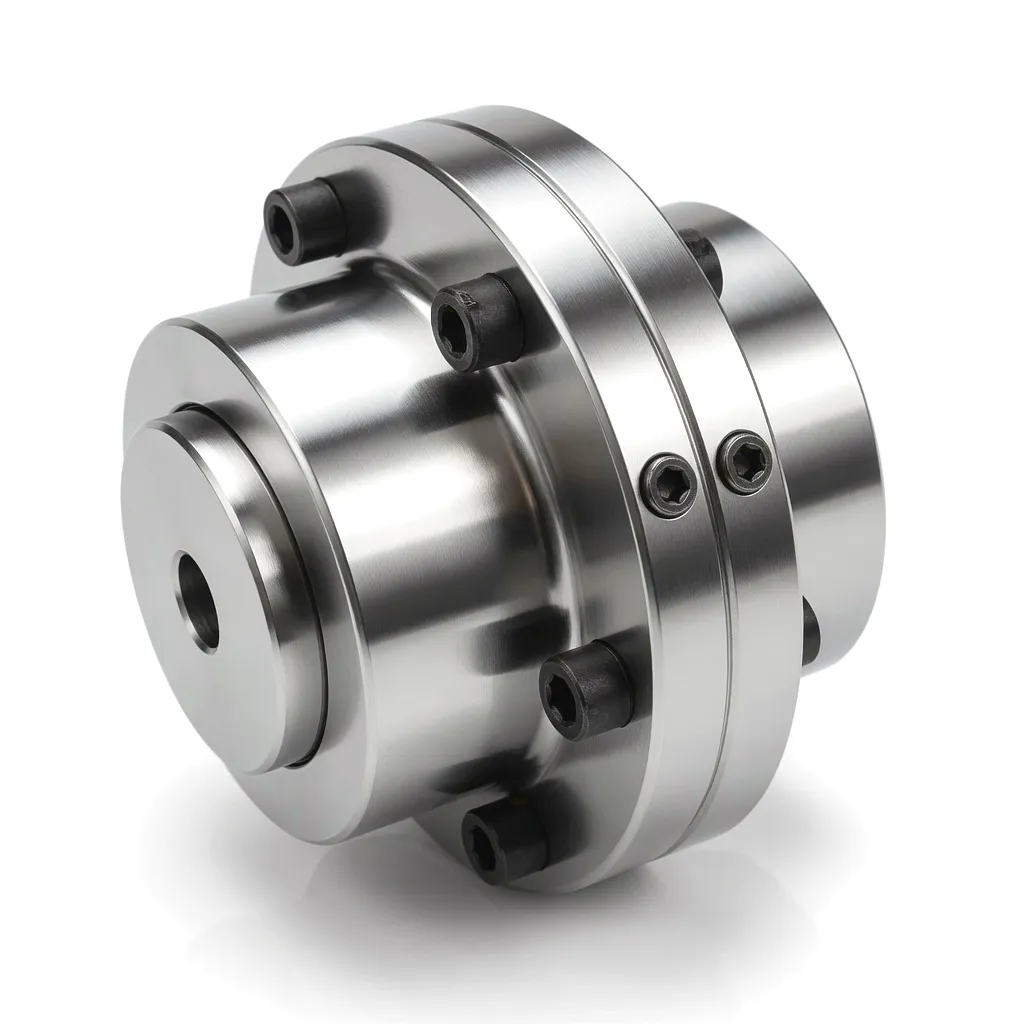
एसडब्ल्यूसी सीरीज यूनिवर्सल कपलिंग
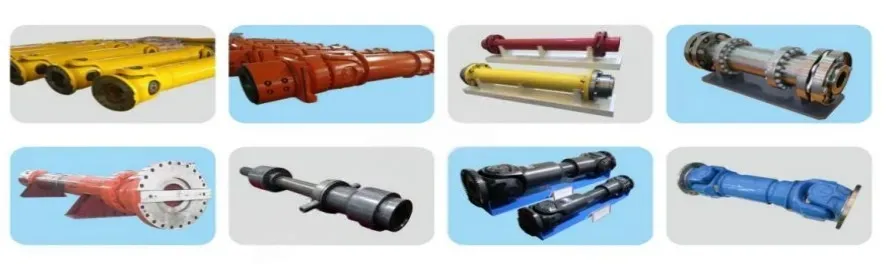
The SWC Series universal coupling handles the significant angular misalignment demands unique to top drive assemblies, swivel connections, and inter-deck shaft systems on drilling platforms where structural deflection and thermal expansion prevent true shaft alignment. With operating angles up to 45° depending on configuration, and torque capacities extending to 2.5 million Nm for the largest bore sizes, the SWC Series covers the full spectrum from auxiliary pump drives to the main rotary power transmission on heavy-duty deepwater rigs. Needle roller cross-joints provide low friction and long service life under the continuous rotation conditions that define rig operations throughout field campaigns that can last 12 months or more without planned dry-dock.
Ever Power: Precision Manufacturing & Custom Engineering Capability
Supplying to UK offshore operators and their engineering partners across the supply chain from Aberdeen to Great Yarmouth
🏭
Advanced Customisation Capabilities
Ever Power engineers work directly with UK procurement and engineering teams to design coupling solutions that meet specific rig requirements rather than forcing operators to adapt their machinery to catalogue products. Bore sizes, keyway configurations, flange bolt patterns, shaft end finishes, and surface treatment specifications are all addressed at the quotation stage, with full drawing approval and dimensional sign-off before production begins. For UKCS operators requiring ATEX-rated equipment in potentially explosive atmospheres, Ever Power offers coupling assemblies with the appropriate material selection and surface treatment to satisfy hazardous area classification requirements as assessed by UK Notified Bodies.
🔬
Precision Manufacturing & Quality Assurance
Every coupling produced in Ever Power’s manufacturing facility passes through a rigorous inspection programme that includes material certification review, dimensional verification on CNC coordinate measuring machines, surface hardness verification for heat-treated components, dynamic balancing to grade, and torque capacity confirmation through destructive testing of batch specimens. Full material test reports (MTRs) and inspection certificates are supplied with every offshore coupling order, supporting the documentation requirements of UK classification societies and the traceability standards expected by North Sea operators working under their respective Safety Management Systems.
🚢
Supply Chain Reliability for Offshore Operations
Ever Power maintains a strategic inventory of high-demand coupling sizes and flexible element spares to support the urgent replacement requirements that characterise offshore maintenance. When a coupling failure occurs on a rig operating in the Central North Sea, the cost of waiting weeks for a replacement component is simply not acceptable. Ever Power’s logistics partnerships enable air-freight despatch to Aberdeen International Airport, Heathrow, or any UK port of entry, with expedited customs documentation packages prepared in advance for common rig coupling sizes. This supply chain responsiveness is valued as highly by offshore procurement managers as the product quality itself.
Customer Success Story: Aberdeen Offshore Drilling Operator
Semi-Submersible Rig Operations
North Sea UKCS Block
From Recurring Failures to Zero Unplanned Shutdowns: A 24-Month Reliability Journey
A well-known Aberdeen-based offshore drilling contractor operating a semi-submersible rig on a Central North Sea UKCS block approached Ever Power in early 2023 following a series of recurring coupling failures on the mud pump drive systems. The rig was running three triplex mud pumps, each driven by a 1,100 kW AC electric motor through a step-down gearbox, and the coupling between each motor and gearbox had been replaced an average of twice per 12-month campaign — an extraordinary maintenance burden that was consuming significant unplanned rig time and exposing maintenance teams to unnecessary manual handling risks in the cramped mechanical equipment room environment below the drill floor.
The original couplings fitted were catalogue gear couplings not specifically engineered for the torsional load profile of the particular motor-pump combination. Torsional analysis commissioned by Ever Power’s engineering team revealed that the coupling stiffness coincided with a torsional resonance of the drivetrain at the motor’s second harmonic excitation frequency under partial load conditions — precisely the operating regime encountered during mud circulation while making connections. The resonant amplification was driving peak coupling tooth stresses more than 40% above the rated design value, explaining the fatigue crack pattern consistently observed on the recovered coupling hubs.
Ever Power designed a replacement coupling programme using modified gear tooth geometry combined with a damped intermediate element to shift the system’s torsional resonant frequency away from the critical excitation range. All three mud pump couplings were replaced during a planned maintenance shutdown at Methil fabrication dock, with full installation supervision provided by an Ever Power field engineer and completed within the planned 18-hour mechanical window. Over the subsequent 24-month operational period, the rig recorded zero unplanned coupling-related shutdowns, a result that the operations manager later described as transformative for their maintenance planning programme. The accumulated saving in rig time, crane costs, and replacement parts was independently estimated by the contractor at over £340,000 across the campaign, representing a return on investment exceeding 12:1 against the coupling replacement programme cost.
What Offshore Operators Say About Ever Power Couplings
★★★★★
“We’ve specified Ever Power’s JSA Series snake spring couplings on four of our rigs’ mud pump drives since 2023, and the reliability improvement compared to what we were running before is substantial. The torsional analysis they provided before we committed gave us genuine confidence that the selection was right for our specific drivetrain, not just a catalogue match based on torque alone. Zero unplanned replacements in two years of continuous North Sea service.”
— Senior Mechanical Engineer, Offshore Drilling Contractor, Aberdeen
★★★★★
“The critical thing for us is lead time. When a coupling fails on a rig, we need a replacement part on the next helicopter run if humanly possible, not six weeks from a factory in a distant time zone. Ever Power’s logistics team in the UK has consistently managed to get us coupling spares into Aberdeen in 72 hours or less, even for the non-standard bore sizes we have on the older units. That kind of supply chain responsiveness is simply not something you can put a price on offshore.”
— Rig Materials Coordinator, Marine Services Company, Great Yarmouth
★★★★★
“We had a very specific set of requirements for the SWC coupling on our top drive swivel assembly — non-standard bore, specific flange geometry to match a legacy housing, and a material certification package to satisfy our classification society survey requirements. Ever Power turned around a full custom design drawing within four working days, got our engineering approval, and delivered manufactured parts inside the planned maintenance window at Dundee. The whole process was genuinely impressive given the complexity of what we asked for.”
— Mechanical Systems Manager, Deepwater Drilling Services, Aberdeen
Frequently Asked Questions — Couplings for Offshore Drilling Rigs, UK
Ready to Solve Your Marine Platform Coupling Challenge?
Ever Power’s engineering team works with offshore operators, drilling contractors, and procurement teams across the UK — from Aberdeen to Great Yarmouth — to deliver couplings that perform where it matters most.
जीजेडएल द्वारा संपादित