Industrial Power Transmission · UK Market Specialist
सीमेंट मिल ड्राइव सिस्टम में कपलिंग: ब्रिटेन के सबसे भारी औद्योगिक भारों के लिए इंजीनियरिंग परिशुद्धता
An in-depth technical and commercial guide to gear-type couplings, snake spring couplings, and universal couplings — covering selection, application, and performance for UK cement plant operators.
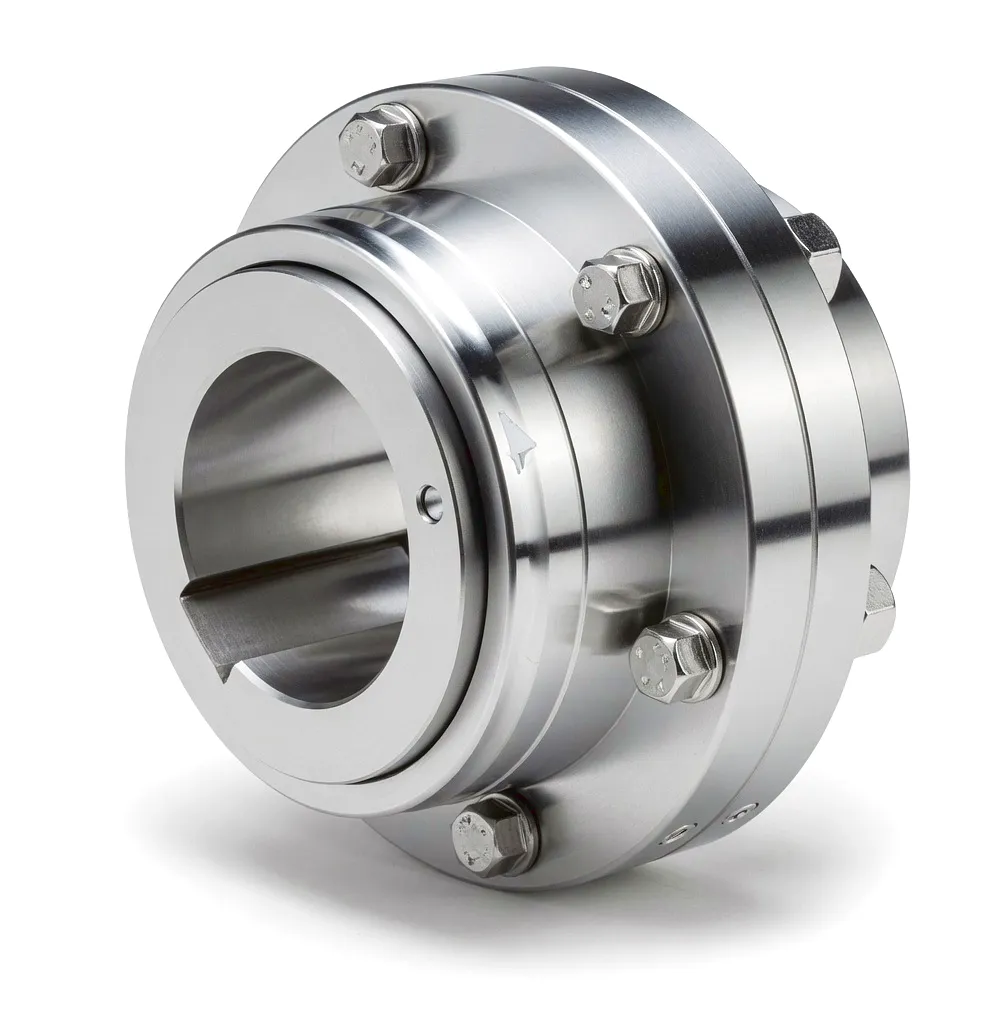 Cement manufacturing is among the most mechanically demanding environments in British industry. From the raw material quarries near Sheffield and the Derbyshire limestone belt through to integrated cement works in the Midlands and the South East, every stage of production depends on drive systems that can endure crushing loads, relentless duty cycles, and airborne dust concentrations that would cripple lesser mechanical components. At the centre of these drive trains sits the coupling — the precision mechanical link that transmits torque between the motor, gearbox, and rotating mill. Choosing the wrong coupling type costs cement plants far more than a replacement component; it costs them unscheduled downtime, production shortfalls, and the cascading damage that a catastrophic shaft failure inflicts on reducers, bearings, and structural frames worth tens of thousands of pounds.
Response within 24 hours · UK-ready documentation · Custom engineering available
How Couplings Work in Cement Mill Drive Trains
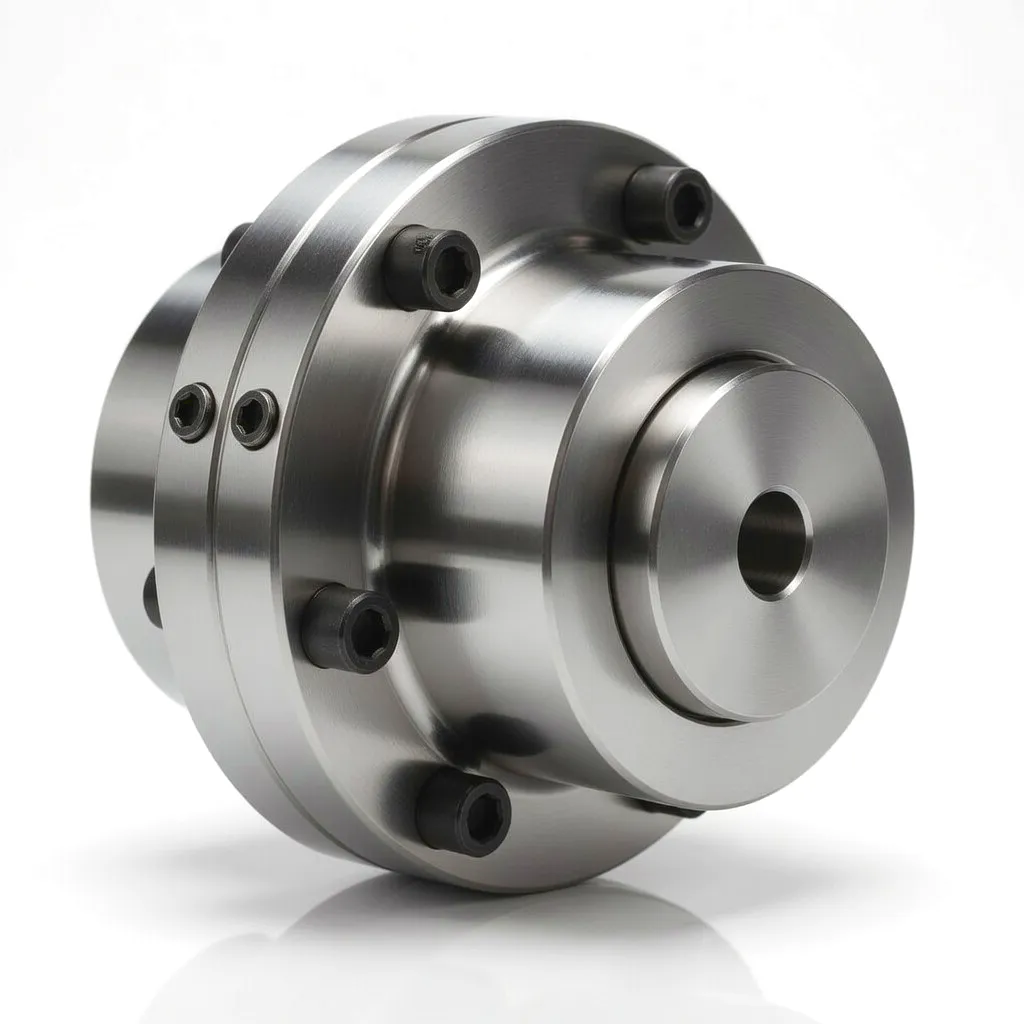 A coupling’s fundamental role is deceptively straightforward: connect two shafts and transmit rotational torque from the driving side to the driven side. In practice, the design challenge is entirely about managing what happens when those two shafts are not — and never will be — in perfect geometric alignment. Manufacturing tolerances, thermal expansion of steel structures during kiln operation, dynamic deflection under load, and the long-term settlement of civil foundations all contribute to misalignment between the motor shaft and the mill pinion shaft. A rigid connection under these conditions would transfer destructive bending moments directly into bearings and housings, shortening their service life dramatically.
⚙️
टॉर्क ट्रांसमिशन
Crown-tooth geometry distributes load across multiple tooth pairs simultaneously, reducing contact stress and extending fatigue life under the pulsating torque characteristic of ball mill drives.
📐
गलत संरेखण मुआवजा
Angular, parallel, and axial misalignment are absorbed within the coupling’s working clearances, preventing harmful radial forces from reaching motor and gearbox bearings.
🛡️
Overload Protection
In designs incorporating a torque-limiting element, the coupling acts as the drive train’s sacrificial link — absorbing start-up shock and protecting expensive downstream components from damage during mill jams.
🔒
Dust Exclusion
Sealed housings with precision-fitted O-rings or labyrinth seals prevent cement dust ingress, which would otherwise act as an abrasive compound accelerating tooth flank wear at a rate far exceeding normal service intervals.
Material Science Behind High-Performance Couplings
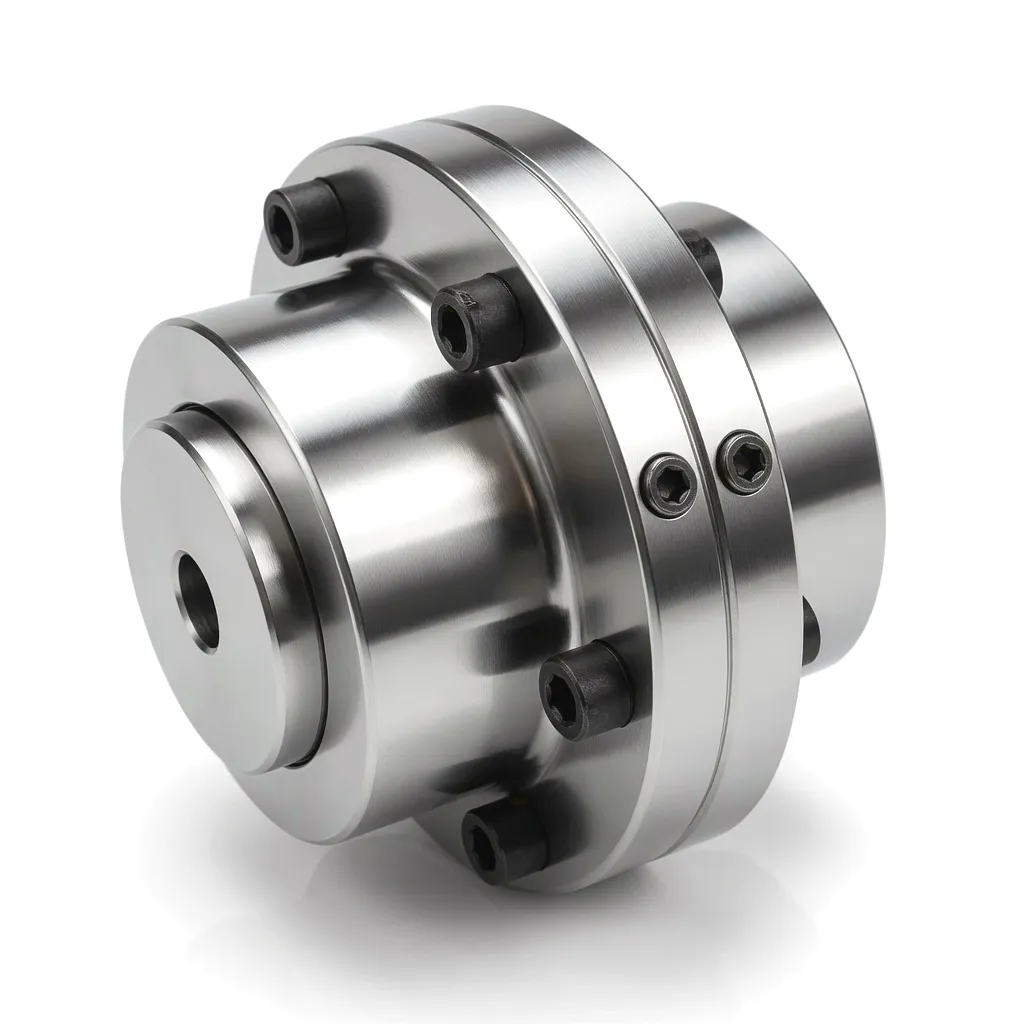
Hub & Sleeve
42CrMo4 / 40Cr alloy steel, forged. Tensile strength ≥ 900 MPa. Tooth surfaces carburised to 58–62 HRC.
Spring Elements (Snake Spring)
65Mn or 60Si2Mn spring steel, oil-quenched and tempered. High fatigue resistance; vibration damping across full torque range.
Universal Joint Yokes
20CrMnTi case-hardened alloy or nodular cast iron (GGG-50 / GGG-70) for lower-speed auxiliary drives. Precision bored and balanced.
Seals & Retaining Hardware
NBR or FKM O-rings. 304/316 stainless steel fasteners for corrosive-environment variants. Zinc-phosphate or Dacromet coating on external carbon-steel parts.
Core Technical Advantages for Cement Mill Applications
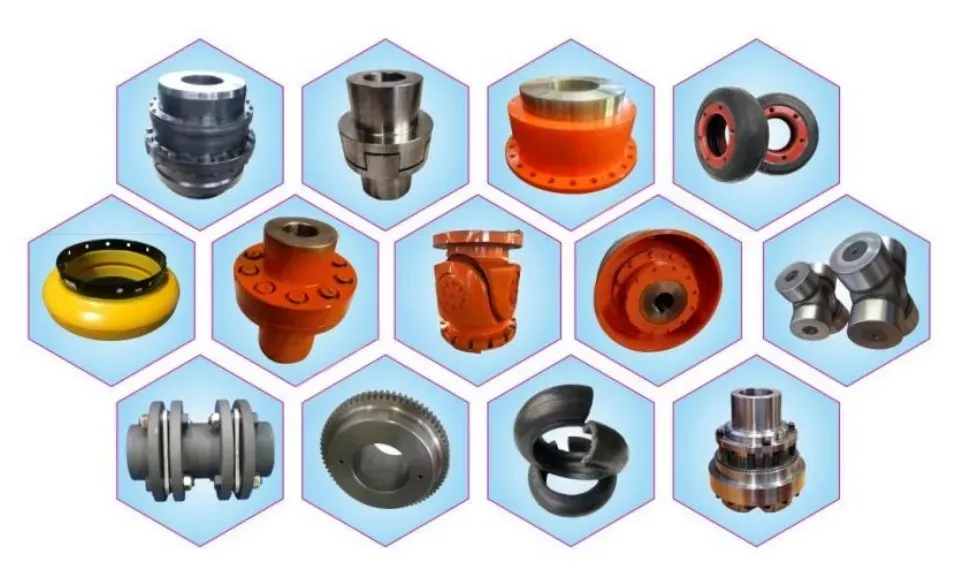
High Torque Capacity, Compact Envelope
Gear-type couplings achieve torque densities that disc or jaw couplings cannot match at equivalent shaft diameters. A compact coupling transmitting 500 kNm allows the overall mill drive arrangement to be shorter, reducing foundation costs — an advantage when retrofitting into constrained plant buildings typical of older UK cement works.
Shock Absorption on Direct-Start Motors
Ball mills with 3.5 MW to 8 MW synchronous motors experience severe starting torque peaks — often three to four times nominal. The coupling’s internal clearances and tooth profile damping characteristics absorb these peaks, protecting the gearbox and open gear ring from fatigue damage across thousands of start cycles over a multi-year service interval.
Extended Maintenance Intervals
Quality gear-type couplings re-greased at the annual plant shutdown can run for 25,000 to 30,000 hours without component replacement. Designed-in maintenance access via split covers means grease renewal does not require shaft uncoupling, saving six to twelve hours of production time per service cycle at a typical UK cement plant operating on continuous production schedules.
Precision Dynamic Balancing
All rotating assemblies are dynamically balanced to G6.3 or better (ISO 1940) at the manufacturing stage, ensuring smooth running at rated speed without exciting resonances in the gearbox housing or mill trunnion bearings — critical for reducing vibration-induced fatigue across the entire drive train structure.
Dust-Sealed Enclosure System
Integrated labyrinth seals and grease-purge systems prevent cement dust — with particle hardness approaching that of corundum — from entering the tooth mesh zone. This single design feature is credited with doubling effective service life compared to open-style couplings in field studies conducted at continuous production facilities across Central Europe and replicated in UK plant audits.
Custom Bore and Keyway Configurations
Bore dimensions, keyway profiles, and shaft interference fits can be machined to exact drawing tolerances to suit original equipment manufacturer specifications or bespoke retrofit requirements, removing the alignment and vibration risks associated with sleeve adapters or filler bushes.
Coupling Technical Performance Parameters
The table below summarises the indicative performance envelope for the range of coupling types most commonly specified in cement mill drive applications. All values are representative of the Ever Power standard range; custom designs may extend beyond these figures. Parameters should always be verified against the specific mill drive analysis before final specification.
| पैरामीटर | गियर-प्रकार कपलिंग | Snake Spring Coupling | SWC Universal Coupling |
|---|---|---|---|
| रेटेड टॉर्क रेंज | 500 – 3,150,000 Nm | 200 – 280,000 Nm | 1,000 – 5,000,000 Nm |
| अधिकतम कोणीय गलत संरेखण | 1.5 डिग्री तक | up to 1.0° | up to 15° (single joint) |
| Max Parallel Offset | depends on L / D ratio | moderate (spring flex) | limited by joint angle |
| Speed Range (rpm) | 10 – 6,000 | 10 – 1,800 | 0 – 1,500 |
| Hub / Sleeve Material | 42CrMo4, 40Cr steel | Grey / ductile cast iron; 45# steel | 35CrMo / 40CrNiMo alloy steel |
| Tooth / Spring Surface Hardness | 58 – 62 HRC (case) | 42 – 48 HRC (spring) | 55 – 60 HRC (cross trunnion) |
| परिचालन तापमान | -20°C to +80°C (grease lubricated) | -30°C to +70°C | -25°C to +100°C |
| Dust Seal Type | Labyrinth + O-ring | Cover plate + grease seal | Dust cap / integral flange seal |
| Typical Service Life (cement mill) | 25,000 – 40,000 hrs | 15,000 – 25,000 hrs | 20,000 – 35,000 hrs |
| डायनामिक बैलेंस ग्रेड | G6.3 (ISO 1940) | G6.3 (ISO 1940) | G6.3 (ISO 1940) |
Industrial Application Scenarios for Couplings in Cement Production
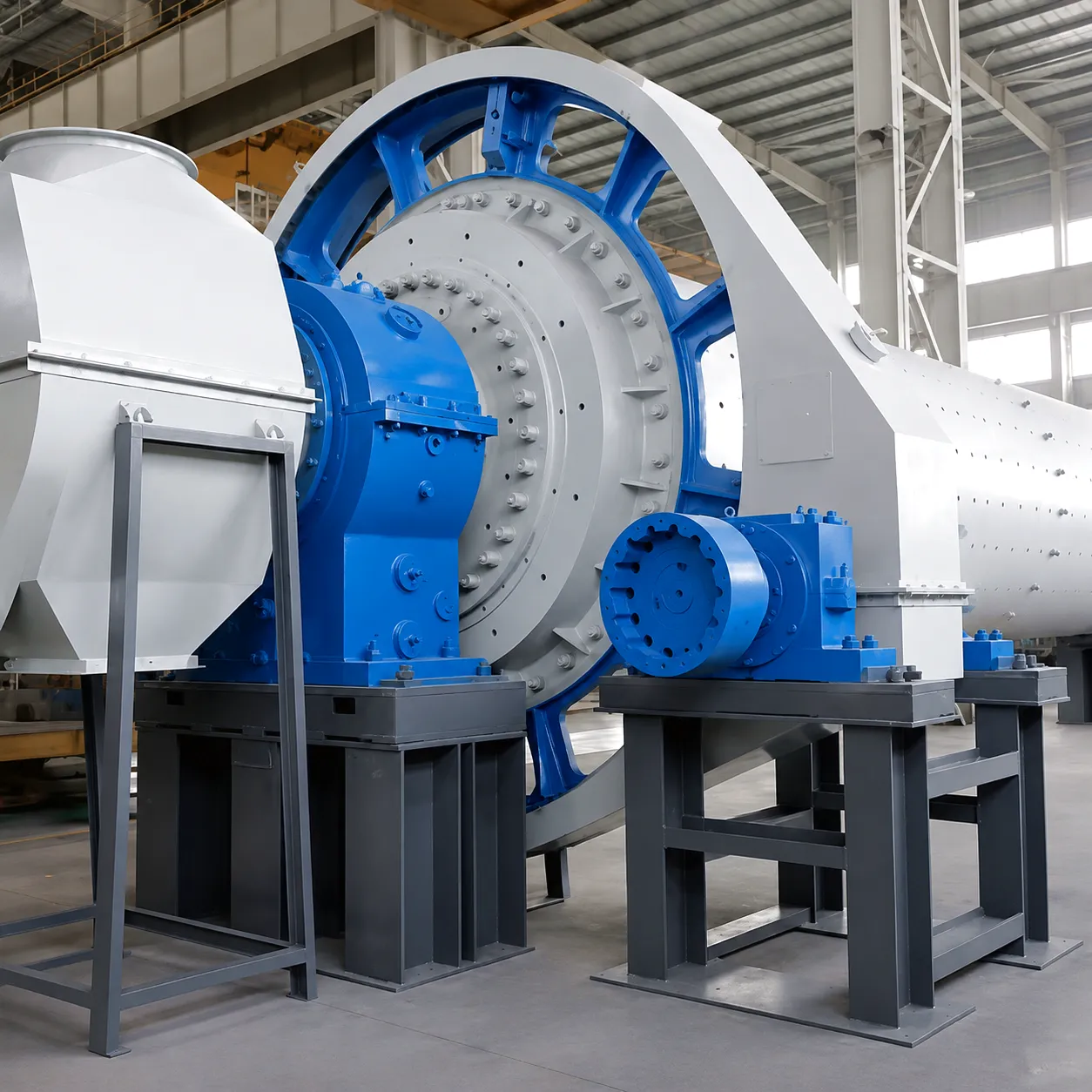 The ball mill main drive is the defining coupling application in any cement plant. A typical UK clinker grinding mill operating at full capacity draws between 3.5 MW and 10 MW from the primary motor, with the power train running through a fluid coupling or soft-starter, into a parallel-shaft or planetary gearbox, and from there via the gear-type coupling to the slow-speed pinion shaft and open bull gear ring. The coupling sits at the highest torque point in the low-speed shaft run, where any compliance failure translates directly into catastrophic gearbox or ring gear damage.
Vertical Roller Mill (VRM) Auxiliary Drive — SWC Universal Coupling
Vertical roller mills — increasingly the technology of choice for raw meal grinding at modern UK cement plants due to their superior energy efficiency compared to ball mills — present a distinct coupling challenge. The grinding table is driven from below by a large bevel-helical planetary gearbox, but the mill also requires an auxiliary or barring drive for maintenance rotation and emergency turning operations. This auxiliary circuit typically incorporates an SWC series universal coupling to bridge the angular offset between the barring motor shaft and the gearbox input, while accommodating the positional adjustments required when the grinding table is lifted during roller replacement.
The universal coupling’s ability to operate through working angles of up to 10° on the auxiliary drive eliminates the need for precisely aligned mounting bases — a considerable civil engineering saving when inserting a temporary barring drive into an existing mill layout. For UK plant engineering teams working within confined grinding buildings typical of older sites in Sheffield and the surrounding Yorkshire industrial corridor, this compact, angle-tolerant coupling geometry is particularly valuable during planned maintenance shutdown periods where access restrictions limit precision alignment work.
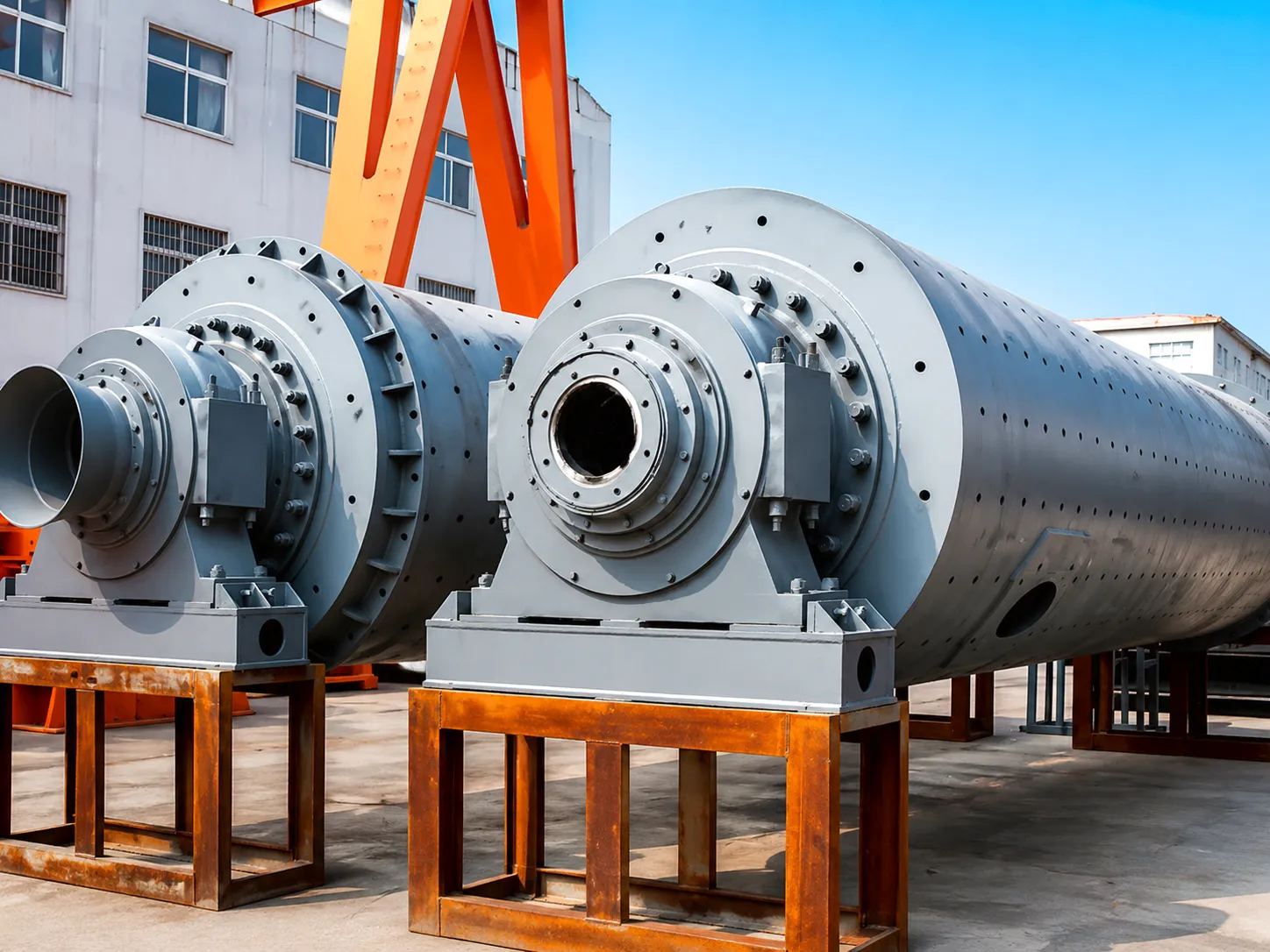 The roller press or high-pressure grinding roll operates at very high specific grinding forces — up to 3,500 kN per square metre of roller surface — creating a pulsating load signature that is fundamentally different from the relatively smooth torque profile of a ball mill. This pulsating characteristic makes vibration damping in the coupling assembly critical: the snake spring coupling, whose spring element is interlaced between the two hub flanges, provides a natural frequency buffer that significantly reduces vibration amplitude transmitted from the roller press back through the gearbox to the motor.
Cement Kiln Drive — Gear-Type Coupling with Floating Shaft
The rotary kiln, the thermal heart of the cement process, rotates continuously at low speed — typically 0.5 to 4 rpm — but transmits enormous torques through the kiln drive gear ring. The kiln shell undergoes significant thermal bowing and longitudinal movement over a working shift, and the kiln tyre-riding ring position shifts relative to the drive station as refractories wear and clinker buildup patterns change. Couplings in the kiln drive application must accommodate both the axial movement of the shell and the gross misalignment between the drive pinion shaft centre and the nominal kiln axis.
A floating-shaft gear-type coupling arrangement — with two crowned-tooth gear sleeves linked by an intermediate shaft — is the standard engineering solution for kiln drives at this scale. The floating shaft provides a long moment arm that converts the small angular misalignment at each end into negligible restoring forces on the drive pinion bearing, even when the kiln shell is running with 20 to 30 mm of thermal bow at the centre span. UK plant engineers specifying kiln drive couplings typically require full material certificates and third-party dimensional inspection reports, requirements that Ever Power fulfils as standard with CE-marked documentation suitable for submission to UK engineering consent authorities.
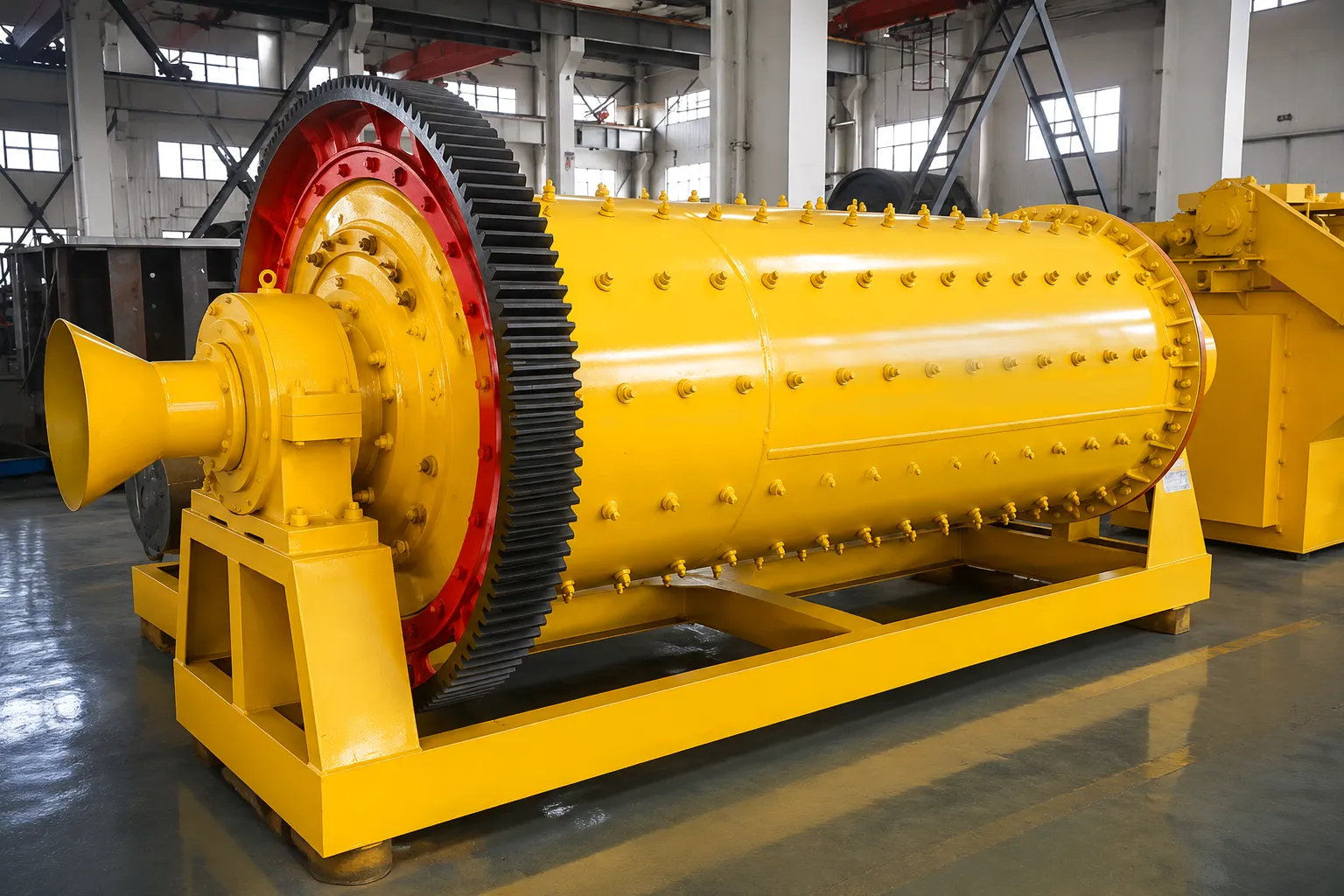 Beyond the main mill and kiln circuits, a cement plant contains dozens of secondary drive applications where coupling performance is equally important for overall plant availability. Raw material belt conveyors carrying limestone and clay from quarry stockpiles to the raw mill building, bucket elevators lifting kiln feed to the preheater tower, and large ID and GD fans serving the kiln and cooler all rely on correctly specified flexible couplings. In a typical UK integrated cement plant with an annual clinker capacity of 500,000 to 1,000,000 tonnes — comparable in scale to the major works in Derbyshire and Kent — there may be over 150 individually specified coupling assemblies across the full process flow.
Coupling in Action — Industrial Drive Scenarios
Featured Products for Cement Mill Drive Applications
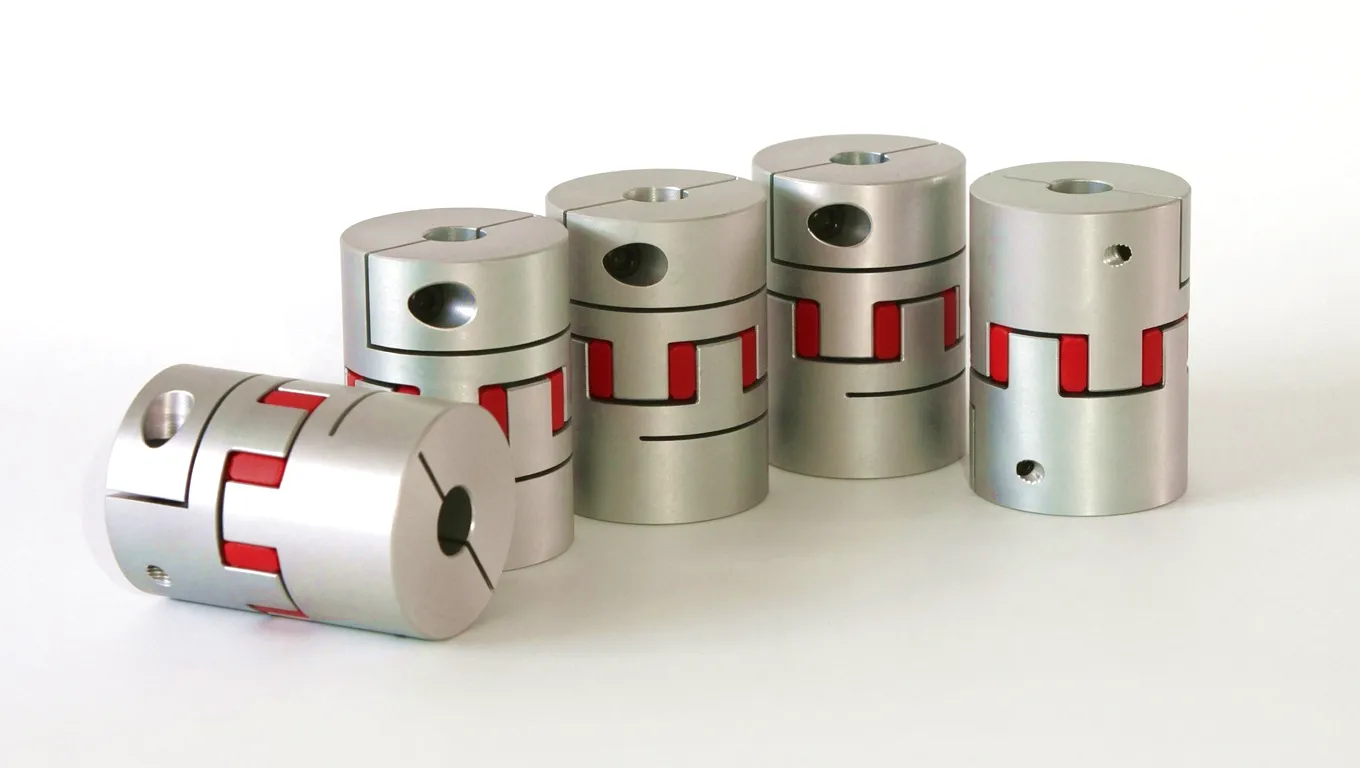
जेएसए सीरीज स्नेक स्प्रिंग कपलिंग
The JSA Series Snake Spring Coupling uses a continuously wound high-carbon spring steel serpentine element interlaced between two cast-iron flanged hubs. This design delivers excellent vibration attenuation, torsional flexibility, and shock absorption — properties that make it particularly well-suited to the pulsating torque environments of roller presses, conveyor drives, and fan applications in cement and heavy industrial service. Spring elements are replaceable in-situ without shaft removal, reducing maintenance downtime significantly.
एसडब्ल्यूसी सीरीज यूनिवर्सल कपलिंग
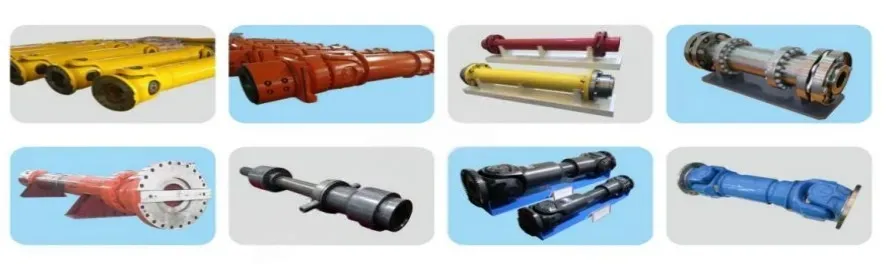
The SWC Series Universal Coupling is an engineering-grade Cardan-type joint designed for high-torque, large-angle power transmission across a wide range of industrial applications. With operating angles up to 15° per joint and torque ratings reaching millions of Newton-metres in heavy series, SWC couplings are specified for kiln auxiliary drives, VRM barring circuits, and rolling mill main drives where angular offset between connected shafts cannot be eliminated through alignment adjustment alone. Precision-bored yokes in alloy steel with needle roller cross bearings ensure smooth, low-vibration power transfer at all working angles.
Ever Power — Precision Coupling Manufacturing & Custom Engineering
Your Industrial Drive Partner · UK Export-Ready · CE Documentation
🏭
Integrated Manufacturing Facility
Ever Power operates a fully vertically integrated production facility with in-house forging, heat treatment, precision CNC machining, and dynamic balancing — ensuring complete traceability from raw material certification to finished component test report.
📐
Custom Engineering Capability
From non-standard bore diameters to specialised keyway profiles, modified flange bolt circles, custom floating shaft lengths, and application-specific sealing systems — Ever Power’s engineering team will reverse-engineer or design from customer drawings to deliver a coupling that fits exactly, without compromise.
📋
UK Export Documentation
All deliveries to the UK market are accompanied by material test certificates (EN 10204 3.1), dimensional inspection reports, dynamic balance certificates, CE marking documentation, and packing lists formatted for UK port customs clearance, reducing administrative burden for UK procurement teams.
🚚
Supply Chain Reliability
Standard production lead times of four to six weeks for catalogue items, with expedited manufacturing available for emergency replacement orders. Air freight to UK ports and door-to-site delivery coordination are offered for urgent plant breakdown situations, minimising cement mill downtime costs.
[email protected] · Engineering drawings accepted · Reverse engineering available
Customer Success Story — Sheffield Cement & Aggregates, South Yorkshire
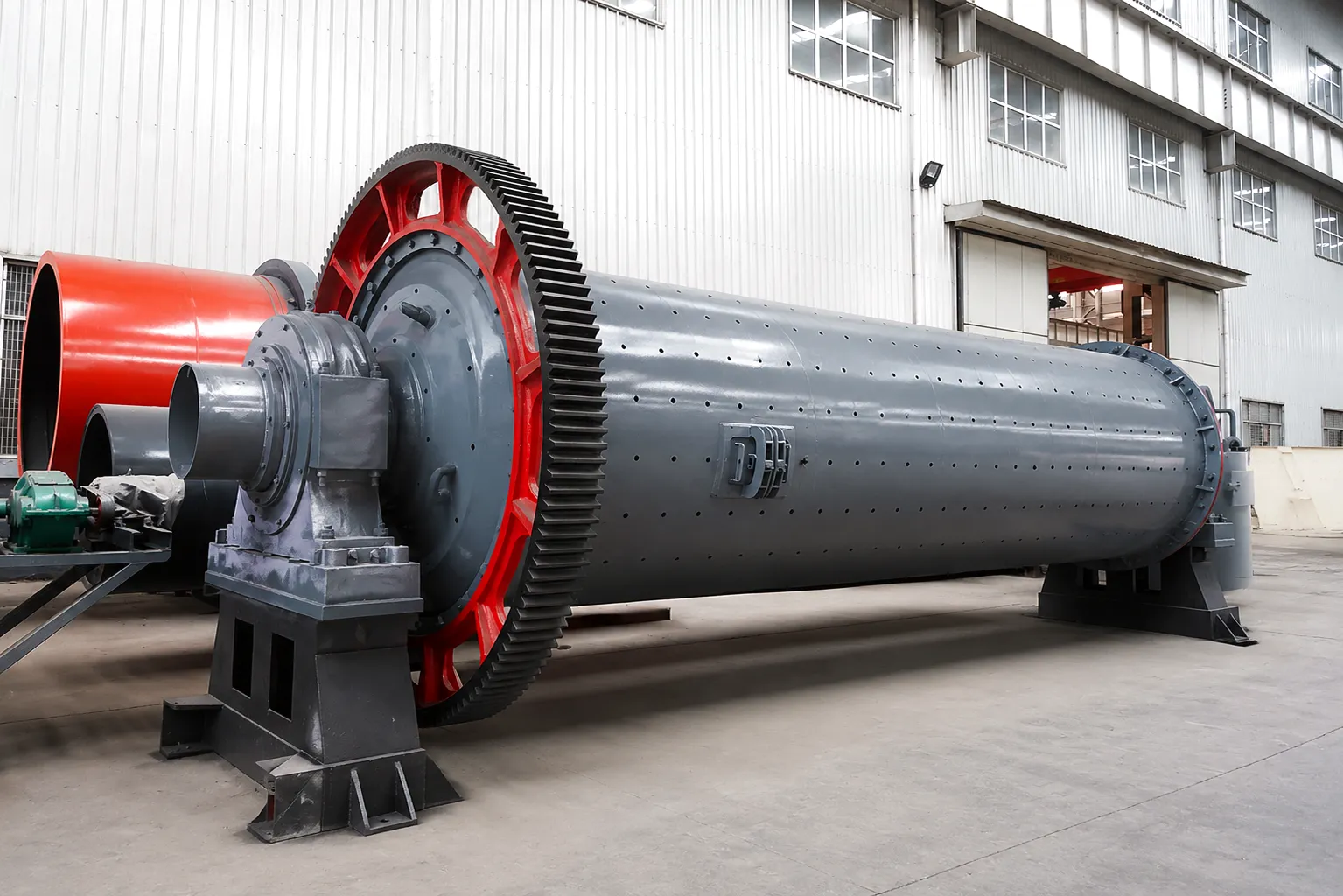 A mid-sized aggregate and cement products manufacturer operating a grinding facility on the outskirts of Sheffield approached Ever Power in late 2023 with a persistent reliability problem. Their primary ball mill — a 4.2 MW installation producing OPC and blended cements for the Yorkshire construction market — had experienced three unplanned shutdowns within eighteen months, each traced to premature failure of the OEM gear-type coupling at the gearbox low-speed output shaft. The combination of the mill’s relatively high start frequency (six to eight daily starts due to the plant’s batch grinding schedule) and the poorly sealed OEM coupling exposed to the plant’s notoriously high ambient dust levels had reduced the coupling’s service life to an average of just over six months.
Ever Power’s application engineering team reviewed the mill drive data — motor power curve, start frequency, ambient dust measurement results, and the dimensional envelope of the installed gear case — and proposed a heavy-duty gear-type coupling with upgraded labyrinth seals and a grease-purge fitting allowing re-lubrication during mill operation without stopping production. The bore dimensions and keyway profile were machined to the customer’s shaft drawings, and the coupling was supplied with a full EN 10204 3.1 material certificate and dynamic balance report for the client’s maintenance records.
The Ever Power coupling was installed during the plant’s scheduled annual shutdown in January 2024. As of the time of writing, the coupling has completed over 14,000 hours of continuous service without any maintenance intervention beyond the specified six-monthly grease purge — a service life already more than double that achieved by the OEM component. The plant’s production manager confirmed that the elimination of unplanned coupling-related downtime has recovered an estimated 280 hours of lost production annually, with a corresponding reduction in maintenance labour and spare parts expenditure that delivered full return on the coupling investment within four months of installation.
हमारे ग्राहक क्या कहते हैं
★★★★★
“The upgrade to the Ever Power sealed gear coupling transformed our mill’s reliability. We went from replacing the coupling twice a year to not needing to think about it at all. The bore tolerances were spot on to our shaft drawings — no shimming, no rework.”
— Engineering Manager, Ball Mill Operations, Sheffield, UK
★★★★★
“Ever Power handled a non-standard floating shaft coupling for our kiln auxiliary drive with a 600 mm centre distance that no UK distributor could source quickly. Full 3.1 certs and a CE declaration on delivery — exactly what our HSE file required. Lead time was under five weeks.”
— Mechanical Projects Engineer, Integrated Cement Works, Derbyshire, UK
★★★★★
“We specified JSA snake spring couplings across our roller press and three fan drives during last year’s major overhaul. The vibration levels on the roller press gearbox dropped noticeably — the night shift team noticed the difference within weeks. The in-situ spring replacement feature is genuinely useful on a tight annual shutdown schedule.”
— Plant Maintenance Supervisor, Cement Pre-grinding Circuit, Birmingham, UK
Frequently Asked Questions — Couplings for UK Cement & Industrial Drives
What is the best type of coupling to use on a cement ball mill main drive in the UK, and what torque rating should I specify?
For a cement ball mill main drive in the UK, a heavy-duty gear-type coupling is the industry standard recommendation. Torque rating should be selected based on the motor nominal torque multiplied by the applicable service factor — typically 1.8 to 2.5 for direct-start synchronous motors in cement mill service — to account for start-up shock and intermittent overload conditions. Always request a coupling sizing calculation from the supplier based on your specific motor power, speed, and start frequency.
How much does a replacement gear-type coupling for a cement mill drive cost, and how quickly can one be supplied to a plant in Birmingham or Sheffield?
Coupling price varies considerably depending on the rated torque, bore size, and whether the design is from catalogue stock or requires custom machining. Standard gear-type couplings for smaller auxiliary drives may cost from a few hundred pounds upward, while heavy main drive couplings for multi-megawatt mills are custom-engineered and priced accordingly. Ever Power can provide a detailed quotation within 48 hours of receiving shaft drawings. Standard catalogue items can be air-freighted to Birmingham or Sheffield within two to three weeks; custom-engineered items typically require four to six weeks from drawing approval.
Which coupling supplier in the UK or internationally can provide CE-documented gear couplings for cement plant use with EN 10204 3.1 material certificates?
Ever Power supplies all couplings destined for the UK market with full EN 10204 3.1 material test certificates, dimensional inspection reports, dynamic balance certificates, and CE marking declarations as standard deliverables, without additional documentation surcharge. These documents are formatted to meet UK HSE file requirements and are suitable for submission to plant engineering consent authorities, insurance surveyors, and third-party inspection bodies.
How often should gear-type couplings be greased on a cement mill operating on continuous shifts in a high-dust environment typical of UK cement plants?
In continuous high-dust environments — which describe the majority of UK cement grinding installations — the general recommendation is to purge and replenish coupling grease every 2,000 to 3,000 operating hours, or at every planned plant shutdown if shutdown intervals are longer. Couplings equipped with grease-purge fittings (as supplied as standard on Ever Power heavy-duty designs) can be re-greased without stopping the mill, eliminating the need to schedule coupling maintenance as a shutdown task. Always use the grease grade recommended in the coupling supplier’s maintenance schedule, as mixing incompatible grease types accelerates lubricant breakdown under load.
When should I consider using a snake spring coupling instead of a gear coupling for a cement plant conveyor or fan drive application in the UK?
A snake spring coupling is generally the better choice for conveyor drives, ID and GD fan applications, and roller press auxiliary circuits where vibration damping is a primary design requirement and torques are moderate. If your fan or conveyor drive experiences noticeable vibration at certain operating speeds, or if you have had recurring issues with gearbox bearing wear on these auxiliaries, switching to a snake spring coupling is worth evaluating. The spring element’s natural frequency characteristics can shift the drive train resonance away from the operating speed range, reducing dynamic loads on connected gearboxes and bearings.
Where can UK cement plant procurement teams request a technical quote for custom-bore gear couplings, and what information is needed to get an accurate price?
UK plant procurement teams can request a technical quote directly from Ever Power by emailing [email protected] with the following information: motor power (kW), drive speed (rpm), required torque (Nm or kNm), coupling flange-to-flange distance, bore diameter and keyway dimensions for both driving and driven shafts, and any special requirements such as operating environment classification, required documentation, or dimensional constraints. The more detail you provide, the faster and more accurate the quotation — but Ever Power can also work from a partial specification and ask technical questions to complete the picture.
Ready to Specify the Right Coupling for Your Cement Mill Drive?
Send us your drive data or shaft drawings and Ever Power’s application engineering team will provide a detailed recommendation and competitive quotation within 48 hours.
जीजेडएल द्वारा संपादित