 Tunnel boring machines represent one of the most demanding mechanical environments on earth. These colossal engineering systems drive rotating cutter heads through bedrock, clay, chalk, and mixed-face conditions at sustained outputs that would destroy lesser drivetrain components within hours. At the heart of every TBM drive system — connecting high-output electric motors to planetary gearboxes, and gearboxes to the main bearing and cutter head shaft — sits a component that most project engineers spend weeks selecting: the gear coupling. In the UK’s underground construction landscape, where projects such as the Thames Tideway Tunnel, HS2 tunnelling operations, and ongoing urban metro expansions demand uninterrupted mechanical performance, the gear coupling is not a secondary consideration. It is, quite literally, the link that keeps the machine turning. Understanding how gear couplings work, what materials define their reliability, and which configurations suit the extreme torque profiles of TBM drive trains is essential knowledge for procurement engineers, project managers, and maintenance teams operating anywhere from London’s Underground extension projects to the deep mineral workings of Yorkshire.
Working Principle: How a Gear Coupling Transmits Extreme Torque
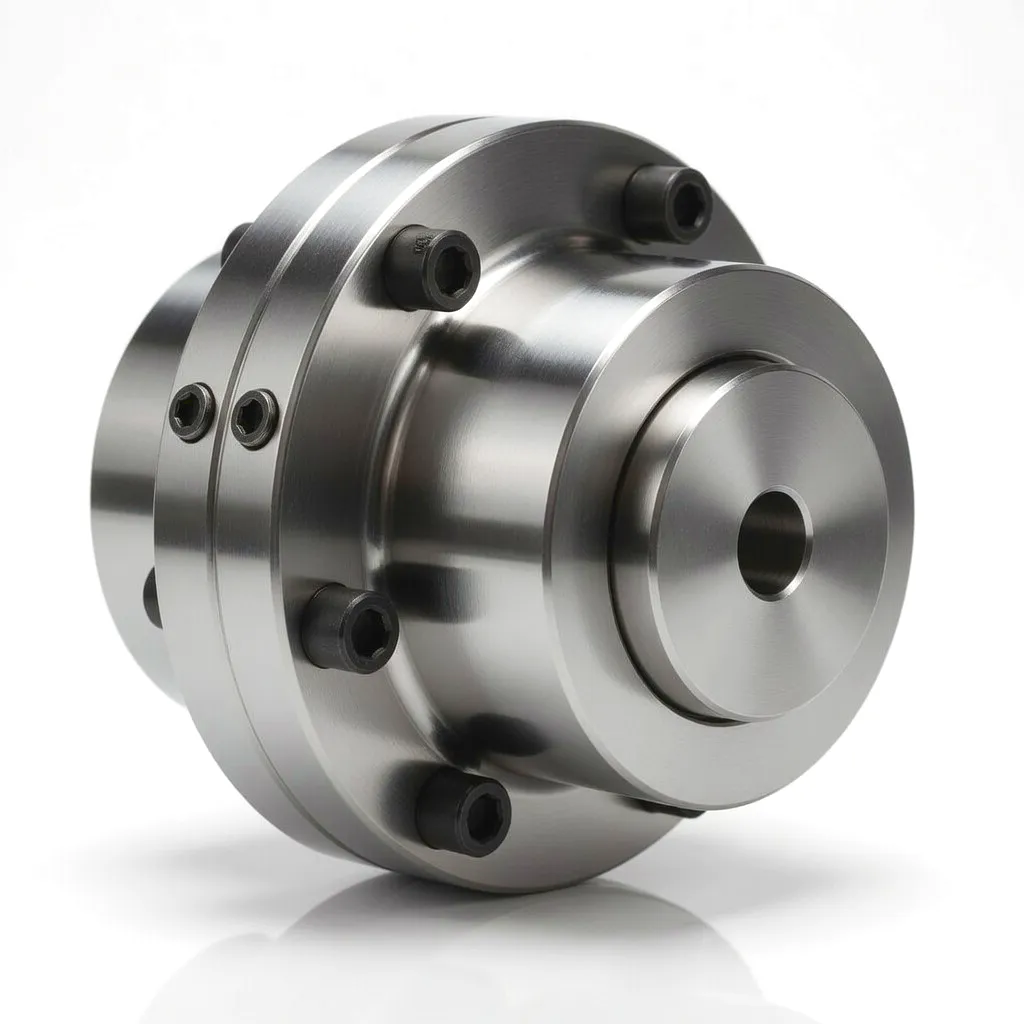
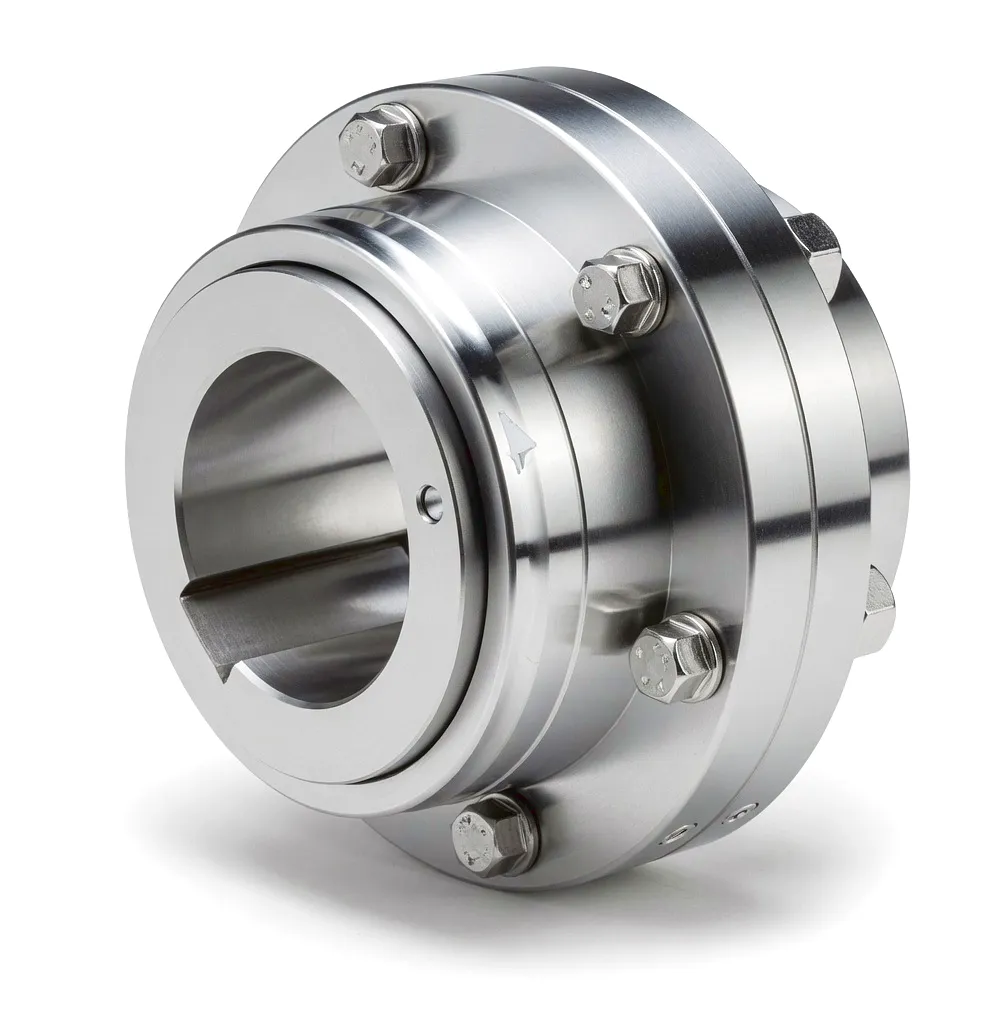
A gear-type coupling transmits rotational torque and accommodates shaft misalignment through the meshing engagement of an internally toothed outer sleeve with an externally toothed hub. The external teeth are crowned — meaning they are machined with a convex profile along their length rather than being straight-cut. This intentional crowning geometry is the defining engineering feature of the design. When the connected shafts are perfectly aligned, the crowned teeth engage uniformly across their full width. When angular, parallel, or axial misalignment exists — as it inevitably does in a TBM’s drive train under load — the crowned teeth rock and slide against the internal sleeve teeth, redistributing contact stress across the tooth face rather than concentrating it at one edge.
This mechanism allows the coupling to accommodate angular misalignment typically in the range of 0.5° to 1.5° per gear mesh, and parallel offset up to several millimetres, depending on coupling size. In TBM applications, where thermal expansion of gearbox housings and dynamic deflection of the main bearing under cutter head loading both contribute to shaft displacement, this misalignment capacity is not merely convenient — it is what prevents catastrophic tooth-to-tooth contact failure in straight-cut alternatives. The gear coupling operates without rubber or elastomeric elements, meaning its torque transmission path is entirely metallic, which allows it to carry shock loads, reversals, and sustained high-torque duty cycles far beyond what flexible disc or jaw couplings can manage. Lubrication is supplied by grease packed within the sealed sleeve, and the interface between hub and sleeve is the only wear point in the entire assembly.
Core Manufacturing Materials
The industry-standard hub material for heavy-duty gear couplings. Chromium-molybdenum steel delivers a tensile strength of 900–1,100 MPa after quench-and-temper treatment, giving the external teeth the core toughness and surface hardness combination needed for sustained torque transmission under reversing loads.
Used where maximum surface hardness is required on the gear teeth without sacrificing inner core ductility. Carburising and case hardening produces tooth surface hardness of 58–62 HRC while maintaining a tough, impact-resistant core. This material is preferred for TBM applications involving frequent start-stop cycles and high shock loading during cutter head engagement with hard rock formations.
Outer sleeve bodies are commonly manufactured from AISI 1045 or EN8 equivalent medium carbon steel, providing sufficient rigidity to contain the internal gear mesh whilst remaining machinable to tight bore and keyway tolerances. For corrosive underground environments — particularly in chalk aquifer zones typical of southeast England — zinc-nickel or hard chrome plating is applied to the outer surface.
Nylon 66 or polyurethane sealing rings maintain grease retention under centrifugal force at operating speeds. EP (extreme pressure) lithium-complex grease rated to NLGI Grade 1 or 2 is specified for the gear mesh interface, providing a sacrificial lubricant film that prevents metal-to-metal contact during misalignment accommodation — a factor that separates a coupling with a 50,000-hour service life from one that fails within months underground.
Core Technical Advantages of Gear-Type Couplings
Gear couplings achieve the highest torque-to-diameter ratio of any flexible coupling type. A 250mm bore gear coupling can routinely transmit 200,000 N·m — a value unmatched by disc, jaw, or tyre couplings of equivalent size. This density is indispensable in TBM drive housings where geometric envelope constraints are severe.
Crowned-tooth geometry simultaneously accommodates angular deviation (up to 1.5°), parallel offset (up to 3–5mm in larger sizes), and axial float. In tunnelling environments where differential settlement, thermal growth, and cutter head reaction loads all displace connected shaft centrelines, this multi-axis tolerance is the primary reason gear couplings dominate TBM drivetrains globally.
Unlike elastomeric couplings, the gear coupling has no polymer elements that fatigue under cyclic shock loading. When a TBM cutter head strikes a hard rock inclusion and the drive system experiences instantaneous torque spikes two to three times rated load, the all-steel gear mesh absorbs and transmits the peak without permanent deformation, provided the coupling is sized with appropriate service factors.
With correct initial lubrication and sealed grease retention, gear couplings in TBM applications routinely operate for 5,000 to 10,000 hours between service interventions. In underground tunnelling contracts where accessing the drive system for maintenance requires stopping the entire operation — a shutdown that can cost tens of thousands of pounds per day — this long service interval directly translates to project schedule and cost performance.
TBM cutter heads are occasionally reversed to clear jammed disc cutters or to back the machine out of problematic ground conditions. Gear couplings transmit rated torque in both rotational directions without degradation — an operational requirement that eliminates many alternative coupling technologies from TBM drivetrain consideration entirely.
Product Technical & Performance Parameters
| Parametro | Light Duty (Type A) | Medium Duty (Type B) | Heavy Duty (Type C) | TBM / Ultra-Heavy (Type D) |
|---|---|---|---|---|
| Rated Torque (N·m) | 1,000 – 5,000 | 5,000 – 30,000 | 30,000 – 100,000 | 100,000 – 250,000+ |
| Bore Diameter (mm) | 20 – 80 | 80 – 160 | 160 – 280 | 280 – 500+ |
| Velocità massima (RPM) | 3,500 | 2,500 | 1,200 | 300 – 600 |
| Disallineamento angolare | fino a 1,5° | fino a 1,5° | fino a 1,0° | up to 0.8° |
| Offset parallelo (mm) | up to 0.5 | up to 1.5 | up to 3.0 | up to 5.0 |
| Materiale del mozzo | 45# Carbon Steel | 42CrMo4 Alloy Steel | 42CrMo4 Q&T | 20CrMnTi Case-Hardened |
| Durezza della superficie del dente | 48–52 HRC | 52–56 HRC | 56–60 HRC | 58–62 HRC |
| Service Temperature (°C) | da -30 a +100 | da -30 a +100 | da -20 a +120 | -10 to +120 |
| Tipo di lubrificazione | Grease (NLGI 2) | EP Grease (NLGI 1) | EP Grease (NLGI 1) | EP Grease or Oil Mist |
| Service Factor (Ks) | 1.25 – 1.5 | 1.5 – 1.75 | 1.75 – 2.0 | 2.0 – 3.0 (TBM) |
Application Scenario: Tunnel Boring Machine Cutter Head Drive Systems
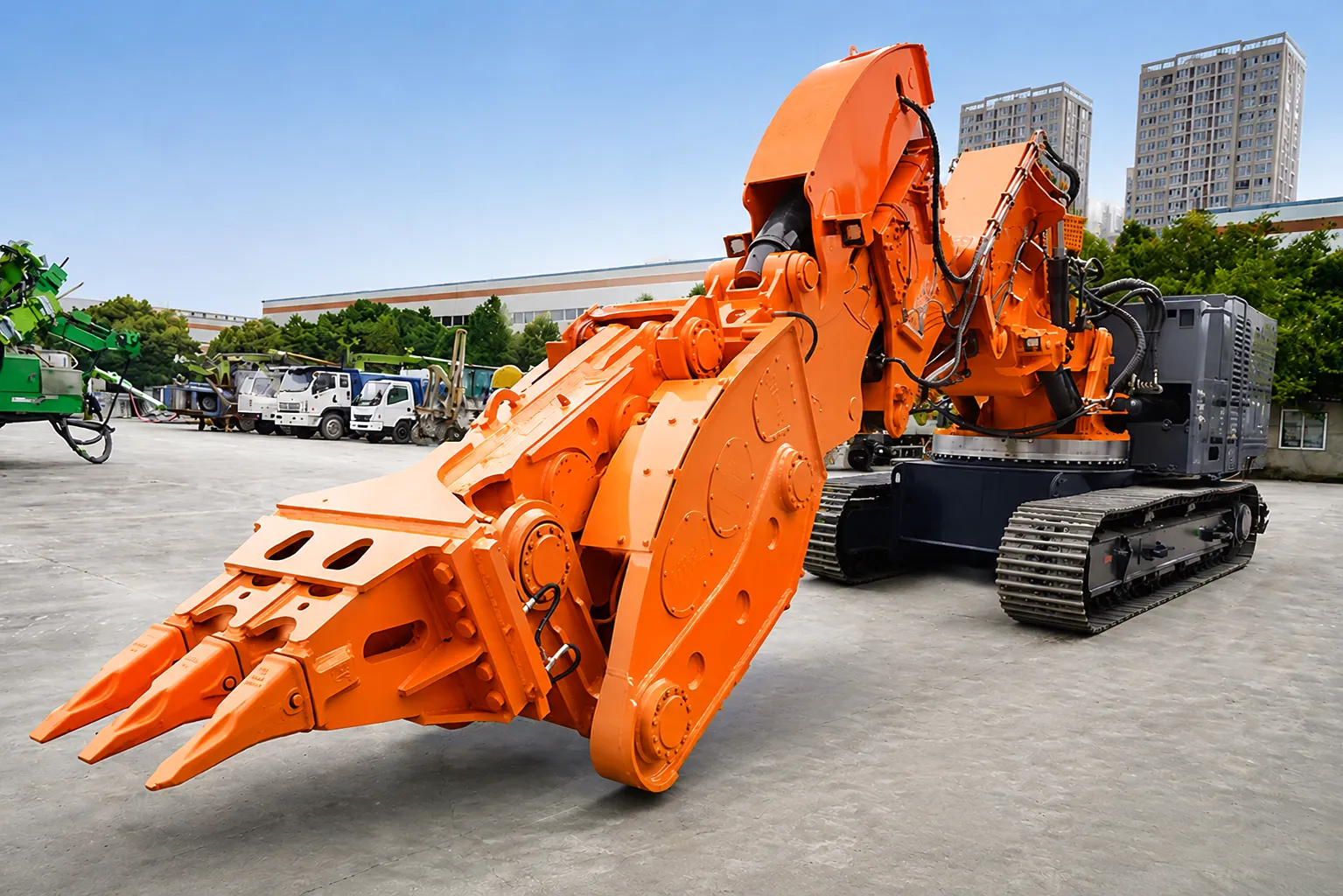
Tunnel boring machines are the flagship of modern civil infrastructure engineering. A typical slurry shield or earth pressure balance TBM designed for urban tunnelling in the UK — such as those contracted for HS2’s Chiltern tunnel section or the Manchester city-centre utility crossings — generates cutter head drive torques ranging from 8,000 kN·m on a 6-metre diameter machine up to over 50,000 kN·m on the largest 14-metre diameter machines used in soft ground conditions. To develop and transmit these torques, the main drive system employs multiple parallel-mounted electric motors, each coupled to an individual planetary gearbox input shaft through a gear coupling. The gearboxes then mount radially around the main bearing, with their output shafts driving pinions that engage the main ring gear bolted to the rear of the cutter head assembly.
Gear couplings appear at two distinct points in this drivetrain. Between each drive motor output shaft and its corresponding gearbox input shaft, a compact gear coupling must accommodate motor mounting tolerance errors, thermal growth of the motor frame relative to the gearbox housing, and the slight lateral motion of the motor during VFD-controlled acceleration ramp-up phases. At this location, the coupling must handle motor output speeds that may reach 1,450 RPM or higher while transmitting full rated torque, making precise balance and accurate tooth profile grinding critical manufacturing requirements. The second application is between gearbox output shafts and the main bearing drive components, where shaft speeds are very low — often below 100 RPM — but torque loads are enormous, and the coupling must simultaneously handle angular deviation caused by differential thermal expansion of the entire gearbox mounting plate under sustained operational heating.
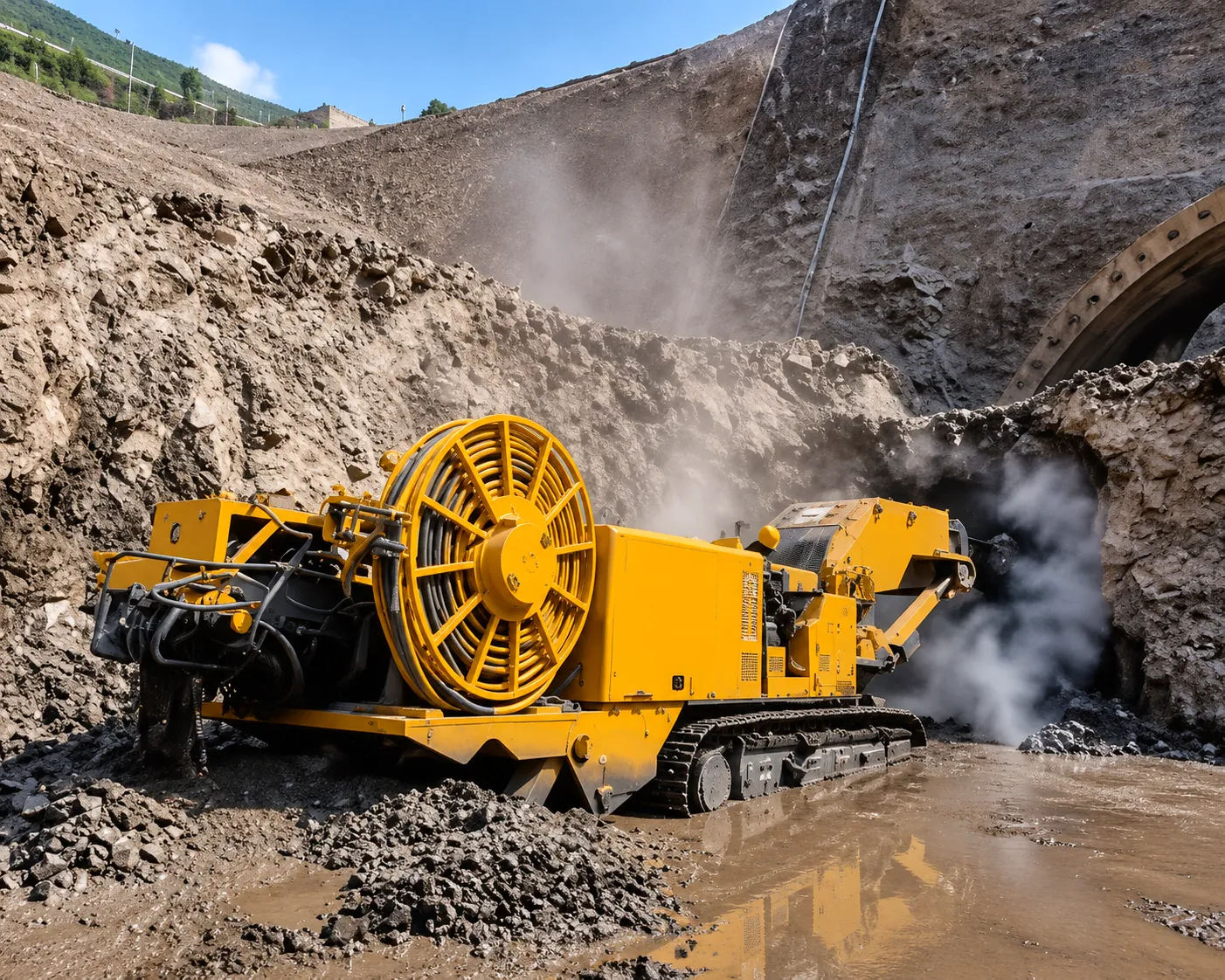
The UK’s tunnelling environment introduces additional selection challenges compared to continental European practice. Much of the ground beneath London and the southeast is London Clay — a highly plastic overconsolidated clay that generates significant face pressure variability and cutter head torque fluctuation as the machine passes through stiffer inclusions or changes in plasticity index. Birmingham’s infrastructure projects frequently encounter Mercia Mudstone and Triassic sandstones, which can produce high abrasion loadings and sudden torque reversals when the cutter head transitions between hard and soft layers. Sheffield’s deep-lying coal measures geology, relevant to existing mine drainage and utility tunnel work, presents similar challenges of variable ground competence. In all these UK geological contexts, the gear coupling’s ability to absorb peak torques of two to three times the steady-state value — without any rubber or elastomer element absorbing and masking the shock — is what allows the drivetrain control system to accurately sense and respond to torque peaks that signal ground condition changes.
Additional Industrial Application Scenarios
In UK power stations — from the remaining gas turbine installations in Yorkshire to offshore wind farm nacelle gearboxes — gear-type couplings connect steam or gas turbine output shafts to generator inputs. These applications demand exceptional balance quality (ISO G1.0 or better) and zero-backlash torque transmission, along with the coupling’s inherent capacity to accommodate differential thermal expansion between the hot turbine casing and the cooler generator frame. The rated operating torques in large utility turbines routinely exceed 500,000 N·m, where gear couplings are the only practical technology.
Steel producers in Sheffield and the surrounding South Yorkshire industrial corridor continue to operate rolling mills and continuous casting lines where gear couplings drive work rolls at torques of 50,000 to 400,000 N·m. The coupling’s ability to handle the severe shock loading of billet entry into rolls, combined with the axial float required as rolls are hydraulically adjusted, makes gear-type couplings the only viable option for continuous hot strip mill applications. Rapid-change sleeve designs allow roll changes to be completed within maintenance windows without disturbing hub-to-shaft interference fits.
UK mining operations — including aggregate quarrying in the Lake District and Pennines as well as potash extraction in North Yorkshire — rely on large gear couplings in conveyor drive systems handling hundreds of tonnes per hour of material. The coupling’s sealed grease design performs reliably in the high-dust, moisture-laden environments typical of UK quarrying operations, where sealing integrity is more critical than in clean industrial environments. Emergency controlled stop requirements mean these couplings must handle braking torques of two to three times normal running load without damage.
Shipbuilding and vessel maintenance facilities in Glasgow, Newcastle, and Southampton frequently specify gear couplings in propulsion system intermediate shafting between main diesel or gas turbine engines and reduction gearboxes. Marine applications impose unique demands: shaft alignment in a floating hull changes with loading condition, sea state, and thermal gradients, making the misalignment accommodation capacity of the gear coupling an operational prerequisite rather than a design preference. Marine-grade couplings are typically supplied with enhanced corrosion protection and compliance with Lloyd’s Register or DNV-GL certification requirements.
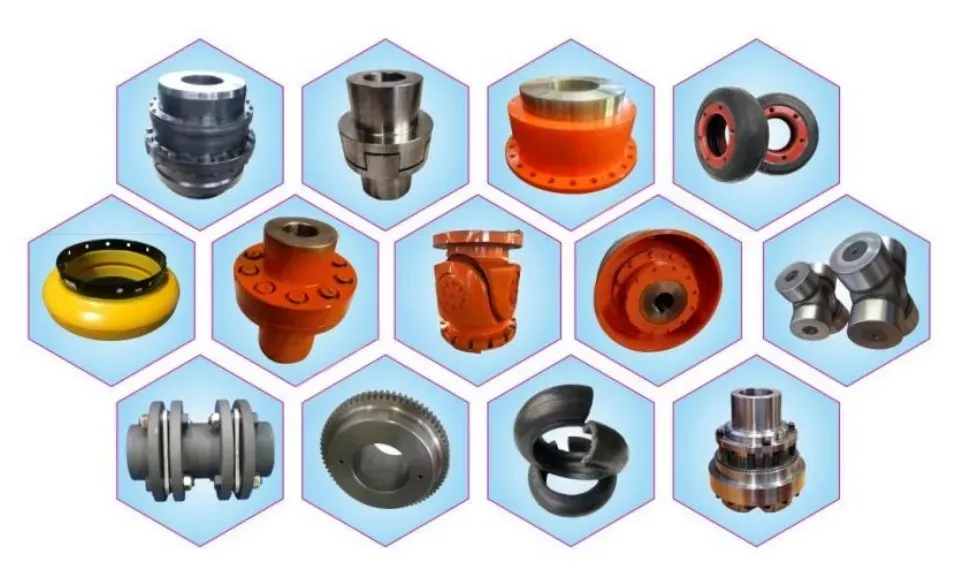
Featured Products from Our Coupling Range
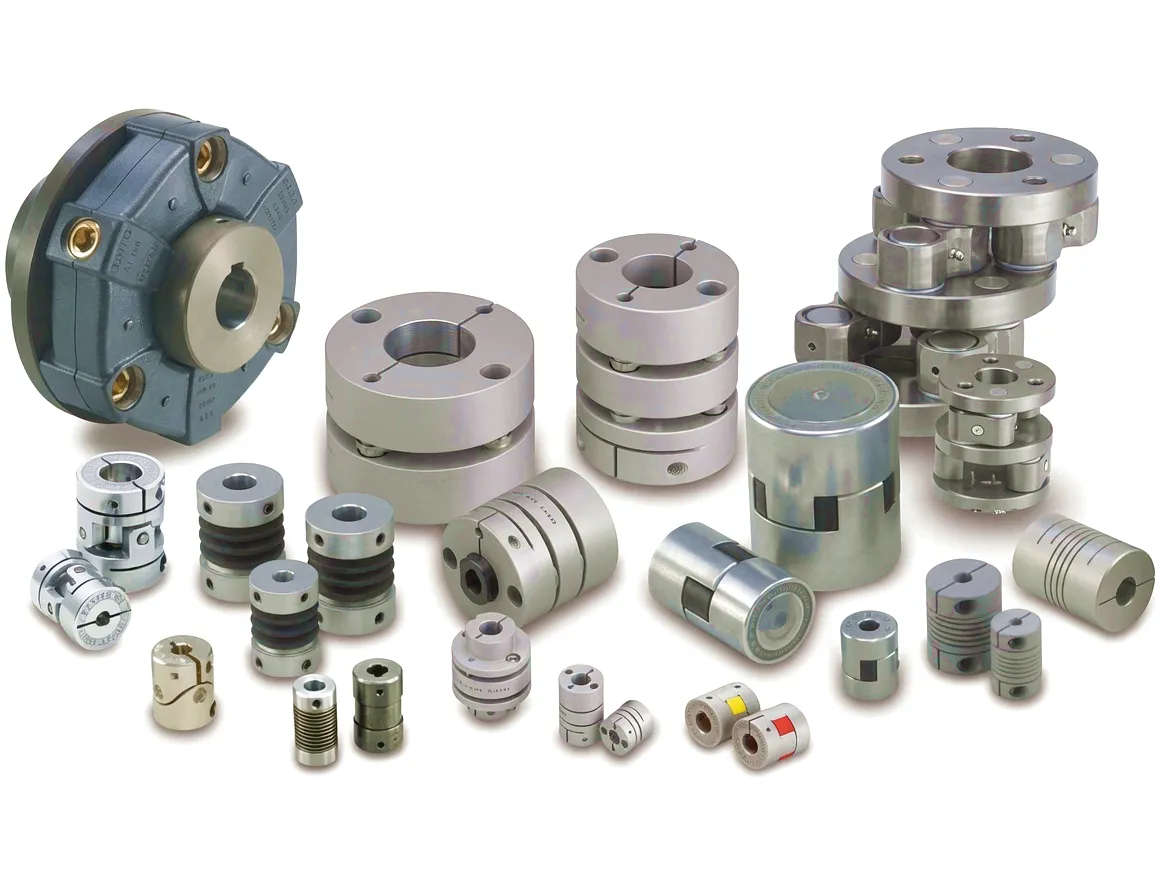
Explore Our Coupling Product Line
The JSA Series utilises a serpentine spring element interleaved between two steel flanges, delivering excellent shock absorption and vibration damping in drive systems where dynamic load peaks exceed steady-state torque by significant margins — ideal for compressor drives, pump drives, and light industrial machinery where soft starting is a priority.
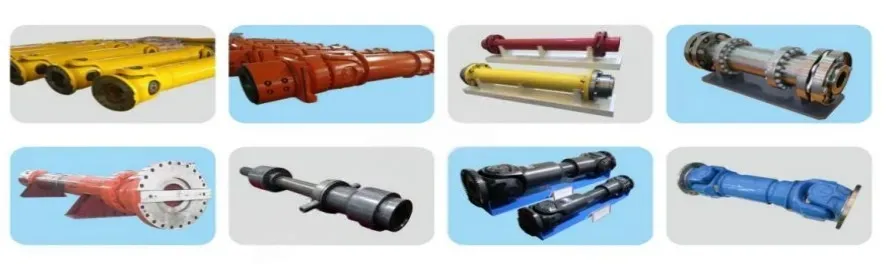
The SWC Series is a Cardan-type universal joint coupling capable of operating at angular deflections up to 35° — far exceeding the misalignment capacity of standard gear couplings. Designed for rolling mill intermediate shafting, continuous casting equipment, and heavy industrial drive systems where large angular intersection angles between driver and driven shafts are a geometric necessity.
Ever Power: Precision Gear Coupling Manufacturing & Custom Engineering
Trusted by UK tunnelling contractors, offshore operators, and heavy industry OEMs across Birmingham, Sheffield, Newcastle and beyond.
Every gear coupling manufactured by Ever Power is built to the customer’s exact shaft specification. Bore diameters from 20mm to 500mm, any keyway profile, interference or clearance fit, with full dimensional report supplied as standard. Our engineering team works directly with UK procurement teams to confirm fit-for-purpose selection and provide certified material traceability.
Ever Power’s gear coupling teeth are produced on CNC gear hobbing machines followed by profile grinding to achieve tooth accuracy of ISO Grade 5 or better. Crowned tooth profiles are generated using precision CNC modification rather than the hand-dressing methods used by lower-tier manufacturers, ensuring consistent misalignment performance across all units in a production batch.
Ever Power maintains UK-compatible stock of standard bore couplings at regional distribution points, with expedited air freight available for urgent TBM drivetrain breakdown situations. Standard custom coupling lead times are 15 to 25 working days ex-factory, with priority build services available for project-critical applications. All documentation is supplied in English with UK-standard unit markings.
All Ever Power gear couplings are manufactured under ISO 9001:2015 quality management systems. Material test certificates (EN 10204 3.1 or 3.2) are available on request. Dynamic balancing to ISO 1940 Grade G2.5 is standard for all couplings operating above 1,000 RPM. Dimensional inspection reports and hardness certificates accompany every shipment.
📧 Request a Custom Quote from Ever Power
[email protected] · Response within 24 hours · UK enquiries welcome
Birmingham Sewer Infrastructure Project: Overcoming Drivetrain Failures with Custom Gear Couplings
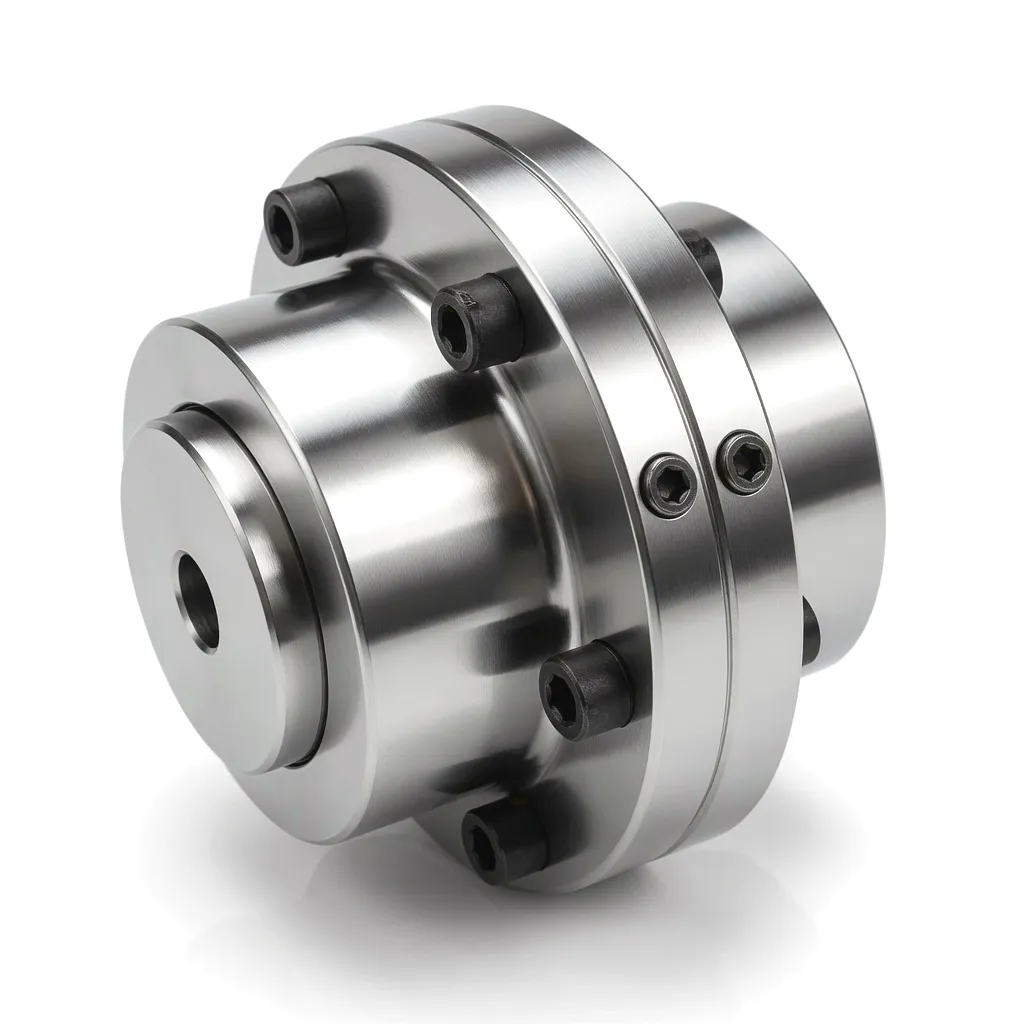 A major tunnelling contractor operating in the Greater Birmingham area won the contract for a 4.2-kilometre sewer relief tunnel under the northern suburbs of the city in 2023. The project utilised a 3.8-metre EPB TBM equipped with eight individual drive motors, each rated at 220 kW, coupled through planetary gearboxes to the main ring gear. The initial equipment specification called for a European-sourced disc pack coupling on each motor-to-gearbox interface — a choice made on price grounds during the tendering phase. Within the first 800 metres of drive, four of the eight coupling positions experienced disc pack fatigue failures, traced to a combination of higher-than-anticipated motor torque pulsation from the VFD controllers and thermal expansion of the motor frames in the sealed drive cavity exceeding the disc pack’s angular capacity.
The contractor’s engineering team contacted Ever Power for an emergency replacement solution. Ever Power’s applications engineers reviewed the motor shaft dimensions, gearbox input specifications, rated torque, expected thermal growth, and the VFD torque ripple characteristics within 48 hours of enquiry. The replacement specification was a Type C gear coupling in 42CrMo4 with case-hardened teeth, rated to 35,000 N·m continuous with a service factor of Ks = 2.5, angular capacity of 1.0°, and sealed with EP lithium-complex grease for the expected 8,000-hour drive duration. Eight units were manufactured and dispatched to Birmingham within 18 working days. Following installation and re-commissioning, the TBM completed the remaining 3.4 kilometres of drive without a single coupling-related stoppage — saving the contractor an estimated £340,000 in further delay and replacement costs compared to continuing with the original specification.
Cosa dicono i nostri clienti nel Regno Unito
“After the disc pack failures nearly derailed our programme, Ever Power’s application team turned around an exact-fit solution in under three weeks. The crowned tooth geometry handles the thermal growth in our sealed drive chamber that the original couplings simply could not manage. We have completed four subsequent TBM contracts using Ever Power gear couplings as standard specification.”
“We specified Ever Power’s heavy-duty gear couplings for the rolling mill intermediate shafting upgrade at our Sheffield plant. The hardness certification, dimensional reports, and EN 10204 3.1 material test certificates were all in order — which matters enormously for our quality system. Tooth geometry accuracy was verified in-house and matched the supplied documentation perfectly. Lead time was better than any other supplier we contacted.”
“The SWC universal coupling units we ordered for our marine shafting refit arrived correctly balanced and with full DNV-GL documentation for the classification society submission. Ever Power’s quotation was competitive, the communication throughout the order was clear, and delivery to our Newcastle facility was on schedule. The dynamic balance report showed G1.6 quality — better than the spec we requested.”
Domande frequenti
Ready to Engineer Your Ideal Gear Coupling Solution?
Whether you’re specifying a TBM drivetrain coupling in Birmingham, replacing rolling mill shafting in Sheffield, or need marine-certified units for a Newcastle refit — Ever Power’s engineering team has the solution.