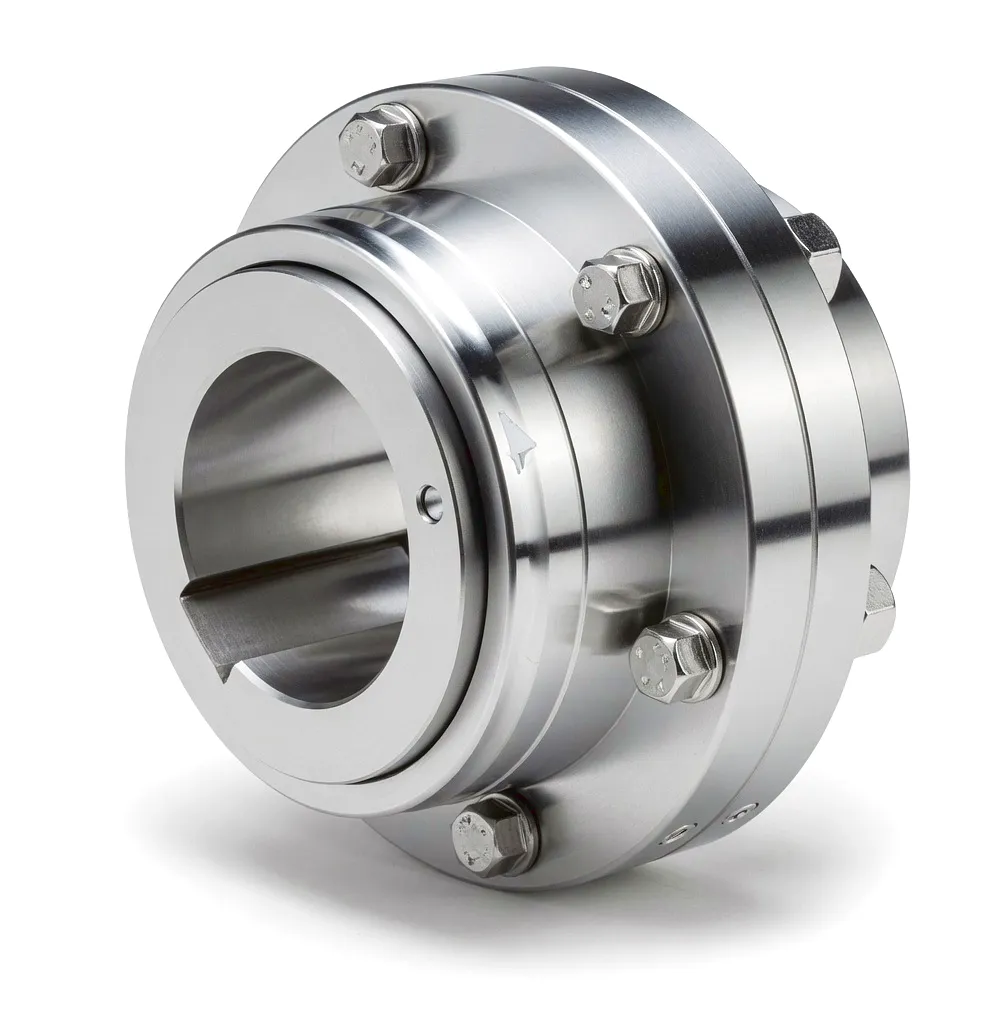
 Portal cranes — also known as gantry cranes or door-type cranes — are among the most demanding mechanical systems in industrial service. Running day and night in ports, shipyards, steel mills, and heavy manufacturing facilities across England, Wales, and Scotland, these machines routinely handle loads measured in hundreds of tonnes. The drive trains that power their hoisting drums, traversing trolleys, and long-travel bogies are subject to shock loading, thermal cycling, misalignment from rail wear, and the relentless pressure of continuous-duty operation. Within this environment, couplings perform a role that is both mechanically critical and frequently underestimated by procurement teams focused on headline machinery costs.
A coupling in a portal crane application must do far more than transmit torque from motor to gearbox. It must absorb transient shock loads generated when the hoist brake releases, accommodate the angular and parallel misalignment that inevitably develops as cranes cycle through millions of operational hours, damp torsional vibration that would otherwise propagate into precision gearboxes, and survive the corrosive marine and industrial atmospheres that characterise British heavy-industry environments. Getting the coupling selection right is the difference between a machine that runs reliably for thirty years and one that suffers chronic unscheduled downtime.
How Couplings Work in Portal Crane Drive Trains
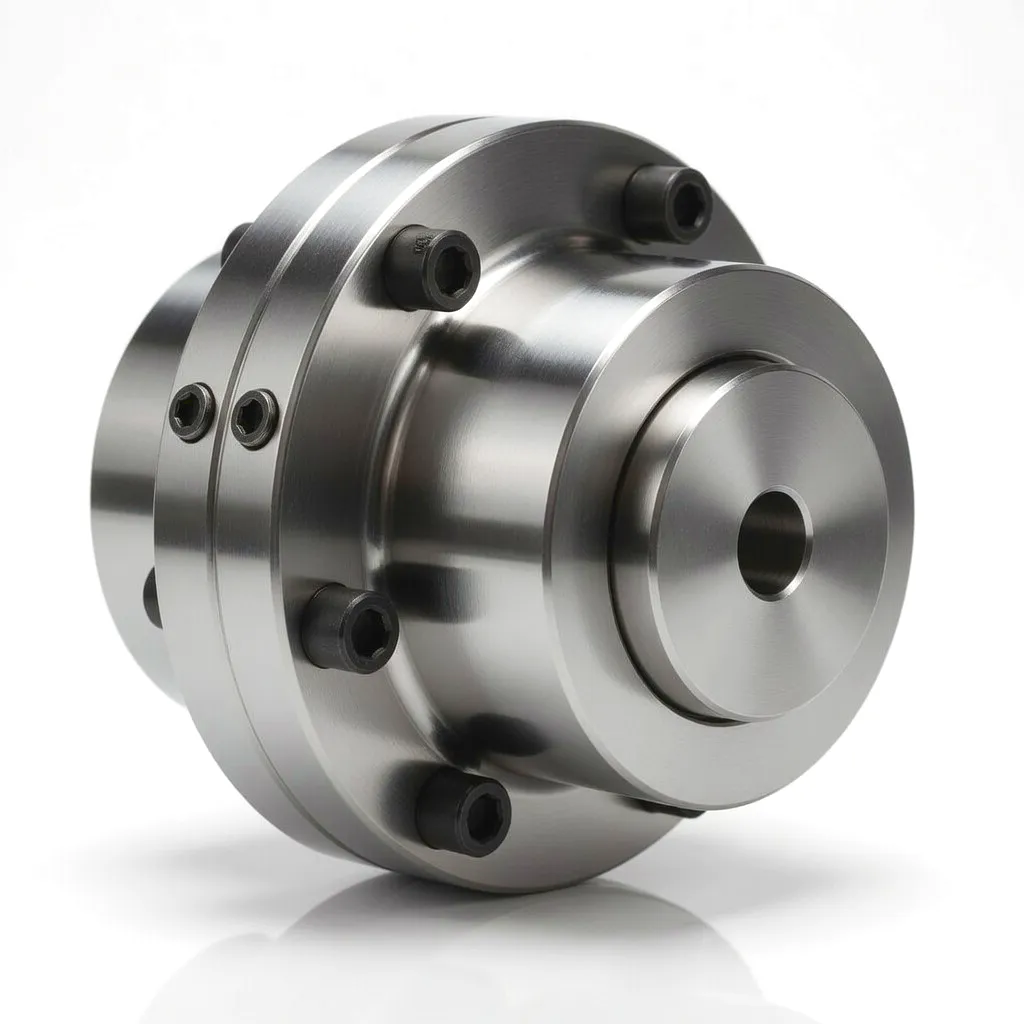 The fundamental operating principle of a coupling in this context is torque transmission under conditions of relative movement between connected shaft centres. In a portal crane hoist drive, the electric motor — typically a high-slip cage induction motor or a variable-frequency drive unit rated between 45 kW and 630 kW depending on the crane’s safe working load — delivers torque through a coupling to the first stage of a multi-stage helical gearbox. The coupling sits between the motor shaft and the gearbox input shaft, bridging any parallel offset (typically 0.1 mm to 0.5 mm on a well-maintained crane), angular misalignment (commonly 0.5° to 1.5° in worn crane structures), and axial float caused by thermal expansion of the motor rotor.
When the brake is released and the motor starts, the coupling transmits the starting torque — which in a direct-on-line motor can peak at two to three times rated torque — through its connecting elements. In flexible couplings, elastomeric elements or gear teeth with lubricated clearances absorb this shock, protecting the gearbox from peak loading events. In disc couplings, thin metallic laminate packs transmit torque while deflecting elastically to accommodate misalignment, combining high torsional stiffness with long fatigue life. Throughout the operating cycle — lifting, traversing, lowering, and braking — the coupling manages the dynamic load envelope continuously, degrading gracefully rather than failing catastrophically when it reaches its service limit.
For the long-travel and cross-travel drives of the crane structure itself, couplings connect motor-gearbox units mounted on the end carriages to wheel axles or travel drive shafts. These applications often demand spacer-type coupling arrangements that allow the gearbox to be removed for maintenance without disturbing the wheel assembly — a critical feature in high-utilisation crane facilities where planned maintenance windows are tightly constrained. Understanding this distinction between hoist drive coupling requirements and travel drive coupling requirements is the starting point for sound engineering selection.
Core Materials in Crane Coupling Manufacturing
Material selection drives performance more than any other single design variable in coupling engineering. For portal crane applications, the material specification must balance strength, fatigue resistance, corrosion behaviour, and machinability within a weight envelope that is constrained by the mounting arrangement and rotor dynamics of the connected motor.
The workhorse material for coupling hubs and flanges. Normalised and sometimes induction-hardened at bore and keyway surfaces to resist fretting corrosion under cyclic loading. Typical tensile strength: 620–850 MPa. Widely available through UK stockholders, enabling rapid re-manufacture when required.
Used where torque density requirements demand higher material strength. Quench-and-tempered to achieve tensile strengths of 900–1,100 MPa with good impact toughness at low temperatures — relevant for outdoor crane operation in northern British climates during winter months.
Specified for marine portal cranes operating in salt-laden coastal atmospheres. Found extensively in port facilities at Felixstowe, Southampton, and Liverpool. The passive chromium oxide layer provides corrosion resistance without coating maintenance, reducing whole-life cost in aggressive environments.
In jaw-type flexible couplings for crane applications, the spider element is moulded from polyurethane with hardness ratings from Shore 64A (soft, high damping) to Shore 98A (hard, high torque capacity). Shore 92A is the standard specification for portal crane hoist drives, balancing shock absorption with torque transmission efficiency.
Disc coupling laminate elements are manufactured from thin strip (typically 0.2 mm to 0.5 mm thick) of precipitation-hardened or martensitic stainless steel, providing exceptional fatigue resistance across tens of millions of flexure cycles. The material achieves tensile strengths above 1,200 MPa while retaining the elastic flexibility necessary for misalignment accommodation.
An economical choice for coupling flanges and intermediate pieces in lower-speed travel drive applications. Ductile iron offers far superior impact resistance compared to grey cast iron, and its vibration damping characteristic is valuable in crane structures subject to track irregularity excitation. Tensile strength: 500 MPa minimum with 7% elongation.
Core Technical Advantages for Portal Crane Service
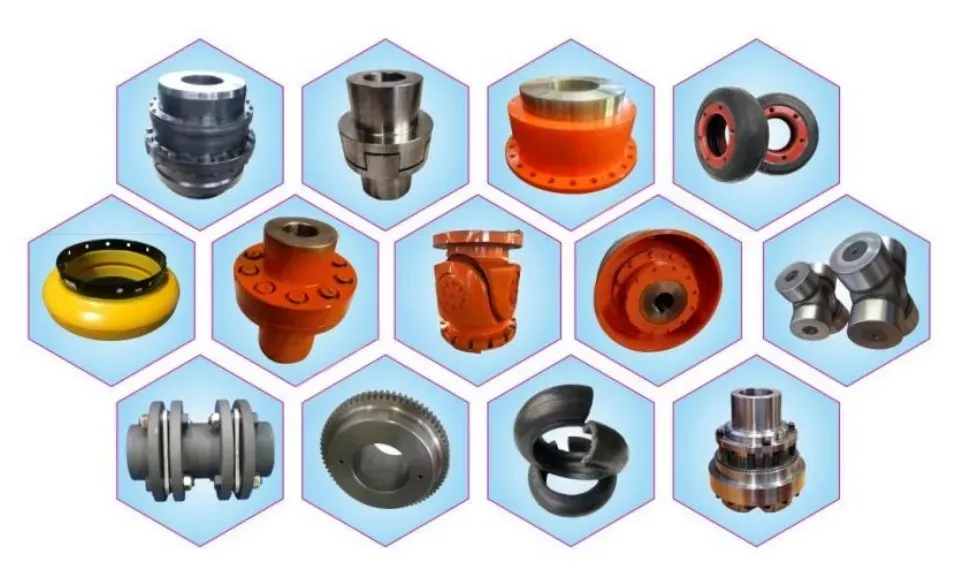
Selecting the correct coupling type for a portal crane application delivers tangible engineering and commercial advantages. The following points summarise the key performance characteristics that differentiate premium crane-duty couplings from general industrial components.
Flexible coupling elements absorb the peak torque spikes generated during hoist brake release events, motor starting, and sudden load arrest. By attenuating these shocks before they reach gearbox helical stages, the coupling extends gearbox bearing and gear tooth service life by a measurable factor — commonly 1.5 to 2.5 times compared with rigid connections.
Portal crane structures deform under load, and rail-mounted cranes develop progressive track wear and settlement. Quality couplings for these applications accommodate parallel misalignment of up to 0.5 mm, angular misalignment up to 1.5°, and axial displacement of ±3 mm, removing the need for precise re-alignment after every maintenance intervention.
Variable-frequency drives introduce higher-frequency torque ripple into drive trains, particularly at low operating speeds. Elastomeric coupling elements provide frequency-dependent torsional stiffness that prevents resonance build-up in the drive train, protecting both the gearbox and the load-bearing structural elements of the crane from fatigue damage accumulation.
In VFD-driven crane systems, shaft currents induced by common-mode voltage can cause accelerated bearing erosion in gearboxes and motors. Non-conductive coupling elements (polyurethane spiders, disc packs, or polymer gear flanges) interrupt the circuit path, preventing current flow and eliminating electro-erosion of bearing races — a maintenance cost driver in modern crane installations.
Spacer-type coupling designs allow axial withdrawal of the coupling centre piece, exposing motor shaft and gearbox input shaft for maintenance without disturbing either connected machine. This design philosophy, standard practice for major crane procurement specifications across UK shipbuilding and port handling sectors, can reduce motor removal time from several hours to under thirty minutes.
Torque-limiting coupling variants provide a calibrated slip point that protects the drive train when mechanical overloads occur — for example, when a spreader bar engages incorrectly with a container or when a hook encounters an immovable obstacle. The coupling slips before damage occurs, representing a much lower repair cost than a broken gear shaft or seized gearbox.
Technical & Performance Parameters — Portal Crane Couplings
| パラメータ | Flexible Jaw Coupling | Gear Coupling | ディスクカップリング |
|---|---|---|---|
| Torque Capacity (Nm) | 50 – 25,000 | 500 – 2,500,000 | 100 – 800,000 |
| 最高回転数(rpm) | Up to 4,000 | 最大6,000 | Up to 10,000 |
| 角度ずれ | Up to 1.0° | 最大1.5° | Up to 0.5° per disc pack |
| Parallel Offset Tolerance | Up to 0.4 mm | Up to 0.5 mm | Up to 0.3 mm per disc pack |
| 軸方向変位 | +/- 2 mm | +/- 5 mm | +/- 3 mm |
| 動作温度 | -30°C to +100°C | -20°C to +120°C | -50°C to +200°C |
| ハブ素材 | Cast Iron / C45 Steel | Alloy Steel 42CrMo4 | Alloy / Stainless Steel |
| Connecting Element | PU Spider 64A–98A | Hardened Gear Teeth | Stainless Disc Pack |
| Lubrication Required | None | Yes (grease) | None |
| Torsional Stiffness | Low to Medium | Very High | High |
| Service Life (typical) | 2–5 years (spider) | 10–20 years | 10–20 years |
| 穴径範囲 | 12 – 140 mm | 25 – 500 mm | 20 – 300 mm |
Application Scenarios: Where Couplings Matter in Portal Crane Systems
Application Scenario 1: Portal Crane Hoist Drive — Steel Mill Operations, Sheffield
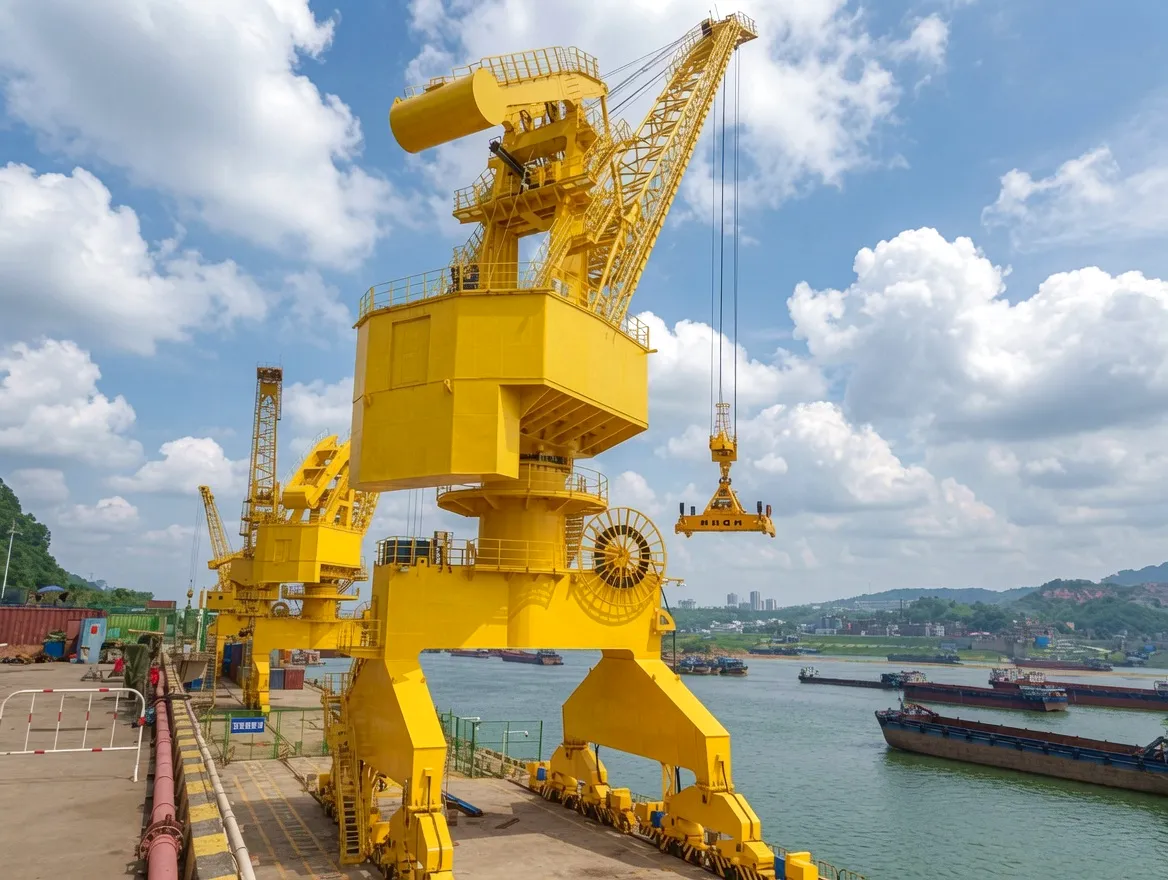
In the speciality steel facilities that still operate across the Sheffield and Rotherham corridor, portal cranes serve as the industrial backbone of ingot handling, billet transfer, and ladle movements. These cranes routinely operate in Class D (ISO 4301-1 M7) or Class E (M8) duty classifications, which translates to operational cycles running into the millions over a twenty-year service life. The hoist drive coupling in this environment must survive not only the thermal shock of lifting ladles of molten steel radiating intense heat but also the constant vibration transmitted through the crane structure from the mill floor.
Gear couplings with case-hardened external gear teeth and bronze flange bushings have historically dominated this segment, offering the high torque density and extended service life demanded by steel mill procurement engineers. The coupling’s ability to transmit rated torque while accommodating the angular misalignment that develops as heavy ladle loads deflect the crane bridge structure is particularly valued. Ever Power supplies gear couplings for Sheffield steel plant applications with bore diameters from 80 mm to 220 mm and rated torques from 8,000 Nm to 180,000 Nm, with surface treatments matched to the high-temperature operating environment.
Application Scenario 2: Container Handling Portal Cranes — Port of Felixstowe
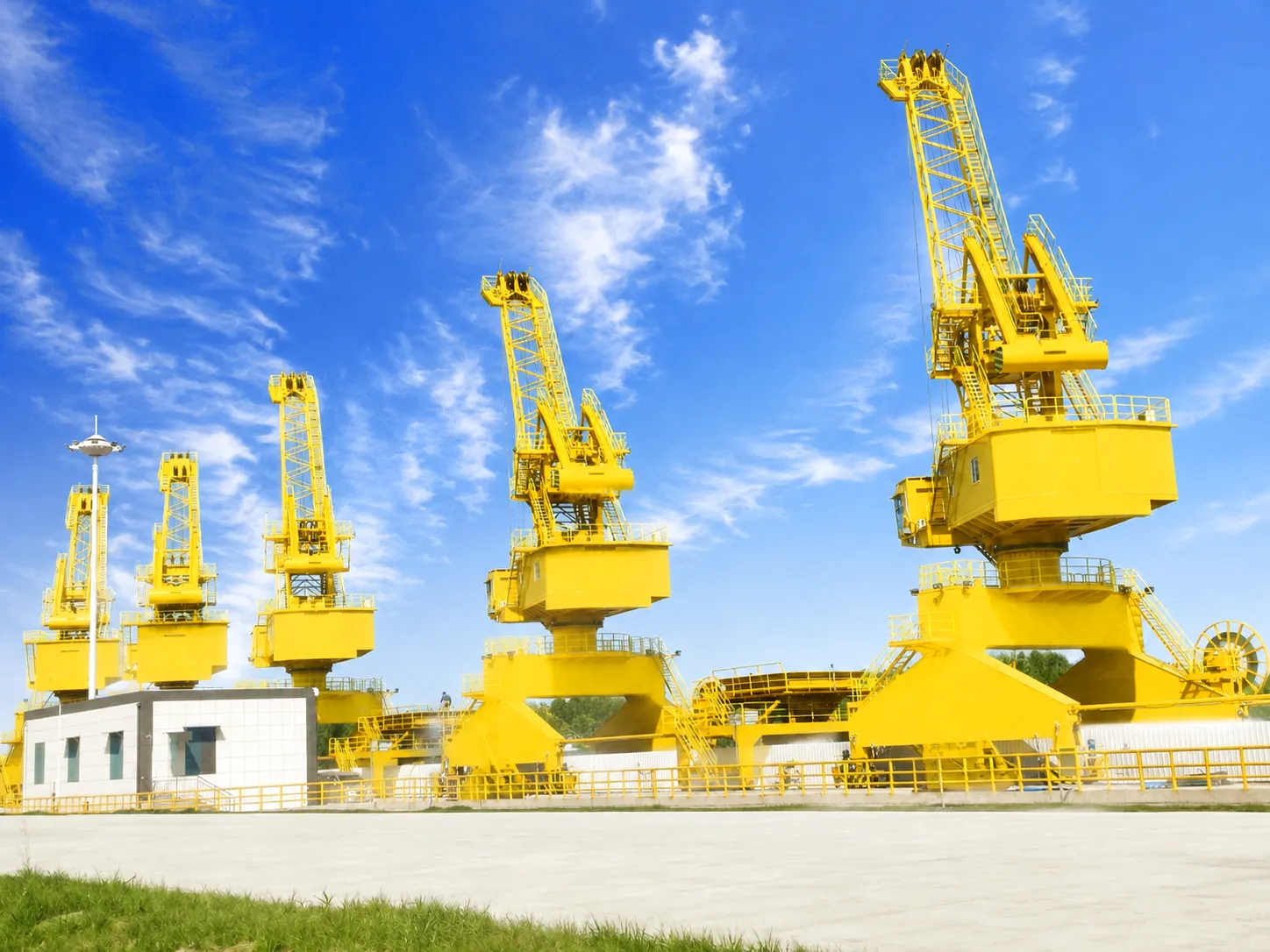
The Port of Felixstowe — the United Kingdom’s busiest container terminal — operates a large fleet of rubber-tyred gantry cranes and rail-mounted portal cranes for container stacking and ship-to-shore transfer operations. In this environment, the performance requirements placed on couplings are shaped by the combination of high cycle frequency, corrosive North Sea coastal atmosphere, and the economic imperative of maintaining crane availability above 95%. Each hour of unplanned crane downtime can cost a terminal operator thousands of pounds in vessel berthing fees and labour costs, creating an extremely strong financial case for premium coupling specification.
Disc couplings have found increasing favour in modern container crane hoist drives, driven by their combination of zero maintenance (no lubrication required), low backlash behaviour that benefits precise positioning with VFD control, and high torsional stiffness that minimises load swing. For travel drive applications on portal cranes at Felixstowe and neighbouring terminals, jaw-type flexible couplings with high-hardness polyurethane spiders provide cost-effective vibration isolation and misalignment accommodation in a compact envelope that suits the restricted space available within end-carriage assemblies. Ever Power’s standard range covers container crane applications with rated torques to 250,000 Nm in gear coupling configurations.
Application Scenario 3: Shipbuilding Portal Cranes — Barrow-in-Furness Shipyard
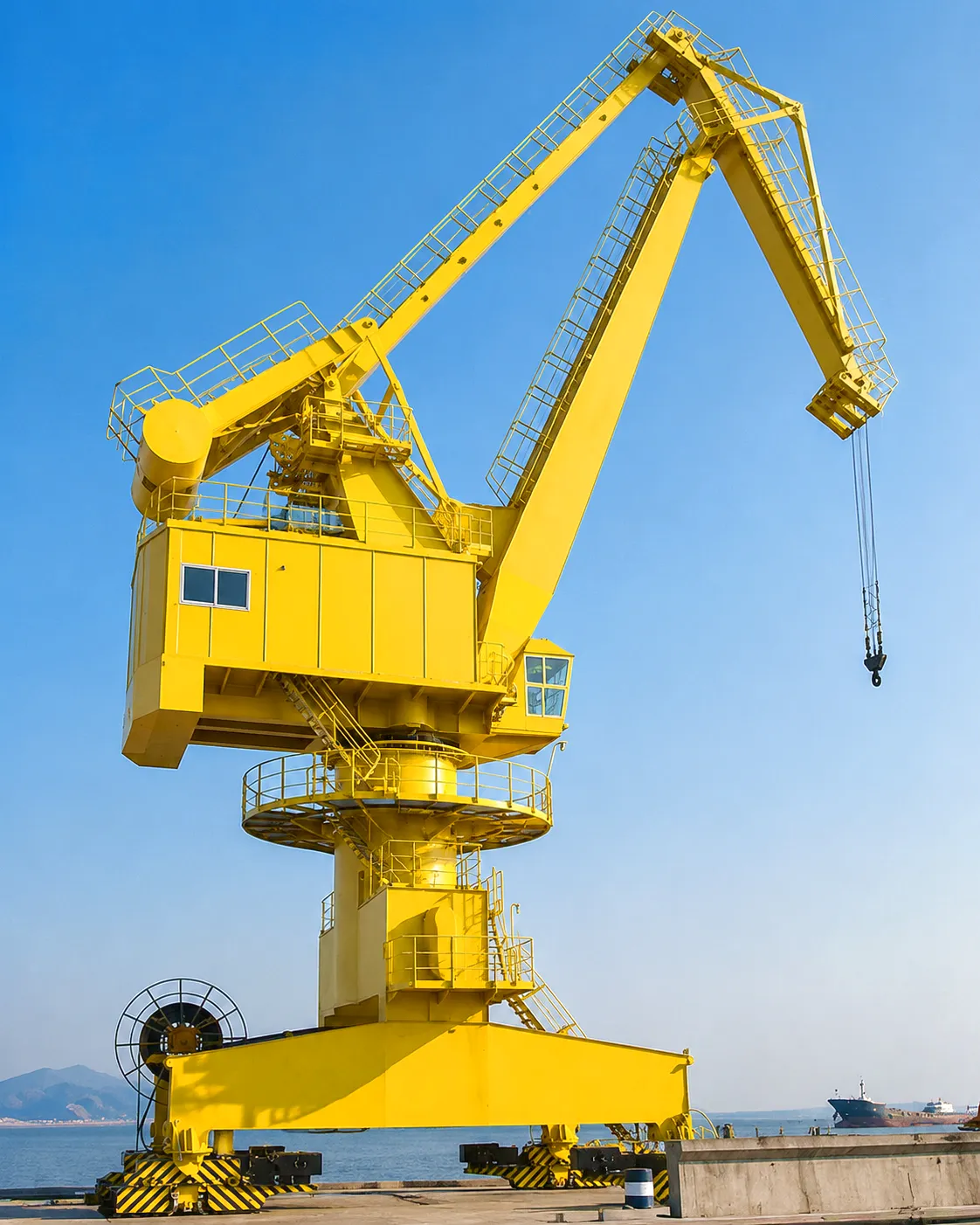
BAE Systems’ shipbuilding facility at Barrow-in-Furness operates some of the largest portal cranes in the UK, used for handling submarine hull sections, heavy equipment modules, and large steel structures during vessel assembly. These cranes operate in Class C (M6) to Class D (M7) duty, covering a wide range of load conditions from precision positioning of sensitive equipment modules to heavy lifts of structural steelwork. The coupling selection challenge in this environment is particularly complex because the cranes must operate reliably in a salt-laden coastal atmosphere with year-round precipitation exposure.
In the Barrow shipyard context, coupling specifications typically call for external surfaces in hot-dip galvanised or epoxy-coated carbon steel for standard applications, with stainless steel construction for components in direct marine atmosphere exposure. The slow-speed, high-torque characteristics of heavy hoist drives at this facility make gear couplings the dominant coupling type, with grease re-lubrication intervals extended through the use of synthetic grease retained by labyrinth seal arrangements that prevent ingress of the abrasive marine atmosphere. Ever Power has supplied purpose-engineered gear couplings for UK shipbuilding applications with documented service in continuous operation exceeding fifteen years without gear flank replacement.
Application Scenario 4: Heavy Engineering Workshop Portal Cranes — Birmingham Manufacturing Zone
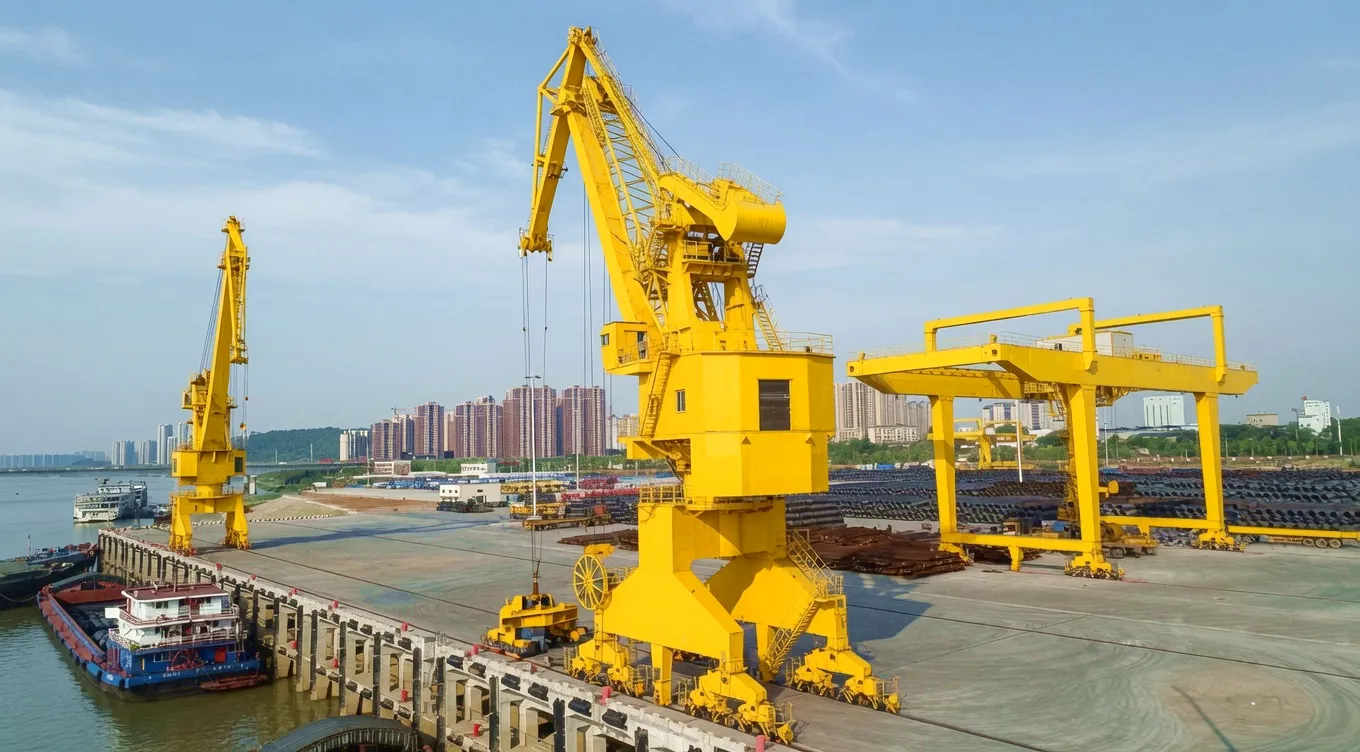
Birmingham’s manufacturing base spans precision engineering, power generation component manufacture, and heavy fabrication — industries that depend on overhead and portal crane systems for workpiece handling at every stage of production. Portal cranes in workshop environments face a different coupling challenge compared to outdoor cranes: the duty cycle is often irregular, with long idle periods followed by demanding pick-and-place operations that impose high inertial loads on the drive train. Additionally, workshop cranes are expected to operate with minimal noise emission to meet health and safety obligations regarding workplace noise exposure.
In Birmingham fabrication shops, the coupling specification often prioritises low backlash and smooth motion characteristics over maximum torque capacity, reflecting the need for precise load positioning rather than continuous heavy lifting. Disc couplings and flexible jaw couplings with soft elastomeric elements are commonly specified in this context, delivering quiet operation, good misalignment accommodation (particularly as older crane structures develop out-of-true conditions), and the electrical isolation that is valued when VFD motor control is in use. Ever Power provides application-specific coupling selection support to British workshop crane operators, drawing on technical knowledge accumulated across hundreds of workshop crane installations.
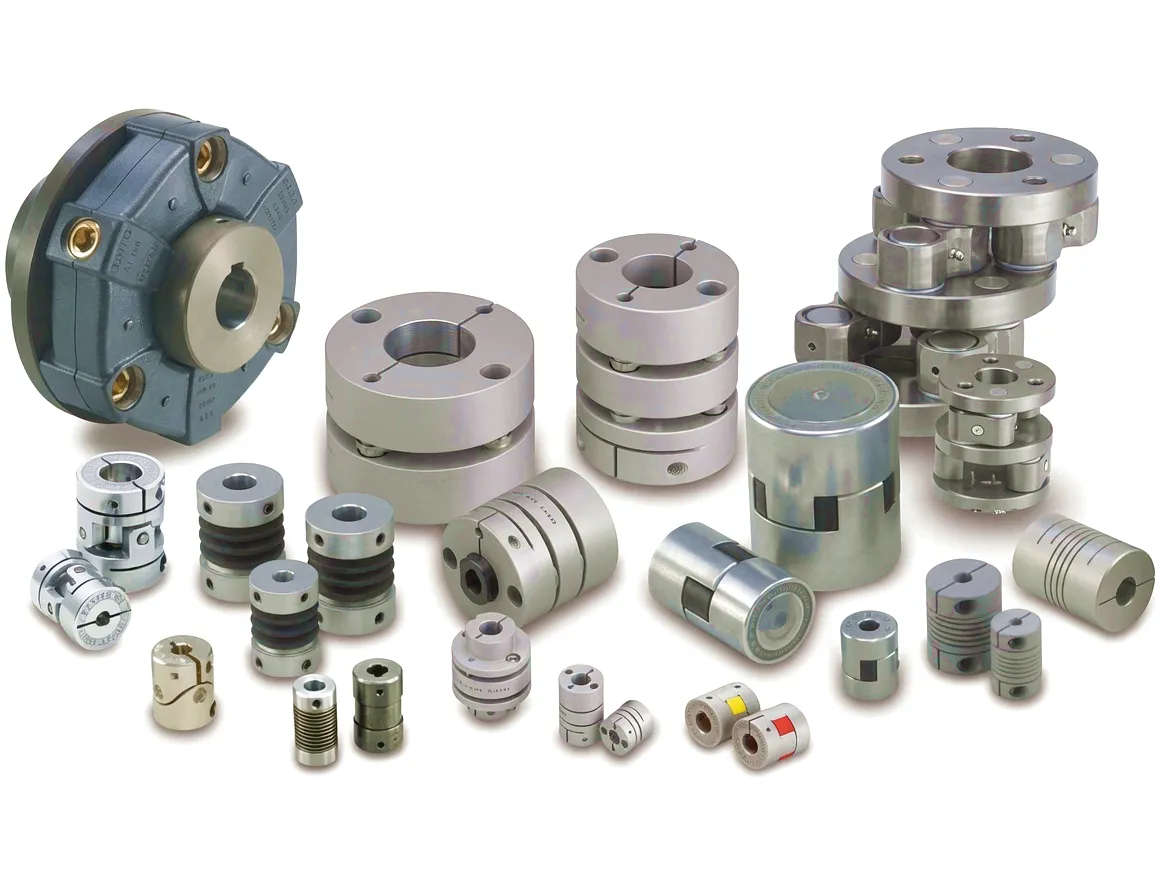
Ever Power Manufacturing Capabilities — Precision Engineering for Crane Duty Couplings
Custom-engineered coupling solutions for portal crane systems worldwide, backed by decades of heavy-industry manufacturing experience.
Ever Power operates across a 60,000 m² manufacturing campus equipped with CNC gear hobbing centres, precision boring machines, heat treatment furnaces, and CMM inspection facilities. With 150 qualified engineers, the facility delivers portal crane coupling sets from design approval to factory test in lead times competitive with European alternatives, at significantly lower unit cost. Production capacity supports both single prototype deliveries and batched volume orders for crane fleet operators.
Every portal crane coupling supplied by Ever Power is engineered to the customer’s specific dimensional envelope, torque requirement, misalignment specification, and environmental conditions. The engineering team produces finite element analysis documentation for structural-critical components, material traceability certificates, and third-party-witnessed performance testing on request. Non-standard bore configurations, keyway profiles, shrink disc interfaces, and split-hub designs for retrofit applications are all within the facility’s standard repertoire.
The Ever Power quality system operates to ISO 9001:2015 and extends to ISO 14001:2015 environmental management. All crane-duty couplings undergo dimensional inspection, hardness verification, surface roughness measurement, and dynamic balance testing where rotational speed warrants. Material chemical composition and mechanical properties are verified by accredited laboratory analysis, with documentation packages available for crane safety audit purposes in compliance with UK Lifting Operations and Lifting Equipment Regulations (LOLER).
Ever Power maintains established logistics arrangements with UK-based distribution partners, ensuring reliable delivery timescales to crane maintenance teams across England, Scotland, and Wales. Standard catalogue coupling sizes are held in bonded warehouse stock by UK partners, enabling next-day despatch for emergency breakdown requirements. For planned replacement programmes at large UK port facilities and steel mills, scheduled delivery contracts with fixed pricing are available, supporting procurement planning across annual maintenance budgets. The company has accumulated over 3,000 project references and serves more than 10,000 customers globally.
Featured Coupling Products for Portal Crane Applications
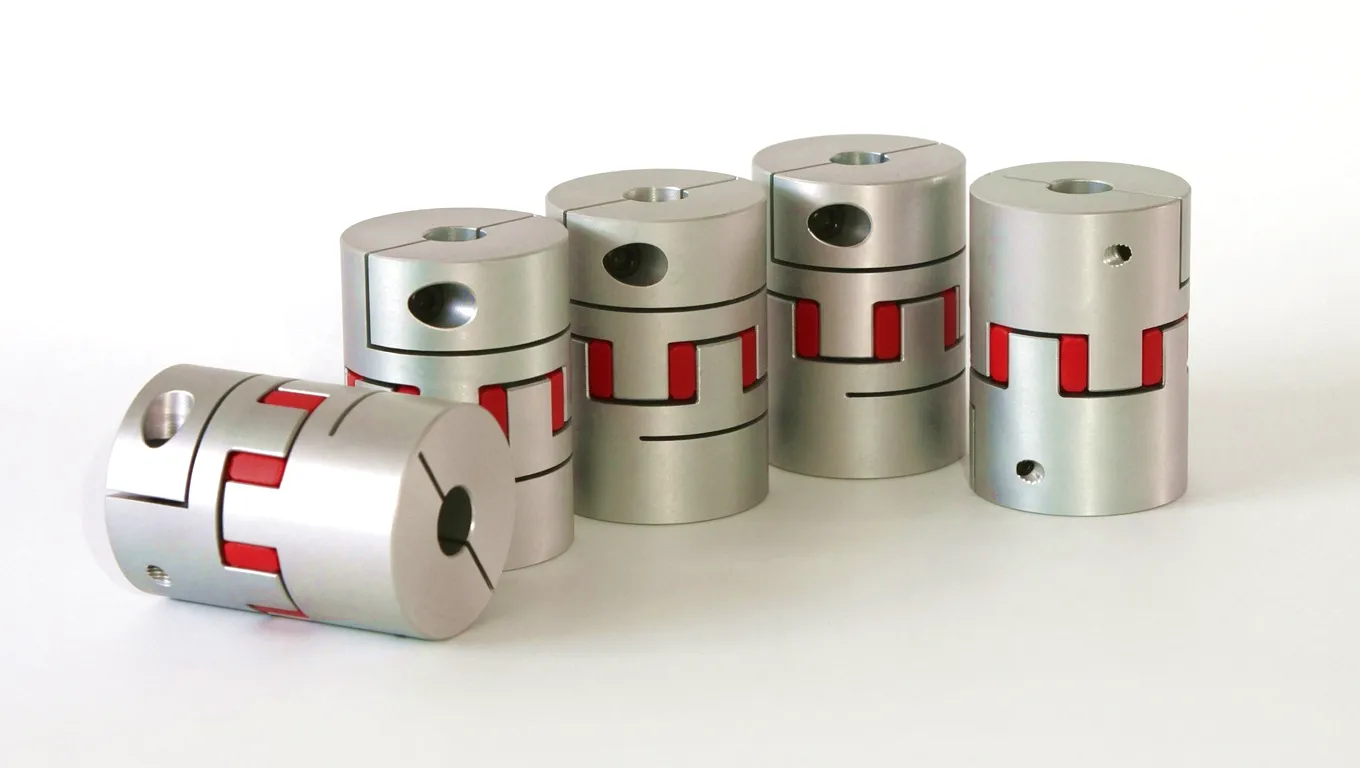
The Flexible Beam Coupling from Ever Power delivers precise torque transmission with inherent misalignment accommodation through a helically cut beam structure machined from a single billet. For portal crane travel drive applications and lighter hoist drives, this coupling type offers zero backlash characteristics that suit VFD-controlled motion, a compact axial footprint suited to confined crane end-carriage installations, and maintenance-free operation over its service life. Available in aluminium, stainless steel, and titanium configurations to match the operating environment and weight constraints of the specific crane installation.
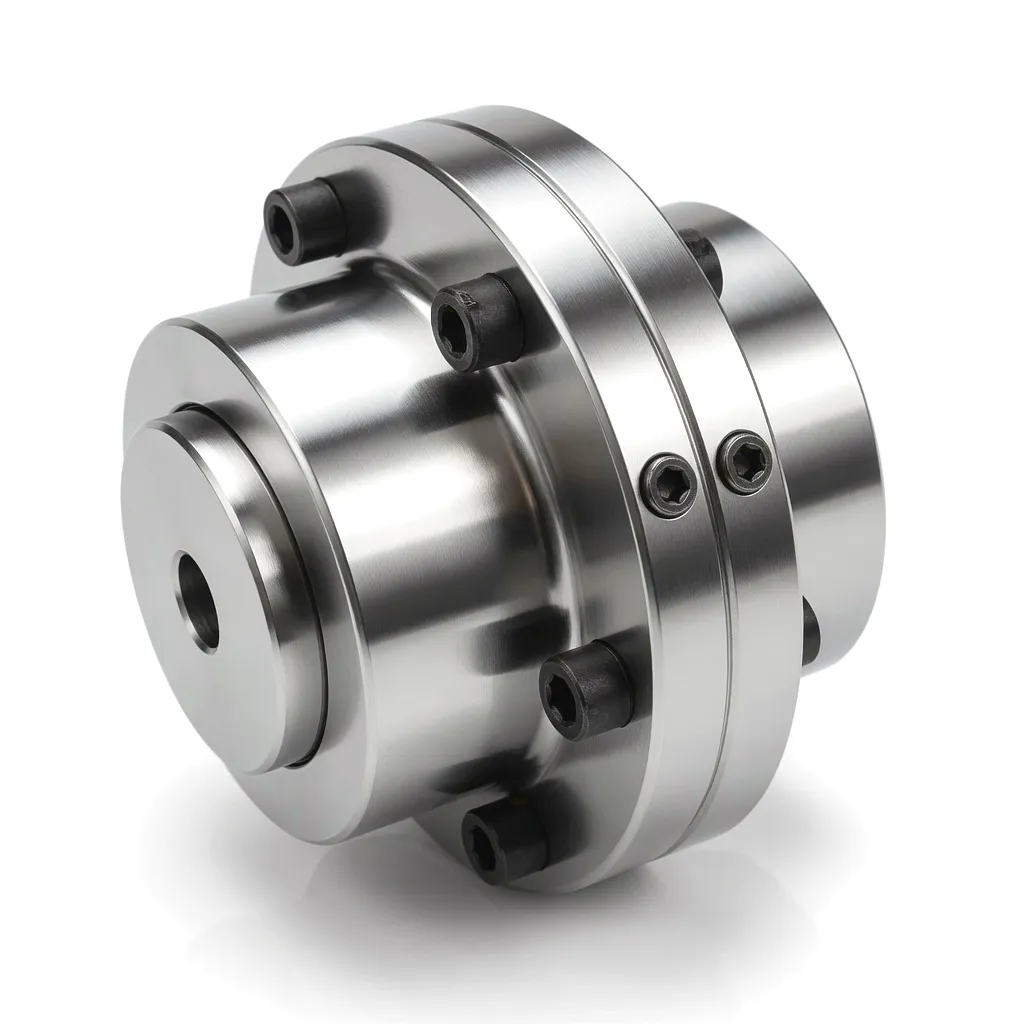
Ever Power’s Disc Coupling range is engineered for demanding portal crane hoist drive applications where long service intervals, high torsional stiffness, and freedom from lubrication maintenance are the key selection criteria. The metallic disc pack design accommodates angular and axial misalignment through elastic flexure of precision-laminated stainless steel discs, transmitting torque with no wearing parts and no lubrication requirement. This coupling type is particularly well-suited to modern VFD-controlled portal cranes where precise dynamic response is required, and has found extensive application in UK container terminal crane modernisation programmes where legacy gear couplings are being replaced with maintenance-free alternatives.
Customer Success Story: Tyne Heavy Fabrication, Newcastle upon Tyne
 Tyne Heavy Fabrication Ltd operates a 14,000 m² fabrication facility on the south bank of the Tyne, producing offshore platform structural modules, bridge sections, and pressure vessel assemblies for clients across the UK North Sea oil and gas sector. The facility’s four portal cranes — with safe working loads of 50 t, 75 t, 100 t, and 160 t — handle all intra-facility movements of heavy fabrications, operating in a medium-duty cycle that averages 180 to 220 full lift cycles per working day across the crane fleet.
By 2023, the facility’s maintenance engineering team had identified an accelerating pattern of gear coupling failures across the hoist drives of the 75 t and 100 t cranes. The original coupling specification dated from the cranes’ commissioning in 2009 and had not been reviewed when both cranes were retrofitted with variable-frequency drive control systems in 2018. The VFD retrofit had changed the torque pulsation characteristics of the drive train in a way that the original gear coupling grease retention system could not cope with — the dynamic loads were causing premature lubricant breakdown and consequential gear flank micro-pitting, with coupling inspection intervals of six months proving insufficient to maintain reliable operation.
The maintenance team approached Ever Power’s technical support team with a detailed operating profile and dimensional survey of the existing coupling interfaces. Ever Power’s engineers recommended transitioning the hoist drive couplings on both cranes from gear couplings to disc coupling designs, specifically the EP-DCH series with stainless disc packs rated to 45,000 Nm continuous and 90,000 Nm momentary peak. The disc coupling design eliminated the grease lubrication requirement entirely, removed the VFD-related lubricant degradation mechanism, and provided the electrical isolation between motor and gearbox shafts that further protected gearbox bearings from the VFD-induced shaft currents that had been contributing to premature bearing failure.
Installation was carried out during a planned two-week facility shutdown in January 2024. The coupling changeover on each crane was completed by the facility’s own maintenance riggers and electricians with telephone support from Ever Power’s engineering team, using the dimensional data and installation procedure documentation provided in advance. Follow-up inspection at six months and twelve months post-installation confirmed zero measurable wear on the disc packs and no recurrence of the lubricant degradation issues that had driven the project. Tyne Heavy Fabrication’s maintenance manager reported a projected saving of approximately £38,000 per year in reduced crane maintenance downtime, replacement parts, and labour, against the capital cost of the coupling replacement programme.
お客様の声
“The disc couplings Ever Power engineered for our 100-tonne hoist drives have performed beyond our expectations. Twelve months in service with no maintenance interventions and no recurrence of the lubrication issues that plagued the previous gear coupling installation. The technical documentation package they provided met our LOLER compliance audit requirements without any additional preparation on our side.”
“We needed a non-standard bore configuration and a split-hub arrangement to allow installation without disturbing the crane wheel assemblies. Ever Power turned that around in three weeks including full drawing approval and dimensional certification. The lead time from a UK supplier for the same specification had been quoted at eleven weeks. The coupling has been in service for eight months with no issues.”
“Ever Power’s application engineering team worked through the torsional vibration analysis with us before specifying the coupling stiffness. For a VFD-driven crane operating in a sensitive manufacturing environment, getting the torsional natural frequency away from the drive excitation band was critical. Their methodology was thorough and the final coupling selection has completely eliminated the low-frequency oscillation that was causing product quality concerns on our precision machining line beneath the crane runway.”
Frequently Asked Questions — Couplings for Portal Crane Applications
For portal crane hoist drives in UK steel mill environments, the selection depends primarily on the crane’s duty class, the presence of variable-frequency drive control, and the operating temperature environment. Class D and E duty cranes in high-temperature zones near furnaces or ladle-handling areas typically require gear couplings manufactured from alloy steel with synthetic grease lubrication and enhanced seal arrangements. Where VFD control is in use, disc couplings or jaw-type flexible couplings with non-conductive spider elements are preferred because they prevent shaft current-induced bearing damage and provide torsional damping at low speeds. Ever Power’s engineering team can conduct a drive train analysis based on your crane specification and recommend the optimal coupling type with full technical justification documentation.
Pricing for custom crane coupling depends on bore diameter, rated torque, surface treatment specification, and required documentation package. For a 100-tonne class portal crane hoist drive application, where rated hoist torque at the gearbox input shaft typically falls in the 15,000 Nm to 40,000 Nm range, custom gear coupling sets from Ever Power are competitively priced compared with European equivalents while meeting equivalent or higher quality standards. For an accurate quotation covering your specific dimensional and performance requirements, contact Ever Power’s UK sales team directly — indicative pricing and delivery lead times can typically be provided within 24 hours of receiving a complete technical specification or existing coupling dimensional survey.
For emergency crane coupling requirements across the UK, Ever Power maintains stock of common-size jaw coupling, gear coupling, and disc coupling components through UK-based distribution partners. Standard-size coupling hubs and elastomeric spider elements are typically available on next-day delivery to addresses throughout England, Scotland, and Wales. For custom bore sizes and keyway configurations, machining at Ever Power’s production facility with priority scheduling can deliver completed coupling sets within seven to fourteen working days depending on complexity — significantly faster than the quoted lead times from some European coupling manufacturers. Contact the UK technical sales team to confirm stock availability and lead time for your specific coupling reference or cross-reference to a competitor’s part number.
Under the Lifting Operations and Lifting Equipment Regulations 1998 (LOLER), thorough examination of lifting equipment in regular use must be carried out at intervals not exceeding six months for equipment used to lift persons and twelve months for all other lifting equipment. However, the coupling specifically is a mechanical component of the crane drive train rather than a directly load-bearing element, and is therefore subject to the preventive maintenance regime defined by the crane manufacturer’s maintenance schedule and risk assessment. For gear couplings, grease inspection and replenishment at intervals of three to twelve months is typical depending on duty intensity. For disc couplings and jaw couplings with polyurethane elements, visual inspection at six-monthly intervals to check for elastomer degradation or disc pack cracking is the standard recommendation. Ever Power can provide a customised maintenance schedule as part of the supply documentation package.
Common indicators that a portal crane travel drive coupling is approaching end of service life include: audible knocking or rattling sounds when the travel drive reverses direction (indicating increased backlash in a gear coupling or degraded elastomeric element in a jaw coupling); visible grease leakage from gear coupling seals during operation; cracking, splitting, or significant surface deterioration of polyurethane spider elements visible during routine visual inspection; increased vibration levels recorded by crane condition monitoring systems during travel; and operational symptoms such as jerky starting or inconsistent speed control at low speeds under VFD. Any of these observations should trigger a detailed coupling inspection and measurement of running clearances or elastomer durometer values, with replacement carried out before the next heavy-duty operational period. Ever Power can supply like-for-like or upgraded replacement coupling assemblies with technical comparison data to support the decision.
For disc coupling quotations for shipbuilding portal crane applications at UK facilities including Barrow-in-Furness, Belfast, Rosyth, or other British shipyard locations, contact Ever Power directly at [email protected]. To enable a prompt and accurate quotation, provide the motor rated power and speed, the gearbox input shaft diameter and keyway dimensions, the estimated peak and continuous torque requirements, the operating temperature range, and any specific surface treatment or material certification requirements. Ever Power’s application engineers are experienced in shipbuilding crane specifications and can advise on coupling types that meet both the technical performance requirements and the quality documentation standards typically required for defence and commercial shipbuilding procurement.
Ever Power’s engineering team provides free technical consultation, application-specific selection guidance, and competitive quotations for portal crane coupling projects across the UK. Serving Sheffield, Birmingham, Newcastle, Barrow-in-Furness, Felixstowe, Liverpool, and beyond.