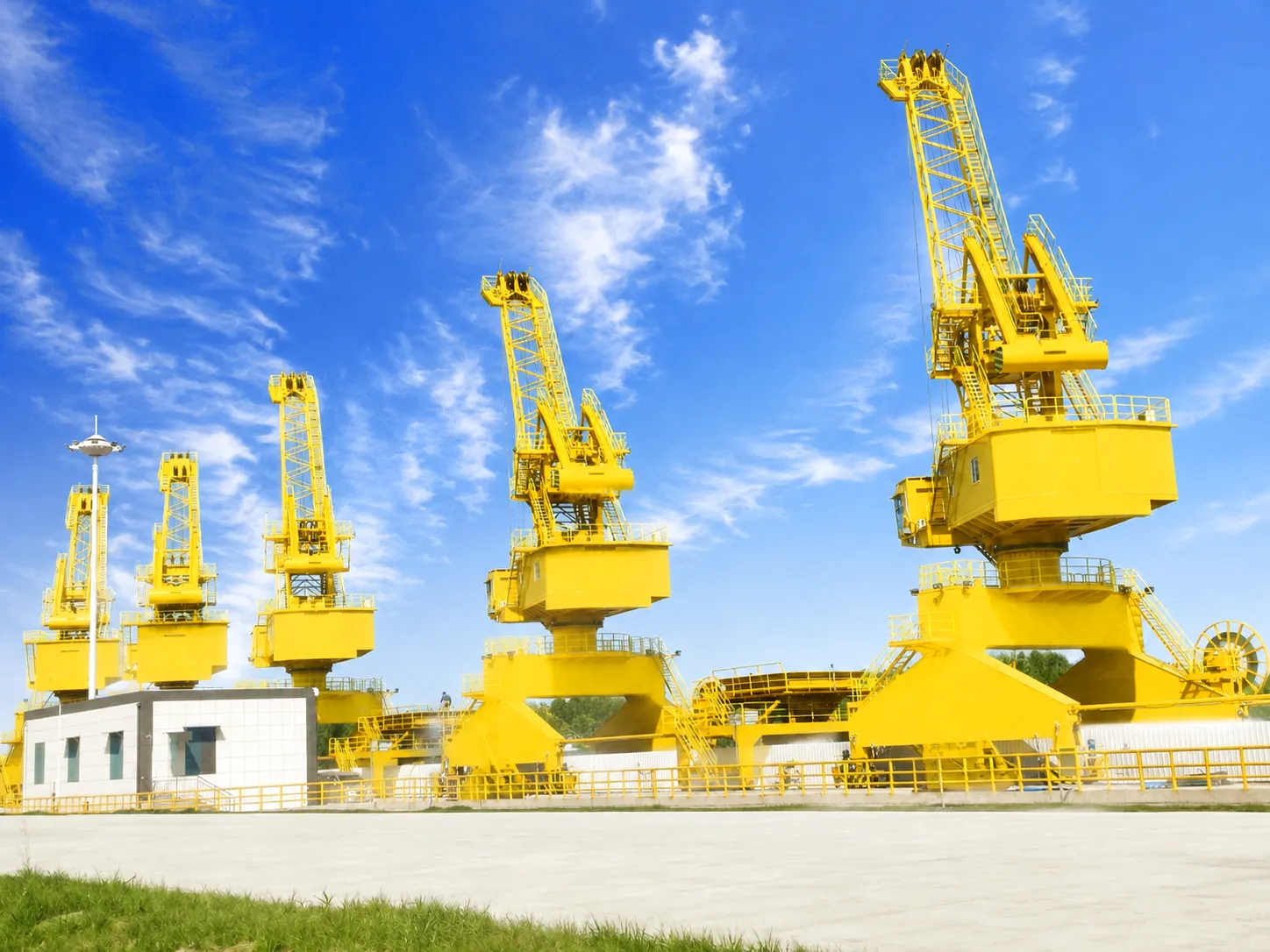
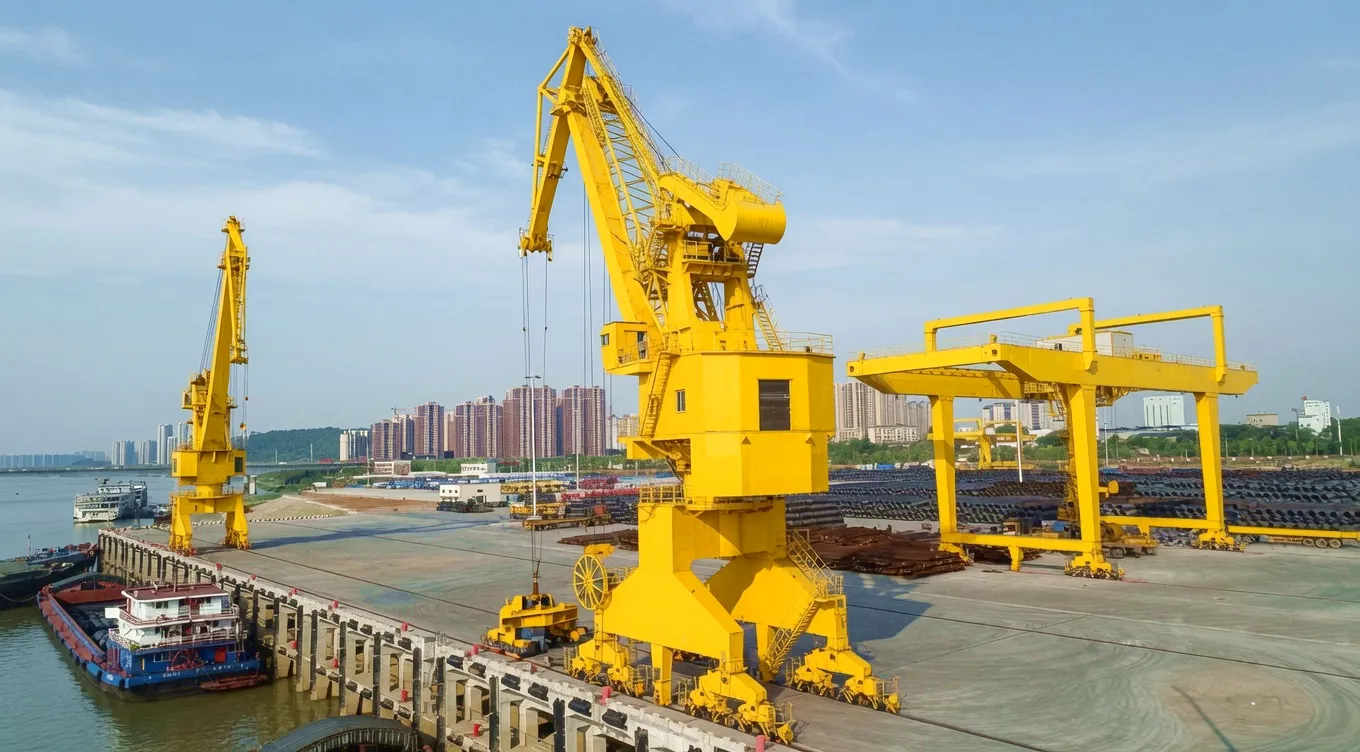
 Portal cranes, also called level-luffing cranes or harbour cranes, stand as some of the most mechanically demanding machines in the UK’s port and heavy industrial landscape. From the sprawling dockyards of Felixstowe and Southampton to the steel-handling facilities in Sheffield and the shipbuilding yards along the River Clyde, these structures carry enormous operational loads every single working hour. At the heart of every portal crane drive train, connecting prime movers to gearboxes, drums, and slewing rings, are couplings — components that are far too often underestimated until they fail at the worst possible moment.
The coupling in a portal crane application is not simply a mechanical connector. It absorbs shock loads generated during sudden starts and braking cycles, compensates for thermal expansion and shaft misalignment that occurs during heavy lifts, and acts as a protective buffer between expensive motor and gearbox assemblies. Selecting the wrong type, or installing a coupling that does not meet the precise torque and misalignment envelope of the crane’s duty cycle, invites costly downtime, premature gearbox wear, and — in extreme cases — catastrophic mechanical failure that endangers personnel. This guide examines every dimension of coupling selection and application in portal crane systems, drawing on verified engineering data and the specific demands of UK industrial operations.
Working Principle: How Couplings Function Within the Portal Crane Drive Chain
A portal crane drive system typically comprises an electric motor, a brake, a speed reducer (often a multi-stage helical or planetary gearbox), a rope drum or slewing drive, and the coupling assemblies that link these components together. The coupling occupies two or more positions in this chain: between the motor shaft and the gearbox input shaft, and sometimes also between the gearbox output shaft and the load-side drum shaft. In slewing drive systems, a flange coupling or gear coupling connects the motor-gearbox unit directly to the slewing ring pinion.
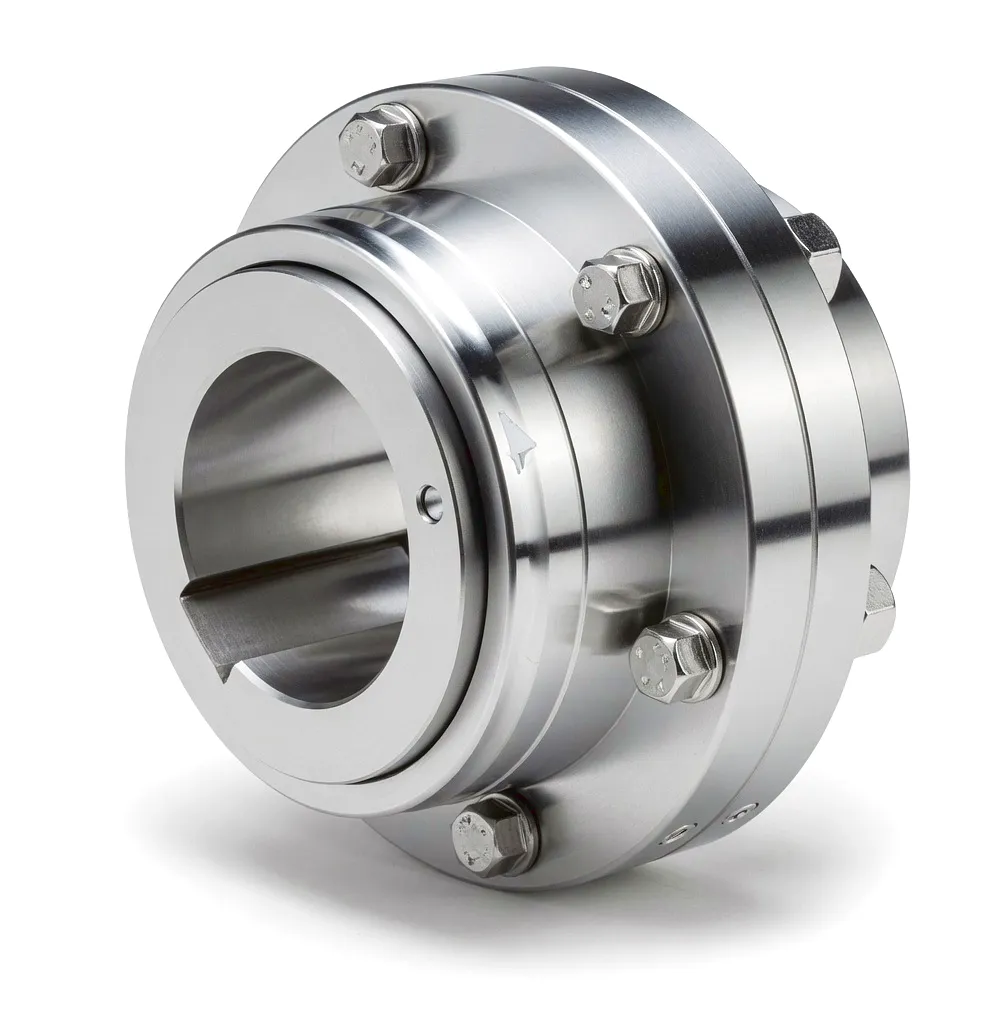
During a lifting cycle, when the motor accelerates from rest to full speed under load, the coupling must transmit peak torque — often three to five times the nominal running torque — without slipping or deforming. As the load decelerates and the brake engages, shock torque reverses direction almost instantaneously. Gear couplings manage this through the meshing engagement of crowned gear teeth on the hub with internal gear teeth on the sleeve, providing a positive, rigid torque path while their crowned tooth geometry accommodates angular misalignment up to approximately 1.5 degrees and axial displacement of several millimetres. Flexible disc couplings, by contrast, transmit torque through metallic disc packs in bending, achieving zero backlash and high torsional stiffness that is valued in precision slewing applications where positional accuracy matters.
Core Materials: What Goes Into a Heavy-Duty Portal Crane Coupling
Material selection for portal crane couplings is driven by three competing requirements: tensile and fatigue strength to handle cyclic shock loads, toughness at ambient temperatures that can drop significantly during UK winters on exposed waterfront sites, and surface hardness to resist the fretting and wear that occur at gear tooth contact faces lubricated by grease rather than a continuous oil film.
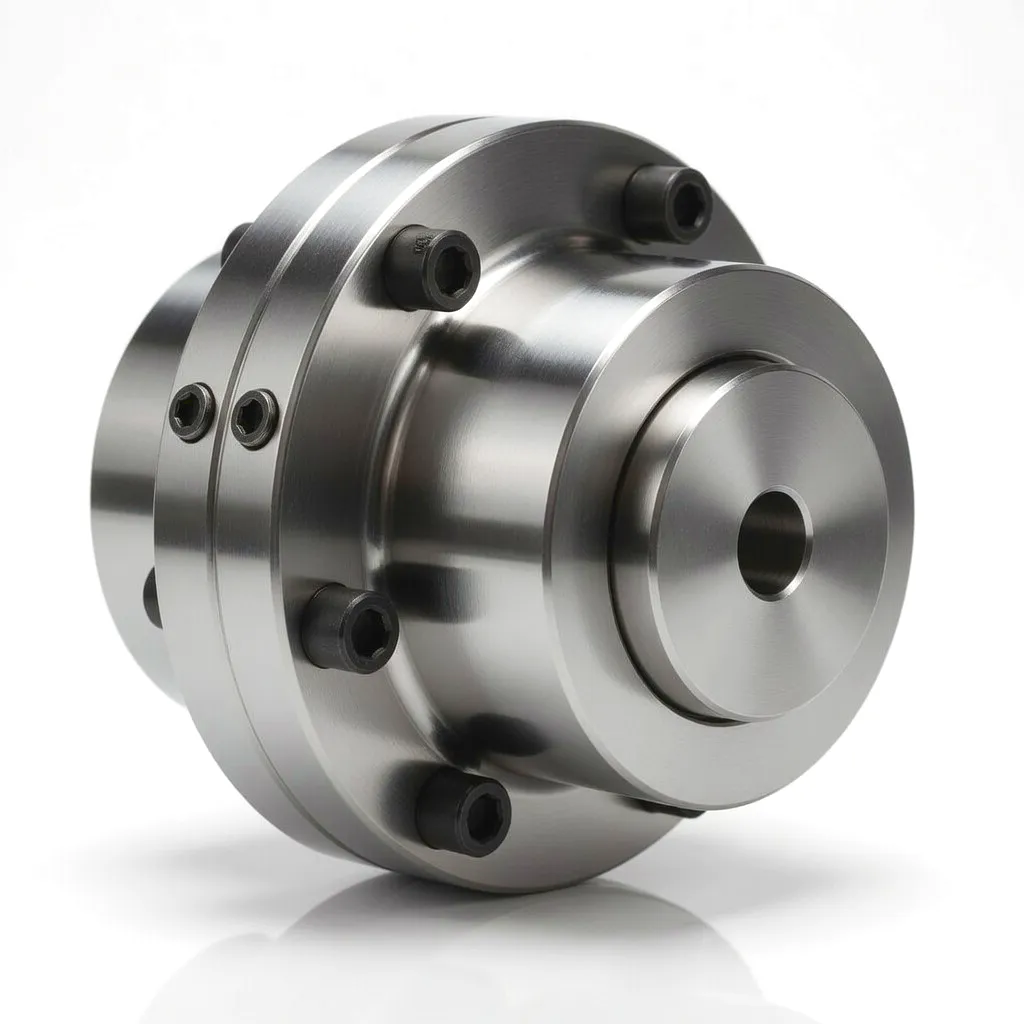
Coupling hubs for gear-type designs are most commonly produced from medium-carbon alloy steels conforming to BS EN 10083 standards — grades such as 42CrMo4 are widely used for their excellent combination of through-hardening response, tensile strength in the range of 900–1100 MPa, and good impact toughness. The gear teeth on these hubs are hobbed and then case-hardened to achieve a surface hardness of approximately 56–62 HRC, with a soft, tough core that resists brittle fracture under shock. Sleeve components, which carry the internal gear profile and act as the outer shell of the coupling, are often produced from ductile iron (GGG-50 or higher) where weight reduction is important, or from alloy steel where maximum torque density is required. Bolted flange couplings used on lower-speed drum drive applications frequently use forged carbon steel flanges conforming to BS 1502 or equivalent specifications, with high-tensile coupling bolts in grade 8.8 or 10.9 to ISO 898-1.
Application Scenario: Couplings in Portal Crane Drive Systems
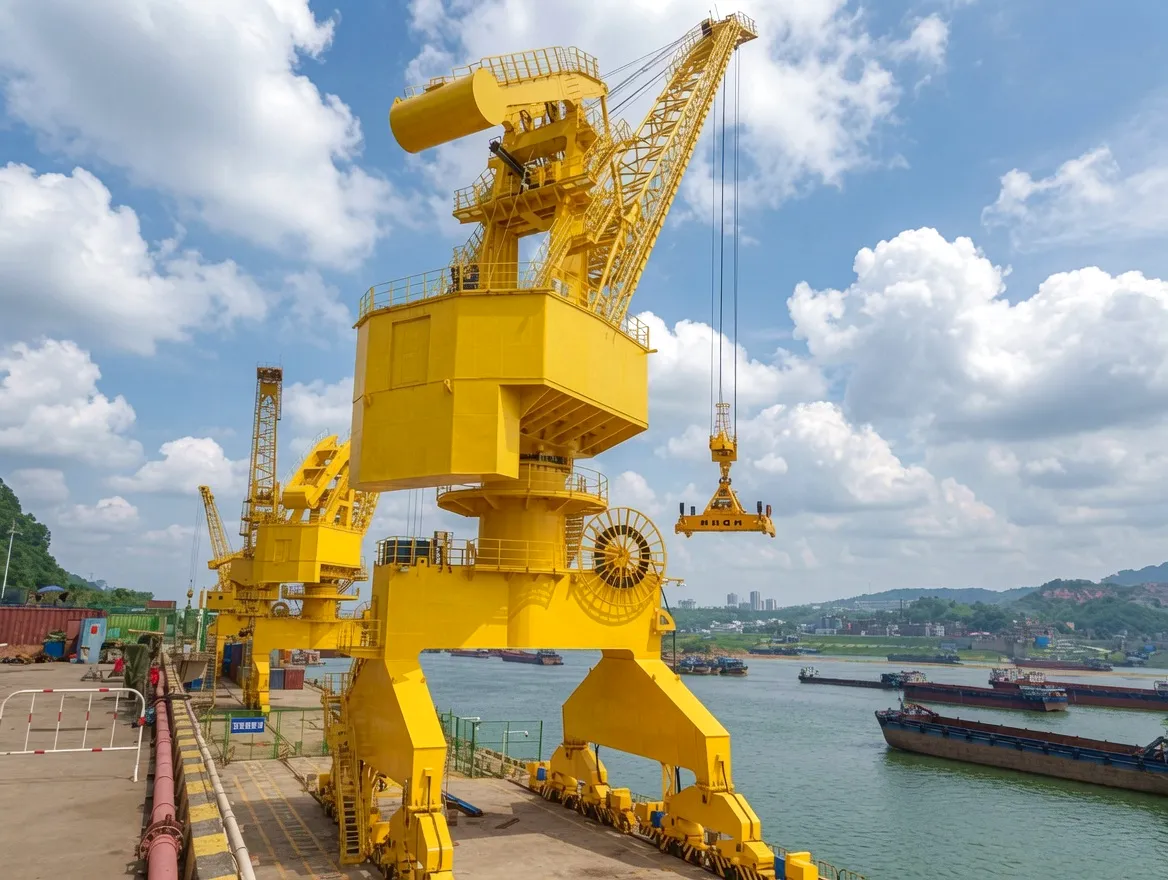
Portal cranes operating in the UK’s major port environments — from the container terminals at Tilbury and Southampton to the bulk cargo facilities at Immingham and the multipurpose berths at Liverpool’s Seaforth Dock — place unique and severe demands on every drive component. The hoisting mechanism alone may cycle hundreds of times per shift, raising and lowering loads ranging from a few tonnes for general cargo to 50 tonnes or more for heavy steel coils and project cargo. Each start-stop cycle creates a torque spike that the coupling in the hoist motor-to-gearbox connection must absorb without fatigue accumulation that shortens service life. A gear coupling rated at 1.5 to 2.0 times the motor peak torque, with a service factor appropriate to the crane’s FEM duty class, gives the engineering team confidence that the coupling will outlast the maintenance interval reliably.
The luffing mechanism — which raises and lowers the jib to vary the working radius of the crane — also relies on couplings to protect its drive train. Luffing cycles in harbour crane operations are frequent, particularly when the vessel being served has a complex cargo hold arrangement that requires the crane to work at different radii throughout the cargo operation. The coupling here must handle not just rotational torque but also the end-thrust generated as luffing rope tensions change during the cycle. Gear couplings with extended gear mesh length and robust flange retention manage this well. For new portal crane designs being specified for UK dock operators with upgraded environmental and noise targets, flexible disc couplings are increasingly popular in luffing drives because they eliminate the grease lubrication maintenance requirement entirely, reducing total maintenance cost over the crane’s service life.
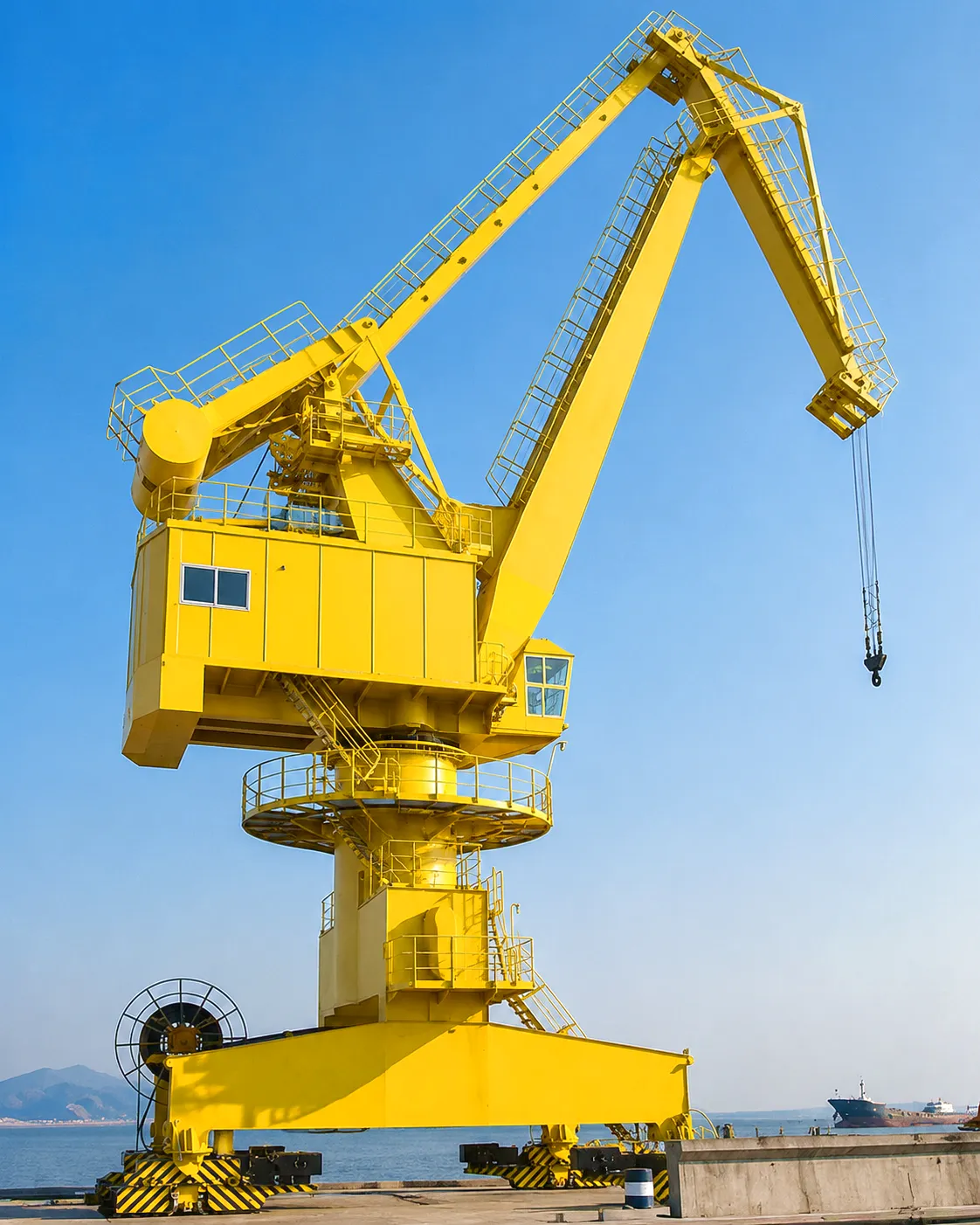
The slewing drive system of a portal crane demands perhaps the most precise coupling specification. Slewing a loaded jib through 360 degrees, smoothly and repeatedly, requires a coupling that offers essentially zero backlash — any lash in the coupling translates directly into angular positioning error at the hook, which can be dangerous when landing loads precisely on to ships’ hatch covers or flatbed trailers. Disc couplings and high-precision gear couplings with reduced-backlash tooth geometry are standard choices here. The slewing drive also subjects the coupling to a continuous, low-intensity vibration from the slew ring gear mesh, meaning fatigue resistance of the disc pack or gear tooth material is a critical selection criterion. At facilities like the port of Bristol, where tidal windows restrict cargo operations and crane efficiency directly affects vessel turnaround times, the reliability of every drive component — and the coupling above all — is a commercial as well as a technical priority.
Product Advantages: Why Gear Couplings Dominate Portal Crane Applications
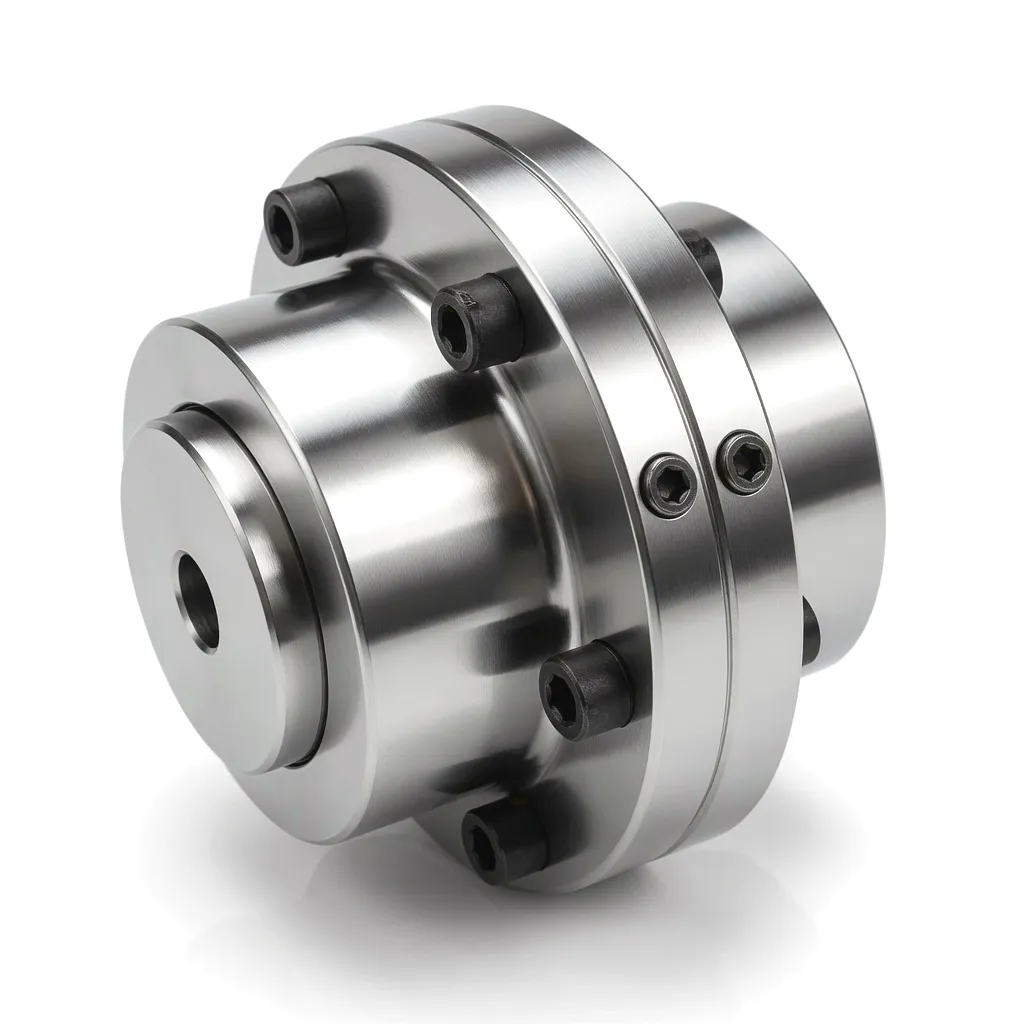
Gear-type couplings retain their position as the dominant choice for heavy-duty portal crane applications because they combine the highest torque density available in a commercial coupling product with the misalignment capacity that crane installations demand. A gear coupling with a 120 mm bore diameter can typically transmit peak torques exceeding 25,000 Nm in a compact envelope that fits within the standard space between crane motor and gearbox flanges, without requiring additional structural bracing to manage reaction forces. This torque density advantage becomes decisive on older crane refurbishment projects — common across the UK’s ageing port infrastructure — where the coupling must match the existing shaft and flange envelope while upgrading the performance specification to meet current operational demands.
The crowned tooth geometry that defines the gear coupling also provides a degree of misalignment accommodation that is simply not achievable with rigid flange or disc couplings in the same torque range. Angular misalignment capacity of 0.5 degrees to 1.5 degrees, combined with radial offset tolerance of up to 0.5 mm and unrestricted axial float, gives installation teams the practical flexibility needed when aligning heavy crane drive components in the field — a particular advantage on crane upgrades where the existing structure may have developed settlement or weld distortion over years of heavy use.
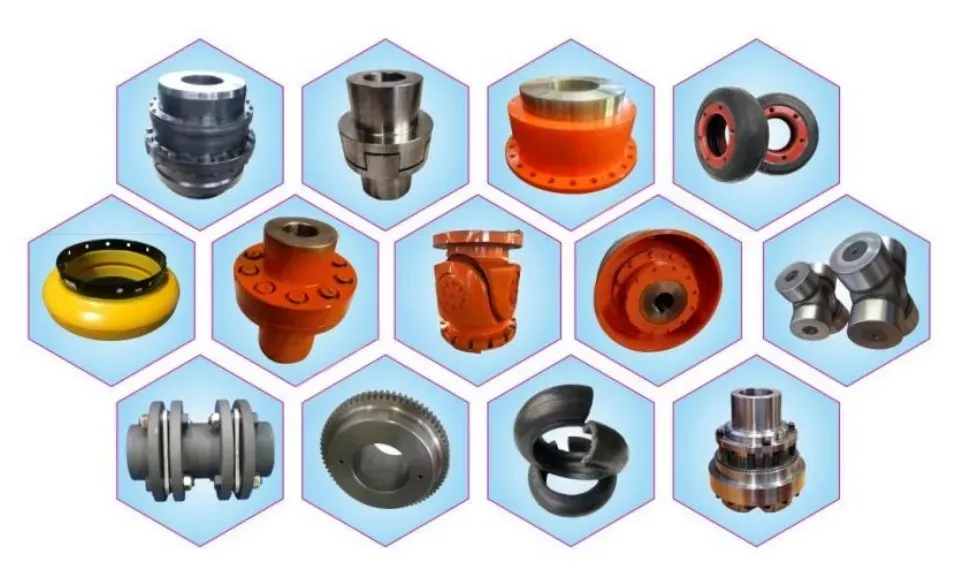
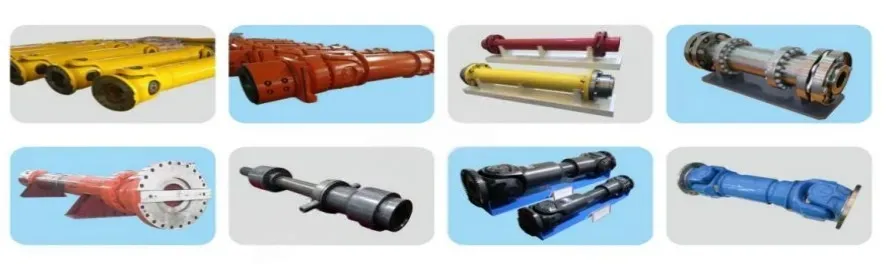
Ever Power gear coupling and flexible coupling product ranges for heavy industrial applications
Technical Performance Parameters: Portal Crane Coupling Specifications
The table below consolidates the key engineering parameters for gear couplings commonly specified in portal crane hoist, slew, and travel drives. Data ranges reflect standard commercial product series and may vary for bespoke engineered designs produced to specific customer requirements. All values should be confirmed against the specific crane duty classification and motor nameplate data during the selection process.
| パラメータ | Hoist Drive Gear Coupling | Slew Drive Disc Coupling | Travel Drive Flexible Coupling |
|---|---|---|---|
| 定格トルク(Nm) | 2,000 – 120,000 | 500 – 45,000 | 200 – 18,000 |
| 最大トルク容量 | 3.0× rated torque | 2.5× rated torque | 2.5× rated torque |
| 角度ずれ | Up to 1.5 degrees | Up to 1.0 degree | Up to 2.0 degrees |
| Radial Offset (mm) | 0.2 – 0.5 | 0.1 – 0.3 | 0.3 – 1.5 |
| 最高回転数(rpm) | 1,500 – 3,600 | up to 6,000 | up to 3,000 |
| 穴径範囲(mm) | 25 – 200 | 20 – 160 | 14 – 130 |
| ハブ素材 | 42CrMo4合金鋼 | Alloy steel or SS316 | GGG-50 or 42CrMo4 |
| 潤滑 | Grease packed (regreased every 6–12 months) | Maintenance-free (no lubrication required) | Grease or dry-running insert |
| 動作温度 | -25 degrees C to +100 degrees C | -40 degrees C to +150 degrees C | -30 degrees C to +80 degrees C |
| 表面保護 | Epoxy paint or hot-dip galvanised | Stainless or hard anodised | Phosphate + paint or SS option |
| Standards Compliance | ISO 14691, FEM 1.001 | ISO 14691, AGMA 9000 | ISO 14691, BS EN 13463 |
Extended Application Scenarios Across the UK Industrial Landscape
Beyond deep-sea port operations, portal cranes of various scales are deployed across the UK’s heavy manufacturing and processing industries in ways that create distinct and often more challenging coupling duty profiles than standard harbour lifts. At steel service centres and hot-rolling mills in the Sheffield and Rotherham area — which together represent one of Europe’s remaining concentrations of specialty steel production — overhead and portal cranes handle steel slabs, coils, and billets at elevated temperatures. The ambient heat that radiates from furnace areas and freshly rolled products means that coupling grease selection must account for thermal stability at temperatures that can reach 60 to 80 degrees C at the coupling body, even with the coupling itself mounted outside the direct heat zone.
Rail freight terminals, such as those operated around the Birmingham logistics corridor and at the DIRFT facility near Rugby, use mobile and semi-portal cranes to transfer intermodal containers between road and rail. These operations run on very tight schedules where each crane cycle time is closely monitored as a key performance indicator. The coupling here must start the hoist motor reliably under full load — including loads near the crane’s rated capacity — time after time through shifts of 10 to 12 hours. Any loss of coupling performance that degrades motor start characteristics, through excessive torsional compliance or internal backlash that causes impact engagement, directly affects crane cycle time and therefore the economics of the terminal operation. Specifying a coupling with measured and certified torsional stiffness values, rather than relying on generic catalogue data, is the standard practice at these sites.
In shipbuilding and ship repair yards — BAE Systems Surface Ships at Govan and Scotstoun in Glasgow, or A&P Group facilities at Falmouth and the Tyne — portal cranes lift ship sections and sub-assemblies weighing tens of tonnes. These lifts require extremely precise synchronised operation when two cranes are used in tandem, and the coupling plays a specific role in preventing drivetrain wind-up that could cause one crane to accelerate ahead of the other during a tandem pick. Carefully matched torsional stiffness values across both crane coupling sets are specified at the procurement stage, and in some installations, torque-monitoring load cells are integrated directly with the coupling assembly to give the crane operator real-time load sharing data between the two crane hooks.
Recommended Products for Portal Crane Drive Systems
Ever Power’s product range covers the full spectrum of coupling requirements encountered in portal crane engineering, from high-torque hoist drives to the precision zero-backlash slewing connections. Two products in the catalogue address particularly common portal crane coupling requirements and are worth highlighting for engineering teams engaged in crane specification or upgrade projects.
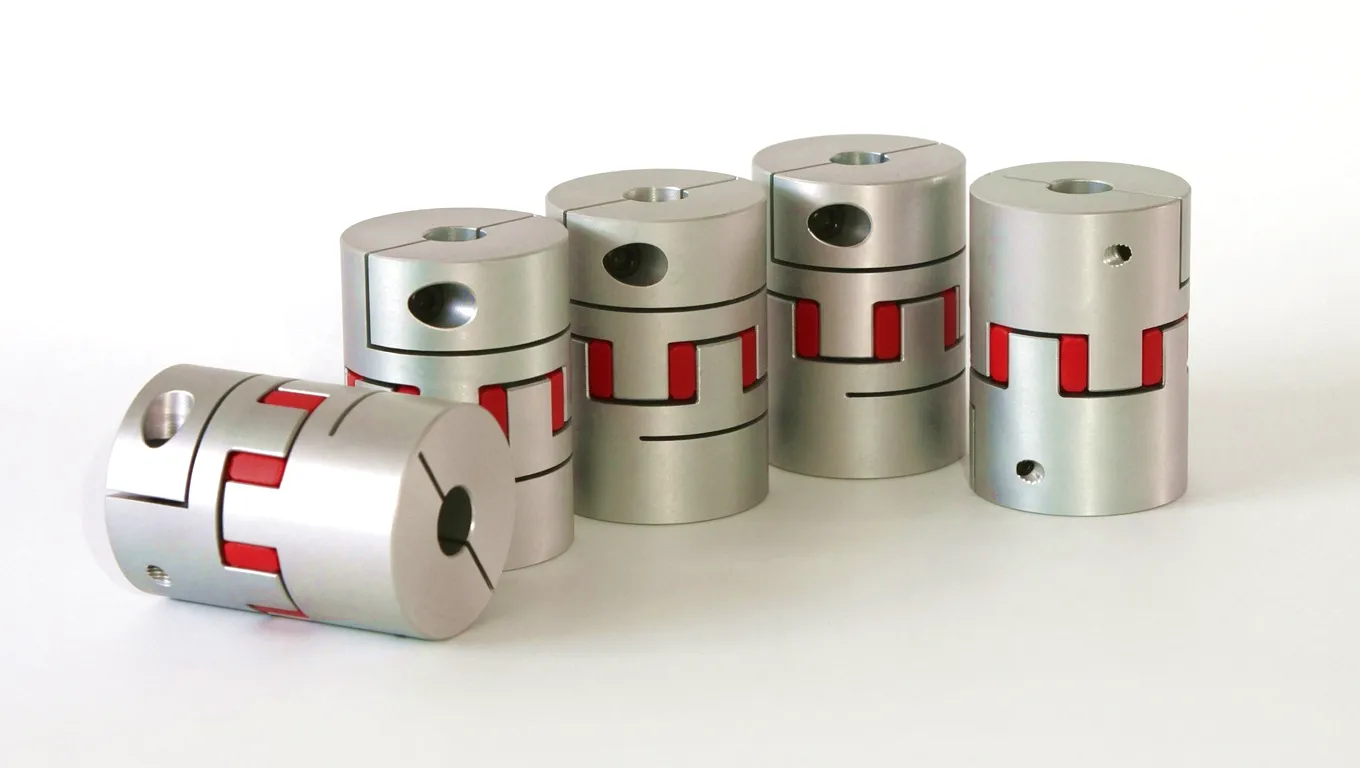
The Flexible Beam Coupling from Ever Power is machined from a single piece of high-grade aluminium alloy or stainless steel, with helical slots that create a flexible beam section transmitting torque while accommodating angular, radial, and axial misalignment without backlash. In portal crane auxiliary drives — such as encoder drives for load cell monitoring or travel limit switch mechanisms — this coupling provides a reliable, maintenance-free connection with electrical isolation properties that protect sensitive instrumentation from motor-induced earth currents. The one-piece construction eliminates joint clearances that cause noise and wear in multi-piece designs, and the coupling is available in bore sizes from 3 mm to 30 mm to suit the full range of small auxiliary shaft diameters encountered in crane control systems.
The Disc Coupling is ever Power’s primary recommendation for portal crane slewing drive and precision luffing drive applications. Metallic disc packs — manufactured from spring steel or high-tensile stainless steel and assembled in alternating planes — transmit torque in pure tension and compression, achieving zero backlash and torsional stiffness that can be precisely characterised and guaranteed as a catalogue specification. Unlike gear couplings, the disc coupling requires no lubrication at any point during its service life, reducing the maintenance burden on crane service teams and eliminating the risk of grease contamination on quayside surfaces that is an environmental and safety concern at UK port operations subject to Environment Agency oversight. Disc couplings from Ever Power are available in single- and double-disc-pack configurations, covering torque ranges from 100 Nm to over 40,000 Nm, with high-speed balance certification to G2.5 or better for motor-side applications.
Ever Power Manufacturing Excellence and Customisation Capabilities
Ever Power has built its reputation in the global industrial coupling market on a manufacturing philosophy that places precision, traceability, and genuine engineering partnership at the centre of every project. Operating from a modern production facility equipped with CNC gear hobbing and grinding centres, multi-axis machining centres, heat treatment lines, and comprehensive dimensional inspection capability — including coordinate measuring machines (CMM) and gear testing equipment calibrated to national standards — Ever Power produces couplings that meet the demanding dimensional and mechanical property requirements of the international crane and heavy-lift sector.
Customisation is a core strength rather than an occasional exception. UK crane OEMs and end users routinely approach Ever Power with application data — motor nameplate torque and speed, gearbox input shaft dimensions, crane duty classification per FEM 1.001, installation envelope constraints, and any specific environmental requirements such as marine atmosphere or food-safe lubricant compliance — and receive a fully engineered coupling proposal within five working days, including material certification, dimensional drawings, and a signed calculation sheet confirming the service factor and coupling selection against the application data. For urgent refurbishment projects where a crane must return to service quickly, Ever Power’s supply chain management ensures accelerated production schedules for standard-range products, with full traceability documentation that satisfies the quality audit requirements of major UK port operators, rail freight companies, and steel producers.
Customer Success Story: Humber Port Crane Upgrade, Hull
A bulk cargo terminal operator based in Hull, on the Humber estuary — one of the UK’s busiest freight gateways handling coal, grain, and aggregate traffic — was running three portal cranes that had been in service for over 18 years. Two of the cranes had experienced unplanned hoist drive coupling failures in the preceding 12 months, each resulting in forced maintenance shutdowns that lasted between 22 and 36 hours and disrupted vessel turnaround schedules. The cranes were originally fitted with a legacy gear coupling design that, while adequate for the original operational specification, had been operating at close to its rated capacity limit after a 2019 decision to increase the maximum lift rating of each crane from 30 tonnes to 38 tonnes to accommodate a new traffic mix including heavier bagged cargo units.
The terminal’s maintenance engineering team engaged Ever Power through a competitive evaluation process involving three coupling manufacturers. Ever Power’s engineering team reviewed the crane duty data — full load cycles per shift, motor start frequency, braking pattern, and the revised maximum lift rating — and identified that the incumbent coupling was operating with an effective service factor of only 1.05 against the FEM M7 duty classification, where a minimum of 1.5 is recommended. Ever Power proposed a redesigned gear coupling with a 25% larger gear module and upgraded 42CrMo4 hub material in place of the original 34CrNiMo6, along with a split-sleeve design that allows inspection and regreasing without shaft displacement.
All three cranes were retrofitted during scheduled maintenance windows over a period of six weeks, without requiring any modification to the motor or gearbox mounting. In the 14 months following the upgrade, the terminal recorded zero unplanned hoist coupling failures across the three cranes. The maintenance engineering manager estimated that the elimination of coupling-related downtime alone had recovered a value equivalent to more than four times the cost of the coupling replacement programme — a figure that excludes the value of improved crane availability and the better customer service that more predictable terminal throughput delivered to the shipping lines using the facility.
What UK Customers Say About Ever Power Couplings
“The gear couplings Ever Power supplied for our hoist drives have transformed how we manage our crane maintenance programme. The split-sleeve design means our team can carry out a full inspection during a routine two-hour maintenance slot, instead of the half-day shutdown the old solid-sleeve design required. Fourteen months without a single unplanned coupling failure speaks for itself.”
“We specified Ever Power disc couplings on the slewing drives of two new portal cranes commissioned at our Teesside facility. The no-lubrication maintenance profile was the primary driver — we operate under a strict environmental compliance regime and eliminating grease points on the drive train reduces our routine COSHH management obligations. Performance has been flawless over the first year of operation, with zero backlash maintained throughout.”
“What sets Ever Power apart is the engineering support behind the product. When we needed a custom bore configuration and a non-standard flange pattern to match our Sheffield-built gearbox, their team produced dimensioned drawings within four days and the finished couplings arrived on time and within tolerance. The material certificates and CMM inspection reports gave our quality team exactly what they needed for the crane documentation file.”
Frequently Asked Questions About Couplings for Portal Cranes in the UK
Share your application data and our engineering team will provide a detailed coupling proposal, selection calculation, and material certification within five working days.