Wind Turbines and the Demand for Precision Mechanical Coupling
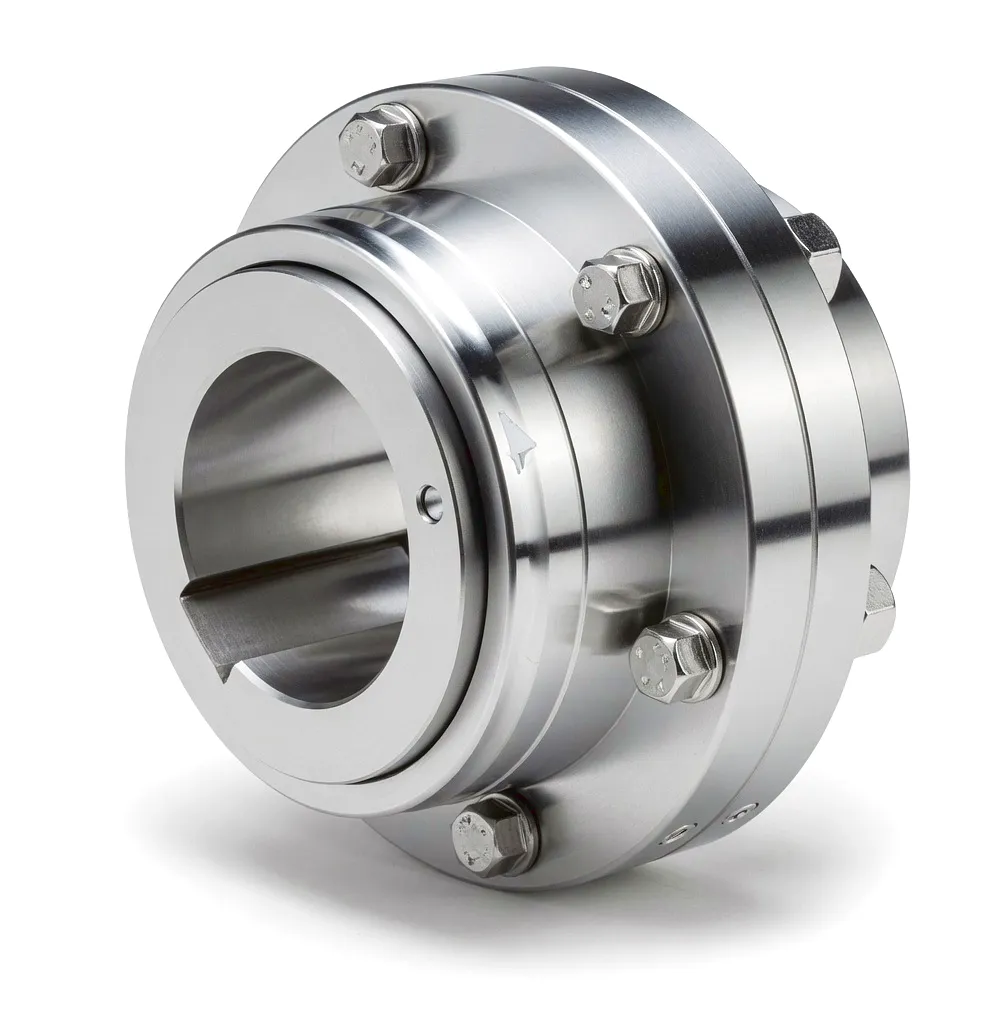 Wind turbines are among the most mechanically demanding environments in modern industry. Each turbine must reliably convert variable aerodynamic forces — fluctuating wind speeds, gusts, directional changes — into smooth, consistent electrical generation. At the heart of this process sits the drivetrain, a sophisticated assembly of shafts, bearings, gearboxes, and generators that must operate continuously, often at heights exceeding 80 metres, in environments where maintenance access is costly and logistically challenging. Across the UK’s expanding onshore and offshore wind sectors, gear type couplings serve as a critical mechanical interface between the gearbox output shaft and the generator shaft, managing angular and parallel misalignment while transmitting torques that can exceed hundreds of kilonewton-metres in large-scale installations.
How Gear Type Couplings Work: The Engineering Principle
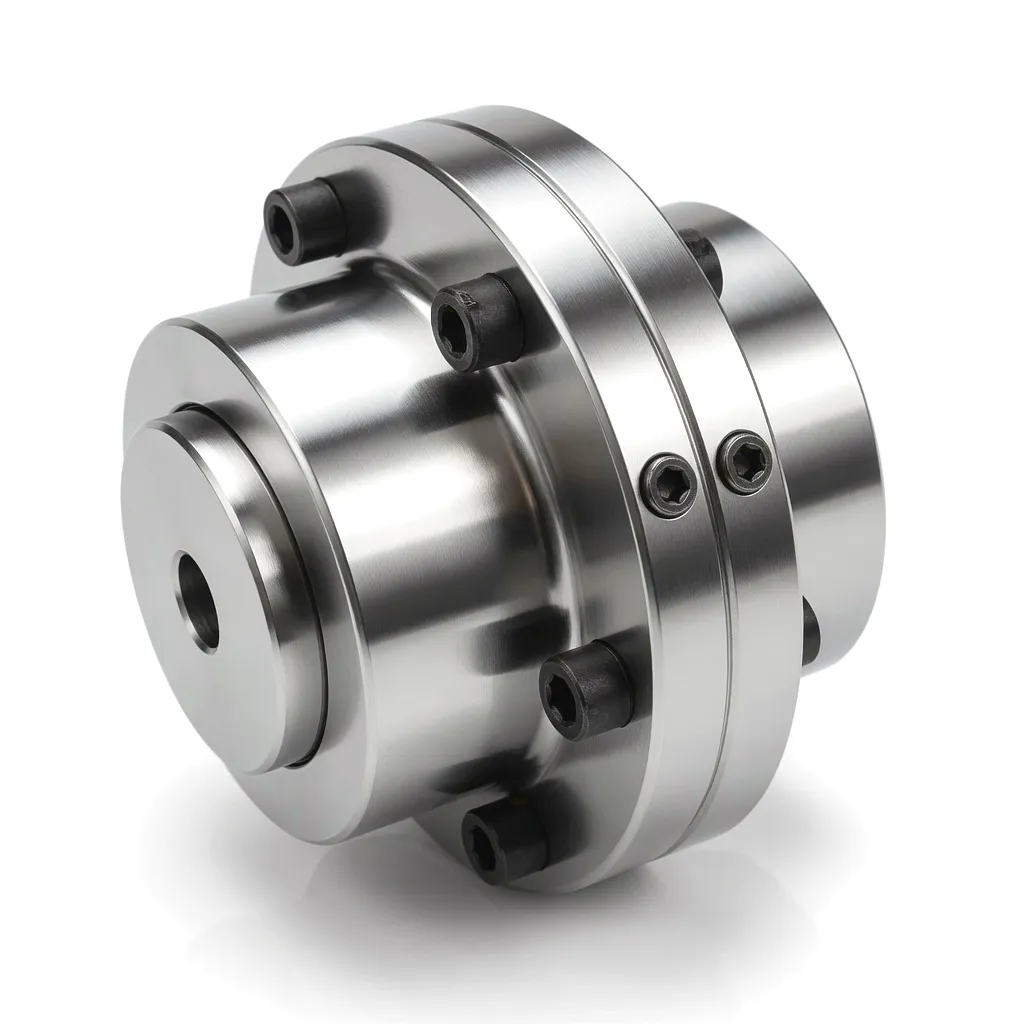
A gear type coupling transmits torque through the meshing engagement of external gear teeth on each hub sleeve with internal gear teeth on the outer sleeve. The crowned tooth profile — where each external tooth is slightly barrel-shaped along its length — is the defining engineering feature that enables angular misalignment compensation. As the two connected shafts deviate from perfect alignment, the crowned teeth rock within the outer sleeve without generating damaging edge loading stresses. This geometry allows the coupling to function under misalignment conditions that would cause rapid failure in rigid or disc-type alternatives.
Lubrication is integral to the gear coupling’s operating mechanism. Grease or oil retained within the sealed outer sleeve continuously films the gear tooth interfaces, reducing friction, dissipating heat, and preventing corrosive wear. In wind turbine service, where the coupling rotates continuously for thousands of hours between inspection intervals, the lubrication system’s integrity is a primary factor in service life. Modern gear type couplings designed for wind energy applications incorporate advanced seal geometries that retain lubricant even during angular displacement cycles, significantly extending relubrication intervals compared to traditional designs.
The half-coupling construction — two identical hub-and-sleeve subassemblies connected by a central floating shaft or directly flanged — allows the coupling to be installed and removed without disturbing the aligned positions of either connected machine. In nacelle environments where access space is constrained and crane availability is limited, this installation characteristic translates directly into reduced downtime and labour cost during scheduled maintenance. The floating shaft variant is particularly valued in wind applications because it provides additional axial float to accommodate thermal growth of the generator shaft during operating temperature changes.
Core Material Science Behind Wind-Grade Gear Couplings
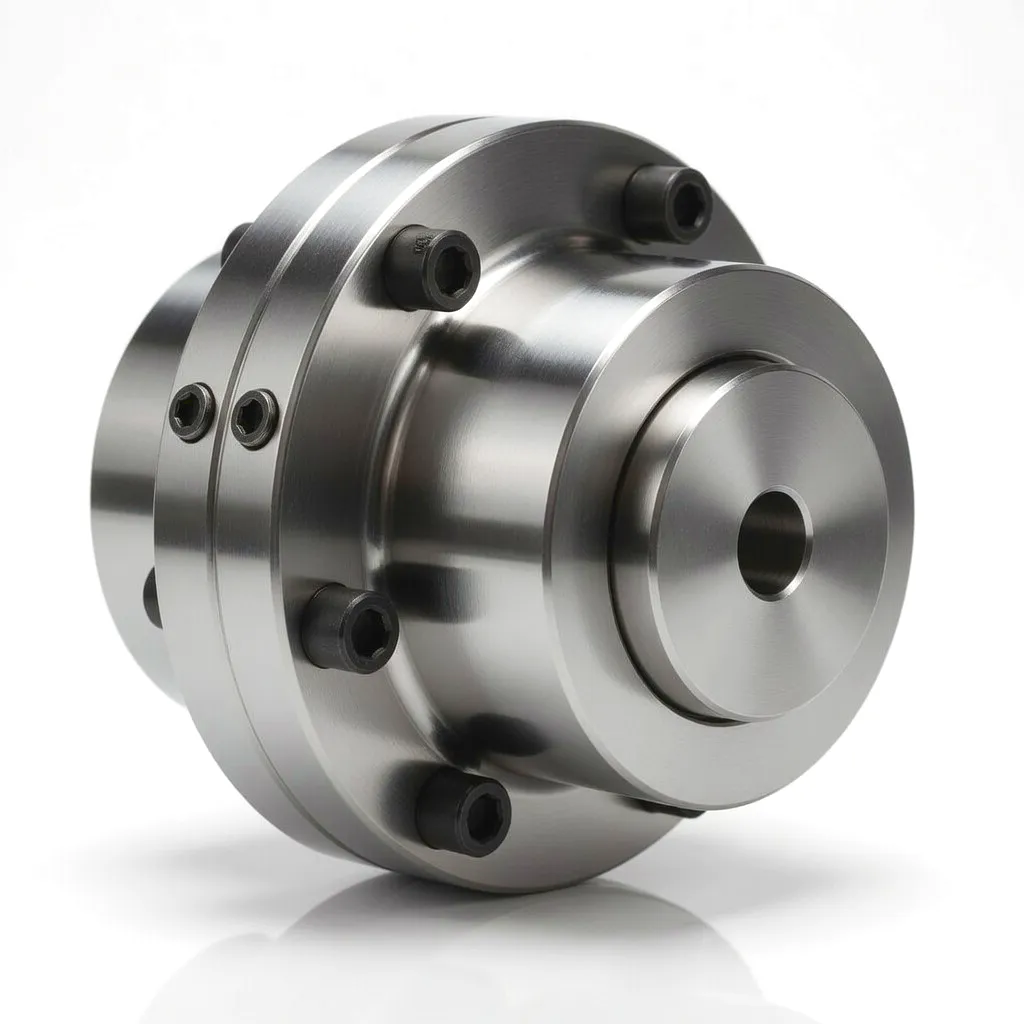
 The material specification of a gear type coupling destined for wind turbine service is one of the most consequential decisions in the component design process. At the hub and sleeve tooth engagement surfaces, the material must deliver surface hardness sufficient to resist pitting and wear over hundreds of thousands of operational hours, while retaining enough core toughness to absorb shock loads from wind gusts without brittle fracture. Carburised and case-hardened alloy steels — typically 20CrMnTi, 18CrNiMo7-6, or equivalent grades — are the established materials of choice for high-performance gear coupling teeth. The case hardening process creates a hard outer surface layer, typically achieving 58–62 HRC, over a substantially tougher core, resulting in a component that can absorb impact energy while resisting abrasive tooth wear.
Product Advantages: Why Wind Engineers Specify Gear Type Couplings
Айналдырудың ерекше тығыздығы
Gear tooth contact across multiple teeth simultaneously delivers a torque-to-size ratio significantly higher than jaw, disc, or diaphragm couplings. This allows smaller, lighter coupling assemblies in nacelle environments where every kilogram of mass at height adds to structural loading and crane lift requirements.
Angular and Parallel Misalignment Tolerance
Crowned gear tooth geometry accommodates angular misalignment typically up to 1.5° per gear mesh (3° total in floating shaft designs) and axial displacement of several millimetres without generating restoring forces that would stress connected shaft bearings. This characteristic is critical in turbines where thermal expansion and nacelle deflection under wind load produce shaft displacements that rigid couplings cannot safely accommodate.
Proven Long Service Life
Well-specified and properly lubricated gear couplings in wind service routinely achieve 50,000 to 100,000 hours of operation before requiring replacement. This multi-decade service horizon aligns with the 20–25 year design life expectations of modern wind turbines, minimising the number of costly high-altitude maintenance interventions over the asset’s operational life.
High Torsional Stiffness with Shock Absorption
The metal-to-metal gear tooth engagement delivers the high torsional stiffness necessary to prevent resonant excitation within the drivetrain’s operational speed range, while the crowned tooth contact geometry allows slight angular accommodation of instantaneous torque spikes from wind gusts or grid fault events, protecting the gearbox and generator from peak overloads.
Compact Axial Profile
The axial length of a gear type coupling is considerably shorter than equivalent flexible disc or diaphragm assemblies. In the constrained nacelle space of modern compact turbine designs, where the distance between gearbox output face and generator input face is minimised to reduce nacelle weight and frontal area, this dimensional advantage is a practical necessity for installation feasibility.
Technical Performance Parameters: Gear Type Coupling Specification Table
| Параметр | Small Wind (250 kW) | Medium Wind (1–2 MW) | Large Wind (3–5 MW) | Offshore Wind (6+ MW) |
|---|---|---|---|---|
| Номиналды айналу моменті (кНм) | 5 – 25 | 80 – 250 | 400 – 900 | 1200 – 3500 |
| Ең жоғары айналу моменті сыйымдылығы | 2.0 × rated | 2.0 × rated | 2.2 × rated | 2.5 × rated |
| Максималды бұрыштық сәйкессіздік | ±1.0° | ±1.5° | ±1.5° | ±2.0° (float shaft) |
| Осьтік қалқымалы (мм) | ±2 | ±4 | ±8 | ±12 |
| Хаб материалы | 20CrMnTi / 42CrMo | 18CrNiMo7-6 | 18CrNiMo7-6 / 17NiCrMo6-4 | Custom alloy, forged |
| Tooth Hardness (HRC) | 56 – 60 | 58 – 62 | 58 – 62 | 60 – 64 |
| Жұмыс температурасының диапазоны | -20°C to +80°C | -25°C to +90°C | -30°C to +100°C | -40°C to +110°C |
| Seal Type | NBR O-ring | FKM lip seal | FKM labyrinth + garter | Custom marine-grade seal |
| Баланс дәрежесі | G6.3 | G2.5 | G2.5 / G1.0 | G1.0 |
| Service Life (hours) | 40,000 – 60,000 | 60,000 – 100,000 | 80,000 – 120,000 | 100,000 – 150,000+ |
Application Scenario: Wind Turbine Drivetrain — The Primary Use Case
 Within a wind turbine drivetrain, the gear type coupling is installed at the high-speed shaft interface — the connection between the gearbox output shaft and the generator input shaft. This is one of the most load-intensive coupling positions in any rotating machinery application, because it sits at the point where the gearbox has already multiplied rotor torque by a factor of 80 to 100, delivering high rotational speed alongside significant residual dynamic loading from wind turbulence. The coupling at this location must not only transmit the full rated mechanical power but must also manage the torsional oscillations that propagate through the drivetrain during grid disturbance events, rapid wind speed changes, and pitch control transients.
North Sea Offshore Arrays
Offshore turbines in UK waters — from the Hornsea and Dogger Bank projects to the East Anglian and Thames Estuary arrays — operate in one of the world’s most hostile mechanical environments. Salt-laden air, humidity, and temperature cycling demand marine-grade corrosion protection on all coupling external surfaces. Gear type couplings for offshore service typically receive hot-dip galvanising, epoxy primer and topcoat, or stainless steel sleeve construction to achieve the corrosion protection levels required for 5–10 year subsea and nacelle maintenance intervals. Aberdeen-based offshore wind logistics companies regularly schedule coupling inspection and relubrication as part of coordinated vessel-based maintenance campaigns that minimise the number of individual turbine visits.
Gearbox-Generator Interface
The gearbox-to-generator interface coupling must accommodate not only the mechanical misalignment and axial growth described above, but also the torsional natural frequency characteristics of the complete drivetrain. Incorrect coupling stiffness specification at this location can result in resonant excitation of the drivetrain at or near the operational speed range, producing vibration signatures that damage gearbox bearings, generator windings, and instrumentation. Ever Power’s engineering team routinely performs torsional analysis in conjunction with gear coupling sizing to ensure the selected coupling stiffness does not create resonance issues within the customer’s drivetrain design.
Pitch and Yaw Drive Systems
Beyond the main drivetrain, gear type couplings find application within the turbine’s pitch and yaw drive systems. The pitch motors that rotate each rotor blade to control power output and loads use compact gear couplings between the motor output shaft and the pitch gearbox input. These applications involve frequent start-stop cycling and directional reversals, requiring couplings with excellent torsional reversibility and low backlash. Similarly, yaw drives — which rotate the nacelle to track wind direction — use gear couplings in their pinion drive assemblies where precision positional control and long service life under intermittent duty must coexist.


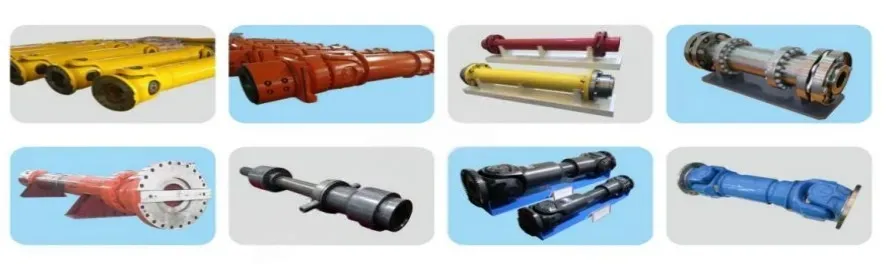
Extended Application Scenarios Across UK Wind Infrastructure
⚡ Grid Connection Sub-Stations
Large wind farm collection substations employ transformer-motor pump sets where gear type couplings connect motor shafts to cooling oil pump gearboxes. These applications demand reliable coupling performance in environments with high ambient electrical noise and the continuous duty cycles characteristic of 24/7 substation operations. Birmingham-based electrical contractors working on grid infrastructure projects throughout the Midlands regularly specify gear couplings for these transformer cooling applications, where coupling replacement access is constrained by substation layout and maintenance outage windows are measured in hours rather than days.
🔧 Hydraulic Brake System Drives
Wind turbine hydraulic brake systems use motor-pump sets where gear type couplings transmit power from the hydraulic unit motor to the pump. The coupling here must provide electrical isolation between motor and pump in some designs to prevent galvanic corrosion in offshore environments. Gear couplings with non-conductive spacer configurations or insulated flange connections serve this dual mechanical and electrical function. Sheffield’s precision engineering suppliers have developed considerable expertise supplying such specialist coupling configurations to the UK wind service sector, where the combination of technical requirement diversity and relatively small production volumes suits their flexible manufacturing capabilities.
🌊 Tidal and Wave Energy Devices
Scotland’s emerging tidal stream and wave energy sector — with projects active in the Pentland Firth, Orkney’s European Marine Energy Centre, and the Sound of Islay — requires couplings that can operate in full-submersion marine conditions or in humidity-saturated nacelles. While tidal devices operate at much lower rotational speeds than wind turbines, the torques involved can be extremely high per unit of shaft diameter. Gear type couplings, with their inherent high torque density and adaptability to corrosion-protection surface treatments, are being actively specified in several tidal turbine drivetrain designs being developed and tested at Scottish proving grounds.
Manufacturing Excellence
Ever Power: Precision Gear Coupling Manufacturing for Wind Energy
🏭
Advanced CNC Gear Grinding
Ever Power operates dedicated gear grinding centres equipped with modern Klingelnberg and Reishauer machines capable of producing crowned tooth profiles to ISO quality grade 5 and above. The grinding process ensures that each gear mesh operates with the precise tooth geometry required for full misalignment accommodation, eliminating stress concentrations that would otherwise reduce fatigue life under wind turbine service loads.
🔬
Full Customisation Capability
Wind energy applications rarely fit standard catalogue dimensions. Ever Power’s engineering team accepts customer-supplied drawings, existing OEM part numbers, or functional specifications — shaft diameters, rated torques, space envelopes, and environmental requirements — and develops custom gear coupling designs that match the exact application demands. From prototype through volume production, the manufacturing process is fully documented and supported by dimensional and performance test reports for every batch.
📦
Reliable UK Supply Chain
Ever Power maintains established logistics partnerships with specialist freight forwarders operating direct services between manufacturing facilities and major UK ports including Felixstowe, Southampton, and Hull. Standard coupling configurations are typically available for dispatch within 15–25 working days, with express manufacturing programmes available for urgent replacement requirements. All shipments are accompanied by complete material certificates, test reports, and compliance documentation in the formats required by UK-based procurement teams.
✅
Quality & Compliance
All gear type couplings from Ever Power are manufactured under ISO 9001 quality management systems with full traceability from raw material receipt through finished product shipment. Non-destructive testing — including magnetic particle inspection of hubs and ultrasonic examination of critical cross-sections — is performed on large or safety-critical components as standard. Dynamic balancing to ISO 1940 G2.5 or better is available for all high-speed wind turbine coupling assemblies.
Featured Ever Power Products
Beyond gear type couplings, Ever Power manufactures a comprehensive range of power transmission components serving wind energy and broader industrial markets throughout the UK. The following two products represent our most specified solutions in UK agricultural and industrial drivetrain applications — where the same engineering values of precision, reliability, and customisation that define our coupling range apply throughout every product line.
PTO Drive System
HC-RC31 PTO Gearbox
The HC-RC31 is a robust, high-efficiency PTO gearbox designed for demanding agricultural and industrial applications. Engineered with the same precision manufacturing standards as our coupling range, it delivers reliable power transmission across a broad torque range, with customisation options for specific shaft configurations and gear ratios suited to UK agricultural machinery specifications.
PTO Drive System
HC-RC30-193 PTO Gearbox
The HC-RC30-193 provides exceptional performance in high-load PTO applications where compact dimensions and elevated torque transmission are simultaneously required. Its precision-machined housing and gear train deliver smooth, efficient power transfer with minimal heat generation, making it suitable for continuous operation environments such as mowing, mixing, and harvesting equipment used extensively across UK farmland.
Тұтынушының табыс тарихы
Newcastle Upon Tyne Offshore Wind Operator: Reducing Unscheduled Downtime by 62%
 A Newcastle-based offshore wind operations company managing a 48-turbine array in the North Sea approached Ever Power in 2023 facing a significant maintenance reliability challenge. Their existing coupling supplier — a European manufacturer — had been unable to maintain lead times below 16 weeks for the specific coupling size required at their high-speed shaft interface, and five turbines had experienced extended downtime periods of 3 to 7 weeks awaiting replacement couplings after seal failures triggered premature lubricant loss and subsequent gear tooth wear.
The company’s procurement director and lead mechanical engineer visited Ever Power’s manufacturing facility for a technical audit, reviewing manufacturing processes, quality control procedures, and the engineering team’s capability to support dimensional customisation. The requirement was specific: the replacement coupling had to maintain exact bolt circle, bore, and flange face dimensions for drop-in compatibility with the existing nacelle arrangement, while incorporating an upgraded FKM labyrinth seal design to replace the original lip seal that had demonstrated premature wear in the high-humidity offshore environment.
Ever Power’s engineering team produced a custom design proposal within 10 working days of the technical audit, incorporating the dimensional requirements alongside the improved seal arrangement. The initial batch of 12 coupling assemblies — covering one spare per turbine cluster — was delivered to the customer’s Aberdeen logistics hub within 22 working days of purchase order confirmation. Installation was completed across the five affected turbines during a coordinated vessel-based maintenance campaign, with two further turbines upgraded preventively during the same mobilisation.
Twelve months post-installation, none of the five previously affected turbines had experienced further coupling-related downtime. The customer has since placed standing orders for Ever Power gear type couplings as the standard replacement specification across the entire 48-turbine array, estimating that the improved seal longevity and Ever Power’s supply chain responsiveness have reduced coupling-related unscheduled downtime by approximately 62% compared to the baseline year, representing a significant improvement in annual energy production and maintenance cost efficiency.
What Our UK Customers Say
★★★★★
“The custom seal upgrade Ever Power designed for our offshore couplings has been transformative. We went from expecting annual seal inspections to genuine confidence that these couplings will run through our entire five-year maintenance cycle without attention. The dimensional accuracy was exact — every coupling fitted on first attempt with no shimming or rework.”
— James Alderton, Senior Mechanical Engineer
Offshore Wind Operator, Newcastle Upon Tyne
★★★★★
“Supply chain reliability is everything when you’re managing 48 turbines 40 kilometres offshore. Ever Power consistently delivers within their quoted lead times and always ships with complete material and test documentation. Our Glasgow-based procurement team finds their commercial terms and technical support substantially better than what we received from European alternatives at similar price points.”
— Sandra MacPherson, Procurement Director
Renewable Energy Asset Management, Glasgow
★★★★★
“We’ve been specifying Ever Power gear type couplings in our onshore turbine drivetrain refurbishment work across Yorkshire and Lancashire for three years. The fatigue test data they provide with custom orders gives our engineering sign-off team the confidence to approve non-OEM components for safety-critical positions, which not every supplier can demonstrate. Excellent product, excellent technical support.”
— Dr. Robert Fielding, Principal Engineer
Wind Turbine Refurbishment Specialist, Leeds
Жиі қойылатын сұрақтар
Common Questions from UK Wind Energy Procurement and Engineering Teams
Ready to Specify?
Get Expert Gear Coupling Guidance for Your Wind Project
Whether you need an exact OEM replacement or a custom-engineered coupling designed around your specific turbine’s performance envelope, Ever Power’s engineering team is ready to support your project from specification through delivery.
gzl арқылы өңдеу