How Couplings Function Within Portal Crane Drive Systems
Torque Transmission Path
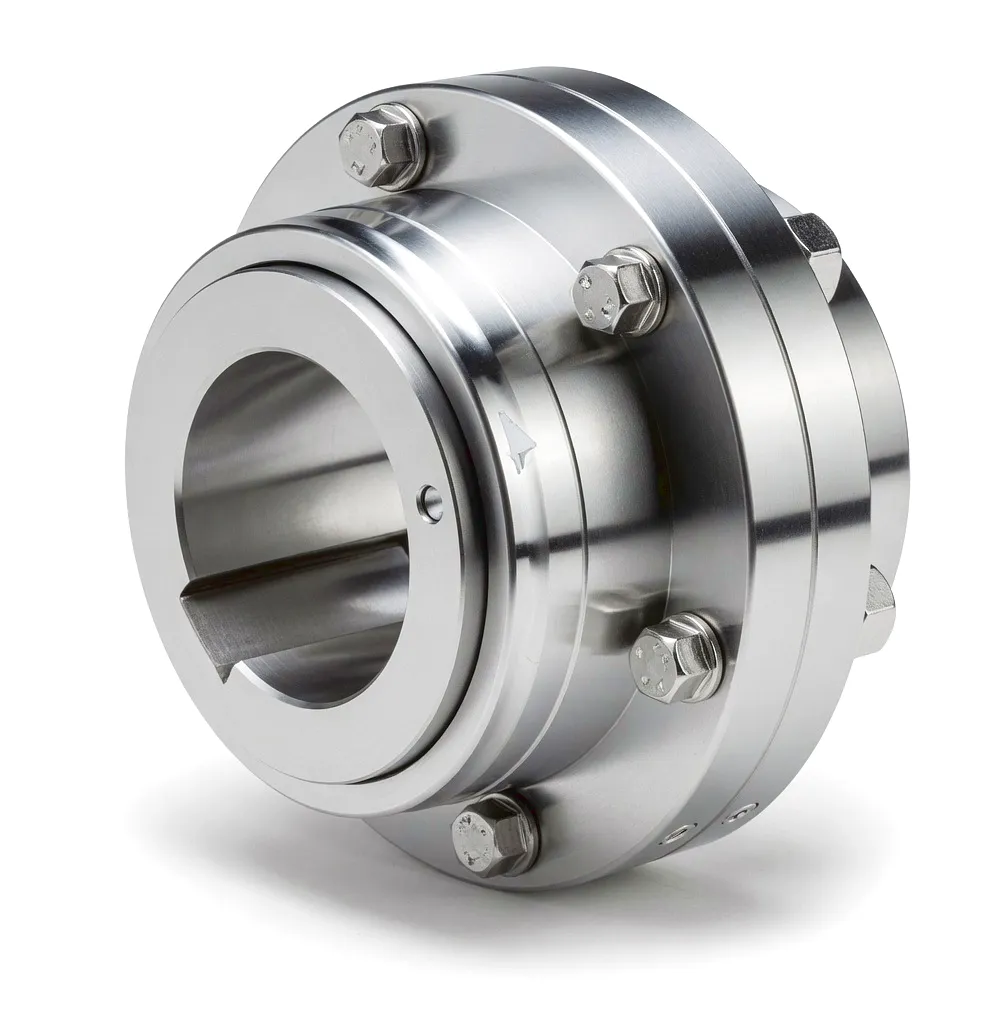
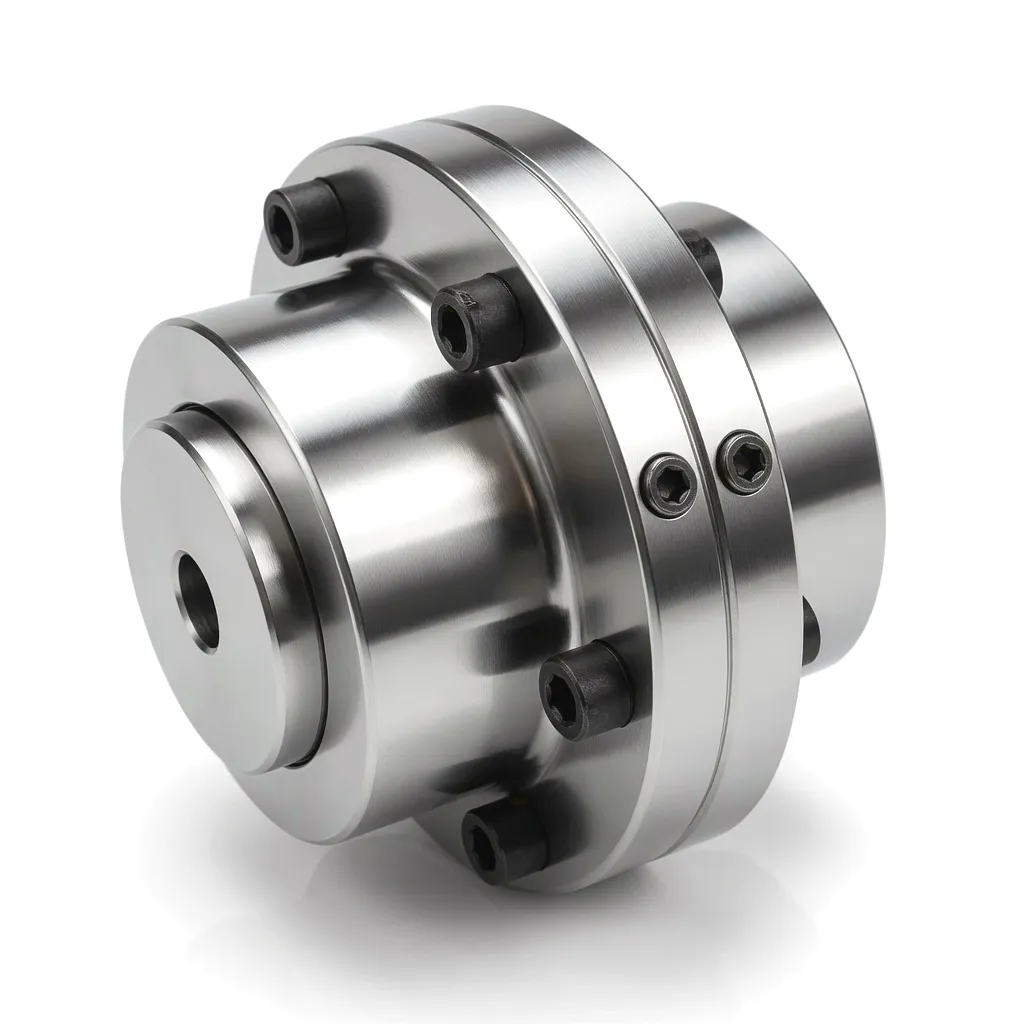
In a portal crane hoist mechanism, the electrical motor generates rotational force which passes through a high-speed flexible coupling into the primary reduction gearbox. Within this coupling, metallic or elastomeric elements absorb torsional shock by deforming elastically. The coupling transmits mean torque while simultaneously permitting small degrees of angular misalignment (typically 0.5 to 2.0 degrees) and parallel offset between motor and gearbox shafts — a critical allowance given the thermal expansion and structural deflection inherent in large crane frames under live load. Without this controlled compliance, shaft bearing loads escalate rapidly, accelerating wear across the entire drive train and creating destructive bending moments at gearbox input flanges.
Dynamic Load Absorption
Portal crane operations are characterised by repeated start-stop cycles, jog inching operations during precision placement, and the sharp shock pulses that occur when a swinging suspended load suddenly comes under control. These dynamic events generate instantaneous torque spikes that may reach three to five times the nominal rated torque of the drive motor. Gear-type couplings and disc couplings used in these environments are designed with specific dynamic safety factors that allow them to absorb and distribute these spikes without plastic deformation of load-carrying elements. The torsional flexibility of the coupling effectively acts as a mechanical filter, preventing destructive shock energy from travelling directly into gearbox teeth or motor shaft bearings, which would otherwise suffer accelerated fatigue crack propagation under cyclic overloading.
Electrical Isolation Function
Many portal crane installations specify couplings with integral electrical insulation, typically achieved through non-conductive intermediate discs or elastomeric elements positioned between the driving and driven coupling halves. This insulating function prevents stray electrical currents — generated by variable-frequency drive controllers or arising from grounding potential differences in large metallic structures — from passing through bearing races and causing electrochemical pitting damage. In UK port environments, where electrical bonding and earthing standards are strictly enforced under the BS 7671 wiring regulations, the addition of an insulating coupling can satisfy specific circuit isolation requirements whilst simultaneously delivering the mechanical coupling function, providing a dual-purpose engineering solution that simplifies the overall drive system design.
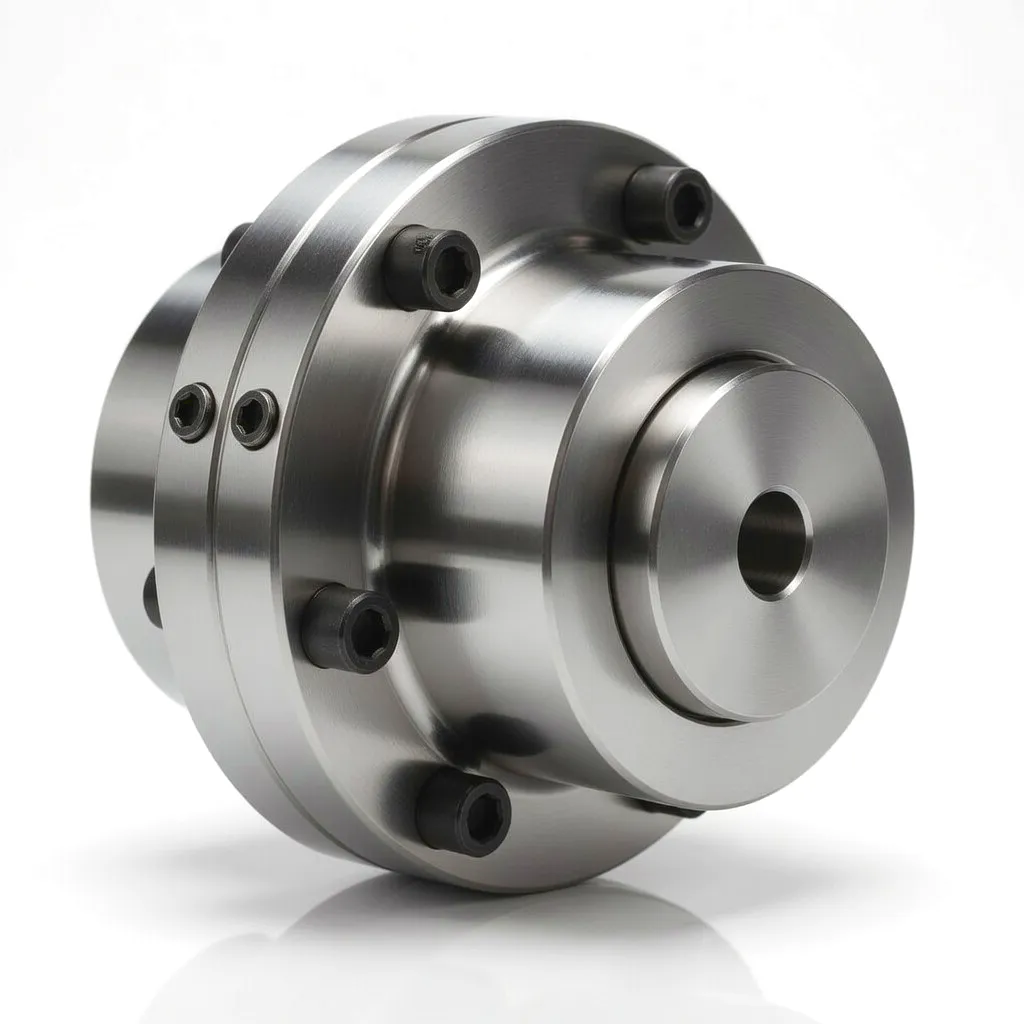 The material specification of a coupling used in portal crane service is not a straightforward catalogue selection — it is an engineering judgement that balances tensile strength, fatigue endurance limit, corrosion resistance, machinability, and cost. Hub bodies subjected to direct shaft interference fits and keyway bending must maintain dimensional stability under thermal cycling without stress relaxation. This requirement makes low-alloy engineering steels the dominant choice for hub manufacture: grades such as EN24 (817M40) and EN19 (709M40) deliver the necessary combination of high yield strength, good toughness at low temperatures encountered in outdoor UK dockyard environments, and excellent machinability to tight tolerances. For particularly demanding applications where weight reduction is critical — such as slewing ring drive couplings on compact portal cranes operating in restricted-headroom rail-mounted configurations — aerospace-grade aluminium alloy hubs are specified, providing approximately 65 percent weight saving compared to steel whilst still meeting torque transmission requirements.
Core Performance Advantages of Industrial Couplings in Crane Service
High Torsional Overload Capacity
Gear-type and disc couplings rated for portal crane service are designed with service factors of 1.5 to 2.5 applied over nominal motor torque, providing reliable protection against the torque multiplication effects caused by inertia loading during emergency stops and sudden brake engagement. This overload margin ensures mechanical integrity is maintained even during the statistically rare but extremely high-energy events that characterise heavy cargo handling operations at UK ports.
Compact Power Density
Precision-machined coupling designs transmit very high torque levels within minimal axial and radial envelope dimensions, an essential consideration on portal cranes where drive train space within the machinery house is constrained by structural steel members and adjacent crane mechanisms. A properly specified coupling with high power density can replace a longer coupling of inferior design without requiring machinery house extension or modification of existing steelwork, directly reducing retrofit installation costs.
Maintenance-Reduced Design
Disc-type and diaphragm couplings used on intermediate drive shafts operate without lubrication requirements, contrasting with traditional gear couplings that demand periodic grease replenishment. In offshore or coastal UK port environments where access to the crane machinery house is restricted and maintenance windows are short, zero-lubrication couplings significantly reduce scheduled maintenance burden and eliminate the risk of lubricant contamination or washout under salt spray conditions, directly lowering the total cost of ownership over the coupling service life.
Precision Alignment Compensation
Portal crane machinery houses are fabricated steel structures that experience significant thermal expansion, live load deflection, and in maritime environments, hull or quayside movement under vessel berthing forces. These structural movements continuously alter the relative position of motor and gearbox shaft centre lines. Couplings specified with adequate misalignment tolerance — angular values of 1.0 to 2.0 degrees and parallel offset of 0.3 to 1.5 mm depending on type — accommodate these inevitable structural movements without generating harmful restoring forces that would otherwise load bearings beyond their rated capacity and induce premature fatigue failures.
Long Fatigue Life
Couplings designed for crane applications are fatigue-rated against a defined number of start-stop cycles, a critical specification parameter given that a busy container terminal crane may execute upward of 50,000 hoisting cycles annually. Disc couplings in particular exhibit extremely flat fatigue curves, meaning that their rated torque capacity diminishes minimally across the full design cycle life, enabling procurement engineers to confidently specify standard rated units without applying excessive additional service factors for cycle-life uncertainty, delivering reliable performance across a typical ten-to-fifteen-year overhaul interval.
Corrosion Resistance
Portal cranes at coastal UK facilities such as those in Hull, Grimsby, and Bristol operate in aggressive marine atmospheric conditions characterised by salt-laden air, humidity cycling, and occasional spray exposure. Couplings in these environments require protective surface treatments — hot-dip galvanising, thermal spray zinc coating, or high-build epoxy primer with topcoat — applied to non-running surfaces, whilst running surfaces of gear teeth or disc bores are protected with appropriate grease or passivation. Stainless steel disc elements offer inherent corrosion immunity without surface treatment, making them particularly appropriate for coupling positions in exposed or difficult-to-inspect locations within the crane structure.
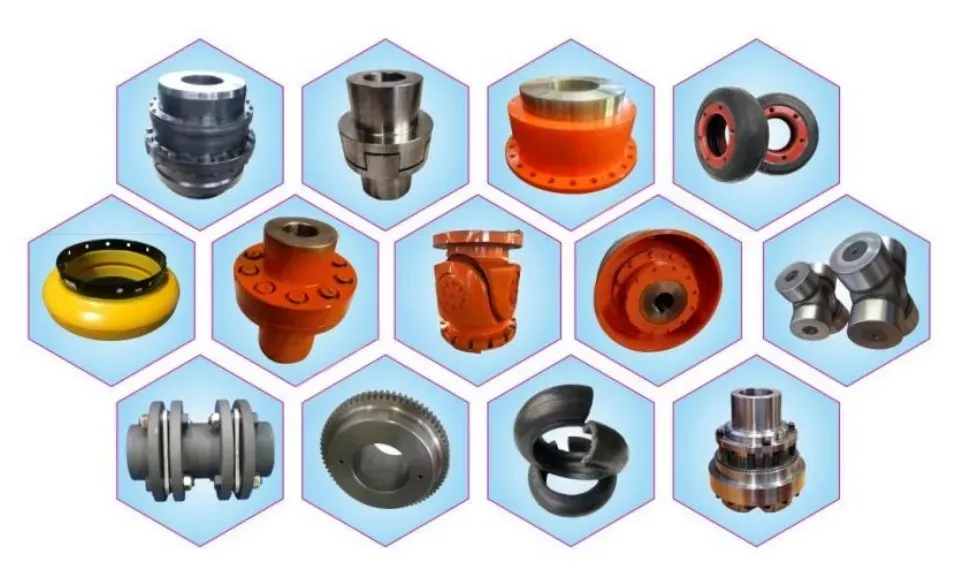
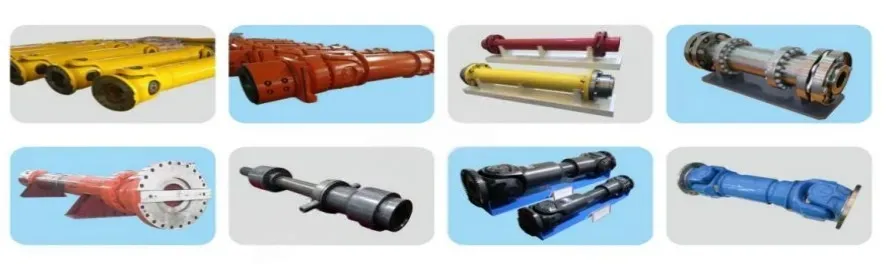
Product Technical and Performance Parameter Table — Portal Crane Couplings
The table below provides representative technical specifications for coupling types commonly applied in portal crane hoist, slewing, and luffing drive systems. Specific project values will vary based on exact drive configuration, rated lift capacity, and ambient operating conditions. Ever Power engineers can review your exact drive data and propose optimised coupling selections matched to your crane’s operational profile.
| 매개변수 | Gear-Type Coupling | 디스크 커플링 | 유연 빔 커플링 | Application Position |
|---|---|---|---|---|
| 공칭 토크 범위 | 500 to 200,000 N·m | 50 to 50,000 N·m | 0.5 to 800 N·m | Low-speed drum drive / High-speed motor shaft / Encoder feedback |
| Peak Torque (shock factor) | 3.0 x Tn max | 4.0 x Tn max | 2.0 x Tn max | Emergency stop / Brake engagement |
| 각도 불일치 | up to 1.5 degrees | up to 1.0 degree | up to 5.0 degrees | — |
| 평행 오프셋 공차 | 0.2 to 1.0 mm | 0.1 to 0.5 mm | 0.2 to 2.0 mm | — |
| 최대 작동 속도 | 1,500 rpm (standard); up to 3,600 rpm | up to 10,000 rpm | up to 15,000 rpm | Motor coupling / Intermediate shaft |
| 허브 소재 | EN24 / 42CrMo4 steel | EN19 steel / Al alloy 7075 | Al alloy 6061 / 7075 | — |
| 유연한 요소 재료 | 20CrMnTi carburised gear teeth | 316 / 17-4PH stainless steel discs | Spring steel / Al alloy beam | — |
| Operating Temp. Range | -25 degrees C to +80 degrees C | -50 degrees C to +120 degrees C | -30 degrees C to +100 degrees C | — |
| Lubrication Requirement | Grease (2-year interval) | Maintenance-free | Maintenance-free | — |
| 내경 범위 | 20 to 320 mm | 10 to 180 mm | 4 to 50 mm | — |
| 설계 표준 | ISO 14691 / DIN 740 | API 671 / ISO 10441 | DIN 740 Part 2 | — |
Application Scenario: Portal Crane Drive Systems — Detailed Engineering Analysis
Portal cranes encompass multiple distinct drive mechanisms, each presenting unique coupling engineering requirements. The following sections analyse the four principal drive positions in detail.
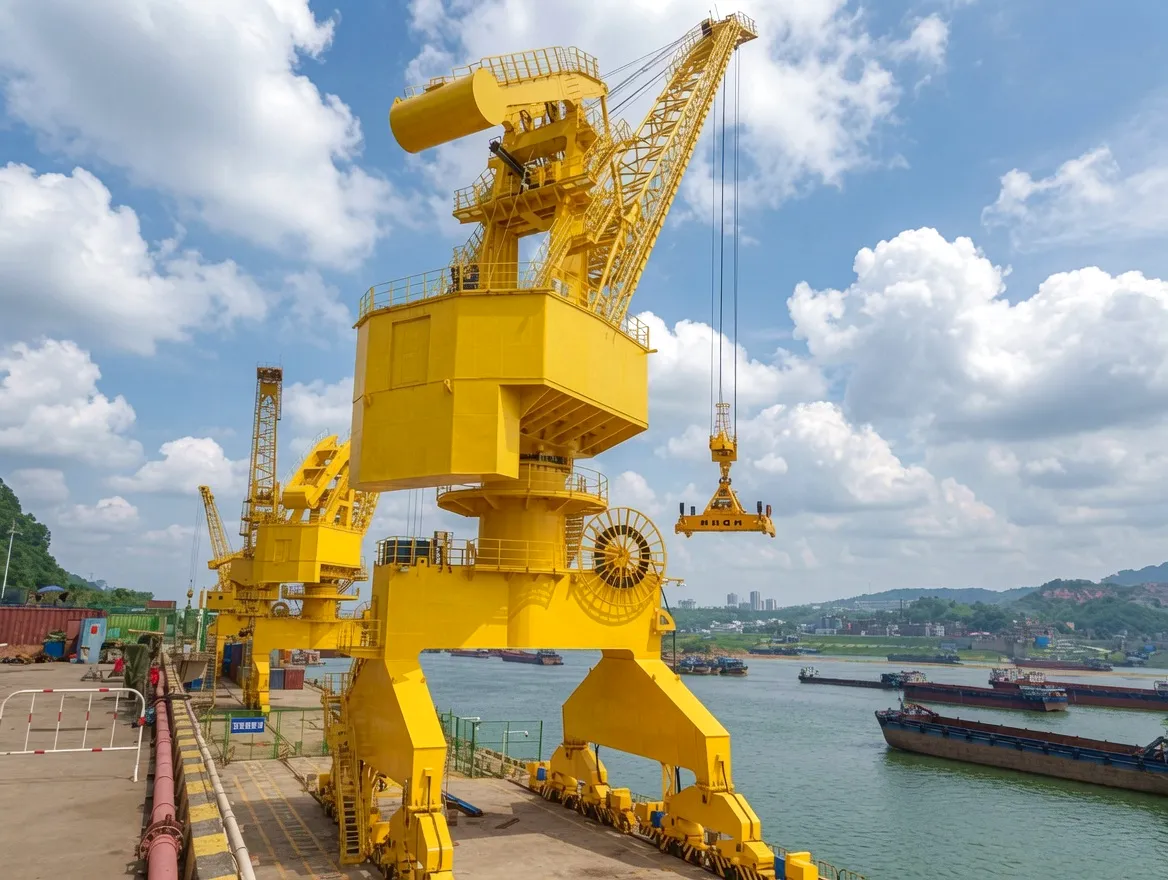 The hoisting mechanism constitutes the most mechanically demanding coupling position on a portal crane. At large UK cargo handling facilities — including the container terminals operated in Tilbury and Felixstowe — portal cranes hoist loads ranging from 25 to 160 tonnes, requiring correspondingly massive torque outputs at the hoisting drum. The coupling connecting gearbox final output to the drum shaft must absorb not only the full steady-state hoisting torque but also the dramatic torque spikes generated during motor starting against a suspended load, brake release under tension, and emergency full-load lowering under regenerative drive control. Gear-type couplings are overwhelmingly preferred for this position due to their exceptional torque density, proven reliability in shock-load environments, and their ability to accommodate the significant parallel misalignment that develops between gearbox output shaft and drum shaft as the crane structure deflects under rated hoist load. Standard gear coupling designs for this position typically incorporate split outer sleeves to permit coupling removal without requiring axial displacement of the drum assembly, a critical design feature that dramatically reduces maintenance time during scheduled overhauls at busy port facilities where crane downtime is directly linked to terminal throughput capacity and revenue.
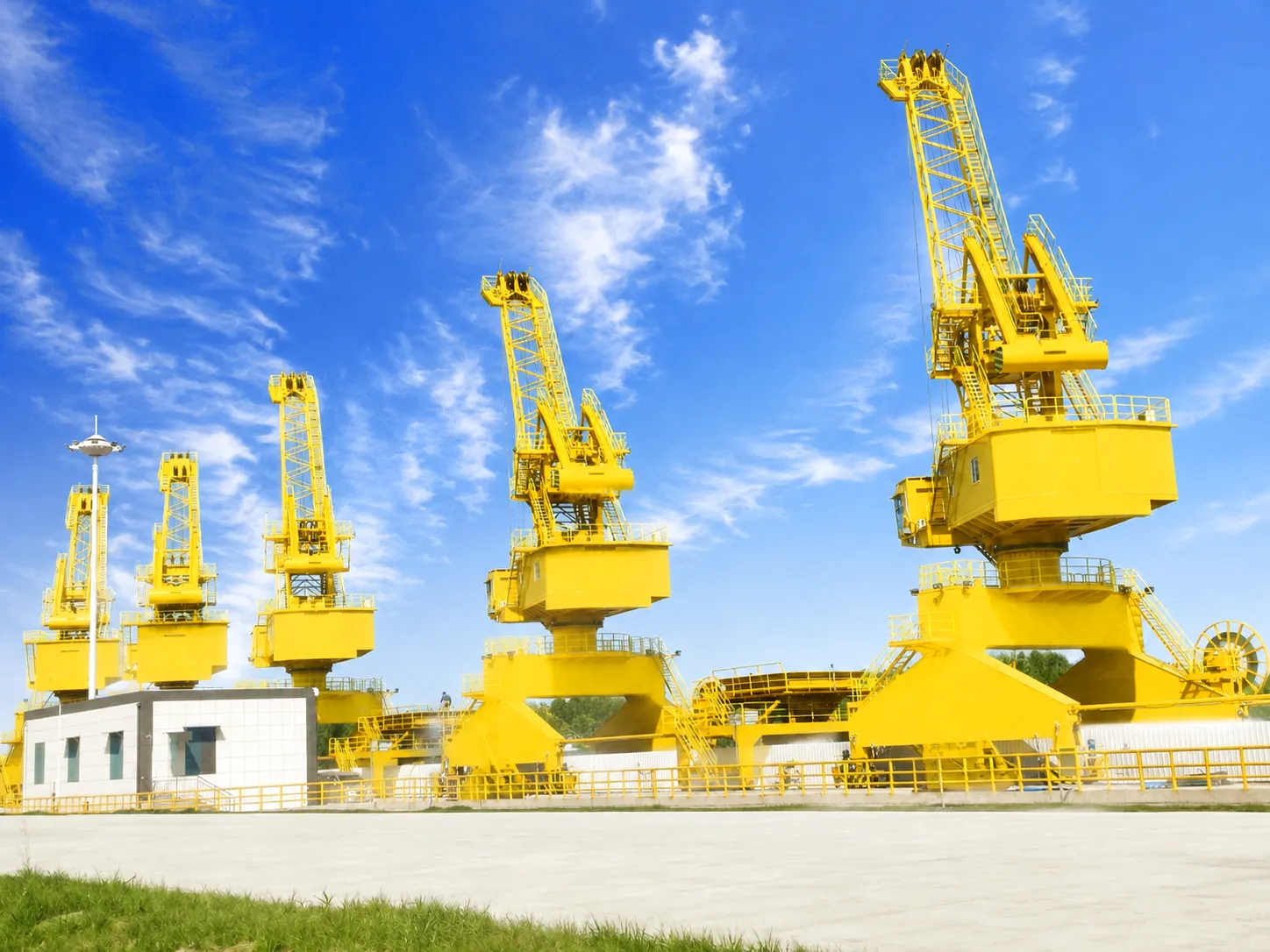 Portal cranes rotate their entire upper structure — boom, jib counterweight, operator cab, and suspended load — through a slewing ring drive that imposes uniquely challenging dynamics on the motor-gearbox coupling. Unlike hoisting, where load direction is essentially vertical, slewing operations involve constantly changing load vectors as the suspended load swings away from the rotation axis under centrifugal effects and wind loading, creating oscillating torque reversals at the slewing drive coupling. At inland freight facilities in Birmingham and Coventry, where portal cranes are deployed in steel stockholding and heavy fabrication yards, slewing operations are frequent and rapid, with operators typically completing full 180-degree rotations between load pickup and deposit positions dozens of times per hour. Disc couplings are frequently selected for the motor-to-gearbox position in slewing drives because their torsionally stiff yet angularly flexible characteristics deliver excellent dynamic response without the lag associated with elastomeric coupling types, enabling precise positioning of suspended loads. The disc coupling’s zero-backlash characteristic is particularly valuable in facilities using load cycle automation or proximity sensor-triggered positioning systems, where positioning repeatability within tight tolerances determines the efficiency of the entire handling cycle.
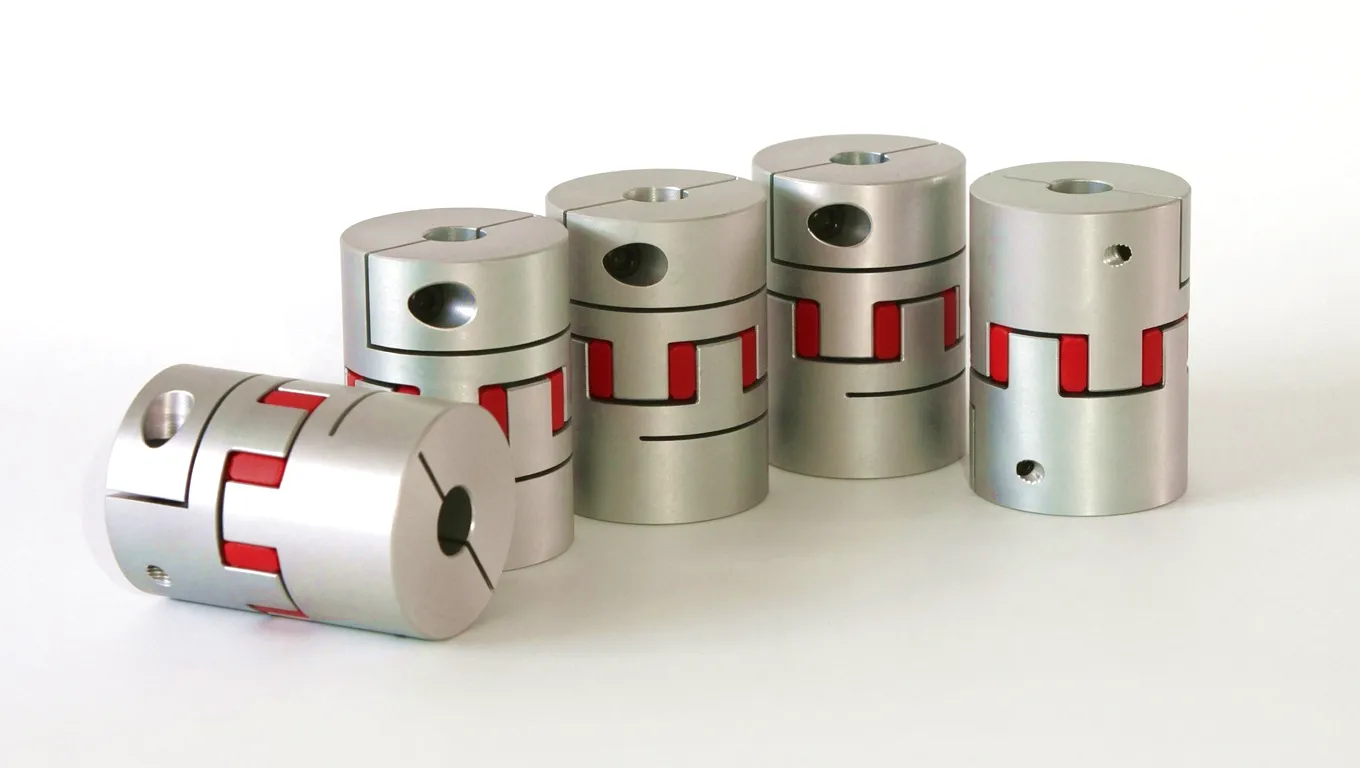
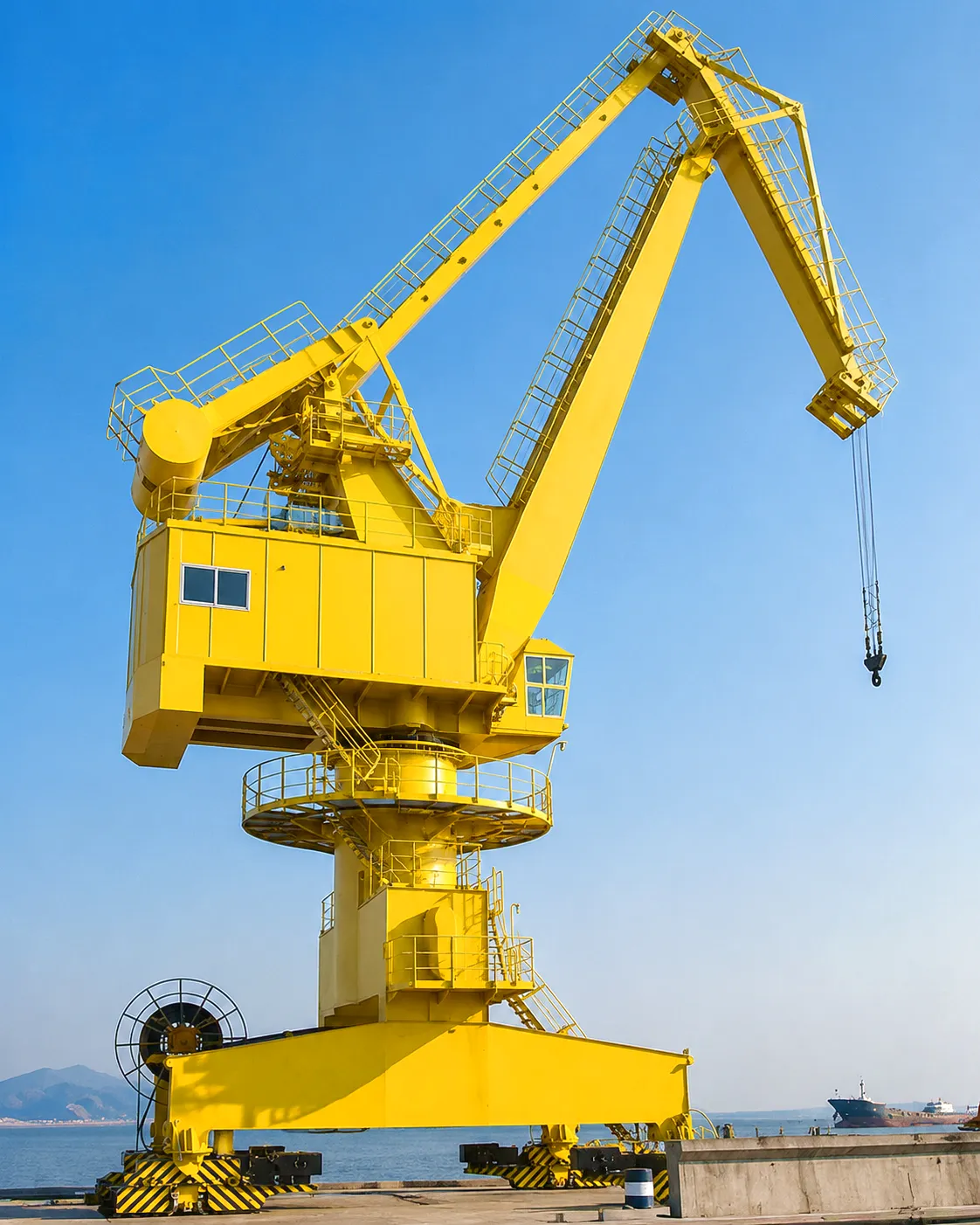 Luffing — the controlled elevation or depression of the crane boom to vary the horizontal radius at which loads are handled — involves a winch-type drive mechanism that experiences very different loading characteristics compared to the hoisting drum. The luffing rope tension varies substantially as the boom angle changes, and in cranes with luffing compensation designed to maintain constant hook height during radius changes, the luffing drive motor must precisely coordinate with the hoisting drive, creating a complex coupled dynamic loading scenario at both drive coupling positions. In Scottish port facilities handling bulk timber and aggregate from short-sea coastal shipping — including operations on the Clyde and Forth estuaries — luffing cranes regularly vary their working radius over the full operational range within individual lift cycles to optimise vessel stow efficiency. The coupling connecting the luffing winch motor to its reduction gearbox must therefore accommodate frequent direction reversals and associated torque transients whilst maintaining absolute reliability in environmental conditions that regularly include temperatures below 0 degrees Celsius, driving rain, and salt spray. Gear-type couplings with galvanised outer sleeves and lithium-complex grease filling are the standard specification for these exposed coastal applications, providing the necessary environmental protection alongside the high torque capacity and shock absorption characteristics that luffing drive service demands.
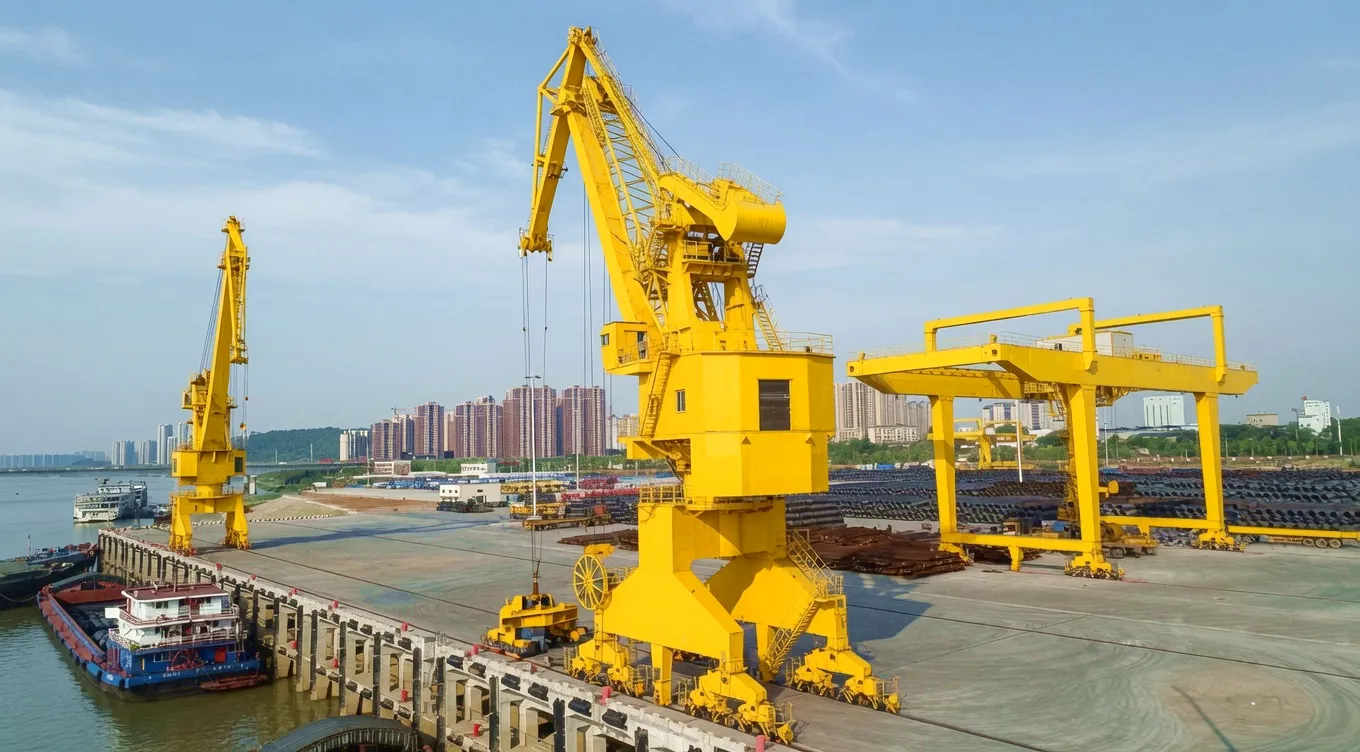 Rail-mounted portal cranes travel along the quayside or yard on rail tracks, repositioning the entire crane structure to align with different vessel holds or cargo storage areas. The travel drive system — typically comprising multiple independently-driven wheel bogies — uses compact inline-shaft gearboxes with integral couplings connecting wheel axles to gearbox outputs. These travel drive couplings operate in particularly hostile conditions: they are located close to the ground, exposed to rainwater pooling, track debris, and occasional impact from falling cargo or handling equipment. The coupling used at each travel wheel axle connection must accommodate the angular misalignment arising from rail joint height variations and track curvature whilst transmitting the traction torque required to move a crane structure weighing several hundred tonnes. Flexible beam couplings serve encoder feedback shafts within the travel drive control system, providing accurate velocity feedback to variable-frequency drive controllers. At multi-crane facilities like those operated at DP World’s London Gateway terminal, precise travel drive control ensures adjacent portal cranes can operate safely at close proximity without collision risk — a safety-critical function that depends entirely on the accuracy and reliability of the coupling-encoder interface in each travel drive system.
Ever Power — Precision Engineering for Portal Crane Coupling Solutions
Ever Power has built its reputation in heavy industrial coupling manufacture through a relentless commitment to precision machining, rigorous metallurgical control, and an engineering-led approach to customisation that distinguishes us from standard catalogue suppliers. Our manufacturing facility operates a comprehensive range of CNC turning, CNC milling, and gear hobbing machinery with positional tolerances maintained to ISO 286-1 IT6 grade, ensuring that coupling hub bores and flange faces meet the interference fit and perpendicularity specifications required for reliable high-torque portal crane service without vibration-inducing imbalance. Every coupling leaving our facility has been dynamically balanced to G2.5 grade as standard, with G1.0 balancing available for high-speed intermediate shaft applications.
Where standard catalogue products are insufficient, Ever Power’s engineering team provides rapid bespoke coupling design and manufacture. UK-based crane manufacturers and major port operators have called upon Ever Power’s customisation capability to develop non-standard bore sizes, extended hub lengths for retrofit applications, split-hub designs for in-situ installation without shaft withdrawal, and special material specifications for offshore or hazardous area service. Our supply chain for raw materials exclusively sources from certified steel mills with full material traceability documentation, enabling compliance with UK health and safety requirements for lifting equipment components and providing the audit trail required by BS EN 13001-3-2 crane design standard documentation packages.
Delivery performance is a critical factor for UK port operators whose crane downtime directly translates to vessel delay charges and lost handling revenue. Ever Power maintains a strategic stock programme of semi-finished coupling bodies and standard hub blanks that enables rapid delivery of customised finished couplings within compressed lead times, supporting urgent maintenance requirements at UK port and industrial facilities. Our technical sales team is available to provide same-day preliminary coupling selection advice, with detailed engineering proposals typically issued within 48 hours of receiving drive train data.
Customer Success: Hull Port Facility — Portal Crane Coupling Retrofit Programme
 A major bulk cargo handling operation based at the Port of Hull — one of the UK’s principal gateways for imported timber, grain, and steel coil — operated a fleet of six rail-mounted portal cranes that formed the backbone of their quayside unloading capability. Following a review of maintenance records spanning five years, the facility’s mechanical engineering team identified that recurring coupling failures at the hoist drive position were generating an average of 34 hours of unplanned crane downtime annually per crane — a total of over 200 crane-hours lost across the fleet each year, representing significant financial impact through delayed vessel discharge, port congestion charges, and emergency maintenance labour.
The root cause analysis conducted in collaboration with Ever Power engineers identified that the original coupling specification had been selected based on nominal motor rated torque without adequate allowance for the high shock factor generated by the facility’s practice of direct-on-line motor starting under partially loaded conditions. The original elastomeric jaw couplings were operating at torque levels approaching their peak rating with every loaded start cycle, and the accumulated fatigue damage was causing elastomeric element degradation and eventual mechanical seizure at intervals of approximately 14 to 18 months — short of the crane’s planned 24-month maintenance cycle.
Ever Power’s engineering team proposed a direct replacement programme using purpose-designed gear-type couplings with a service factor of 2.2 applied over the peak dynamic torque estimate, incorporating split outer sleeves to allow future replacement without drum shaft withdrawal. The new coupling design used 42CrMo4 through-hardened hubs with 20CrMnTi carburised gear teeth operating in fully enclosed sleeves with automatic grease nipple access provisions. Installation of all six couplings was completed during a scheduled maintenance shutdown period, with the entire retrofit taking 11 working days against an estimated budget of approximately 28 days using conventional means, thanks to Ever Power’s pre-machined bore sizing service matching the existing shaft diameters to within IT6 tolerance without further site machining.
Over the following 36 months of operation, the Hull facility recorded zero coupling-related unplanned downtime events across the entire six-crane fleet. The maintenance team reports that the 36-month scheduled inspection revealed minimal gear tooth wear and no sleeve distortion, indicating that the coupling fleet is on course to deliver a service life substantially exceeding the initial design target of five years between major inspections. The facility’s operations manager estimates that the coupling retrofit programme has recovered approximately 600 crane-hours of productive capacity annually compared to the pre-retrofit baseline, delivering a payback period of under six months against the total programme cost including coupling supply, installation labour, and engineering services.
What Our UK Customers Say
“The gear-type couplings Ever Power supplied for our hoist drives have been running continuously for over three years without any maintenance intervention beyond our standard greasing schedule. The torque capacity and shock absorption performance matched exactly what their engineers predicted. Zero downtime since installation — that speaks for itself in a terminal environment.”
“We needed a completely non-standard bore configuration for our slewing drive retrofit — standard catalogue items simply did not fit our existing shaft dimensions. Ever Power’s engineering team turned around a detailed proposal within two days and delivered finished couplings that bolted straight on without any site modification work. That level of customisation capability at competitive pricing is genuinely rare in the UK market.”
“The disc couplings on our intermediate luffing drive shafts came with full material certificates and dynamic balance reports as standard — exactly what we needed for our crane design documentation file under BS EN 13001. The quality of machining is exceptional, and the pricing was very competitive against UK and European suppliers we compared. Ever Power will be our first call for the next crane build.”
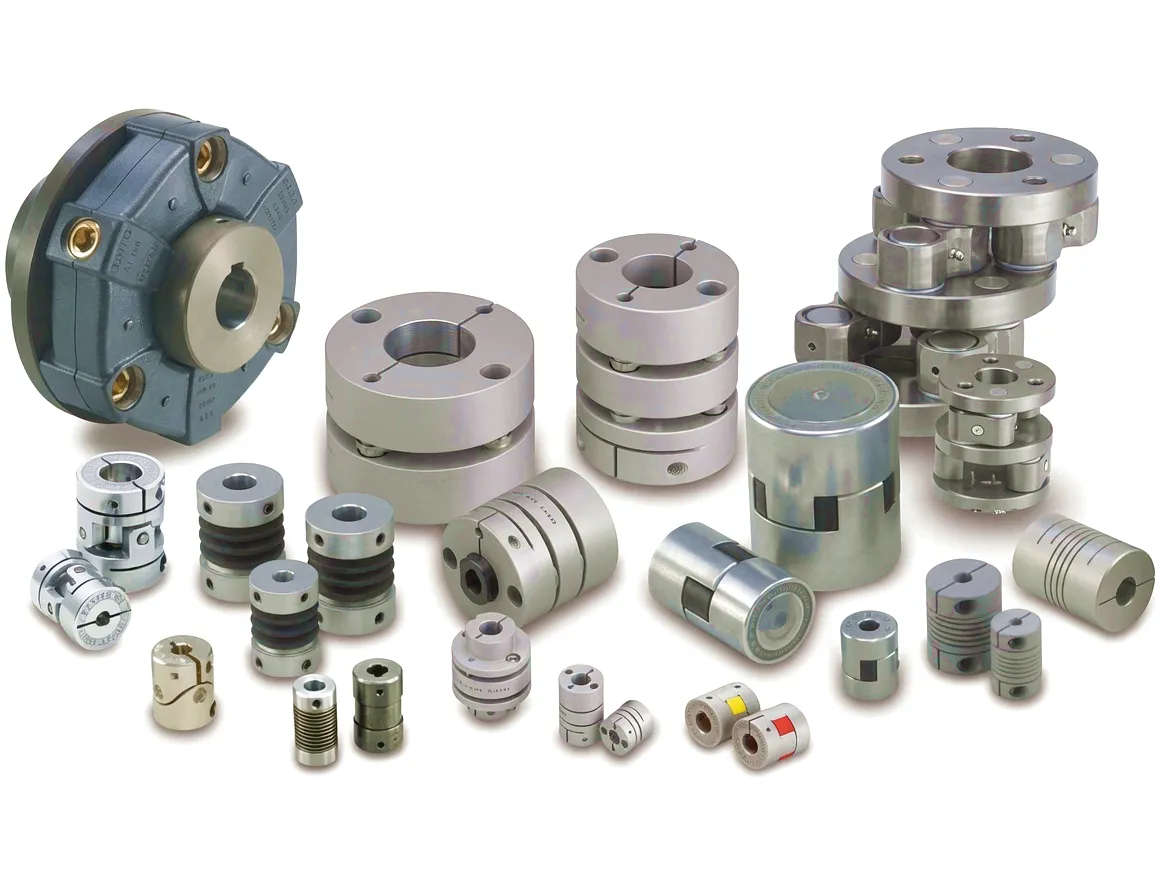
Recommended Coupling Products for Portal Crane Applications
Frequently Asked Questions — Portal Crane Coupling Selection in the UK
What type of coupling should I use for the main hoist drive on a portal crane operating in a UK coastal port environment?
For main hoist drive service in a UK coastal port setting, gear-type couplings with galvanised outer sleeves and lithium-complex grease filling represent the most proven and widely adopted solution. The gear coupling’s exceptional torque density handles the high drum shaft torques typical of 25-to-100-tonne class portal cranes, while the gear tooth geometry naturally accommodates the parallel misalignment that develops as the crane structure deflects under rated load. For high-speed motor-to-gearbox connections on variable-frequency drive equipped cranes, disc couplings are increasingly preferred due to their maintenance-free operation and torsionally stiff response that avoids resonance issues with VFD excitation frequencies.
How much does a custom portal crane coupling cost in the UK, and where can I get a competitive price or quote from a reliable supplier?
Pricing for portal crane couplings varies considerably depending on torque rating, coupling type, material specification, and degree of customisation required. Standard gear couplings in the lower torque ranges (under 5,000 N·m) typically range from several hundred to low thousands of pounds per unit, whilst large customised gear couplings for high-capacity hoist drum positions may reach four to five figures. To get a competitive and accurate quote matched specifically to your crane’s drive data — motor power, rated speed, shock factor classification, shaft dimensions — we encourage you to contact Ever Power directly via our enquiry email with your drive specification sheet. Quotations are typically returned within 48 hours and include full technical selection justification alongside commercial pricing.
Which coupling suppliers in Birmingham or Sheffield can provide custom-sized couplings for heavy-duty portal crane retrofits within a short lead time?
Ever Power supplies custom-engineered couplings directly to crane maintenance and engineering teams across Birmingham, Sheffield, and throughout the UK with delivery times that consistently undercut domestic fabrication alternatives. Our pre-machined semi-finished hub stock programme means that custom bore finishing and keyway cutting can typically be completed within 5 to 10 working days of receiving confirmed shaft dimension drawings, with expedited programmes available for urgent portal crane breakdown situations. We ship direct to site or to your preferred engineering workshop for any location in mainland UK.
How do I calculate the correct service factor and torque rating when selecting a coupling for a portal crane hoist motor in the UK?
Coupling torque rating selection for portal crane hoist service begins with the motor nominal torque at rated speed, to which a service factor is applied. ISO 14691 and the FEM 1.001 crane design standard define service factor ranges based on operating class: cranes classified as M5 to M8 (the standard range for port portal cranes) typically require service factors of 1.5 to 2.5 applied over the calculated peak dynamic torque including starting acceleration and braking deceleration effects. The coupling peak torque rating (not the nominal continuous rating) must exceed the product of the peak dynamic torque and the selected service factor. Ever Power engineers provide no-charge coupling selection assistance for UK customers submitting their crane drive data, including a written selection report confirming the calculation basis, which can be incorporated into design documentation packages.
What are the signs that a portal crane hoist drive coupling is failing and needs to be replaced before it causes a breakdown in a busy UK terminal?
Early warning indicators of hoist drive coupling deterioration include unusual noise at the motor-gearbox connection — metallic clicking or knocking under load that was not previously present — visible grease weeping from gear coupling sleeve joints, increased vibration signature on motor bearing housings measured during routine CBM rounds, and in the case of elastomeric couplings, discolouration or rubber extrusion visible at the coupling jaw interface. Thermal imaging during operation can reveal localised heat generation at failing coupling positions before mechanical symptoms become apparent. Any coupling showing these signs at a busy UK terminal should be treated as an urgent replacement requirement to avoid the disproportionate costs of an unplanned breakdown during peak cargo handling periods.
When should a portal crane operator in the UK schedule coupling inspections and what maintenance intervals are recommended for gear-type hoist drive couplings?
Gear-type coupling maintenance intervals for portal crane hoist drives are typically aligned with the crane’s scheduled maintenance programme, which for UK FEM operating class M6 and M7 cranes is commonly set at 24-month major inspection intervals. Within that period, visual external inspections at 6-monthly service visits should check for grease leakage, sleeve joint integrity, and axial float within design limits. The grease in gear coupling sleeves should be fully changed at the 24-month major inspection or after 8,000 operating hours, whichever comes earlier. For cranes operating in coastal salt-spray environments — Liverpool, Hull, Immingham — external protective coating condition should be assessed annually and recoated as required to prevent corrosion-induced sleeve cracking.
Who manufactures portal crane couplings that comply with BS EN 13001 and can supply material certificates for crane design documentation in the UK?
Ever Power manufactures couplings with full material traceability to certified raw material supply, providing EN 10204 3.1 material certificates as standard on request for components intended for use in crane drive systems subject to BS EN 13001 documentation requirements. Our quality management system operates to ISO 9001 certification, and our inspection documentation package for crane couplings includes dimensional inspection certificates, balance reports to ISO 21940-11 grade confirmation, and hardness test results for carburised or through-hardened components. This documentation package is provided at no additional charge and can be tailored to specific project requirements where crane OEMs or port operators have defined their own documentation control requirements.
Ready to Specify the Right Coupling for Your Portal Crane?
Share your drive data with Ever Power engineers and receive a no-obligation technical coupling selection report and commercial quote within 48 hours. Serving UK port operators, crane manufacturers and maintenance teams across England and Scotland.
📩 Request Engineering Support & Quote
gzl님이 편집함