Industrial Application Series

Cuplaje în aplicațiile macaralelor portal: Fiabilitate inginerească la scară largă

How advanced coupling technology keeps Britain’s busiest port and heavy-lift operations running without interruption — and why specifying the right coupling is the most consequential drivetrain decision you will make.

⚙ Mechanical Power Transmission
🚧 Portal Crane Drivetrains
🇬🇧 UK Heavy Industry

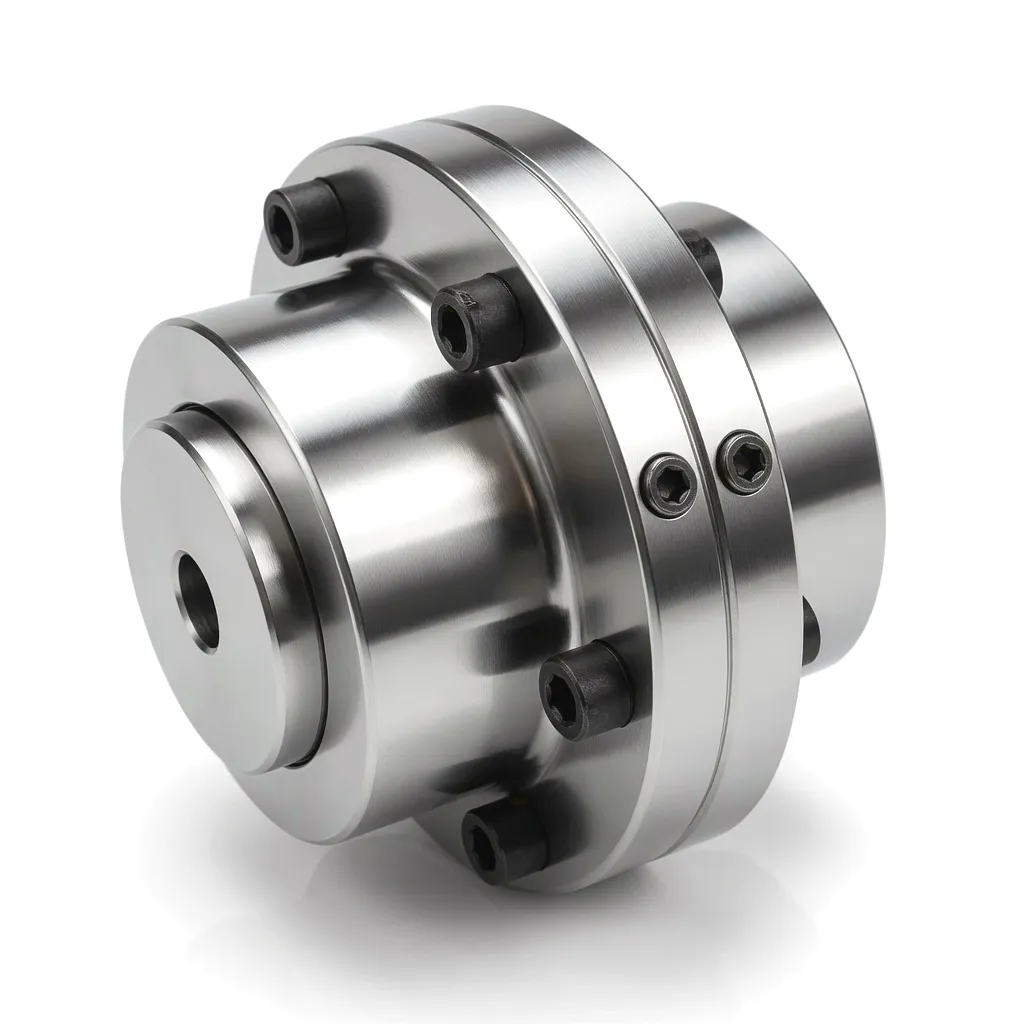
Gear Type Coupling for Portal Crane

Portal cranes — also known as harbour cranes or quayside luffing cranes — represent some of the most mechanically demanding equipment in continuous industrial service. From the tidal docks of Liverpool and Tilbury to the steel-handling yards of Sheffield and the shipbreaking facilities along the Teesside coast, these machines operate across multiple drive systems simultaneously, each one subject to shock loads, vibration, cyclic torque reversal, and environmental exposure that would compromise lesser drivetrain components within weeks. The coupling, often an overlooked element in the broader specification process, is in practice the single component that determines whether a portal crane runs at full productivity or faces unplanned downtime costing thousands of pounds per hour.

This article examines in detail how couplings function within portal crane drive systems, which coupling types are most appropriate for each mechanism, what materials and engineering tolerances matter most, and how Ever Power’s precision manufacturing supports UK heavy-lift operators seeking long-term reliability and competitive total cost of ownership.

Portal Crane Drivetrain Architecture: Where Couplings Matter Most
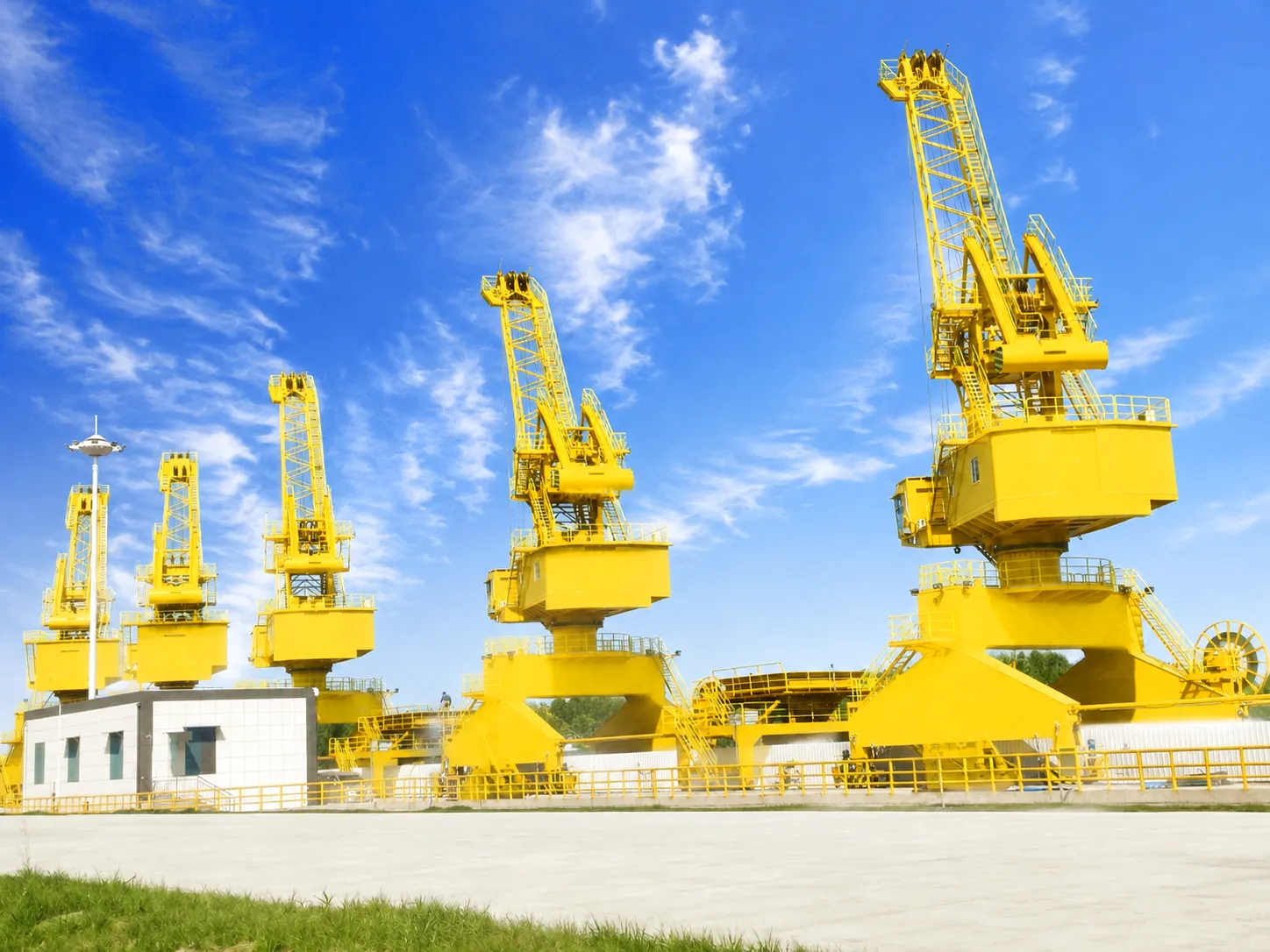
Portal Crane Application

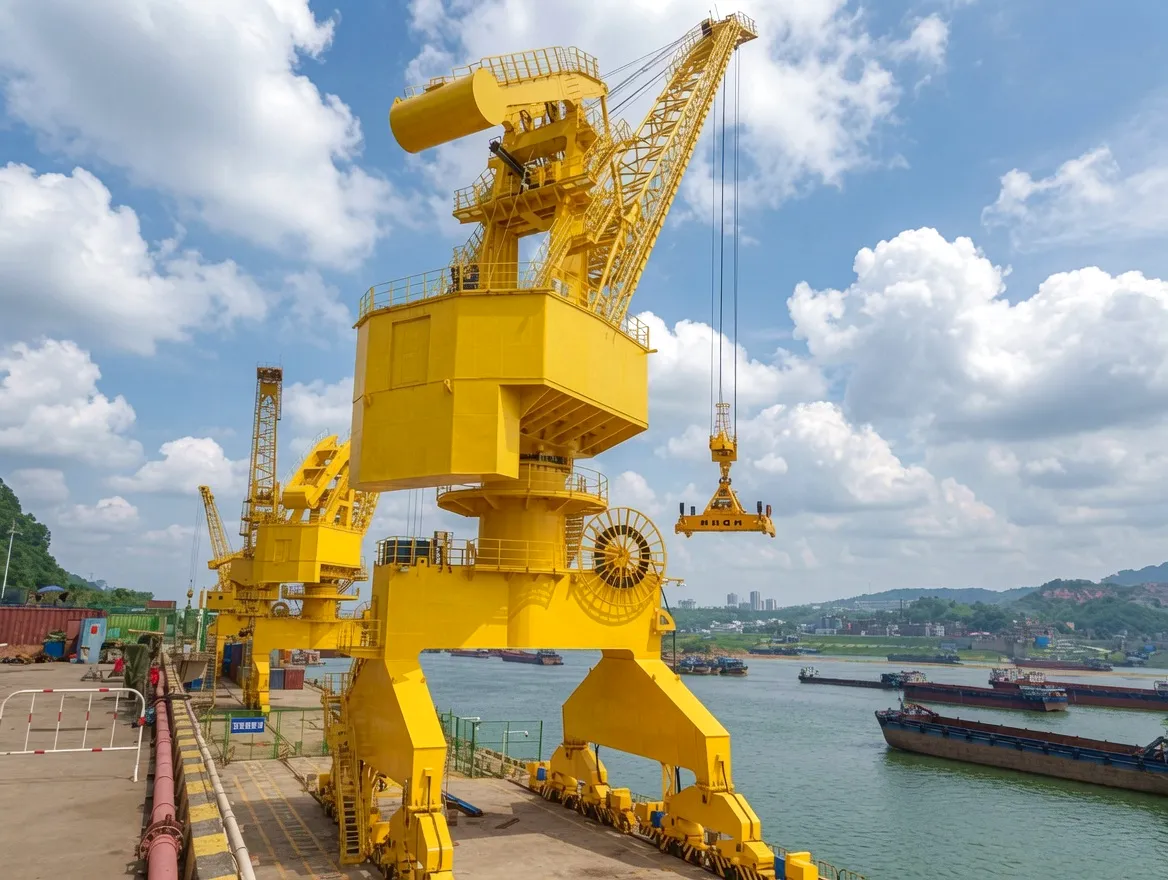
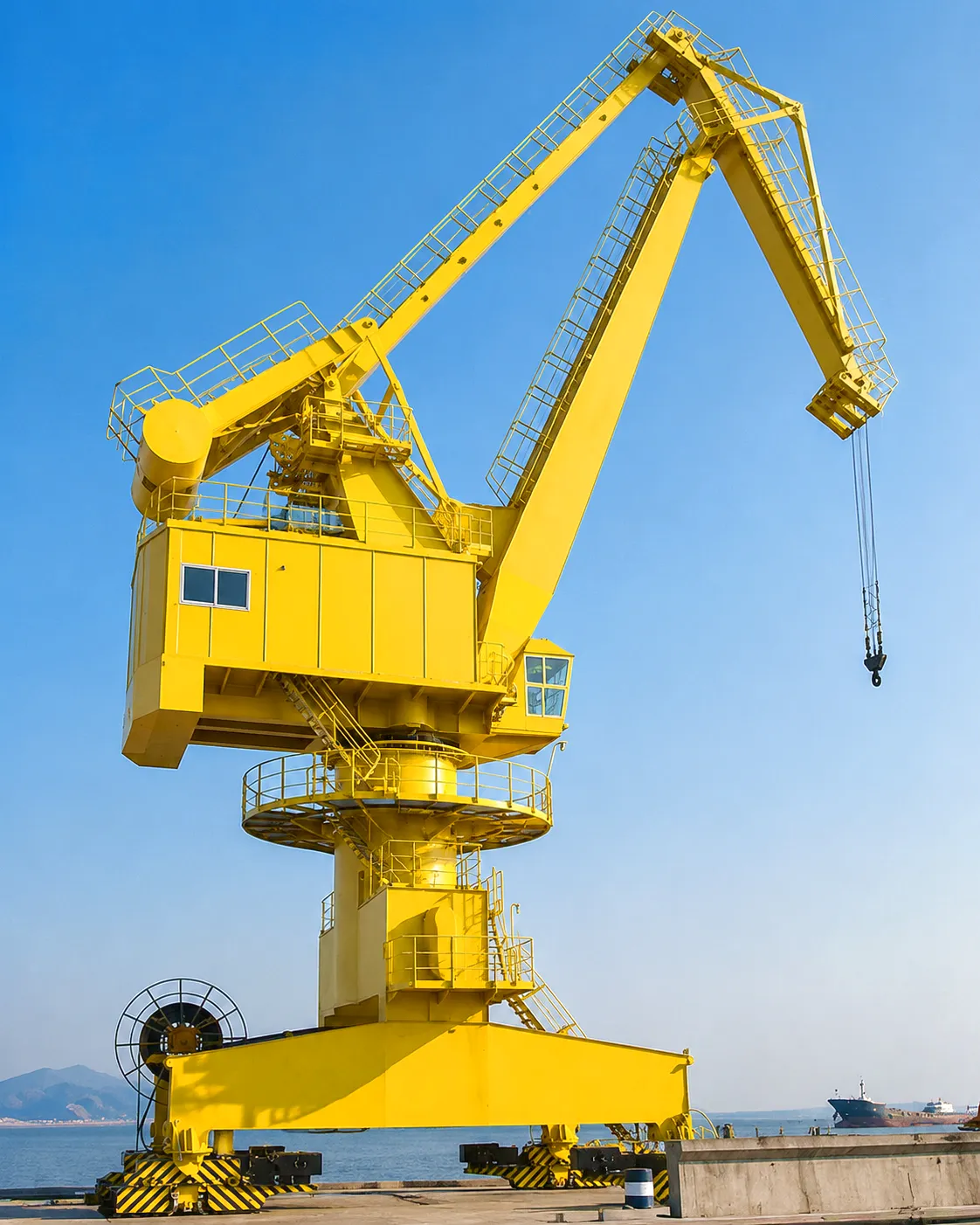
A portal crane is a rotating heavy-lift machine mounted on a portal frame structure, which itself travels on rails along a quayside or production yard. Unlike simpler overhead bridge cranes, the portal crane must coordinate at least four independent drive mechanisms — slewing (rotation of the upper structure), luffing (raising and lowering the jib), hoisting (the lifting mechanism), and travel (movement of the entire portal frame along the rail). Each of these mechanisms has its own motor-gearbox-coupling-drum or motor-gearbox-coupling-slew-ring arrangement, and each presents different loading characteristics and alignment challenges. The hoist mechanism, for example, generates high cyclic torque with frequent start-stop events. The slewing drive is characterised by reversing loads and inertial shocks as a boom carrying tens of tonnes of cargo changes direction. Luffing demands smooth torque modulation across a wide angle of travel. In every case, the coupling positioned between the prime mover (typically an electric motor) and the reduction gearbox — or between the gearbox output and the driven shaft — is absorbing, transmitting, and controlling the mechanical energy that makes safe, precise load handling possible.

In UK port facilities such as those operated along the Humber Estuary or at the Port of Immingham, portal cranes regularly handle cargo weights from 25 tonnes up to 160 tonnes or more. The shock loading events that occur when a load is suddenly engaged — known as dynamic shock torque — can reach three to five times the rated torque for brief durations. A coupling with insufficient peak torque capacity will fail catastrophically; a coupling with no damping capability will transmit destructive impulse forces directly into the gearbox, leading to accelerated wear on gear flanks, bearings, and housings. Selecting the right coupling type is therefore as much about protecting downstream equipment as it is about transmitting power.

Hoist Mechanism
Cyclic high-torque loading with frequent starts. Requires couplings with high peak torque and fatigue resistance.
Slewing Drive
Reversing torque with inertial shock. Demands vibration damping and misalignment compensation.
📈
Luffing Mechanism
Smooth torque modulation over a wide angular travel. Torsional stiffness and angular misalignment tolerance critical.
🚗
Travel Drive
Sustained moderate torque with rail-induced vibration. Robust parallel/angular compensation needed.

Working Principle: How Couplings Function Within Portal Crane Power Transmission
Coupling Working Principle

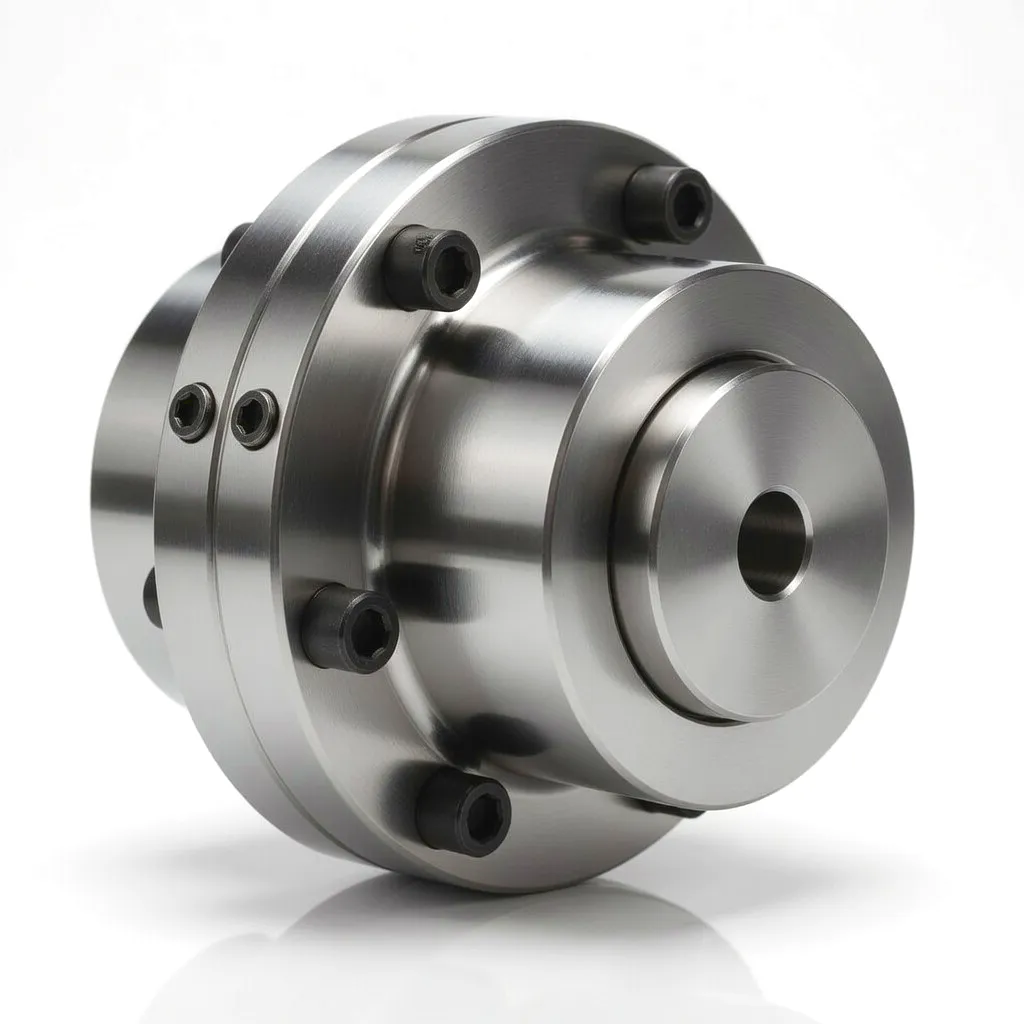
At its core, a coupling connects two rotating shafts so that torque can be transmitted from one to the other while accommodating the inevitable imperfections in shaft alignment that arise during installation, thermal expansion, foundation settlement, and dynamic deflection under load. In a portal crane hoist system, the motor shaft and the gearbox input shaft will rarely be in perfect coaxial alignment — there will be some degree of parallel offset, angular misalignment, or axial displacement, often all three simultaneously. A rigid connection between the shafts would generate enormous bending moments at both shaft ends, accelerating bearing failure and shaft fatigue. The coupling provides the necessary mechanical buffer.

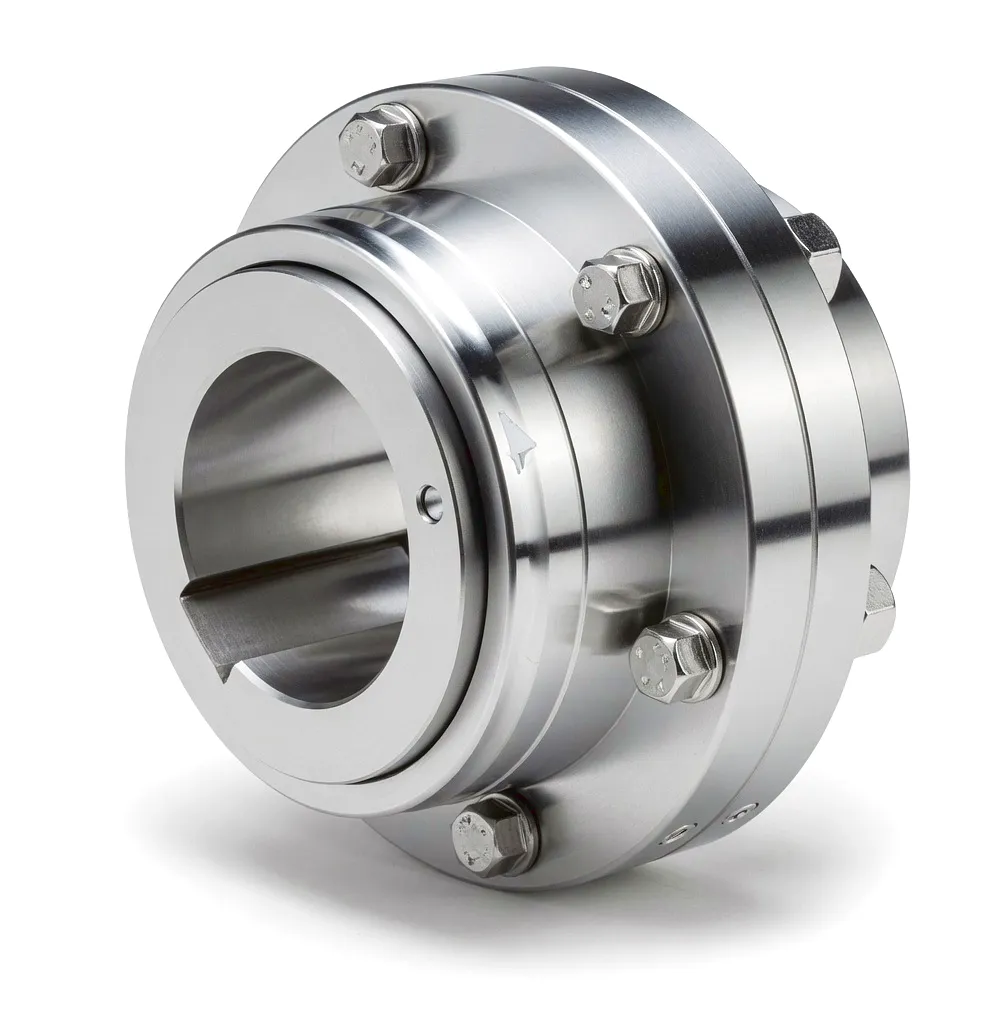
In gear-type couplings — among the most commonly specified for heavy-lift crane applications — torque transmission occurs through the meshing of external gear teeth on the hub with internal gear teeth on the sleeve. The tooth profile is typically crowned (barrel-shaped along the tooth length) to allow angular deflection while maintaining full tooth contact and thus transmitting torque uniformly without point-loading. Gear couplings handle simultaneous parallel, angular, and axial misalignment, and they are capable of transmitting very high torques relative to their physical size, making them well-suited to the confined space constraints typical of a portal crane machinery house. Disc couplings, which transmit torque through a series of thin metallic laminae bolted alternately between driving and driven flanges, offer zero backlash and high torsional stiffness — properties that are particularly valuable in slewing drive systems where precise positioning of the boom is required. Flexible beam couplings, while lower in torque capacity, provide excellent misalignment tolerance with inherent vibration damping and are widely used in encoder and brake control circuits within the crane’s electronic drive systems.

Motor
Torque source
🔗
Cuplare
Transmit, damp, compensate
Gearbox
Speed reduction / torque multiplication
🚧
Crane Mechanism
Hoist / slew / luff / travel

Core Materials in Portal Crane Coupling Manufacturing
Coupling Material and Manufacturing

Material selection for couplings deployed in portal crane environments is driven by four imperatives: tensile and fatigue strength sufficient to handle peak shock torques; wear resistance at gear tooth contact surfaces where relative motion is continuous; corrosion resistance appropriate to marine or coastal operating environments typical of UK port installations; and machinability that enables the tight dimensional tolerances on bore, keyway, and tooth profile necessary for precise alignment. For gear coupling hubs and sleeves, alloy steels such as 42CrMo4 (equivalent to EN19 in British Standard designation) are preferred. This chromium-molybdenum steel achieves tensile strengths in the range of 900 MPa to 1,100 MPa after quench and temper heat treatment, combined with good fatigue endurance and resistance to impact loading. The gear teeth are typically case-hardened to 58–62 HRC at the surface while retaining a tough, ductile core — a combination that resists pitting, spalling, and abrasive wear over many millions of load cycles.

For applications in coastal port environments, such as those found at the Port of Southampton or Liverpool’s Royal Seaforth Dock, additional surface protection is applied. Hot-dip galvanising, epoxy powder coating, or zinc-rich primer systems protect exposed coupling flanges and bolts from salt-laden atmospheric corrosion. Internal gear meshes are protected by lithium-complex grease or semi-fluid gear oil sealed within the coupling housing by purpose-designed O-ring or labyrinth seals. For disc couplings, the laminated disc packs are manufactured from precipitation-hardened stainless steel such as 17-4PH, which combines high fatigue strength with inherent corrosion resistance and eliminates the need for additional surface treatment of the flexible element itself.

Coupling flanges and adaptor hubs for large portal cranes are often produced from EN-GJS-600-3 spheroidal graphite cast iron or from forged carbon steel to ISO 683-1, depending on the bore diameter, keyway configuration, and whether the hub is being fitted to a parallel key shaft, splined shaft, or shrink-fit shaft connection. Ever Power’s manufacturing facility operates to ISO 9001:2015 quality management standards, with full traceability from raw material certification through to final inspection records, a capability that UK procurement teams increasingly require as part of supply chain due diligence.

42CrMo4 Alloy Steel
Tensile strength 900–1,100 MPa; case-hardened gear teeth 58–62 HRC; primary hub and sleeve material.
17-4PH Stainless Steel
Precipitation-hardened; disc pack laminae for disc couplings; corrosion-resistant with high fatigue strength.
EN-GJS-600-3 Ductile Iron
Spheroidal graphite cast iron for flanges and housings; excellent machinability and damping characteristics.
Polyurethane / Elastomer
Spider elements and tyre inserts in jaw-type and tyre couplings; vibration damping and electrical isolation.

Product Technical and Performance Specification Table

The following table presents representative performance parameters across the principal coupling types supplied for portal crane applications. Actual values vary with bore size, shaft configuration, and operating duty cycle; Ever Power engineers provide full application-specific calculations on request.

Coupling TypeCuplu nominal (Nm)Peak Torque (Nm)Viteză maximă (rpm)Angular Misalign.Parallel OffsetPrimary MaterialCrane Application
Gear Coupling500 to 1,500,000Up to 3x ratedUp to 3,600Up to 1.5 deg0.25–0.75 mm42CrMo4 steelHoist, Travel, Luffing
Cuplaj cu disc100 to 500,000Up to 2.5x ratedUp to 10,000Up to 0.5 deg0.05–0.15 mm17-4PH stainlessSlewing, Servo drives
Jaw / Spider Coupling10 to 12,000Up to 2x ratedUp to 5,500Up to 1 deg0.15–0.5 mmDuctile iron + PUAuxiliary drives, pumps
Cuplaj flexibil pentru grinzi0.5 to 800Up to 1.5x ratedUp to 12,000Up to 3 deg0.1–0.5 mm6061-T6 aluminiumEncoder, brake, control
Tyre (Donut) Coupling50 to 50,000Up to 3x ratedUp to 2,500Up to 4 degUp to 3 mmSteel flanges + NRTravel drive, rail wheels

Core Technical Advantages for Portal Crane Coupling Applications
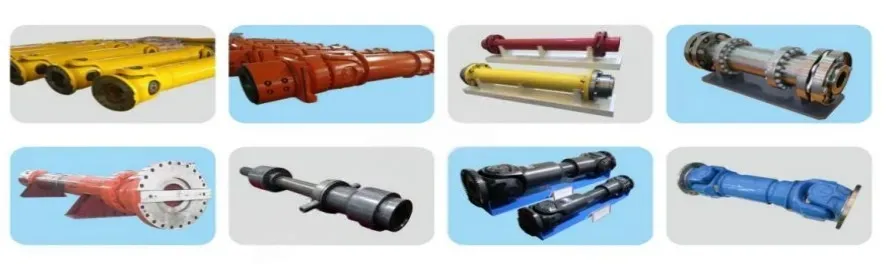
Coupling Product Range
📈

Densitate mare de cuplu

Gear couplings transmit rated torques exceeding one million Newton-metres within compact outer diameters, critical where machinery house space is constrained on portal crane platforms. The high torque density reduces coupling weight and rotational inertia, lowering dynamic loads on motor bearings during frequent start-stop cycles that characterise hoist and slewing operation.

👮

Shock Load Absorption

When a crane hook engages a load, the sudden torque spike — often reaching three to five times rated torque for durations of 50 to 200 milliseconds — must be absorbed without propagating destructive impulse forces into the gearbox. Tyre and jaw coupling designs with elastomeric elements absorb peak shock loads through controlled elastic deformation, extending gearbox and motor service life measurably.

🎯

Misalignment Compensation

Portal cranes operating on rail systems experience continuous micro-movements as the structure travels, flexes under load, and responds to thermal cycling across the operating temperature range typical of British port environments — from -15 C in winter to +40 C in summer. Couplings with adequate misalignment tolerance prevent the generation of parasitic bending loads on shafts and bearings, which are the leading cause of premature seal failure and shaft fatigue fracture.

Minimal Maintenance Demand

Disc couplings are entirely lubrication-free, eliminating the periodic regreasing requirements that add maintenance cost and — if neglected — lead to accelerated tooth wear in gear couplings. For crane operators where maintenance windows must align with operational schedules and tidal access constraints, a service-free coupling in critical slewing or luffing positions delivers measurable savings in planned maintenance expenditure and reduces the risk of unplanned failures between inspection intervals.

🌍

Rezistență la coroziune

UK port and coastal installations subject mechanical components to salt spray, condensation, and frequent pressure washing. Couplings specified with appropriate surface protection — hot-dip galvanised flanges, epoxy-coated housings, and stainless fasteners — maintain dimensional integrity and protect gear mesh geometry from the corrosive attack that leads to spalling, increased backlash, and ultimately catastrophic coupling failure during peak loading events.

Zero Backlash Precision

Disc coupling designs operating in slewing drive systems provide zero backlash, enabling precise boom positioning for grab and hook operations where load placement accuracy is safety-critical. Modern variable frequency drives controlling portal crane slew motors rely on encoder feedback that is itself transmitted through flexible beam couplings, making zero-backlash performance important throughout the entire control chain from encoder shaft to slewing ring.

Industrial Application Scenarios: Couplings Across Portal Crane Operating Environments

Portal crane installations span a wide range of UK industrial settings, each imposing distinct loads, environmental conditions, and operational duty cycles on the coupling components installed within the drive systems.
⚓ Application Scenario 1 — Quayside Container and Bulk Cargo Handling, Tilbury and Felixstowe

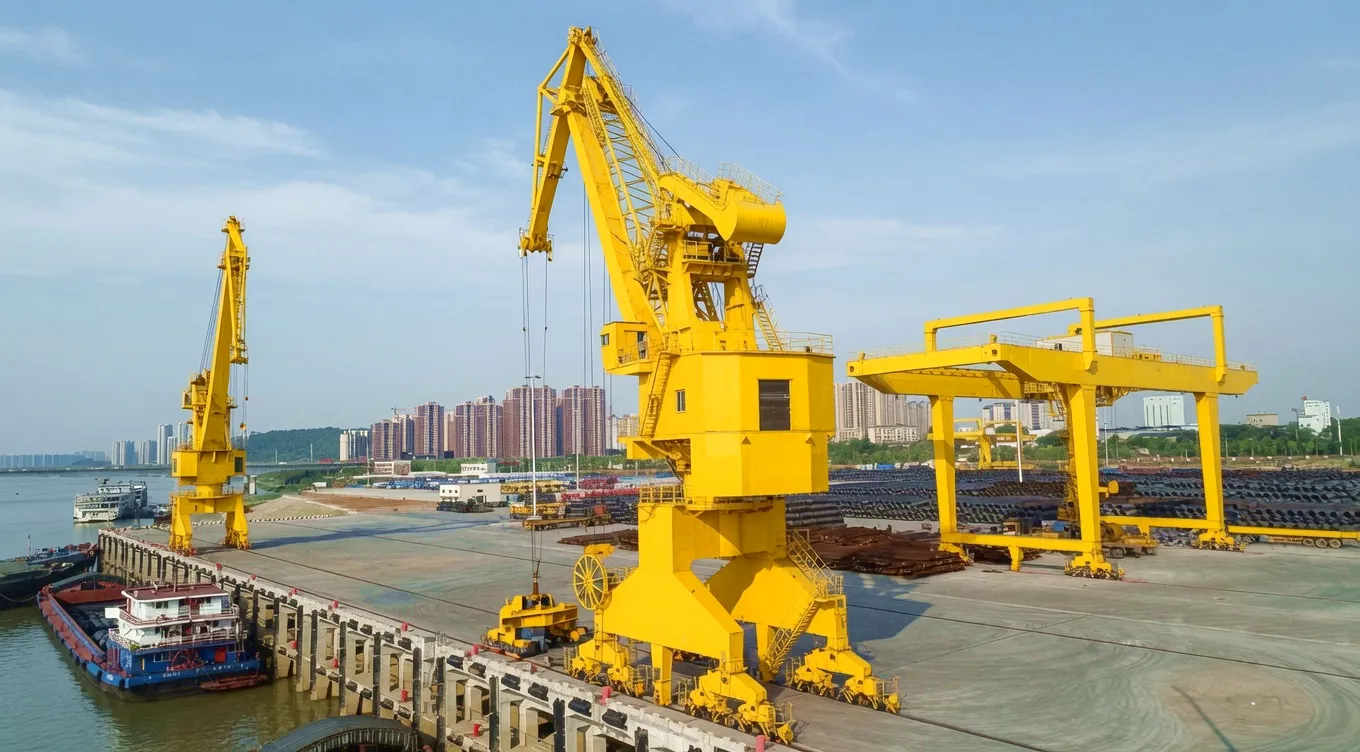
Quayside Portal Crane ApplicationAt major UK port terminals such as the Port of Tilbury on the Thames Estuary and the Port of Felixstowe in Suffolk, portal cranes handle hundreds of container movements per shift, often running 24 hours a day for extended periods with minimal planned downtime. The hoist mechanism on these cranes — lifting containers weighing 20 to 40 tonnes — experiences torque cycles of enormous cumulative magnitude. Gear couplings are typically specified for the primary hoist drive between motor and gearbox, with crowning angle designed to accommodate the deflection of the crane structure under full rated load. The travel drive along the quayside rail uses tyre couplings or flexible jaw couplings to absorb the vibration from rail joints and the variable surface quality of container terminal paving.
Coupling selection at these terminals must also account for the rapid acceleration profiles programmed into VFD-controlled hoist motors, where soft-start features reduce but do not eliminate the torque transients that cause fatigue damage over a coupling’s service life. Engineers specifying couplings for Tilbury or Felixstowe terminals often work to an assumed duty cycle of 1,000 to 1,200 full-load hoist cycles per eight-hour shift, driving minimum fatigue life calculations well into hundreds of millions of torque cycles over the expected crane service interval.

⚖ Application Scenario 2 — Steel Coil and Plate Handling, Sheffield and Rotherham

The steel-producing regions of South Yorkshire — centred on Sheffield and Rotherham — operate some of the most demanding portal crane installations in the British Isles. Here, cranes lift steel coils, heavy plate sections, and billets in an environment characterised by thermal radiation from furnaces, metallic dust, and the shock loading inherent in handling products that must be precisely placed on storage racks, rolling mill tables, and transport vehicles. The slewing mechanism of steel-yard portal cranes requires couplings capable of handling rapid direction reversals without backlash, as positioning tolerances for steel plate placement on cutting beds can be measured in tens of millimetres. Disc couplings are gaining adoption in Sheffield’s steel-handling applications precisely because they provide the torsional stiffness required for precise positional control, combined with the angular misalignment tolerance needed to accommodate structural deflection of the slewing ring mounting under asymmetric load conditions.

The thermal environment in Sheffield’s steelworks — where ambient temperatures around the crane machinery house may reach 50 to 60 degrees Celsius — requires that coupling greases retain adequate consistency across a wide temperature range, that elastomeric elements in jaw or tyre couplings are specified in high-temperature compounds rather than standard natural rubber, and that thermal expansion differences between the coupling body and the motor/gearbox shaft materials are accounted for in the interference fit calculations for hub-to-shaft connections. Mis-specification in this area results in hubs that either loosen under elevated temperature or are impossible to remove for maintenance without destructive means.

⛳ Application Scenario 3 — Shipyard Heavy Assembly, Newcastle and Barrow-in-Furness

Shipyard Portal CraneShipbuilding and naval construction at facilities such as those along the River Tyne in Newcastle and at BAE Systems’ Barrow-in-Furness submarine construction facility demands portal cranes capable of lifting hull sections, propulsion modules, and pressure vessel components weighing upwards of 100 tonnes. These are typically low-cycle but very high-torque applications, where the coupling must be sized for the maximum load case with generous safety factors — UK naval procurement standards often specify safety factors of 3.0 or higher on coupling rated torque for safety-critical crane classifications. In these applications, the luffing mechanism coupling is of particular importance, as the crane must hold the boom at precise angles for extended periods while deck sections are bolted into position, placing the coupling under sustained static torque rather than dynamic cycling. Materials and fits must be chosen to prevent fretting fatigue on hub-to-shaft interfaces under these sustained loading conditions.

The marine environment at these shipyard locations also demands the most rigorous corrosion protection specifications. Couplings in outdoor installation positions on the crane structure may be subjected to continuous salt spray from the estuary environment, requiring hot-dip galvanised or thermally sprayed aluminium coatings on exposed components, together with stainless steel or hot-dip galvanised fasteners throughout the assembly. Ever Power supports UK shipyard customers with full material certification packs, dimensional inspection reports, and where required, third-party testing to Lloyds Register or DNV class society standards.

🔨 Application Scenario 4 — Bulk Materials and Aggregate Handling, Humber Estuary and Teesside

Bulk terminal operations along the Humber Estuary and at Teesport handle iron ore, coal, grain, and aggregate using grab-equipped portal cranes that subject the hoist and slewing drives to particularly severe shock loading events. When a grab is plunged into a bulk material pile and then snapped shut, the mechanical shock transmitted back through the hoist rope, drum, gearbox, and coupling can exceed five times rated torque. Coupling designs specified for grab crane duty must either absorb this energy through elastomeric damping elements — in which tyre or pin-and-bush couplings are appropriate — or be sized with sufficient peak torque margin to transmit the shock without yielding, as is the case for heavy-duty gear couplings specified with generous service factors in the range of 2.5 to 3.0 applied to rated torque.

The dusty, gritty environment of a bulk terminal is also hostile to conventional coupling seals. For gear couplings operating in these conditions, labyrinth seals are preferred over lip seals, as they are less susceptible to abrasive particle ingress that cuts seal lips and allows lubricant contamination. Periodic coupling inspection is good practice, with maintenance intervals typically aligned with quarterly crane certification inspections required under the Lifting Operations and Lifting Equipment Regulations 1998 (LOLER) that govern crane operation across all UK industrial sites. Replacement coupling elements — sleeve inserts, elastomeric spiders, disc packs — must be readily available with short lead times to minimise terminal downtime, and this is an area where UK-based distributors holding Ever Power stock provide clear operational value to terminal operators.

Featured Coupling Products for Portal Crane Applications

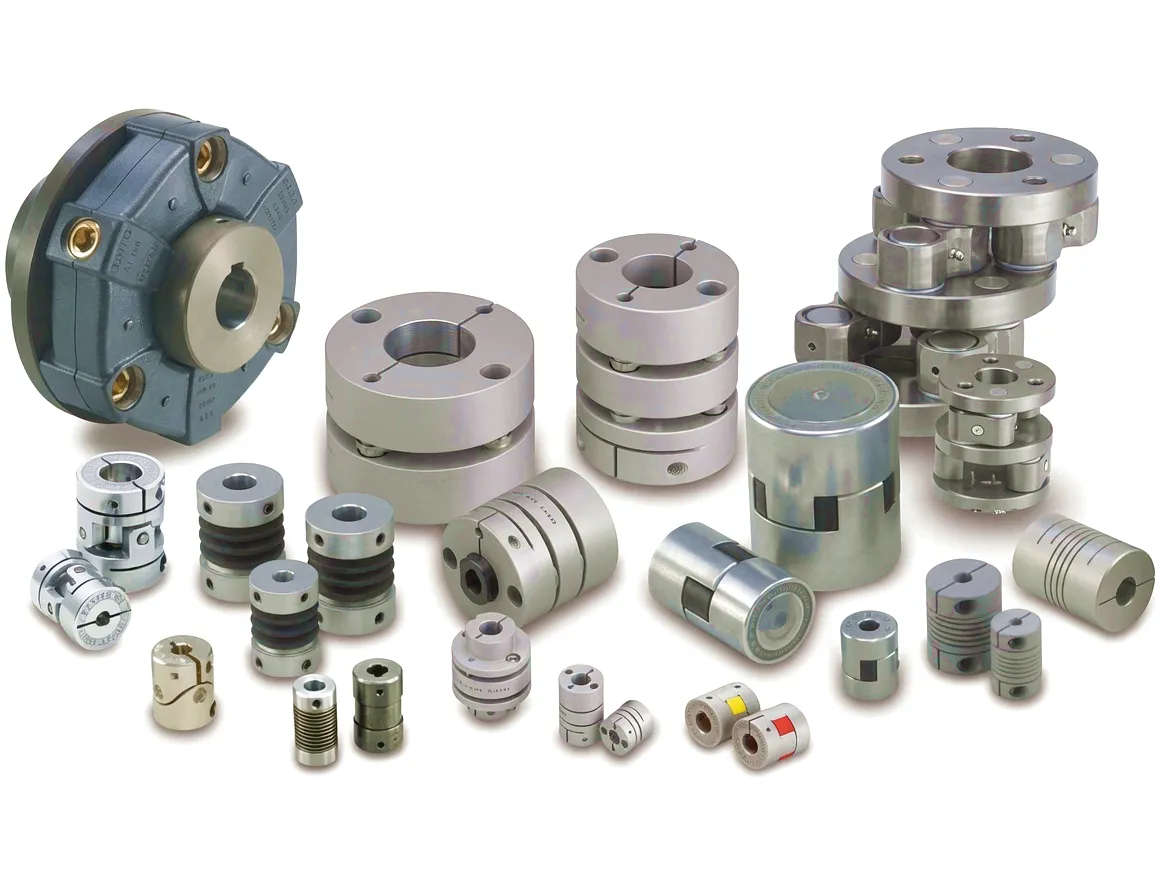
Ever Power offers a comprehensive coupling product range covering the full spectrum of portal crane drive system requirements, from high-torque gear couplings in hoist mechanisms to precision disc couplings in slewing drives and flexible beam couplings in control circuits. Two products of particular relevance to crane equipment engineers are highlighted below.
Cuplaj flexibil pentru grinzi

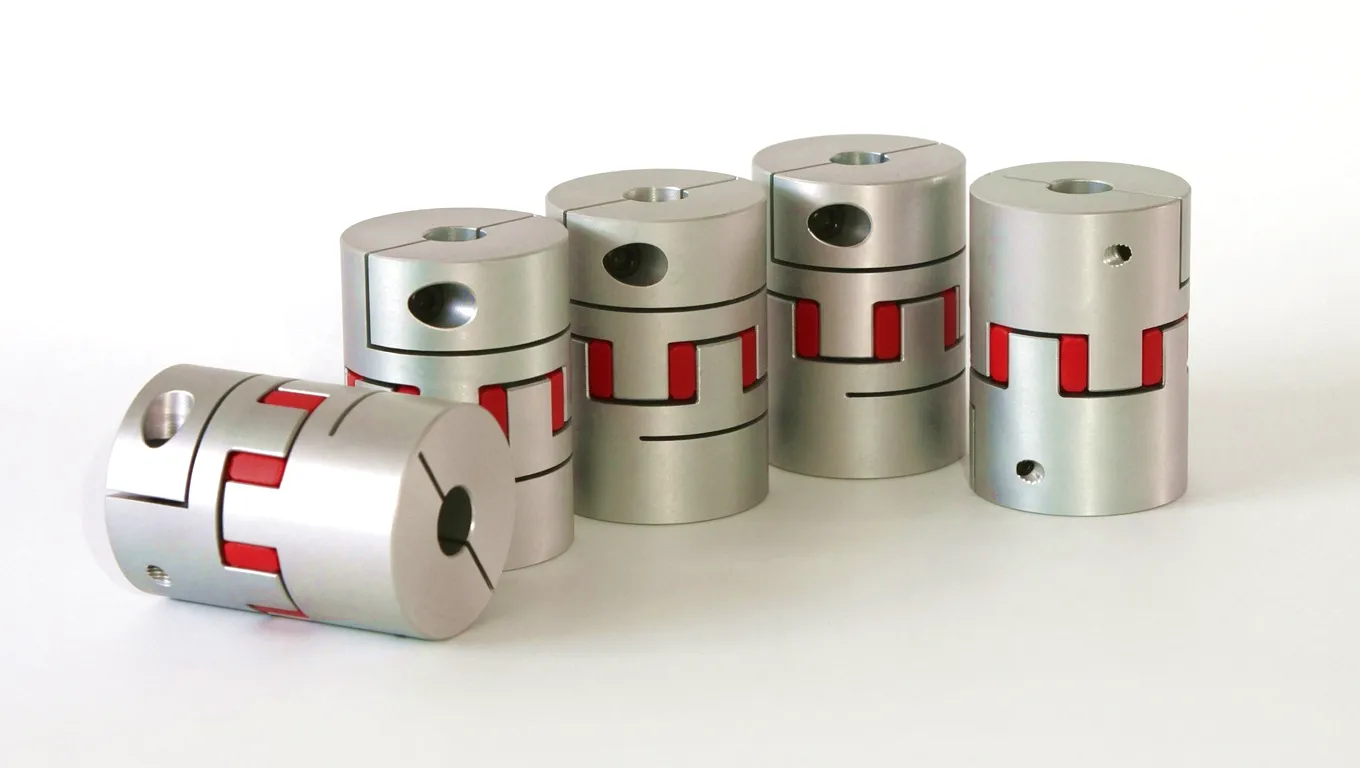
Cuplaj flexibil pentru grinzi

Designed for encoder mounts, brake control circuits, and low-torque auxiliary drives within portal crane electronic control systems. The helical beam cut into a single-piece aluminium body provides excellent angular and parallel misalignment tolerance with inherent torsional flexibility, eliminating backlash entirely. Ideal for signal-level applications where precise rotary feedback is required from encoder shafts connected to VFD motor control units. Available in bore sizes from 3 mm to 30 mm with a wide range of hub materials and beam geometries to match specific torsional stiffness requirements.
View Flexible Beam Coupling →

Cuplaj cu disc

Cuplaj cu disc

The precision disc coupling delivers zero-backlash torque transmission with high torsional stiffness, making it the coupling of choice for portal crane slewing drive systems where boom positioning accuracy is a safety and productivity requirement. The metallic disc pack — manufactured from 17-4PH stainless steel laminae — provides inherent corrosion resistance with no requirement for lubrication, reducing lifetime maintenance cost in UK coastal and port environments. Angular misalignment accommodation and axial float capability allow assembly without critical alignment precision, reducing installation time and labour cost. Rated torque range from 100 Nm to 500,000 Nm, fully scalable to match any portal crane slewing mechanism specification.

View Disc Coupling →

Ever Power: Precision Manufacturing and Customisation Capability for UK Heavy-Lift Applications
Ever Power Manufacturing Facility

Ever Power operates a modern precision manufacturing facility with the dedicated capability and capacity to serve UK portal crane OEMs, retrofit engineering contractors, and terminal operators seeking direct supply of technically specified coupling components. The facility spans a substantial production floor equipped with CNC gear hobbing machines, CNC turning and milling centres, surface grinding equipment, and gear measurement technology capable of achieving tooth profile accuracy to DIN 3960 Quality 6 or better — the standard required for high-speed gear coupling manufacture. Induction hardening lines dedicated to gear tooth case hardening allow controlled surface hardness to 58–62 HRC with case depth precisely tailored to the transmitted load profile, preventing the tooth fracture mode that results from insufficient case depth in high-impact applications such as grab crane hoisting.

Customisation at Ever Power extends across every dimension of coupling design. UK crane engineers frequently require non-standard bore diameters, keyway configurations to BS 4235, or shaft connection systems using hydraulic interference fits (Ringfeder or Tollok style) that provide higher transmissible torque than keyed connections in the same envelope. Ever Power’s engineering team processes customer drawings and dimensional data, providing application-specific coupling designs with full calculation documentation covering safety factor, fatigue life, misalignment capacity, and dynamic balance class. For UK market customers, delivery documentation is provided in English and includes material test certificates to EN 10204-3.1, dimensional inspection reports, and where required, test assembly records demonstrating backlash measurement and dimensional compliance. Export packaging is configured for deep-sea containerised shipping with full desiccant moisture protection, ensuring that coupling components arrive at UK ports in first-class condition regardless of transit duration or handling conditions. Spare parts and replacement elements are held in stock for standard catalogue sizes, enabling rapid dispatch to UK addresses when crane downtime cannot wait for manufacture lead times.

500+
Coupling SKUs In Production
DIN 6
Gear Tooth Accuracy Class
ISO 9001
Certificare în Managementul Calității
EN 10204
3.1 Material Certs Available

Ready to specify your portal crane coupling?

Send Ever Power your shaft dimensions, torque data, operating speed, misalignment values, and environmental conditions. Our engineers will return a fully documented coupling recommendation with safety factor calculation, dimensional drawing, and commercial quotation — typically within 48 hours of enquiry receipt.

✉ Get a Quote from Ever Power

Customer Success Story: Tees Bulk Terminal, Middlesbrough — Eliminating Unplanned Crane Downtime

A bulk materials terminal operator based in Middlesbrough, handling iron ore and coal imports for the regional steel industry, was experiencing recurring failures of the hoist drive coupling on one of their two main grab-equipped portal cranes. The original coupling — a jaw-type flexible coupling sourced from a European manufacturer — was failing at the elastomeric spider element on average every four to six months, with each failure causing unplanned downtime of 18 to 24 hours while a replacement spider was located and shipped from the Continent. Over a two-year period, this single coupling location had cost the terminal an estimated £280,000 in lost handling throughput, emergency logistics fees, and maintenance labour.

The terminal’s mechanical engineering manager contacted Ever Power to review the application. Ever Power engineers analysed the actual shock torque profile of the grab hoist cycle — including the characteristic double-shock event that occurs when the grab closes and when the hoist takes up the load — and determined that the original coupling’s rated torque was being exceeded by a factor of approximately 1.4 during peak grab engagement events. Rather than simply replacing like for like, Ever Power specified a heavy-duty gear coupling with a rated torque of 22,500 Nm and a service factor of 2.8 applied to the calculated shock torque, combined with a crowned tooth geometry selected for the measured misalignment condition at the motor-gearbox interface — angular misalignment of 0.35 degrees combined with parallel offset of 0.18 mm, both of which had been contributing to accelerated wear on the previous jaw coupling’s spider element.

Ever Power supplied the gear coupling with EN 10204-3.1 material certification, a dimensional inspection report, and two spare sleeve assemblies held in stock by the terminal’s spares holding as recommended service parts. The coupling was fitted by the terminal’s own maintenance team using Ever Power’s installation guide, which included assembly torque values for the flange bolts, shaft interference fit values, and alignment verification procedure. At 24 months following installation, the coupling remains in service with no reported failures, no lubricant top-up required ahead of schedule, and zero unplanned downtime attributable to the coupling. The terminal estimates the coupling upgrade has delivered a net saving in excess of £180,000 against the previous two years’ failure cost, after accounting for the cost of the coupling, installation, and spare part holding.
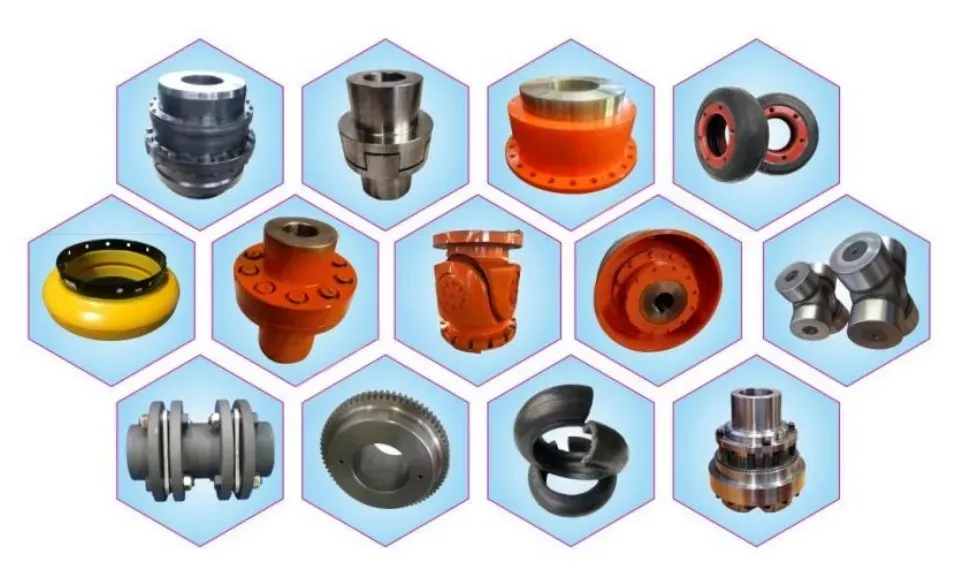
Coupling Products Collection

What UK Engineers Say About Ever Power Couplings

★★★★★★

“The gear coupling Ever Power supplied for our portal crane hoist has now completed 22 months without a single service intervention beyond the scheduled six-month grease check. The documentation pack — including the 3.1 cert and calculation sheet — went straight through our procurement approval without challenge. Exactly what we needed for a LOLER-regulated asset.”

James H., Mechanical Engineering Manager
Bulk Terminal Operator, Humberside
★★★★★★

“We specified Ever Power disc couplings for the slewing drives on our new-build portal crane project at the Sheffield facility. The zero-backlash characteristic has made a measurable difference to the precision of our slab positioning — our operators report noticeably tighter placement accuracy. The technical support during specification was excellent and the delivery timeline was met without issue.”

Thomas R., Head of Projects
Steel Products Manufacturer, Sheffield, South Yorkshire
★★★★★★

“What impressed us most was the level of application-specific customisation Ever Power were able to provide. We needed non-standard bore sizes with BS 4235 keyways to match our existing gearbox shafts — they came back with a drawing within three working days and matched our delivery schedule. The price was also highly competitive against European alternatives, with no compromise on technical documentation quality.”

David M., Procurement Director
Crane OEM, Birmingham, West Midlands

Frequently Asked Questions: Couplings for Portal Crane Applications in the UK

Q: What type of coupling is most commonly used in the hoist mechanism of a portal crane operating at a UK port terminal?
For portal crane hoist mechanisms at UK port terminals, gear couplings are the most widely specified choice. They offer the high torque density needed for the compact machinery house of a portal crane, can handle the shock loading characteristic of grab and hook hoist cycles, and tolerate the combined misalignment — angular plus parallel plus axial — that occurs as the crane structure flexes under rated load. Tyre couplings are an alternative in applications where maximum shock absorption is the primary design objective and where the higher outer diameter of a tyre coupling can be accommodated within the drive arrangement.
Q: How much does a replacement gear coupling cost for a portal crane hoist drive in the UK, and what is a typical lead time?
Pricing for gear couplings suitable for portal crane hoist applications varies considerably with rated torque, bore configuration, and whether the coupling is a standard catalogue item or a custom-designed component. Standard gear couplings in the 5,000 to 50,000 Nm torque range typically range from several hundred to several thousand pounds sterling depending on size. Custom-specified couplings with non-standard bores, BS 4235 keyways, or specialist coatings carry a premium over catalogue pricing. Lead times for standard units are generally two to four weeks ex-works; custom units typically require six to ten weeks including drawing approval. Ever Power recommends that terminal operators hold at least one spare sleeve assembly at site to protect against unplanned downtime — contact our team at [email protected] for a specific price and availability quotation for your crane model and shaft dimensions.
Q: Which coupling supplier in the UK can provide gear couplings with EN 10204-3.1 material certification and full dimensional inspection reports for portal crane applications?
Ever Power supplies gear couplings and disc couplings with full EN 10204-3.1 material test certification as standard for heavy-duty crane applications. All couplings supplied for crane service include dimensional inspection reports covering bore diameter, key or spline dimensions, tooth profile parameters, and surface roughness at sealing faces. Where UK procurement or end-client requirements specify additional testing — such as magnetic particle inspection of forgings or hardness verification at multiple tooth positions — these can be arranged and documented as part of the purchase order. Ever Power’s documentation is provided in English and formatted for direct inclusion in crane maintenance records and LOLER compliance files.
Q: How do I select the right coupling size when replacing an old or failed coupling on a portal crane slewing drive in Birmingham or Sheffield?
The selection process for a replacement slewing drive coupling requires five key data points: the motor output torque and rated speed, the service factor accounting for shock load class of the application, the bore diameters and keyway or spline dimensions at both the motor and gearbox shaft ends, the available axial and radial envelope within the coupling space, and the operating environment conditions (temperature range, presence of contamination or moisture). If the original coupling nameplate data is available, this provides a starting point for comparison with the replacement specification. If the original has failed, it is important to analyse the failure mode before selecting the replacement — a failed coupling that has been oversized relative to the actual peak torque conditions may indicate a misalignment issue rather than a torque issue, which changes the specification approach entirely. Ever Power’s engineering team can assist with application review for customers anywhere in the UK.
Q: Where can I get a quote for custom-bore disc couplings for a portal crane slewing drive retrofit project at a UK steel plant?
Custom-bore disc couplings for portal crane slewing drive retrofit projects can be quoted by Ever Power directly. Email your project enquiry to [email protected] with your shaft diameter and tolerance, required bore configuration (parallel key or interference fit), motor rated torque and maximum speed, coupling envelope limitations, and your target delivery date. Ever Power typically responds with a preliminary coupling recommendation and budgetary price within 48 hours of receiving complete application data. For UK steel plant applications, where thermal environment and contamination conditions are relevant, please also include the operating temperature range and any specific corrosion protection requirements in your enquiry.
Q: When should a portal crane coupling be replaced as part of a LOLER compliance maintenance programme at a UK port facility?
Under LOLER 1998, lifting equipment including portal cranes must be thoroughly examined at regular intervals by a competent person, with documentation retained. Coupling inspection should be integrated into the thorough examination schedule, with particular attention to gear coupling tooth wear and lubricant condition, elastomeric element condition and deformation in jaw and tyre couplings, disc pack condition including checks for cracked or deformed laminae in disc couplings, and hub-to-shaft connection integrity. Replacement intervals are condition-based rather than calendar-based for most coupling types, but prudent maintenance practice in high-utilisation terminal operations is to replace elastomeric elements every 12 to 18 months as a precautionary measure, and to inspect gear coupling tooth condition under borescope at every six-month service. Couplings that show signs of fretting corrosion at hub bores, accelerated tooth wear, or lubricant contamination should be replaced without delay regardless of elapsed time since last replacement.

Ever Power — Precision Coupling Engineering

Specify with Confidence. Supply with Certainty.

Whether you are specifying a new portal crane drivetrain, retrofitting a life-expired coupling, or seeking a more reliable alternative to a repeatedly failing product, Ever Power’s engineering team is ready to support your project from application review through to delivery and installation guidance.

✉ Contact Ever Power: [email protected]

editat de gzl