

 In heavy industrial environments across the United Kingdom, the mechanical link between a drive motor and a centrifugal pump is one of the most continuously stressed components in the entire drivetrain. Engineers who have spent years troubleshooting recurring pump failures often trace the root cause not to the pump impeller, the motor windings, or the bearings — but to the coupling sitting between them. A gear type coupling, when correctly specified and maintained, removes that weak link entirely. It transmits torque through precision-machined involute gear teeth distributed across a wide contact area, tolerates angular, parallel, and axial misalignment simultaneously, and delivers a service life measurable in years rather than months — even in the unforgiving environments found on UK water treatment works, chemical processing sites, and North Sea offshore platforms.
Unlike elastomeric jaw couplings or tyre-element designs that degrade progressively and fail without warning, a gear type coupling gives audible and measurable signals — increasing vibration amplitude, slight lubricant weepage, or a change in the coupling’s thermal signature — well before mechanical failure occurs. That predictability is worth a great deal to a plant reliability team managing pump sets that run continuously at a Yorkshire water treatment works or a Teesside chemical facility where unplanned downtime carries a direct financial penalty and, in some cases, a regulatory consequence under the Environmental Permitting Regulations. This article draws on more than 18 years of applied coupling engineering experience to give UK plant engineers a thorough, practical guide to gear type coupling selection, sizing, materials, and real-world application in centrifugal pump drives.
The analysis covers operating principles, material grades, temperature and speed envelopes, installation tolerances, lubrication regimes, and application-specific design considerations from ANSI process pumps at 3,000 RPM to large vertical turbine pump sets with shaft diameters exceeding 200 mm. Whether you are specifying a new pump installation, evaluating a replacement for a failed flexible coupling, or preparing a long-term reliability programme for a UK industrial site, the depth of technical content here is designed to give you a clear, actionable framework.
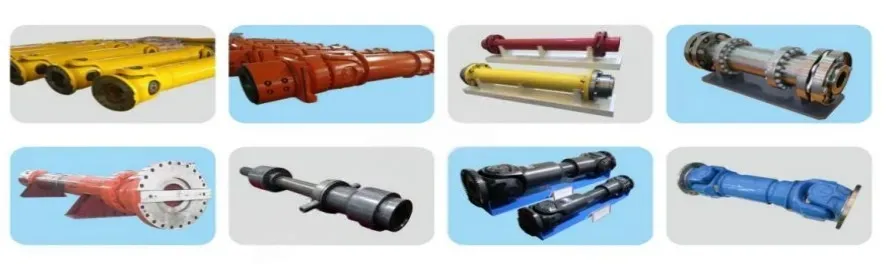 Ever Power Gear Type Coupling — Pump Drive Series. Available in carbon steel, stainless steel, and duplex alloy grades.
What Distinguishes a Gear Type Coupling from Other Flexible Couplings
A gear type coupling — also referred to in British engineering literature as a gear coupling or toothed sleeve coupling — consists of two machined steel hubs, each carrying external involute gear teeth, and an outer sleeve (or two flanged half-sleeves) carrying matching internal teeth. Torque passes from the driving shaft hub teeth into the sleeve teeth and onward into the driven shaft hub in a continuous, metal-to-metal load path. There is no elastomeric element to degrade, no bonded interface to delaminate, and no composite material to crack. The gear tooth profile — typically a 20-degree pressure angle with a carefully engineered crowned geometry — distributes contact stress across a broad tooth face rather than concentrating it at a single line, which is why a gear type coupling in the GTC-160 size can routinely transmit 1,600 N·m through a sleeve with an outer diameter of roughly 160 mm.
In a centrifugal pump application, the coupling handles three distinct loading conditions: start-up torque spikes (typically 2.5–6 times the full-load torque on DOL-started motors), continuous steady-state torque transmission at rated speed, and transient overloads generated by cavitation events, valve closures, or process surges. A gear type coupling manages all three loading modes through the same tooth contact mechanism, without the compliance change that elastomeric designs exhibit as they heat up and soften. That torsional stiffness consistency is important in variable-frequency drive (VFD) controlled pump systems, where torsional natural frequency calculations must remain valid across the entire speed range — a design requirement increasingly common in UK energy-efficiency programmes under the Energy Savings Opportunity Scheme (ESOS).
Engineering Principles: How the Gear Tooth Mechanics Actually Work
Torque transmission in a gear type coupling follows the relationship T = F × r, where F is the tangential force at the gear tooth contact and r is the pitch radius of the hub gear. The crowned tooth profile — each tooth is slightly barrel-shaped along its length — shifts the contact zone axially when angular misalignment is present, preventing the edge-loading that would occur on a straight-sided tooth and initiate fatigue failure. This crowning geometry is calculated to a specific misalignment envelope, typically 1.5 degrees per gear mesh (3.0 degrees total for a double-engagement coupling with two meshes in series), while maintaining Hertzian contact pressure below the allowable threshold for the tooth surface hardness.
Lubrication is integral to the gear type coupling’s operating principle rather than merely desirable. As the coupling transmits torque under misalignment, the teeth slide slightly relative to each other in an oscillatory motion at a frequency equal to shaft speed. Without a lubricant film separating the tooth surfaces, this micro-sliding contact generates adhesive wear that consumes the tooth profile and reduces the coupling’s misalignment capacity progressively until catastrophic tooth fracture occurs. In grease-lubricated gear type couplings, centrifugal force during rotation maintains the lubricant film around the tooth flanks — which is why the correct grease fill level (typically 40–60% of the internal sleeve cavity volume) is specified rather than simply “fill to the top.”
Oil-lubricated gear type couplings, found on high-speed turbine-pump sets in UK power generation and LNG facilities, circulate lubricating oil continuously through passages drilled in the hub and sleeve assembly. At peripheral tooth velocities above 25 m/s — common in 3,600 RPM boiler feed pump applications — the continuous oil flush carries away heat generated at the tooth contact and removes wear debris that would otherwise accumulate and act as an abrasive between tooth surfaces. This continuous oil lubrication approach typically extends gear type coupling tooth life by a factor of three to five compared to equivalent grease-lubricated units at the same operating conditions, which is why it remains the standard for the highest duty pump applications in UK industry.
Materials and Construction: What Goes Into a Quality Gear Type Coupling
⚙
Alloy Steel Hubs — 42CrMo4 & Stainless Grades
Grade 42CrMo4 (to BS EN 10083-3) alloy steel is the industry benchmark for gear type coupling hubs in pump drive applications across the UK. Through-hardened to 28–34 HRC with case-hardened teeth at 58–62 HRC, this material delivers the surface hardness needed for sustained tooth life while retaining the core toughness to withstand shock loading from DOL motor starts and cavitation transients. For corrosive environments — prevalent in UK water treatment raw water intake applications, coastal chemical plants, and marine pump rooms — stainless steel hubs in 316L or duplex 2205 (1.4462) grades are available. These maintain the full torque rating of the carbon steel equivalents at temperatures below 200°C and resist the chloride-induced pitting corrosion that shortens carbon steel coupling life in coastal environments. Every hub leaves our facility with a hardness certificate traceable to the heat of origin.
🔧
Forged Steel Sleeves — Precision AGMA Q10 Gear Geometry
The outer sleeve of a gear type coupling is forged from medium-carbon steel (EN8 equivalent or S45C) rather than cast, because the forging process produces a finer grain structure with superior fatigue strength — critical in continuous-duty pump applications where the coupling may cycle through 30–50 million load reversals over its service life. Internal tooth geometry is precision-machined on CNC gear shaping or hobbing equipment to AGMA quality level 10 or better, controlling tooth profile error, pitch variation, and lead deviation within tight tolerances that directly affect misalignment capacity and tooth load distribution. Flanged half-sleeve designs are standard in Ever Power’s pump series because they allow in-place disassembly of the coupling without disturbing pump or motor alignment — a maintenance advantage that reduces planned outage duration at UK industrial sites by 40–60% compared to full-sleeve designs requiring shaft removal.
🛡
Sealing Systems — O-Rings, Retaining Rings & Locking Plates
An often underappreciated element of gear type coupling design, the sealing system retains lubricant inside the sleeve cavity and prevents ingress of process fluids, steam, or water wash-down streams. O-rings in NBR (nitrile) are specified for ambient-temperature pump applications with mineral greases. FKM (Viton) O-rings are standard where process fluid splash, elevated temperatures above 80°C, or synthetic lubricants with ester or PAO bases are present — conditions common in UK pharmaceutical, food-grade, and chemical pump installations. Stainless steel retaining rings and locking plates prevent the sleeve from migrating axially along the hub during operation — a failure mode that manifests when sustained misalignment beyond the design limit generates an axial reaction force on the tooth face, progressively walking the sleeve along the hub until lubricant loss and tooth disengagement occur. Correct sealing is as important as correct tooth geometry for achieving the rated gear type coupling service life.
Technical Parameters — Ever Power Gear Type Coupling, Pump Drive Series
* Custom bore sizes, keyway profiles, splined interfaces, and non-standard flange patterns available. Contact Ever Power for non-catalogue specifications. All torque ratings at service factor 1.0 — apply AGMA service factors per drive type and start frequency.
Where Gear Type Couplings Excel: Key UK Pump Application Scenarios
The range of centrifugal pump applications where a gear type coupling represents the optimal engineering selection is broader than many procurement engineers initially appreciate. Each scenario below places specific demands on the coupling that drive particular choices in material grade, sleeve type, lubrication system, and misalignment envelope. Understanding these demands is what separates a well-specified gear type coupling installation from a generic one.
💧 Water Treatment & Distribution — Thames Valley, Yorkshire, Anglian, Scottish Water
UK water utilities — regulated under the Water Industry Act 1991 and audited by Ofwat — demand equipment with documented reliability histories and traceable material certifications. Gear type couplings on horizontal split-case and end-suction pumps at treatment works in the Thames Valley, Severn Trent, and Anglian Water service areas typically operate 8,000–12,000 hours between planned lubrication service intervals with negligible wear if the correct grease specification is maintained. The stainless steel option (316L hubs and forged sleeves) is increasingly specified for raw water intake pumps exposed to grit-laden influent flows, where the external corrosion of standard carbon steel coupling housings accelerates during seasonal site flooding — a recurring problem at East Anglian riverside installations. Bore ranges from 50 mm to 160 mm cover the full motor shaft range from 18.5 kW to 355 kW motors found in modern UK treatment works, and Ever Power carries stock of GTC-160 and GTC-400 sizes in both carbon steel and 316L SS grades for rapid despatch.
🏭 Chemical & Pharmaceutical Processing — Teesside, Merseyside, Cambridge-Oxford Arc
Process pumps in UK chemical plants and pharmaceutical manufacturers transfer aggressive media at elevated temperatures in ATEX-classified areas where coupling failure must not generate ignition sources. A gear type coupling’s all-steel construction eliminates the fire risk and degradation concerns associated with polyurethane or rubber elastomers in environments with solvent vapour, acid splash, or high-temperature steam tracing. For ATEX Zone 1 or Zone 2 applications, gear type couplings are supplied with surface roughness specifications that prevent frictional spark generation in the event of sleeve-hub contact under extreme misalignment. High-temperature pump services operating above 150°C sustained — common in hot oil transfer and steam condensate return loops — use MoS2-based solid lubricant pastes in place of conventional greases, maintaining the tooth film integrity across thermal cycles that would degrade normal lubricants. DSEAR 2002 compliance documentation and ATEX equipment categorisation certificates are available for all gear type coupling sizes in our pump drive range.
⚡ Power Generation Cooling Water Circuits — CCGT & Nuclear Sites
Circulating water pumps at UK combined-cycle gas turbine (CCGT) stations and nuclear sites are among the most demanding centrifugal pump applications in existence. These vertical-shaft or large horizontal pumps, with shaft diameters of 150–280 mm, operate continuously for months between planned outages. The gear type coupling linking the motor to the pump shaft must accommodate the independent thermal expansion of the motor rotor and pump casing, which can generate 3–6 mm of relative axial displacement between shafts during a cold-to-hot transition. Oil-lubricated gear type couplings with forced-oil circulation are standard in this service, ensuring adequate film thickness even at the low peripheral tooth velocities of large-diameter shafts turning at 500–740 RPM. A coupling failure on a circulating water pump triggers an immediate unit trip — the lost generation revenue at a 500 MW CCGT station exceeds £25,000 per hour at current UK wholesale electricity prices, making the business case for a premium gear type coupling specification self-evident to any commercial team reviewing a maintenance budget.
⛵ Marine & Offshore — North Sea, Aberdeen, UK Port Installations
Offshore platforms on the UK Continental Shelf and vessels operating out of Aberdeen, Immingham, and Felixstowe carry ballast pumps, fire-and-general-service pumps, and seawater cooling pumps where the structural flexing of hulls and topsides makes rigid shaft alignment impossible to maintain permanently across a vessel’s operational life. Marine-grade gear type couplings manufactured to DNV-GL or Lloyd’s Register class requirements use duplex stainless (2205) or nickel-alloy hubs for maximum resistance to the chloride-saturated atmosphere of a North Sea platform or an FPSO vessel. The high axial compliance of a double-engagement gear type coupling — ±8 mm on GTC-2500 — is particularly valuable on FPSOs where hull deflection under wave loading generates axial shaft movements beyond the tolerance of diaphragm or disc-pack couplings. Class certification packages, including type test reports and factory acceptance documentation, are standard deliverables for all offshore gear type coupling orders processed through Ever Power.
Six Reasons UK Plant Engineers Specify Ever Power Gear Type Couplings
01
Highest Torque Density of Any Flexible Coupling Type
Gear tooth contact distributes transmitted force across a wide area, enabling a gear type coupling to transmit more torque per unit of outer diameter than elastomeric, disc, or jaw coupling designs. For retrofit applications where the coupling guard, baseplate, or pump inlet piping constrains the available envelope, this means upgrading to a higher torque rating without structural modifications — a significant cost advantage on brownfield UK industrial sites where civils work is expensive and disruptive.
02
Simultaneous Three-Dimensional Misalignment Accommodation
Angular, parallel, and axial misalignment are all accommodated within the same gear type coupling without requiring separate design features. This matters in real-world installations where foundation settlement, thermal growth, and maintenance rebuild errors introduce misalignment in multiple planes simultaneously — the common situation on older UK sites where pump foundations have not been re-levelled in 20 years. The gear type coupling handles the combined misalignment condition gracefully; disc couplings and jaw couplings running at their combined misalignment limits generate bearing-damaging reaction forces.
03
Predictable, Planned Maintenance Rather Than Surprise Failures
A well-maintained gear type coupling provides measurable warning before failure: increasing vibration amplitude on the pump and motor bearings, a change in the coupling’s thermal profile detectable by infrared thermography, or visible lubricant weepage at the sleeve seals. These signals appear weeks or months before catastrophic failure, giving reliability teams the opportunity to schedule replacement within a planned outage. Emergency coupling failures on UK production sites regularly cost between £5,000 and £50,000 per event in emergency contractor costs, lost output, and material waste — the predictability advantage of a gear type coupling compounds over a multi-pump fleet.
04
Operating Temperature Range −40°C to +200°C
The all-steel construction of a gear type coupling — with temperature-rated lubricant and appropriate seal materials — operates across a temperature envelope that elastomeric couplings simply cannot match. Hot oil transfer pumps at 180°C sustained, cryogenic pump drives at −40°C in LNG applications, and heat exchanger circulating pumps cycling between ambient and 120°C across seasonal demand variation are all appropriate gear type coupling applications. For UK district heating networks, industrial steam raising plant, and the growing LNG import terminal sector, this temperature capability is a genuine discriminator.
05
Electrically Isolated Options for VFD-Driven Pump Systems
Gear type couplings with ceramic-coated or PEEK-insert gear tooth interfaces break the electrical continuity between the motor shaft and pump shaft, preventing shaft current from flowing through the bearing races and causing electrolytic pitting — a failure mode that has become significantly more prevalent as VFD-driven pump systems become the norm in UK ESOS compliance programmes. Pump bearing failure attributable to shaft currents is frequently misdiagnosed as lubrication failure, leading to repeated bearing replacements without addressing the root cause. A gear type coupling with integrated shaft current isolation solves the problem at source and does not require the ongoing maintenance that shaft grounding brushes demand.
06
Dimensionally Interchangeable with AGMA & Legacy OEM Standards
Ever Power gear type couplings are dimensionally interchangeable with AGMA 9003-B08 and AGMA 9002 standard sizes, ensuring drop-in compatibility with legacy Falk, Rexnord, Dodge, Thomas, and Bibby gear coupling designs widely present in UK plant inventories. Replacing a worn or obsolete OEM coupling with an Ever Power unit requires no re-engineering of the baseplate, guard, or pump inlet piping — only a standard bore re-machining to the new shaft diameter if required. For UK OEMs and pump integrators building standardised pump packages for multiple customers, this interchangeability simplifies spare parts management and reduces the inventory value held in the storeroom.
Customer Success Case Study: Yorkshire Water Authority — East Yorkshire, UK
Industrie
Water Treatment
Locaţie
East Yorkshire, UK
Problem
Repeated Jaw Coupling Failures
Outcome
Zero Failures — 36 Months
A Yorkshire-based water authority was experiencing three to four elastomeric jaw cuplare failures per year across a fleet of twelve 55–110 kW intake pump sets — each failure requiring emergency contractor attendance, with average downtime of 6–10 hours and direct costs of £1,800–£3,200 per event. A detailed alignment survey commissioned by the authority’s rotating equipment team revealed that 15 years of foundation settlement had introduced 0.7–0.9 mm parallel shaft offset and 0.7–0.9 degrees of angular misalignment across the pump fleet — values exceeding the rated tolerance of the jaw couplings and progressively destroying the rubber spider elements, typically within 4–6 months of installation.
After converting all twelve pump drives to Ever Power GTC-400 gear type couplings with stainless steel hubs — selected specifically for the corrosive groundwater environment and the misalignment values measured during the survey — the authority completed a full 36-month operating period without a single coupling-related outage. The annual maintenance cost saving across the fleet was calculated at approximately £47,000, excluding the unquantified benefit of eliminated emergency call-outs, avoided process interruptions, and reduced risk of regulatory non-compliance with abstraction licence conditions. The site maintenance manager noted that technicians now service each gear type coupling on a planned 18-month cycle, completing the grease replenishment and O-ring inspection in under two hours per unit. The authority has since adopted Ever Power gear type couplings as the site standard for all future pump drive installations and has extended the same specification to a sister site in the Humber area.
💬 What Our Customers Say
„
We specified Ever Power gear type couplings for a new effluent transfer pump installation at our Teesside processing facility. The application engineering support during the selection process was thorough — they reviewed our shaft layout drawing, confirmed the combined misalignment values against the coupling’s rated envelope, and provided a written torque analysis accounting for our DOL motor start frequency. Eighteen months into operation, the couplings are performing exactly as projected with no unplanned interventions.
— Senior Mechanical Engineer, Northeast England Chemical Processing Plant
„
We needed a non-standard bore of 145 mm with a specific keyway profile for our circulating water pump at a Scottish power station. Most suppliers quoted 14–16 weeks. Ever Power delivered custom gear type couplings in six weeks complete with full CMM dimensional inspection reports and EN 10204 3.1 material certificates. That level of responsiveness and documentation quality is not what we are accustomed to receiving from coupling suppliers.
— Rotating Equipment Specialist, Scottish Power Generation Facility
„
After three years of sourcing gear type couplings from multiple suppliers and dealing with inconsistent dimensional quality and premature tooth wear, we consolidated our entire pump drive coupling supply to Ever Power. The batch-to-batch consistency is measurably better — our stores team no longer needs to individually verify coupling dimensions before installation, which alone saves two to three hours of inspection labour per delivery. The engineering team’s availability to discuss application-specific questions by phone is also genuinely different from the industry norm.
— Maintenance Manager, East Midlands Food & Beverage Processing Site
Capacitate de producție Ever Power și servicii de inginerie personalizate
Ever Power operates a purpose-built gear coupling manufacturing facility equipped with CNC gear hobbing and gear shaping machine tools capable of cutting involute profiles to AGMA quality 10 or better on hub bore diameters from 20 mm through to 400 mm. Our in-house heat treatment line processes alloy steel components through case carburising, induction hardening, or through-hardening cycles to precisely controlled case depths and surface hardness profiles. Dimensional verification on every gear type coupling is performed on calibrated coordinate measuring machines (CMM) before despatch, with full traceable inspection reports issued as a standard document — not an optional extra.
Custom design is a core manufacturing competency, not an exception process. Our application engineering team routinely delivers non-standard bore and keyway dimensions, special flange bolt-circle patterns matching OEM pump shaft flanges, marine paint systems or hot-dip galvanising for offshore applications, splined bores for gearbox-direct-drive connections, integrated spacer tube designs for vertical pump spool-piece requirements, and full material certification to EN 10204 3.1 or 3.2 where project specifications require it. If your organisation operates under a Pressure Systems Safety Regulation (PSSR 2000) written scheme of examination, DSEAR 2002 hazardous area register, or an offshore safety case requiring traceable equipment records, our documentation team has prepared these packages for UK clients across multiple industry sectors and can tailor the deliverable to your exact specification.
For UK OEM pump manufacturers in Birmingham, Manchester, Sheffield, and the Bristol area requiring ongoing supply agreements with framework pricing and call-off delivery, Ever Power offers dedicated stock-holding programmes and engineering liaison to support new pump model development. We carry ISO 9001:2015 certification and can provide ITPs (Inspection and Test Plans) and FAT (Factory Acceptance Test) procedures aligned to your project quality plan. Contact our sales engineering team to discuss a tailored supply arrangement.
Supplying Gear Type Couplings Across UK Industry Sectors
Ever Power supplies gear type couplings to industrial customers throughout England, Scotland, Wales, and Northern Ireland, with ex-stock availability through our UK distribution network providing next-day delivery on standard size ranges. Our UK customer base spans water utilities and treatment contractors in the Thames Valley, Severn Trent, Yorkshire Water, Anglian, United Utilities, and Scottish Water supply territories; chemical and petrochemical processors in the Teesside chemical complex, the Merseyside industrial corridor, and the Humber estuary refinery cluster; offshore oil and gas operators and inspection contractors based in Aberdeen and Peterhead; power generation facilities at CCGT and pumped-storage hydro sites operated by major UK energy companies; food and beverage processing plants in the East Midlands, Yorkshire, and the Scottish Borders; pharmaceutical manufacturers in the Oxford-Cambridge innovation arc; and marine engineering workshops in Southampton, Portsmouth, and the Tyne and Wear area.
UK procurement teams working under BS EN 10204 material certification requirements, PSSR 2000 written schemes of examination, DSEAR 2002 hazardous area compliance, or ATEX Directive equipment classification frameworks will find our documentation deliverables straightforward to integrate into their existing quality management systems. We understand that UK engineering procurement often involves approval authority sign-off at multiple levels, and we can provide preliminary engineering data for specification work, HAZOP support data for gear type coupling failure mode assessment, and RCM (Reliability-Centred Maintenance) input data for asset management systems. Pump OEMs and systems integrators in Birmingham, Manchester, and Bristol who need a reliable, technically credible gear type coupling supply partner for new equipment builds should contact us to discuss a preferred supplier agreement.
Frequently Asked Questions: Gear Type Couplings for UK Industrial Pump Applications
Ready to Source Gear Type Couplings for Your Pump Application?
Tell us your shaft size, rated torque, operating speed, and application. Our engineering team responds within one UK business day — no automated replies, no holding queues.
📧 Enquire Now — [email protected]
editat de gzl