Industrial Drivetrain Engineering
Kopplingar i cementroterugnstillämpningar: Teknisk tillförlitlighet under extrema förhållanden
A deep-dive technical guide for UK cement and heavy industry professionals — covering selection, performance, materials, and procurement.
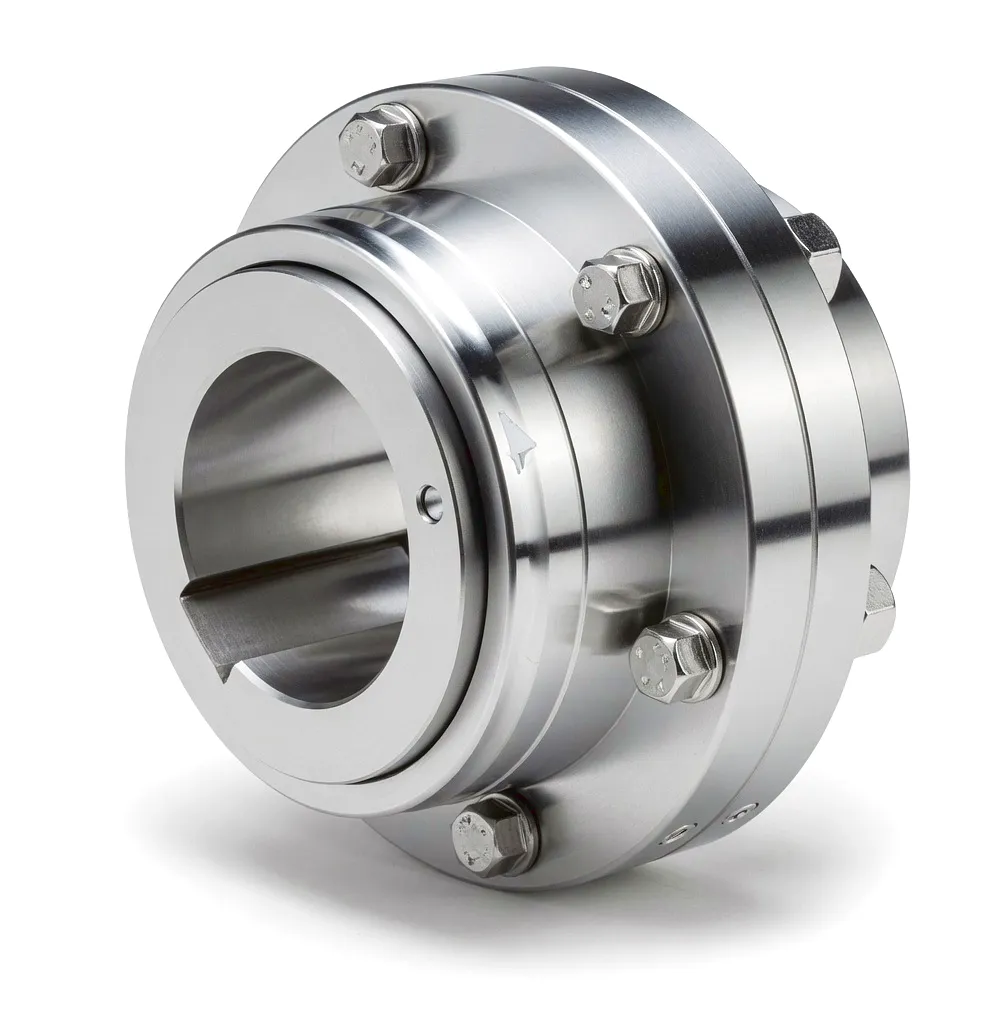
Cement rotary kilns rank among the most mechanically demanding machines in modern heavy industry. Stretching anywhere from 50 to over 200 metres in length and rotating continuously at temperatures that can exceed 1,400 degrees Celsius inside the barrel, these kilns place extraordinary stress on every mechanical component in the drivetrain. At the heart of that drivetrain sits the coupling — a component that most plant engineers do not think about until something goes very wrong. In reality, coupling selection is one of the single most consequential decisions made when commissioning or refurbishing a cement kiln line, and getting it right from the outset determines not only uptime but also the long-term maintenance burden and total cost of ownership for the entire drive system. Facilities across the UK — from the large integrated cement works in the East Midlands to the coastal aggregate and clinker operations in Yorkshire and the South West — share a common dependency on reliable coupling technology to keep production moving around the clock.
A coupling in this context is far more than a connector between motor and gearbox, or between gearbox and kiln pinion shaft. It is an active mechanical buffer that must absorb shock loads generated during kiln start-up, accommodate the gradual thermal expansion of shafts and housings as the kiln reaches operating temperature, compensate for angular and parallel misalignment that develops over time as foundations settle or shell deformation occurs, and do all of this while transmitting torque values that regularly run into hundreds of thousands of Newton-metres. The engineering challenge is significant, and the margin for error is extremely narrow given that unplanned downtime in a cement plant can cost tens of thousands of pounds per hour when production targets are missed and contractual penalties apply.
How Couplings Function Within the Cement Kiln Drive System
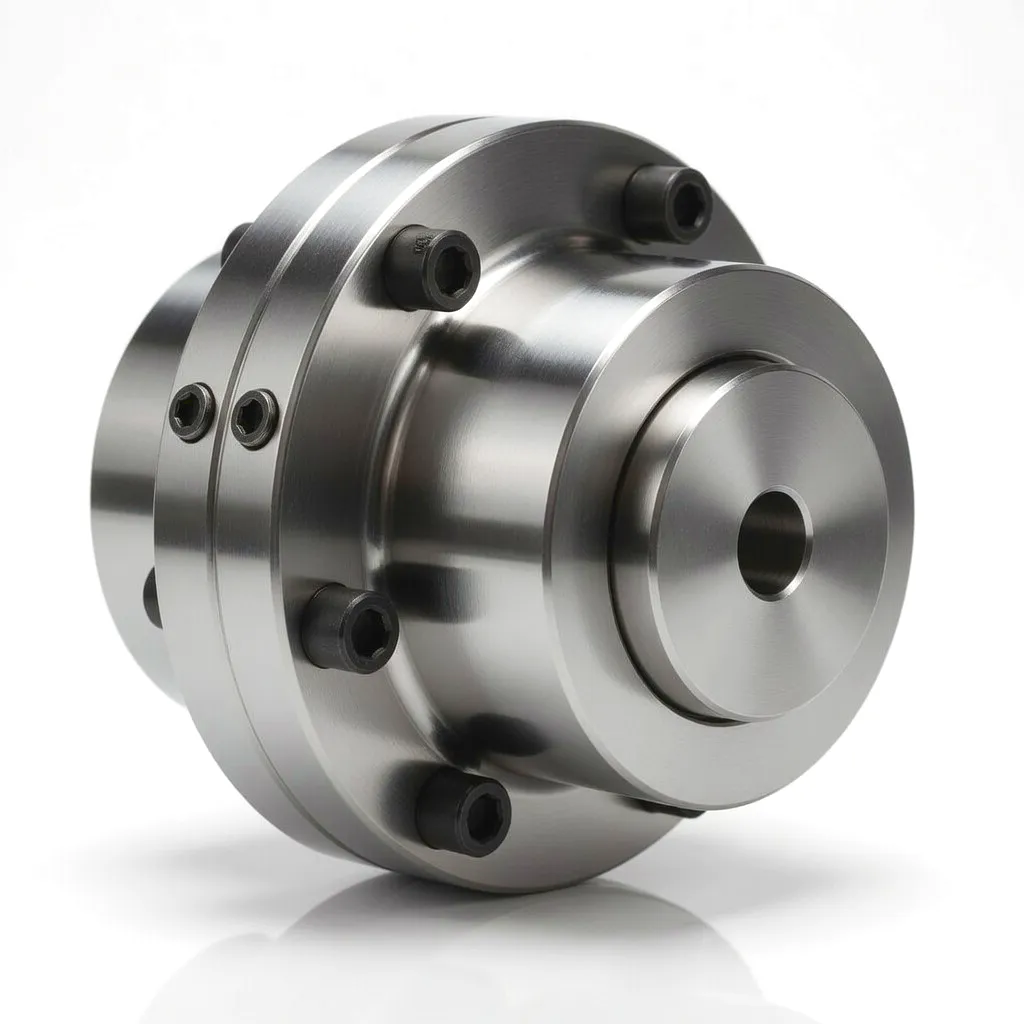
The cement rotary kiln drive train typically consists of an electric motor, a fluid coupling or direct coupling stage, a high-reduction gearbox, an output coupling, and finally the open gear ring-and-pinion arrangement that rotates the kiln shell itself. In some configurations, auxiliary or backup drives are incorporated, each requiring its own coupling arrangement. The coupling positioned between the gearbox output shaft and the kiln pinion shaft is the most critically loaded component in the entire system, because it must simultaneously handle peak torque, dynamic shock, and significant continuous misalignment.
When a cement kiln starts from cold, the motor ramps up and the drivetrain must overcome the considerable breakaway torque of a stationary kiln — the shell itself can weigh several thousand tonnes and any charge of raw meal inside adds further resistance. This start-up shock load can be three to five times the nominal running torque. A coupling that has not been correctly rated for this dynamic factor will fatigue at the hub teeth, flex element, or spider interface, leading to progressive damage that is difficult to detect visually until failure becomes imminent.
Once at operating speed, the kiln shell gradually flexes as the thermal gradient develops along its length. This flexure causes the pinion shaft centreline to migrate, introducing angular misalignment at the coupling. In parallel, the gearbox itself experiences thermal growth, shifting its output shaft position relative to the kiln. A high-performance gear coupling or flexible disc coupling addresses this by accommodating angular deflections of up to several degrees without transferring bending moment back into the gearbox bearings — a critical protection against premature bearing failure and seal damage that would otherwise demand emergency maintenance shutdowns.
Material Science Behind Heavy-Duty Coupling Construction
⚙
Alloy Steel Hubs (42CrMo4 / EN19T)
The hub is the interface between coupling and shaft, and it must survive keyway fretting, high bending moments, and corrosive environments common to cement dust atmospheres. Alloy steel grades such as 42CrMo4 (equivalent to BS EN 10083 EN19T) are the standard choice, offering tensile strengths above 900 MPa after quenching and tempering, combined with excellent fatigue resistance. Bore tolerances are held to H7/js6 interference fits to eliminate fretting corrosion at the shaft interface, which is a frequent root cause of premature hub failure in high-cycle applications like cement kilns that run 24 hours a day, 365 days a year in facilities across Birmingham’s manufacturing belt and beyond.
🔥
Case-Hardened Gear Teeth (Surface Hardness HRC 55–62)
Gear-type couplings used in kiln pinion shaft applications rely on carburised and case-hardened external and internal tooth profiles. The tooth form is typically an involute profile with crowned geometry — a deliberate convex curvature applied to the tooth flanks that allows the coupling to accommodate angular misalignment without point-loading at tooth edges. Without this crowning, misalignment translates directly into concentrated stress at the tooth tip, which leads to pitting and spalling within months. The case depth is typically controlled to 0.8–1.5 mm, with the core remaining tough to resist impact, and the surface achieving the hardness necessary to resist abrasive cement dust contamination that inevitably finds its way past seals during long service intervals.
🔮
High-Performance Flexible Disc Packs (301 Stainless Steel)
For disc coupling configurations deployed on the motor-to-gearbox interface, the flex element consists of precisely laser-cut laminate disc packs manufactured from 301-grade austenitic stainless steel. This grade offers a favourable balance of fatigue strength, corrosion resistance, and ductility, which is essential because the flex pack undergoes cyclic bending at every revolution. The disc thickness, diameter, and number of laminates are calculated to achieve the required angular and axial misalignment capacity while keeping the alternating stress amplitude well below the material’s endurance limit. In UK cement facilities, where planned maintenance windows can be as short as 48 hours per quarter, the zero-lubrication maintenance requirement of disc couplings represents a significant operational advantage over gear couplings that demand periodic regrasing and sleeve inspection.
📃
Polyurethane and Nitrile Elastomeric Elements
In certain drive positions, particularly auxiliary drive systems and variable-frequency-drive applications, elastomeric jaw or spider couplings are selected for their vibration damping capacity. The spider element in these couplings is manufactured from cast polyurethane or moulded nitrile rubber, with shore hardness ranging from 80A to 98A depending on the torsional stiffness required. Softer elements absorb more vibration energy but deflect more under torque, potentially causing excessive rotational backlash at start-up. Harder elements transmit torque more efficiently but damp less vibration. The selection is always a calibrated compromise, and in cement kiln auxiliary drive contexts, a 92A to 95A grade polyurethane is typically the preferred specification across UK plant engineering departments.
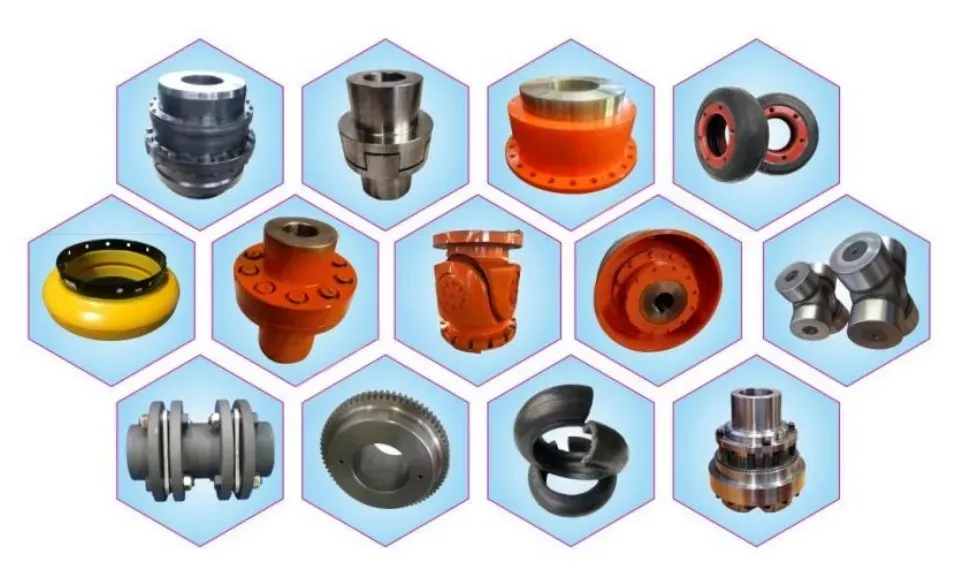
Core Technical Advantages of Modern Coupling Systems for Rotary Kilns
✓ Misalignment Tolerance up to 3°
Gear and disc coupling designs rated for angular deflections up to 3 degrees accommodate the gradual shell warping and thermal growth without imposing destructive bending loads on connected shaft bearings, protecting gearbox longevity and reducing seal replacement frequency significantly across long production campaigns.
✓ Dynamic Torque Rating to 5 x Nominal
Peak load service factors of 5.0 or above ensure that start-up shocks, grid electrical disturbances, and sudden load changes are absorbed rather than transmitted to the gearbox or motor shaft. This is particularly valuable in UK plants where ageing power infrastructure can introduce current fluctuations that translate into torque spikes at the motor shaft coupling during energisation.
✓ Zero Lubrication Maintenance (Disc Type)
Dry disc coupling designs eliminate the greasing schedule, grease contamination risks, and sleeve wear monitoring that gear coupling maintenance requires. Over a five-year operating horizon, this maintenance saving translates into reduced man-hours, lower consumables cost, and elimination of the risk of a greasing-interval miss that leads to tooth surface scoring and premature coupling replacement.
✓ Fail-Safe Membrane Construction
Laminate disc packs are engineered with progressive failure modes — when a single laminate reaches fatigue life, the load redistributes to adjacent laminates and vibration signature changes detectably, providing advance warning to condition monitoring systems before complete separation occurs. This predictability is invaluable in continuous-operation cement plants where unplanned shutdowns carry enormous financial consequences.
✓ High Torsional Stiffness with Damping Option
Modern coupling designs allow engineers to fine-tune torsional stiffness independent of torque capacity. This means the drivetrain’s natural frequency can be deliberately detuned away from excitation frequencies generated by the kiln ring gear mesh, avoiding resonance that would otherwise amplify dynamic loads to destructive levels within the gearbox internals. Torsional analysis services are increasingly offered alongside coupling supply in the UK engineering supply chain.
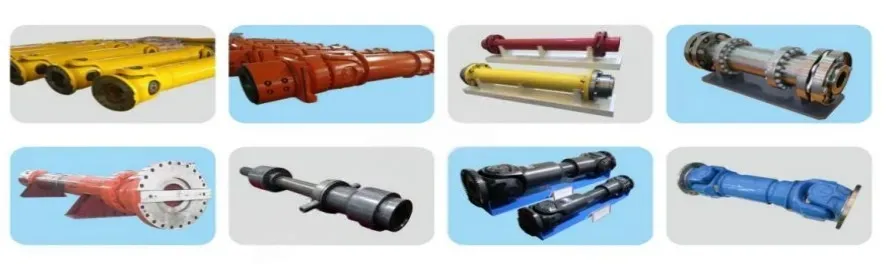
Product Technical and Performance Parameters
The table below outlines representative performance parameters for gear-type and disc-type couplings commonly specified for cement rotary kiln drives. Actual values will vary according to shaft diameter, speed, and application-specific service factors determined during engineering review. Custom configurations beyond these ranges are available through Ever Power.
| Parameter | Gear-Type Coupling | Skivkoppling | Flexible Jaw Coupling |
|---|
| Nominellt vridmomentområde | 500 – 2,500,000 N·m | 200 – 800,000 N·m | 5 – 25,000 N·m |
| Maximal vinkelförskjutning | upp till 3° | up to 1.5° per disc pack | up to 1° |
| Axial Displacement Capacity | ±5 to ±20 mm | ±2 to ±8 mm | ±2 to ±5 mm |
| Borrdiameterområde | 20 – 650 mm | 15 – 500 mm | 8 – 200 mm |
| Maximum Speed (RPM) | up to 4,000 rpm | up to 20,000 rpm | up to 8,500 rpm |
| Navmaterial | 42CrMo4 / AISI 4140 | 42CrMo4 / Stainless 316 | GG25 Cast Iron / Steel |
| Flex Element Material | Sätthärdade tänder i legerat stål | 301 / 304 Stainless laminate | Polyurethane 80A–98A |
| Service Factor (Peak / Nominal) | up to 5.0 | up to 3.5 | up to 2.5 |
| Lubrication Requirement | Grease, 6-month interval | None (dry assembly) | None (dry assembly) |
| Driftstemperaturområde | -30°C to +120°C | -50°C to +150°C | -40°C to +100°C |
Application Scenarios: Where Couplings Perform in Cement Rotary Kiln Systems
▶ Application 1: Main Drive Coupling — Motor to Planetary Gearbox
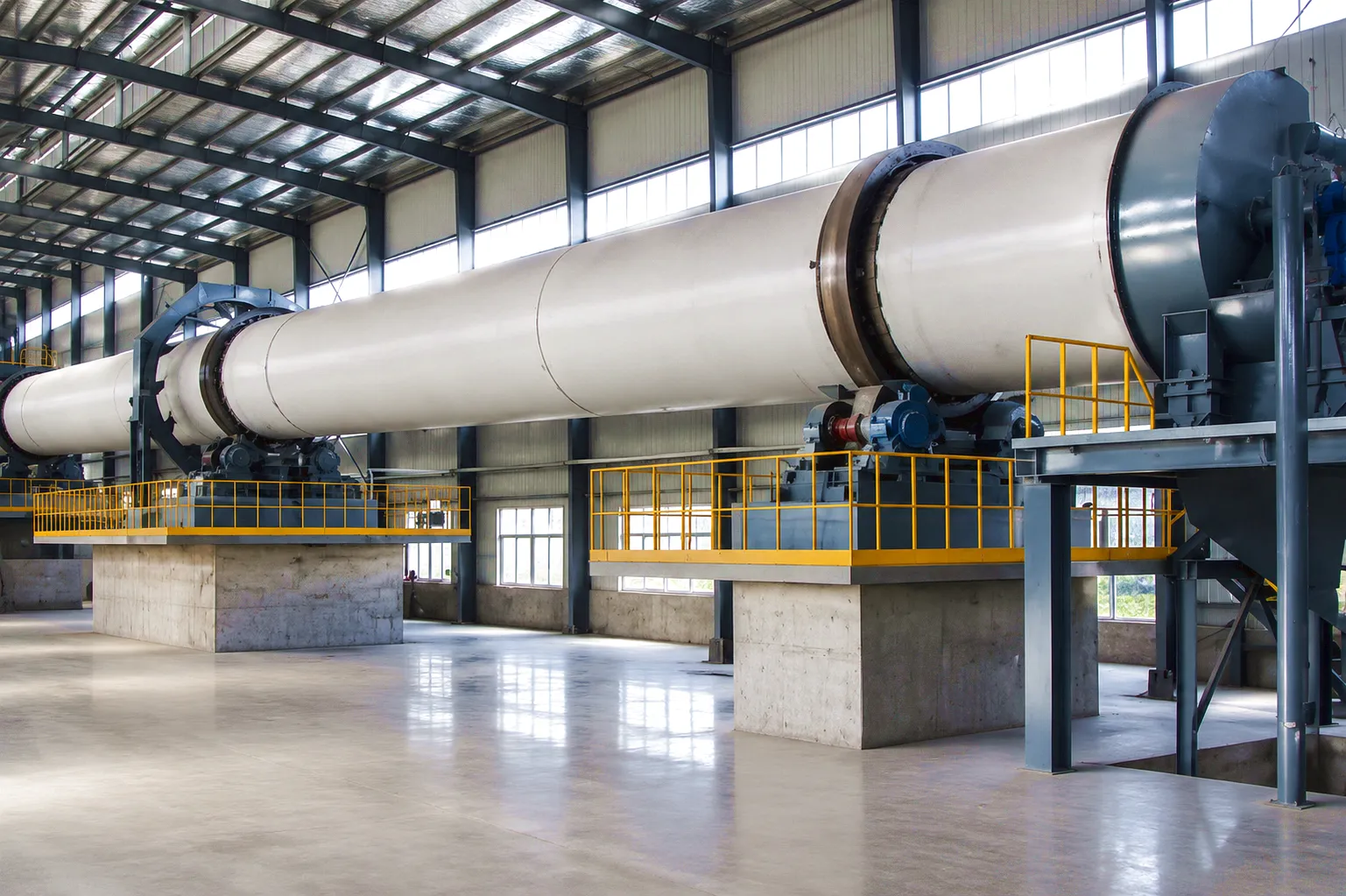
The connection between the main electric drive motor and the primary reduction gearbox is one of the most torque-variable positions in the entire cement kiln drivetrain. During start-up, the motor draws peak current and the output torque climbs sharply; during normal running it settles at a fraction of peak; and during process upsets such as a hard charge freeze (where material inside the kiln solidifies and blocks rotation), the motor may be forced to deliver sustained peak torque against a locked rotor. The coupling at this position must bridge significant radial and angular misalignment resulting from thermal growth of the motor mounting frame, while providing a degree of torsional cushioning that protects the gearbox from the harsh electrical torque ripple produced by direct-online-start motors that remain common in older UK cement facilities. Disc couplings with a dual-disc-pack arrangement are the engineered solution of choice here, providing the combination of high angular capacity, zero maintenance, and torsional accommodation that this demanding position requires. Cement plants in Sheffield and similar steel-industrial corridor areas have increasingly adopted this specification for full-line refurbishment projects over the past decade.
▶ Application 2: Gearbox Output to Kiln Pinion Shaft — High-Torque Gear Coupling
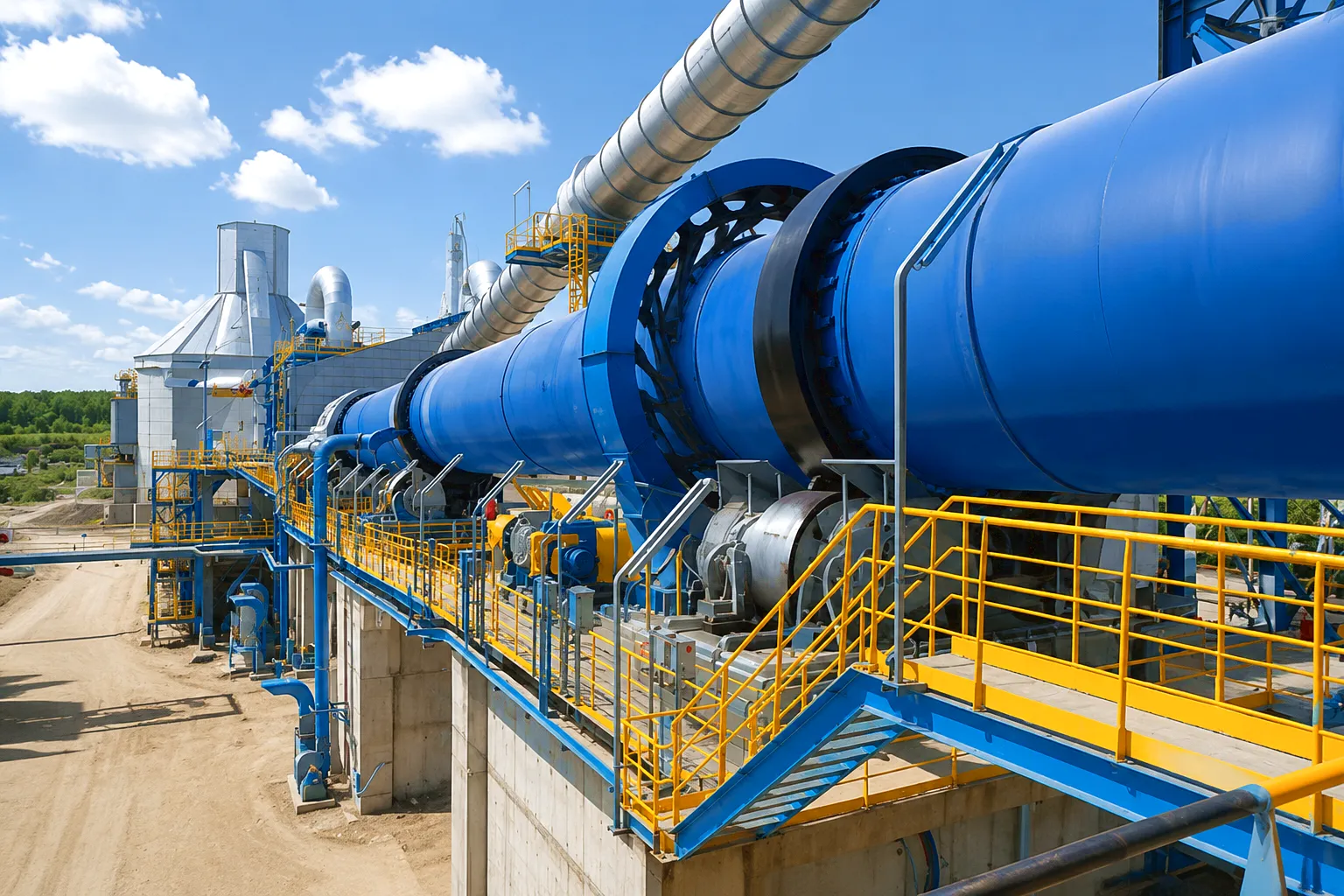
Arguably the single most mechanically demanding coupling position in any cement plant, the output side of the main reduction gearbox transmitting torque into the kiln pinion shaft must handle peak torques that in large modern kiln designs can exceed one million Newton-metres. The slow rotational speed at this output stage, often between 0.3 and 4 rpm depending on kiln diameter and process speed, means that the coupling is transmitting enormous torque at very low angular velocity — a combination that creates extreme surface contact stress at all torque-carrying interfaces. Rigid flanged gear couplings with crown-tooth profiles are the traditional engineering answer, and they remain highly effective when the installation is properly aligned and the greasing regime is maintained rigorously. The critical alignment challenge is that the kiln shell, when thermally loaded, exhibits a predictable but significant sagging deflection along its length, which displaces the pinion shaft axis relative to the gearbox output shaft and introduces angular misalignment at the coupling that was not present during cold commissioning. Engineering teams at UK cement operations have found that scheduling a cold-alignment check immediately after each planned shutdown, and adjusting the coupling spacer shimming accordingly, extends gear coupling service life dramatically and reduces the frequency of tooth replacement machining work.
▶ Application 3: Auxiliary Drive System — Barring and Creep Drive Coupling
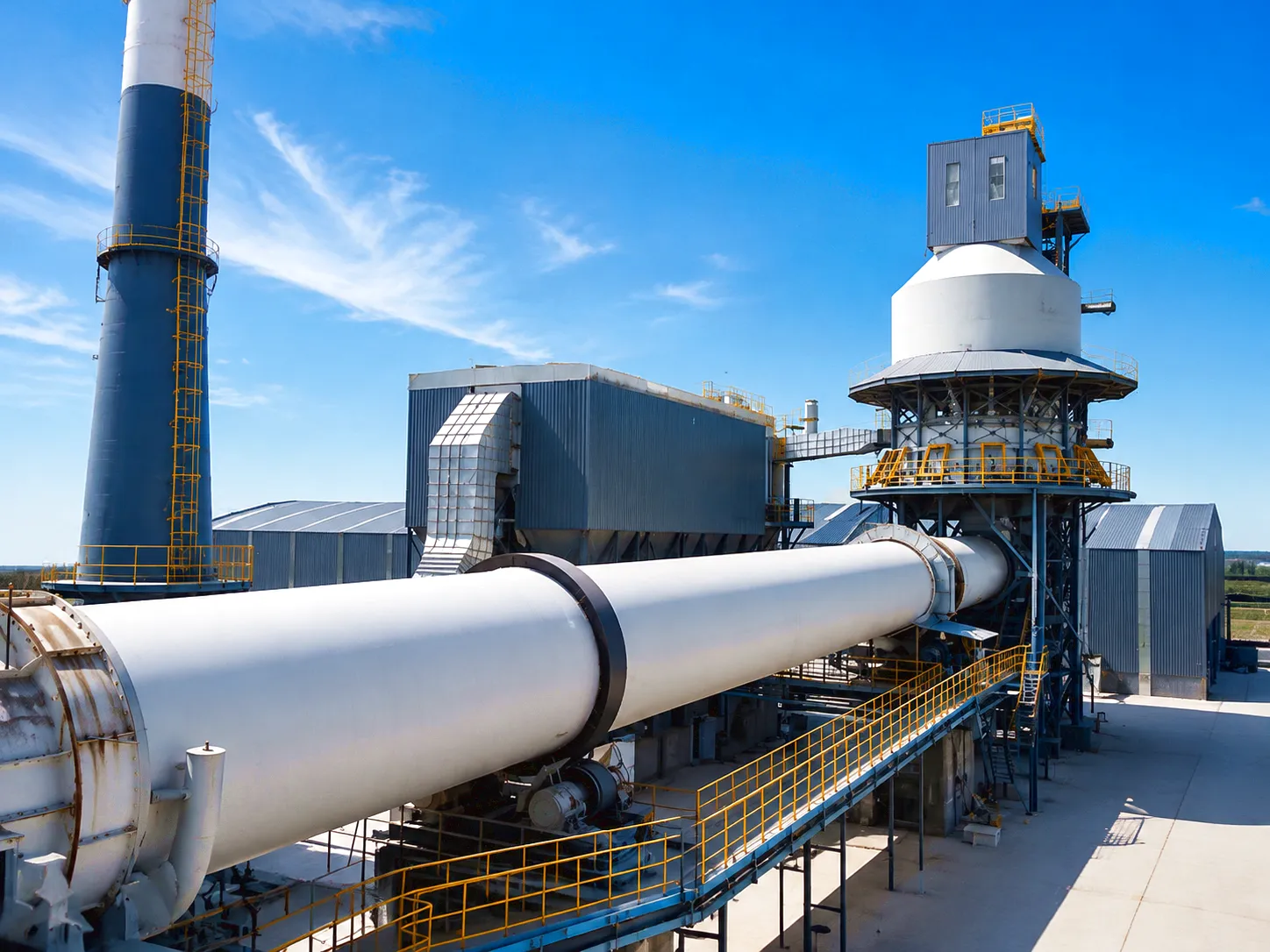
Every cement rotary kiln is fitted with an auxiliary or barring drive — a much smaller secondary drivetrain that rotates the kiln shell slowly during hot shutdowns to prevent the shell from sagging under its own weight when the main drive is de-energised. This barring drive typically rotates the kiln at a creep speed of around 0.1 to 0.5 rpm, and the coupling within it must engage and disengage smoothly without shock loads that could damage the ring gear. In addition to the barring function, many modern UK cement plants use the auxiliary drive as a controlled-speed creep drive during the heating-up and cooling-down phases of production campaigns, where the kiln must be rotated continuously at variable speeds without the main drive motor’s limited low-speed control capability. For this application, a combination of a fluid coupling on the auxiliary motor output and a disconnect coupling with integrated overrunning clutch between the auxiliary and main gearboxes is the standard design, with elastomeric flexible jaw couplings used throughout the auxiliary drive to provide vibration isolation between the small auxiliary motor and the large inertia of the kiln.
▶ Application 4: Raw Mill and Finish Mill Drive Couplings Within the Cement Process
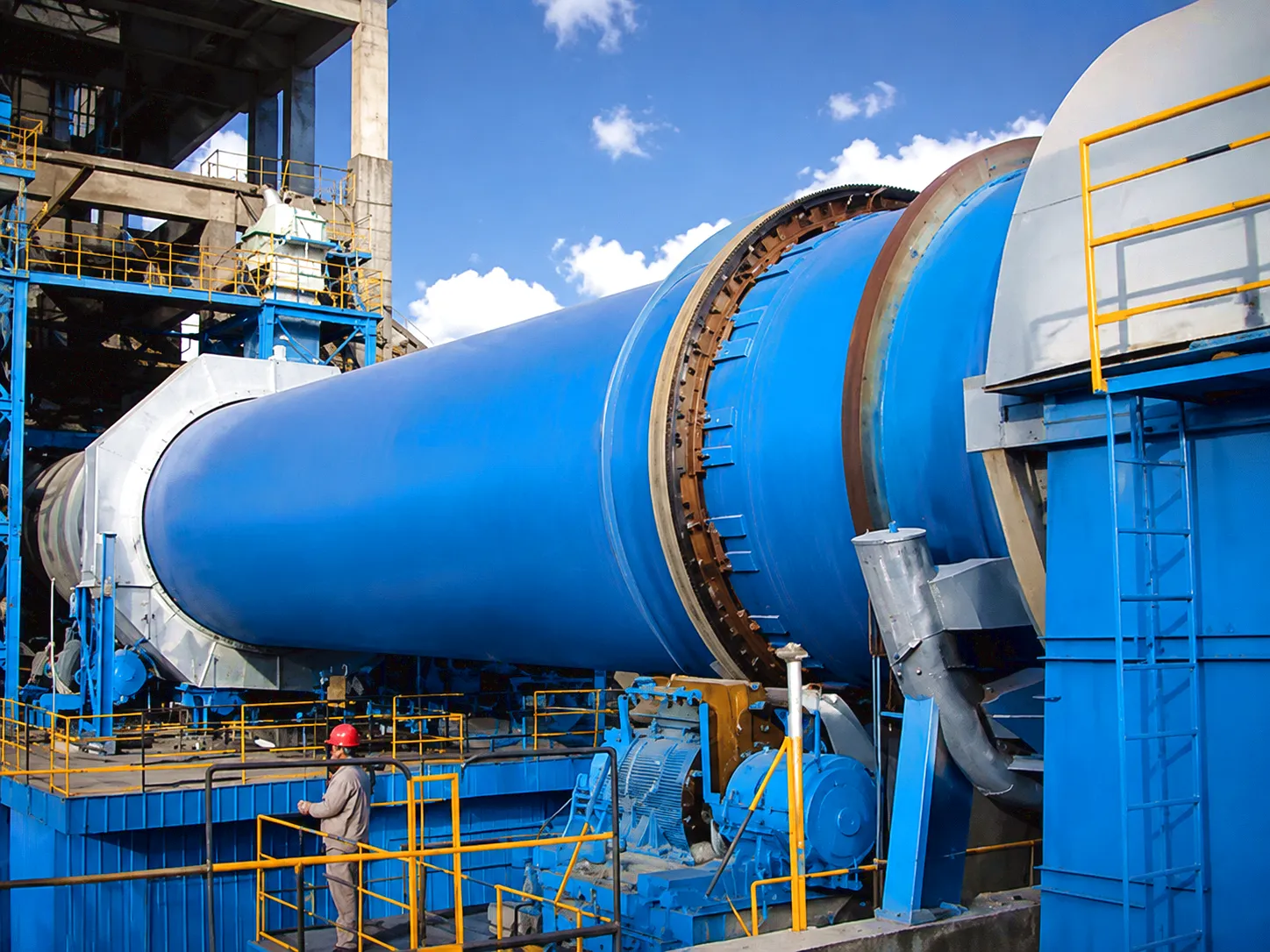
Within the complete cement manufacturing process, the rotary kiln operates as the central thermal processing unit, but it feeds into and draws from a series of adjacent grinding and processing machines that each have their own drive coupling requirements. The raw mill — grinding limestone, clay, and other raw materials before they enter the kiln feed — is typically a tube mill or vertical roller mill driven by a large gearbox through a high-torque coupling. The clinker leaving the kiln is cooled in a planetary or grate cooler and then fed into the finish grinding mill where the final cement product is ground to specification. Each of these machines presents its own coupling engineering challenge. The ball mill and tube mill applications demand couplings with very high cyclic fatigue resistance due to the oscillating load pattern created by the tumbling grinding media charge. Birmingham-based manufacturing engineering consultancies have identified coupling fatigue at mill drives as one of the top three causes of unplanned downtime in integrated cement plants across the West Midlands, and specifying correctly rated couplings with appropriate dynamic service factors is the primary mitigation. Disc and gear couplings are both widely used in these positions, with the selection typically driven by alignment capability requirements and available maintenance window duration rather than by torque capacity alone.
Featured Coupling Products for Rotary Kiln and Heavy Industrial Applications
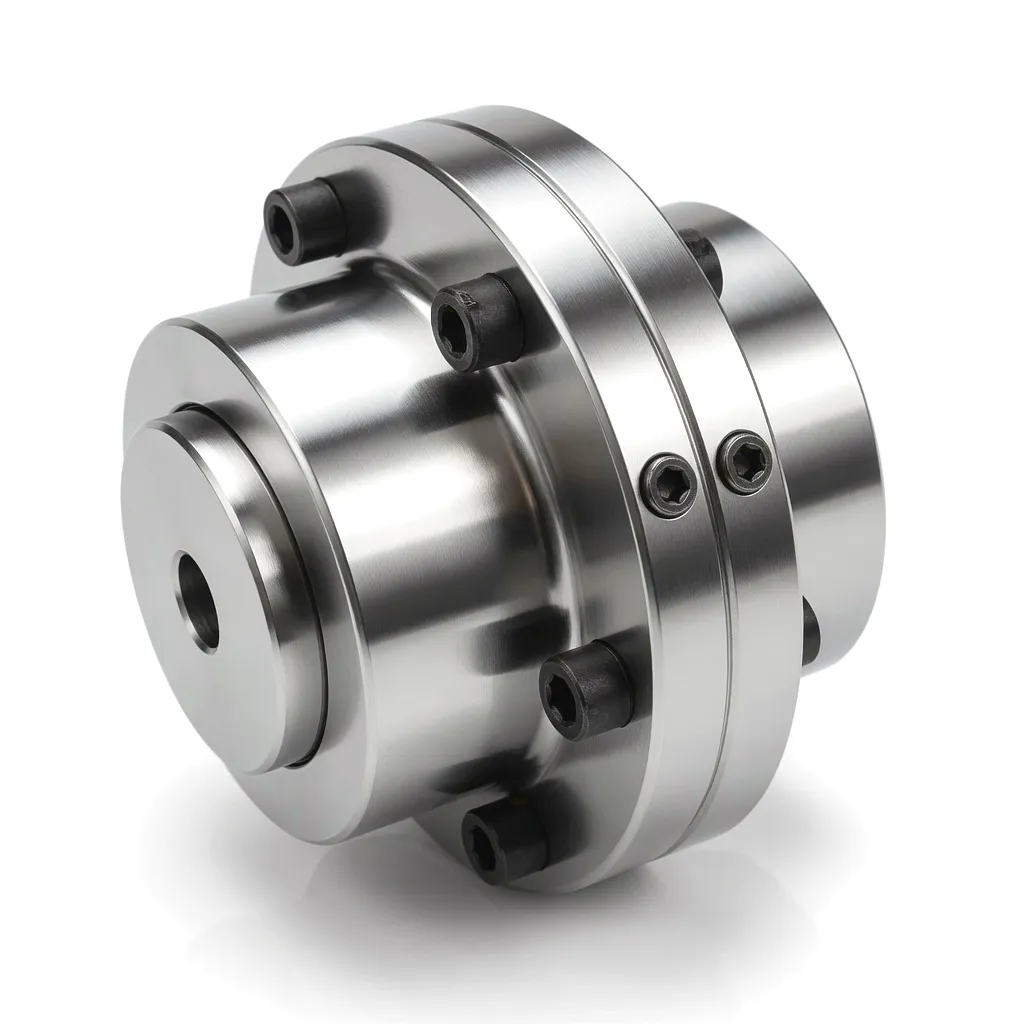
Flexibel balkkoppling
The flexible beam coupling is a single-piece helically cut stainless steel body coupling offering precise torsional flexibility, zero backlash, and excellent misalignment capacity in a compact envelope. Widely used in servo motor and light-to-medium auxiliary drive positions within cement plant control systems, conveyor indexing mechanisms, and position-feedback encoder mountings. Its maintenance-free construction and repeatability make it the standard choice for UK motion engineering applications requiring consistent torque transmission without mechanical play.
Visa produkt →
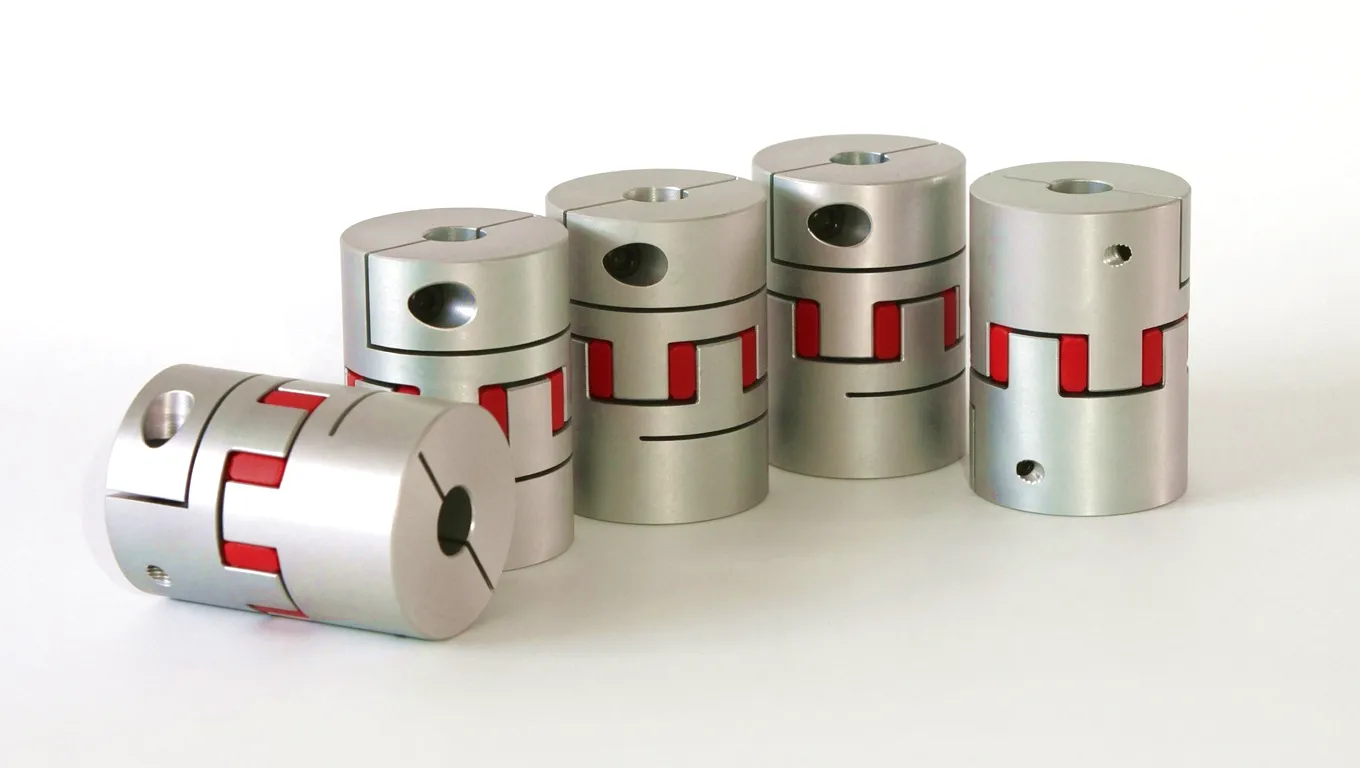
Skivkoppling
The disc coupling uses a pack of thin, laser-profiled stainless steel laminates to transmit torque while accommodating angular, parallel, and axial shaft misalignment without lubrication. Engineered for high-power, high-speed industrial drives including cement kiln motor-to-gearbox interfaces, compressor trains, and turbine generator sets, it offers torsional stiffness combined with misalignment flexibility in a single, elegant assembly. The all-metal construction ensures consistent performance across the full operating temperature range encountered in UK industrial environments, from cold winter start-ups in northern England to sustained thermal steady-state conditions during extended production runs.
Visa produkt →
Ever Power — Precision Engineering and Custom Coupling Manufacture
Trusted by cement, mining, and heavy process industry operators across the UK and globally
🏭 Custom Bore Machining
Ever Power operates precision CNC turning and boring centres capable of machining hub bores from 8 mm to 650 mm with H7 tolerance as standard. Custom interference fits, keyways to BS 4500 and DIN 6885, and tapered bore configurations are all within standard production capability. Lead times for custom bore machining on standard coupling bodies run from five to ten working days, with express scheduling available for UK plant breakdown recoveries.
🔧 Full Torsional Analysis Service
For cement kiln and other critical drive applications, Ever Power provides a full torsional vibration analysis service prior to coupling selection. This service identifies the natural frequencies of the complete drivetrain, maps excitation sources including motor electrical frequency, ring gear mesh frequency, and kiln rotation harmonics, and specifies the coupling torsional stiffness required to avoid resonance conditions that would drastically shorten coupling and gearbox life. This service is included at no additional charge with qualifying orders.
📦 UK-Compatible Supply Chain
Ever Power maintains a dedicated UK technical liaison team and works with established freight forwarding partners to deliver couplings DDP (Delivered Duty Paid) to UK destinations, with all import documentation, CE marking where applicable, and material traceability certificates provided as standard. Customers at cement operations in Wales, Scotland, and Northern Ireland receive the same delivery terms as those in the English Midlands, with no minimum order surcharges for emergency replacement quantities.
📄 Material Certification and Traceability
Every coupling shipped by Ever Power is accompanied by EN 10204 3.1 material test certificates covering chemical composition and mechanical properties, dimensional inspection reports, and where applicable, hardness test results for case-hardened tooth surfaces. This level of documentation satisfies the requirements of UK plant engineering quality management systems and supports compliance with BS EN ISO 9001 quality frameworks maintained by major UK cement producers and their maintenance contractors.
Ready to specify the right coupling for your cement kiln or heavy process drive? Contact Ever Power now for a technical consultation and competitive quotation.
📧 Get a Custom Quote from Ever Power
Customer Success Story: Peak Road Cement — Barnsley, South Yorkshire
Background and Challenge
Peak Road Cement operates a three-kiln integrated clinker production facility on the edge of the Don Valley industrial corridor south of Barnsley. The site has been in continuous production for over 40 years and the mechanical infrastructure of Kiln Line 2 — a 4.5 metre diameter by 72 metre long rotary kiln producing approximately 1,800 tonnes of clinker per day — had seen incremental upgrades but no full drivetrain overhaul since 2007. Over the preceding 18 months, the maintenance team had logged an increasing frequency of gearbox oil contamination events and three unplanned stops attributed to coupling-related vibration alarms generated by the kiln drive condition monitoring system. Root-cause analysis identified progressive wear of the gear teeth on the output shaft coupling, combined with a 1.4-degree angular misalignment that had developed as the kiln’s riding ring tyre had worn unevenly and caused a gradual shift in shell centreline position.
Solution Implemented
Peak Road’s chief mechanical engineer contacted Ever Power after receiving a recommendation from a sister plant in the East Midlands. Following a detailed technical exchange in which the kiln geometry, drive motor specification, gearbox output shaft dimensions, and operating speed data were shared, Ever Power’s applications engineering team produced a coupling selection report identifying a custom-bored gear-type coupling assembly with an enlarged angular capacity sleeve profile as the preferred replacement. The hub bores were machined to accept the existing gearbox output shaft with a new interference fit, and the coupling sleeve was modified with an extended tooth face width to maintain full rating at the measured 1.4-degree steady-state misalignment. The complete assembly was delivered to Barnsley with full 3.1 material certificates within nine working days of order placement, timed to coincide with a scheduled 60-hour kiln reline shutdown.
Results Achieved
Following installation, the kiln drive vibration signature returned to baseline levels within the first week of production resumption. The gearbox oil contamination events ceased entirely within one month, confirming that the previous coupling wear had been the primary source of metallic debris entering the gearbox through the output seal. Kiln Line 2 subsequently completed its longest uninterrupted production run in seven years — 214 consecutive days without a mechanical shutdown — before the next planned maintenance inspection. The maintenance cost saving over this 214-day period, compared to the equivalent period in the preceding year with three unplanned stops, was estimated by Peak Road’s operations team at over £280,000 in avoided lost production and emergency maintenance labour.
Customer Reviews
★★★★★
“The angular capacity of the custom sleeve profile Ever Power engineered for our output coupling genuinely exceeded our expectations. We had always accepted that some vibration increase was unavoidable at our level of shell misalignment, but after the new coupling went in, the bearing temperature on our main gearbox output bearing dropped by 8 degrees Celsius at steady state. That is concrete evidence that the bending moment load on the bearing has been dramatically reduced.”
— David Hargreaves, Chief Mechanical Engineer, Peak Road Cement, Barnsley
★★★★★
“What impressed our procurement and engineering teams equally was the speed of delivery without compromise on documentation. We had 3.1 certs, dimensional reports, and hardness test data in our quality system before the coupling arrived at site. For a production-critical component going into a machine that runs 24 hours a day, that traceability package gives the whole engineering team confidence. Ever Power clearly understands what UK industrial buyers actually need from a supplier.”
— Rachel Patel, Senior Reliability Engineer, Peak Road Cement, Barnsley
★★★★★
“We have now placed three separate orders with Ever Power across two of our kiln lines, and the consistency of product quality and technical support has been excellent on every occasion. The custom bore machining on our most recent order was within the tolerance band specified on our engineering drawing, which is something we cannot say for all the suppliers we have trialled over the years. We are now specifying Ever Power as our preferred coupling supplier for all future rotary kiln drive maintenance at this facility.”
— Tom Whitfield, Plant Manager, Peak Road Cement, Barnsley
Frequently Asked Questions — Couplings for Cement Rotary Kilns (UK)
How do I choose the right type of coupling for a cement rotary kiln drive system in the UK?
Selecting the correct coupling type for a cement rotary kiln requires a systematic engineering process. The starting point is defining the rated torque at each coupling position, including the dynamic service factor for start-up loads and process upsets. Angular and parallel misalignment values — measured both at cold installation and estimated at operating temperature — must be defined. For the main output coupling, gear-type units are generally preferred for very high torque ratings above 500,000 N·m, while disc couplings are selected for motor-to-gearbox interfaces where speed is higher and maintenance-free operation is a priority. UK plant engineers should also consider the available maintenance window frequency: disc couplings offer a significant advantage in facilities where planned shutdowns occur only twice per year. Consulting an experienced supplier such as Ever Power, who can provide a torsional analysis alongside the coupling recommendation, ensures that the selected coupling also avoids drivetrain resonance conditions.
What is the typical price range for a heavy-duty gear coupling for a cement kiln pinion shaft in the UK, and where can I get a competitive quote?
Pricing for heavy-duty gear couplings used on cement kiln pinion shaft drives varies considerably depending on the torque rating, bore diameter, material specification, and whether custom modifications such as enlarged angular capacity sleeves or non-standard keyways are required. Entry-level gear couplings for smaller kiln auxiliary drives may be priced in the low hundreds of pounds sterling, while a full custom assembly for a large-diameter high-torque output shaft position can reach into the tens of thousands of pounds. UK buyers should request quotations with full documentation included — material test certificates, dimensional inspection reports, and hardness test results — as these are standard requirements for quality management system compliance at most UK cement facilities. Contact Ever Power directly at
[email protected] for a technical review and competitive quotation tailored to your specific kiln drive specification.
Which coupling supplier in the UK can provide custom bore machining for cement kiln drive couplings with fast delivery and full material certification?
Custom bore machining with rapid turnaround is a critical requirement for UK cement plants that need coupling replacements to fit within planned or emergency shutdown windows. Ever Power provides custom bore machining to H7 tolerance and DIN 6885 keyway specifications with standard lead times of five to ten working days from order placement. Full EN 10204 3.1 material test certificates, dimensional inspection reports, and hardness test documentation are included with every shipment. Deliveries are made DDP (Delivered Duty Paid) to UK destinations, removing import customs complications for the buyer. Ever Power has supplied emergency replacement couplings to cement operations across Yorkshire, the Midlands, and Scotland, and maintains an express scheduling capability for genuine breakdown recoveries where kiln production loss costs are accruing daily.
How often should a gear coupling on a cement rotary kiln gearbox output shaft be inspected and relubricated in a UK industrial environment?
Gear coupling maintenance intervals for kiln output shaft applications depend primarily on the operating environment and the type of grease specified for the coupling. In UK cement plants, where cement dust is pervasive and frequently finds its way past lip seals, a six-monthly inspection and regreasing interval is the standard recommendation from most coupling manufacturers and aligns with the planned maintenance shutdown frequency operated by the majority of UK integrated cement facilities. At each inspection, the sleeve should be removed, the tooth surfaces examined for pitting, fretting corrosion, or abrasive wear, and the old grease removed before applying fresh coupling grease conforming to the manufacturer’s specification — typically an NLGI 1 or NLGI 2 high-viscosity, water-resistant lubricant. If the tooth surfaces show significant wear patterns concentrated at the tooth edges rather than distributed across the full face width, this is a reliable indicator that angular misalignment has exceeded the coupling’s design tolerance and a realignment check should be performed before the coupling is returned to service.
What are the signs that a coupling on a cement kiln drive is failing, and when should a Birmingham or Sheffield plant engineer replace it urgently?
Early warning signs of coupling distress in a cement kiln drivetrain are detectable through a combination of vibration monitoring, visual inspection, and oil analysis. A sustained increase in vibration amplitude at the gearbox output bearing, particularly in the frequency band associated with the coupling rotational speed and its harmonics, indicates progressive wear or damage within the coupling assembly. Metallic contamination appearing in gearbox oil samples — identified through spectrometric analysis during routine oil condition monitoring — frequently originates from coupling tooth surface wear entering through the output shaft seal. Audible knocking or rattling during start-up and shutdown transients suggests excessive backlash developing within a gear coupling that has lost tooth contact over part of the engagement arc. Any UK plant engineer observing two or more of these indicators concurrently should schedule coupling removal and inspection at the earliest available opportunity, as the consequence of allowing a partially failed coupling to reach complete separation on a running kiln is catastrophic mechanical damage to the gearbox, pinion shaft, and potentially the ring gear assembly.
Where can I find a reliable coupling supplier who can deliver quickly to a cement plant in Yorkshire or the Midlands without high shipping costs?
Ever Power supplies industrial couplings to UK cement, mining, and heavy process industry customers at all locations across England, Wales, Scotland, and Northern Ireland. All orders are dispatched DDP (Delivered Duty Paid), meaning the buyer receives the goods at their specified delivery address in the UK with all import duties, freight charges, and customs clearance handled by Ever Power’s logistics team. There are no minimum order surcharges and no additional charges for deliveries to Yorkshire, the Midlands, or other UK regions. Express air freight is available for emergency coupling replacements where production loss is accruing daily. Contact Ever Power at
[email protected] with your shaft dimensions and application details for a rapid technical assessment and same-day quotation during business hours.
 Proper coupling selection, installation, and maintenance constitute the foundation of reliable cement kiln operation. The relationship between coupling condition and the health of the broader drivetrain is more tightly coupled — in the mechanical sense — than is sometimes appreciated by plant management teams focused on the kiln shell, refractory, and thermal performance. A coupling that is operating within its design parameters, properly aligned, and maintained to schedule contributes silently and invisibly to production continuity. A coupling that is marginal, worn, or misaligned introduces vibration energy into the gearbox, shortens bearing life, contaminates oil, and eventually forces the unplanned shutdown that disrupts delivery schedules and triggers penalty clauses in clinker supply contracts. For UK cement operators dealing with the pressures of carbon cost management, energy efficiency targets, and increasingly competitive clinker pricing, optimising the mechanical reliability of the kiln drivetrain through correct coupling specification is one of the highest-return engineering investments available.
Ever Power’s team is available to support UK cement plant engineers through the full coupling selection cycle — from initial application data collection through torsional analysis, custom design, manufacture, documentation, and delivery. Whether the requirement is a single replacement coupling for an emergency repair in Sheffield or a complete drivetrain coupling upgrade across multiple kiln lines at a large integrated works in Birmingham, Ever Power has the engineering depth and manufacturing capability to provide a technically sound, commercially competitive, and documentarily complete solution. Reach out today and put the right coupling at the heart of your kiln drive system.
redigerad av gzl