Industrial Coupling Applications

Couplings in Cement Rotary Kiln Operations:
Engineering Reliability at 1,450 °C

A deep-dive into how precision shaft couplings keep cement rotary kilns turning continuously across UK manufacturing sites — from raw material feed to clinker discharge.

🕐 Read time: 18 min
🌐 UK B2B Focus
⚙️ Mechanical Engineering

Coupling for cement rotary kiln

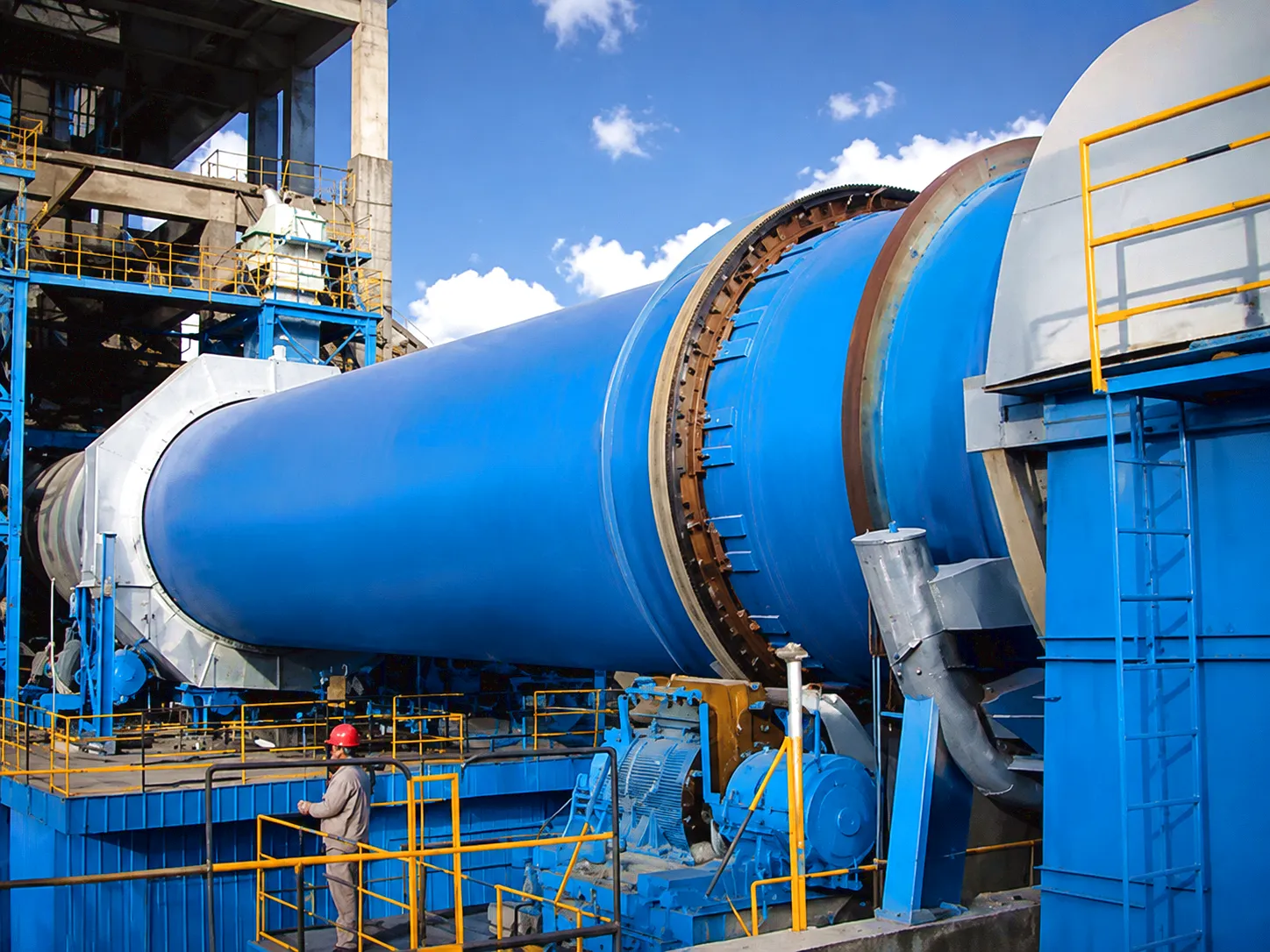
The cement rotary kiln stands as one of the most mechanically demanding pieces of equipment in modern heavy industry. Operating around the clock, often at temperatures exceeding 1,450 degrees Celsius inside the combustion zone, these massive rotating cylinders convert raw limestone and clay into the clinker that forms the foundation of Portland cement. In UK cement plants — from the Blue Circle facilities in Kent to the Tarmac operations in the Peak District — a single kiln can stretch to 80 metres in length, weigh several hundred tonnes when loaded, and turn continuously for weeks without interruption. The torque loads involved are extraordinary, and any failure in the drive train translates directly into costly unplanned downtime. At the heart of every reliable kiln drive system sits a precision shaft coupling.

Couplings in this environment are not passive connectors — they are active engineering components that absorb shock, compensate for shaft misalignment caused by thermal expansion, and protect gearboxes and motors from sudden torque spikes. Choosing the wrong coupling or neglecting its specification leads to premature wear, vibration-induced fatigue cracking in adjacent components, and eventually catastrophic mechanical failure. This article examines in depth how couplings function inside cement rotary kiln drive systems, what materials and geometries stand up to the punishment involved, and how Ever Power engineers bespoke solutions for the specific demands of the UK cement manufacturing sector.

✉ Hemen Fiyat Teklifi Alın

Response within 24 hours • UK industrial specialists • Custom solutions available

Understanding Shaft Couplings in Heavy Industrial Drive Systems

Mechanical Fundamentals

⚙️

Torque Transmission

A coupling transmits rotating mechanical power — torque — from a driving shaft (typically connected to a motor or gearbox output) to a driven shaft (the kiln shell trunnion ring or supporting tyre assembly). In cement kiln applications, this torque can exceed 5,000 kN·m on larger installations, making component selection and metallurgical specification absolutely critical to operational continuity.

📈

Hizalama Hatası Telafisi

Cement kilns experience significant thermal growth during their warm-up cycle. As the shell heats from ambient to operating temperature, the drive-end shaft can shift axially by several millimetres and exhibit angular misalignment as foundations settle under load. Flexible couplings — particularly gear-type and disc-type designs — accommodate these movements without transmitting damaging bending moments back into the gearbox or motor bearing housings.

Shock Absorption

Feed irregularities, hard clinker nodules, and kiln coating collapses generate sudden torque transients that can spike to three or four times the nominal design torque within milliseconds. Without a coupling designed to absorb these impulses — through elastomeric elements, crowned gear teeth, or metallic flexing discs — the shock propagates straight into the gearbox, potentially fracturing gear teeth or shattering roller bearings. The coupling acts as the last line of mechanical defence in the drive train.

Working Principle of Couplings in Cement Rotary Kiln Drive Trains

Operational Mechanics
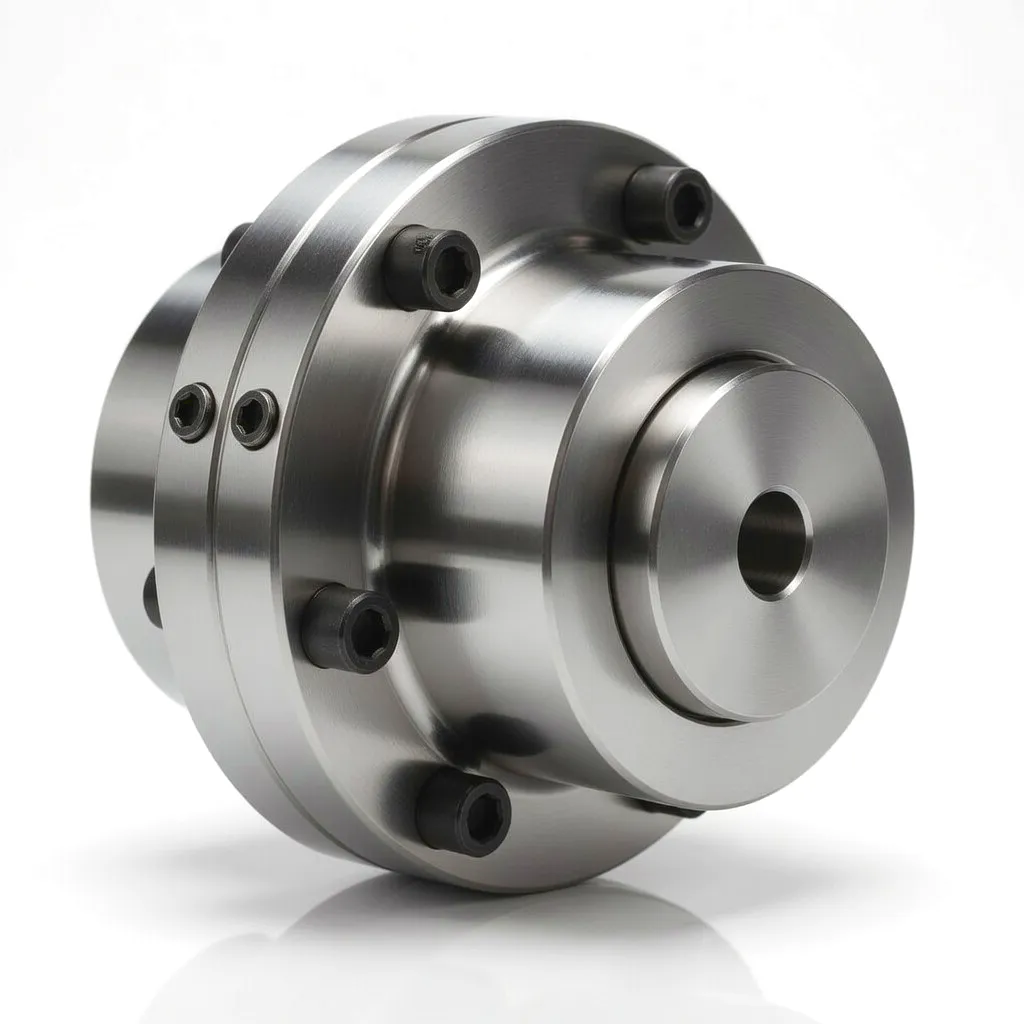
Coupling working principle for rotary kiln

In a typical cement kiln configuration, a high-power AC motor drives through a primary speed reducer — often a parallel helical or planetary gearbox — and the gearbox output shaft connects to the kiln drive pinion via a flexible coupling. The pinion meshes with a large open gear ring bolted to the kiln shell. This arrangement means the coupling sits between the highest-speed, highest-precision component (the gearbox output) and the mechanically noisiest component (the open gear ring, which is exposed to dust, thermal cycling, and varying tooth loads as the kiln shell deflects under its own weight).

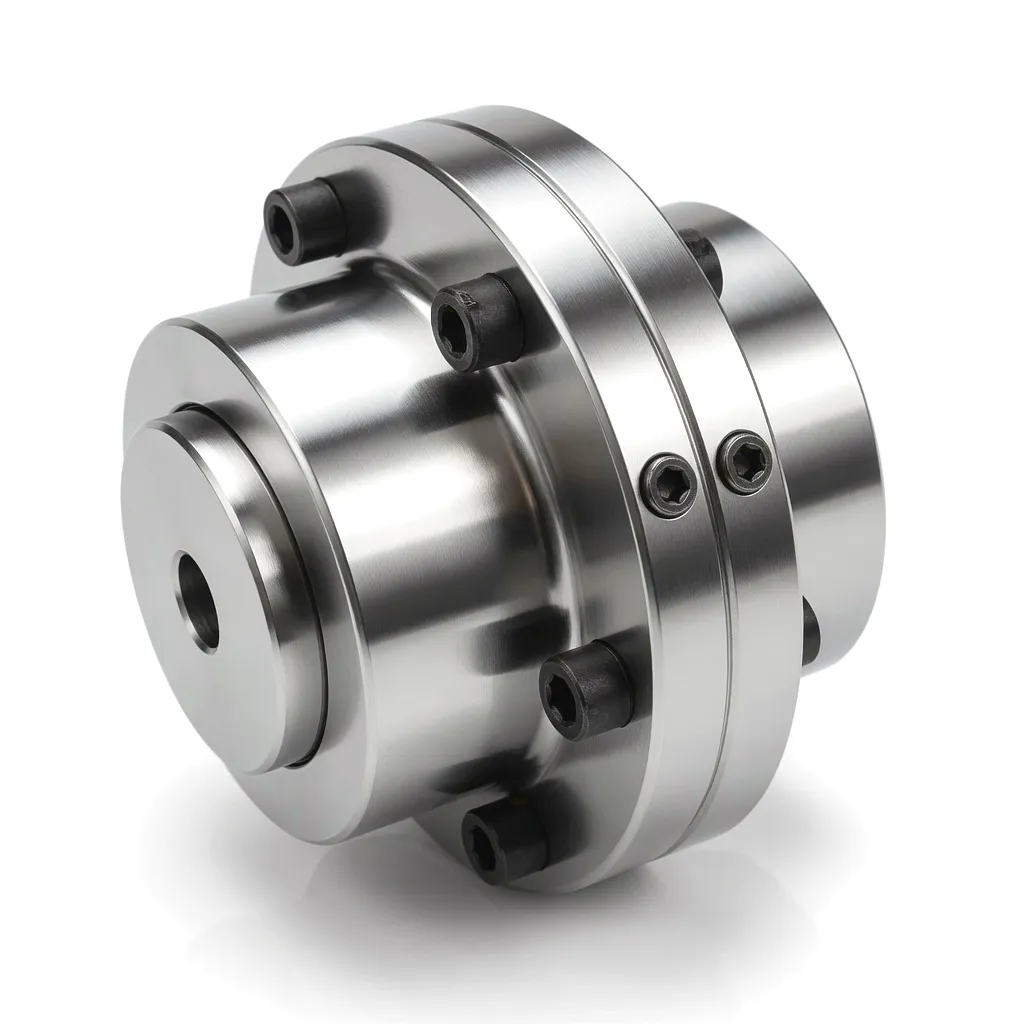
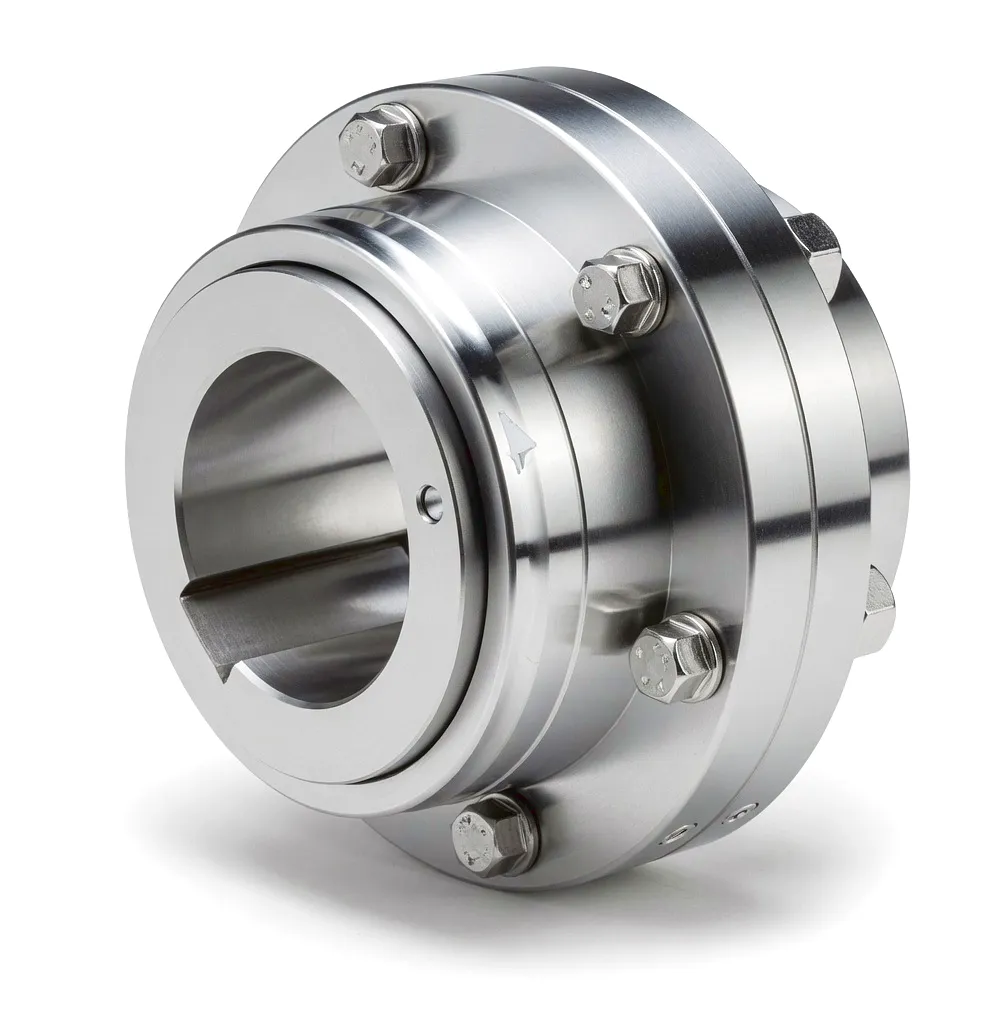
A gear-type coupling achieves this through two hubs with externally cut crowned spur teeth that engage internal tooth sleeves. The crowned profile on the outer hub teeth allows the hub to pivot within the sleeve under angular misalignment conditions without creating edge-loading stress concentrations. As the kiln rotates, the coupling continuously accommodates small angular and axial movements, transmitting torque smoothly throughout. The sleeve is typically a one-piece forged-and-machined unit with a barrel-shaped tooth form, and the entire assembly is sealed with end caps and filled with high-viscosity grease to prevent ingress of the fine cement dust that permeates every surface in a kiln building.

Disc-type flexible couplings take a different approach: thin metallic discs or disc packs — stamped from 17-7PH stainless steel or Inconel for high-temperature applications — flex under misalignment without any relative sliding between components. This means zero friction, zero lubrication requirement within the disc pack, and zero backlash. The torsional stiffness is precisely predictable, which makes disc couplings the coupling of choice when the system requires controlled torsional dynamics, such as in kiln drive systems using variable frequency drives (VFDs) where resonance management is essential to smooth speed ramp-up and avoiding critical speed frequencies.

Core Materials Used in Rotary Kiln Coupling Manufacturing

Metallurgical Specification

Merkez Malzemesi

40Cr / 42CrMo4 Alloy Steel

Chromium-molybdenum alloy steels are the dominant hub material for heavy kiln couplings. After forging and rough machining, hubs are through-hardened by quench-and-temper heat treatment to 28–35 HRC, providing excellent fatigue resistance at the root of the gear teeth where alternating bending stresses are highest. The molybdenum content prevents temper embrittlement during the slow cooling of large-section forgings.

Kol Malzemesi

Case-Hardened 20CrMnTi Steel

Internal sleeves undergo carburising and case hardening to achieve a tooth surface hardness of 58–64 HRC with a case depth of 1.2–2.0 mm. This produces a hard, wear-resistant tooth contact surface over a tough, ductile core — exactly the property combination needed to handle the continuous sliding contact between hub and sleeve teeth during misalignment articulation. The chromium-manganese-titanium alloying also promotes fine carbide distribution for improved fatigue crack propagation resistance.

Disc Material (Disc Couplings)

17-7PH / Inconel 625

Disc packs for cement kiln auxiliary drive applications are stamped from 17-7PH precipitation-hardening stainless steel (H900 condition, tensile strength 1,310 MPa) for standard duty. Where radiated heat from the kiln shell creates an elevated-temperature environment around the drive, Inconel 625 discs maintain their mechanical properties above 600 °C and resist the oxidising atmosphere. Multiple thin discs in a pack distribute the flexing strain energy across the entire disc perimeter, eliminating any point of stress concentration.

Seals & Lubrication

Synthetic Polyurea / Lithium Complex Grease

Gear coupling sleeves are sealed with neoprene or HNBR O-ring end caps and filled with synthetic polyurea grease rated to NLGI No. 2 consistency. In the high-dust environment of a kiln building, sealing integrity is paramount — cement dust contaminating the grease causes abrasive wear that rapidly accelerates tooth degradation. Lithium complex greases with an extreme-pressure (EP) additive package extending relubrication intervals to 8,000–12,000 operating hours are standard specification in UK cement plant maintenance regimes.

Key Technical Advantages of Precision Couplings for Cement Rotary Kilns

Engineering Benefits
01

Yüksek Tork Yoğunluğu

Precision-cut crowned gear teeth and tight manufacturing tolerances allow gear-type couplings to transmit torques exceeding 5,000 kN·m within a compact envelope. This high power density is critical in kiln buildings where space between the gearbox and pinion is constrained by plant layout, particularly in older UK cement works originally designed for smaller drive arrangements and subsequently upgraded to higher-output motor and gearbox combinations.

02

Üç Boyutlu Hizalama Toleransı

Quality kiln couplings simultaneously accommodate angular misalignment up to 1.5 degrees, parallel offset up to several millimetres, and axial displacement in both directions. This three-dimensional flexibility means that as the kiln shell thermally expands and contracts during temperature cycling — a movement that can shift shaft positions significantly on a 75-metre kiln — the coupling absorbs every component of that movement without imposing damaging reaction forces on motor or gearbox bearing housings.

03

Torsional Shock Protection

The compliance built into flexible coupling designs — whether through elastomeric elements in jaw-type versions or the inherent elasticity of multiple thin disc packs — provides meaningful torsional damping during kiln startup, coating collapse events, and hard clinker passage through the burning zone. This protection extends gearbox and motor bearing service life substantially, reducing total maintenance expenditure over the kiln campaign, which in the UK typically runs to 8–12 months between scheduled maintenance stops.

04

Long Service Life and Low Maintenance Demand

When correctly specified and initially aligned, high-quality gear couplings in kiln service routinely achieve 40,000–80,000 operating hours before tooth wear necessitates replacement. The only routine maintenance requirement is periodic grease replenishment — an operation that can often be performed while the kiln is running using pressurised grease injection points without requiring a process interruption. This low maintenance footprint is of particular value to UK cement plants operating under tight production schedules and constrained maintenance windows dictated by market demand cycles.

Application Scenario: Cement Rotary Kiln Main Drive System

Primary Application Deep Dive
Cement rotary kiln application coupling
Rotary kiln drive system coupling
Industrial coupling cement application

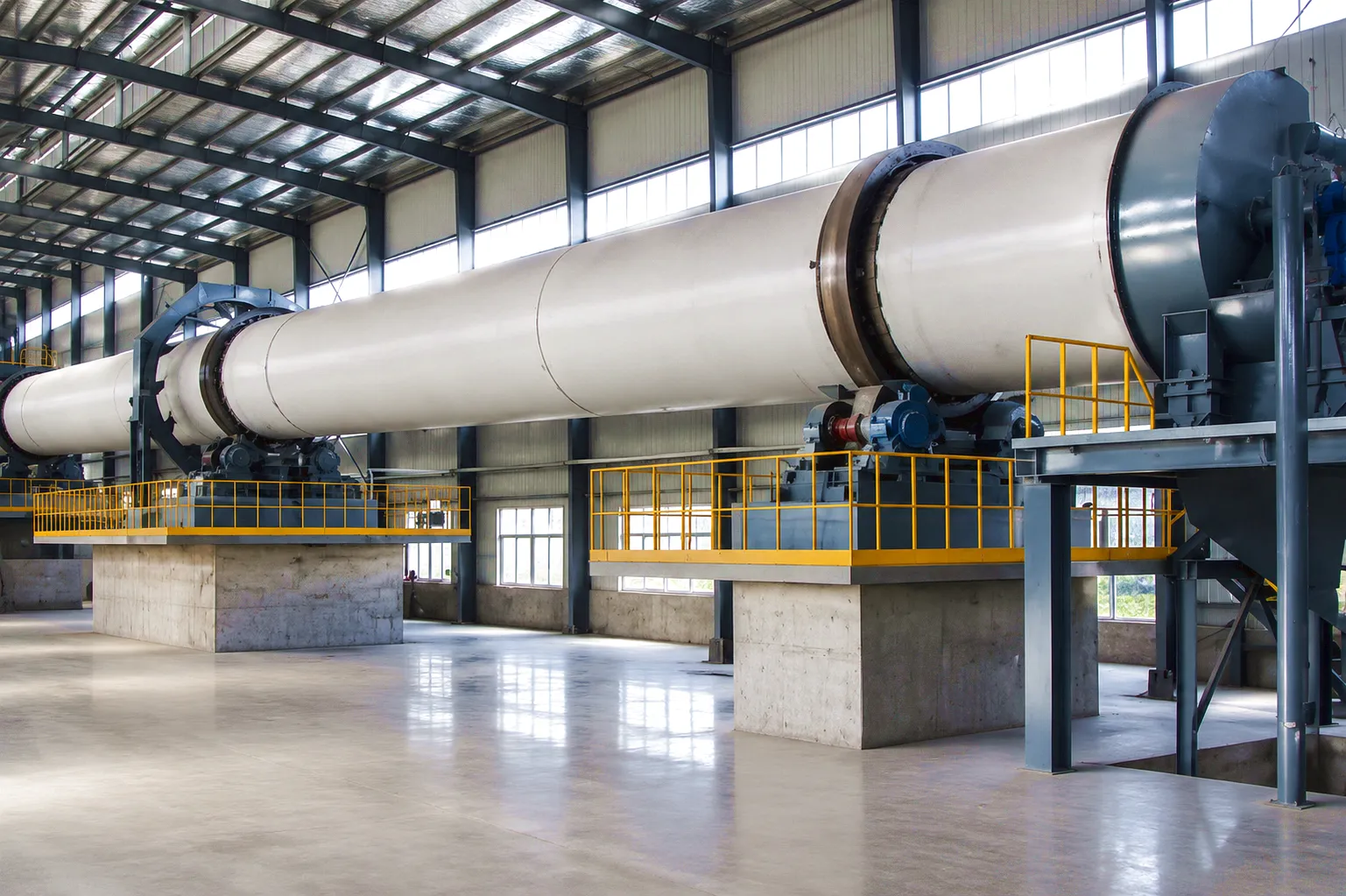
The cement rotary kiln main drive is the most demanding coupling application in the entire cement manufacturing process. The kiln itself is essentially a long, slow-rotating cylindrical reactor inclined at 3–5 degrees from horizontal. Raw meal enters at the elevated feed end and tumbles slowly toward the discharge end, progressively passing through preheating, calcining, and burning zones. The massive size and weight of this assembly — combined with its continuous operation requirement, high internal temperatures, and the abrasive, chemically aggressive atmosphere in the kiln building — imposes a uniquely severe set of requirements on the coupling installed in its drive train.

The main drive coupling must handle not just steady-state torque but also the cyclic torque variation that occurs once per revolution as the gear ring tooth that has the largest accumulated pitch error engages the pinion — an event known as the “once-per-rev” torque spike. In addition, during kiln startup from cold, the drive system must overcome the static friction of all riding rings and carrying rollers simultaneously, generating a breakaway torque that may be two to three times higher than the normal running torque. The coupling must absorb both of these transient loads without slipping on its key-and-keyway shaft connection or overloading any of its structural components. Specifying a generous torque safety factor — typically 2.5–3.0 times the calculated maximum continuous torque — is essential practice in kiln coupling sizing at all UK cement manufacturing sites.

💡 Engineering Insight

In the Sheffield and Derbyshire cement belt, plant engineers routinely specify gear-type couplings with an OD-to-bore ratio of less than 2.5 to keep the coupling mass below the critical threshold that would amplify torsional vibration in the first natural mode of the drive train. This is particularly important where VFD-controlled drives are used, as the VFD can excite any torsional resonance within its speed range during ramp-up.

Product Technical and Performance Parameters

Specification Table

Parametre Gear-Type Coupling Disc-Type Coupling Elastomeric Coupling
Rated Torque Range 100 ~ 5,500 kN·m 10 ~ 1,200 kN·m 0.5 ~ 150 kN·m
Peak Torque Multiplier up to 3.0x rated up to 2.5x rated up to 2.0x rated
Açısal Hizalama Hatası up to 1.5 deg up to 1.0 deg up to 4.0 deg
Eksenel Yer Değiştirme +/- 4 ~ +/- 15 mm +/- 1 ~ +/- 5 mm +/- 3 ~ +/- 10 mm
Operating Speed up to 3,600 rpm up to 8,000 rpm up to 2,000 rpm
Delik Çapı Aralığı 50 ~ 560 mm 20 ~ 300 mm 15 ~ 200 mm
Göbek Malzeme Standardı 42CrMo4 / 40Cr 42CrMo4 / SS304 Cast Iron / Cast Steel
Sleeve / Disc Material 20CrMnTi (58-64 HRC) 17-7PH / Inconel 625 Polyurethane / NBR
Backlash Low (gear tooth clearance) Zero Very Low
Maintenance Interval 8,000 ~ 12,000 hr 20,000+ hr (lube-free) 4,000 ~ 6,000 hr
Typical Kiln Position Main drive gearbox output Auxiliary / creep drive Auxiliary fans / pumps

Extended Industrial Application Scenarios for Shaft Couplings

Cross-Sector Deployment

Application Scenario

Raw Mill Drive — Cement Manufacturing

The ball mill and vertical roller mill used to grind raw materials before feed into the kiln preheater rely on high-torque gear-type couplings between their gearbox outputs and mill pinion shafts. Mills in the UK — including those at major quarry-integrated cement works in Lincolnshire — frequently operate in two-shift patterns with frequent start-stop cycles. The coupling must withstand repetitive starting torques without fretting corrosion at the bore-to-hub interface, which requires careful tolerancing of the interference fit and often the application of anti-fretting compounds during assembly. Coupling designs with larger bore diameters and deep key seats are preferred for this application to distribute the high torsional loads over a greater contact area at the shaft interface.

Application Scenario

Coal Mill and Kiln Preheater Fan Drives

Coal mills — used to prepare pulverised fuel for direct injection into the kiln burner — operate in a potentially explosive atmosphere and must therefore use couplings that satisfy ATEX Zone 22 requirements. This rules out elastomeric elements with high surface temperatures under slip conditions. Non-sparking, antistatic disc couplings manufactured from aluminium bronze alloys or specified non-sparking coated steel are the correct approach. Birmingham-area cement works using biomass co-firing have similar requirements for their biomass preparation mill couplings. The induced draught fan at the kiln outlet — often the largest centrifugal fan in the plant at 2,000 kW and above — similarly requires a high-integrity coupling capable of handling the imbalance loads that develop as the fan blades accumulate coating material during operation.

Application Scenario

Cooler Clinker Conveying — Kiln Discharge

At the kiln discharge end, red-hot clinker at 1,200–1,300 °C falls onto a reciprocating grate cooler. The drive mechanism for this cooler — whether a hydraulic system or an electric gearmotor arrangement — uses shaft couplings in an extremely high ambient temperature environment. Radiated heat from the clinker and the cooler housing can raise ambient temperatures around the coupling to 120–150 °C, requiring high-temperature-rated greases with a dropping point above 200 °C, or the use of disc couplings that require no lubrication. British cement manufacturers, under pressure from net-zero commitments, are increasingly recovering cooler exhaust heat for power generation through Organic Rankine Cycle (ORC) turbines, and these turbines in turn require precision disc couplings on their shaft connections to manage the very high rotational speeds involved.

Application Scenario

Cement Kiln Auxiliary (Creep) Drive

Every cement rotary kiln has a separate low-speed auxiliary or creep drive — typically a small electric motor driving through a high-ratio worm gearbox — used to rotate the kiln slowly during maintenance shutdowns, refractory cooling, and commissioning. This auxiliary drive engages through a disc coupling or toothed jaw coupling mounted on the kiln main drive pinion shaft extension. The coupling must provide reliable engagement and disengagement without requiring precise shaft alignment each time it is connected — an important practical requirement when the operations team needs to connect the auxiliary drive quickly during an unplanned hot stop. Sheffield-based cement plant engineering teams frequently specify quick-disconnect disc coupling variants for this application to reduce reconnection time during scheduled and unplanned outages.

Our Coupling Product Range

Manufacturing Excellence

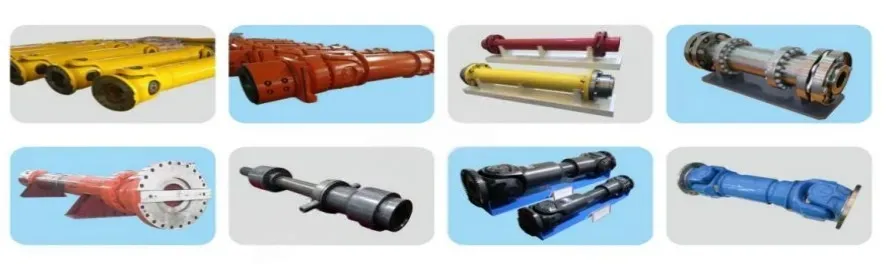
Gear type coupling product

Gear-Type Coupling

Industrial coupling product

High-Torque Shaft Coupling

Coupling assembly product

Heavy-Duty Coupling Assembly
Coupling collection range
Coupling product collection

Featured Coupling Products

Recommended for Cement Kiln Applications

⚙️

Esnek Kiriş Bağlantısı

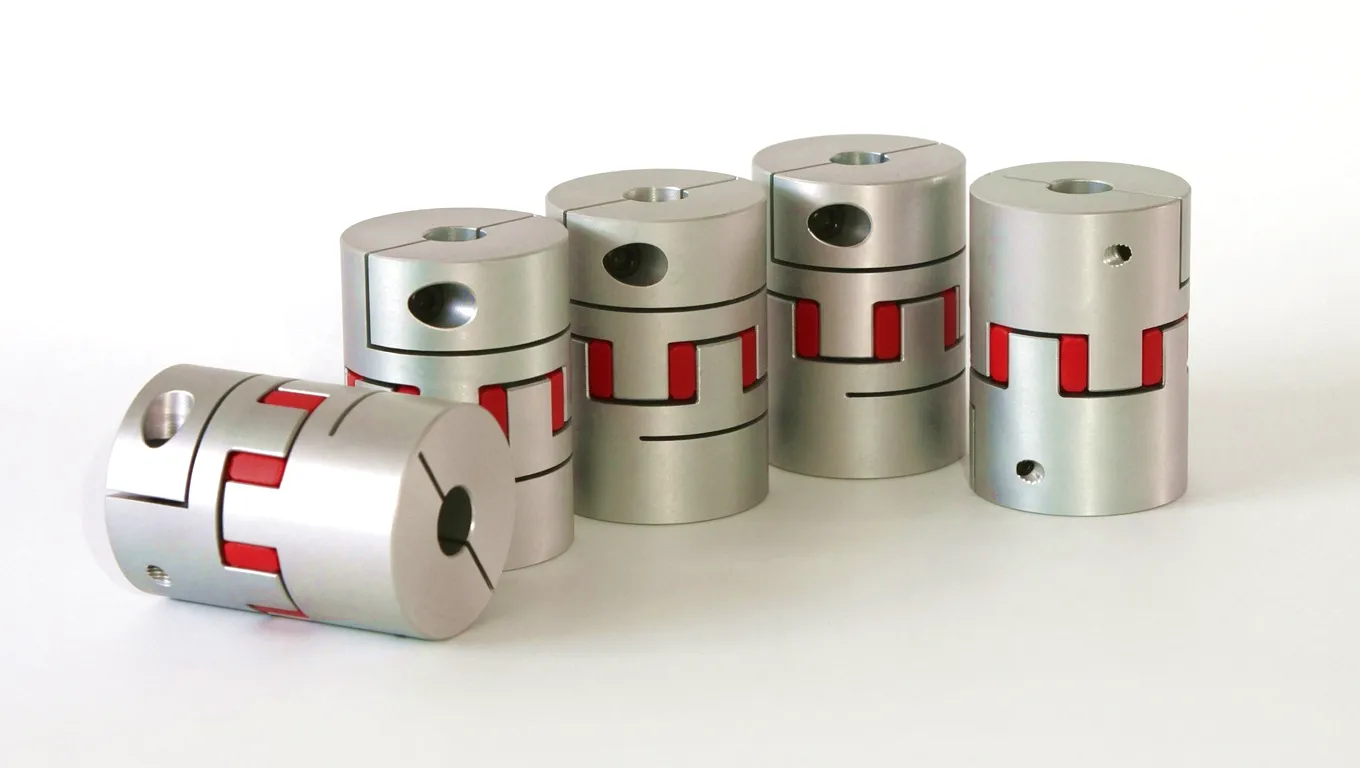
The flexible beam coupling excels in auxiliary drive and servo-motor applications throughout the cement plant. Machined from a single piece of 7075-T6 aluminium alloy or 303 stainless steel, it is characterised by a spiral slot pattern that creates a compliant helical beam element. This geometry simultaneously accommodates angular, parallel, and axial misalignment while maintaining zero backlash throughout — making it the coupling of choice for encoder and resolver connections in kiln speed measurement systems, position feedback on kiln shell measurement instruments, and auxiliary drive servomotor connections where precise angular positioning is required. Its compact, grease-free, maintenance-free construction fits neatly into the congested drive housings found in kiln auxiliary systems, and it is available in bore diameters from 3 mm to 40 mm in standard configurations, with custom bores available on request from Ever Power’s manufacturing facility.

View Product →

🗡️

Disk Kaplin

The disc coupling is Ever Power’s recommendation for cement kiln auxiliary and creep drive systems, ORC turbine drives, and any kiln application requiring zero-maintenance, lubrication-free shaft connection. The disc pack — an assembly of thin metallic discs bolted alternately to two flanges — flexes under misalignment while transmitting torque through the bolted tangential elements, with no sliding contact between any components. This eliminates lubrication entirely from the coupling itself, reducing the risk of contamination and simplifying maintenance scheduling. The disc coupling’s torsional stiffness is a well-defined, calculable value, enabling drive train designers to accurately predict the torsional natural frequencies of the complete kiln drive system and ensure that VFD operating speeds avoid resonance conditions. Ever Power manufactures disc couplings to torque ratings from 10 N·m to over 1,200 kN·m, and custom flanged configurations are available to match any existing machinery interface dimensions — critical when engineering a coupling replacement for a kiln that has been in continuous service since the 1980s without drawing modification.
View Product →

Ever Power: Precision Manufacturing and Custom Coupling Solutions

Factory Capability & Customisation

Ever Power has established itself as a specialist coupling manufacturer with a proven record of supplying engineered power transmission solutions to heavy industry across the UK, Europe, and global markets. The company’s manufacturing facility operates a complete in-house production process — from raw material inspection through forging, precision CNC turning and gear hobbing, heat treatment, surface treatment, assembly, and final inspection — ensuring full quality traceability for every component that leaves the factory. This vertical integration is the foundation of Ever Power’s ability to offer genuine customisation rather than catalogue-only supply, which is the critical differentiator for cement kiln applications where no two installations are dimensionally identical.

The customisation capability at Ever Power spans the full scope of what UK cement plant engineers require: non-standard bore diameters and keyway configurations to match existing shaft interfaces, custom flange bolt patterns to drop directly into existing gearbox output flanges without modification, special gear tooth profiles optimised for specific torque and misalignment combinations, high-temperature sealing arrangements for discharge-end applications, and ATEX-compliant material specifications for coal and biomass mill drives. Ever Power’s engineering team works directly with plant engineers in Birmingham, Sheffield, and across the UK cement belt to develop coupling solutions that solve real operational problems, not just theoretical specification requirements.

Quality assurance at Ever Power is embedded at every stage of the manufacturing process. Material certificates are issued for every raw material batch. Dimensional inspection reports accompany every finished coupling. Gear tooth geometry is verified by gear measuring centre (GMC) inspection against ISO 1328 tolerances. Balancing is performed on all assemblies above a specified mass and speed threshold. This rigorous approach translates directly into coupling service lives that consistently exceed those of catalogue-selected alternatives — an outcome that is visible in the maintenance cost records of UK cement plants that have switched to Ever Power’s engineered coupling solutions.

✉ Request Custom Coupling Quote

100%
In-house CNC gear manufacturing
ISO 9001
Certified quality management system
4 Weeks
Typical lead time for custom kiln couplings
Global
Shipping with UK stock holding available

Cement kiln industrial coupling application

Customer Success Story: Derbyshire Cement Works

Case Study — UK Heavy Industry
Konum
Hope Valley, Derbyshire
Sanayi
Portland Cement Manufacturing
Kiln Output
2,800 tonne / day clinker
Coupling Installed
Custom Gear-Type, 3,200 kN·m

Meydan Okuma

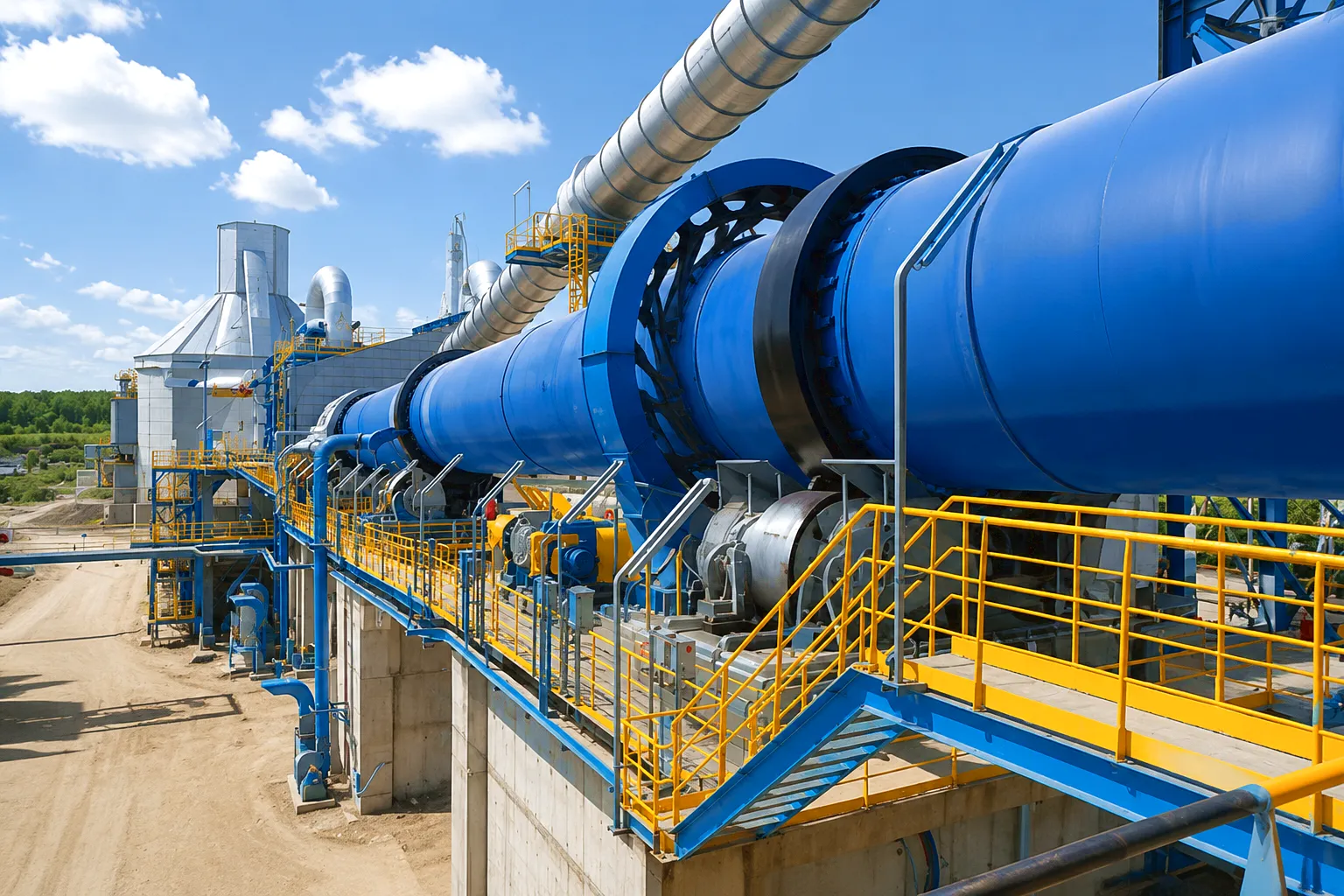
A major Portland cement manufacturer operating a 75-metre wet process kiln in the Hope Valley, Derbyshire, had been experiencing recurring coupling failures on their kiln main drive. The existing coupling — a legacy design from the original 1978 kiln commissioning — was showing accelerated tooth wear due to cement dust ingress past deteriorated seals. The plant had experienced two unplanned kiln stoppages in eighteen months due to coupling-related failures, each resulting in approximately 60 hours of lost production and refractory thermal stress that shortened lining life. The engineering team estimated that each unplanned stop cost the business in excess of £180,000 in direct production loss, logistics disruption, and emergency maintenance resource.

Ever Power’s Solution

Ever Power’s applications engineering team conducted a full drive train review, collecting motor current logs, vibration spectra from the gearbox output bearing housings, and kiln alignment survey data from the plant’s own maintenance records. This analysis identified that the legacy coupling’s sealing system was completely ineffective in the fine-cement dust environment of the kiln building, and that thermal misalignment during the kiln’s warm-up cycle exceeded the original coupling’s design envelope — a situation that had arisen because the kiln had been converted from wet to semi-dry process during a 1990s upgrade, raising operating temperatures and therefore thermal shaft movements beyond the original design basis.

Ever Power designed and manufactured a replacement gear-type coupling with a torque rating of 3,200 kN·m, incorporating a triple-lip seal arrangement with labyrinth dust exclusion, an extended angular misalignment capacity of 1.2 degrees to cover the measured thermal misalignment envelope, and crowned tooth profile geometry calculated specifically for the plant’s measured torque spectrum including the known once-per-rev torque variation characteristic of the kiln’s gear ring. The coupling hubs were manufactured from 42CrMo4 forgings, heat treated and finish-machined to a gear pitch diameter runout of less than 0.015 mm TIR. The delivery lead time from order placement to despatch from Ever Power’s facility was 26 working days — within the plant’s planned maintenance stop window.

Results

The Ever Power coupling was installed during the next scheduled maintenance stop and the kiln restarted on schedule. In the twenty-two months since installation, the plant has recorded zero coupling-related stoppages. Vibration levels at the gearbox output bearing housings have reduced by 34% compared to the pre-replacement baseline — indicating that the new coupling’s improved sealing and misalignment capacity is reducing the dynamic loads transmitted into the gearbox structure. The plant engineering manager estimates the change has saved in excess of £380,000 in avoided production losses over the first eighteen months alone, against an investment in the coupling replacement of under £28,000 including installation labour.

⭐⭐⭐⭐⭐

“The triple-lip seal on the Ever Power coupling has been genuinely impressive in our kiln building. We used to have to re-grease the old coupling every three months to fight off dust ingress — with the Ever Power unit we are at nine months and the grease sample analysis still comes back clean. That alone has changed the maintenance economics substantially.”

R. Hartley
Chief Mechanical Engineer, Derbyshire Cement Works
⭐⭐⭐⭐⭐

“What made the difference with Ever Power was that their engineers actually understood the once-per-rev torque behaviour of kiln gear rings and designed the coupling tooth profile around it. Previous suppliers just quoted a standard catalogue item. The torsional analysis they provided with the order gave us confidence before we even fitted the coupling, and the vibration data since has confirmed their prediction was accurate.”

M. Ogden
Rotating Equipment Engineer, Hope Valley Plant
⭐⭐⭐⭐⭐

“The 26-day delivery was critical for us — we had a planned maintenance stop booked and could not slide it. Ever Power committed to the date at order and they delivered on day 24. The coupling arrived with full material certs, a CMM dimensional report, and an assembly inspection certificate. For a component going into a safety-critical application on a large kiln, that documentation is not optional, and other suppliers we approached simply could not provide it.”

A. Bradshaw
Procurement Manager, Midlands Cement Group

Sıkça Sorulan Sorular

Cement Kiln Coupling — UK Industrial Buyer Guide

How do I select the right type of coupling for a cement rotary kiln main drive system in the UK?

+

Selecting a coupling for a cement rotary kiln main drive requires a structured approach. Start by determining the gearbox output torque at both running and startup conditions, then multiply by a service factor — typically 2.5 to 3.0 for kiln duty — to arrive at the required coupling torque rating. Measure or calculate the expected shaft misalignment including the thermal growth component. Compare the misalignment capacity of candidate coupling types against this figure, ensuring a margin of at least 20%. For UK kilns operating with VFD drives, request a torsional analysis from the coupling manufacturer to confirm that no torsional resonance falls within the VFD’s operating speed range. A gear-type coupling is typically the primary recommendation for the main drive position; disc couplings suit the auxiliary drive and high-speed accessory positions.

What is the typical price or cost of a custom gear coupling for a large cement kiln in Birmingham or Sheffield?

+

The cost of a custom gear-type coupling for a large cement kiln main drive varies considerably with torque rating, bore diameter, material specification, and the extent of customisation required. For a coupling in the 1,500–3,500 kN·m torque range — typical for kilns producing 2,000–4,000 tonnes of clinker per day — indicative pricing from a specialist manufacturer such as Ever Power generally falls in the range of £15,000 to £50,000 ex-works, depending on specification. ATEX-rated couplings for coal mill duties, or couplings requiring special material certifications for third-party inspection, carry an additional premium. The most reliable way to obtain an accurate price is to submit your existing coupling data sheet and shaft dimensions directly to the Ever Power sales team for a tailored quotation. Delivery logistics to Birmingham, Sheffield, or any UK cement site can be arranged through standard freight services with appropriate lifting equipment provision for heavier assemblies.

Where can I find a reliable coupling supplier in the UK who can provide emergency replacement couplings for cement kilns?

+

For emergency coupling replacements at UK cement works, the key criterion is a supplier with their own manufacturing capability rather than a pure distributor, because only a manufacturer can accelerate production scheduling when a plant is in an unplanned outage. Ever Power maintains an expedite programme for kiln coupling emergencies, and in many cases can commit to delivery of a replacement coupling within 15–20 working days if the original drawings or dimensional data are available and the material stock is held. The company can also arrange technical support for coupling removal, inspection of associated components such as the gearbox output shaft, and installation supervision if required, working with UK rigging and alignment contractors familiar with the specific requirements of heavy kiln maintenance.

Which coupling type is best for a cement kiln auxiliary creep drive where maintenance access is restricted?

+

For cement kiln auxiliary or creep drive applications where access for maintenance and reconnection is limited, a disc coupling with a split spacer or a quick-disconnect design is the recommended choice. Disc couplings require no lubrication, eliminating the need for grease nipple access, and their disc packs can be visually inspected for cracking or fatigue damage without disassembly. The split spacer design allows the coupling spacer to be removed radially without moving the motor or gearbox, facilitating disc pack inspection and replacement in confined spaces. This is particularly valuable at older UK cement works where the auxiliary drive arrangement was not designed with modern maintenance access standards in mind and the clearances around the coupling are very tight.

How often should I get a quote for coupling replacement as part of planned preventive maintenance at a UK cement plant?

+

UK cement plant best practice is to include kiln main drive coupling inspection in every annual planned maintenance stop, and to obtain a replacement coupling quotation every 40,000 operating hours regardless of apparent condition, so that a replacement unit is available to deploy without delay when inspection reveals accelerated wear. Grease sample analysis should be performed every 6 months as an early warning of seal deterioration and dust ingress. At 80,000 hours, replacement should be treated as mandatory rather than conditional on inspection results, as gear tooth fatigue failure at this age can be sudden and without significant prior warning from vibration monitoring. Building coupling replacement into the long-term capital maintenance plan — and obtaining quotes at least 12 months before the planned replacement date — allows ever-present budget flexibility and avoids the premium cost of emergency manufacturing slots.

What technical data does Ever Power need from me to provide a custom coupling quotation for my cement kiln in the UK?

+

To prepare a custom coupling quotation for a cement kiln application, Ever Power’s engineering team requires: motor rated power (kW) and full-load speed (rpm); gearbox output shaft diameter, length, and keyway dimensions; driven shaft (pinion shaft) diameter, length, and keyway dimensions; the estimated maximum angular, parallel, and axial misalignment; details of any special environmental conditions (ATEX zone, elevated ambient temperature, dust type); the existing coupling make and model number if known; and any space envelope constraints (maximum coupling OD, maximum overall length). If original drawings are not available, a dimensional sketch with key measurements taken from the existing installation is equally useful. Providing this information allows Ever Power to generate an accurate quotation with engineering calculations — not just a catalogue price — within 3–5 working days.

Ready to Solve Your Cement Kiln Coupling Challenge?

Ever Power’s engineering team is ready to review your drive train data and develop a coupling solution engineered specifically for your kiln installation — with full technical documentation and UK delivery support.

✉ Contact Ever Power Now

[email protected] • Custom Coupling Quotations • 3–5 Working Day Response

gzl tarafından düzenlendi