Engineering Deep Dive
Муфти в портальних кранах: точність проектування для важкої промисловості
A technical guide for procurement engineers, plant managers, and mechanical designers across the UK manufacturing and port logistics sectors.
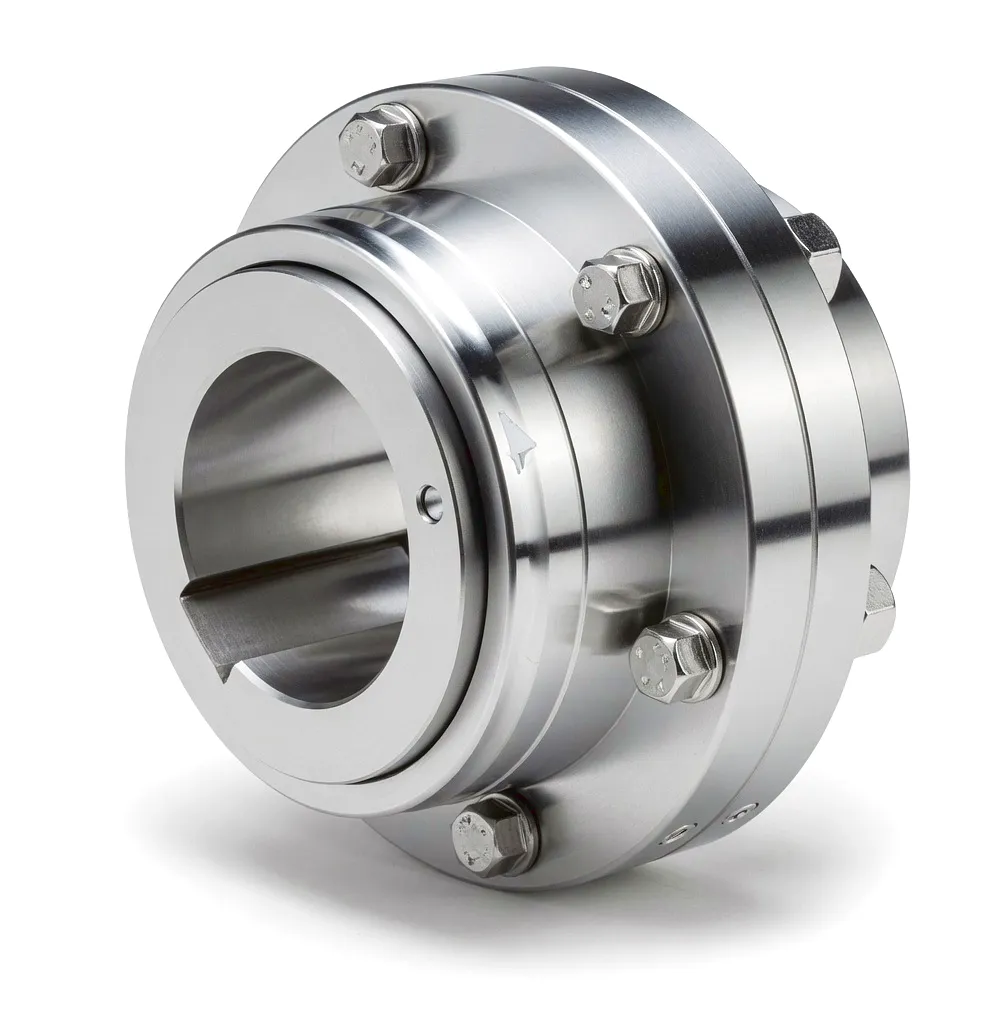
Portal cranes — those towering gantry structures that define the silhouette of British seaports, rail freight yards, and steel fabrication facilities — are among the most mechanically demanding machines in modern heavy industry. From the bustling quaysides of Southampton and Tilbury to the inland logistics hubs of Birmingham’s Freight Terminal and the steel plants of Sheffield and Scunthorpe, portal cranes carry extraordinary loads, cycle relentlessly through lift-and-lower sequences, and do so in environments where mechanical reliability is not merely desirable — it is an operational imperative. At the mechanical heart of every portal crane drive system sits a component whose engineering elegance is often underestimated: the coupling. Connecting electric motors to gearboxes, gearboxes to drum shafts, and slew rings to drive units, couplings absorb shock, compensate for misalignment, and transmit torque with a precision that directly determines crane performance, maintenance frequency, and ultimately, the operational cost of the entire lifting system. Understanding how to specify, select, and maintain the right coupling for portal crane service is therefore not a peripheral concern — it is a central engineering decision that shapes the long-term productivity of the asset.
This guide examines the technical demands that portal crane duty places on couplings, explores the engineering principles governing their design, and offers practical guidance for procurement teams and maintenance engineers seeking to optimise their crane drivetrains in the UK industrial context.
How Couplings Function Inside a Portal Crane Drivetrain
⚙
Torque Transmission
Couplings transfer rotational torque from the motor shaft to the driven load — whether a hoisting drum, travel wheel gearbox, or slew mechanism — without slip, energy loss, or resonance. In portal crane duty, torque demands can peak sharply during load pick-up, requiring couplings that handle both sustained and impulse torque without permanent deformation.
🔃
Компенсація перекосу
Even the most carefully aligned crane driveshafts experience angular, parallel, and axial misalignment due to thermal expansion, structural deflection under load, and foundation settlement. A correctly specified coupling accommodates these deviations in real time, preventing destructive side-loading on bearings and gearbox input shafts — one of the most common hidden causes of premature crane drivetrain failure.
🔴
Shock and Vibration Damping
Portal crane operations generate cyclical shock loads — during brake actuation, load snatching, and travel over rail joints. Elastomeric elements within flexible couplings act as torsional buffers, absorbing energy that would otherwise propagate as fatigue stress through gearbox internals. This shock attenuation is particularly valuable in the UK’s older dock infrastructure, where rail surfaces may introduce additional vibration inputs.
Application Scenario: Couplings in Portal (Gantry) Crane Systems
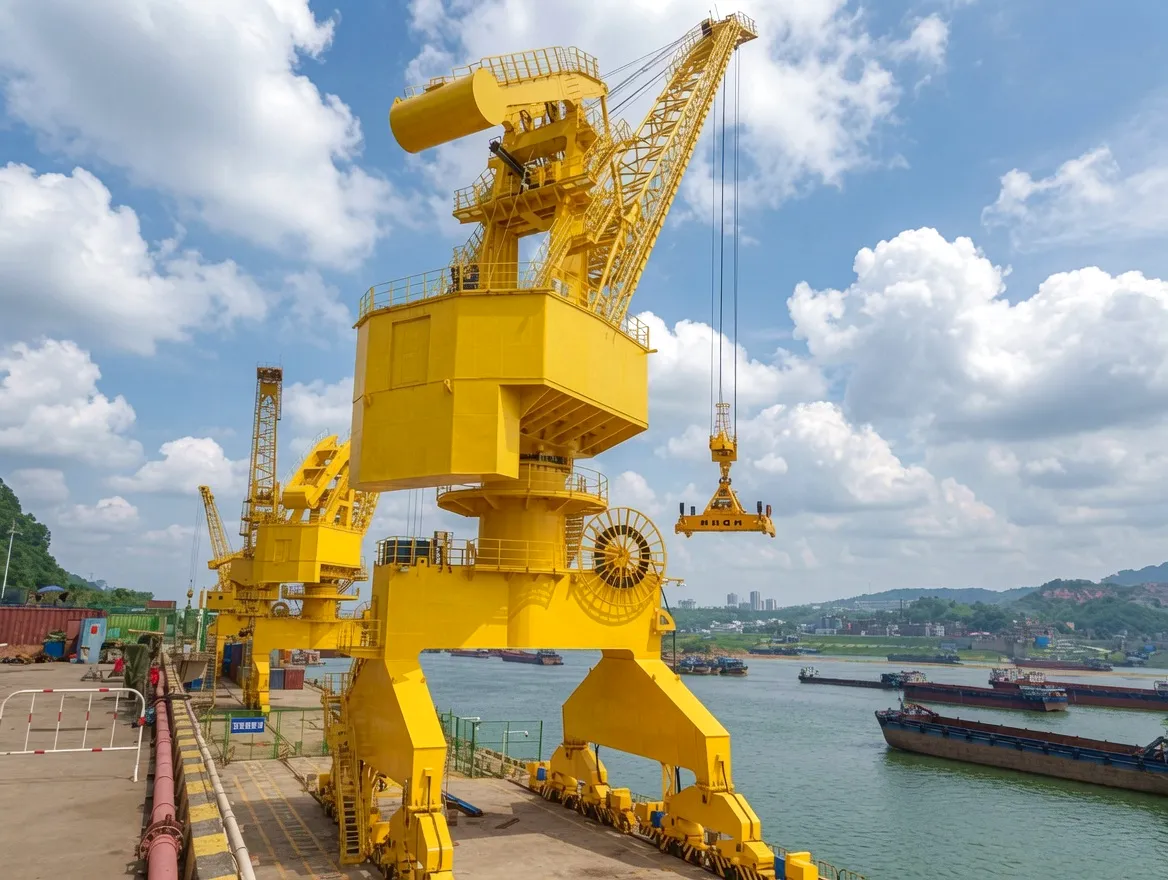
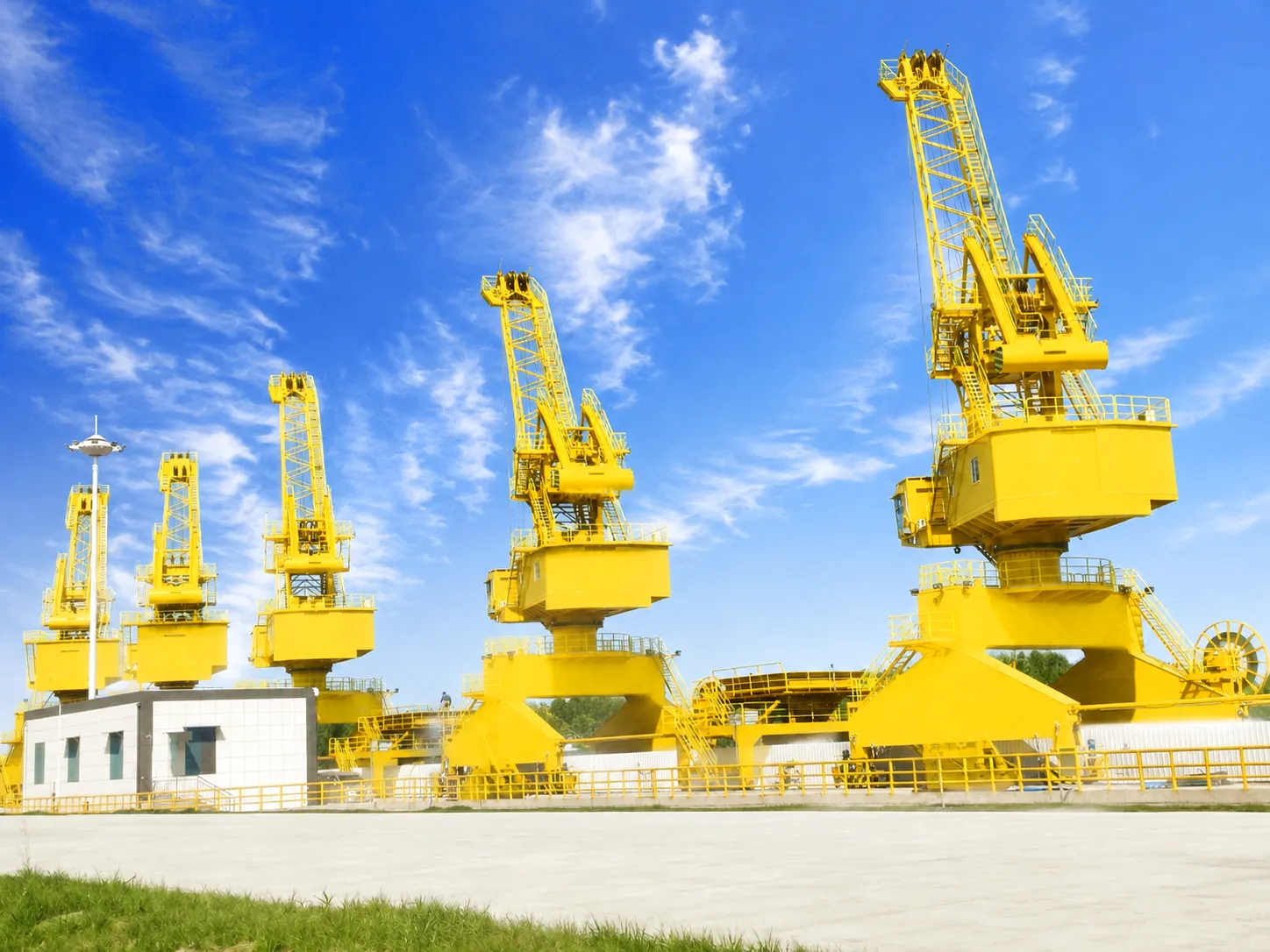
Portal cranes, also known as gantry cranes, operate across the full spectrum of British heavy industry — from the container terminals of Felixstowe and Liverpool to the structural steel yards of Rotherham and the ship-building facilities in Glasgow. In each of these environments, the crane must execute thousands of lift cycles under varying load profiles, frequently starting and stopping under full load in weather conditions ranging from sub-zero North Sea winters to summer heat that causes structural components to expand measurably. The coupling’s role within this system is therefore multi-dimensional: it must transmit rated torque reliably, accommodate the shaft misalignment that inevitably develops during service, protect downstream components from the shock loads generated during load engagement and brake application, and do all of this with minimal maintenance intervention for service intervals measured in months rather than weeks.
Within the portal crane structure, couplings appear in multiple drive assemblies. The hoist mechanism — arguably the highest-stress drivetrain on the crane — uses couplings to connect the hoist motor to the reduction gearbox and the gearbox to the rope drum. These joints must handle the full dynamic torque of load engagement, which can exceed rated torque by a service factor of 2.0 or higher in installations where loads are frequently snatched from a stationary position. The long-travel drive — responsible for moving the entire portal structure along its runway rails — similarly employs couplings at each driven wheelset, where alignment accuracy is complicated by the physical length of the portal legs and the differing thermal expansion coefficients of steel structures and concrete foundations. Cross-travel drives on the trolley impose yet another set of demands, often requiring compact coupling designs that fit within the trolley’s tight dimensional envelope while tolerating the vibration generated by travel over rail fishplates and expansion gaps.
The slewing mechanism — where fitted — places some of the most technically challenging demands on the coupling. Slew drives operate at low rotational speeds but with extremely high intermittent torque requirements, generating complex combined loading that includes torsion, bending, and axial thrust simultaneously. The coupling specified at the slew drive motor-to-gearbox interface must tolerate this multi-axis loading without fretting corrosion at the contact surfaces — a failure mode that becomes particularly pronounced in UK coastal installations where salt-laden air accelerates oxide formation at interference fits and mating surfaces. The solution here typically involves gear-type or disc-type couplings manufactured with tight dimensional tolerances and surface finishes specified to resist fretting, combined with sealed lubrication arrangements that are demonstrably compatible with the operating temperature range of the installation.
Portal crane procurement engineers at facilities such as those operated by Associated British Ports (ABP) or Peel Ports routinely specify couplings that meet or exceed ISO 14691 requirements for flexible couplings and BS EN 13001 structural and mechanical requirements for cranes. Compliance with these standards is not merely a box-checking exercise — it reflects a genuine engineering validation that the coupling can sustain the duty cycle, shock factors, and service life expectations of heavy crane applications. Procurement teams increasingly demand factory test certificates, material traceability documentation, and dimensional reports as standard deliverables alongside the coupling hardware itself.
Core Materials Used in Crane Coupling Manufacturing
Carbon Steel
45# carbon steel and 40Cr alloy steel are the dominant hub and sleeve materials. Heat-treated to HRC 28–35, they provide the tensile strength (600–900 MPa) required for the high torsional loads of crane hoist drives. Carbon steel hubs are precision machined, bored, and keyway-cut to H7/h6 fit tolerances, ensuring positive coupling under reversal loads without fretting movement at the bore interface.
Alloy Steel Gears
In gear-type couplings, the internal and external gear teeth are manufactured from 20CrMnTi or 42CrMo alloy steel, carburised and hardened to HRC 58–62 at the tooth surface, with a tough core retained to absorb impact. The involute tooth profile is ground to AGMA Class 10 or equivalent DIN 3961 Q8 standards, ensuring uniform load distribution across the full tooth face width even under significant angular misalignment conditions experienced in crane service.
Polyurethane / Rubber Elastomers
Elastomeric spider or cushion elements in jaw-type and tyre-type couplings are formulated from 90A–98A shore hardness polyurethane or NBR rubber, selected based on operating temperature range (typically -30 degC to +100 degC for UK outdoor crane service) and the specific torsional stiffness required to avoid resonance with the drive system’s natural frequency. Higher hardness grades are selected for high-shock applications such as overhead crane hoists with frequent emergency braking.
Stainless Steel Disc Packs
For disc couplings used in precision crane hoisting applications or marine environments, disc packs are fabricated from Type 301 or 17-7PH precipitation-hardened stainless steel, delivering high fatigue resistance alongside corrosion immunity. Disc thickness is precisely engineered (typically 0.2 mm to 0.4 mm per lamina) to achieve the desired combination of angular flexibility and torsional stiffness — a balance that is critical when the coupling must remain backlash-free over many thousands of direction reversals.
Technical Advantages in Portal Crane Coupling Service
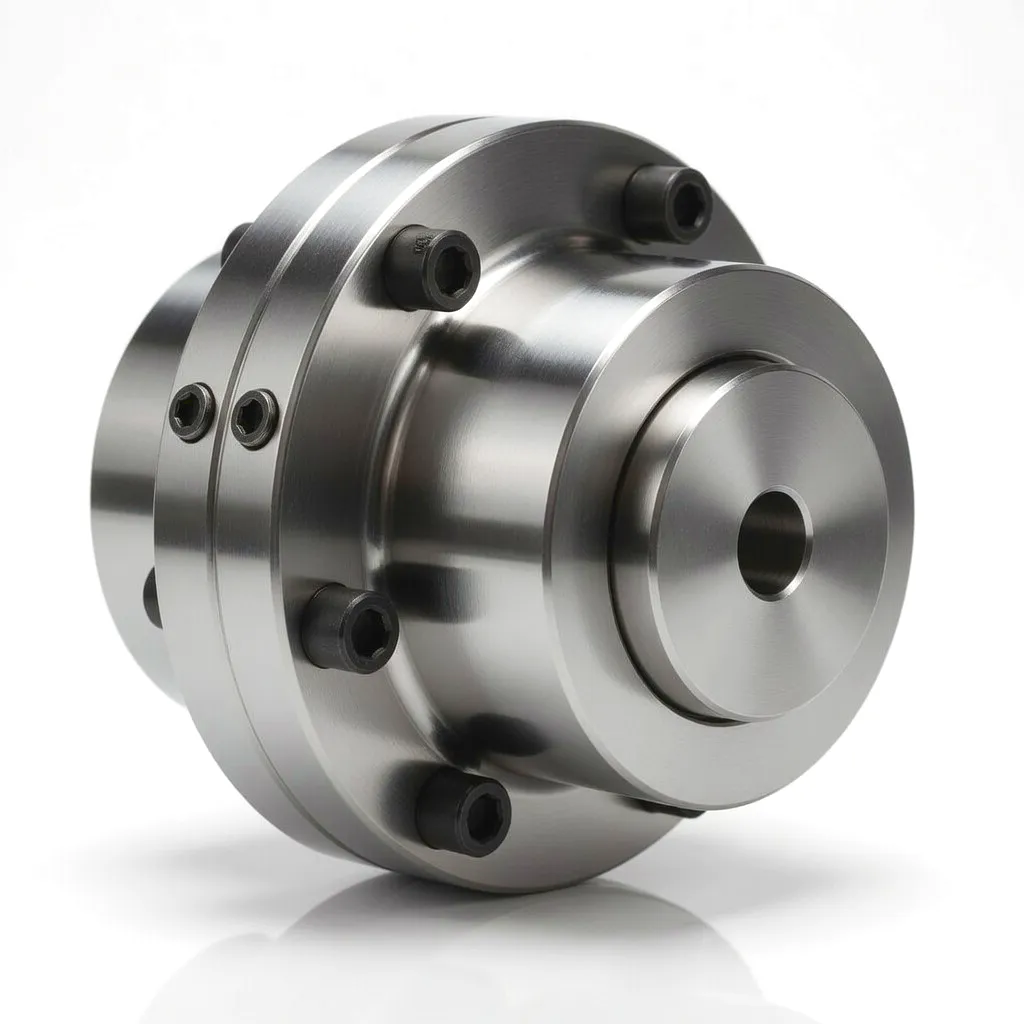
The engineering advantages delivered by a properly specified coupling in portal crane service extend well beyond simple torque transmission. Modern crane couplings are designed to act as the intelligent mechanical interface between prime mover and load — performing several protective and performance-enhancing functions simultaneously. These advantages directly translate to reduced downtime, extended service intervals, and lower total cost of ownership for crane operators across Britain’s industrial sectors.
Angular and parallel misalignment tolerance is perhaps the most operationally significant advantage. A gear-type coupling, for example, can accommodate angular misalignment of up to 1.5 degrees and parallel misalignment of up to 0.5 mm in typical crane drive arrangements, eliminating the need for micrometer-precision alignment during installation or after maintenance interventions. This tolerance dramatically reduces the skill requirement and time associated with crane refits — an important consideration for port operators managing tight vessel turnaround schedules where crane downtime directly impacts berth utilisation rates.
●
Zero-Backlash Operation
Disc and bellows coupling types eliminate rotational play at direction reversal — critical in hoist drives where load positioning accuracy is specified, and where load swing during deceleration must be minimised for safe personnel operation.
●
Fail-Safe Mechanical Protection
Elastomeric element designs provide an inherent overload protection mechanism — the elastomer will degrade before the gearbox sustains catastrophic damage in an overload event, making the coupling a predictable and replaceable mechanical fuse within the drivetrain.
●
Electrical Isolation
In crane applications with inverter drives (VFDs), elastomeric couplings provide a degree of electrical isolation across the drivetrain, reducing the risk of induced stray currents causing bearing pitting — a known failure mechanism in VFD-controlled crane hoists that has generated significant warranty claims across the UK crane maintenance sector.
●
Lubrication-Free Maintenance
Disc and jaw coupling designs operate entirely without lubrication, eliminating the contamination risk associated with grease-lubricated gear couplings in food-adjacent or environmentally sensitive applications, and reducing preventive maintenance intervals to visual inspection only — a significant operational benefit for crane operators working under ISO 45001 health and safety management systems.
●
High Speed Balance
For long-travel drives operating at elevated speeds, couplings are dynamically balanced to ISO 1940-1 G6.3 or better, eliminating vibration that would otherwise propagate through the crane’s runway rail system, cause structural fatigue at welded connections, and generate noise complaints in urban port environments near residential areas — an increasingly common compliance challenge for UK port operators.
●
Compact Dimensional Profile
Modern coupling designs — particularly disc and beam type variants — deliver high torque capacity within a remarkably compact axial length and outside diameter, allowing crane designers to optimise the space envelope between motor flange faces and gearbox input flanges without compromising torque transmission capability or misalignment tolerance.
Technical Performance Parameters Table
| Параметр | Gear-Type Coupling | Дискова муфта | Щелепа / Еластомерна | Tyre-Type |
|---|
| Номінальний крутний момент (Нм) | 100 to 2,000,000+ | 50 to 500,000 | 5 to 150,000 | 50 to 80,000 |
| Кутове зміщення | Up to 1.5 deg | Up to 1.0 deg | Up to 1.0 deg | Up to 4.0 deg |
| Parallel Offset (mm) | Up to 0.5 | Up to 0.3 | Up to 0.5 | До 1,5 |
| Максимальна швидкість (об/хв) | До 6000 | Up to 10,000+ | До 4500 | Up to 3,000 |
| Temperature Range | -20 to +80 degC | -50 to +200 degC | -30 to +100 degC | -30 to +80 degC |
| Backlash | Low (tooth clearance) | Zero | Near-zero | Low |
| Lubrication Required | Yes (grease/oil) | Ні | Ні | Ні |
| Hub Material Options | 40Cr, 42CrMo alloy steel | Stainless / alloy steel | Cast iron / steel | Cast iron / ductile iron |
| Shock Load Tolerance | Excellent | Moderate | Good (damped) | Very Good |
| Typical Crane Locations | Hoist / slew / travel | Hoist precision | Auxiliary / travel | Long-travel drives |
Industrial Application Scenarios Across UK Portal Crane Operations
Scenario 01
Port Container Handling — Felixstowe
At the UK’s busiest container terminal in Felixstowe, Suffolk, portal cranes execute over 600 lift cycles per day during peak vessel berthing windows. Each hoist cycle generates an impulse torque at motor start that can reach 2.5 times rated torque in less than 150 milliseconds. Gear-type couplings specified at the hoist motor-gearbox interface provide the torsional rigidity to transmit this peak torque without tooth deflection, while accommodating the angular misalignment that develops as the crane portal structure twists under asymmetric load. The sealed gear coupling design also resists the salt-spray environment characteristic of East Anglian coastal terminal operations, maintaining lubrication integrity for intervals exceeding 8,000 operating hours between gearbox services.
Scenario 02
Steel Coil Handling — Scunthorpe
Integrated steelworks in Scunthorpe, Lincolnshire deploy heavy-duty portal cranes for magnet and C-hook coil transfer duties, handling loads up to 45 tonnes per cycle in ambient temperatures that can exceed 40 degC near continuous casting lines. Disc couplings are increasingly specified for these applications in preference to older jaw-type designs, because their all-metal construction tolerates the elevated ambient temperature without elastomer degradation, and their zero-backlash characteristic ensures precise load positioning when setting coils onto transfer saddles — positional accuracy within plus or minus 10 mm is a routine process requirement at modern strip mill facilities.
Scenario 03
Bulk Aggregates Terminal — Bristol
The bulk aggregates and mineral handling terminals operating through the Port of Bristol and nearby Avonmouth handle stone, sand, and recycled construction materials using portal cranes fitted with grab attachments. Grab operation imposes particularly demanding duty on couplings: each grab close-and-lift sequence generates a shock load at the hoist motor proportional to the sudden resistance of the full grab load engaging. The coupling must sustain millions of these impulse events over its service life. Tyre-type couplings, with their higher elastomeric mass and greater angular flexibility, are often preferred in these grab applications, as their torsional compliance effectively filters the grab shock and prevents its propagation through the gearbox into the hoist drum bearings.
Scenario 04
Offshore Wind Component Logistics — Hull
The rapid expansion of offshore wind manufacturing and assembly in Kingston upon Hull — particularly at the Siemens Gamesa blade factory and the ABP-operated offshore wind terminal — has created significant demand for portal cranes handling oversized, high-value components such as monopile foundations, nacelle housings, and rotor blades. Load capacities range from 80 tonnes to over 600 tonnes in some heavy-lift gantry applications. At these tonnages, coupling selection becomes a critical engineering discipline: gear couplings at the long-travel drive wheelsets must maintain precise rail engagement under eccentric loads imposed by out-of-centre mass distributions typical of nacelle and hub assemblies. Custom-bore coupling variants with shrink disc connections are often specified to avoid keyway stress concentrations at the high torque levels involved.
Rail Freight Yards — Birmingham Intermodal Freight Terminal
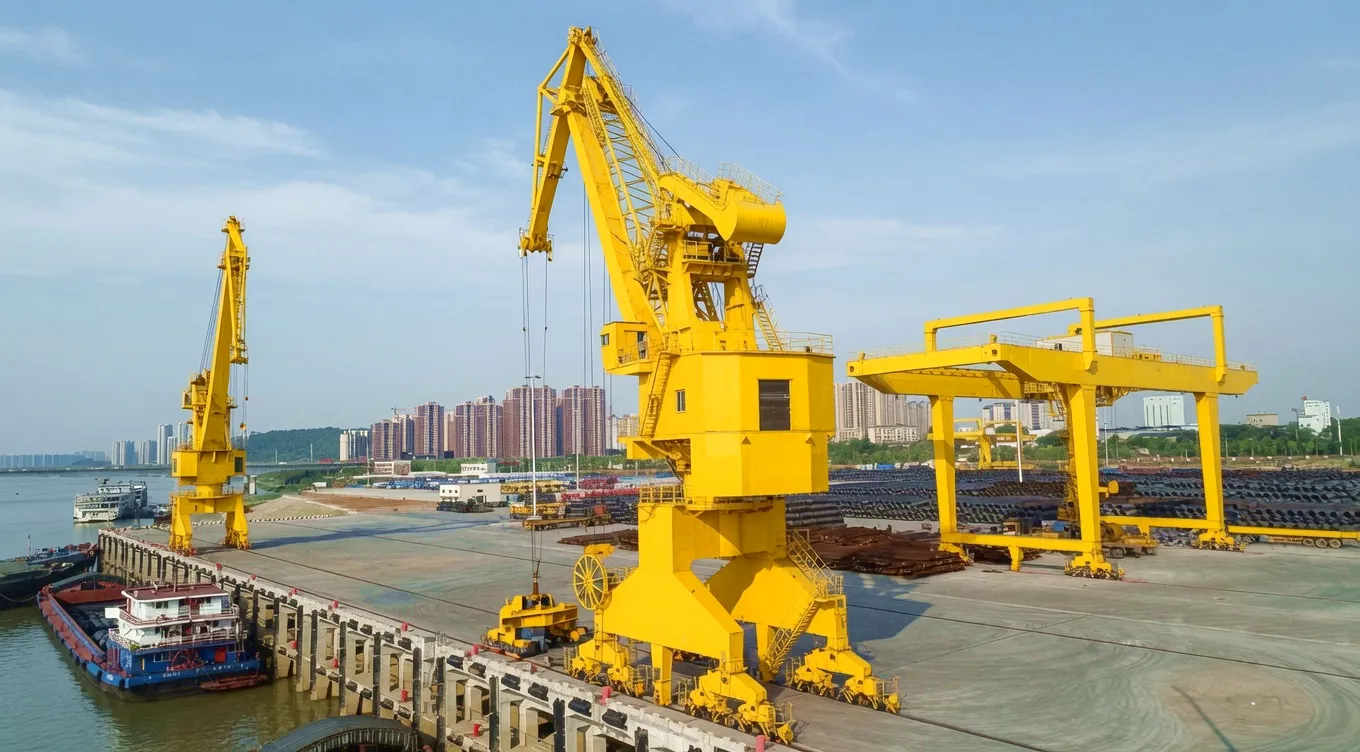 The Birch Coppice and Hams Hall intermodal freight terminals serving the wider Birmingham logistics hub operate rubber-tyred and rail-mounted portal cranes for container transhipment between rail, road, and warehousing systems. The duty profile here combines moderate load weights (up to 45 tonnes gross) with extremely high cycle frequencies — some terminals operate 24 hours per day, 360 days per year. This continuous duty cycle places premium value on coupling designs with long service intervals and predictable wear characteristics. Jaw-type couplings with colour-coded elastomeric spiders (indicating shore hardness grade) are widely deployed in these facilities, as their simple three-piece construction allows elastomer replacement in under 20 minutes without special tooling or shaft disassembly — a meaningful advantage in operations where crane downtime translates directly to delayed container delivery commitments to major retail distribution customers.
The slewing drive coupling on rail-mounted portal cranes at Birmingham terminals must additionally tolerate the torsional reversals generated by wind loads on container spreaders — the East Midlands weather pattern generates gusts that can impose significant lateral force on loaded spreader bars, which translates to intermittent torsional impulse at the slew drive coupling even during nominally stationary operations. Specifying a coupling with adequate torsional stiffness to resist wind-induced oscillation, without being so stiff that it transmits drive vibration into the slew gearbox, requires careful torsional analysis of the entire slew drivetrain system.
Featured Products
Coupling Solutions for Crane Applications
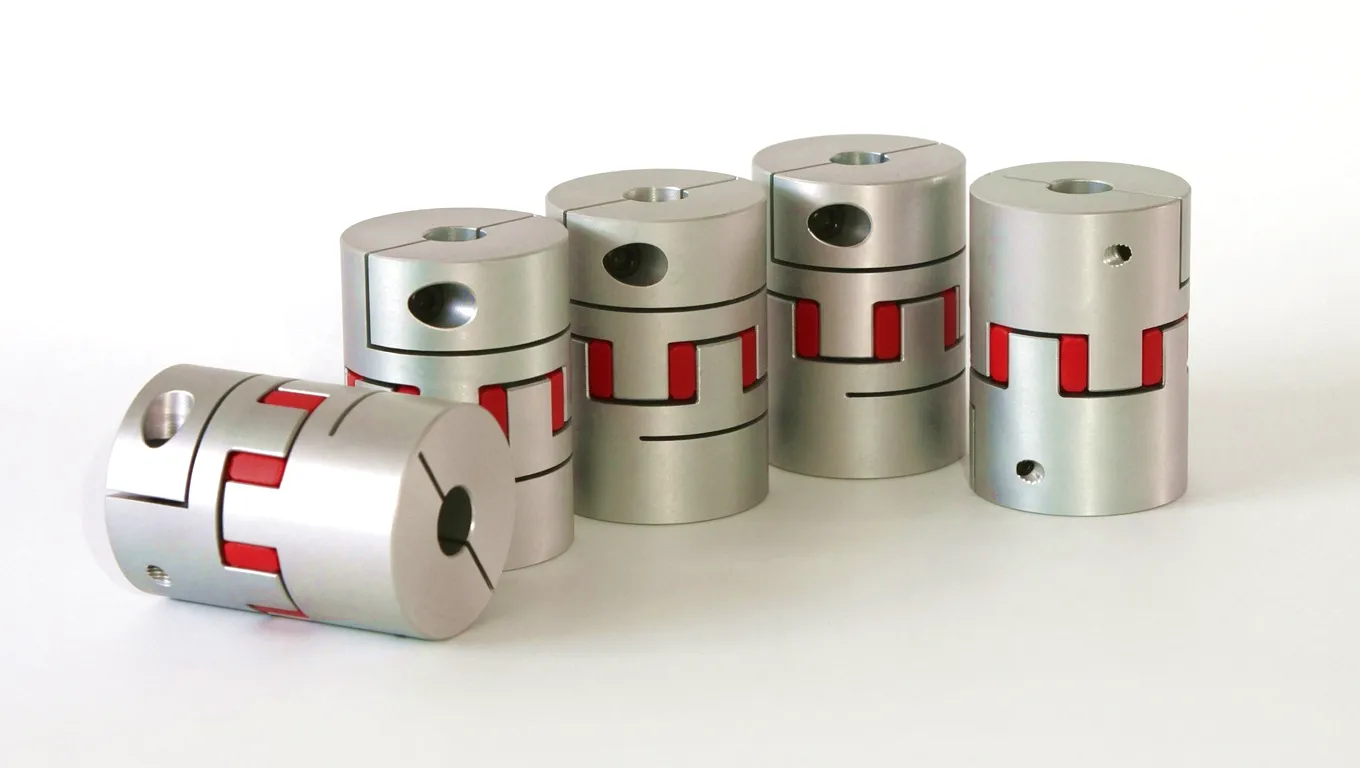
Гнучка балкова муфта
A precision-machined single-piece aluminium or stainless steel coupling that combines zero backlash with excellent misalignment accommodation. Ideal for auxiliary crane drives, encoder mounts, and light-duty servo applications requiring positional accuracy. The helical spiral cut provides consistent torsional stiffness across the full operating speed range.
View Flexible Beam Coupling →
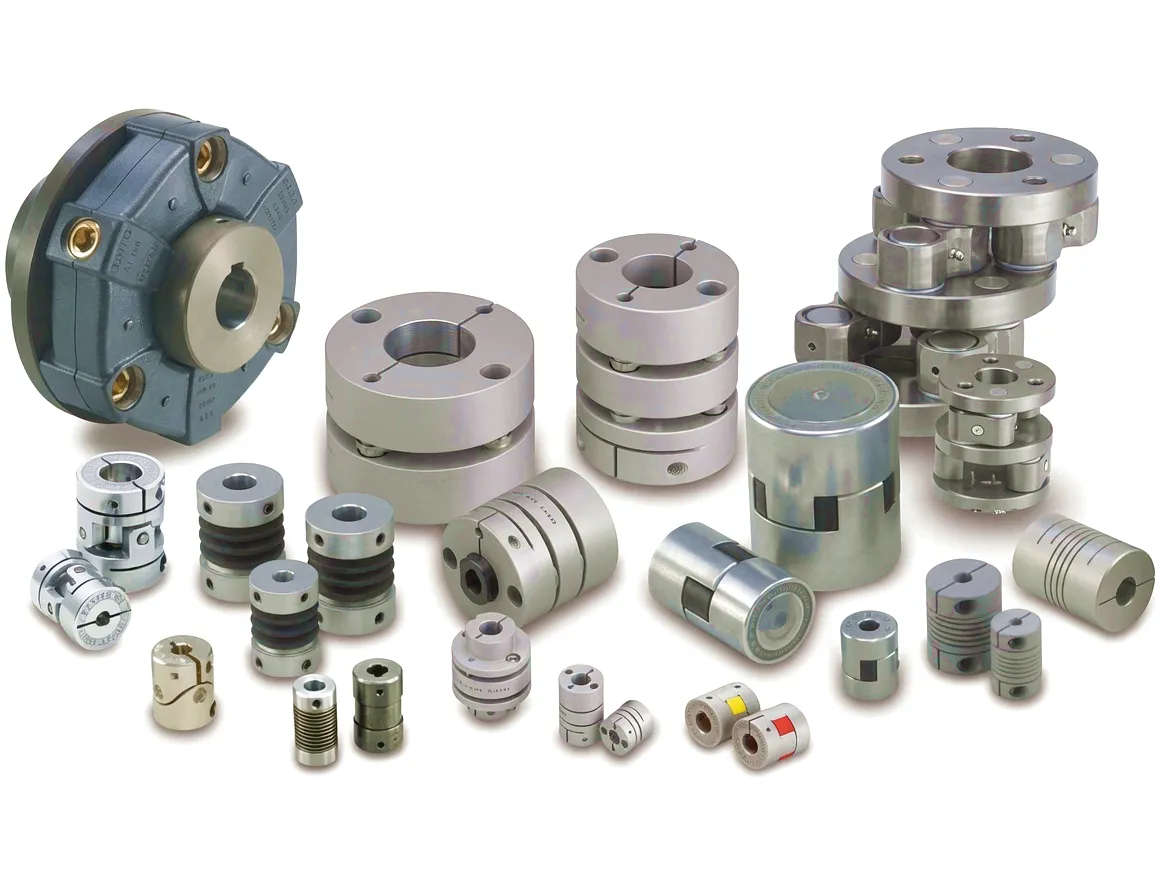
Дискова муфта
An all-metal, lubrication-free coupling using stainless steel disc packs to transmit torque while accommodating angular and axial misalignment. Delivers zero backlash, high torsional stiffness, and excellent fatigue resistance — precisely the characteristics demanded by portal crane hoist drives operating in continuous duty cycles at ports and steel terminals across the UK.
View Disc Coupling →
Ever Power: Precision Manufacturing and Custom Coupling Solutions
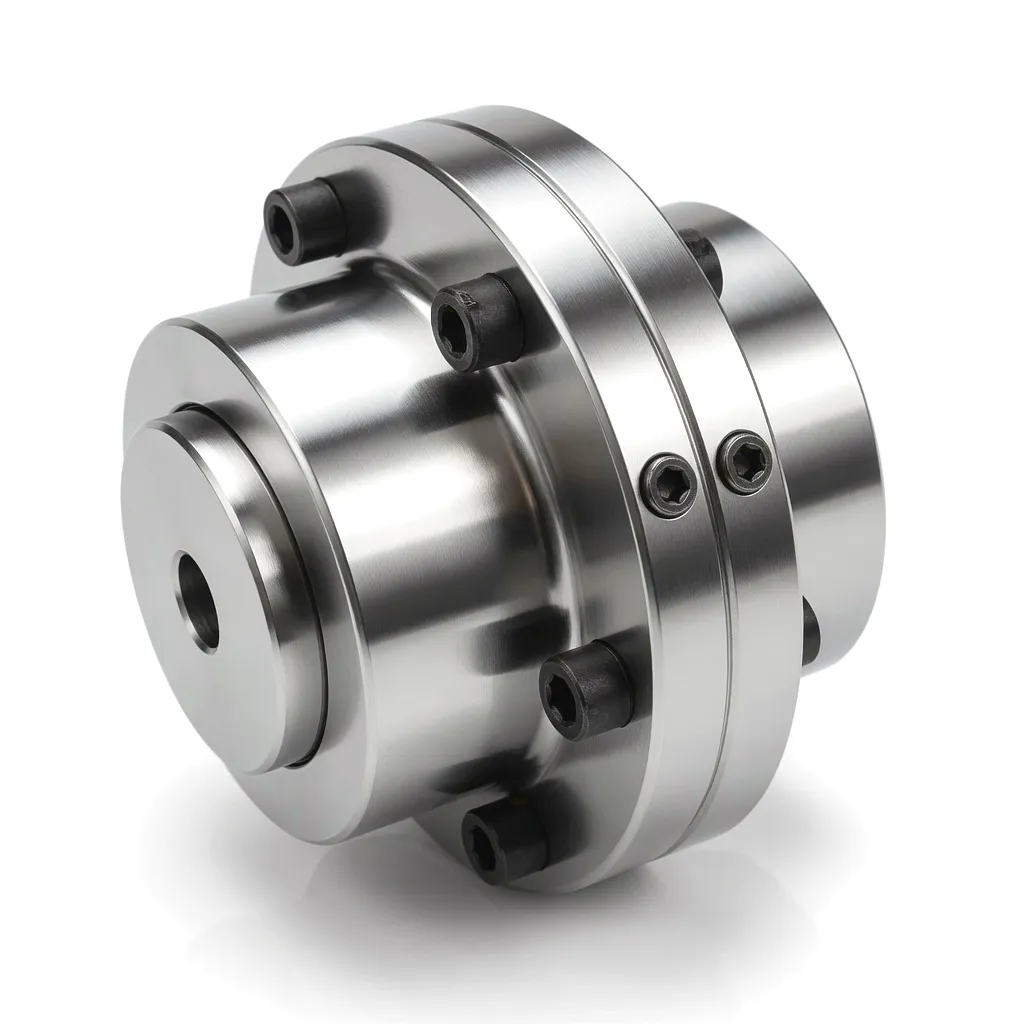
Ever Power has spent over two decades developing its position as a precision coupling manufacturer with deep engineering capability across the full spectrum of industrial power transmission applications. The company’s manufacturing facility — spanning over 60,000 square metres of covered production floor — houses a complete coupling production chain from raw material verification through to finished product dynamic balancing, encompassing CNC turning centres, gear hobbing and grinding machines, induction hardening lines, heat treatment furnaces, and three-dimensional coordinate measuring machines (CMMs). This integrated manufacturing model gives Ever Power the capacity to control every quality variable from billet material certification through to final assembly inspection, providing the traceability documentation increasingly required by UK crane operators and their insurers.
The customisation capability at Ever Power is perhaps the most distinctive aspect of the company’s value proposition for portal crane OEMs and aftermarket procurement teams. Standard catalogue couplings satisfy many applications — but portal crane drivetrains routinely present non-standard requirements: unusual shaft diameters or lengths resulting from non-standard gearbox designs, specific surface finish requirements at shaft bores to satisfy interference-fit torque transmission calculations, keyway configurations not covered by standard DIN or BS specifications, or flanged hub designs required by crane-specific mounting arrangements. Ever Power’s engineering team works directly with customers’ design offices to develop application-specific coupling drawings, subject to finite element analysis (FEA) of critical stress regions before committing to production. This engineering-led approach has enabled the company to support crane projects at facilities in Sheffield, Cardiff, and the Humber region where off-the-shelf solutions were simply not available at the required performance level.
10,000+
Customers Worldwide
Supply chain reliability is a decisive factor for UK crane operators and OEMs who cannot tolerate coupling lead times measured in months. Ever Power’s supply chain architecture maintains strategic buffer stocks of common bore sizes and coupling configurations, enabling dispatch of standard catalogue items within 3–5 working days of order receipt. Custom-engineered coupling variants — including special bores, non-standard flanges, and application-specific material specifications — are managed through a dedicated project engineering workflow with committed lead times confirmed at order acknowledgement. The company’s international logistics partnerships ensure reliable delivery to UK ports and distribution centres, with full export documentation, CE marking where applicable, and test certificates included as standard deliverables.
Історія успіху клієнта
Hull Offshore Wind Terminal: Reducing Crane Drivetrain Failures by 74%
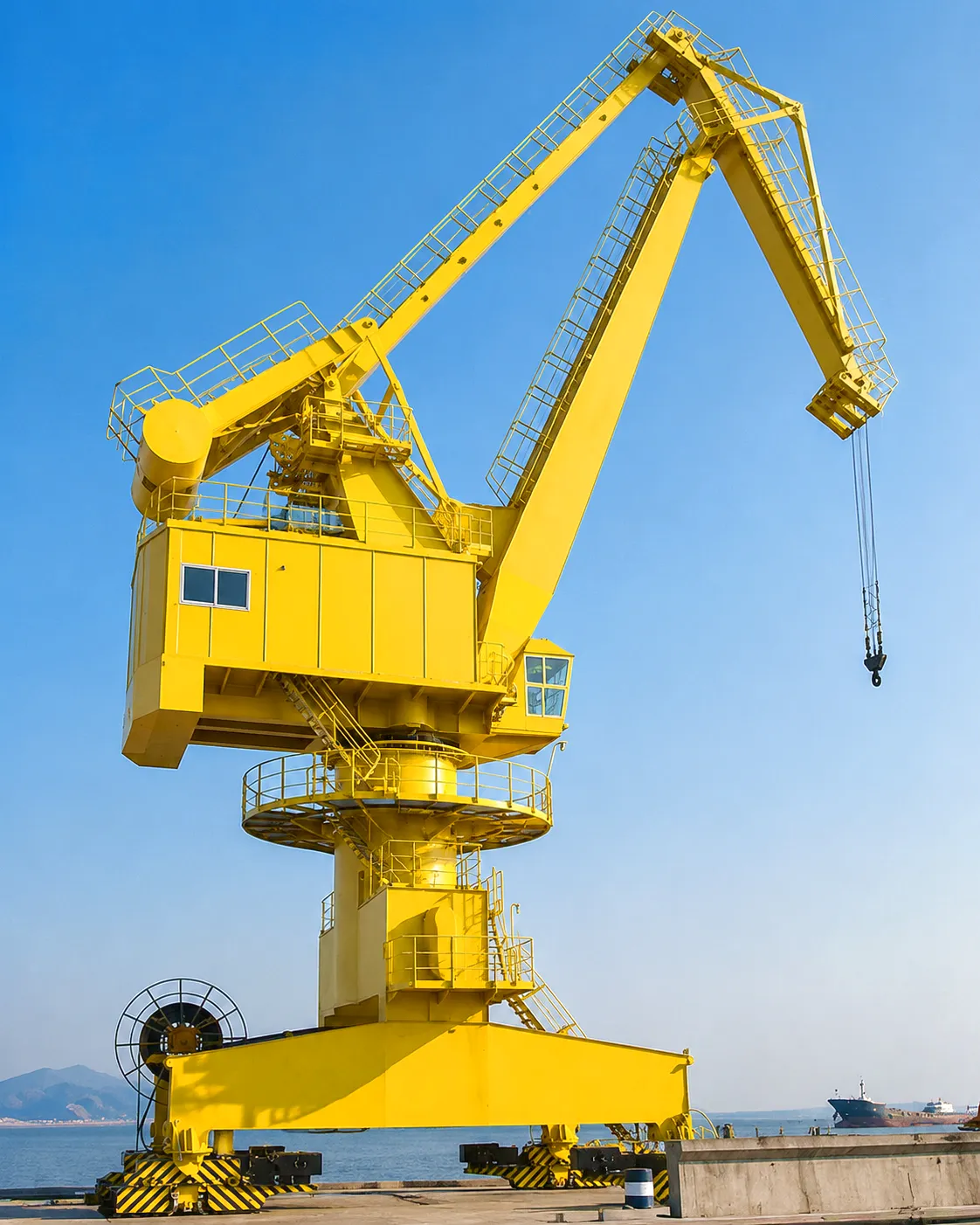
A leading UK offshore wind logistics company operating out of a dedicated assembly and export terminal on the River Humber near Kingston upon Hull faced a persistent and costly problem: the gear couplings on their two primary 200-tonne capacity portal cranes were failing at an average interval of 14 months, each failure requiring crane shutdown for 3–4 days while replacement parts were sourced and installation was completed. The cranes, originally delivered with coupling components from a European supplier whose UK distributor had since ceased trading, required sourcing an alternative supply chain that could match the technical specification and deliver within the project-critical lead times imposed by the offshore wind installation calendar.
The facility’s maintenance engineering team contacted Ever Power after reviewing the company’s technical documentation and coupling application guides. A collaborative engineering process followed, involving the exchange of original coupling drawings, gearbox manufacturer’s specification sheets, and operational load cycle data extracted from the crane’s PLC historians. Ever Power’s engineering team identified that the original coupling specification had used a gear tooth profile with inadequate crowned tooth geometry for the angular misalignment actually occurring in service — a root cause that the original failure investigation had not identified. The replacement gear couplings supplied by Ever Power incorporated a fully crowned tooth profile ground to DIN 3962 Class 7 tolerance, along with an upgraded sealing arrangement suited to the offshore-adjacent marine environment at the Humber terminal.
After 26 months of service following the coupling replacement programme, neither crane has required unplanned coupling-related maintenance. The estimated saving in avoided downtime costs and emergency maintenance labour exceeds GBP 180,000 over the comparison period, in addition to the reputational benefit of maintaining crane availability commitments to wind farm vessel loading schedules. The terminal’s technical director formally adopted Ever Power as the preferred coupling supplier for all future crane maintenance requirements across the facility.
★★★★★
“The root cause analysis that Ever Power’s engineers carried out on our old coupling failures was more thorough than anything we had received from our previous supplier. They identified the crowned tooth geometry issue within two weeks of receiving our data, and the replacement couplings have now run for over two years without a single unplanned intervention.”
— Technical Director, Humber Offshore Wind Terminal
★★★★★
“We needed a coupling with a non-standard bore diameter and a specific keyway orientation that no UK stock supplier could provide. Ever Power turned around a drawing confirmation and production commitment within four working days, and the couplings arrived with full material certificates and a dimensional inspection report that our quality team accepted immediately.”
— Maintenance Manager, Sheffield Steel Processing, South Yorkshire
★★★★★
“We switched our Felixstowe terminal’s portal crane coupling supply to Ever Power three years ago after persistent seal failures with our previous European-sourced gear couplings. The change to Ever Power’s sealed coupling design with upgraded NBR seals for marine environments has been transformative — maintenance intervals have extended from 12 months to 36 months and counting.”
— Operations Engineer, East Anglian Container Terminal
Часті запитання
Answers to common questions from UK procurement and maintenance teams
Q: What type of coupling is most suitable for a portal crane hoist drive operating in a UK coastal port environment?
For portal crane hoist drives at UK coastal facilities — where salt-laden air, temperature cycling, and high-shock load profiles all apply — sealed gear-type couplings are generally the most robust choice for high-torque, high-shock positions, while disc couplings offer a maintenance-free alternative where positional accuracy and zero backlash are prioritised. The selection should always be validated against the calculated service factor, which combines the shock factor of the application with the motor service factor and any application-specific environmental corrections.
Q: How much does a custom-specified gear coupling for a heavy-duty UK portal crane typically cost, and what is the usual delivery lead time?
Pricing for custom portal crane gear couplings varies widely depending on bore diameter, torque rating, material specification, and required quality documentation. As an indicative guide, standard-range gear couplings for crane hoist service are typically priced between GBP 180 and GBP 3,500 per coupling assembly depending on size, while large custom-engineered variants for very high-torque applications may be priced individually following drawing review. For an accurate quote specific to your crane type and application, we recommend contacting [email protected] with your coupling drawing reference or the gearbox manufacturer’s model number.
Q: Which UK crane standards should I reference when specifying couplings for a portal crane upgrade project in Birmingham or Sheffield?
The primary standards framework for UK crane coupling specification covers BS EN 13001 (crane design, general principles), BS EN 13135 (equipment for cranes, design requirements for mechanical components), and ISO 14691 (flexible couplings for petroleum, chemical, and gas industry services — widely referenced as a quality benchmark even outside those sectors). For crane drives using variable frequency drives, EN IEC 61800 series and the crane manufacturer’s specific coupling interface requirements must also be reviewed. Ever Power’s engineering team can assist with standards compliance documentation for specific project requirements.
Q: Where can I find a reliable coupling supplier in the UK who can provide same-week delivery of portal crane replacement parts to ports in Southampton or Hull?
Ever Power maintains buffer stocks of the most common gear and elastomeric coupling sizes used in crane service, with international dispatch typically achievable within 3–5 working days for standard catalogue items. Expedited air freight delivery to UK ports including Southampton, Tilbury, Hull, and Felixstowe is available for urgent breakdown situations. Contact our sales team at [email protected] with your coupling part number or dimensional specification and we will confirm availability and lead time within 24 hours of your enquiry.
Q: How do I calculate the correct service factor when selecting a coupling for a portal crane slewing drive in a heavy steel fabrication facility?
The service factor for a portal crane slew drive coupling is calculated by multiplying the base application factor (typically 1.5 to 2.5 for crane slew duty, depending on load classification) by the start-stop frequency factor and any environmental factor applicable to the installation. The result is used to calculate the required coupling rating as: Required Torque Rating = Nominal Drive Torque multiplied by Service Factor. For steel fabrication environments, a service factor between 2.0 and 2.5 is generally appropriate, reflecting the combination of heavy loads, frequent reversals, and potential shock from wind loading and structural settlement. Ever Power’s technical team can assist with service factor calculations for specific installations on request.
Q: What is the difference in price between a disc coupling and a gear coupling for portal crane applications, and which offers better overall value for UK buyers?
Disc couplings carry a higher initial purchase price than gear couplings at equivalent torque ratings — typically 30% to 60% more — but deliver significantly lower total cost of ownership in applications where elimination of lubrication and inspection intervals justifies the premium. For continuous-operation crane facilities where maintenance windows are scarce and labour costs are high (as is the case at most major UK ports and steel terminals), the extended service intervals of disc couplings often justify the additional upfront investment within two to three maintenance cycles. Gear couplings remain the preferred choice where budget constraints are primary and access for periodic regreasing is straightforward.
Готові визначитися з муфтою?
Talk to Ever Power — Your Trusted UK Coupling Supply Partner
Whether you need a standard replacement coupling for an urgent breakdown or a fully engineered custom solution for a new portal crane project, Ever Power has the technical capability and supply chain reliability to meet your requirements.
📧 Get a Quote Now
редагування від gzl