Industrial Couplings · UK B2B
Couplings in Thermal Power Generation: Precision Drive Solutions for High-Speed Turbine-Generator Sets
How gear-type and flexible couplings sustain reliable torque transmission in fossil-fuel power stations — with insights for UK energy operators, plant engineers, and procurement teams.
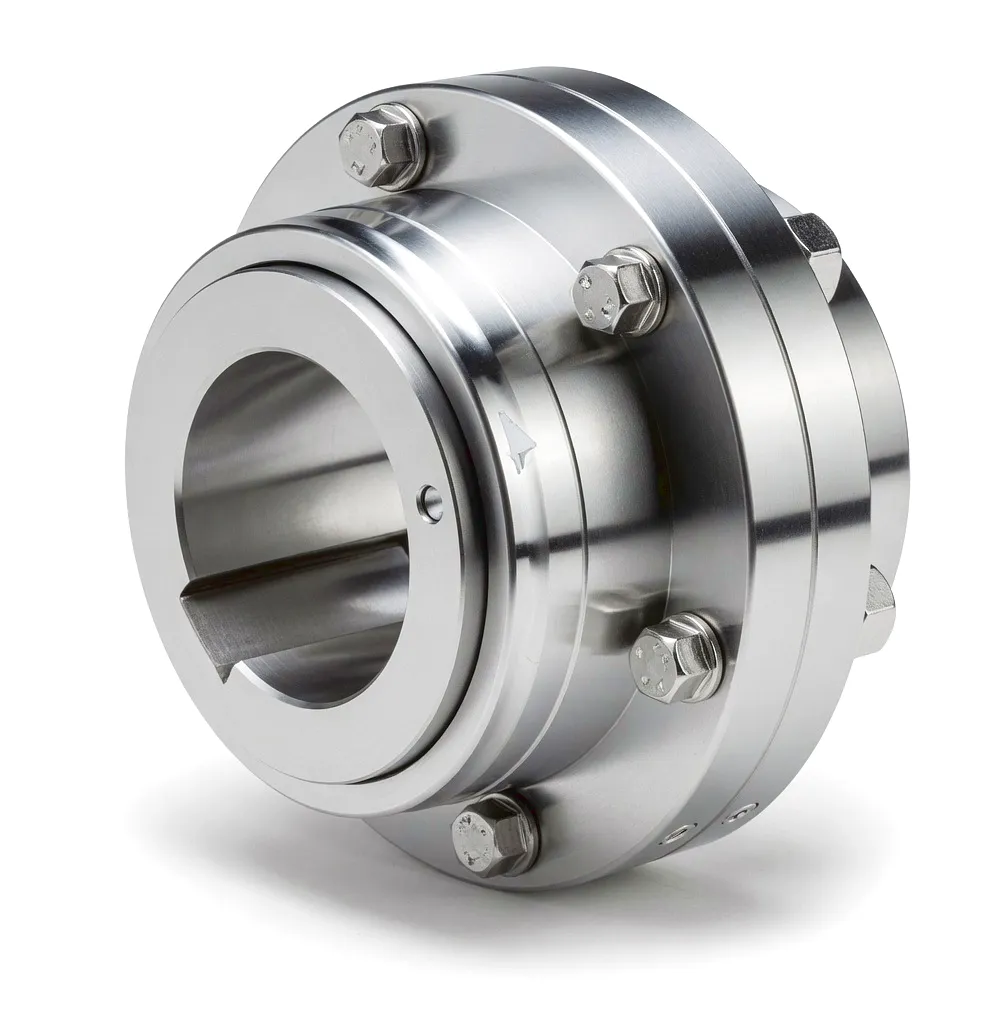
Among the many mechanical components that keep a thermal power station running around the clock, the coupling sitting between a steam turbine and its generator is arguably one of the most load-critical. In a large fossil-fuel plant — whether coal-fired in the Yorkshire coalfields, gas-fired near the Thames Estuary, or biomass-fuelled in Scotland — the prime mover may deliver several hundred megawatts of shaft power at rotational speeds ranging from 1,500 rpm to 3,600 rpm. Every kilowatt that reaches the national grid must pass through that connection. When the coupling works perfectly, operators barely notice it exists; when it fails, the entire unit trips, and the financial and reputational cost can be severe.
Thermal power generation has been a backbone of British industry for well over a century, from the earliest reciprocating steam engines of the Victorian era to the combined-cycle gas turbine (CCGT) stations now supplying flexible capacity to the National Grid. Throughout that evolution, the design and manufacture of power-transmission couplings has kept pace with escalating demands: higher temperatures, faster speeds, tighter balance grades, longer continuous-running intervals, and ever more stringent vibration targets. Today, selecting the right coupling type — and the right supplier — is a decision that plant engineers make with both rigorous technical criteria and commercial pragmatism.
How Couplings Work in Thermal Power Drivetrains
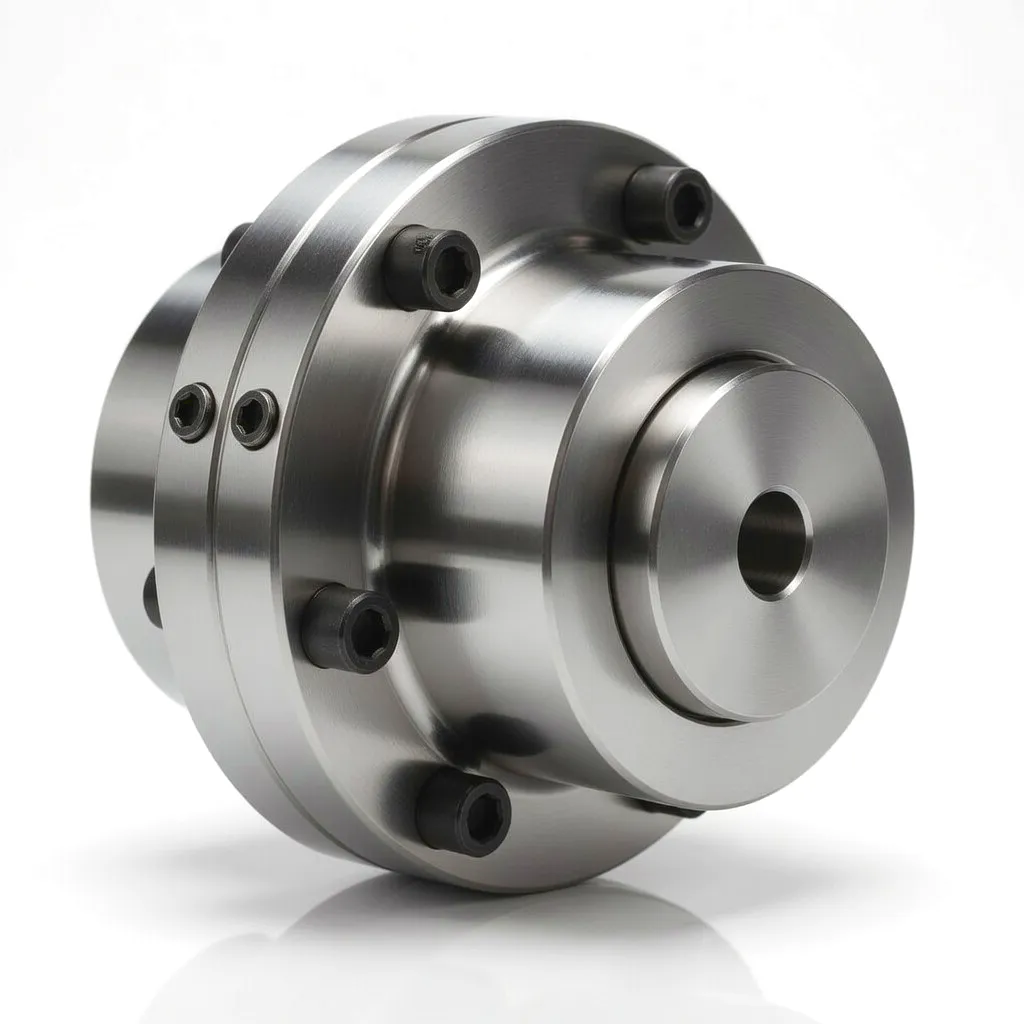
At its core, a coupling transmits rotational torque from one shaft to another while accommodating the inevitable small misalignments that arise in any real installation. In a thermal power station, the turbine shaft and generator shaft are enormous steel forgings, each weighing many tonnes. Achieving perfect collinear alignment between them during assembly is practically impossible — and even if achieved at ambient temperature, the differential thermal expansion that occurs as the turbine heats to operating conditions will introduce a fresh offset. Angular misalignment, parallel offset, and axial displacement all place additional loading on bearings and seals if not absorbed by the coupling itself.
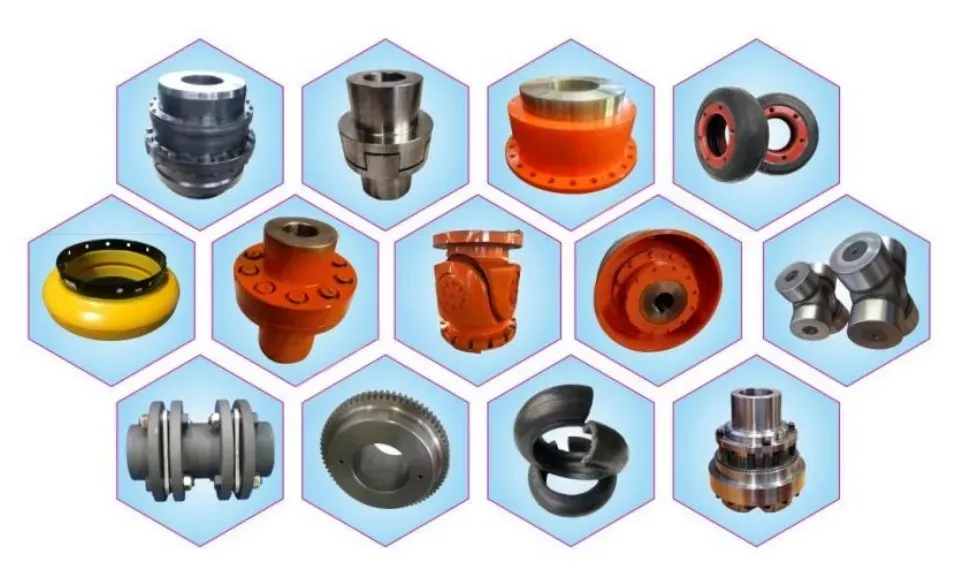
Gear-type couplings address these challenges through a meshing arrangement of crowned external teeth on each hub engaging with straight internal teeth in a sleeve. The crowned tooth profile allows a small angular articulation — typically up to 1.5° per gear mesh — so that shaft misalignment is absorbed within the tooth contact zone rather than transmitted as bearing side-loads. The two hubs and the central sleeve together create a three-piece assembly that is both torsionally stiff and angularly compliant. Lubrication of the tooth mesh is vital: most power-plant gear couplings run in an oil-bath environment within a sealed housing, and the lubricant film both prevents metal-to-metal wear and carries away frictional heat generated by the slight rocking motion of the teeth during misaligned service.
Flexible disc couplings and diaphragm couplings take a different approach: instead of mechanical articulation through tooth flanks, they use thin metallic disc packs or contoured diaphragms to accommodate misalignment through elastic flexure. Because there are no sliding surfaces, these dry couplings require no lubrication and are intrinsically maintenance-free between scheduled inspections. This makes them attractive for newer combined-cycle plant where maintenance windows are short and access to the coupling housing may be constrained by the tight turbine-exhaust layout.
Core Materials Used in Power-Plant Coupling Manufacture
Material selection for couplings operating inside a thermal power station is governed by three overlapping requirements: tensile and fatigue strength sufficient for the peak torque loads seen during grid synchronisation or load rejection events; corrosion and oxidation resistance given the warm, humid atmosphere inside turbine halls; and machinability precise enough to achieve the close dimensional tolerances required for high-balance-grade assemblies.
🔩
Alloy Steel (42CrMo4 / EN24)
The workhorse material for hubs and flanges. After quenching and tempering, yield strengths above 900 MPa are achievable, providing the fatigue life demanded by 100,000+ hour service targets. Sheffield steel mills have historically been a key UK source for these forgings.
⚙️
Carbon Steel Sleeves (S45C / C45)
Gear sleeves are typically machined from medium-carbon steel with induction-hardened bore profiles. The hardness difference between hub teeth and sleeve teeth is carefully controlled to ensure a predictable wear pattern that favours the more accessible hub element rather than the sleeve.
🔬
Stainless Steel Disc Packs (17-4PH / 15-5PH)
Precipitation-hardened stainless grades combine very high fatigue strength with excellent corrosion resistance, making them the standard for disc-coupling flex elements. The thin laminations — sometimes no more than 0.3 mm — are laser-cut for edge precision before being stack-assembled and bolt-torqued.
🛡️
Ductile Iron (GGG-50 / GGG-70)
Where weight reduction and cast-complex geometry are priorities — such as coupling guards and certain flanged housings — spheroidal graphite iron provides adequate strength, good dampening of vibration, and excellent castability. Its specific gravity is roughly 10% lower than equivalent steel cross-sections.
Key Technical Advantages of Couplings for Turbine-Generator Drivetrains
Why leading UK power generators specify precision-engineered couplings
◈
Εξαιρετική Αποζημίωση για Κακοποίηση Ευθυγράμμισης
Crowned gear teeth or flexible disc packs absorb angular, parallel, and axial shaft offsets simultaneously, protecting turbine and generator bearings from harmful side loads induced by thermal growth during steady-state operation.
◈
High-Cycle Fatigue Resistance
Designed to exceed 100,000 cumulative operating hours — a benchmark aligned with large power-station overhaul intervals. Surface hardening and precision tooth geometry extend the fatigue life envelope far beyond what plain shaft flanges could achieve.
◈
Precision Dynamic Balance (G2.5 or Better)
Every coupling assembly undergoes dynamic balancing to ISO 1940-1 Grade G2.5 or finer, minimising residual unbalance forces at running speed. For a 3,000 rpm machine, even a few gram-centimetres of unbalance translates into significant bearing vibration amplitudes if left uncorrected.
◈
Torsional Stiffness Tuning
The coupling stiffness can be matched to the torsional natural frequency of the turbine-generator train. Gear couplings are generally very stiff torsionally, which suits machines that need a high first critical speed; disc couplings offer moderate stiffness that can be adjusted through disc-pack geometry and bolt-circle diameter.
◈
Zero Backlash for Precise Load Sharing
In multi-shaft compound turbine trains, evenly sharing electrical load between generator windings demands consistent torque transmission without angular play. Precision-manufactured couplings deliver near-zero backlash, supporting stable grid synchronisation and avoiding transient load spikes on grid connection.
◈
Turbine Hall Safety by Design
Flanged coupling guards, torque-limiting spacers, and burst-containment sleeves are standard engineering provisions in power-station couplings. A failed coupling that fragments at high speed poses catastrophic risk to personnel and adjacent plant; containment design is therefore mandatory, not optional, for any UK-regulated power station.
Application Scenario 13: Thermal Power Generation Unit Drivetrains

The connection between a steam turbine and an electrical generator sits at the very heart of thermal power production. In a large fossil-fuel station — say, one of the CCGT plants operating along the Humber Estuary or the remaining coal-capable units in the East Midlands — the turbine shaft may deliver in excess of 500 MW of mechanical power to the generator rotor through this single mechanical joint. At 3,000 rpm (the standard synchronous speed for a 50 Hz UK grid connection), the surface velocity of a large-bore coupling exceeds 40 m/s, placing extreme demands on the tooth geometry, lubricant viscosity, and dynamic balance of the assembly.
One of the defining challenges in this application is managing thermal growth. As the turbine rotor heats from cold standstill to full-load operating temperature, the steel shaft elongates axially and the turbine casing — supported on its own foundation — shifts relative to the generator pedestal. These movements are not random; they are predictable, but they impose a time-varying misalignment on the coupling during the start-up transient. A coupling without sufficient angular and axial accommodation capacity would transmit this misalignment directly to the turbine’s exhaust-end bearing and the generator’s drive-end bearing, generating elevated vibration signatures visible on the plant’s continuous vibration monitoring system.
Gear-type couplings have historically dominated this application segment because of their inherent ability to tolerate this combination of angular offset and axial thermal float simultaneously. The crowned teeth carry the full torque through a distribution of contact points along the tooth face, and the small rocking motion of the gear mesh absorbs the misalignment without creating bending moments in the shaft. Modern power-station gear couplings are designed with a deliberate axial float provision — sometimes termed “free float” — that allows the turbine shaft to expand thermally without loading the thrust bearing of the generator. This is a subtle but critical feature; without it, turbine thermal growth during load increase would push the turbine rotor into its thrust bearing at exactly the moment when bearing loads from the aerodynamic steam forces are already at their peak.

Fatigue life targets for turbine-generator couplings are set by the generating company’s maintenance philosophy. In a base-load plant operating more than 7,000 hours per year, the expectation is typically 100,000 cumulative operating hours before a planned overhaul strip of the coupling assembly. That equates to roughly 14 years of continuous running — a demanding target that places the tooth-contact fatigue properties of the steel, the quality of the running lubricant, and the initial assembly accuracy all under scrutiny. UK power companies operating under Environment Agency licensing and Health and Safety Executive oversight tend to specify detailed coupling inspection protocols at each major maintenance outage, typically every four to six years, to confirm that tooth wear rates and any fatigue crack initiation in the hub fillet radii remain within the original design envelope.
The dynamic balancing requirement for large turbine-generator couplings is particularly stringent. The complete coupling assembly — comprising two hubs, a central sleeve or spacer tube, and all fasteners — is balanced as a complete set at the coupling manufacturer’s facility on a high-speed balance machine capable of simulating running conditions. ISO 1940-1 Grade G2.5 is the minimum acceptable standard, and some specifications for machines above 200 MW call for G1.0 balance quality. Achieving these grades on a component weighing several hundred kilograms, with a bore tolerance of just a few micrometres, is a genuine precision manufacturing challenge that distinguishes specialist coupling manufacturers from general mechanical suppliers.
Broader Industrial Application Scenarios for Precision Couplings
Across the UK’s industrial heartlands, similar high-demand coupling applications occur in neighbouring sectors:
💧
Water Treatment Pumping Stations
Large centrifugal pumps serving Thames Water, Severn Trent, or Yorkshire Water infrastructure rely on flexible couplings between motor and pump shafts to absorb the vibration transmitted during impeller cavitation events and to accommodate pump casing thermal expansion. The coupling also provides mechanical isolation, limiting motor bearing damage when a pump surge occurs.
🏗️
Steel Mill Rolling Drives — Sheffield & Rotherham
Heavy rolling mill spindles see cyclic torque peaks ten times the nominal running torque during biting of a hot slab. Gear couplings in these drivetrains must combine high torsional stiffness for precise roll gap control with enough misalignment accommodation to cope with roll stand deflection under multi-tonne rolling loads. Sheffield’s remaining steel producers have specified this configuration for decades.
🌬️
Gas Compression & Pipeline Stations
National Gas Transmission compressor stations on the UK high-pressure pipeline network couple gas turbine drivers to centrifugal compressors through large disc or diaphragm couplings. The dry, lube-free nature of disc couplings suits these ATEX-classified environments where leaked lubricant would constitute a fire risk, and the absence of wearing parts reduces the maintenance burden on remote, unmanned stations.
⚓
Marine Diesel Generator Sets
Offshore platform generators at fields in the North Sea and vessels departing from Aberdeen or Southampton use heavy-duty flexible couplings to isolate diesel engine torsional vibrations from the alternator rotor. The multi-mode vibration environment created by engine firing impulses, vessel motion, and wave slamming loads requires a coupling that combines good torsional damping with rugged misalignment tolerance.
🏭
Chemical Process Agitators — Teesside
Large agitator drives serving petrochemical reactors on Teesside require couplings that combine stainless-steel wetted-surface compatibility with the ability to tolerate cyclic torque reversals as batch contents change viscosity. Compact disc couplings with metric bores are a common fit-for-purpose solution, easily adapted to existing motor-gearbox mounting arrangements without costly baseplate modification.
🌀
Wind Turbine Main Shaft Connections
Onshore wind farms across the Scottish Highlands and offshore arrays in the North Sea and Irish Sea use large torsionally-flexible couplings between the main shaft and the planetary gearbox to mitigate the shock-torque transients generated by wind gusts and blade pitching actions. The coupling functions as a torsional damper, protecting the gearbox planet carrier pins from the most damaging fatigue cycles.

Τεχνικές παράμετροι και παράμετροι απόδοσης προϊόντος
Reference specifications for power-plant grade gear-type and disc couplings — values are indicative; custom configurations available.
| Παράμετρος | Gear Coupling (Standard) | Gear Coupling (Heavy-Duty) | Σύνδεσμος δίσκου |
|---|
| Nominal Torque (kN·m) | 5 – 500 | 500 – 5,000 | 0.5 – 800 |
| Μέγιστη χωρητικότητα ροπής | 2× Nominal | 2.5× Nominal | 3× Nominal |
| Μέγιστη ταχύτητα (rpm) | Έως 6.000 | Έως 4.500 | Έως 12.000 |
| Ανοχή γωνιακής κακής ευθυγράμμισης | Έως 1,5° ανά πλέγμα | Up to 1.0° per mesh | Up to 0.5° per end |
| Αξονική πλεύση | ±3 – ±15 mm | ±5 – ±25 mm | ±1 – ±5 mm |
| Υλικό πλήμνης | 42CrMo4 / EN24T | 42CrMo4 / 34CrNiMo6 | 42CrMo4 / 17-4PH SS |
| Disc / Sleeve Material | C45 (induction hardened) | C45 / 16MnCr5 | 17-4PH / 15-5PH SS |
| Βαθμός ισορροπίας | G6.3 standard / G2.5 opt. | G2.5 standard / G1.0 opt. | G2.5 / G1.0 |
| Λάδωμα | Λουτρό λίπους / λαδιού | Oil bath (pressurised) | None required (dry) |
| Design Life Target (hours) | ≥ 50,000 | ≥ 100,000 | ≥ 100,000 |
| Εύρος θερμοκρασίας λειτουργίας | -20°C έως +80°C | -20°C έως +120°C | -40°C to +200°C |
| Εύρος γεώτρησης | 25 – 250 mm | 200 – 600 mm | 10 – 300 mm |
| Surface Finish (Ra) | Ra 1.6 µm | Ra 0.8 µm | Ra 0.4 µm (disc bores) |
Featured Coupling Products
Two precision-engineered coupling types from the Ever Power range, each designed for demanding industrial drivetrains:
Εύκαμπτος σύνδεσμος δοκού
Precision torsional flexibility for servo & encoder applications
The Εύκαμπτος σύνδεσμος δοκού features a machined helical slot in an aluminium or stainless steel body, delivering zero-backlash torque transmission with compliance in three degrees of freedom. It is a preferred choice for servo motor drives, CNC machine tool spindles, and encoder feedback applications where positional accuracy cannot tolerate any angular play.
Δείτε το προϊόν →
Σύνδεσμος δίσκου
High-speed, lube-free performance for turbomachinery
The Σύνδεσμος δίσκου uses stacked precision stainless-steel disc packs to transmit torque with zero backlash and no lubrication requirement. Its maintenance-free, dry-running design makes it the coupling of choice for compressors, pumps, and high-speed generator sets where reducing service intervals is a commercial priority. Available with spacer-tube configurations for long-distance shaft separation.
Δείτε το προϊόν →
Manufacturer Profile
Ever Power: Custom Coupling Manufacturing for Critical Industrial Applications
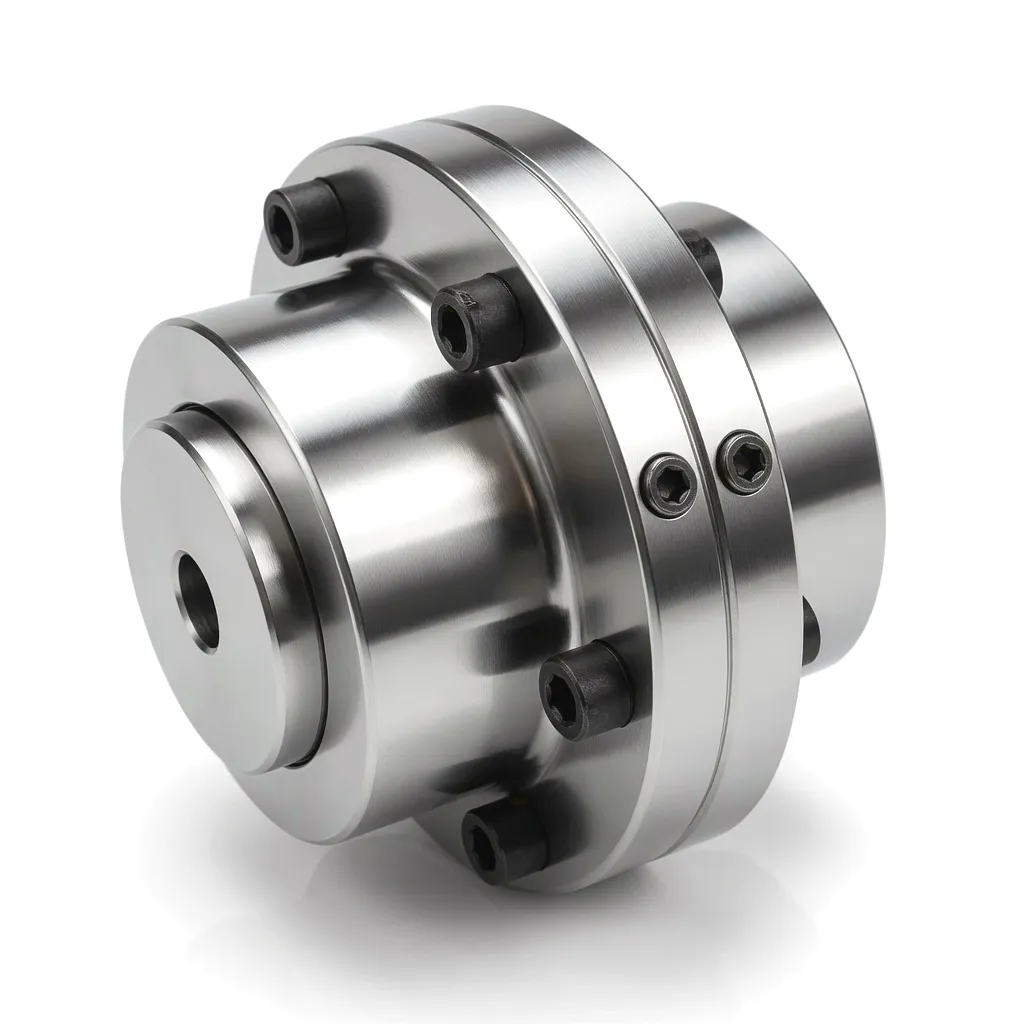
Ever Power has built its reputation in the global power transmission industry on a foundation of precision manufacturing, deep engineering capability, and the flexibility to deliver genuinely custom solutions — not catalogue products forced into non-standard applications. The company operates modern CNC machining centres, gear-hobbing and grinding equipment, and a dedicated dynamic balancing facility capable of handling the largest power-plant couplings at close-to-running speeds. Every batch of coupling steel forgings is accompanied by material test certificates verified against EN 10204 Type 3.1 requirements, giving UK plant engineers the traceability documentation they need for their asset records.
Customisation capability is at the heart of the Ever Power offer. While standard catalogue gear couplings are available for short-lead-time replacement requirements, the engineering team routinely designs bespoke assemblies for demanding applications: non-standard bore sizes and keyways, special tooth profiles for extreme misalignment duty, extended spacer tubes for pump-pull-out designs, and integral torque measurement flanges for power-monitoring installations. Dimensional and material specifications can be matched to existing OEM coupling designs, allowing direct interchangeability when refurbishing a turbine-generator unit originally supplied with a European or North American coupling that has gone out of production.
Supply chain reliability is a competitive point of difference that UK energy operators and maintenance teams consistently identify as a priority. Ever Power holds buffer stocks of semi-finished forged hubs in its most popular alloy steel grades, reducing finished-goods lead time significantly compared to competitors who begin machining from raw bar. For customers in Birmingham, Manchester, or the power corridors of the East Midlands and Yorkshire, international freight consolidation and express UK Customs clearance services are available to match planned outage windows.
🏭
CNC Multi-Axis Machining
5-axis machining centres delivering bore tolerances to H7 as standard, with H6 available on request for interference-fit applications.
⚖️
Dynamic Balancing Facility
Two-plane dynamic balancing to G2.5 as standard; G1.0 achievable on premium specification assemblies. Test reports issued with each shipment.
📋
Πλήρης Ιχνηλασιμότητα Υλικών
EN 10204 3.1 material certificates, hardness test reports, and dimensional inspection datasheets accompany every power-plant grade coupling assembly.
🔧
OEM-Match Customisation
Direct dimensional interchange with obsolete OEM designs. Submit original drawings or measured data — Ever Power engineers reverse-engineer and improve where appropriate.
Customer Success Story: CCGT Station Refurbishment — Nottingham, East Midlands
⚡
Trent Valley Power Services Ltd — Nottingham, UK
Combined-Cycle Gas Turbine Station · 2023–2024 Refurbishment Programme
 Trent Valley Power Services, operating a 400 MW combined-cycle gas turbine station on the outskirts of Nottingham, identified during a scheduled turbine inspection that the main turbine-generator coupling had developed progressive tooth wear well ahead of its design life target. The original coupling — supplied when the station commissioned in 2006 — had reached a condition where the tooth contact ratio had deteriorated to the point where the plant’s continuous vibration monitoring system was recording elevated 1× and 2× running-speed vibration at both the turbine exhaust bearing and the generator drive-end bearing. The station was still operating safely within alarm limits, but the trajectory of vibration amplitude increase indicated that corrective action during the next planned outage was essential to avoid an unplanned trip during winter peak-demand season.
The procurement and maintenance team approached several coupling manufacturers for replacement options. The original OEM had ceased manufacture of the specific bore size and tooth module combination, meaning that a direct replacement was not available off the shelf. Ever Power’s engineering team received a package of original drawings, a set of measured tooth-wear profiles, and the plant’s torsional analysis report. Within ten working days, the Ever Power team had prepared a dimensional proposal confirming interchangeability, upgraded the hub material specification from the original’s C45 to 42CrMo4 tempered steel for improved fatigue margin, and proposed a minor increase in tooth-crown radius to improve misalignment accommodation during the turbine start-up transient. The improved crown radius — a change of just 0.4 mm — was modelled to reduce the peak tooth contact stress during thermal alignment transients by approximately 18%, significantly extending tooth life expectancy at the plant’s operating duty cycle.
Manufacturing, balancing to G2.5, and inspection were completed within six weeks of order placement. The coupling was delivered to Nottingham with full EN 10204 3.1 material certificates, dimensional inspection datasheets, and the balance machine test report — exactly the documentation package required by the station’s insurance underwriter and by Trent Valley’s own asset management system. Installation during the six-day planned outage window went smoothly, and post-restart vibration measurements at the turbine and generator bearings showed a reduction in 1× amplitude of 62% compared to pre-outage readings. The station returned to full-load operation ahead of schedule and has continued to deliver dispatch-ready capacity without further coupling-related vibration alerts through the following eighteen months of continuous operation.
Τι λένε οι μηχανικοί του Ηνωμένου Βασιλείου για τους συνδέσμους Ever Power
★★★★★
“The replacement coupling performed exactly as the Ever Power engineers predicted. Post-installation vibration levels dropped back to levels we haven’t seen since the unit’s commissioning. The documentation package was comprehensive and accepted by our insurer without any queries — that alone saved us two weeks of back-and-forth.”
James Hargreaves, Rotating Plant Engineer
Trent Valley Power Services, Nottingham
★★★★★
“We’ve been sourcing coupling components from three different manufacturers over the years, and Ever Power is now our preferred supplier for any non-standard or obsolete-OEM replacement work. Their ability to reverse-engineer from a set of worn drawings and improve the design at the same time is something none of the other suppliers offered. Lead time was significantly shorter than we expected for a bespoke item of this size.”
Karen McDougall, Procurement Manager
Caledonian Industrial Services, Glasgow
★★★★★
“We specified G2.5 balance on our replacement turbine coupling and were pleasantly surprised that Ever Power offered G1.0 as a standard upgrade at very modest additional cost. The improvement in bearing vibration at full load was measurable and immediately visible on our Bently Nevada monitoring system. Their technical team also helped us cross-reference the mounting bolt torque values, which the original documentation was unclear about.”
Derek Ashworth, Maintenance Director
Mersey Energy Partners, Liverpool
Συχνές ερωτήσεις
Real questions from UK plant engineers, procurement teams, and maintenance planners.
What type of coupling is best suited for connecting a steam turbine to a large generator in a UK thermal power station?
+
For most large steam turbine-generator sets running at 3,000 rpm on the UK 50 Hz grid, a gear-type coupling with a crowned tooth profile is the most widely used and technically proven option. It provides the axial thermal float required to accommodate turbine shaft thermal growth, absorbs angular misalignment from differential thermal expansion between turbine and generator foundations, and offers a long service life when correctly lubricated. For newer high-speed CCGT sets and installations where maintenance-free operation is a priority, a disc coupling may be the preferred choice, albeit with tighter installation alignment requirements.
How much does a bespoke turbine-generator coupling typically cost, and where can I get a competitive price quote from a reliable UK supplier?
+
The cost of a bespoke large turbine coupling varies considerably depending on bore size, torque rating, material specification, and balance grade. A power-plant grade gear coupling for a 100–300 MW unit typically starts from several thousand pounds sterling for the supply-only hardware, rising significantly for larger bores, premium alloy steels, or very fine balance grades. The best approach is to request a detailed quote early, supplying the turbine OEM drawing number or a dimensional survey, your required torque rating, operating speed, and any existing balance or material certification requirements. Ever Power can provide a competitive written quote within a few working days of receiving this information — simply email the technical package to
[email protected].
Which coupling suppliers in the UK or internationally can manufacture an exact replacement for an obsolete OEM turbine coupling that is no longer in production?
+
Reverse-engineering an obsolete turbine coupling is a specialist service that relatively few manufacturers offer reliably. Ever Power has extensive experience in this area, working from original drawings, dimensional surveys of the worn component, or even photographs and basic measurements when original documentation is unavailable. The engineering team will prepare a dimensional proposal and, where appropriate, suggest material or profile improvements to extend service life beyond the original specification. This OEM-match capability has made Ever Power a repeat supplier for plant operators in Birmingham, Sheffield, and across the English power generation corridor where turbine-generator sets from the 1990s and 2000s are still generating revenue at refurbished facilities.
How do I know when a turbine-generator coupling in a UK power plant needs to be replaced rather than inspected and relubricated?
+
Several indicators suggest that replacement rather than maintenance is the appropriate course of action: a progressive upward trend in 1× or 2× running-speed vibration amplitude at the coupling-adjacent bearings that does not stabilise after relubrication; visible tooth wear during inspection showing greater than 20% reduction in tooth thickness from the drawing nominal; fretting corrosion pits visible in the tooth roots indicating sub-critical fatigue crack initiation; and accumulated running hours approaching or exceeding the design life target. Any evidence of micro-cracking in hub fillet radii is an immediate replacement trigger regardless of operating hours, since fatigue crack propagation rates in rotating components can be rapid once initiated. UK plant operators governed by Pressure Systems Safety Regulations and HSE Power Plant Guidance should consult their competent engineer when making such determinations.
What balance grade should I specify when ordering a replacement coupling for a 3,000 rpm generator set at a UK power station?
+
For a 3,000 rpm generator coupling, ISO 1940-1 Grade G2.5 is the minimum standard acceptable for most plant engineers and insurance underwriters in the UK power sector. However, if the machine’s bearing vibration specifications are set to the tighter limits of IEC 60034-14 or the plant’s own OEM vibration acceptance criteria, Grade G1.0 may be necessary, particularly if the coupling is the heaviest rotating component closest to the bearing measurement points. It is generally advisable and cost-effective to specify G1.0 from the outset for any replacement coupling on a machine above 200 MW, since the incremental manufacturing cost is relatively small compared to the potential benefit of improved vibration margins during the next operating interval. Ever Power can supply either grade with a full balancing test report.
Where in the UK can a large turbine coupling be inspected and rebalanced between major overhauls, and how much does this service typically cost?
+
In-country rebalancing services are available from a handful of specialist rotating equipment service centres in the UK, with concentrations in the Midlands and Yorkshire industrial regions. However, some plant operators find it more cost-effective to send large turbine coupling assemblies to the original manufacturer or to an overseas precision manufacturer like Ever Power for a combined inspection, remetalling or tooth dressing, and rebalancing service — particularly when the component requires specialist machining that UK service centres cannot accommodate. Shipping costs for a large coupling are modest relative to the total service cost, and Ever Power’s express documentation and freight service is designed to fit within planned outage windows. For an indicative service price, contact the technical team directly with the coupling dimensions, material specification, and your required turnaround time.
When ordering a custom coupling for a Birmingham or East Midlands power station, how long does manufacturing and delivery typically take from an international supplier?
+
For a standard-size bespoke gear coupling in a common alloy steel grade, Ever Power typically completes manufacturing, inspection, and balancing within six to eight weeks of drawing approval. For very large bores (above 400 mm) or unusual material specifications, ten to twelve weeks is a more realistic planning figure. Delivery to UK sites in the Birmingham, East Midlands, or Yorkshire power generation regions is coordinated through regular consolidated freight departures to UK ports, with customs clearance documentation prepared in advance to minimise any bonded warehouse dwell time. For urgent requirements tied to a fixed outage window, Ever Power’s project management team will work directly with your maintenance planner to develop a bespoke delivery programme.