Working Principle: How Couplings Manage Turbine-to-Generator Power Transmission
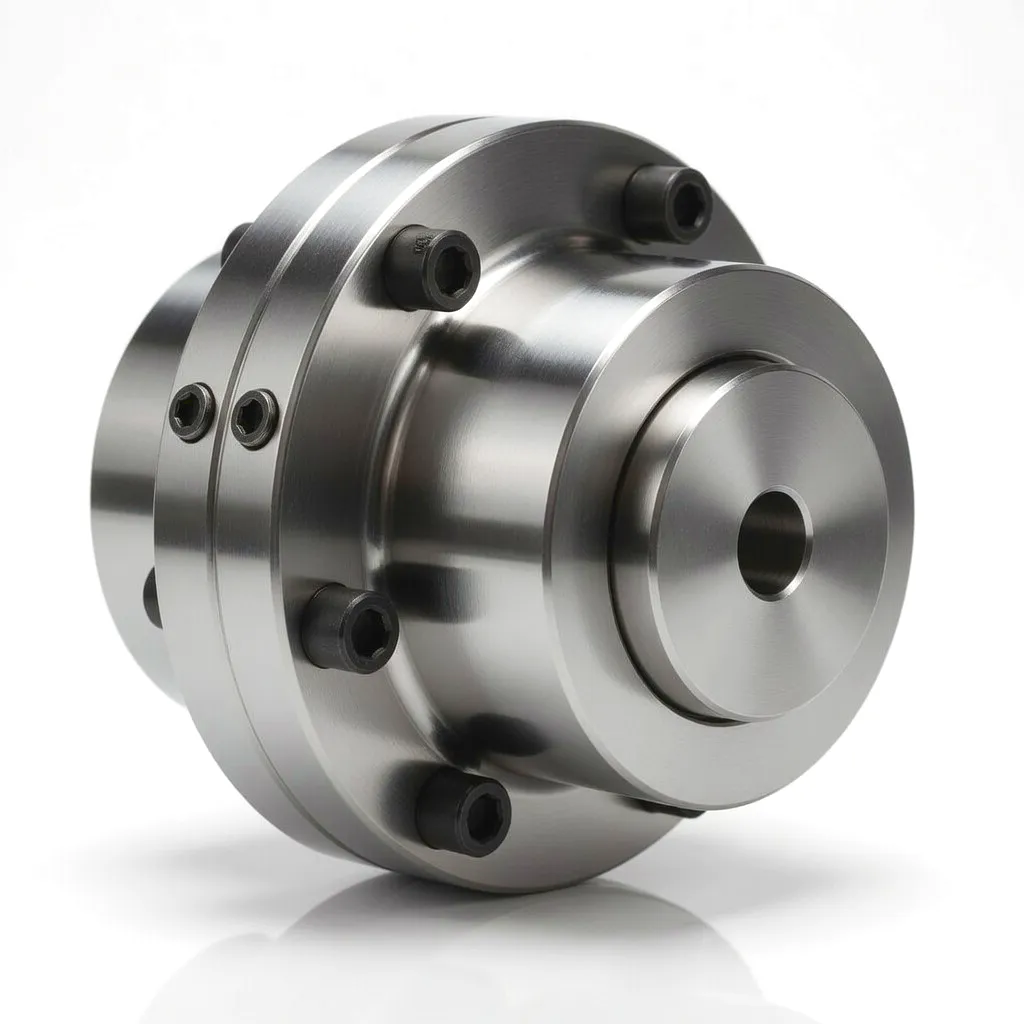
Dynamic balancing is the second critical working principle. A turbine-generator set rotates at exactly 3,000 rpm (for 50 Hz grid synchronisation), meaning any rotational imbalance in the coupling generates a centrifugal force that oscillates at 50 Hz — directly in the audible and structural vibration band. Couplings used in these applications are balanced to ISO 1940-1 Grade G2.5 as a minimum, with many high-power units balanced to G1.0 or better. This is achieved through precision machining of the sleeve and hubs, followed by residual correction drilling or addition of balance weights during factory testing on high-speed balancing rigs calibrated to the target operating speed.
Core Materials Used in Power Generation Couplings
Product Advantages of Gear-Type Couplings in Turbine Drive Trains
Coupling Technical Performance Parameters — Power Generation Grade
Application Scenario 13: Thermal Power Generation Drive Systems
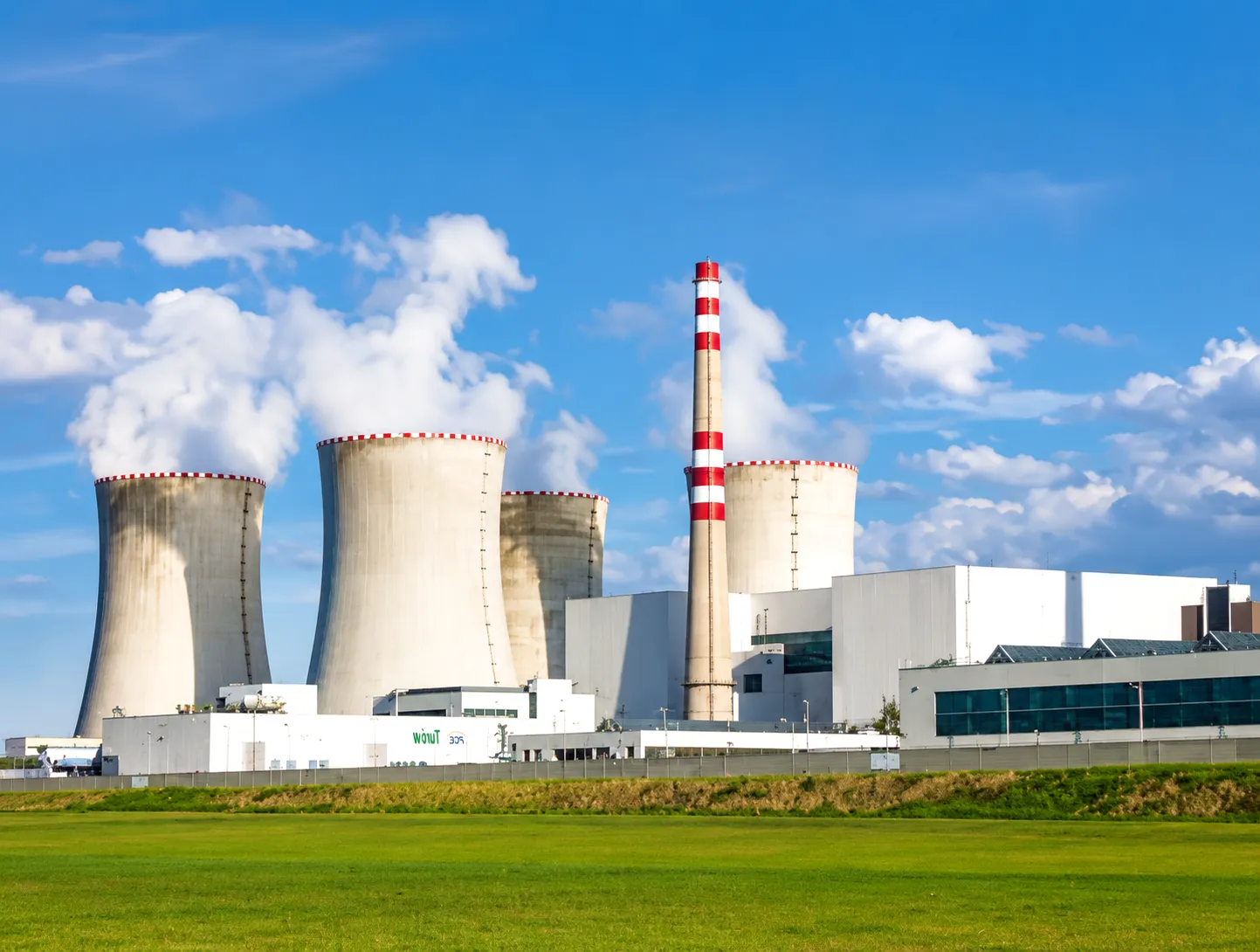
Thermal expansion is the dominant challenge. A 200 MW coal-fired turbine operating at steam conditions of 540 °C and 16 MPa will see its turbine shaft move axially by 20–35 mm relative to the cold condition as the unit warms up over its 4–6 hour start-up cycle. The radial thermal growth differential between turbine and generator — anchored at different distances from their respective fixed expansion points — introduces a radial shaft offset of 1–3 mm at the coupling plane. A rigid or semi-rigid coupling under these conditions would transmit substantial bending moments into the turbine thrust and journal bearings, accelerating white-metal fatigue and, in severe cases, causing catastrophic bearing failure on the road to a forced outage. The gear coupling’s ability to operate continuously through both these offsets simultaneously, without transmitting restoring bending moments, is the physical mechanism that protects bearing life.
- Grid frequency: 50 Hz (3,000 rpm synchronous speed)
- Key UK sites: Drax (North Yorkshire), Grain (Kent), Brigg (Lincolnshire), Rye House (Hertfordshire)
- Peak demand driving flexible load cycling — increases coupling fatigue duty
- Retrofitted coal-to-gas / hydrogen co-fire plants require coupling recertification
- Environment Agency C5-M or C5-I corrosivity at coastal sites
- National Grid: forced outage penalties incentivise maximum drive train reliability

Gas turbine applications introduce an additional complexity: the turbine exhaust end connects to the generator on one side, while the compressor section or a starting motor occupies the cold end. The coupling between gas turbine and generator must handle extremely rapid load changes during peak-demand dispatch cycling on the Balancing Mechanism. Modern open-cycle gas turbines running as spinning reserve can be dispatched to full load in under ten minutes, cycling between standstill and 3,000 rpm under full torque multiple times each week during the winter demand peak in the United Kingdom. Each start-up and load application cycle represents a fatigue event for the coupling. Fatigue life calculations using S-N curve data for 42CrMo4 under torsional loading must account for this irregular duty cycle, typically using a cumulative damage approach in accordance with BS 7608. The result is an overhaul interval or coupling replacement schedule that accounts for cycles, not just operating hours — an important distinction for plant managers at gas peakers in the English Midlands and Scotland.

Further Industrial Application Scenarios for Precision Couplings
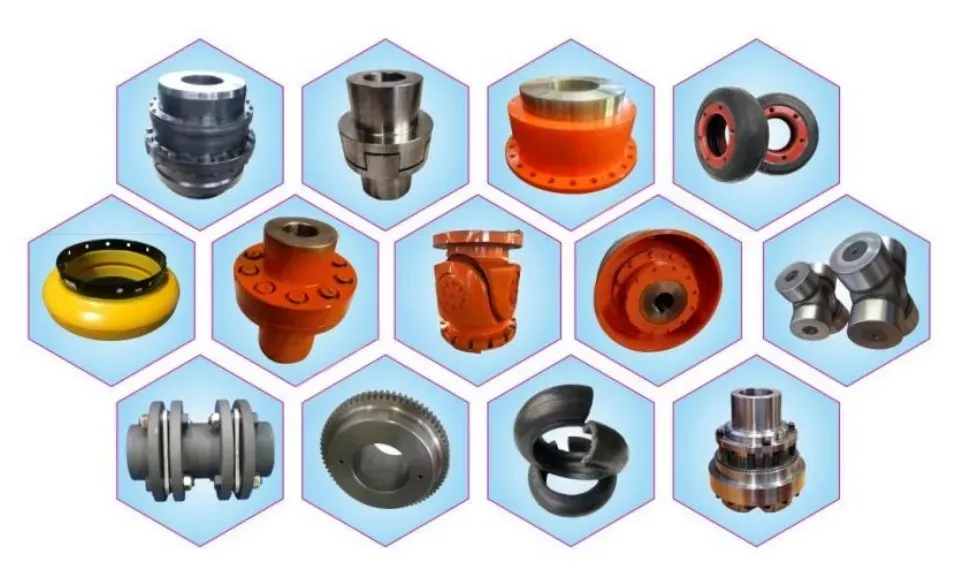
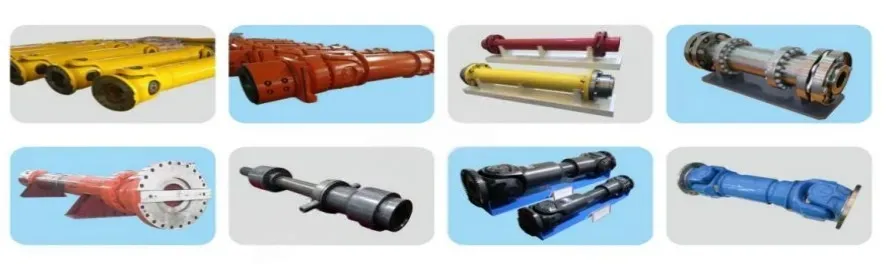
Ever Power: Custom Coupling Manufacturing for UK Power & Industrial Markets
Ever Power has built its reputation across the UK and wider European market as a coupling manufacturer that operates at the intersection of precision engineering and application-specific customisation. Where many suppliers offer standard product ranges drawn from published catalogues, Ever Power’s engineering approach begins with the customer’s duty specification — rated power, speed, misalignment envelope, environmental conditions, and maintenance access constraints — and works backward to a coupling design that meets those requirements exactly rather than approximately. This distinction matters profoundly in thermal power generation, where an undersized coupling sleeve, an incorrect balance grade, or inadequate axial float has the potential to cascade into a forced outage with contractual and financial consequences that dwarf the coupling’s own cost many times over.
Ever Power’s manufacturing facility operates CNC gear hobbing and grinding centres calibrated to DIN 3960 accuracy Grade 5, which enables the production of crowned gear teeth to the precise profile radius required for a given misalignment tolerance and pitch diameter. Every power generation coupling undergoes full dimensional inspection using coordinate measuring machines with certified traceability to national measurement standards, with material certification to EN 10204 Type 3.1 provided as standard for critical applications. Dynamic balancing at speeds up to 6,000 rpm on calibrated balancing machines — with results documented and furnished to the customer in full — is included in the standard manufacturing scope for turbine couplings. This end-to-end manufacturing traceability is the foundation of the confidence that plant engineers at UK power stations place in Ever Power supply contracts.
- Bespoke bore sizes, keyways, spline profiles to customer drawing
- Custom sleeve lengths for extended spacer arrangements
- Torsional stiffness tuning for specific resonance avoidance
- Alternative material grades for H2S, cryogenic, or elevated-T environments
- API 671 third-edition compliant designs with full documentation packages
- Rapid response on urgent replacement units — 4–8 week lead times achievable for medium sizes
- UK logistics and on-site commissioning support available
Featured Coupling Products from Ever Power
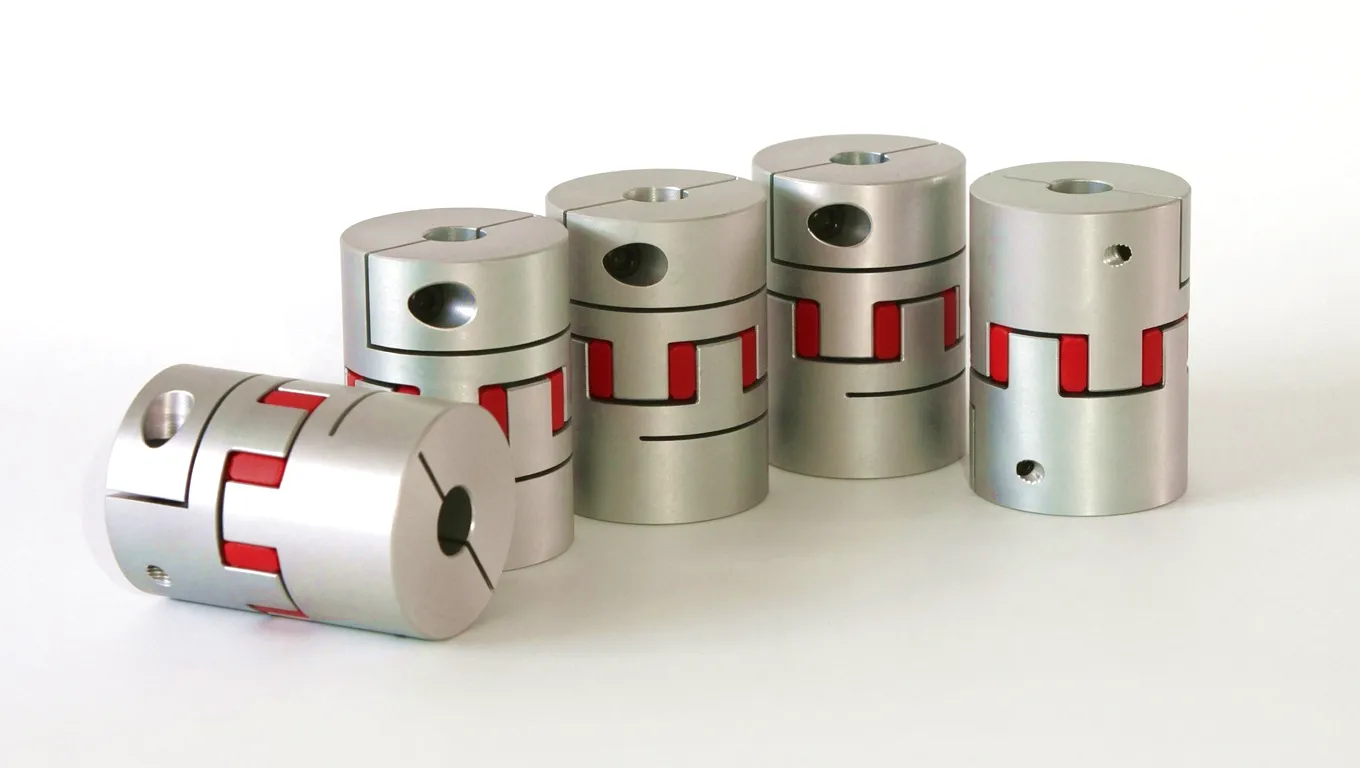
The Acoplamiento de viga flexible is a single-piece helical-slotted coupling machined from solid aluminium or stainless steel, delivering exceptional angular and parallel misalignment accommodation in a backlash-free design. Its helical beam structure provides predictable torsional stiffness that makes it ideal for precision servo motor drives, encoder mounting, and laboratory instrumentation drive trains where positional accuracy and zero-backlash torque transmission are paramount. Available in sizes from 4 mm to 20 mm bore diameter with metric or imperial keyway options as standard from Ever Power’s catalogue, with larger and custom bore sizes available on request.
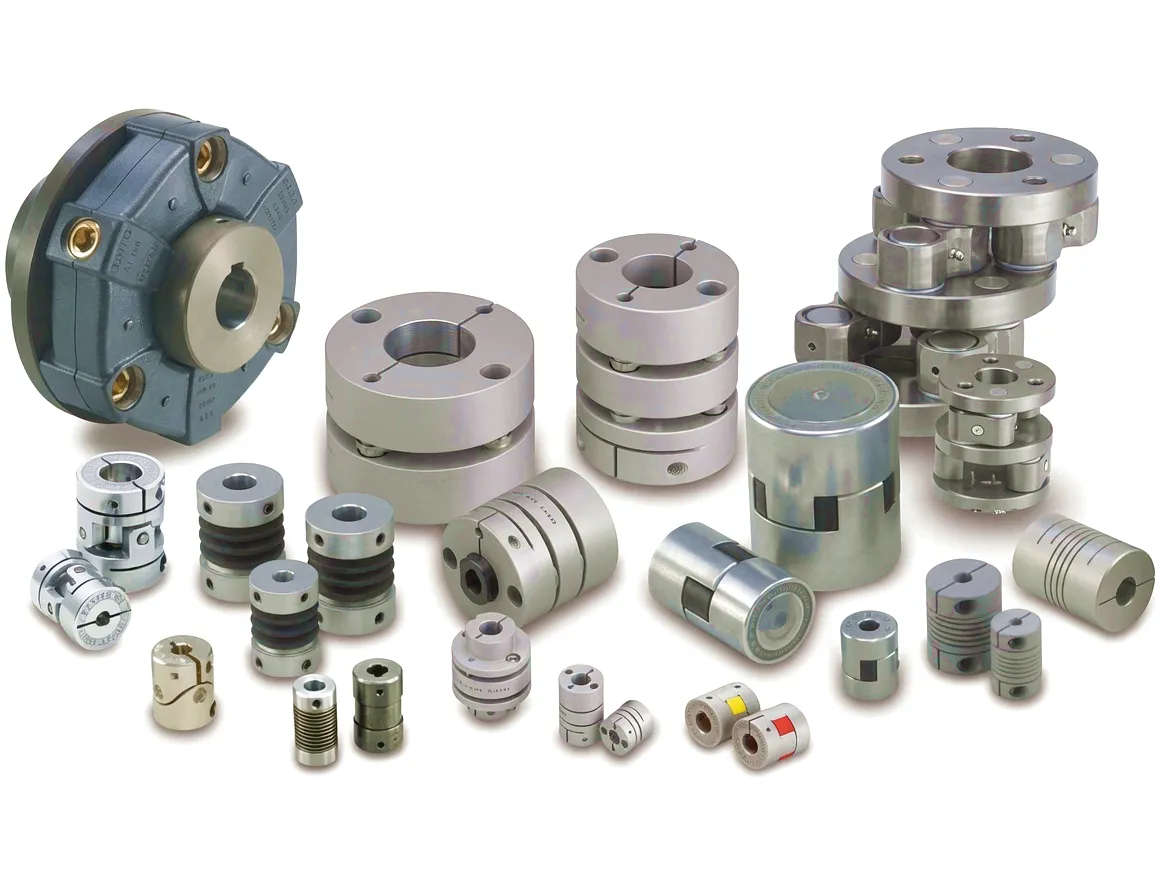
The Acoplamiento de disco from Ever Power employs a pack of thin stainless steel disc elements connected alternately to driving and driven flanges. The disc pack flexes to accommodate angular and axial misalignment while transmitting torsional loads with high rigidity and zero backlash. This combination makes disc couplings the preferred selection for high-speed turbomachinery, compressor trains (API 671), and servo precision applications where the oil-free operation eliminates the lubrication maintenance demand of gear type alternatives. Single-disc and double-disc (two-plane) spacer arrangements accommodate different misalignment requirements across the full power generation and process industry spectrum.
Customer Success Story: Turbine Coupling Refurbishment — Teesside, North East England
Teesside, North East England
CCGT Power Plant
450 MW (Combined)
A 450 MW combined-cycle gas turbine facility on Teesside — one of the industrial heartland sites in the North East that has been central to British energy generation since the 1990s gas bubble — identified progressive vibration growth at the coupling plane between the gas turbine and generator during a routine condition monitoring review. The plant’s maintenance engineering team noted a slow upward trend in 1x vibration amplitude at the coupling adjacent bearing over a period of seven months, ultimately triggering an alarm at 125% of the ISO 7919-2 limit.
 Borescope inspection of the coupling during a ten-day planned outage revealed progressive wear on the crowned tooth flanks of the original coupling hubs — the result of a lubrication system orifice restriction that had reduced oil flow to the coupling cavity below design minimum for approximately eighteen months prior to detection. The coupling sleeve showed acceptable condition, but both hubs required replacement. The plant’s procurement team approached Ever Power with the original coupling drawing package and a request for a manufacturing review that would address the lubrication sensitivity seen on the original design.
Ever Power’s engineering team reviewed the original specification and proposed two modifications alongside the dimensional replacement: an increase in the crown radius of the gear teeth from the original value to a slightly larger radius, reducing the peak Hertzian contact stress by approximately 12% and improving the tolerance to reduced lubrication film thickness; and an upgrade of the bore oil supply groove geometry to improve distribution of lubricant to the full gear tooth contact zone at the coupling’s operating rotational speed. The modified hubs were manufactured in 42CrMo4 steel, heat-treated to Rm 1,000 MPa, carburised to a case depth of 1.2 mm, and dynamically balanced to G1.0 at 3,000 rpm. Full documentation — EN 10204 3.1 certificates, dimensional records, NDT reports, and balancing charts — was delivered as part of the order.
Following installation and turbine recommissioning, the 1x vibration amplitude at the coupling bearing returned to levels 18% below the pre-fault baseline — confirming that the original design had been operating with slightly elevated misalignment-induced excitation prior to the lubrication failure. The plant has since completed fourteen months of continuous operation with no coupling-related alarms, and scheduled the next coupling inspection to coincide with the ten-year major overhaul planned for the unit.
What UK Plant Engineers Say About Ever Power Couplings
“We supplied Ever Power with the original coupling drawing and a challenging 6-week delivery requirement for our Teesside unit outage. Not only did they deliver on time, the modified crown geometry they proposed actually improved our vibration levels below what they were before the wear event. The documentation pack was complete and ready before the coupling arrived, which is rare in my experience.”
“For our flexible grid-balancing open-cycle gas plant in Yorkshire, coupling fatigue life is calculated in start-stop cycles, not just hours. Ever Power provided a full torsional stiffness data sheet and confirmed calculated coupling life against our actual dispatch profile. That level of analytical engagement from a supplier, at this price point, is something I hadn’t encountered from other catalogue suppliers.”
“We needed custom coupling hubs for a 1980s-vintage biomass conversion project at a plant originally designed for coal. The OEM no longer supported the design, and three other suppliers declined to reverse-engineer it. Ever Power took on the project, produced a full reverse-engineered drawing within two weeks, and delivered conforming hubs with 3.1 certificates inside our outage window. That service genuinely saved our project timeline.”