Acoplamiento de engranajes de alta resistencia para sistemas de propulsión principal marinos
Engineering Reliability Beneath the Waves — From the North Sea to Global Shipping Lanes
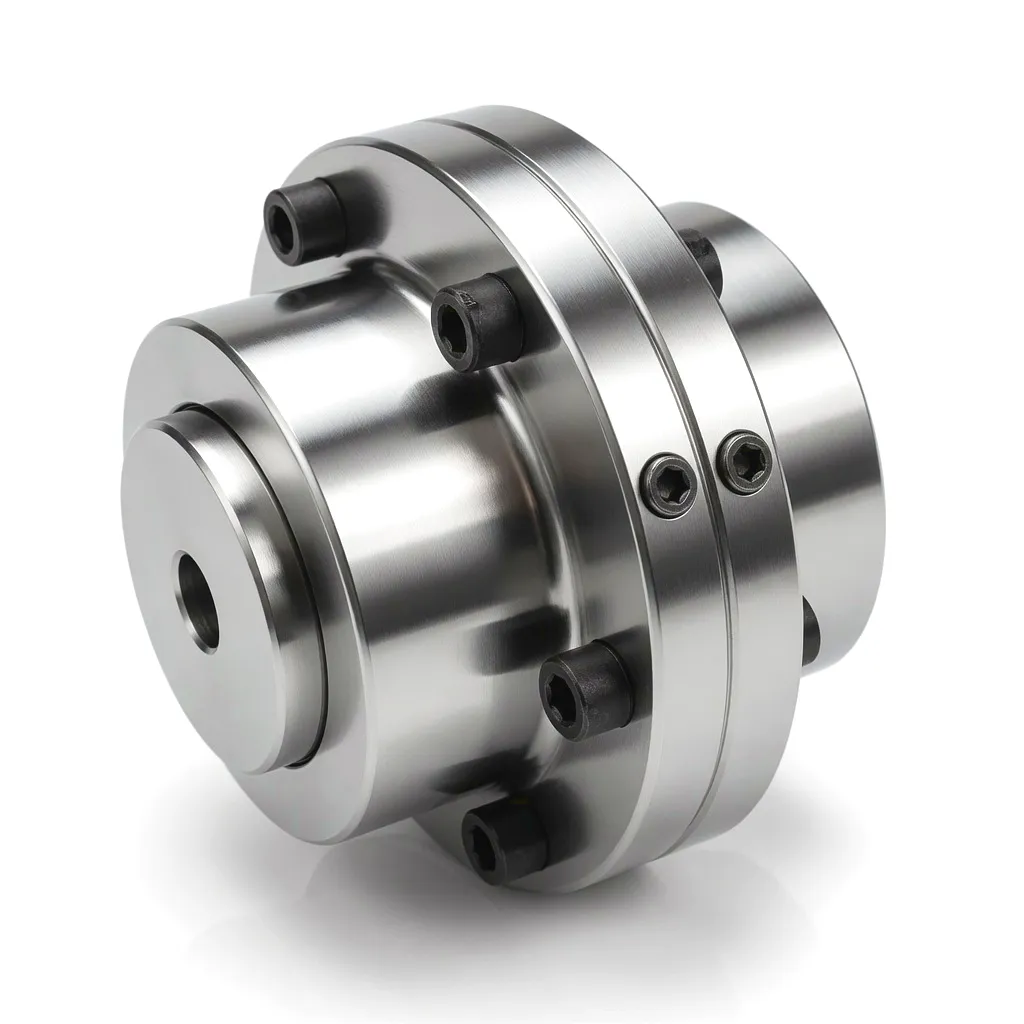 Marine propulsion shafts live a punishing life. Saltwater haze, constant vibration, hull flex during rough crossings, and torque spikes the moment a vessel changes pitch — all of it lands on the connection between the engine and the gearbox. A gear type coupling sits right at that hand-off point, absorbing misalignment while transmitting thousands of kilowatts from prime mover to propeller shaft. For UK shipyards, North Sea offshore operators, and Channel-bound ferry fleets, picking the wrong coupling means costly dry-docking and unscheduled downtime. Picking the right one means decades of quiet, reliable service. This guide walks through what makes a marine-grade gear type coupling truly seaworthy, how Ever Power engineers ours for British maritime conditions, and why operators across Southampton, Aberdeen, and Belfast keep coming back.
Why Marine Propulsion Demands a Specialised Gear Type Coupling
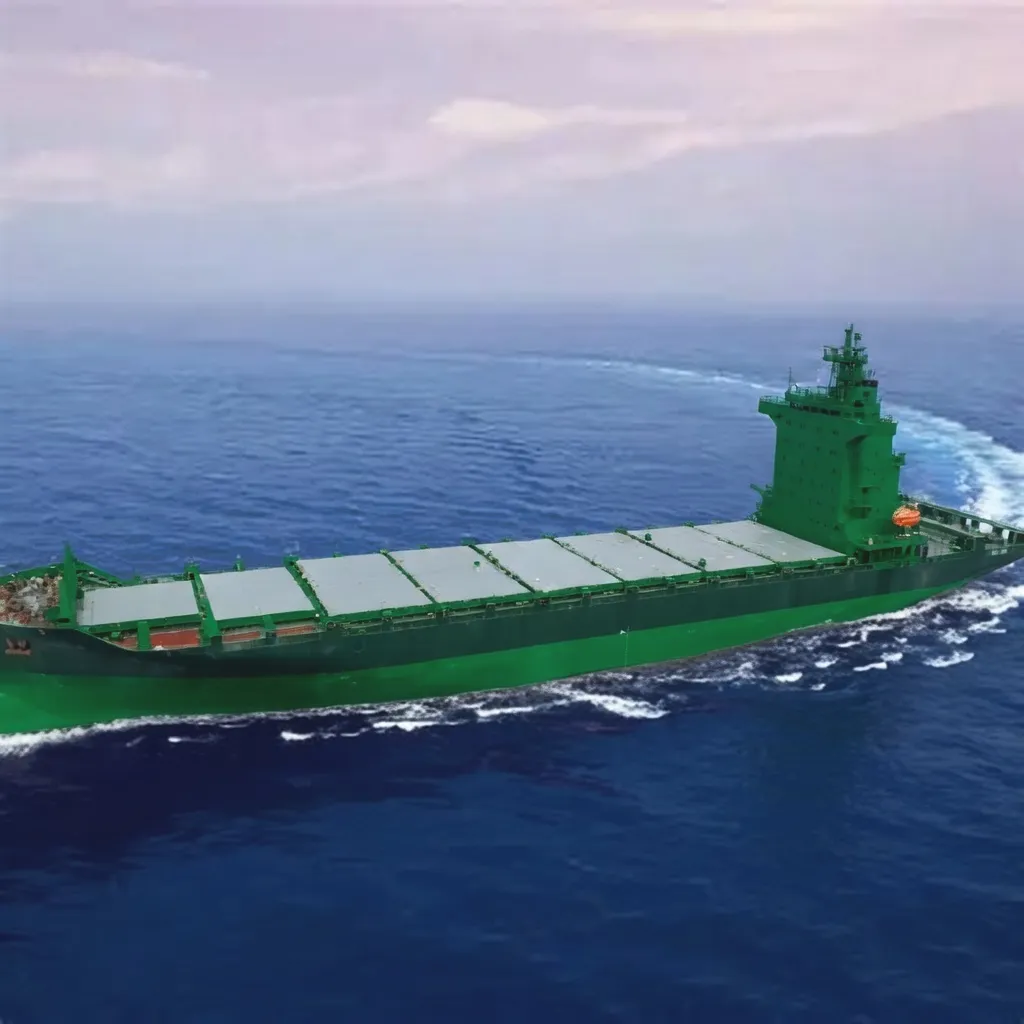
Anyone who has stood on the engine room grating of a 12,000 GT cargo vessel during a North Atlantic crossing understands the brutal reality of marine drivetrains. The hull twists. The propeller shaft bows under hydrodynamic load. The diesel prime mover delivers torque pulses that would shred a rigid connection in hours. Between the main engine output flange and the reduction gearbox input shaft, something has to give — gracefully, predictably, and for 25,000 service hours minimum.
A gear type coupling solves this problem through crowned external teeth meshing with internal teeth in a surrounding sleeve. That crowning is the trick. It permits angular misalignment, parallel offset, and a measured degree of axial float without binding, all while transmitting torque ratings that dwarf disc or elastomeric alternatives. For a chief engineer planning a 30-year hull lifecycle, this matters enormously. The gear type coupling outlasts virtually every other mechanical component in the propulsion train, and when it does need attention, the maintenance window is short.
Product Advantages: Where Engineering Meets Endurance
Massive Torque Density
A compact marine gear type coupling transmits up to 1,200 kNm of continuous torque — typically 40 to 60 percent more capacity per unit weight than a comparable disc coupling. Engine rooms have no spare cubic centimetres, so density is everything.
Tolerancia de desalineación
Crowned gear teeth accept up to 1.5° angular deviation per hub. With two hubs working together, total system tolerance reaches 3°, more than enough to absorb hull flex on heavily loaded bulk carriers crossing the Bay of Biscay in winter.
Corrosion Resistance
Galvanised or phosphated finishes paired with marine-grade epoxy paint protect against salt spray for decades. Internal cavities are sealed and filled with corrosion-inhibiting EP grease that holds film strength under both heat and water ingress.
Field Serviceability
Split-cover designs allow inspection and re-greasing without disturbing the shaft alignment. A typical service on a 400 mm bore unit takes a two-person team under four hours — critical when a vessel must return to charter quickly.
Working Principle, Materials, and Operating Conditions
The mechanical heart of a marine gear type coupling is deceptively simple — two hubs with crowned external teeth machined to AGMA Class 10 or DIN Class 7 precision, each engaging an internally toothed sleeve. The crown geometry, usually a spherical contact profile, allows each tooth to roll slightly within its mating groove. When the engine block shifts a millimetre during a wave impact, or when the gearbox housing flexes on its resilient mounts, the teeth simply reposition themselves without losing contact pressure. Power transmission continues uninterrupted.
Material selection drives the entire performance envelope. For UK-flagged commercial vessels, the hubs are typically forged from 42CrMo4 alloy steel — quenched and tempered to 280–320 HB hardness, then induction-hardened on the tooth flanks to 55 HRC. This combination delivers the toughness needed for shock loading while resisting pitting from contaminated lubricant. The outer sleeves use the same alloy or, for larger units above 600 mm diameter, cast steel grade GS-42CrMo4 to reduce weight without sacrificing strength.
Surface protection against the marine environment uses a layered approach. Hot-dip galvanising provides sacrificial zinc protection, followed by a zinc-rich epoxy primer and two coats of polyurethane topcoat rated for C5-M offshore exposure per ISO 12944. Sealing rings between hub and sleeve use Viton fluoroelastomer, retaining flexibility from minus 20 to plus 200 degrees Celsius. Lithium-complex EP2 grease with molybdenum disulphide additive fills the tooth cavities, refreshed every 8,000 operating hours.
📊 Technical Specifications Table
| Parámetro | Small Class (GIICL1–4) | Medium Class (GIICL5–10) | Heavy Class (GIICL11–18) |
|---|---|---|---|
| Par nominal | 0.8 – 25 kNm | 25 – 180 kNm | 180 – 1,200 kNm |
| Rango de perforación | 35 – 95 mm | 100 – 280 mm | 300 – 720 mm |
| Maximum Speed | 4,800 rpm | 3,200 rpm | 1,800 rpm |
| Desalineación angular | ±1.5° per hub | ±1.0° per hub | ±0.75° per hub |
| Flotación axial | ±4 mm | ±8 mm | ±15 mm |
| Grado del material | 42CrMo4 forged | 42CrMo4 forged | 42CrMo4 / cast GS-42CrMo4 |
| Tooth Hardness | 55–58 HRC induction | 55–58 HRC induction | 55–60 HRC induction |
| Service Life | 25,000+ hours | 30,000+ hours | 40,000+ hours |
| Classification | Lloyd’s / DNV / ABS | Lloyd’s / DNV / ABS / BV | All major societies |
Application Scenarios Across the Marine Sector
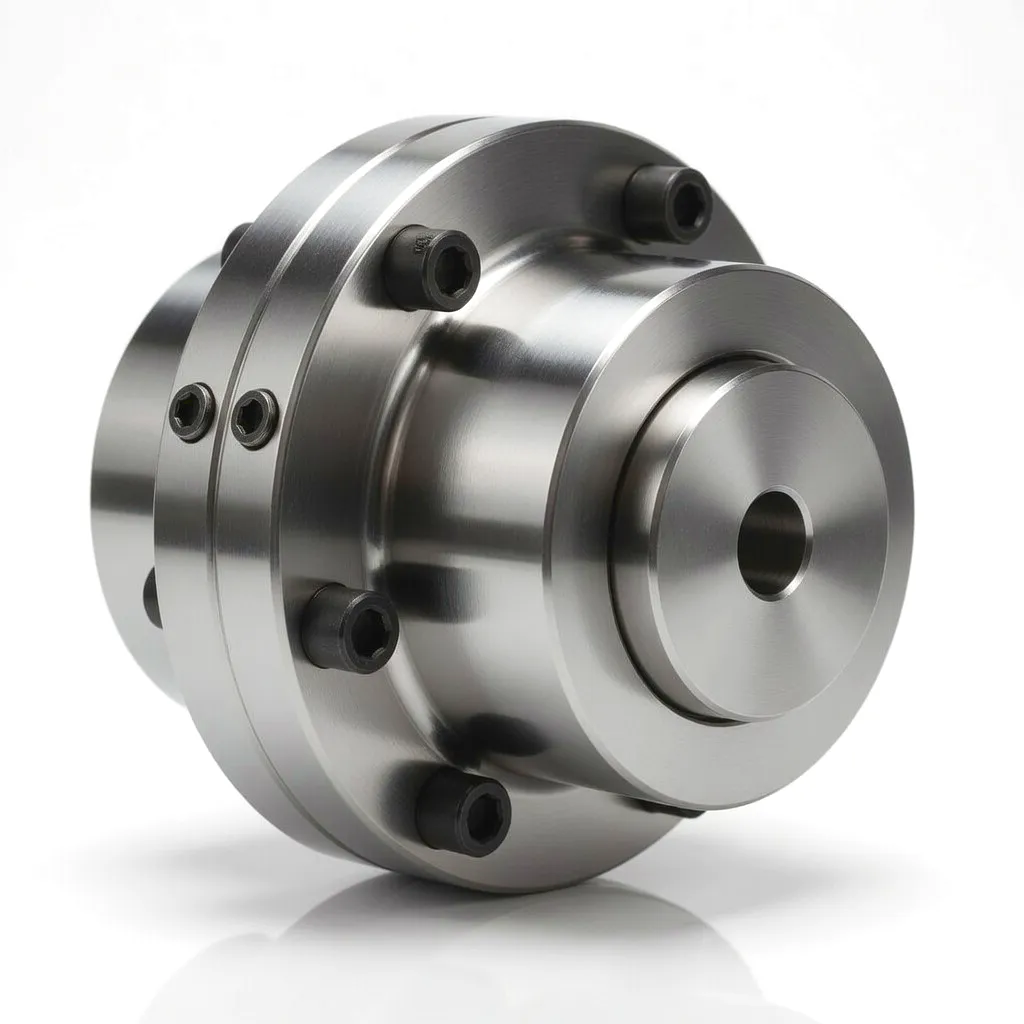 Within the propulsion chain of a conventional diesel-driven merchant vessel, the gear type coupling occupies several specific positions. The most demanding is between the main engine flywheel housing and the input flange of the reduction gearbox. Here it sees full nominal torque continuously, plus transient peaks during crash-stop manoeuvres and ice impact events. A 50,000 DWT bulk carrier with a 12 MW two-stroke engine will typically use a heavy-class gear type coupling with 480 mm bore at this location.
Further down the propulsion line, between intermediate shaft sections and the stern tube assembly, smaller gear type couplings handle progressive misalignment as the hull deforms under cargo loading. A tanker fully laden sits with measurably different shaft geometry than one in ballast condition. Without flexible couplings at strategic points, bearings would wear unevenly within months. The gear type coupling absorbs this dynamic geometry change without complaint.
Beyond conventional cargo vessels, specialised applications include tugboat propulsion where rapid load reversals during berthing place enormous demands on the drivetrain. North Sea offshore supply vessels working out of Aberdeen face additional shock loading from dynamic positioning thruster engagement. Roll-on, roll-off ferries crossing the Irish Sea need couplings that survive thousands of start-stop cycles annually. Each scenario demands a tailored gear type coupling specification, which is precisely where Ever Power’s customisation capability earns its keep.
🚢 Commercial Shipping
Bulk carriers, container ships, tankers — primary engine-to-gearbox connection
⚓ Tugs & Workboats
High shock load operation with frequent direction changes during port operations
🛢️ Offshore Vessels
North Sea PSVs and AHTS units handling dynamic positioning loads and rough conditions
⛴️ Passenger Ferries
Cross-Channel and Irish Sea routes requiring high cycle durability and noise control
🎣 Fishing Fleet
Trawlers operating from Peterhead and Brixham facing constant net drag variation
🛡️ Naval Auxiliaries
Royal Fleet Auxiliary support ships demanding low-vibration, mil-spec gear type coupling solutions
Customer Success Story: Aberdeen Offshore Operator
🏴 North Star Marine Services — Aberdeen, Scotland
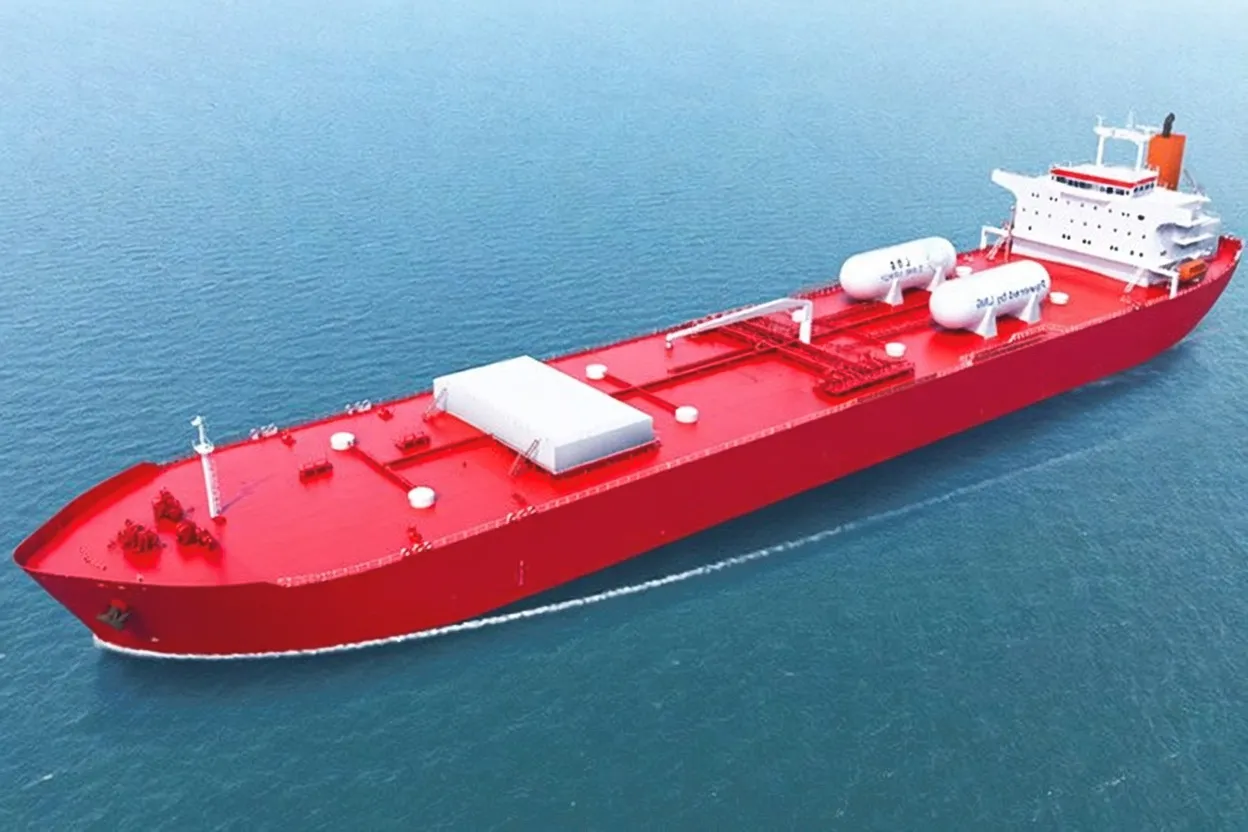
Vessel: MV Cromarty Endeavour — Platform Supply Vessel, 4,500 DWT, dual MTU 4000-series diesels totalling 6.4 MW
Desafío: The original disc-pack couplings between the main engines and Reintjes gearboxes were suffering progressive fatigue cracking after 11,000 service hours. North Sea winter operations were generating misalignment values exceeding the disc coupling specification, and unscheduled dry-docking at Aberdeen Harbour was costing the operator approximately £180,000 per incident.
Solution Delivered: Ever Power engineered two GIICL12 marine gear type coupling units with 320 mm bore, custom-machined to match the original disc-pack mounting interface. We added an optional spacer tube to maintain the existing DBSE dimension, classification-certified by Lloyd’s Register, and shipped within nine weeks of order confirmation. Installation took place during a scheduled three-day port call.
Resultado: Twenty-two months later, the units show zero measurable tooth wear during borescope inspection. The vessel has completed 14,800 operating hours including three severe winter campaigns supporting platforms east of Shetland. Total avoided downtime cost: estimated £540,000. Annual maintenance window reduced from 96 hours to 18 hours per coupling.
💬 What Our Clients Say
“Specifying a gear type coupling for our refit was simplified enormously by Ever Power’s engineering team. They provided full DXF interface drawings within 48 hours and accommodated our class society requirements without fuss.”
— Iain MacGregor, Technical Superintendent, Clyde Marine (Glasgow)
“We replaced three legacy units on our cross-Channel ferry fleet. The new gear type coupling assemblies have run flawlessly through two summer seasons. Tooth contact pattern after inspection looks textbook perfect.”
— Sarah Holloway, Fleet Engineering Manager, Solent Ferry Operations (Southampton)
“Delivery on our urgent dry-dock job was eight days faster than the competitor quote. The gear type coupling arrived properly preserved with full material certificates. Ever Power earned a place on our approved vendor list.”
— David Pemberton, Project Engineer, Tyne Marine Services (Newcastle)
Serving the UK Maritime Industry from Our Manufacturing Base
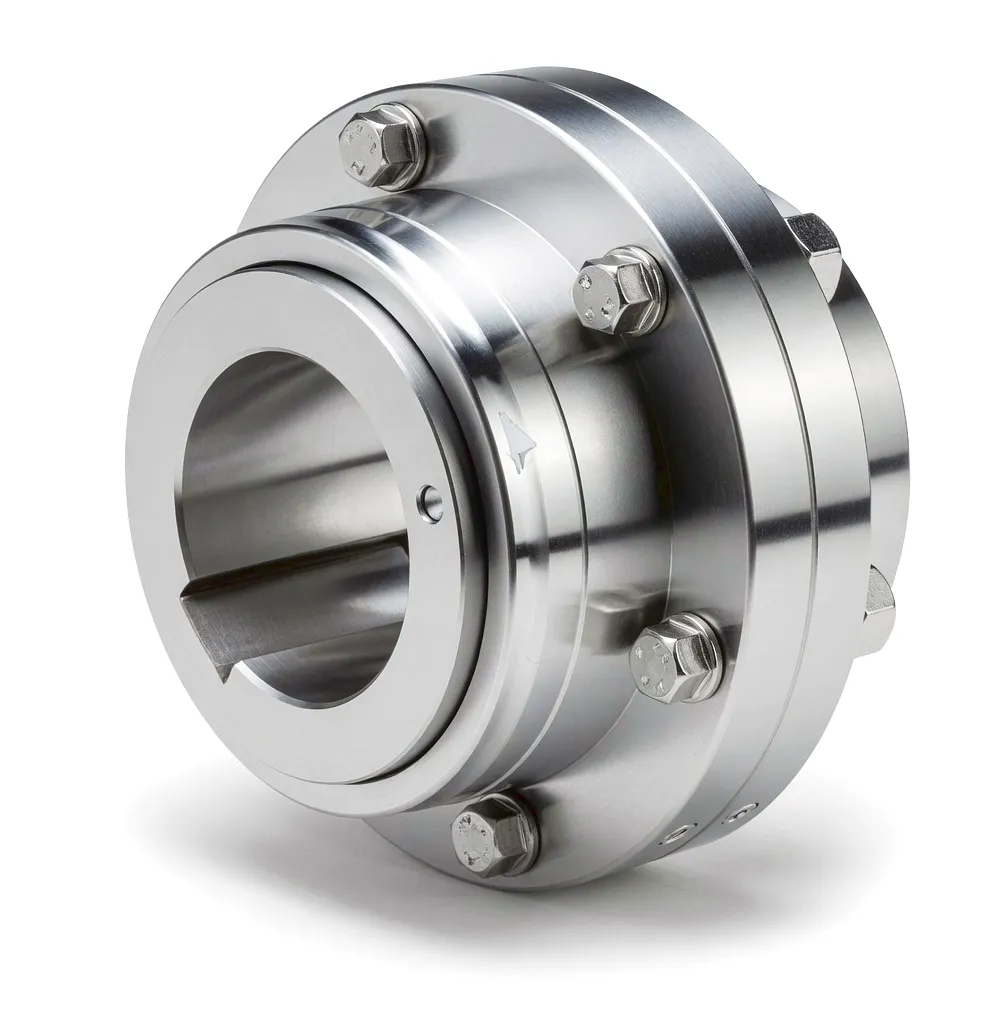 British shipyards and marine engineering houses have specific requirements that generic catalogue suppliers struggle to meet. Ever Power maintains a dedicated UK liaison engineering desk that handles enquiries from Portsmouth Naval Base, Cammell Laird in Birkenhead, Babcock at Rosyth, and the busy commercial yards at Hull and Tyne. Lead times to UK destinations average four to eleven weeks depending on size, with priority air-freight available for critical dry-dock situations at Falmouth, Liverpool, or Belfast.
UK Maritime and Coastguard Agency surveyors recognise our certification packages. Every gear type coupling supplied for British-flag vessels arrives with full EN 10204 3.1 material certificates, dimensional inspection reports traceable to UKAS-calibrated instruments, and where required, classification society type approval documents from Lloyd’s Register London office. We understand that delays in paperwork can hold up a vessel as effectively as a missing part.
Beyond standard catalogue offerings, our British customers regularly request customisation that reflects local operating realities. The cold-soak winter conditions in Scottish waters, the high-cycle duty of cross-Channel ferries, the abrasive sediment in Thames Estuary operations — each environment calls for tailored material selection, surface treatment, and lubricant specification. Ever Power’s engineering team builds these custom solutions routinely, often turning around prototype drawings within five working days for UK clients.
Our Factory: Where Customisation Becomes Standard
Ever Power operates a vertically integrated manufacturing facility spanning forging, heat treatment, precision gear cutting, dynamic balancing, and final assembly under one roof. Our gear hobbing capacity reaches up to 1,250 mm diameter on five-axis Niles and Höfler machines, with profile grinding to AGMA Class 12 / DIN Class 5 for premium applications. This in-house capability means a custom gear type coupling can move from drawing approval to shipping in as little as 35 working days — a timeline catalogue-only suppliers simply cannot match.
Custom services we routinely deliver include non-standard bore diameters, blind-bore configurations for through-shaft installations, integrated brake disc flanges, oil-lubricated continuous-flow designs for high-speed applications above 6,000 rpm, marine-spec galvanic isolation kits, and reverse-engineered replacements for obsolete legacy couplings. If your gear type coupling requirement involves an unusual interface or operating condition, our engineering team treats it as an opportunity rather than an obstacle.
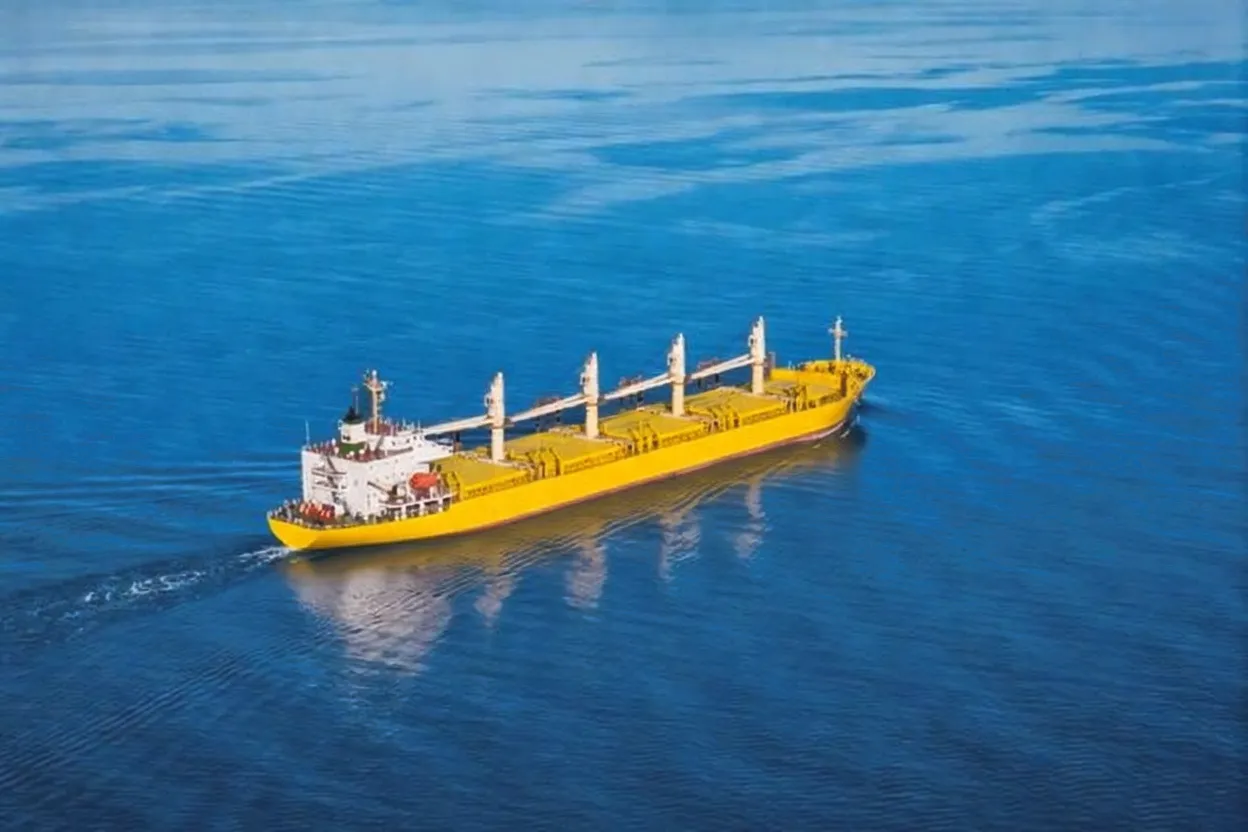
Selection Guide: Matching the Coupling to the Vessel
| Vessel Type | Typical Power | Recommended Series | Key Feature |
|---|---|---|---|
| Coastal tug | 800 – 2,500 kW | GIICL5 – GIICL8 | Shock-load tolerance |
| Inshore ferry | 500 – 1,800 kW | GIICL4 – GIICL7 | High cycle endurance |
| PSV / AHTS | 3,000 – 8,000 kW | GIICL9 – GIICL14 | North Sea spec |
| Bulk carrier | 6,000 – 18,000 kW | GIICL14 – GIICL18 | Continuous duty |
| Fishing trawler | 400 – 1,500 kW | GIICL3 – GIICL6 | Variable-load capacity |
Installation, Alignment, and Long-Term Maintenance
Proper installation determines whether a gear type coupling delivers its theoretical service life or fails prematurely. Cold-fit hubs require precise bore-to-shaft interference, typically H7/r6 for marine applications, with shaft surface finish better than Ra 1.6. Hot-fit installation uses induction heating to 120–140 degrees Celsius, allowing the hub to slide onto the shaft and shrink-grip as it cools. Our installation documentation walks through the procedure step by step, including the recommended tooling list for vessels operating without dedicated workshop facilities.
Initial alignment uses laser systems calibrated to within 0.05 mm tolerance. For propulsion installations, the cold alignment values must account for thermal growth of the engine block and gearbox housing — typically 0.15 to 0.30 mm upward shift as components reach operating temperature. Our application engineers provide vessel-specific alignment offset recommendations based on documented thermal data from similar installations across hundreds of merchant vessels.
Routine maintenance is straightforward but should not be neglected. Grease replenishment every 4,000 to 8,000 operating hours depending on duty cycle. Visual inspection of seal integrity every annual dry-dock. Full lubricant change and tooth contact pattern check every five years or 30,000 hours, whichever comes first. Following this schedule, a properly specified gear type coupling will outlast the vessel’s first major refit cycle without issue.
Preguntas frecuentes
❓ What does a marine gear type coupling cost from a UK supplier for a typical 5 MW propulsion installation?
For a 5 MW class application, expect a budgetary price between £8,500 and £18,000 per coupling unit depending on bore size, classification society requirements, and any custom interface machining. Ever Power provides firm quotations within 48 hours of receiving your installation drawing and operating data sheet, with transparent pricing that includes UK delivery and full certification documentation.
❓ How do I choose the right gear type coupling supplier for North Sea offshore supply vessels?
Look for three things — documented North Sea installation references, classification society type approval from Lloyd’s, DNV, or ABS, and engineering support that responds within one working day. Ever Power maintains reference lists showing PSV and AHTS units running our couplings out of Aberdeen, Peterhead, and Lerwick, with full traceability back to the supplied serial numbers.
❓ Which lubricant should I specify for a gear type coupling running on a Scottish trawler in cold winter conditions?
For UK fishing vessels operating from Peterhead, Fraserburgh, or Mallaig, we recommend lithium-complex EP2 grease with NLGI 1.5 consistency rated for minus 30 degrees Celsius pumpability. Mobil SHC Polyrex 462 and Shell Gadus S5 V100 2 are both approved. The lubricant choice matters more than most engineers realise — wrong viscosity at cold start can cause measurable tooth scuffing within the first 500 hours.
❓ Where can British shipyards source a custom gear type coupling with classification approval within eight weeks?
Ever Power routinely delivers classification-approved custom units to UK shipyards including Cammell Laird, Harland and Wolff Belfast, and A&P Falmouth within 35 to 55 working days from order. We hold pre-approved material certifications with Lloyd’s Register London office, which removes the typical six-week paperwork delay that catches out new suppliers entering the British market.
❓ When should I request a quote for replacement gear type coupling units ahead of scheduled UK dry-docking?
Request budgetary pricing at least 16 weeks before your planned dry-dock window at Birkenhead, Falmouth, or Belfast. This allows time for design review, classification submission, manufacturing, sea-freight or air-freight, and customs clearance into the UK. Emergency turnarounds of six to eight weeks are achievable but typically incur a 20 percent priority surcharge for tooling reallocation.
❓ What is the typical price difference between a gear type coupling and a disc-pack alternative for cross-Channel ferry service?
For equivalent torque ratings in ferry duty between Dover, Folkestone, and continental ports, a gear type coupling typically costs 15 to 25 percent more upfront than a comparable disc-pack unit. However, the lifetime cost analysis usually favours gear type couplings because tooth replacement is rarely required, whereas disc packs frequently need replacement disc sets every 18,000 to 25,000 service hours.
❓ How does a marine gear type coupling supplier handle obsolete replacement parts for legacy UK vessels?
Reverse engineering is a routine service. Send us your worn part, drawing, or even photographs with key dimensions, and our engineering team will produce a fully dimensioned replacement specification within ten working days. We have produced replacement gear type coupling units matching Flender, Renk, and Voith Turbo legacy designs for Royal Fleet Auxiliary support ships and several preserved heritage vessels including a Mersey ferry on the Liverpool route.
⚓ Ready to Specify Your Marine Gear Type Coupling?
Whether you operate a single trawler from Plymouth or manage a fleet of supply vessels working the North Sea, our engineering team is ready to help you specify the right coupling for your propulsion installation. Detailed quotations within 48 hours. Custom designs welcomed. UK-friendly documentation included.
Schema markup: Speakable + FAQPage Schema applied to all questions above for voice search optimisation. edit by gzl