Why Offshore Platform Drilling Rigs Demand Specialised Coupling Technology
Salt spray, humidity above 90%, and constant condensation attack carbon steel components relentlessly. Couplings exposed to the North Sea atmosphere require either corrosion-resistant alloy steel bodies, high-grade surface treatments, or both. Without proper material selection, coupling housings and hub bores can corrode to the point of seizure within a single offshore rotation cycle, making material specification the first critical engineering decision.
Drilling decks, cellar decks, and moon pools are frequently classified as Zone 1 or Zone 2 explosive atmospheres under BS EN 60079. Any coupling generating excessive heat from misalignment, frictional rubbing, or spark-producing contact between metallic elements poses a direct ignition risk. Offshore-grade couplings must be balanced to minimise vibration-induced heat generation and must use materials or coatings that prevent incendive sparking in gaseous hydrocarbon environments.
A semi-submersible or jack-up rig moves continuously in response to wave action and deck loading changes. This introduces dynamic misalignment between drive motors and driven machinery that would be static on a land installation. Couplings must accommodate angular misalignment of up to several degrees, lateral offset, and axial displacement simultaneously while transmitting peak torques that can be three to five times the nominal running torque during drilling string breakout operations.
When a coupling fails a hundred miles offshore in the North Sea, a helicopter logistics chain, limited spare parts inventory, and crew change scheduling can turn what would be a half-day repair on a land site into a week-long production shutdown. This reality forces UK offshore procurement teams to specify couplings with the longest possible service intervals, the simplest possible maintenance procedures, and the most robust overload protection characteristics available in the market.
Working Principle of High-Performance Couplings in Drilling Rig Drivetrain Systems
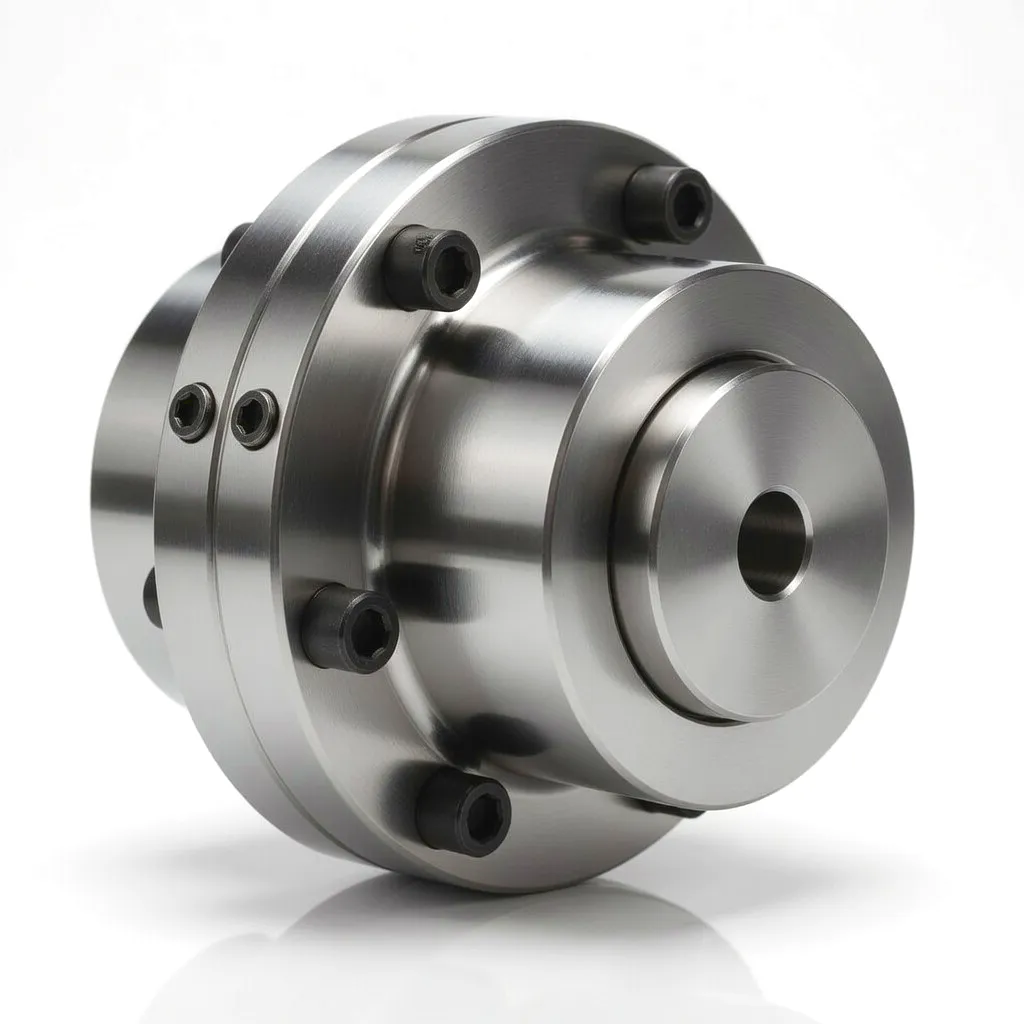
The relationship between misalignment, transmitted torque, and bearing load is non-linear in gear-type couplings. A small angular misalignment that appears insignificant — say, 0.5 degrees — can generate bearing reaction forces several times greater than the simple geometry would suggest, because the tooth contact geometry creates a bending moment across the coupling length. This is why offshore coupling specifications for top-drive applications always include a detailed calculation of resultant shaft-end bearing loads as part of the coupling selection process, not merely a torque-capacity check.
Core Manufacturing Materials for Offshore Coupling Applications
The predominant hub and sleeve material for high-torque offshore couplings. After quenching and tempering to hardness values of 28–34 HRC, 42CrMo4 achieves tensile strengths in the range of 900–1,100 MPa with excellent impact toughness at temperatures down to -20°C — directly relevant to North Sea winter operations. The chromium and molybdenum alloying elements provide deep hardenability, ensuring consistent mechanical properties across large coupling cross-sections.
Used for disc pack elements in disc couplings and for exposed flanges and fasteners where salt spray contact is unavoidable. The low-carbon designation (L grade) suppresses sensitisation at weld interfaces, while the molybdenum addition pushes the critical pitting potential well beyond the electrochemical activity of North Sea seawater. For couplings in moon pool areas or splash zones, 316L disc packs eliminate the surface treatment maintenance cycles that plague carbon steel alternatives.
Gear-type coupling teeth require a different material philosophy from the coupling body: a hard, wear-resistant surface over a tough, impact-absorbing core. Case-hardened 20CrMnTi achieves surface hardness of 58–62 HRC to a case depth of 0.8–1.5mm, providing exceptional tooth-flank wear resistance under the boundary-lubrication conditions present during rig start-up and during the misalignment-induced sliding motion at the tooth mesh interface.
Where torsional vibration damping is a priority — particularly in diesel-engine-driven mud pump trains — elastomeric coupling elements made from high-nitrile rubber compounds provide the required compliance. Compound formulation is critical: the rubber must resist swelling in contact with drilling mud, hydraulic fluids, and hydrocarbon vapours while maintaining its dynamic stiffness characteristics across the temperature range of -15°C to +80°C encountered in North Sea operations throughout the year.
Core Technical Advantages of Ever Power Offshore Couplings
Ever Power disc couplings eliminate lubrication entirely from the coupling maintenance schedule. On a rig where lubricant replenishment requires height access and specialist equipment, removing that maintenance task translates directly into lower operating cost and reduced personnel exposure to risk. The 316L disc packs are rated for 10+ years of service under correct installation conditions without any planned maintenance intervention.
Weight is a critical constraint on offshore platforms where topside load calculations affect stability and structural fatigue life. Ever Power couplings achieve torque density values 20–35% higher than standard catalogue products through finite element analysis-optimised hub geometries that remove material from low-stress regions while concentrating it precisely where the tooth load paths demand it. This results in couplings that weigh less yet carry higher peak torque ratings.
Torque spikes during drill string hangoff, stuck pipe freeing, or emergency brake application can exceed rated coupling torque by factors of 3–5. Ever Power couplings are designed with a precisely calibrated overload factor and include optional shear-hub or torque-limiting configurations that protect gearboxes and motors worth hundreds of thousands of pounds from destructive overloads while limiting collateral damage to the coupling itself — which is the least expensive and most accessible component in the drivetrain.
At the rotational speeds common in AC top-drive motors (typically 600–1,800 rpm), even modest residual imbalance in a coupling creates bearing loads that can halve the designed bearing service life. Ever Power couplings for high-speed drive applications are balanced to ISO 21940 Grade G2.5 as standard, with Grade G1.0 available for specialist high-speed applications, ensuring that coupling-induced vibration does not compromise the platform’s structural integrity monitoring system readings.
North Sea operators and their verification bodies (Bureau Veritas, DNV, Lloyd’s Register) demand material certificates with heat number traceability for all critical rotating components. Every Ever Power coupling supplied for offshore service is accompanied by a full documentation package including EN 10204 3.1 material certificates, hardness test records, dimensional inspection reports, and balance test certificates — the complete technical file that offshore inspection authorities require.
Ever Power gear couplings accommodate angular misalignment of up to 1.5 degrees per mesh (3.0 degrees total for double-engagement configurations) under full rated torque, with peak misalignment capacity to 2.0 degrees in short-duration operating conditions. This tolerance range directly addresses the dynamic shaft displacement that occurs on floating drilling units during operations in sea states up to JONSWAP spectrum Hs 4.5 metres — the threshold at which operations typically suspend on North Sea wells.
Product Technical and Performance Parameters
Typical specification ranges for Ever Power offshore-grade couplings — custom configurations available on request.
| Parameter | Gear Coupling | Schijfkoppeling | Flexibele balkkoppeling |
|---|---|---|---|
| Nominal Torque Range (Nm) | 500 → 2,500,000 | 50 → 800,000 | 0.5 → 12,000 |
| Peak Torque Overload Factor | 3.5x rated | 2.5x rated | 2.0x rated |
| Angular Misalignment (degrees) | Up to 1.5° per mesh | Tot 0,5° | Up to 3.0° |
| Lateral (Parallel) Offset (mm) | Up to 3.5 | Tot 1,0 | Up to 0.8 |
| Maximale bedrijfssnelheid (rpm) | 3,600 | 10,000 | 6,000 |
| Operating Temperature Range (°C) | -30 to +120 | -50 to +280 | -40 tot +150 |
| Hub Material Standard | 42CrMo4 / 18CrNiMo7-6 | 42CrMo4 / 316L SS flanges | 7075-T6 Al / 304 SS |
| Balance Grade (ISO 21940) | G2.5 (G1.0 option) | G1.0 standard | G2.5 standard |
| Lubrication Requirement | Grease (ISO VG 320 EP) | None | None |
| Bore Size Range (mm) | 20 → 630 | 10 → 450 | 4 → 80 |
Application Scenarios: Where Couplings Are Critical on an Offshore Drilling Platform
Modern drilling platforms deploy couplings at dozens of points across the power distribution and mechanical drive architecture. The following scenarios represent the highest-consequence applications where coupling selection directly determines equipment reliability and operational continuity.
Application Scenario 1: Top Drive Motor-to-Gearbox Interface

Application Scenario 2: Mud Pump Crankshaft Drive

Application Scenario 3: Draw-Works Drum Brake and Drive Train
The draw-works raises and lowers the drill string, the completion string, and the blowout preventer stack — operations where precise speed control and overload protection are safety-critical. The coupling between the drum drive motor and the disc or band brake assembly must allow for controlled brake application without coupling damage, and must survive the maximum hook load imposition as an emergency event without propagating the shock into the electrical drive system.
On UK-registered vessels operating under the offshore installation management regulations, draw-works couplings are subject to third-party verification as rotating machinery in a safety-critical function. Ever Power couplings for draw-works applications are supplied with DNV or Lloyd’s Register type approval documentation as required, covering the material specification, manufacturing process, non-destructive testing regime, and the rated service conditions. This documentation package eliminates the certification delays that can hold up rig commissioning programmes and delay first production dates — a consideration that UK project managers in Aberdeen’s offshore supply chain cite as among their most pressing procurement concerns.
Application Scenario 4: Power Generation and Diesel Genset Couplings
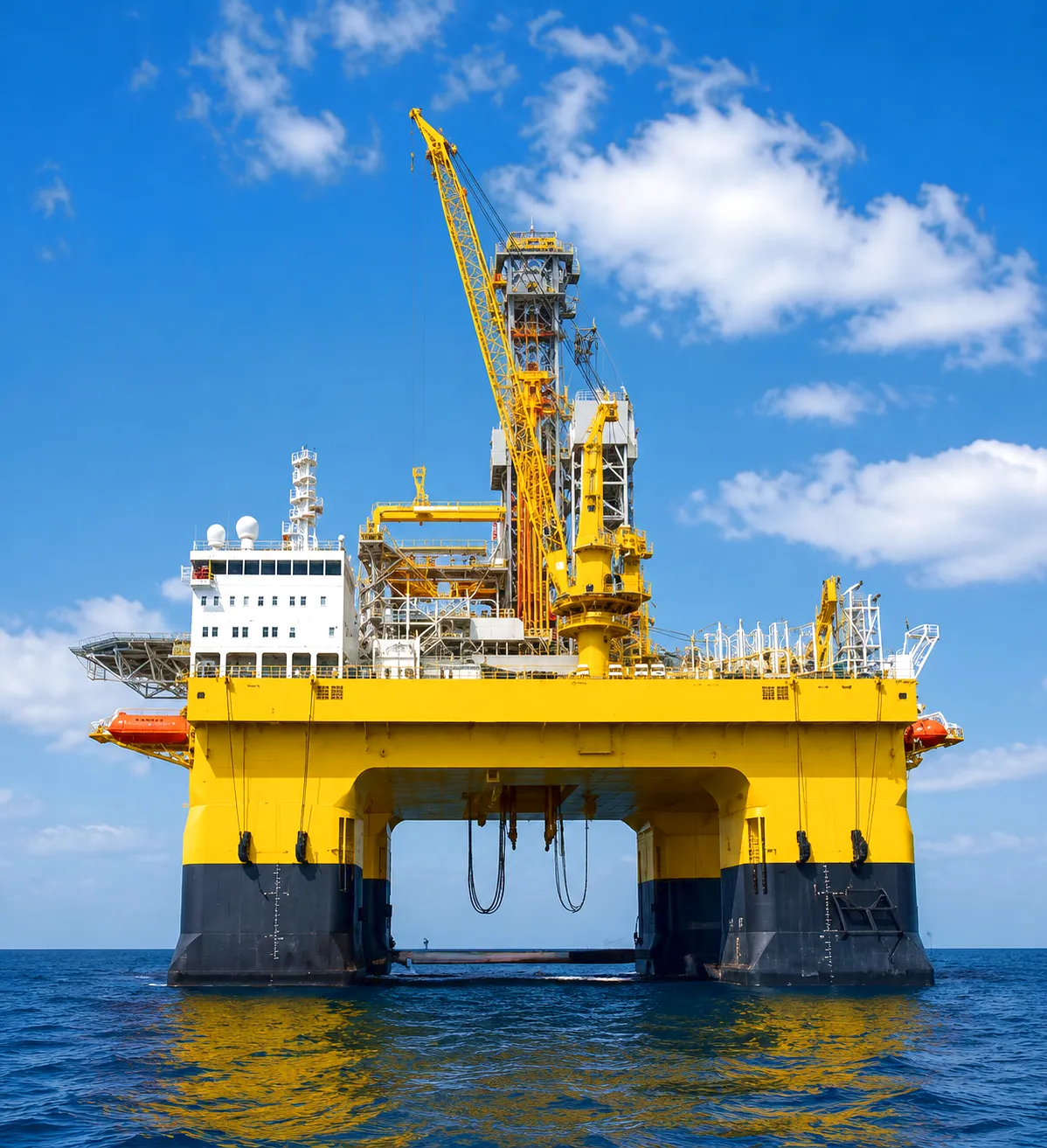
Application Scenario 5: Thruster Drive Systems on Dynamically Positioned Rigs
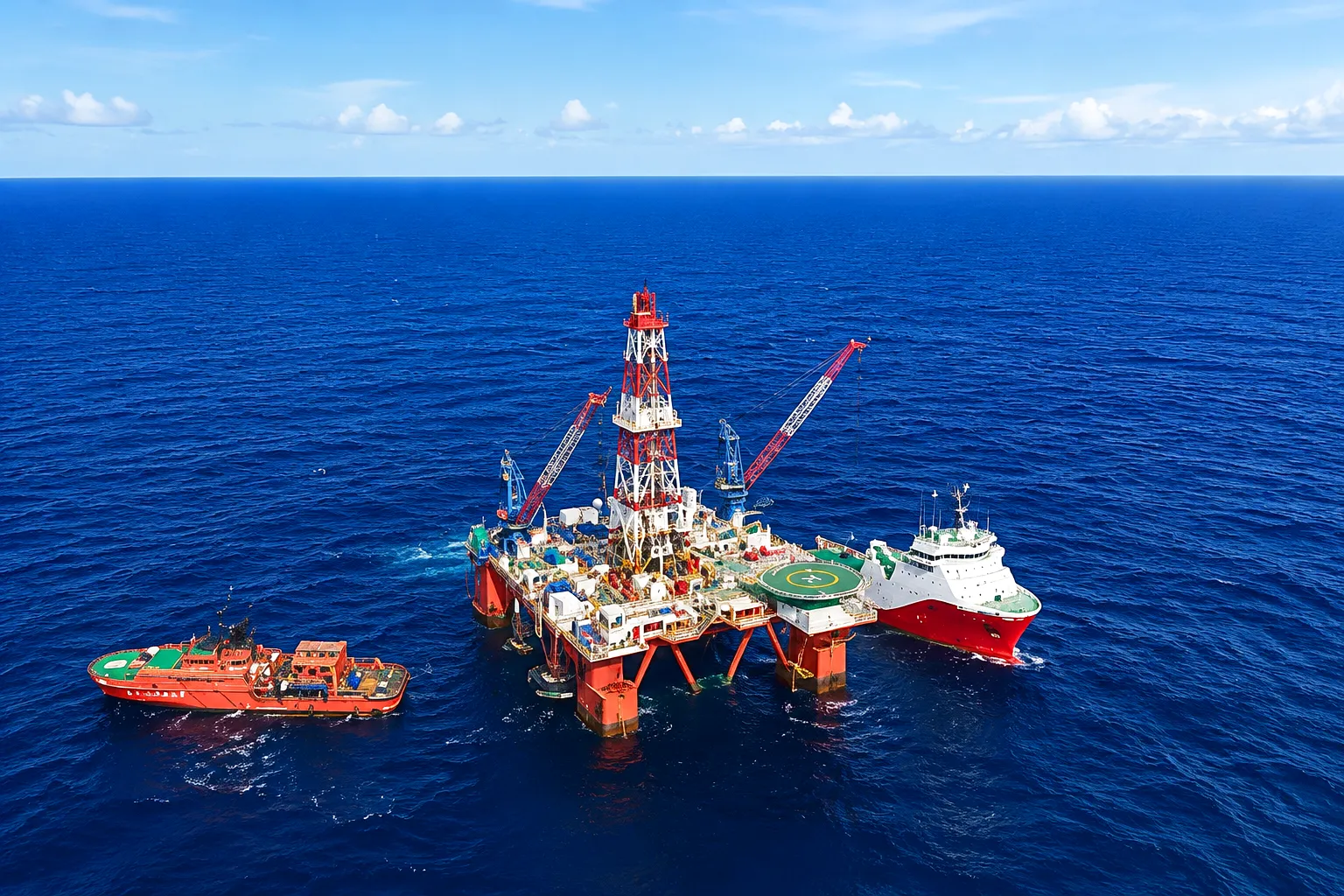
Featured Coupling Products for Offshore Applications
Engineering solutions built for demanding industrial environments
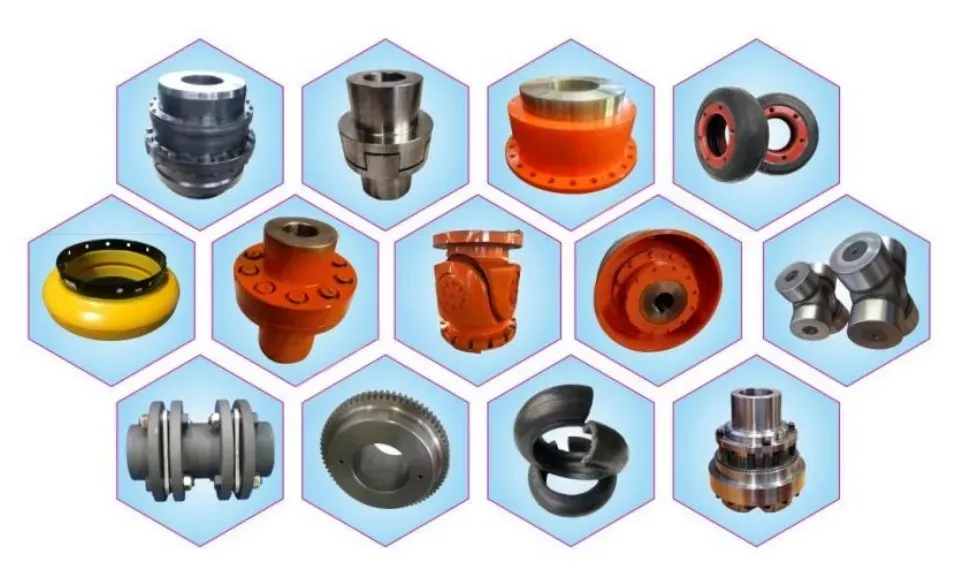
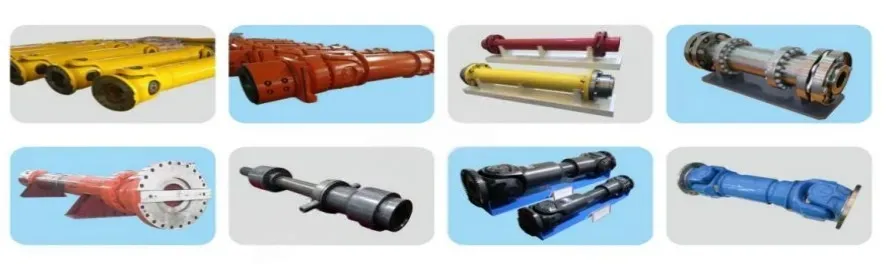
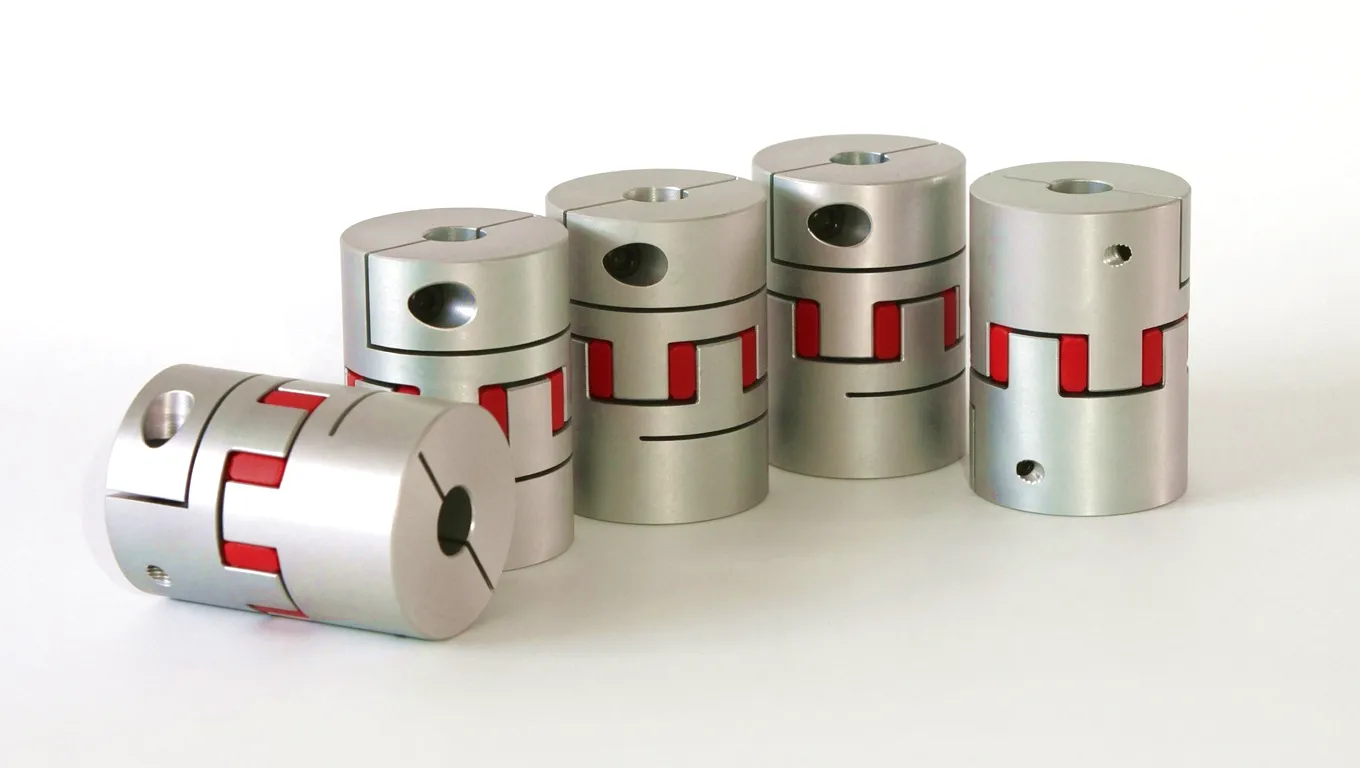
A precision one-piece coupling machined from high-grade aluminium alloy or stainless steel, the Flexible Beam Coupling eliminates backlash entirely through its helical cut pattern. It delivers zero-backlash torque transmission with angular misalignment capacity up to 3 degrees and is particularly valued in encoder drive systems, servo feedback loops, and precision instrumentation drives found in offshore MWD (measurement while drilling) and LWD (logging while drilling) equipment where signal integrity depends on positional accuracy at the coupling interface.
The Disc Coupling transmits torque through a series of thin metallic disc packs that accommodate misalignment through elastic flexure rather than sliding friction, eliminating lubrication requirements entirely. Constructed from 316L stainless steel disc packs with 42CrMo4 flanges and precision-balanced to ISO 21940 G1.0 as standard, these couplings are the benchmark choice for offshore top drive, genset, and pump discharge applications where maintenance access is restricted and operational continuity is non-negotiable.
Ever Power: Manufacturing Capability and Customisation Services
Our engineering team responds to offshore coupling enquiries within 24 hours. Send your application details — motor rating, shaft diameters, operating speed, misalignment data, and any relevant API or classification society requirements — and receive a detailed technical proposal with dimensional drawings and full documentation list.
Customer Success Story: North Sea Top-Drive Coupling Upgrade — Aberdeen, Scotland
An Aberdeen-based drilling contractor operating a fourth-generation semi-submersible in the Northern North Sea had experienced three coupling failures on the top-drive gearbox input within a single operational year, each resulting in an unplanned production shutdown of between three and seven days. The original equipment manufacturer coupling had been specified to the nominal motor torque rating without adequate allowance for the dynamic torque factor arising from VFD control mode transitions during automated pipe-handling sequences. The repeated failures were attributed by the OEM to operator error, but the drilling contractor’s maintenance engineering team suspected a fundamental specification deficiency.
The contractor’s Aberdeen procurement team engaged Ever Power for an independent technical review. Ever Power’s engineering team collected the rig’s VFD torque reference logs, reviewed the drill string hangoff procedure that preceded each failure, and conducted a torsional vibration analysis of the motor-gearbox system using the actual mass elastic parameters of the installed equipment. The analysis revealed that the VFD’s torque bandwidth setting allowed torque ramp rates that imposed impulsive loads on the coupling three to four times the nominal rated torque during certain automated sequencing events — loads the original coupling was not rated to withstand under repeated cycle conditions.
Ever Power designed a replacement disc coupling with a nominal torque rating 60% higher than the original, a disc pack selected for fatigue life under the actual dynamic torque spectrum rather than the static peak, and flanges modified to match the existing bolt circle pattern without shaft modification — a critical requirement given the limited machine shop capability available on the rig. The complete engineering, manufacture, testing, and documentation process was completed in 11 weeks from the initial brief. The replacement coupling was installed during the rig’s next scheduled maintenance window and has since operated for over 18 months without failure or unplanned intervention, recovering an estimated production value of approximately £4.2 million compared to the failure pattern of the previous twelve months.
“After three coupling failures in a single year, we were running out of options and the OEM was not providing solutions that addressed the real cause. Ever Power’s torsional analysis pinpointed exactly what was happening at the VFD-to-gearbox interface and their replacement coupling design has given us 18 months of uninterrupted operation. The torque capacity and fatigue life data in their technical proposal were significantly more detailed than anything we had received from the original supplier.”
“The documentation package that Ever Power provided with our mud pump coupling order — EN 10204 3.1 certs, balance records, dimensional inspection report — was accepted by Lloyd’s Register at the first submission without any requests for additional information. That has not been our experience with all coupling suppliers. The manufacturing quality clearly reflects a mature offshore supply-chain understanding.”
“We specified Ever Power disc couplings for the thruster drive system on our DP3 drillship and the engineering support during the selection process was exceptional — they ran shaft end load calculations for all three thruster motor sizes, provided torsional stiffness data in the exact format our naval architects needed, and turned around a revised drawing within 48 hours when we needed a bore size change. The coupling price represented excellent value given the level of technical support included.”
Veelgestelde vragen
Answers to the questions UK offshore procurement and engineering teams ask most
For North Sea top drive applications, disc couplings are the most widely specified solution because they are maintenance-free, provide the torsional stiffness required to avoid drill string resonance, and accommodate the angular misalignment caused by dynamic structural deflection of the rig derrick under wave loading. Gear couplings remain in service on older installations but require periodic re-greasing that is impractical at height on a working rig. The critical selection parameter is not just nominal torque rating but dynamic torque factor under the VFD control strategy in use — Ever Power provides torsional analysis as part of the standard application review.
Offshore-grade disc coupling pricing varies considerably with torque rating, material specification, documentation requirements, and lead time urgency. A disc coupling for a 500 kW genset application in 42CrMo4 with standard EN 10204 3.1 documentation typically ranges from £800 to £2,500 depending on bore size and quantity. Top drive couplings for 1,500–2,000 kW applications with DNV or Lloyd’s type approval documentation fall in the range of £8,000 to £35,000 depending on design complexity and certification scope. Requesting a detailed quote from Ever Power with your specific application data — torque, speed, misalignment, bore diameters, and certification requirements — is the fastest route to an accurate price.
Ever Power supplies couplings with DNV and Lloyd’s Register type approval documentation for offshore applications, including compliance with ATEX Directive 2014/34/EU and the UK equivalent UKEX marking requirements for equipment used in Zone 1 and Zone 2 explosive atmosphere areas on drilling platforms. The technical file supporting ATEX compliance covers thermal analysis of the coupling under worst-case misalignment conditions, confirming that surface temperatures remain below the T-class limit for the gas group specified. Aberdeen-based projects with specific ABS, BV, or ClassNK certification requirements are accommodated on a project-specific basis.
Standard in-stock coupling sizes are available for dispatch within three to five working days. Custom-engineered offshore couplings with third-party certification typically carry lead times of eight to fourteen weeks from drawing approval, covering material procurement from certified mills, machining, heat treatment, gear cutting, balance, non-destructive testing, and documentation compilation. For projects with aggressive mobilisation schedules, engaging Ever Power at the front-end engineering stage — before detailed design freeze — allows the coupling specification to be developed in parallel with the equipment procurement rather than sequentially, typically saving four to six weeks on the critical path.
The choice between gear and disc couplings for mud pump drives depends principally on two factors: the torsional vibration characteristics of your specific pump-motor-VFD combination, and your maintenance philosophy for the rig. Gear couplings tolerate higher misalignment and higher peak torques but require periodic lubrication and inspection. Disc couplings are lubrication-free and maintenance-free but have lower misalignment capacity and require more precise initial shaft alignment. If your rig has a laser alignment protocol and maintenance resources are constrained, a disc coupling is generally the better long-term choice. Ever Power’s engineering team will conduct a torsional analysis for your specific equipment combination — contact us for a consultation before finalising your specification.
Ever Power ships coupling orders to UK ports including Aberdeen, Dundee, Teesside, Great Yarmouth, and Portsmouth, with air freight options available for urgent requirements where sea transit time of twelve to eighteen days is not compatible with the rig schedule. All shipments are accompanied by packing lists, customs documentation, and the full technical documentation package required for offshore receiving inspection. UK-registered offshore operators can request shipping via established freight forwarders already on their approved logistics provider lists — Ever Power works within whatever export arrangement the client’s supply chain requires.
Contact the Ever Power engineering team with your application data. We will respond with a detailed technical recommendation and quotation within 24 hours of receiving your enquiry.