Response within 24 hours • UK industrial specialists • Custom solutions available
Understanding Shaft Couplings in Heavy Industrial Drive Systems
Mechanical Fundamentals
Koppeloverdracht
A coupling transmits rotating mechanical power — torque — from a driving shaft (typically connected to a motor or gearbox output) to a driven shaft (the kiln shell trunnion ring or supporting tyre assembly). In cement kiln applications, this torque can exceed 5,000 kN·m on larger installations, making component selection and metallurgical specification absolutely critical to operational continuity.
Compensatie voor verkeerde uitlijning
Cement kilns experience significant thermal growth during their warm-up cycle. As the shell heats from ambient to operating temperature, the drive-end shaft can shift axially by several millimetres and exhibit angular misalignment as foundations settle under load. Flexible couplings — particularly gear-type and disc-type designs — accommodate these movements without transmitting damaging bending moments back into the gearbox or motor bearing housings.
Shock Absorption
Feed irregularities, hard clinker nodules, and kiln coating collapses generate sudden torque transients that can spike to three or four times the nominal design torque within milliseconds. Without a coupling designed to absorb these impulses — through elastomeric elements, crowned gear teeth, or metallic flexing discs — the shock propagates straight into the gearbox, potentially fracturing gear teeth or shattering roller bearings. The coupling acts as the last line of mechanical defence in the drive train.
Working Principle of Couplings in Cement Rotary Kiln Drive Trains
Operational Mechanics
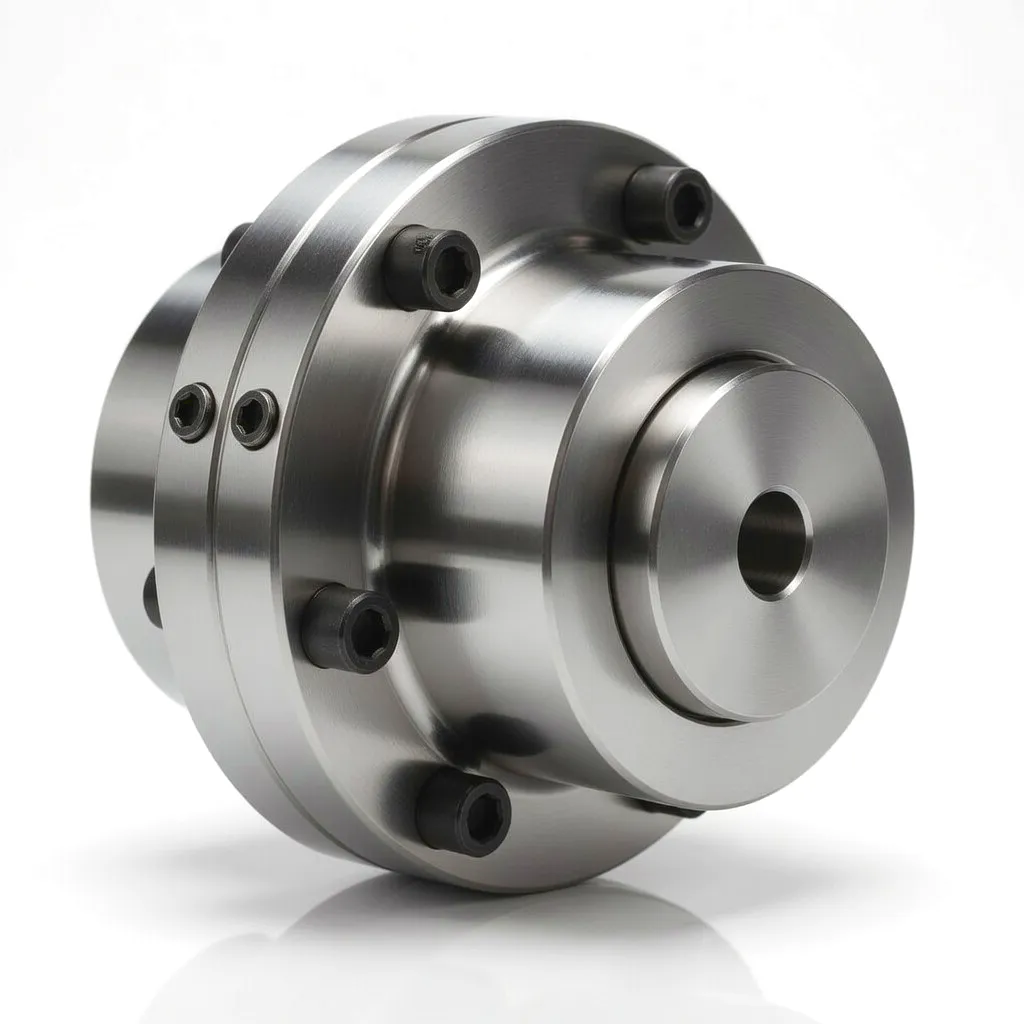
Core Materials Used in Rotary Kiln Coupling Manufacturing
Metallurgical Specification
Key Technical Advantages of Precision Couplings for Cement Rotary Kilns
Engineering Benefits
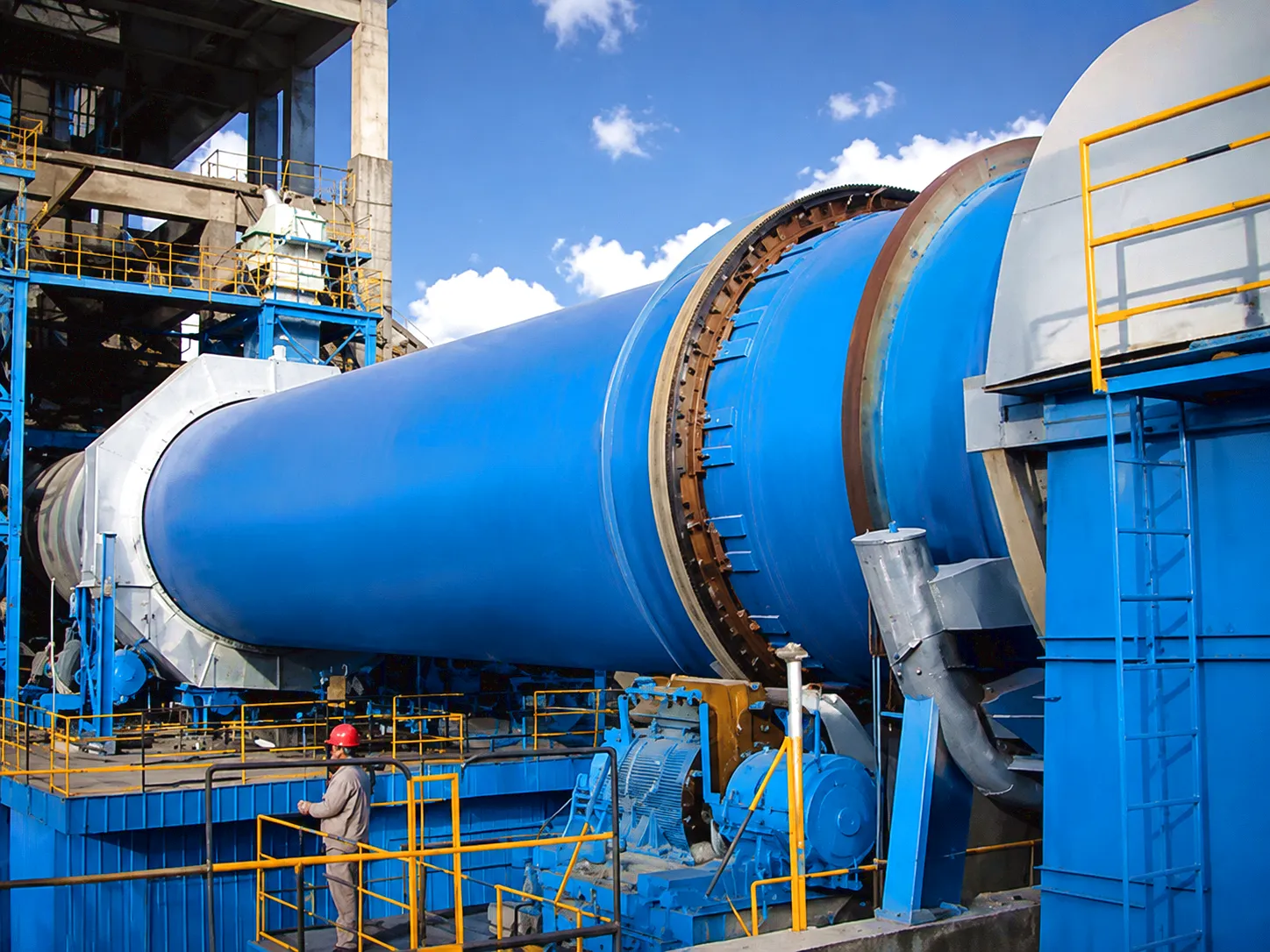
Application Scenario: Cement Rotary Kiln Main Drive System
Primary Application Deep Dive
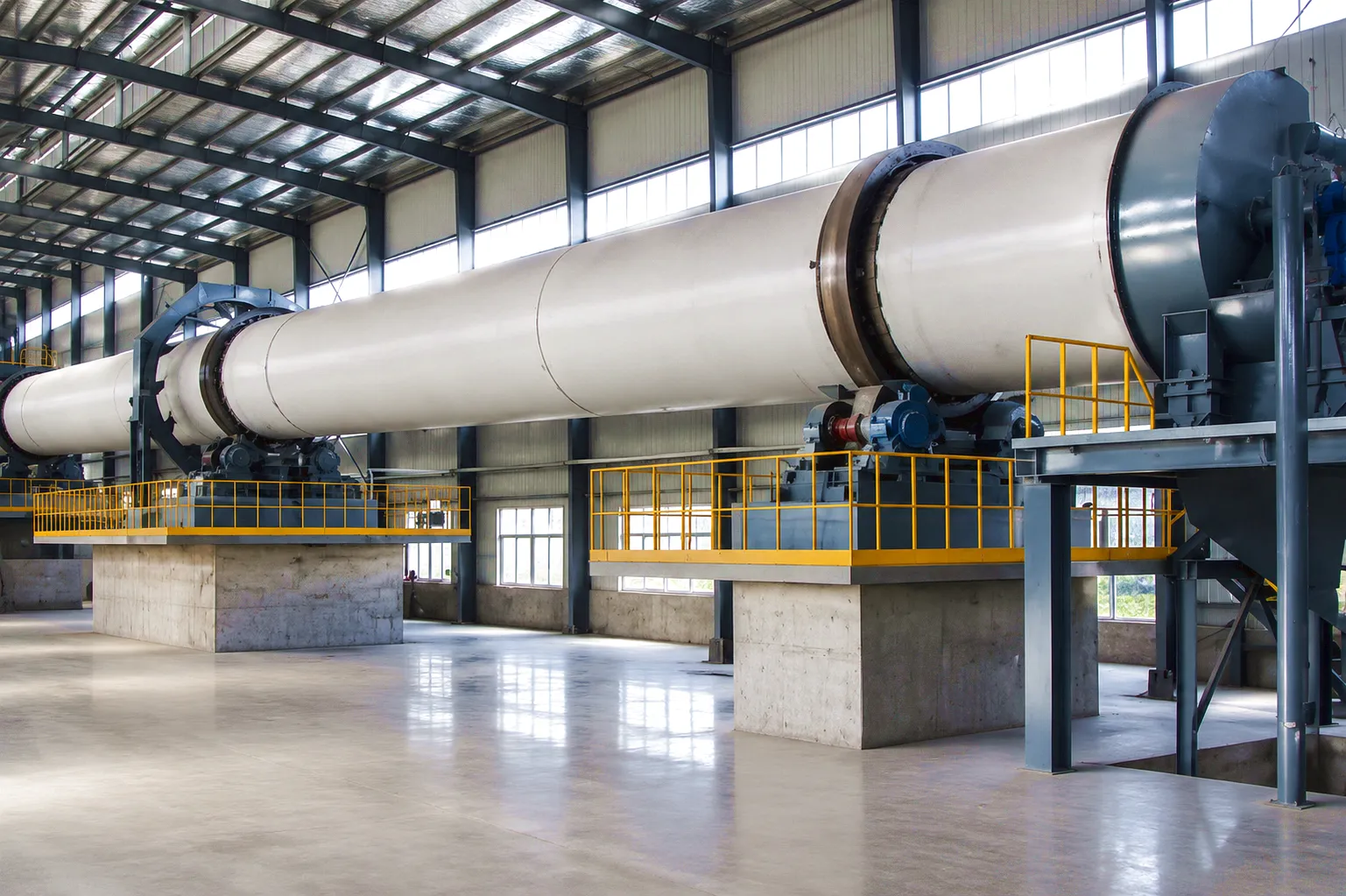
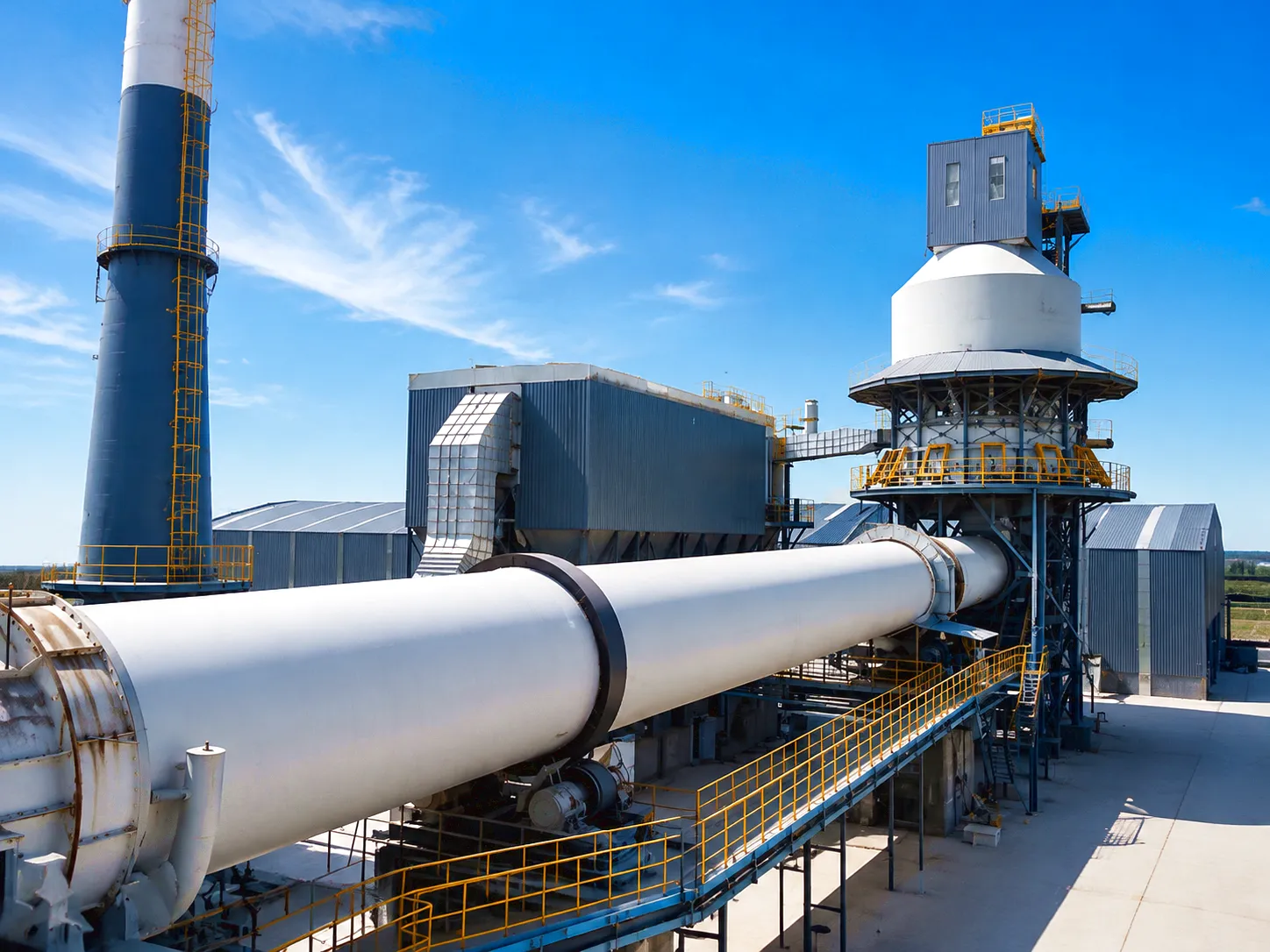
The cement rotary kiln main drive is the most demanding coupling application in the entire cement manufacturing process. The kiln itself is essentially a long, slow-rotating cylindrical reactor inclined at 3–5 degrees from horizontal. Raw meal enters at the elevated feed end and tumbles slowly toward the discharge end, progressively passing through preheating, calcining, and burning zones. The massive size and weight of this assembly — combined with its continuous operation requirement, high internal temperatures, and the abrasive, chemically aggressive atmosphere in the kiln building — imposes a uniquely severe set of requirements on the coupling installed in its drive train.
The main drive coupling must handle not just steady-state torque but also the cyclic torque variation that occurs once per revolution as the gear ring tooth that has the largest accumulated pitch error engages the pinion — an event known as the “once-per-rev” torque spike. In addition, during kiln startup from cold, the drive system must overcome the static friction of all riding rings and carrying rollers simultaneously, generating a breakaway torque that may be two to three times higher than the normal running torque. The coupling must absorb both of these transient loads without slipping on its key-and-keyway shaft connection or overloading any of its structural components. Specifying a generous torque safety factor — typically 2.5–3.0 times the calculated maximum continuous torque — is essential practice in kiln coupling sizing at all UK cement manufacturing sites.
💡 Engineering Insight
In the Sheffield and Derbyshire cement belt, plant engineers routinely specify gear-type couplings with an OD-to-bore ratio of less than 2.5 to keep the coupling mass below the critical threshold that would amplify torsional vibration in the first natural mode of the drive train. This is particularly important where VFD-controlled drives are used, as the VFD can excite any torsional resonance within its speed range during ramp-up.
Producttechnische en prestatieparameters
Specification Table
| Parameter | Tandwielkoppeling | Disc-Type Coupling | Elastomeric Coupling |
|---|---|---|---|
| Nominaal koppelbereik | 100 ~ 5,500 kN·m | 10 ~ 1,200 kN·m | 0.5 ~ 150 kN·m |
| Peak Torque Multiplier | up to 3.0x rated | up to 2.5x rated | up to 2.0x rated |
| Hoekafwijking | tot 1,5 graden | tot 1,0 graden | up to 4.0 deg |
| Axiale verplaatsing | +/- 4 ~ +/- 15 mm | +/- 1 ~ +/- 5 mm | +/- 3 ~ +/- 10 mm |
| Bedrijfssnelheid | up to 3,600 rpm | up to 8,000 rpm | up to 2,000 rpm |
| Diameterbereik van de boring | 50 ~ 560 mm | 20 ~ 300 mm | 15 ~ 200 mm |
| Hub Material Standard | 42CrMo4 / 40Cr | 42CrMo4 / SS304 | Cast Iron / Cast Steel |
| Sleeve / Disc Material | 20CrMnTi (58-64 HRC) | 17-7PH / Inconel 625 | Polyurethane / NBR |
| Verzet | Low (gear tooth clearance) | Nul | Very Low |
| Maintenance Interval | 8,000 ~ 12,000 hr | 20,000+ hr (lube-free) | 4,000 ~ 6,000 hr |
| Typical Kiln Position | Main drive gearbox output | Auxiliary / creep drive | Auxiliary fans / pumps |
Extended Industrial Application Scenarios for Shaft Couplings
Cross-Sector Deployment
Ons assortiment koppelingen
Productie-uitmuntendheid
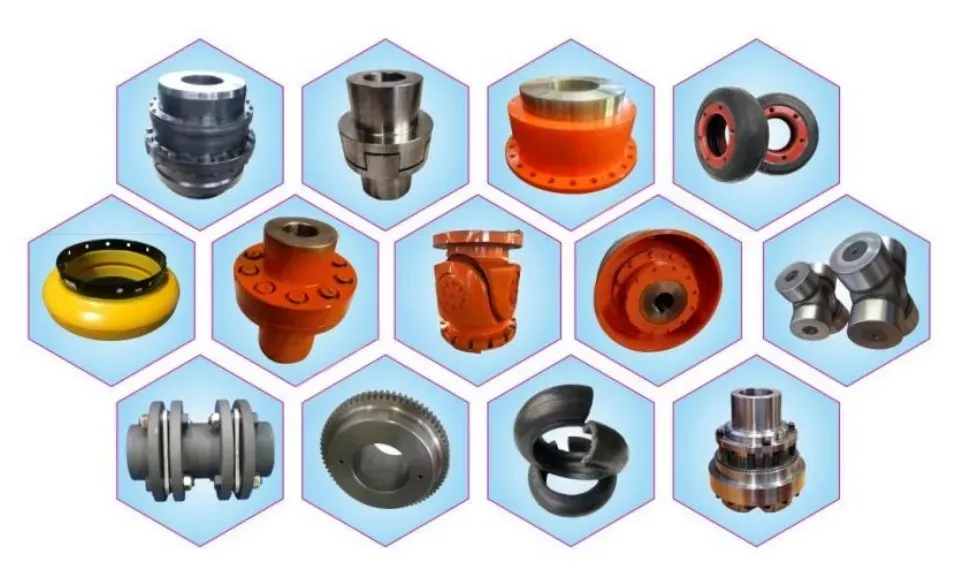
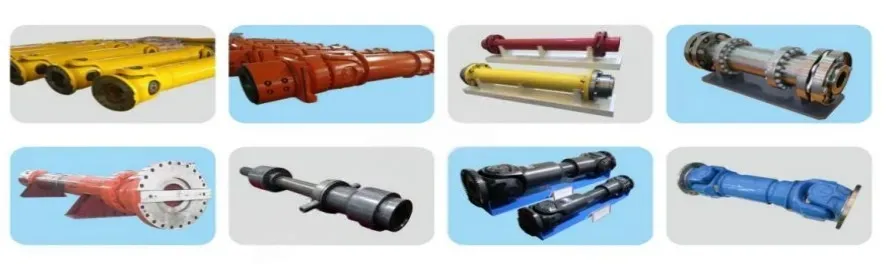
Uitgelichte koppelingsproducten
Recommended for Cement Kiln Applications
Flexibele balkkoppeling
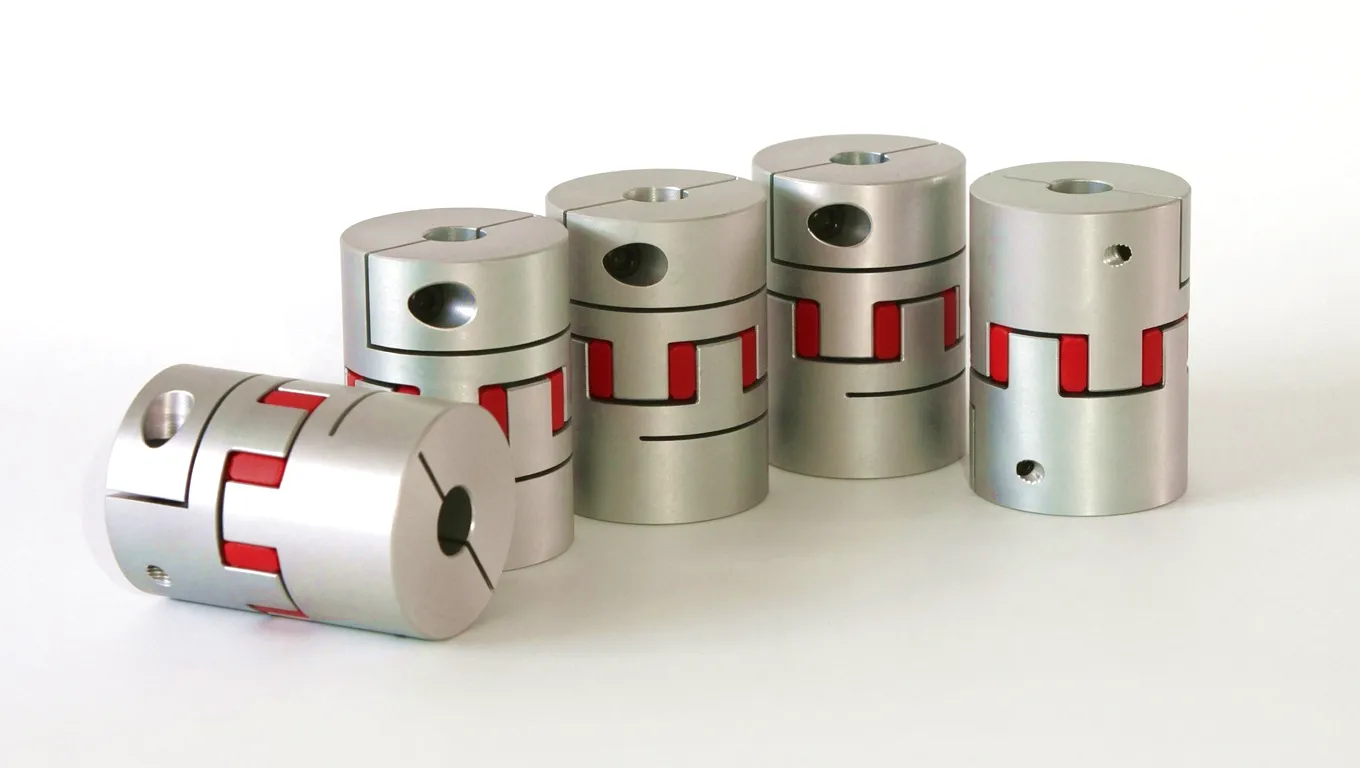
The flexible beam coupling excels in auxiliary drive and servo-motor applications throughout the cement plant. Machined from a single piece of 7075-T6 aluminium alloy or 303 stainless steel, it is characterised by a spiral slot pattern that creates a compliant helical beam element. This geometry simultaneously accommodates angular, parallel, and axial misalignment while maintaining zero backlash throughout — making it the coupling of choice for encoder and resolver connections in kiln speed measurement systems, position feedback on kiln shell measurement instruments, and auxiliary drive servomotor connections where precise angular positioning is required. Its compact, grease-free, maintenance-free construction fits neatly into the congested drive housings found in kiln auxiliary systems, and it is available in bore diameters from 3 mm to 40 mm in standard configurations, with custom bores available on request from Ever Power’s manufacturing facility.
Schijfkoppeling
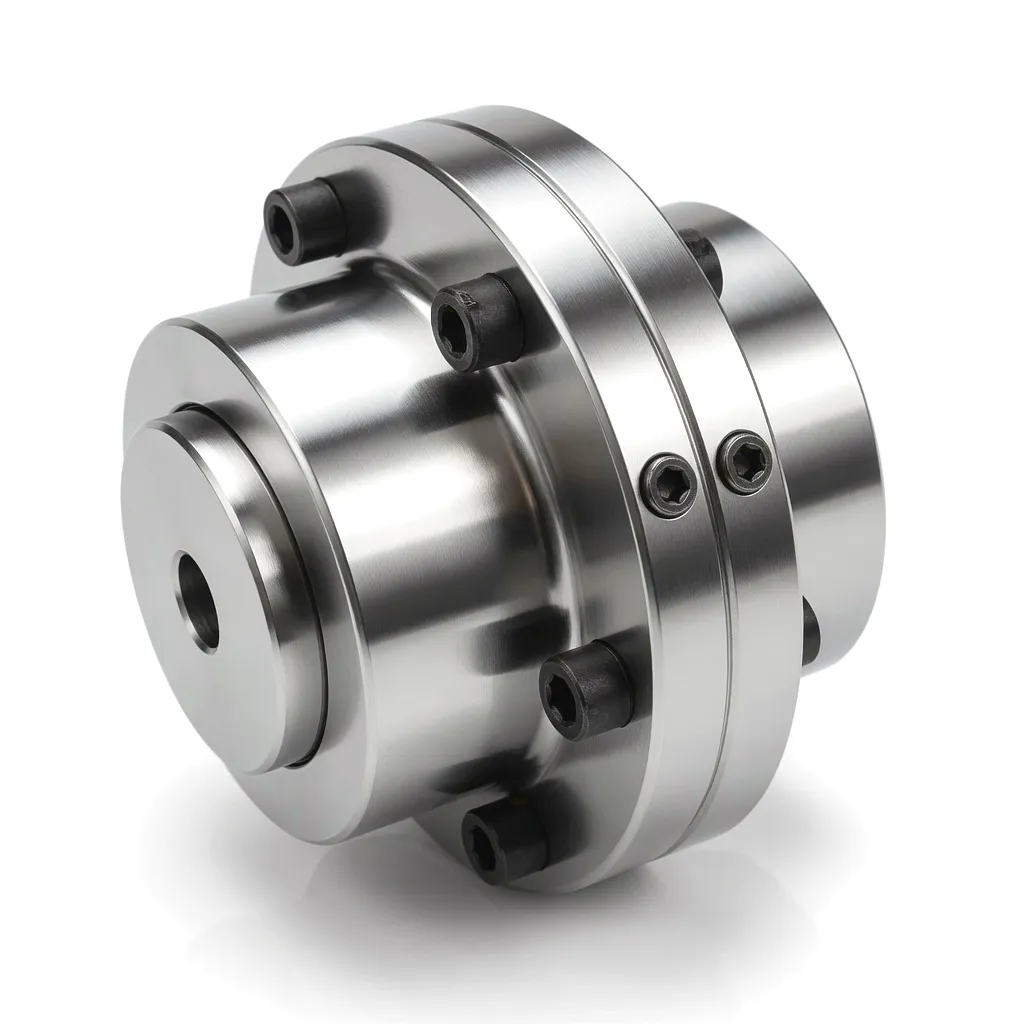
The disc coupling is Ever Power’s recommendation for cement kiln auxiliary and creep drive systems, ORC turbine drives, and any kiln application requiring zero-maintenance, lubrication-free shaft connection. The disc pack — an assembly of thin metallic discs bolted alternately to two flanges — flexes under misalignment while transmitting torque through the bolted tangential elements, with no sliding contact between any components. This eliminates lubrication entirely from the coupling itself, reducing the risk of contamination and simplifying maintenance scheduling. The disc coupling’s torsional stiffness is a well-defined, calculable value, enabling drive train designers to accurately predict the torsional natural frequencies of the complete kiln drive system and ensure that VFD operating speeds avoid resonance conditions. Ever Power manufactures disc couplings to torque ratings from 10 N·m to over 1,200 kN·m, and custom flanged configurations are available to match any existing machinery interface dimensions — critical when engineering a coupling replacement for a kiln that has been in continuous service since the 1980s without drawing modification.
Customer Success Story: Derbyshire Cement Works
Case Study — UK Heavy Industry
De uitdaging
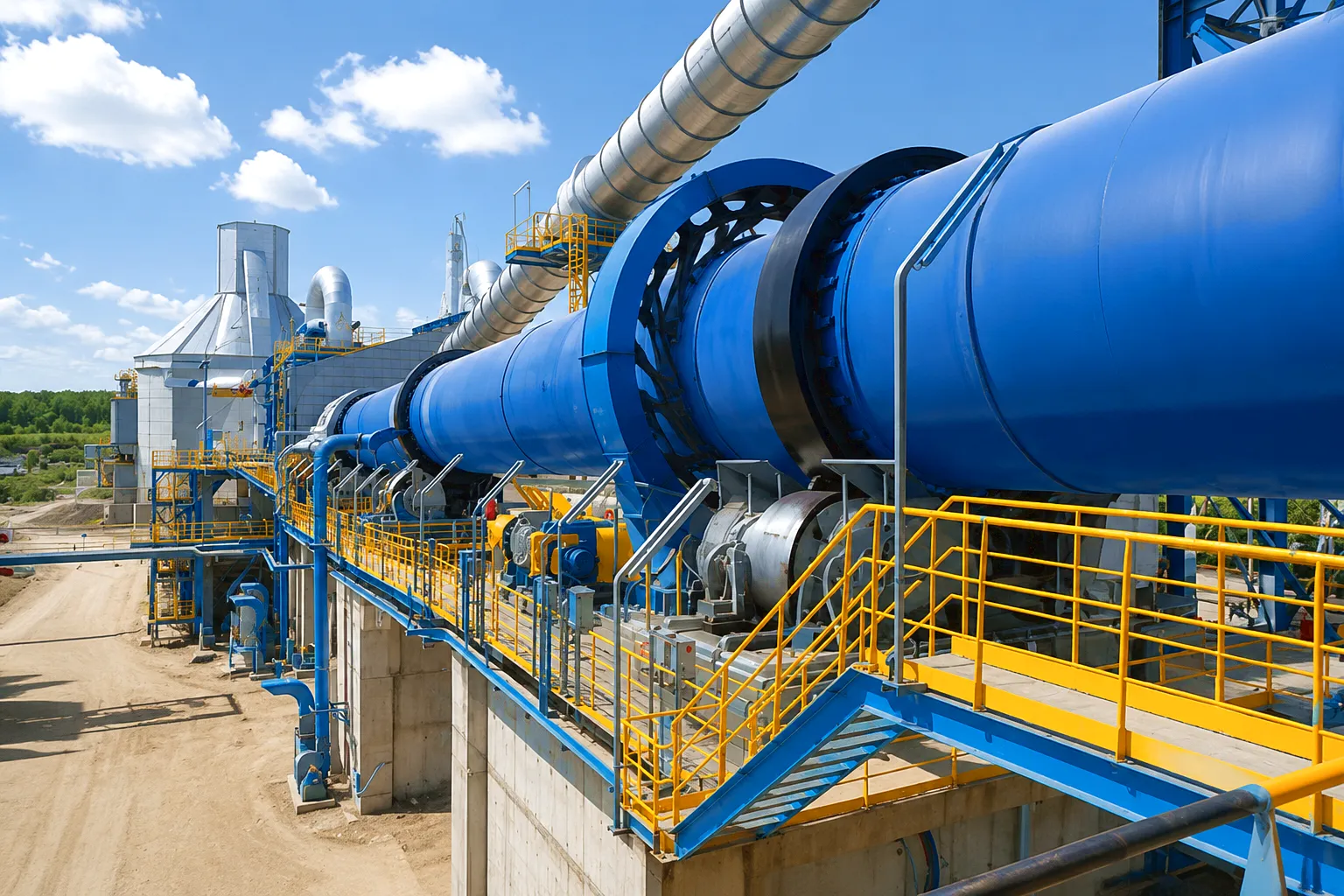
A major Portland cement manufacturer operating a 75-metre wet process kiln in the Hope Valley, Derbyshire, had been experiencing recurring coupling failures on their kiln main drive. The existing coupling — a legacy design from the original 1978 kiln commissioning — was showing accelerated tooth wear due to cement dust ingress past deteriorated seals. The plant had experienced two unplanned kiln stoppages in eighteen months due to coupling-related failures, each resulting in approximately 60 hours of lost production and refractory thermal stress that shortened lining life. The engineering team estimated that each unplanned stop cost the business in excess of £180,000 in direct production loss, logistics disruption, and emergency maintenance resource.
Ever Power’s Solution
Ever Power’s applications engineering team conducted a full drive train review, collecting motor current logs, vibration spectra from the gearbox output bearing housings, and kiln alignment survey data from the plant’s own maintenance records. This analysis identified that the legacy coupling’s sealing system was completely ineffective in the fine-cement dust environment of the kiln building, and that thermal misalignment during the kiln’s warm-up cycle exceeded the original coupling’s design envelope — a situation that had arisen because the kiln had been converted from wet to semi-dry process during a 1990s upgrade, raising operating temperatures and therefore thermal shaft movements beyond the original design basis.
Ever Power designed and manufactured a replacement gear-type coupling with a torque rating of 3,200 kN·m, incorporating a triple-lip seal arrangement with labyrinth dust exclusion, an extended angular misalignment capacity of 1.2 degrees to cover the measured thermal misalignment envelope, and crowned tooth profile geometry calculated specifically for the plant’s measured torque spectrum including the known once-per-rev torque variation characteristic of the kiln’s gear ring. The coupling hubs were manufactured from 42CrMo4 forgings, heat treated and finish-machined to a gear pitch diameter runout of less than 0.015 mm TIR. The delivery lead time from order placement to despatch from Ever Power’s facility was 26 working days — within the plant’s planned maintenance stop window.
Results
The Ever Power coupling was installed during the next scheduled maintenance stop and the kiln restarted on schedule. In the twenty-two months since installation, the plant has recorded zero coupling-related stoppages. Vibration levels at the gearbox output bearing housings have reduced by 34% compared to the pre-replacement baseline — indicating that the new coupling’s improved sealing and misalignment capacity is reducing the dynamic loads transmitted into the gearbox structure. The plant engineering manager estimates the change has saved in excess of £380,000 in avoided production losses over the first eighteen months alone, against an investment in the coupling replacement of under £28,000 including installation labour.
“The triple-lip seal on the Ever Power coupling has been genuinely impressive in our kiln building. We used to have to re-grease the old coupling every three months to fight off dust ingress — with the Ever Power unit we are at nine months and the grease sample analysis still comes back clean. That alone has changed the maintenance economics substantially.”
“What made the difference with Ever Power was that their engineers actually understood the once-per-rev torque behaviour of kiln gear rings and designed the coupling tooth profile around it. Previous suppliers just quoted a standard catalogue item. The torsional analysis they provided with the order gave us confidence before we even fitted the coupling, and the vibration data since has confirmed their prediction was accurate.”
“The 26-day delivery was critical for us — we had a planned maintenance stop booked and could not slide it. Ever Power committed to the date at order and they delivered on day 24. The coupling arrived with full material certs, a CMM dimensional report, and an assembly inspection certificate. For a component going into a safety-critical application on a large kiln, that documentation is not optional, and other suppliers we approached simply could not provide it.”
Veelgestelde vragen
Cement Kiln Coupling — UK Industrial Buyer Guide
Ready to Solve Your Cement Kiln Coupling Challenge?
Ever Power’s engineering team is ready to review your drive train data and develop a coupling solution engineered specifically for your kiln installation — with full technical documentation and UK delivery support.
[email protected] • Custom Coupling Quotations • 3–5 Working Day Response
bewerkt door gzl