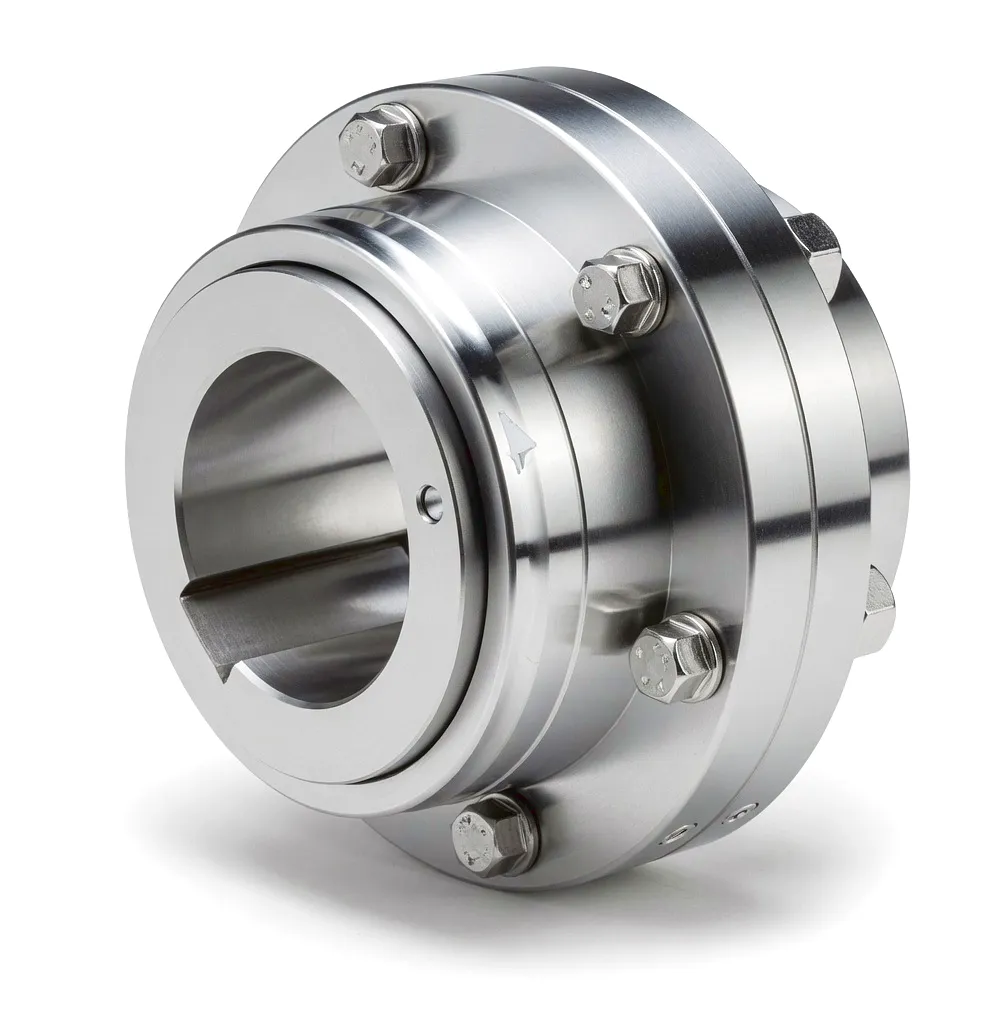
 Tunnelling has always pushed engineering to its absolute limits. When the Elizabeth Line extended beneath central London — boring through chalk, clay, and decades of buried infrastructure — the cutter head drive systems had to deliver sustained torques measured not in kilonewton-metres but in the tens of thousands. The gear type coupling sits at the heart of that power chain, bridging electric motor to planetary gearbox and gearbox output to the main bearing assembly that turns the cutter head itself. Without this deceptively compact component working reliably in near-total inaccessibility, major tunnelling projects across Britain simply could not proceed.
Respond within 24 hours · Technical datasheets available on request
Application Scenario: Tunnel Boring Machine Cutter Head Drive Systems
Heavy Civil Infrastructure · Underground Construction · UK Metro & Rail Projects
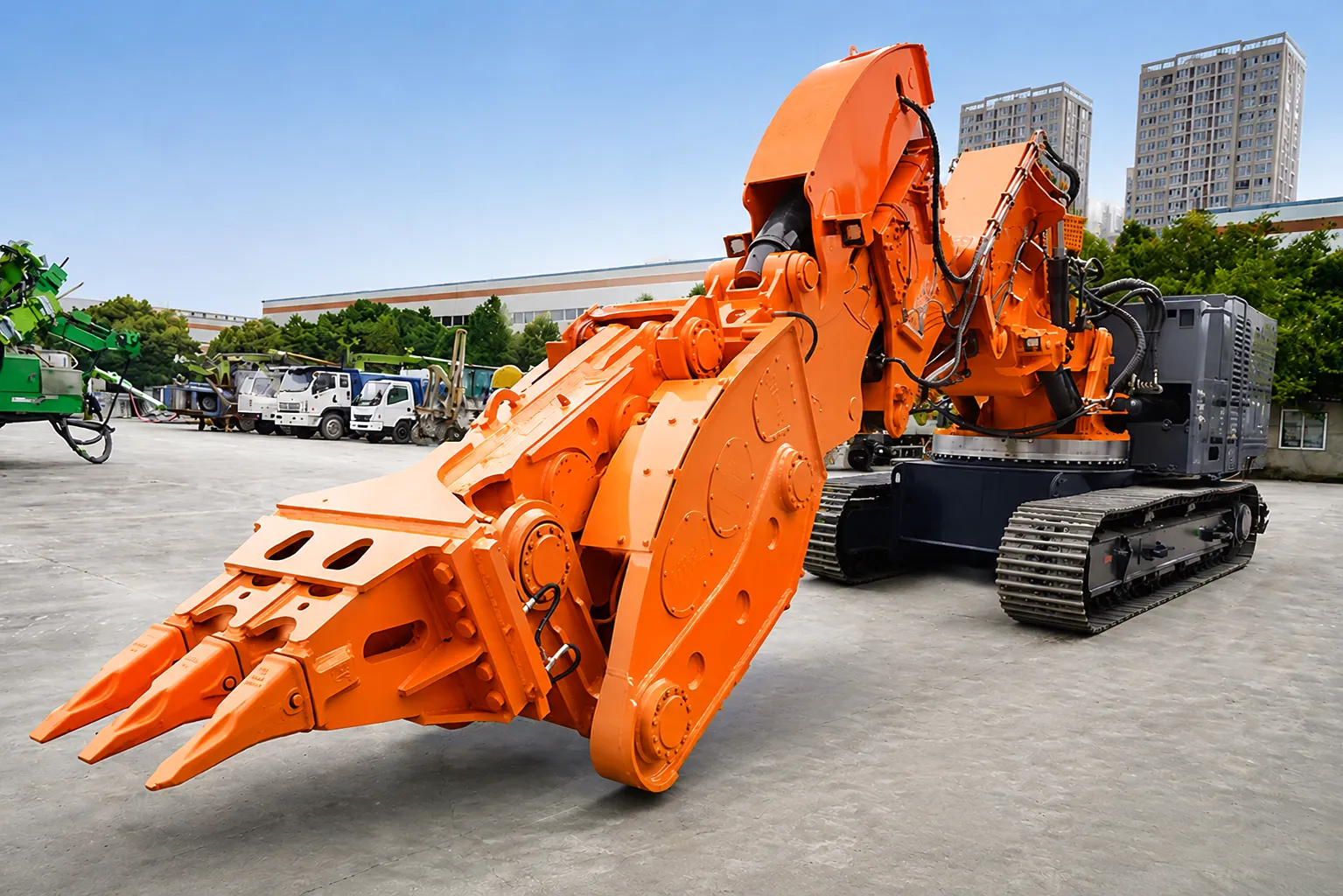
Between the drive motor (commonly 200–500 kW, 750–1500 rpm) and the planetary reducer, the gear coupling handles peak start-up torques 2–3× rated torque, damps electrical torque impulses at motor startup, and allows slight misalignment arising from differential thermal expansion of cast iron gearbox housings versus motor frames during extended drives.
At the low-speed, high-torque output side, gear couplings connect individual pinion shafts to the main ring gear or torque tube assembly. Here, shaft speeds may be as low as 2–8 rpm but torques are immense. The coupling must also accommodate dynamic bending of the main beam under variable rock face pressures — a challenging combined misalignment and high-torque condition that gear couplings handle better than any elastomeric alternative.
TBMs are not just about the cutter head. The muck conveyor, segment erector rotator, and hydraulic pump drive trains also employ gear type couplings in medium-torque ranges. For TBM projects in UK urban environments such as those seen beneath Glasgow and Edinburgh, these auxiliary drives must be particularly reliable because access for maintenance is severely constrained within the trailing gear carriage.
Zasada działania sprzęgła zębatego
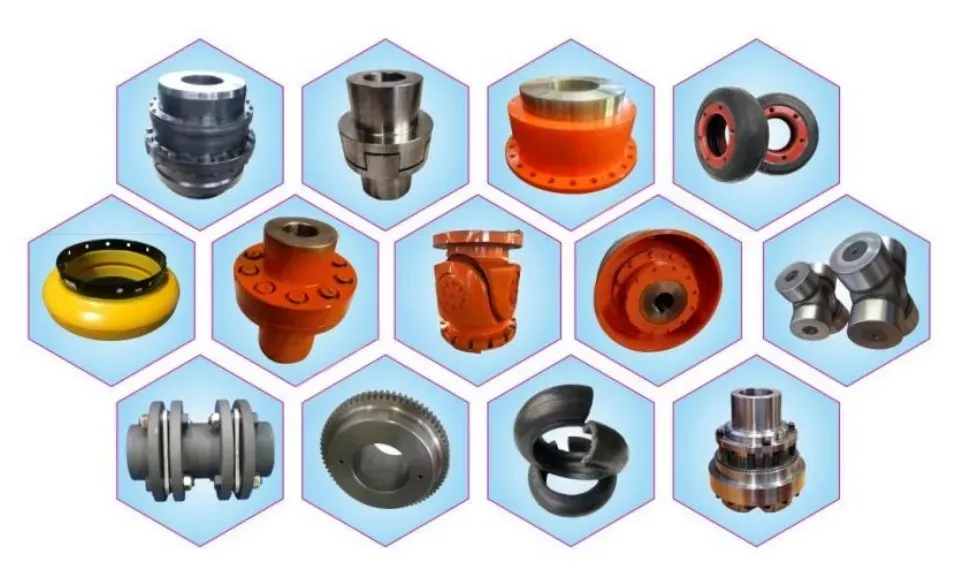
Core Materials in Gear Coupling Manufacture
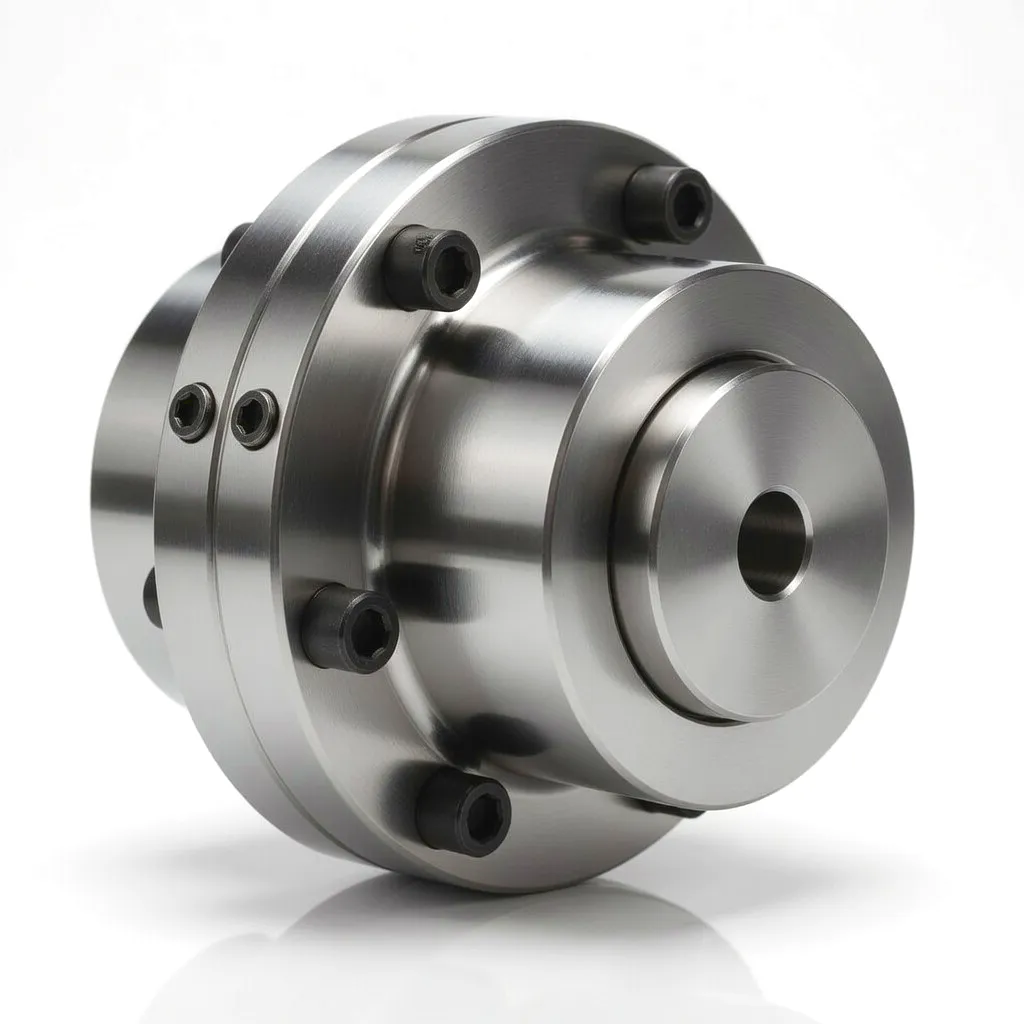
The hub is manufactured from 42CrMo4 (EN 1.7225) chromium-molybdenum alloy steel, which offers a tensile strength of 900–1100 MPa after quench-and-temper heat treatment. This specification meets the demanding fatigue cycles imposed by TBM drive systems cycling through start-stop events during ring building. The material is also widely available through UK steel stockholders in Sheffield and Rotherham, simplifying the supply chain for projects requiring rapid spare components.
Tooth surfaces are carburised to achieve a case depth of 0.8–1.5 mm with a surface hardness of 58–62 HRC. This hard shell resists wear from the axial sliding motion inherent to crowned-tooth articulation, while the tougher core retains shock absorption capacity. For TBM applications where restart torques can reach 250% of rated torque, this dual-zone hardness profile is not optional — it is the reason gear couplings outlast competing types in these conditions.
Coupling sleeves are produced from forgings rather than castings to ensure directional grain flow aligned with the principal stress direction. For large-bore TBM couplings, sleeve forgings in 34CrNiMo6 provide the toughness required to survive ground-induced shock loads without brittle fracture. CNC hobbing and grinding of the internal tooth form ensures pitch-circle accuracy to DIN 3960 Grade 5 or better across bore sizes from 50 mm to over 600 mm.
Lip seals are manufactured from fluoroelastomer (FKM/Viton) compounds, resisting the high operating temperatures and EP additive packages in modern coupling greases. The grease itself — typically a NLGI Grade 1 or 2 lithium complex EP formulation meeting DIN 51825 classification KP2K-30 — retains pumpability and film strength across the -30°C to +120°C temperature envelope encountered in UK tunnelling projects across all seasons.
Core Technical Advantages of Gear Type Couplings
Product Technical & Performance Parameters
Reference data for gear type couplings suitable for TBM and heavy industrial drive applications
| Parametr | Light Series (GLC-L) | Medium Series (GLC-M) | Heavy Series (GLC-H) | TBM Grade (GLC-TBM) |
|---|---|---|---|---|
| Rated Torque (N·m) | 500 – 12,000 | 10,000 – 150,000 | 100,000 – 800,000 | 500,000 – 2,000,000 |
| Peak Torque (% of rated) | 200% | 225% | 250% | 300% |
| Zakres średnicy otworu (mm) | 18 – 110 | 60 – 250 | 180 – 480 | 320 – 680 |
| Maksymalna prędkość (obr./min) | 6,000 – 8,000 | 3,000 – 5,000 | 1,200 – 2,500 | 200 – 800 |
| Niewspółosiowość kątowa | up to 1.0° / element | up to 1.5° / element | up to 1.5° / element | up to 2.0° / element |
| Radial Offset (mm) | 0,2 – 0,5 | 0.3 – 0.8 | 0.5 – 1.2 | 0,8 – 2,0 |
| Przesunięcie osiowe (mm) | ±2 | ±5 | ±8 | ±12 |
| Materiał piasty | 45# Steel / 42CrMo | 42CrMo4 Q+T | 42CrMo4 / 34CrNiMo6 | 34CrNiMo6 Forging |
| Twardość powierzchni zęba | 50–55 HRC | 56–60 HRC | 58–62 HRC | 60–64 HRC |
| Temperatura pracy | -20°C to +100°C | -30°C to +120°C | -30°C to +130°C | -40°C to +150°C |
| Gear Accuracy Grade | DIN 3960 Grade 7 | DIN 3960 Grade 6 | DIN 3960 Grade 5 | DIN 3960 Grade 4 |
| Protection / Seal Type | Grease-packed + O-ring | EP grease + lip seal | EP grease + FKM seal | Pressure-fed + FKM dual lip |
Industrial Application Scenarios Across UK Heavy Industry
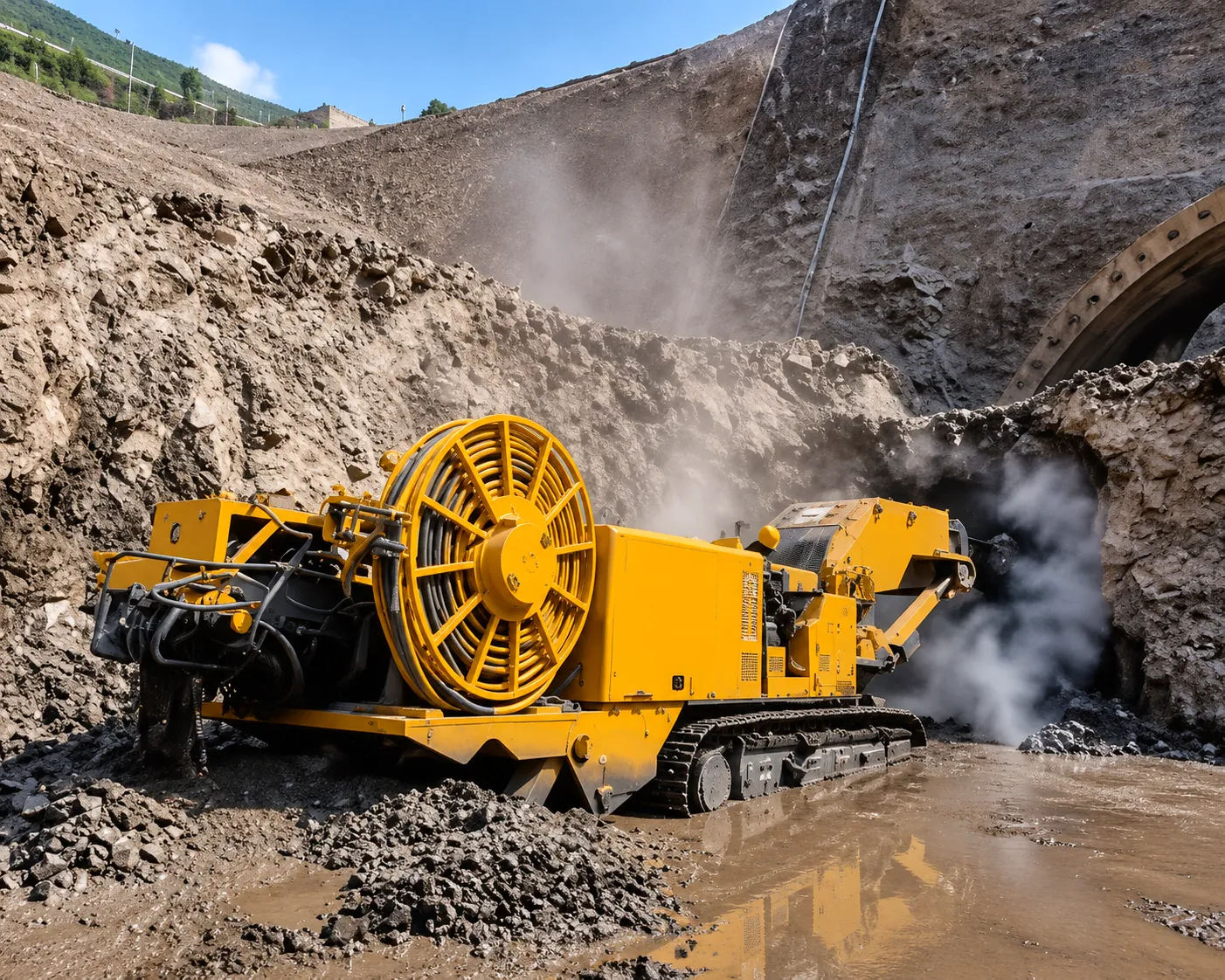 Beyond the tunnelling sector, gear type couplings serve as a backbone component in almost every branch of UK heavy manufacturing. In Birmingham’s metal forming plants — where the West Midlands retains a significant cluster of precision rolled products and forging operations — gear couplings connect the main drive motors of rolling mill stands to the work roll pinion housings. These connections must transmit roll-reversing torque impulses at frequencies of several cycles per minute, imposing extreme fatigue loading on every coupling element in the drive line.
Gear couplings connect main drive motors and pinion boxes in flat and long product rolling mills. The rated torque range for medium wire rod blocks runs from 80,000 to 400,000 N·m per stand. Angular misalignment tolerance accommodates the wear-induced shift in roll housing position between roll changes — critical for maintaining product dimensional tolerances without stopping for drive alignment correction.
At defence and commercial marine engineering centres on the south coast and in northwest England, gear couplings couple dynamometers to propulsion shaft trains. Requirements include torsional stiffness characterisation, precision backlash measurement, and full dynamic balance certification — all part of Ever Power’s standard TBM and marine-grade supply offering.
Reciprocating and centrifugal compressors at UK refinery and chemical plant sites — including facilities on Teesside’s Wilton process complex — employ gear couplings between motor and compressor shafts where API 671 / ISO 10441 compliance is mandatory. Gear couplings naturally meet the torsional stiffness, moment of inertia, and run-out requirements of these standards.
Rotary kiln drive systems at UK cement and lime production facilities in Yorkshire and the North West use large-bore gear couplings between girth gear pinion drives and the reducer output shafts. The combination of very slow rotation (0.5–5 rpm), very high torque (up to 1,500,000 N·m), thermal expansion over 30–50 m kiln length, and dust-laden atmosphere describes a duty that gear couplings handle more reliably than any competing design.
Featured Coupling Products from Ever Power
Two versatile solutions from our precision power transmission portfolio, engineered for demanding UK and global applications.
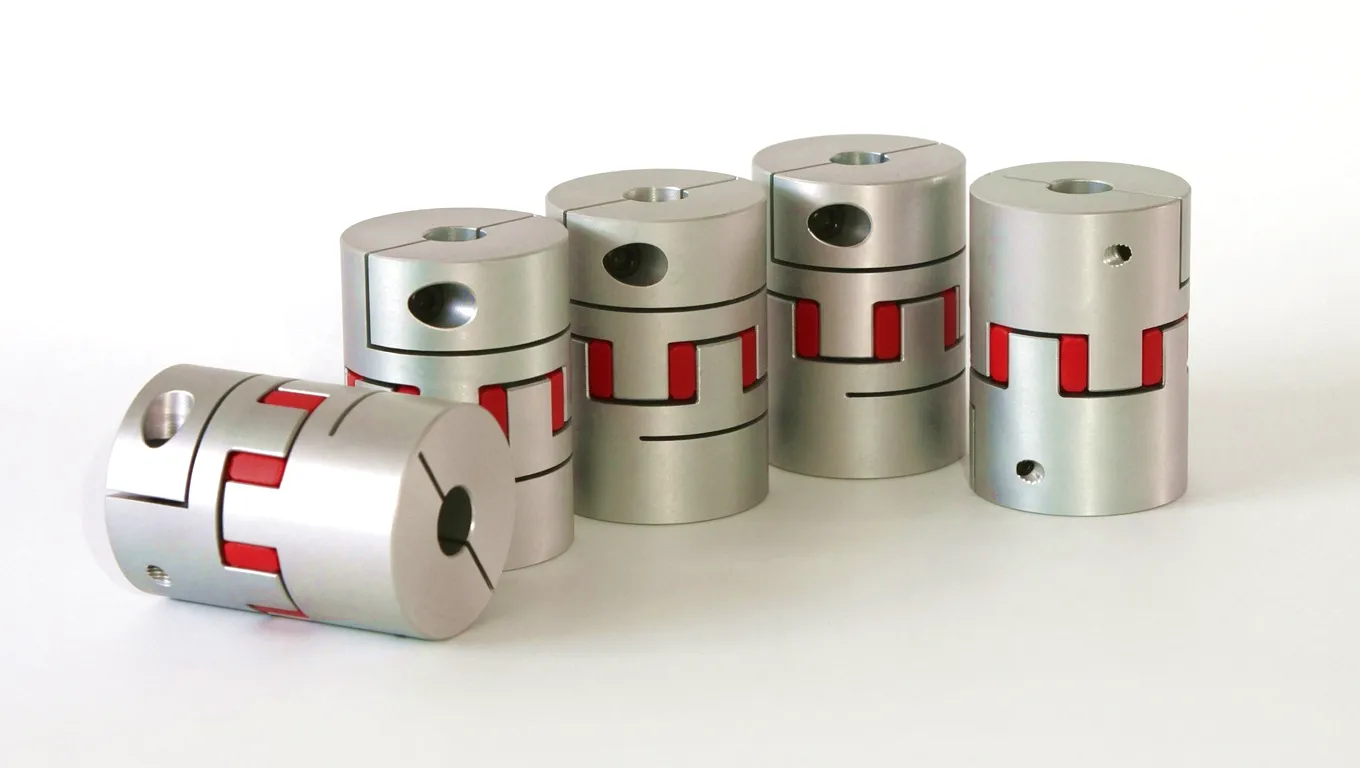
The JSA Series Snake Spring Coupling is designed for medium-duty applications requiring vibration damping and shock absorption alongside reliable torque transmission. The sinusoidal spring element distributes load evenly across multiple contact points, reducing peak stresses in connected equipment — an ideal solution for pump, compressor, and conveyor drives across UK process industries.
The SWC Series Universal Coupling is a high-performance Cardan-type unit engineered for applications requiring large angular misalignment — up to 15° in heavy-duty variants — at moderate speeds and high torques. Widely used in UK rolling mills, paper machines, and propulsion test rigs, the SWC series combines a robust forged yoke assembly with a precision needle-bearing cross kit for smooth, long-lived operation across demanding drive cycles.
Ever Power: Manufacturing Capability & Customisation Services
Whether you need a standard series unit delivering to the UK within weeks, or a fully engineered TBM-grade coupling designed around your specific torque and misalignment envelope, Ever Power’s technical sales team is ready to respond.
📧 Get a Factory Quote — [email protected]
24-hour response · Technical documentation included · DDP UK delivery available
Customer Success Story: Bristol Urban Rail Extension, UK
Heavy Civil Infrastructure · Metro Tunnelling · South West England
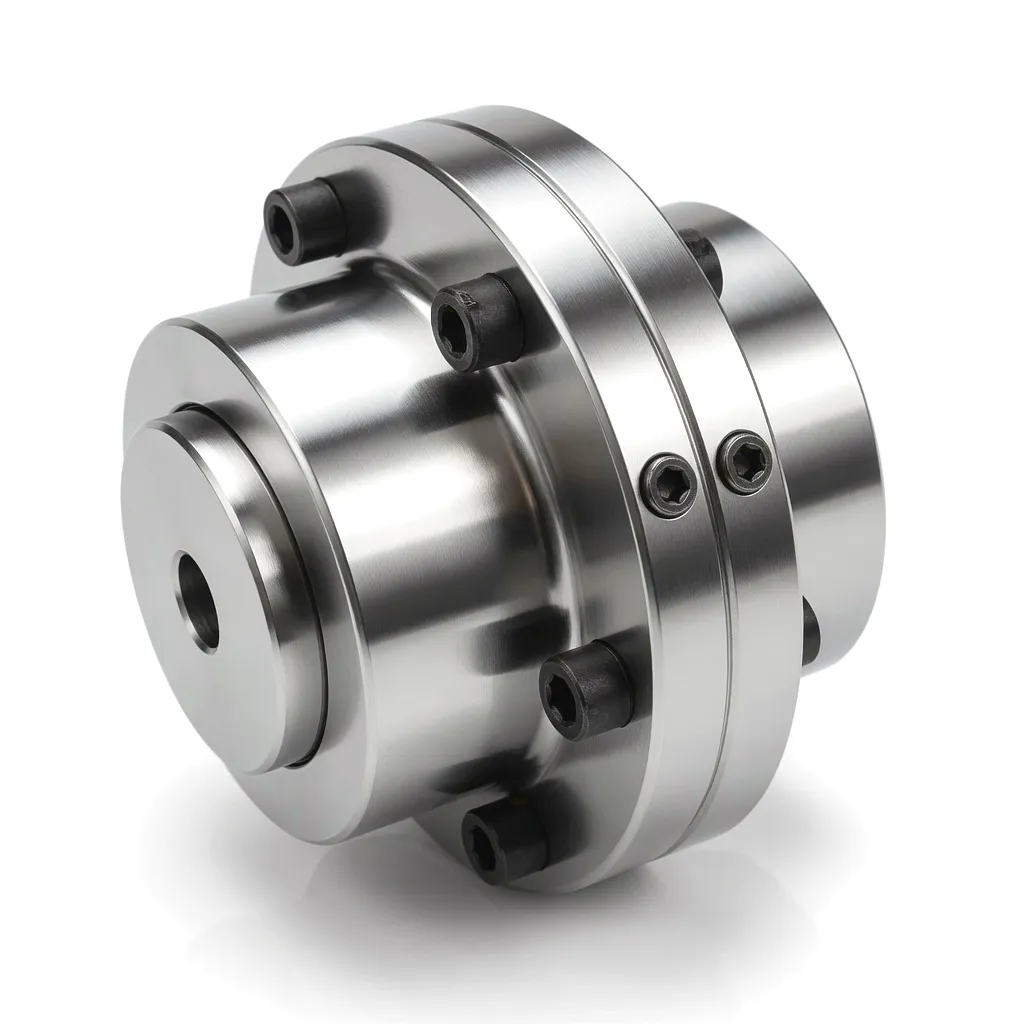 A major civil engineering contractor awarded a light metro extension project in the Bristol city-region encountered a replacement coupling crisis at a critical point in their TBM programme. The machine — a 7.2 m diameter mixed-face EPB (earth pressure balance) TBM — was 340 m into a 1.4 km drive when one of the twelve planetary drive modules developed audible gear coupling noise indicative of advanced tooth wear. Stopping the machine for more than five days would have threatened the contract programme and triggered substantial liquidated damages.
The contractor’s mechanical engineering team contacted Ever Power with full coupling dimensional data — 310 mm bore, 34CrNiMo6 hub material, customised spacer length of 380 mm to suit the drive bay geometry, and FKM lip seal specification. The requirement was DIN 3960 Grade 5 tooth accuracy and EN 10204 3.1 material certification for both hub and sleeve forgings. Ever Power confirmed a 22-day production timeline for a matched replacement pair with documentation, including supply of a third unit as a forward-positioned spare.
The units arrived at the Bristol construction logistics hub 19 days after order placement — three days ahead of schedule — allowing the TBM drive bay team to complete the coupling replacement and restart the machine within the five-day window. The contract programme was maintained, and the contractor subsequently placed a blanket order covering forward-stocked spares for all twelve drive modules for the remainder of the project drive. Total coupling cost was a small fraction of the avoided liquidated damages exposure, and the experience led the contractor to specify Ever Power as the preferred supplier for their next tunnelling project in Manchester.
“The tooth surface finish and dimensional accuracy on the 310 mm bore units were genuinely impressive — backlash measurements were within 0.06 mm of the specified value right out of the box, which saved our fitters considerable bedding-in time on the drive. The 3.1 certificates were comprehensive and held up to our quality auditor’s scrutiny without any queries.”
“We have now used Ever Power gear couplings across three TBM programmes. The customisation service is where they really stand apart — when we needed a modified spacer assembly with a marine-grade corrosion protection package for our coastal project near Portsmouth, their engineering team turned around the revised drawing within 48 hours and the production schedule held. That kind of responsiveness is rare at this level of technical complexity.”
“For our Birmingham rolling mill refurbishment, we needed TBM-grade rated gear couplings on a 160,000 N·m stand drive, but with a non-standard flange bolt circle because we were retrofitting into an existing housing. Ever Power produced the custom flanged sleeves with zero dimensional error, and the units have now run through 14 months of 24/7 production with no greasing issues and no measurable increase in backlash. The total cost of ownership calculation strongly favoured these over what we had been sourcing locally.”
Często zadawane pytania
Voice-search optimised answers for UK procurement and engineering teams
© Ever Power Transmission Technology · gear-type-coupling.top · UK Industrial Supply · edit by gzl