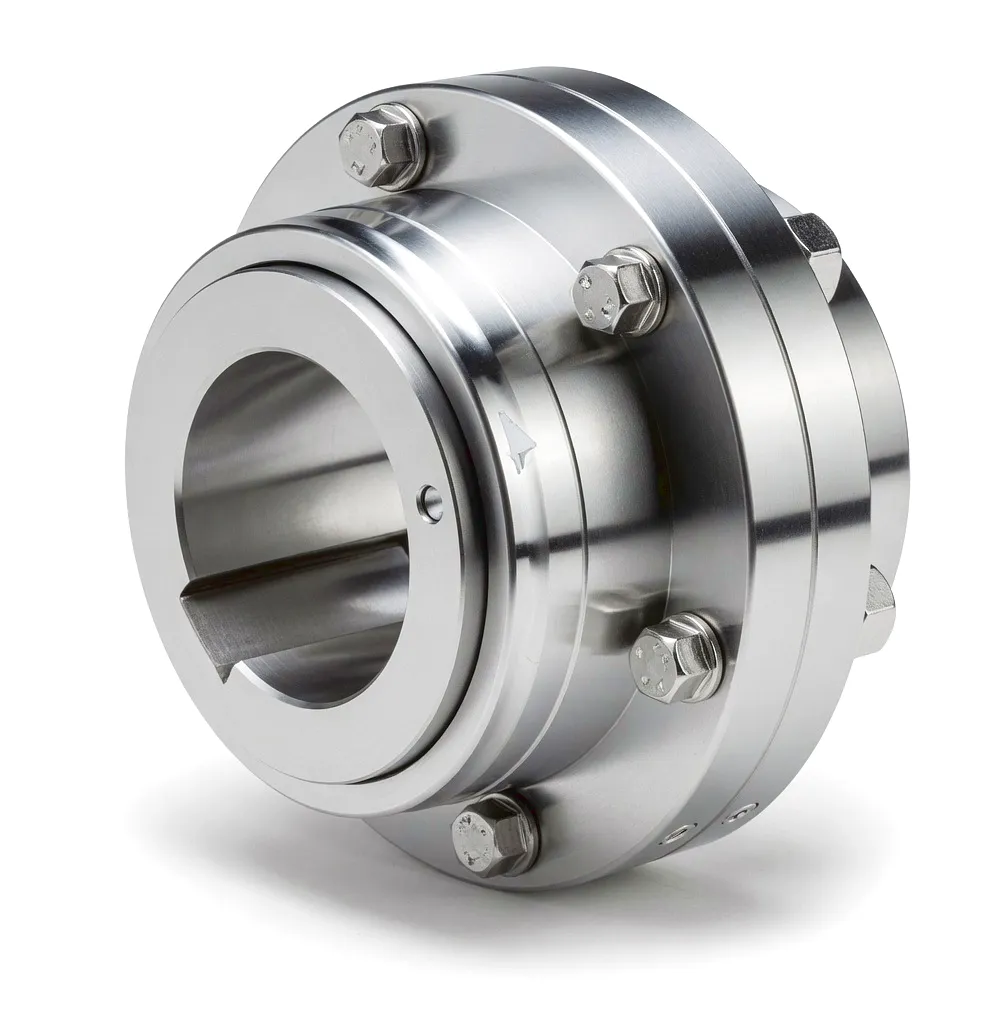
 Inside any large thermal power station — whether a coal-fired plant in Yorkshire, a gas-fired combined-cycle facility in Teesside, or an industrial cogeneration site in the West Midlands — the connection between the high-speed steam turbine and the generator shaft is one of the most mechanically demanding joints in the entire energy industry. This single coupling must transmit several hundred megawatts of rotational energy at speeds typically ranging from 1,500 rpm to 3,600 rpm, while simultaneously accommodating the thermal expansion of a massive steel rotor operating at elevated temperatures. The consequences of failure are catastrophic: an unplanned trip can cost a UK power operator tens of thousands of pounds per hour in lost generation. That reality makes the selection of the right industrial coupling — and the precision engineering behind it — a strategic engineering decision rather than a commodity purchase.
Why Turbine Drive Couplings Demand a Different Engineering Approach
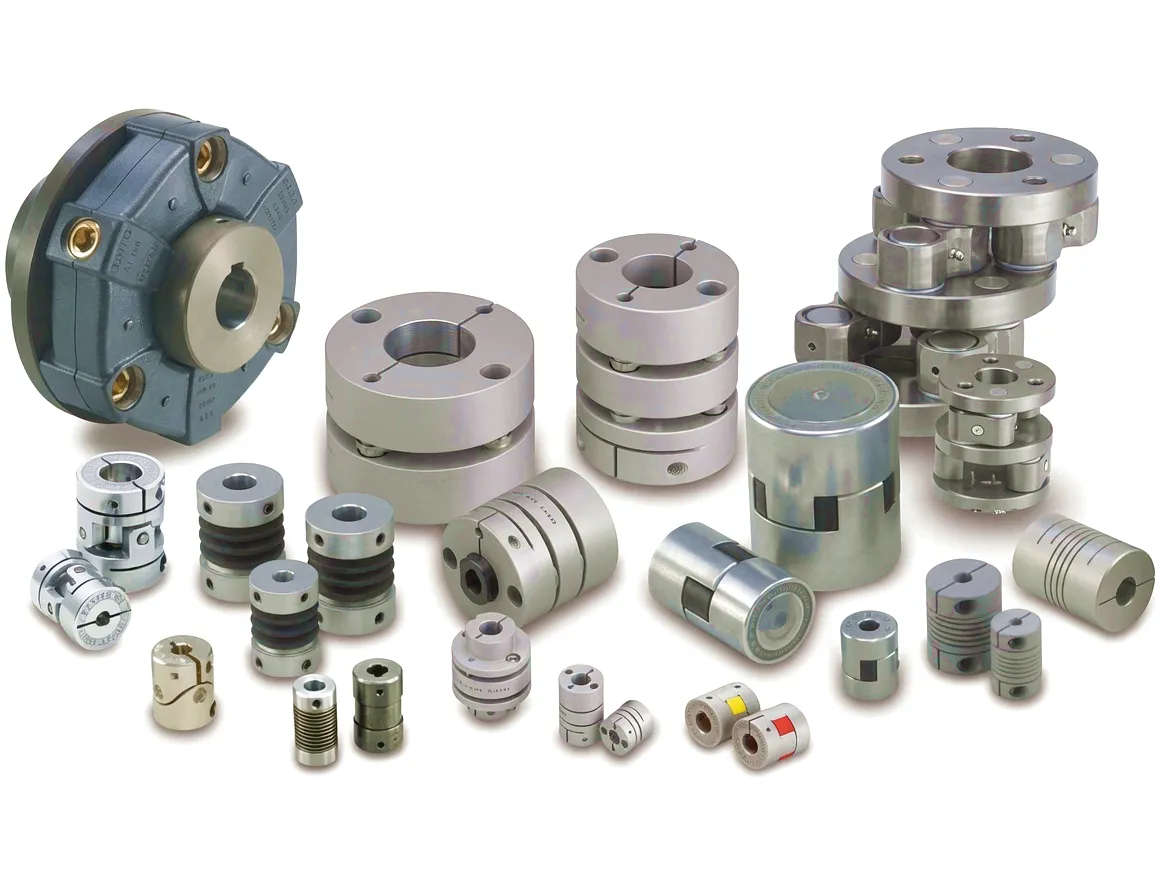 A standard industrial coupling that performs perfectly well on a pump or compressor shaft will fail prematurely in a turbine-generator application. The operating environment is fundamentally different in several overlapping ways. The sheer magnitude of transmitted torque — reaching millions of Newton-metres on large utility-scale turbines — demands forged alloy steel components with tightly controlled metallurgical specifications. The continuous duty cycle eliminates any opportunity for scheduled wear compensation. And the rotor dynamics of a turbine-generator train are so sensitive to coupling-induced mass imbalance that even a small deviation from the specified balance grade can trigger sub-synchronous resonance, leading to bearing damage and forced outage.
Perhaps the most distinctive challenge, however, is thermal growth. When a steam turbine reaches its rated operating temperature — the high-pressure cylinder alone operates well above 500 °C in a modern supercritical unit — the turbine casing and rotor expand by measurable amounts along all three axes. The cold-alignment condition set during installation is, by design, an offset alignment chosen so that the shafts reach true co-axiality only at rated thermal conditions. The coupling must therefore accommodate significant angular and axial displacement every time the machine starts, runs at partial load, and eventually shuts down. Gear-type couplings, with their crowned tooth geometry, are specifically engineered to absorb these excursions without generating destructive restoring forces that would load the turbine and generator bearings asymmetrically.
How Gear-Type Couplings Work in High-Speed Turbine Drive Trains
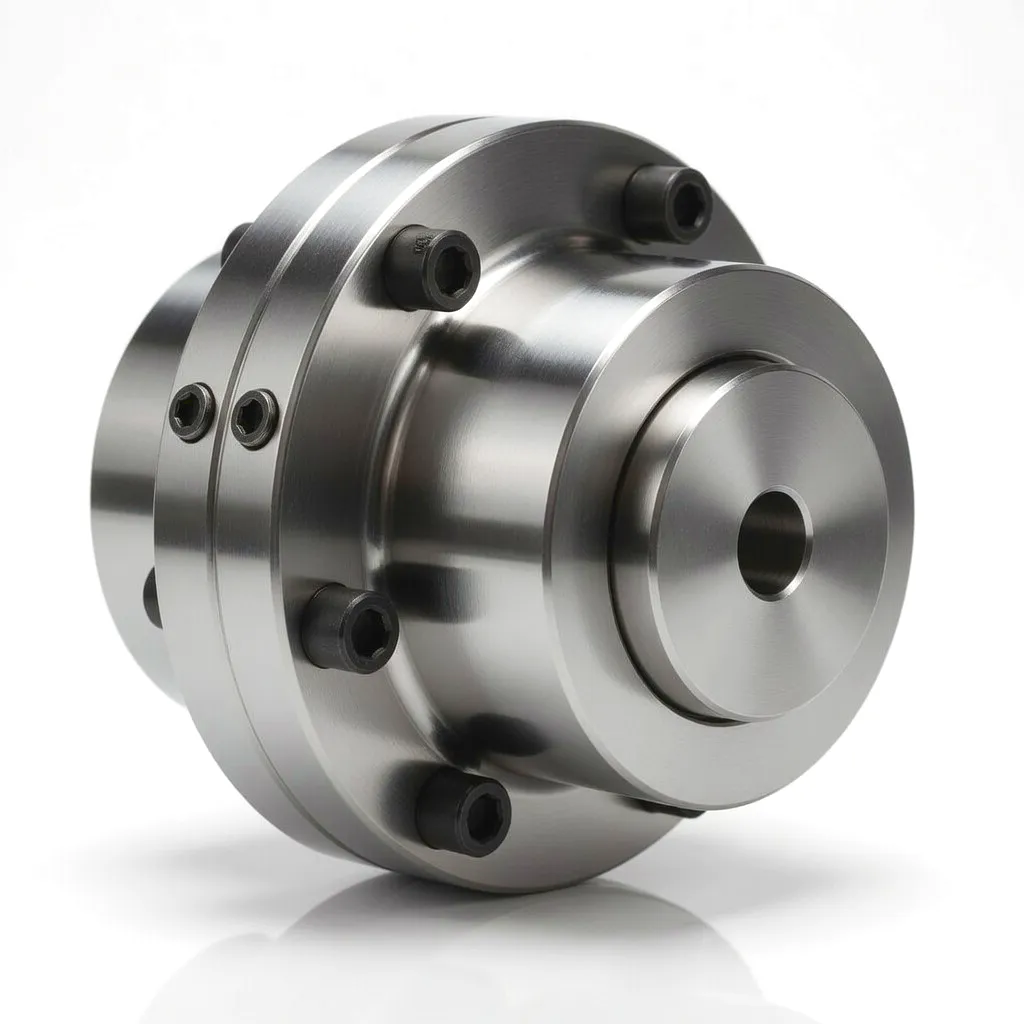 The gear-type coupling — also referred to as a gear coupling or toothed coupling — transmits torque through meshing teeth, very much like an internal spur gear pair, but with a crucial geometric modification: the teeth on the inner hub (the male component that fits on the shaft) are convex in profile when viewed along the coupling axis. This so-called crowned tooth geometry means that tooth contact is maintained even when the hub axis is angularly offset from the sleeve axis by up to 1.5 degrees, depending on coupling series and speed. Torque transfer occurs through the full circumferential array of teeth simultaneously, distributing the load and minimising contact stress.
Core Materials in Thermal Power Coupling Manufacturing
Application Scenario 13: Thermal Power Generation Drive Trains
Steam Turbine → Coupling → Generator | Continuous-Duty High-Speed Drive
 In the context of UK power generation, the turbine-to-generator coupling sits at the very heart of the conversion process — transforming the kinetic energy of high-pressure steam into electrical power that flows into the National Grid. On a typical 660 MW two-shaft arrangement, such as those operating at Drax Power Station in North Yorkshire or Cottam Development Centre in Nottinghamshire, the high-pressure and intermediate-pressure turbines drive one end of the coupling train, while the low-pressure turbines and generator form the other side. The coupling between the last LP turbine and the generator is often the most heavily loaded, carrying the full combined torque output at 3,000 rpm (for 50 Hz machines directly connected to the grid at two pole-pairs).
Core Technical Advantages of Gear-Type Couplings in Power Generation
Product Technical & Performance Parameters
The table below summarises typical design parameters for gear-type couplings specified in UK thermal power and heavy industrial turbine applications. Values represent standard production ranges; Ever Power engineering teams regularly manufacture to customer-specific requirements beyond these bounds.
| พารามิเตอร์ | Small / Medium (SM) | Large Industrial (LI) | Utility Turbine (UT) | Standard / Note |
|---|---|---|---|---|
| Nominal Torque (Nm) | 500 – 20,000 | 20,000 – 500,000 | 500,000 – 5,000,000+ | ISO 14691 / DIN 740 |
| Peak Torque (Nm) | Up to 40,000 | Up to 1,000,000 | Up to 10,000,000+ | Short-duration overload (2× Tn) |
| ความเร็วสูงสุด (รอบต่อนาที) | Up to 6,000 | Up to 4,500 | 3,000 / 3,600 | 50 Hz / 60 Hz grid-synchronous |
| Bore Diameter (mm) | 20 – 180 | 180 – 400 | 400 – 650+ | H7 tolerance, keyed or shrink-fit |
| การเยื้องศูนย์เชิงมุม | สูงสุด 1.5° | Up to 1.0° | Up to 0.5° | Per coupling face (total = 2× value) |
| Axial Travel (mm) | ± 3 – 8 | ± 8 – 15 | ± 15 – 30 | Thermal growth accommodation |
| Dynamic Balance Grade | G6.3 | G2.5 | G1.0 or better | ISO 1940-1 |
| Hub Material | C45 Steel | 42CrMo4 | 34CrNiMo6 / Custom | EN 10083; vacuum-degassed forging |
| Tooth Hardness (HRC) | 28 – 32 (through) | 58 – 62 (case) | 58 – 64 (case + ground) | Carburised and quench-hardened |
| Design Life (hours) | 25,000 | 50,000 | 100,000+ | Continuous operation, lube maintained |
Beyond Turbine Main Shafts: Other Power Generation Coupling Applications
 While the turbine-generator main coupling receives the most engineering attention, a large thermal power plant contains dozens of other coupling-dependent drive systems, each presenting its own set of technical demands. The boiler feed pump — one of the highest-powered auxiliaries on any power station, often rated at 10–30 MW — is typically driven through a hydraulic coupling or direct mechanical coupling to an electric motor or turbine driver. In the steam-driven boiler feed pump turbine (BFPT) arrangements common at UK 660 MW stations, the drive train from the BFPT to the feed pump includes a gear coupling with relatively high misalignment allowance, because the thermal growth of the pump casing under operating feed water temperatures of 230–250 °C creates significant vertical shaft displacement.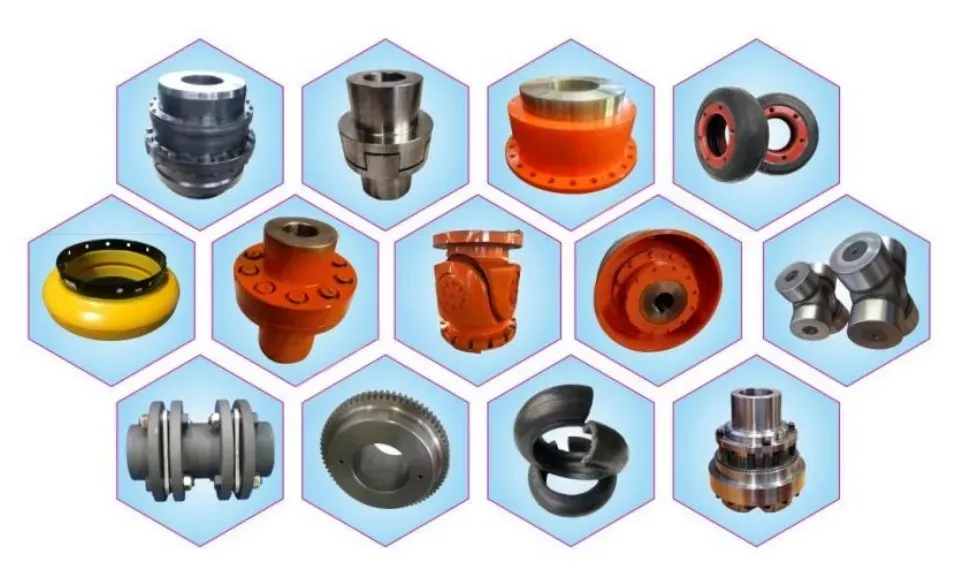
The UK Power Generation Landscape and Coupling Supply Requirements

Ever Power: Precision Coupling Manufacturing & Global Supply Chain
Featured Ever Power Coupling Products
Two products within Ever Power’s range that address the overlapping demands of thermal power generation, precision industrial drives, and high-speed turbomachinery applications:
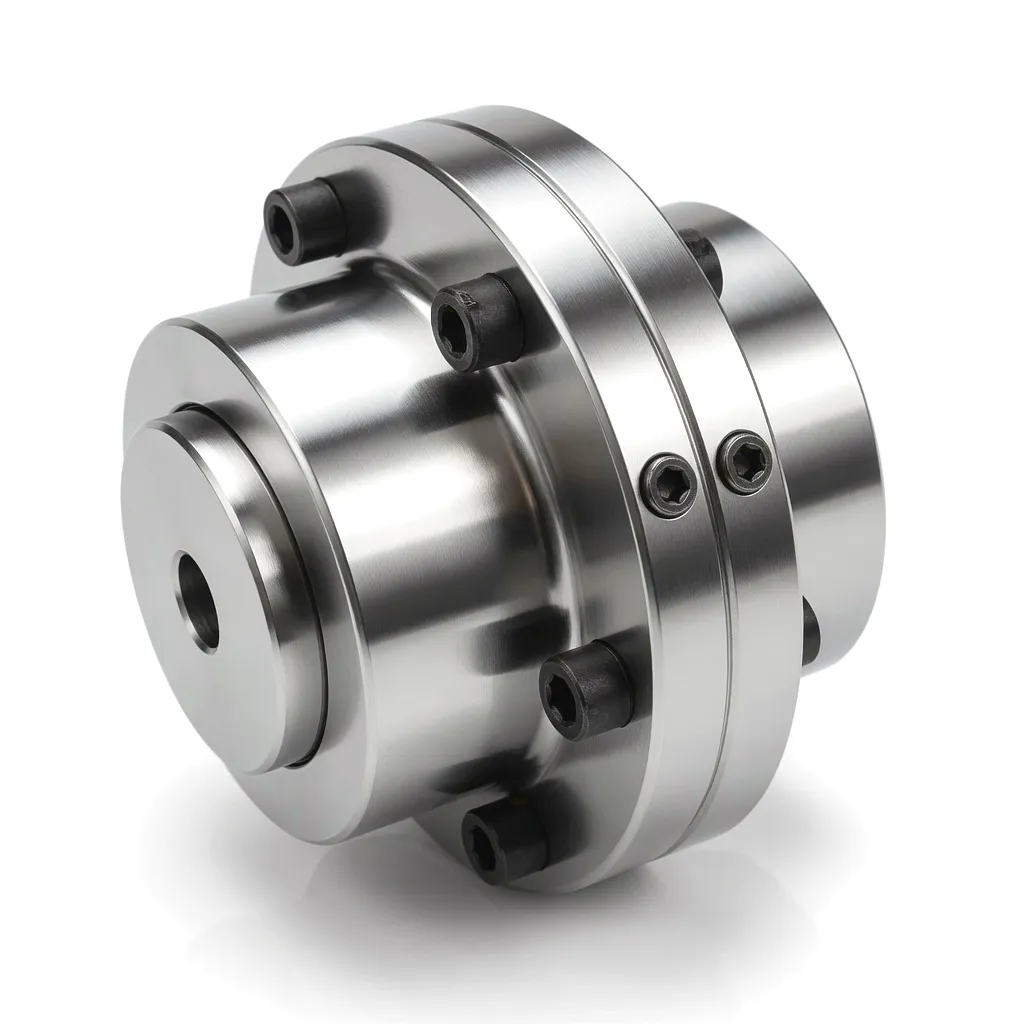
The ข้อต่อคานแบบยืดหยุ่น from Ever Power is machined from a single piece of high-tensile aluminium alloy or stainless steel, incorporating one or more helical beam cuts that provide angular, parallel, and axial flexibility without any sliding or rolling contact. This zero-backlash, maintenance-free design makes it ideal for servo motor drives, encoder connections, light-duty fan auxiliaries, and instrumentation drive trains within power generation control systems. The absence of any wearing contact surfaces means the coupling transmits positional accuracy reliably throughout its design life, making it a preferred choice for actuator feedback loops and metering pump drives in fuel gas conditioning systems.
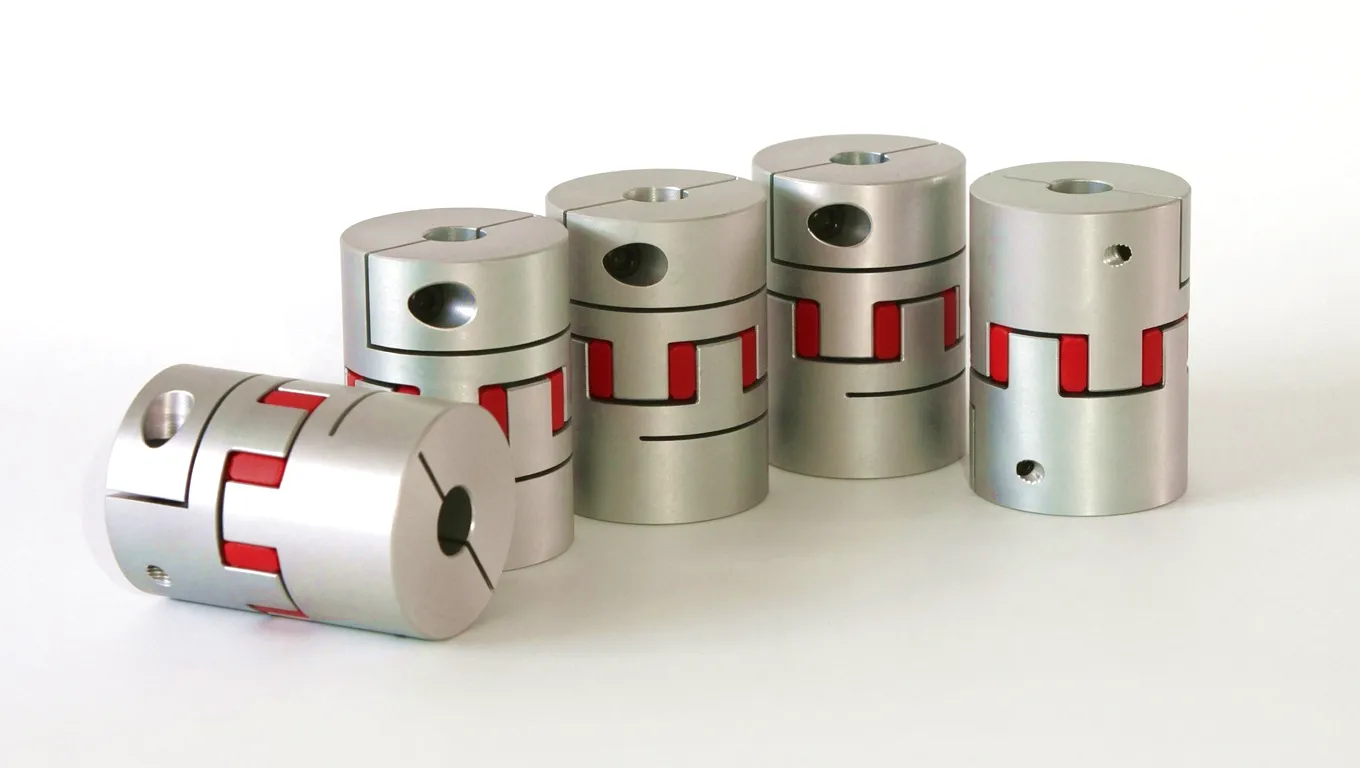
Ever Power’s ข้อต่อดิสก์ uses a pack of thin metallic disc elements — typically manufactured from 17-4 PH stainless steel or 15-5 PH — to transmit torque through elastic bending rather than contact meshing. This construction delivers torsional stiffness that is highly repeatable over the service life, supports operation without lubrication, and achieves dynamic balance grades of G1.0 or better due to the symmetric geometry of the disc pack assembly. In thermal power generation, disc couplings are the dominant choice for gas turbine compressor couplings, gearbox high-speed output connections, and generator exciter drive connections — applications where any maintenance intervention is an outage event and oil-lubrication piping to the coupling would represent an additional system complexity and fire risk.
Customer Success Story: Teesside CCGT Unplanned Outage Recovery

“The tooth surface finish and dimensional accuracy on the replacement hubs were measurably better than the original OEM components we removed after 87,000 hours. Balance certification data was clean — residual unbalance well within G1.0 on both planes. Post-installation vibration dropped to sub-alarm levels on first start. Highly recommend Ever Power for turbine coupling applications where you cannot afford a second bite of the cherry.”
“We’ve been sourcing gear couplings from various suppliers for our Birmingham plant for fifteen years. The Ever Power team is the only one that proactively sent us a torsional analysis recommendation before we even asked for it — they spotted that our original coupling selection was creating a torsional natural frequency closer to our 3× running speed excitation than was ideal. The redesign has reduced our bearing replacement frequency noticeably. That kind of application engineering depth is genuinely rare.”
“We required a non-standard spacer length coupling for a Sheffield site retrofit where two different OEM machines had been connected during a capacity upgrade, creating an unusually wide shaft gap. Ever Power’s customisation capability handled this without any issue — full engineering package, custom spacer tube with confirmed subcritical lateral resonance at our 3,000 rpm operating speed, and 3.1 material certs for all components. Arrived on time and fitted first time. The framework supply agreement we subsequently set up has simplified our spares management significantly.”
คำถามที่พบบ่อย
แก้ไขโดย gzl