Industrial Power Transmission • UK Market

ข้อต่อในกระบวนการบดมอลต์: ความแม่นยำทางวิศวกรรมสำหรับอุตสาหกรรมการผลิตเบียร์และสุราในสหราชอาณาจักร

A deep-dive technical guide for engineers, procurement managers, and plant operators working with malt grinders across Britain’s brewing, distilling, and food processing sectors.

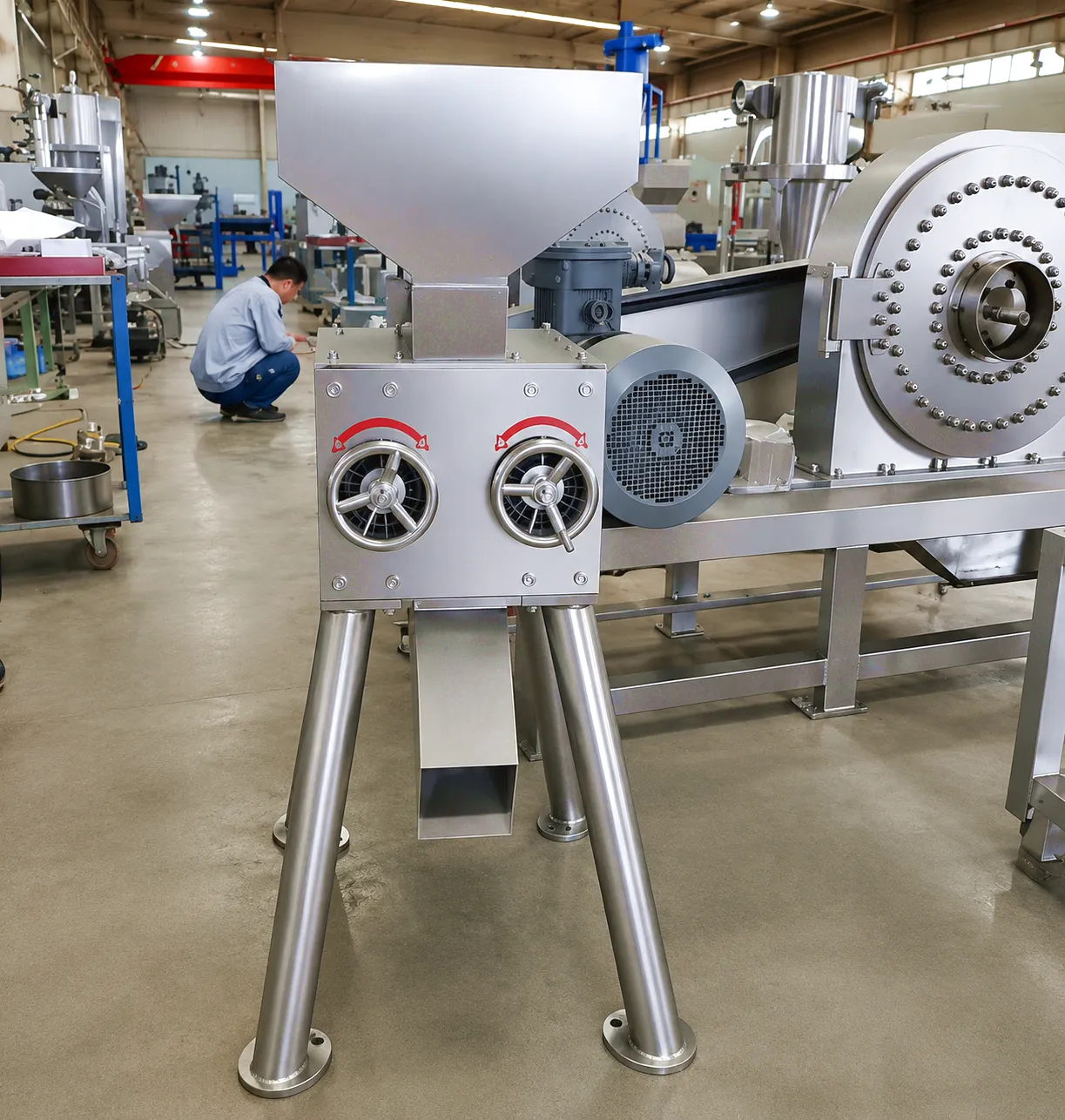
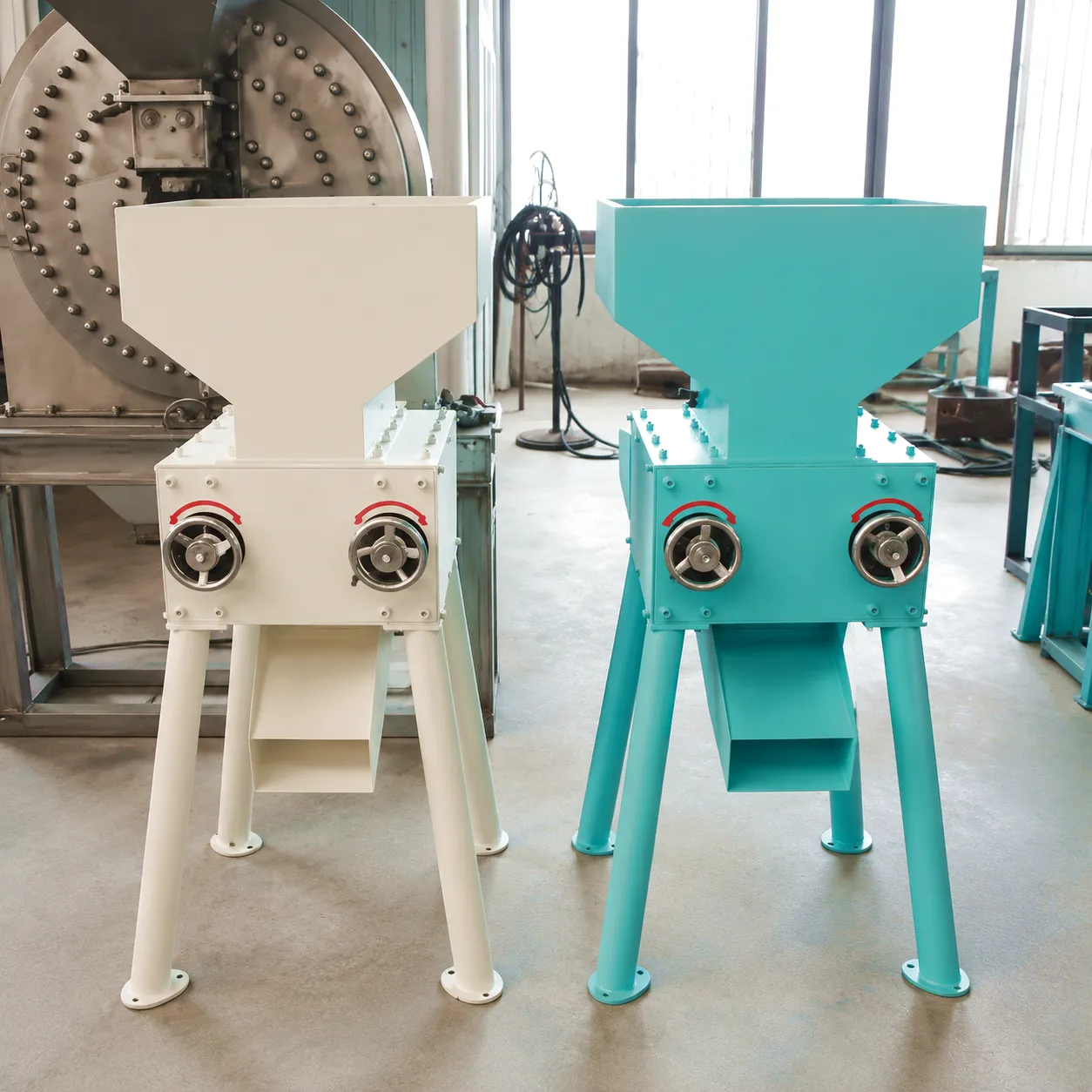
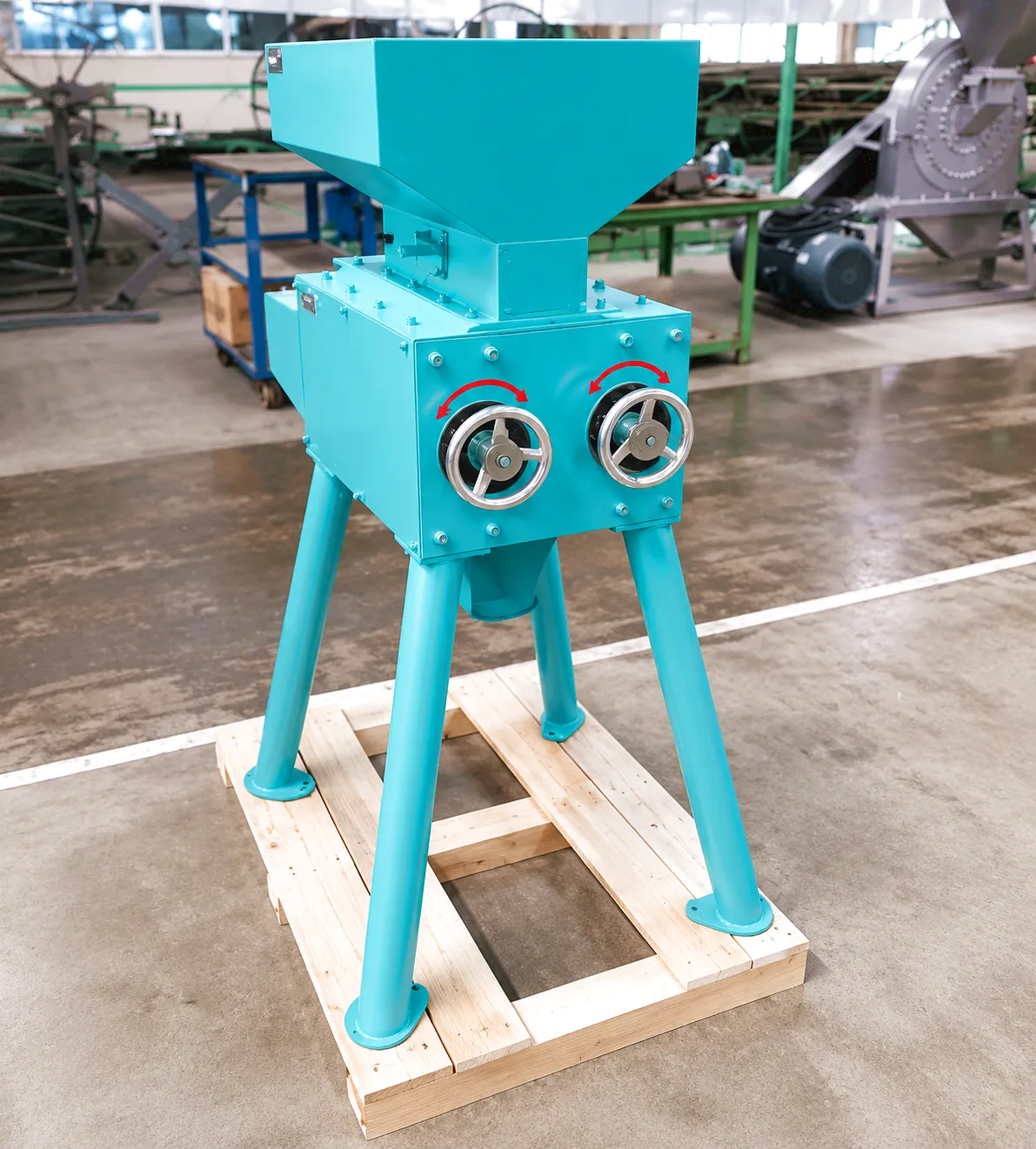
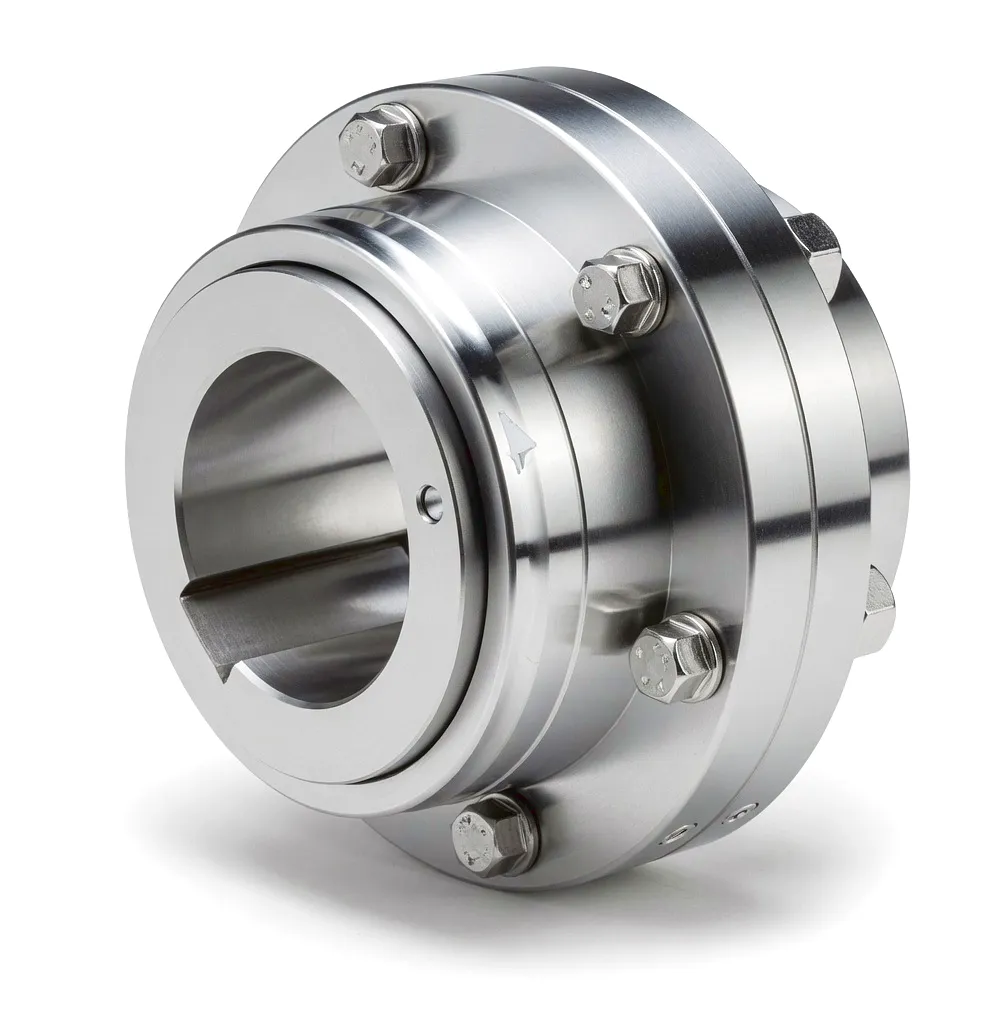
Industrial coupling for malt grinder

Malt grinding sits at the very heart of brewing and distilling operations across the United Kingdom. From the storied whisky distilleries of Scotland to the craft ale producers of Yorkshire and the large-scale commercial breweries of Burton-upon-Trent, the mechanical reliability of a malt grinder determines the quality of the grist and, ultimately, the character of the final product. Yet for all the attention lavished on grain selection and milling gap settings, one component rarely gets the recognition it deserves: the shaft coupling. This unassuming connector between the drive motor and the grinder shaft is the linchpin of the entire milling train. When it fails, production stops. When it performs flawlessly, it quietly enables everything else to work as intended.

The demands placed on couplings in malt grinder applications are remarkably specific. Grain feed rates fluctuate, causing transient torque spikes. Roller wear creates gradual shaft misalignment. Vibration from the grinding action propagates through the drivetrain and stresses every mechanical joint. In environments where hygiene standards are paramount and downtime costs can run into thousands of pounds per hour, specifying the right coupling is not a secondary consideration. It is a primary engineering decision that shapes maintenance intervals, energy efficiency, and product consistency.

How Couplings Work in a Malt Grinder Drive Train
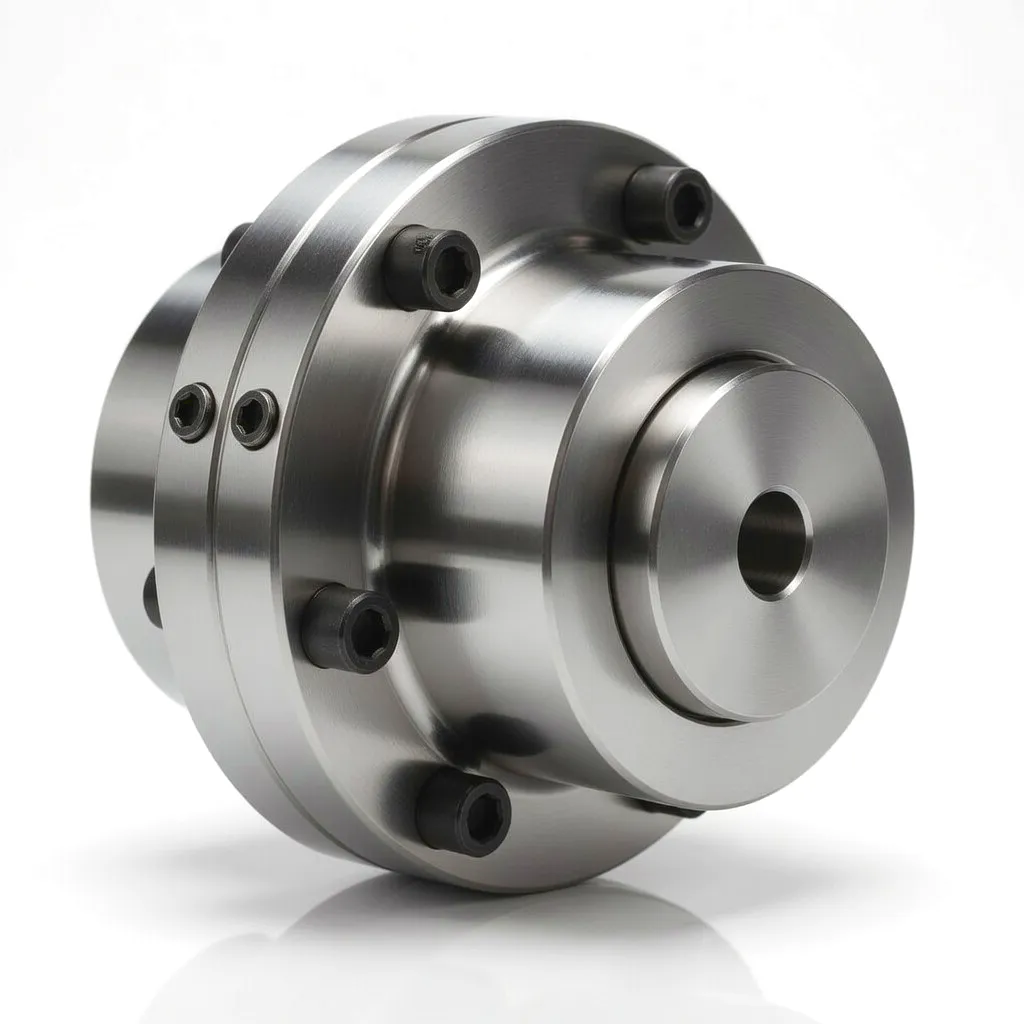
Coupling working principle malt grinder

A coupling transmits rotational torque from the output shaft of a motor or gearbox to the input shaft of a malt roller mill, while simultaneously accommodating the natural imperfections that arise from installation tolerances and operational wear. In a typical two-roller malt grinder configuration, the drive motor connects via a gearbox to a pair of counter-rotating rollers. The coupling bridges the gap between these elements, allowing them to operate as a coherent unit despite slight parallel offset, angular misalignment, and axial float between shaft centrelines.

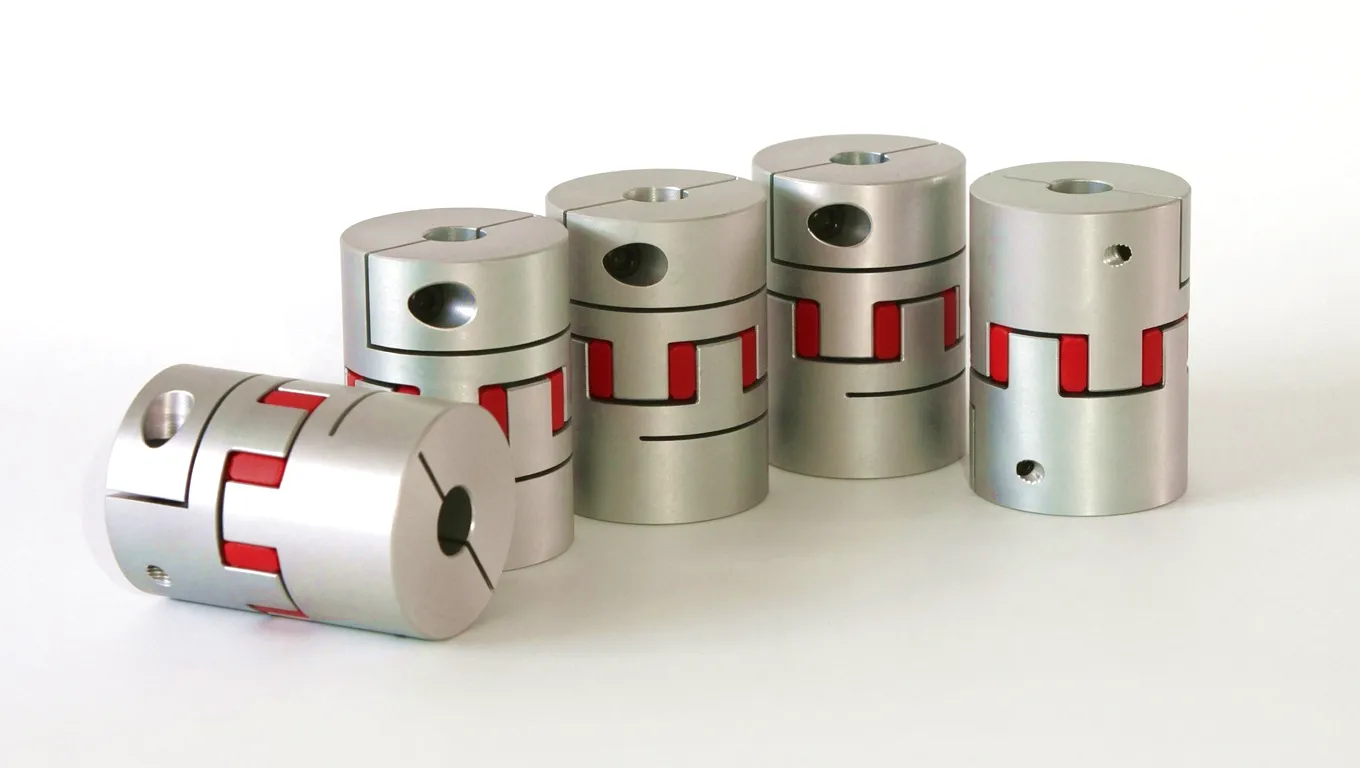
Flexible couplings achieve this through an elastomeric, metallic, or composite intermediate element that can deform elastically under load. When grain feed suddenly increases — as it does when a bulk delivery is tipped into the hopper — the coupling absorbs the torque spike through elastic deformation rather than transmitting the full shock load into the gearbox or motor bearings. This shock-absorption function is critical in malt grinding because grain density and kernel hardness vary between batches, creating unpredictable loading cycles that would rapidly fatigue a rigid connection.

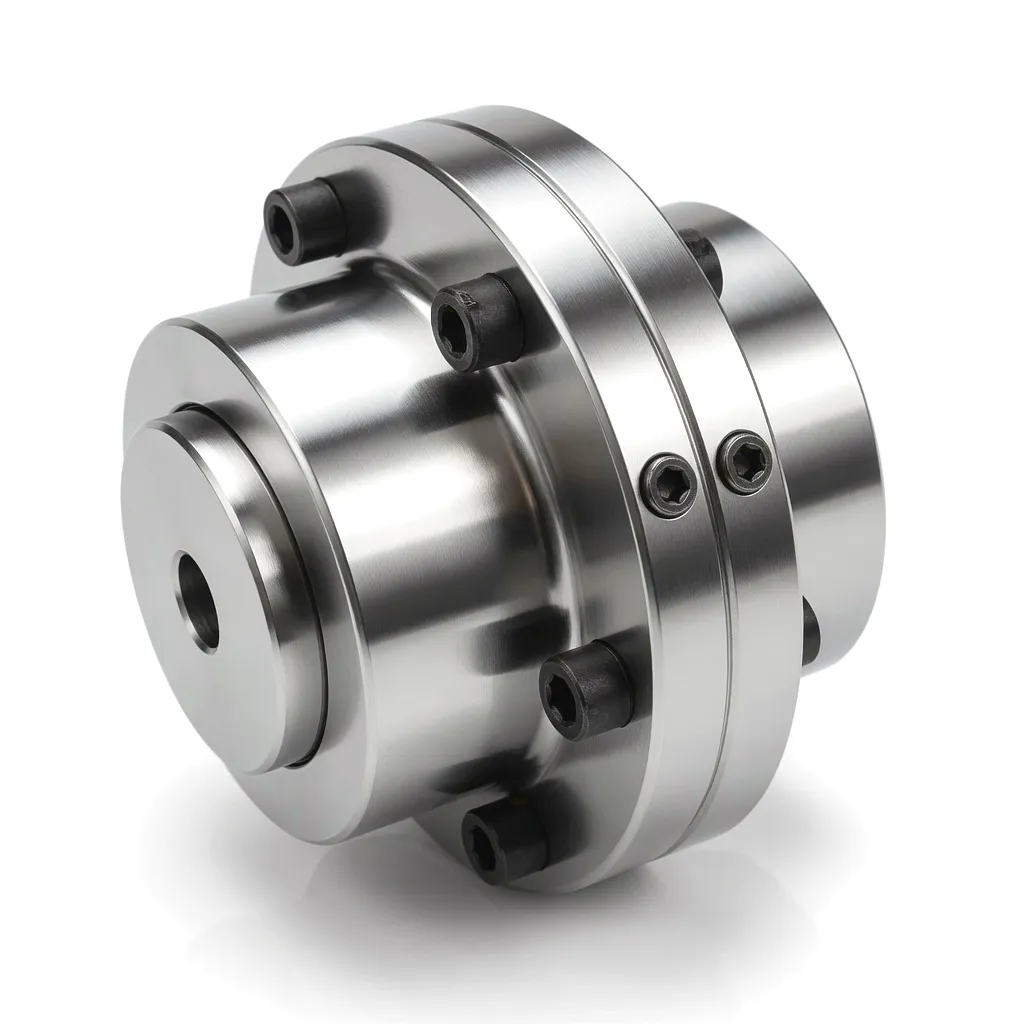
Disc couplings and gear-type couplings, by contrast, rely on mechanical flexure in thin metallic discs or precisely profiled gear teeth to accommodate misalignment while maintaining a near-rigid torque path. These designs are preferred when positional accuracy between the motor and roller shafts is critical for maintaining consistent mill gap tolerances — particularly in four-roller and six-roller fine-grinding arrangements found in large industrial malting plants in the English Midlands and the Scottish Highlands.

Core Materials Used in Coupling Manufacture
Alloy Steel (42CrMo4)
Used for hubs, flanges, and gear sleeves. Offers exceptional tensile strength (up to 1,100 MPa) and fatigue resistance, making it ideal for the cyclic loading inherent in malt grinder drivetrains. Widely specified in Sheffield-manufactured precision components.
🔥
Ductile Cast Iron (GGG50)
Selected for housings and intermediate flanges where good damping characteristics are needed alongside structural integrity. Its graphite nodule microstructure absorbs vibration energy particularly well, reducing noise transmission in busy brewery environments.
Polyurethane / NBR Elastomers
Jaw coupling spiders and flexible elements are manufactured from polyurethane (Shore 92A–98A) or nitrile rubber (NBR). These elastomers provide controlled torsional compliance, excellent chemical resistance to grain dust and cleaning solvents, and operating temperatures spanning -40 degrees C to +100 degrees C.
📈
Stainless Steel (316L)
Disc packs and beam elements in precision disc couplings are typically cut from 316L stainless steel sheet. The chromium-molybdenum alloy composition delivers corrosion resistance essential in wet malting areas, while the work-hardened disc surface maintains dimensional accuracy over millions of flex cycles.

Product Range Gallery
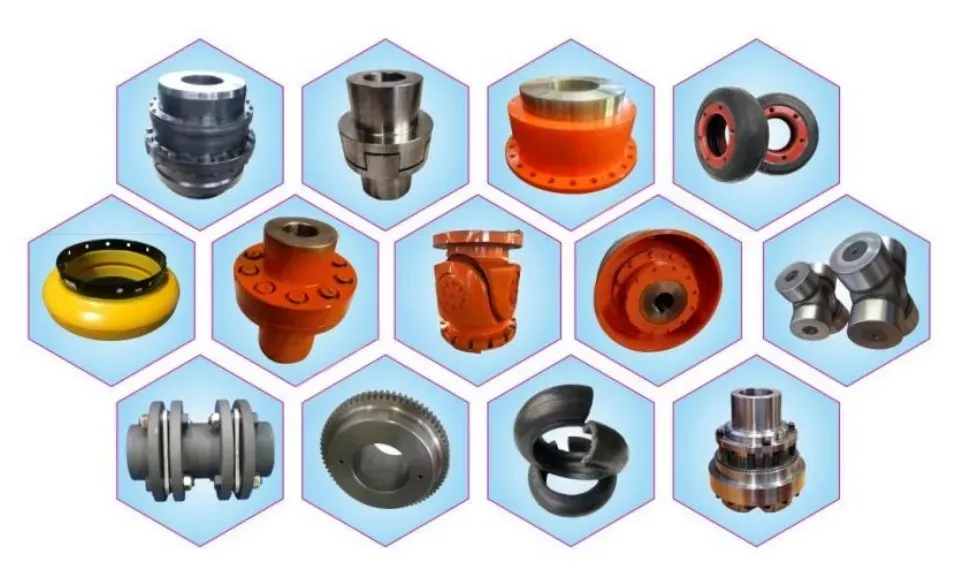
Coupling product range

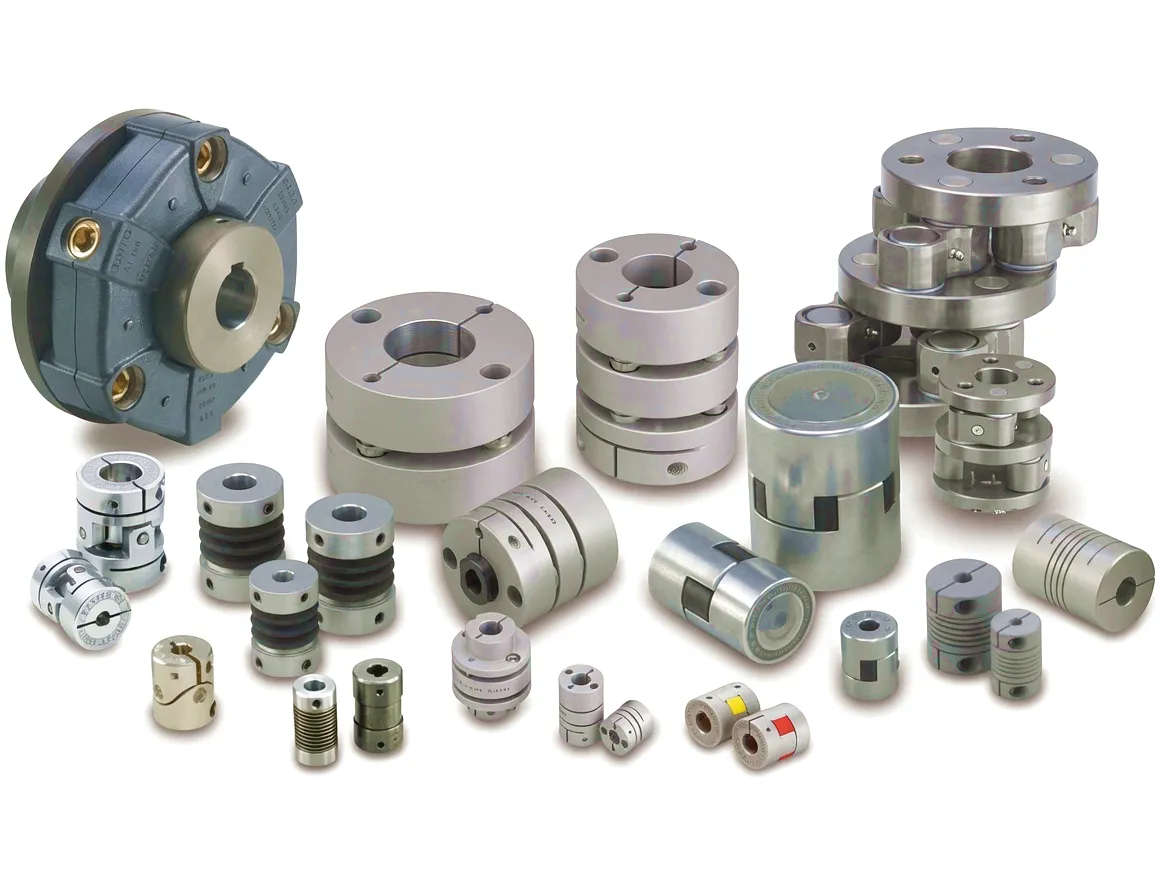
Ever Power manufactures over 30 standard coupling series and accepts fully bespoke orders. Bore diameters from 5 mm to 280 mm. All products available with metric or imperial shaft configurations for seamless integration with UK-sourced motors and gearboxes.

Core Technical Advantages of Modern Couplings in Malt Grinder Applications

✔ Misalignment Tolerance
Modern flexible couplings tolerate parallel offsets of up to 1.5 mm, angular misalignment of up to 3 degrees, and axial displacement of plus or minus 5 mm simultaneously. In malt grinders where roller wear causes progressive shaft displacement over months of continuous operation, this tolerance prevents the bearing failures that would otherwise result from a rigid connection transmitting misalignment forces into bearing races.
✔ Torsional Damping
The elastomeric intermediate elements in jaw and tyre-type couplings attenuate torsional vibration before it reaches the gearbox. Measured damping ratios of 0.12 to 0.18 are typical, which translate to a significant reduction in the resonant vibration that can cause fatigue cracking in gearbox casings, particularly during the start-up and shut-down cycles of large industrial malt grinders running under UK grid frequency variations.
✔ Zero Backlash Transmission
Disc couplings and beam couplings deliver essentially zero backlash, ensuring that the roller gap positioning signal from a servo controller is transmitted faithfully to the roller shaft. This precision matters in modern smart mill installations — common in new-build craft breweries across Manchester and Leeds — where automated gap adjustment systems rely on accurate position feedback to maintain consistent grist particle size distribution.
✔ Overload Protection
Shear-pin or torque-limiting coupling designs can be specified to provide a mechanical fuse in the drivetrain. When a foreign object — a stone, a metal fragment, or a damp grain clump — jams the rollers, the coupling element fails before the gearbox or motor sustains damage. This sacrificial protection can save a brewery many thousands of pounds in gearbox replacement costs and eliminates the multi-week lead time for specialist gearbox repairs from UK suppliers.
✔ Maintenance-Friendly Design
Split-hub and quick-release coupling designs allow the flexible element to be replaced without disturbing either connected shaft. In a 24-hour brewing operation in Birmingham or Nottingham, this means a worn elastomeric spider can be swapped in under 20 minutes during a scheduled grain change, rather than requiring a multi-hour drivetrain teardown that would compromise next-day production schedules.
✔ High Thermal Stability
Gear-type couplings with lubricated tooth profiles maintain rated torque capacity from minus 30 degrees C up to 150 degrees C continuous service temperature. For malt kilning or drying drum applications adjacent to malting plant grinders, this thermal envelope ensures the coupling retains its design performance in the warm, humid air flows that characterise traditional UK floor malting facilities.

Product Technical and Performance Parameters

พารามิเตอร์Jaw / Flexible Couplingข้อต่อดิสก์Gear-Type CouplingBeam Coupling
แรงบิดที่กำหนด5 Nm to 5,000 Nm10 Nm to 50,000 Nm100 Nm to 200,000 Nm0.5 Nm to 800 Nm
Peak Torque Ratio2.5 x rated3.0 x rated3.5 x rated1.8 x rated
การเยื้องศูนย์เชิงมุมup to 1.5 degup to 1.0 degup to 3.0 degup to 5.0 deg
Parallel Offsetup to 0.6 mmup to 0.5 mmup to 1.5 mmup to 0.3 mm
Max Speed (RPM)up to 8,000up to 12,000up to 6,000up to 10,000
Operating Temp Range-40 to +100 deg C-50 to +120 deg C-30 to +150 deg C-50 to +130 deg C
Hub MaterialDuctile iron / Steel42CrMo4 alloy steelAlloy steel / Nodular ironAluminium alloy / Stainless
Flexible ElementPolyurethane spider316L stainless disc packLubricated gear teethHelical beam slot
Bore Diameter Range5 mm to 120 mm10 mm to 200 mm20 mm to 280 mm3 mm to 50 mm
BacklashLow (0.5 to 2 deg)ZeroLow (0.1 to 0.5 deg)Zero

Industrial Application Scenarios: Couplings in Malt Grinder Drivetrains
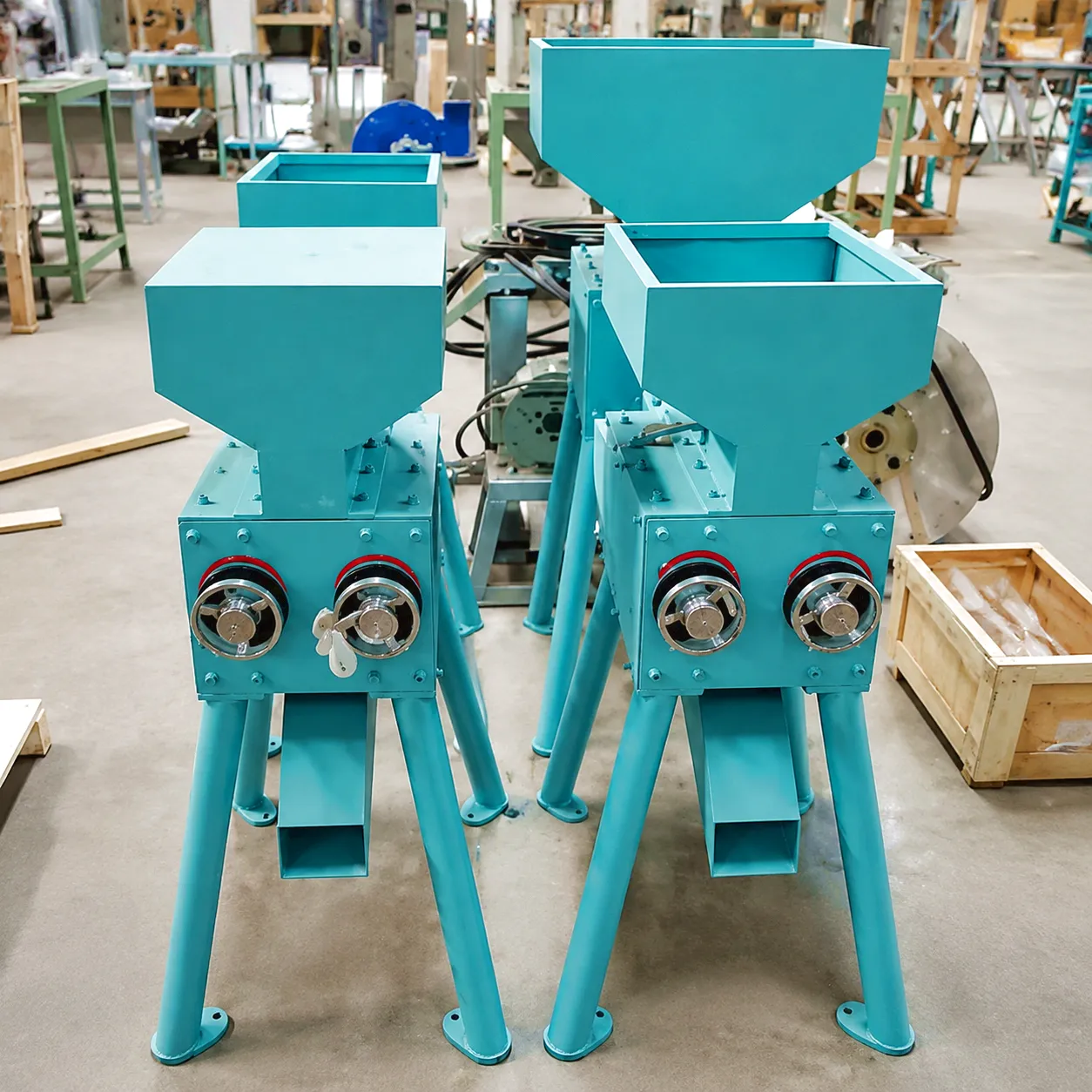
Malt grinder application brewery

Application Scenario 1: Commercial Brewery Two-Roller Malt Mill

Commercial brewing facilities across Burton-upon-Trent and Tadcaster — the historic heartlands of English pale ale production — rely on two-roller malt mills running at outputs from two tonnes per hour up to ten tonnes per hour. In these settings, a direct-drive motor shaft is coupled to the primary roller through a jaw coupling fitted with a medium-hardness polyurethane spider. The coupling must handle start-up inertia loads that can reach four to five times the running torque, absorb the shock of inconsistent grain feed from overhead hoppers, and do so continuously across a shift of twelve or more hours. The jaw coupling handles this duty exceptionally well because its star-shaped elastomeric spider distributes load across multiple contact lobes, preventing any single point of stress concentration. Breweries also appreciate that the elastomeric element can be inspected visually for cracking or permanent set during routine maintenance, giving maintenance engineers a reliable early-warning sign before a complete failure occurs. With replaceable spider elements priced at a fraction of the cost of a new coupling assembly, total ownership costs over a ten-year service life are substantially lower than alternative coupling types in this power range.

Scotch whisky distillery malt mill coupling

Application Scenario 2: Scotch Whisky Distillery Roller Mill

Scotland’s whisky distilleries present a demanding coupling environment that differs meaningfully from mainstream brewery applications. Traditional pot still distilleries in Speyside and the Highlands typically operate smaller, intermittent batch processes where the malt mill may start and stop dozens of times per shift as individual mash batches are processed. Each start-up event imposes a significant jolt on the drivetrain as the motor overcomes the inertia of stationary rollers, a loaded hopper, and any compacted grain already between the rolls. A gear-type coupling with crowned tooth geometry is often specified in these higher-torque applications because it can handle the combined angular and parallel misalignment that develops as the mill foundation settles over time in traditional stone distillery buildings. The lubricated gear teeth distribute load evenly across the full contact width, keeping peak tooth stresses well within the material’s endurance limit even under repeated shock loading. For distilleries pursuing premium provenance credentials — increasingly important in UK export markets — the mechanical reliability of the gear coupling directly supports uninterrupted single-malt production schedules and compliance with Scotch Whisky Regulations that mandate specific mashing and fermentation timelines.

Industrial malting plant disc coupling

Application Scenario 3: Industrial Malting Plant Six-Roller Fine Mill

Large industrial malting plants supplying grain to multiple regional UK breweries increasingly use six-roller mills capable of processing forty or more tonnes of malt per hour. These machines apply multiple sequential crushing stages — scalping, first reduction, and second reduction — each requiring its own precisely tuned roller gap. Disc couplings are the preferred solution in these precision applications because their metallic disc pack architecture delivers zero backlash torque transmission, which allows the automated gap control systems to position rollers to within plus or minus 0.02 mm of the setpoint. Even a small backlash in the coupling would make repeatable gap control impossible, resulting in inconsistent particle size distributions that destabilise lautering performance in downstream brewery operations. The stainless steel disc packs also withstand the grain dust and cleaning chemical exposure inherent in malting plant environments, and their compact cross-section fits within the tight envelope between motor flanges and roller shaft ends in modern high-density machine layouts. Several major UK malting companies operating facilities in East Anglia’s barley-growing belt have standardised on disc couplings for exactly these reasons.

Craft malt grinder flexible beam coupling

Application Scenario 4: Craft Maltster Micro-Mill with Variable-Speed Drive

The rapid growth of artisan malting in the UK — with craft maltsters in regions including Norfolk, Shropshire, and Perthshire producing heritage grain varieties for specialty beer and spirits markets — has driven demand for compact, variable-speed micro-mills capable of processing one to five tonnes per shift. These mills are typically driven by permanent magnet servo motors controlled by vector inverter drives that can vary roller speed from 50 RPM to 500 RPM within a single mashing cycle. Beam couplings are ideally matched to this application because of their zero-backlash, inherently torsionally stiff design that faithfully conveys servo drive positioning commands. The helical slot geometry of a beam coupling provides sufficient angular and parallel misalignment accommodation for the small shaft offsets found in bench-scale and pilot-plant mills, without any need for lubrication or periodic element replacement. For a small maltster managing the entire operation with a two-person team, the maintenance-free nature of a beam coupling is a significant practical benefit that reduces the overhead of planned maintenance and allows operators to focus entirely on grain quality and process consistency.

Featured Coupling Products for Malt Grinder Applications
ข้อต่อคานแบบยืดหยุ่น

The Flexible Beam Coupling from Ever Power is precision-machined from high-grade aluminium alloy or stainless steel and features a proprietary helical slot pattern that delivers zero-backlash torque transmission with true simultaneous misalignment compensation in all three planes. Rated torque from 0.5 Nm to 800 Nm, with no maintenance or lubrication required throughout the service life. Ideal for variable-speed drives, servo-controlled micro-mills, and laboratory-scale malt grinding equipment where precise roller gap positioning is essential. Available in metric and imperial bore configurations to suit both new UK builds and legacy equipment retrofit projects.
View Product

ข้อต่อดิสก์

Ever Power’s Disc Coupling series uses stacked 316L stainless steel disc packs to deliver a torsionally rigid, zero-backlash connection capable of handling rated torques from 10 Nm to 50,000 Nm. The all-metal design eliminates the progressive stiffness change associated with elastomeric couplings as they age, ensuring that gap control calibrations in six-roller fine mills remain valid across the entire operational life of the disc pack. The dry-running, lubrication-free design also eliminates the risk of oil contamination in grain processing environments — a critical hygiene requirement for UK food-grade and beverage-grade malt processing facilities operating under BRCGS and FSSC 22000 food safety standards.

View Product

Ever Power: Precision Manufacturing and Custom Coupling Solutions

Ever Power has built its reputation over two decades as a specialist manufacturer of precision power transmission components, with coupling design and manufacture at the core of its technical portfolio. The company operates a vertically integrated production facility equipped with CNC turning centres, high-speed machining centres, gear grinding machines, and coordinate measuring machines capable of achieving dimensional tolerances below 2 micrometres on critical coupling bore and register surfaces. This level of precision underpins the repeatable torque-to-misalignment performance that customers in demanding industries — including UK malt processing, food manufacturing, and pharmaceutical production — depend upon.

What distinguishes Ever Power from many commodity coupling suppliers is its deep customisation capability. Engineers at Ever Power routinely develop application-specific solutions: non-standard bore diameters and keyway profiles to match legacy UK motor shaft configurations, modified overall lengths to fit space-constrained mill drive arrangements, or custom torque ratings achieved by varying disc pack count or elastomeric element hardness. Every custom order is supported by finite element analysis to verify stress distribution across the coupling geometry, and prototype samples are dynamically balanced and proof-tested at rated torque before shipment. This engineering discipline ensures that no customer has to accept a compromise between available standard catalogue sizes and the actual dimensions that their application demands.

Ever Power’s supply chain management keeps standard coupling lines in ready stock, enabling rapid despatch to UK customers via international courier with typical lead times of seven to fourteen business days for standard items. For custom-engineered solutions, the company’s dedicated project team provides a structured schedule of design review, production, inspection, and certification milestones that integrates cleanly with clients’ procurement and maintenance planning calendars. All products are supplied with material traceability documentation and test certificates that satisfy the quality management requirements of UK industrial buyers operating under ISO 9001 quality systems.
✉ Request a Custom Quote

Ever Power precision coupling manufacturing

30+
Coupling Series
2 um
Bore Tolerance
ISO 9001
Certified
7-14
Day Delivery

Customer Success Story: Yorkshire Craft Malting, Harrogate
การเชื่อมต่อ

Harrogate Grain Craft, a premium artisan malting operation established in North Yorkshire in 2019, produces heritage barley and wheat malts for a network of specialty brewers and single malt distillers across northern England. Their principal milling equipment consists of two four-roller mills configured for a two-stage crushing process targeting a grist particle distribution peaking at 0.8 mm to 1.2 mm for optimal lautering in copper kettle brewing systems. In 2022, the company was experiencing persistent maintenance issues with the original jaw couplings fitted during commissioning. Elastomeric spiders were failing every four to six months, driven by a combination of accelerated wear from grain dust ingress and stress concentration at the hub bore resulting from a 0.4 mm parallel offset between the motor and reducer shafts. Each failure meant a minimum of half a day of lost production — a serious impact for a batch malting operation with commitments to named brewery customers expecting precise weekly deliveries.

The operations manager contacted Ever Power through the company’s UK distribution partner and described the symptom pattern in detail. Ever Power’s application engineering team recommended switching to disc couplings sized for the existing shaft diameters and space envelope, selected on the basis that the zero-backlash disc pack architecture would eliminate the impact loading that was accelerating elastomeric wear, while the stainless disc packs would resist the grain dust environment without any degradation in stiffness over time. The coupling proposal included a parallel offset accommodation analysis confirming that the 0.4 mm shaft offset — within the new coupling’s rated parallel capacity — would not impose harmful bearing loads.

Four disc coupling assemblies were custom-machined by Ever Power with 42 mm bore on the motor side and 45 mm bore on the reducer side — a non-standard combination unavailable from any catalogue-only supplier. Delivery was achieved within twelve business days, enabling a scheduled weekend changeover that caused no disruption to the production calendar. At the eighteen-month review, the disc couplings remained in service with no degradation in performance measurements. Planned maintenance intervals were extended from quarterly inspections to annual checks, and the malting facility recorded zero unplanned coupling-related stoppages in the first full year after installation. The total cost saving in avoided downtime and replacement parts over that period exceeded the original procurement cost of the four coupling assemblies.

What Our Customers Say
★★★★★

“The disc couplings Ever Power supplied have completely transformed our maintenance picture. We went from changing elastomeric elements every few months to a zero-intervention period of over eighteen months. The precision of the bore machining was exceptional — both ends fitted our shafts without any rework.”

— Operations Manager, Harrogate Grain Craft, North Yorkshire
★★★★★

“We needed a non-standard dual-bore configuration that no UK catalogue supplier could offer within our timeline. Ever Power engineered, manufactured, and delivered four custom couplings in twelve business days. The application engineering support was genuinely impressive — they ran the misalignment load analysis and confirmed compatibility before we committed to the order.”

— Maintenance Engineer, Harrogate Grain Craft, North Yorkshire
★★★★★

“Price and lead time were both better than we anticipated. The material certificates and test documentation that arrived with the shipment were thorough enough to satisfy our ISO 9001 audit requirements without any additional supplier questionnaires. We have already placed a follow-up order for our second production site in Sheffield.”

— Procurement Director, Harrogate Grain Craft, North Yorkshire

คำถามที่พบบ่อย

What type of coupling should I use on a two-roller malt grinder in a UK commercial brewery to handle start-up shock loads without damaging the gearbox?

A jaw coupling fitted with a medium or hard polyurethane spider is the most common and cost-effective solution for two-roller malt grinder drivetrains in commercial breweries. The elastomeric spider absorbs start-up inertia peaks and continuous grain-feed shock loads while protecting the gearbox bearings. For applications above 1,500 Nm rated torque, a gear-type coupling should be considered instead, particularly if angular misalignment between the motor and reducer exceeds one degree.

How much does a custom coupling cost from an industrial supplier in the UK for a malt mill application requiring non-standard dual bore diameters?

Pricing for custom couplings with non-standard bore diameters varies widely depending on torque rating, material specification, and the extent of engineering work required. For typical malt mill couplings in the 500 Nm to 5,000 Nm range, custom units manufactured to exact bore specifications generally range from a few hundred to several thousand pounds per assembly. Ever Power provides formal quotations at no charge — contact the team directly at [email protected] with your shaft diameters, torque requirement, and space envelope for an accurate price.

Which coupling type is best for a Scotch whisky distillery roller mill in the Scottish Highlands where shaft misalignment occurs due to old stone building foundations?

Gear-type couplings with crowned tooth geometry are the preferred choice in this scenario. They accommodate the higher angular and parallel misalignment that develops in traditional stone distillery buildings where foundation movement over seasons causes gradual shaft displacement. The lubricated gear tooth contact distributes load evenly even when running at an offset, preventing the bending moments that a rigid or semi-flexible coupling would impose on motor and gearbox bearings in these variable-foundation environments.

Where in the UK can I get a quick-turnaround quote and delivery for a disc coupling for an industrial malting plant six-roller fine mill in East Anglia?

Ever Power ships disc couplings to UK customers from held stock for standard sizes, with international courier delivery typically taking three to five working days to East Anglia. Custom configurations carry a lead time of seven to fourteen business days. Send your shaft diameters, torque specification, and any dimensional constraints to [email protected] and the team will respond with a written quotation within one working day.

How often should I replace the elastomeric spider element in a jaw coupling fitted to a malt grinder in a Birmingham food manufacturing facility?

In a typical malt grinder application running one or two shifts per day, polyurethane jaw coupling spiders should be visually inspected every three months for signs of cracking, permanent set, or grain dust abrasion. Under normal operating conditions — correct shaft alignment, rated torque duty, and clean environmental conditions — replacement is typically required every twelve to twenty-four months. Where frequent spider replacement is occurring, it usually indicates excessive misalignment or shock loading that should be addressed at the source rather than by simply increasing spider replacement frequency.

Who supplies reliable couplings for the craft malting and brewery equipment market across Yorkshire, with full material traceability certificates and ISO documentation?

Ever Power supplies coupling assemblies to craft maltsters and brewery equipment manufacturers across Yorkshire and the wider UK. All products are supplied with full material traceability documentation, dimensional inspection reports, and ISO 9001 production certificates as standard. For customers operating under food safety management systems, stainless steel and food-contact-safe elastomeric options are available on request. Contact the sales team for a formal supplier qualification pack.

Ever Power — Precision Coupling Solutions for UK Industrial Applications

[email protected]

แก้ไขโดย gzl