How Couplings Work Inside an Offshore Drilling Drive Train
Material Selection for Marine and Offshore Environments
Alloy Steel (42CrMo4 / EN 19)
The primary material for gear-type coupling hubs and sleeves in high-torque offshore applications. Through-hardened and tempered to 280–320 HB, it provides the core strength to transmit loads exceeding 1,000,000 Nm while resisting the fretting fatigue that arises at gear tooth contact surfaces. Phosphate coating or hard chrome plating provides a baseline corrosion barrier; for UKCS applications where the coupling may be partially exposed to splash zone conditions, additional hot-dip galvanising or PTFE-loaded epoxy coatings are specified.
Duplex Stainless Steel (2205 / 2507)
Selected for couplings in areas with direct seawater exposure or highly corrosive chemical environments, such as H2S-laden mud systems. Super duplex grades offer pitting resistance equivalence numbers exceeding 40, making them suitable for continuous immersion in oxygenated seawater at North Sea temperatures. The austenitic-ferritic microstructure also provides 50–60% higher yield strength than standard austenitic stainless steels, reducing the coupling mass penalty that comes with upgrading from carbon steel.
Polyurethane and Nitrile Elastomers
Used in flexible element couplings where vibration isolation is a primary design requirement, such as between a diesel engine and a mud pump on a jack-up rig. Polyurethane elements offer excellent resistance to mineral oil, diesel fuel, and hydraulic fluids, maintaining their elastic properties across the temperature range -30 °C to +80 °C. Nitrile compounds are preferred where H2S exposure is possible. Both materials provide inherent electrical isolation between driver and driven shafts, a feature that matters in corrosion-protection schemes that use impressed current cathodic protection on steel platforms.
Metallic Disc Packs (301/304/316 Stainless)
In disc couplings, the flexible element is a stack of thin stainless steel discs, typically 0.3–0.6 mm thick, assembled in alternating compression-tension bolt patterns. Grade 316 stainless is standard for UKCS applications due to its molybdenum content, which significantly improves resistance to chloride pitting. The disc pack transmits torque with zero backlash and zero wear because there is no sliding contact — the discs flex elastically. This makes disc couplings ideal for applications requiring precise positioning, such as directional drilling tool drives and top-drive systems where angular position feedback is critical to trajectory control.
Core Technical Advantages of Offshore-Grade Couplings
Engineering benefits that translate directly into reduced downtime and lower total cost of ownership on UKCS assets.
High Misalignment Tolerance
Angular capacity up to 6 degrees for gear-type designs and up to 1.5 degrees per disc pack for disc couplings means platform motion and thermal growth are absorbed without load being transferred to adjacent bearings or seals. This dramatically extends bearing service life on mud pumps, drawworks, and top-drive systems.
Torsional Damping and Shock Load Protection
Elastomeric flexible element couplings absorb peak torque spikes that occur during bit stick-slip, top-drive stall events, or sudden load engagement on drawworks. By attenuating these shocks before they reach the gearbox or engine output shaft, the coupling acts as a sacrificial but replaceable protective device, preventing catastrophic damage to high-cost prime movers.
Corrosion Resistance for Marine Service
Material selection, surface treatment, and sealing design combine to provide service life of 10 years or more in North Sea saline environments. Grease-lubricated gear couplings use sealed flanged sleeves with labyrinth seals to retain lubricant and exclude seawater. Disc couplings offer an entirely grease-free design that eliminates one of the most common failure modes in offshore couplings — lubricant degradation and washout.
ATEX Zone Compatibility
Couplings used in Zone 1 and Zone 2 classified areas of drilling platforms must not generate ignition sources through friction, static electricity, or temperature rise under fault conditions. Ever Power’s offshore coupling range is designed with non-sparking materials at contact interfaces, dimensional tolerances that prevent frictional contact between hub and sleeve under maximum misalignment, and anti-static conductive grease grades where earthing continuity across the coupling is required by the electrical area classification design.
High Power-to-Weight Ratio
Offshore platform deck space and payload capacity are strictly limited by structural design. Every kilogram matters. Advanced coupling designs using finite element analysis for optimised hub geometry and high-strength alloy steels deliver torque ratings comparable to larger, heavier legacy designs at significantly reduced mass. This weight saving directly reduces the structural load on the platform deck and simplifies crane lifting during installation and maintenance.
Ease of Offshore Maintenance
Split-cover gear couplings allow inspection and regreasing without disturbing shaft alignment — a significant advantage when realigning a multi-tonne mud pump on a moving platform is the alternative. Disc couplings allow disc pack replacement at the connecting bolts without removing either hub from its shaft. These features reduce planned maintenance hours and eliminate the need to bring alignment specialists offshore for routine coupling servicing.
Product Technical and Performance Parameter Table
Standard reference data for offshore-grade coupling selection. Custom specifications available on request from Ever Power engineering team.
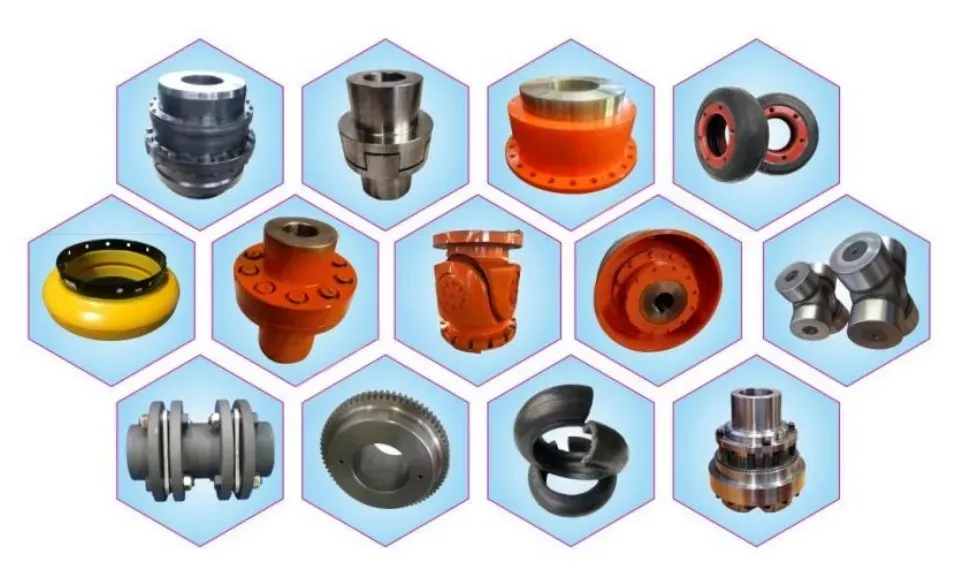
| พารามิเตอร์ | ข้อต่อแบบเฟือง | ข้อต่อดิสก์ | ข้อต่อคานแบบยืดหยุ่น | Elastomeric Jaw Coupling |
|---|---|---|---|---|
| Torque Range | 500 Nm – 1,500,000 Nm | 200 Nm – 800,000 Nm | 0.5 Nm – 1,200 Nm | 50 Nm – 25,000 Nm |
| Speed Range (rpm) | Up to 6,000 | Up to 10,000 | Up to 5,000 | Up to 4,500 |
| การเยื้องศูนย์เชิงมุม | Up to 6° | Up to 1° per disc pack | Up to 5° | Up to 2° |
| Parallel Misalignment | Up to 2 mm | Up to 1 mm | Up to 0.5 mm | Up to 0.8 mm |
| Hub Material | 42CrMo4 / Duplex SS | 4140 Alloy / SS316 | Al 7075 / SS303 | Carbon Steel / GGG40 |
| Flexible Element | Crowned gear teeth | SS301/316 disc packs | Helical beam cut (monolithic) | PU / Nitrile spider |
| Operating Temperature | -40 °C to +120 °C | -60 °C to +200 °C | -50 °C to +150 °C | -30 °C to +80 °C |
| Lubrication Required | Yes (grease, 2-year interval) | No (maintenance-free) | เลขที่ | เลขที่ |
| Backlash | Low (tooth side clearance) | Zero | Zero | Low to medium |
| Typical Offshore Use | Drawworks, mud pumps, rotary table | Top drives, compressors, turbines | Encoder drives, control systems | Auxiliary pumps, deck machinery |
| การบำบัดพื้นผิว | Phosphate + epoxy / hard chrome | Passivation (stainless) | Anodised / hard anodised | Paint / zinc primer |
| Certification Available | DNV, ABS, ISO 14691, ATEX | DNV, Lloyd’s, API 671, ATEX | ISO 14691, CE | CE, ISO 14691 |
Application Scenarios: Couplings Across Offshore Platform Drilling Rig Systems
Each drilling system on an offshore platform presents a distinct mechanical challenge. The coupling specification must match not just the torque and speed of the drive, but the dynamic character of the load, the maintenance access constraints, and the environmental classification of the installation area.

Application Scenario 5: Gas Turbine Generator Sets — High-Speed Disc Couplings for Power Generation
Offshore platform power generation typically relies on gas turbine generators running on natural gas exported from the producing reservoir, making the power generation system one of the most energy-efficient components of the topsides installation. Gas turbines operate at output shaft speeds of 3,000 to 20,000 rpm and connect to the generator through a coupling that must transmit continuous power at high speed, accommodate the differential thermal growth between the hot turbine casing and the cooler generator, and prevent the transmission of turbine vibration into the generator’s electrical windings, where vibration can cause insulation cracking and winding failure. These requirements are directly addressed by metallic disc couplings, which combine high-speed balancing capability (disc couplings can be dynamically balanced to ISO 1940 Grade G0.4 or better), thermal accommodation through disc pack flexibility, and low vibration transmission due to their inherently smooth torque transmission without the sliding contact present in gear couplings.
For turbine-generator couplings on UK North Sea installations, API 671 compliance is typically required by the package OEM and the operating company. API 671 specifies material, testing, documentation, and performance requirements for special purpose couplings in petroleum, chemical, and gas industry services. Ever Power’s disc couplings for turbine-generator applications are manufactured and tested in accordance with API 671 Fourth Edition, with factory acceptance tests including visual and dimensional inspection, material certification review, non-destructive testing of all hubs and disc packs, and high-speed balance verification. Coupling packages are shipped to UK offshore supply bases — commonly through Great Yarmouth for southern North Sea projects, Aberdeen for central and northern North Sea fields, or Inverness for Moray Firth and West of Shetland developments — with all required documentation in the specific format required for UK Customs and Port Health clearance.
Ever Power: Precision Manufacturing and Customisation for Offshore Applications
From design verification to offshore delivery — complete supply chain management for UKCS operators and drilling contractors.
🏭 Manufacturing Capability
Ever Power operates a 60,000 m² manufacturing facility equipped with 5-axis CNC machining centres capable of producing coupling bores to H7 tolerance and keyway dimensions to JS9, with surface finish achieving Ra 0.8 micrometres or better on mating faces. Gear tooth profiles are generated on CNC gear hobbing machines and finished by gear shaving or grinding to achieve DIN 5 or AGMA 11 quality levels, ensuring smooth tooth engagement and minimal dynamic load amplification even at the highest permitted operating speeds. Heat treatment is performed in computer-controlled furnaces with atmosphere control, producing consistent through-hardened microstructures and documented Brinell hardness values on every production batch.
🔨 Customisation Services
Ever Power’s engineering team accepts custom coupling briefs directly from drilling equipment OEMs, platform operators, and offshore drilling contractors. Customisation options include non-standard bore diameters and keyway configurations, special materials outside the standard range, modified hub lengths for restricted axial clearances, integrated torque measurement features using strain gauged shafts, and special surface coatings for specific environmental conditions including subsea applications. Full torsional analysis, finite element stress analysis, and dynamic balance reports are provided as standard documentation. Drawing packages in DXF, STEP, or IGES format are delivered within agreed lead times.
📜 Quality and Certification
Quality management at Ever Power is certified to ISO 9001:2015, with supplementary management systems certified to ISO 14001:2015 for environmental management and ISO 45001:2018 for occupational health and safety. Product certification is available from DNV, ABS, Lloyd’s Register, Bureau Veritas, and CCS depending on the customer’s classification society requirements. ATEX certification for Zone 1 and Zone 2 classified area applications is maintained through a notified body relationship with an UKCA-accredited testing organisation, ensuring that Ever Power’s offshore couplings meet UK conformity requirements following the UK’s departure from the EU ATEX directive framework.
🚚 UK Supply Chain and Logistics
Ever Power maintains strategic stock of the most commonly specified offshore coupling sizes at logistics partners located in Aberdeen and Great Yarmouth, enabling same-day dispatch of standard items for urgent offshore interventions. Customs documentation is pre-prepared to UK HMRC commodity code requirements. Dangerous goods certification for IATA/IMDG classified packing grease compounds is maintained. Export packaging follows ISPM 15 requirements for timber packaging, preventing phytosanitary delays at UK ports. For scheduled maintenance campaigns on UKCS installations, Ever Power provides consignment stock arrangements, allowing the drilling contractor’s shore base team to draw coupling spares against a running contract without individual purchase order processing for each requisition.
Featured Coupling Products for Offshore Applications
Two proven coupling products from the Ever Power offshore range, covering precision instrument drives and high-power industrial connections.
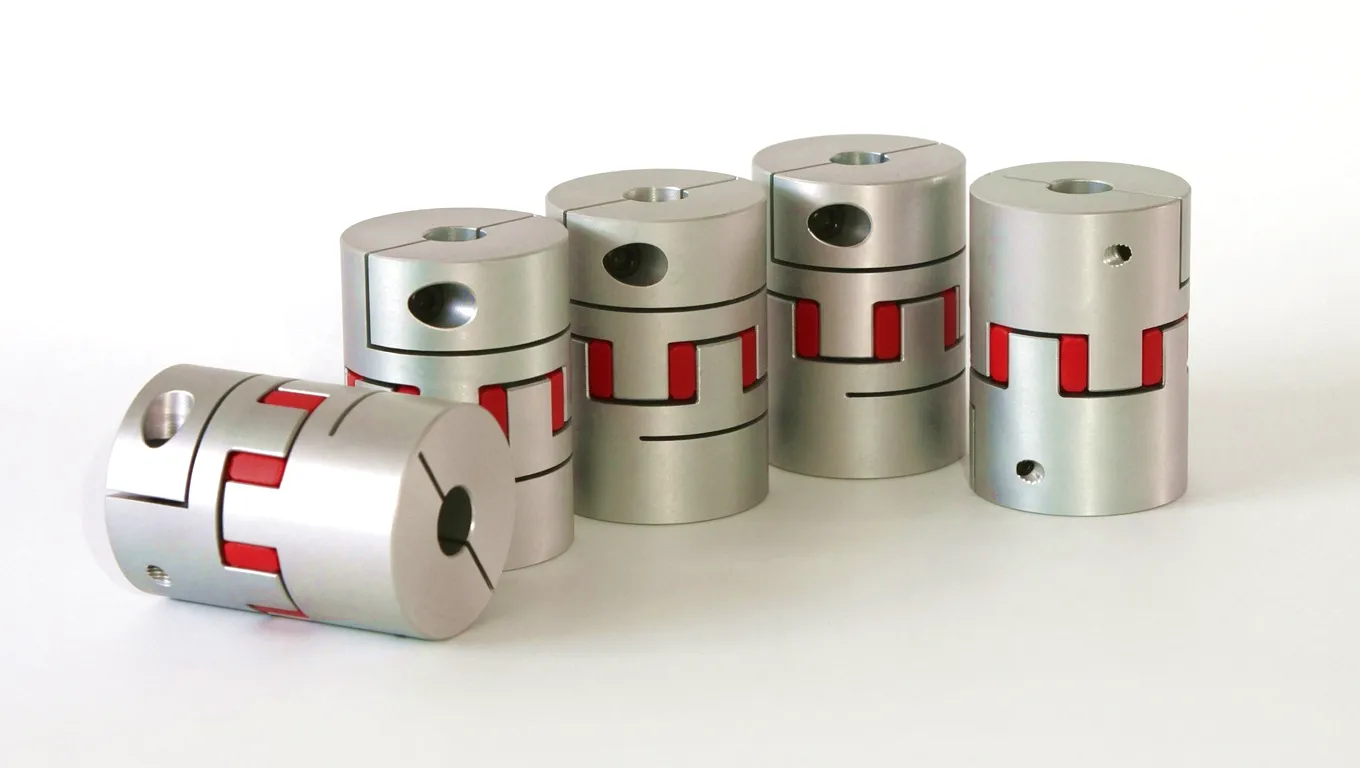
A single-piece monolithic aluminium or stainless steel coupling machined with helical beam cuts to create torsional flexibility while maintaining high torsional stiffness. Zero backlash and maintenance-free design make it the preferred choice for angular position encoders, servo motor drives, and directional drilling tool position sensors on UKCS platforms. Available in bore sizes from 3 mm to 60 mm with customisable beam patterns to adjust torsional stiffness for specific drive train tuning requirements.
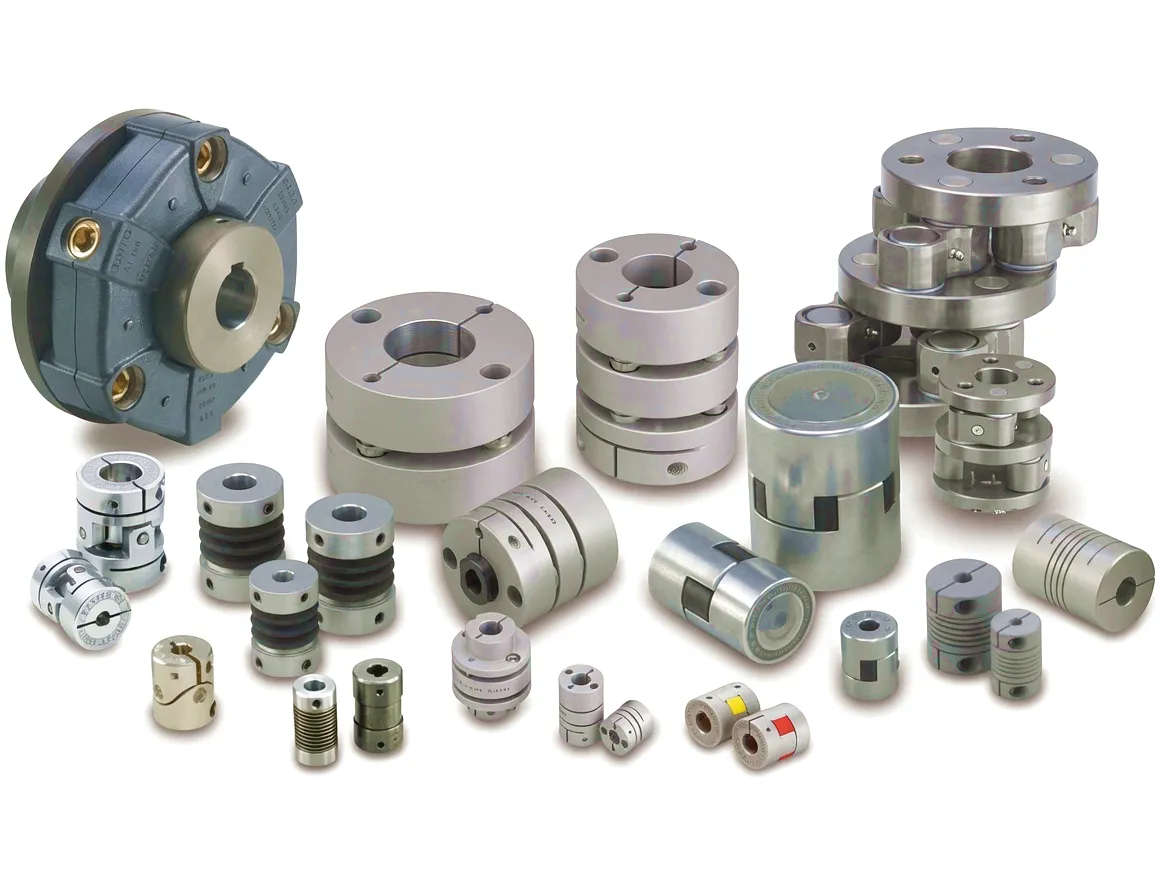
A metallic flexible element coupling transmitting torque through a stack of thin stainless steel discs bolted alternately to driver and driven flanges. The elastic deformation of the disc pack accommodates all three misalignment types simultaneously without sliding contact, resulting in zero wear, zero backlash, and zero maintenance requirement between scheduled inspection intervals. Particularly suited to top drive systems, gas turbine generators, and compressor drives on offshore platforms where API 671 compliance, high rotational accuracy, and long service life between planned maintenance opportunities are paramount requirements.
Customer Success Story: Aberdeen-Based Drilling Contractor — North Sea Jack-Up Rig Coupling Replacement Programme
 An Aberdeen-based offshore drilling contractor operating a fleet of three jack-up rigs in the Central North Sea approached Ever Power with a recurring reliability problem on their mud pump drive trains. Each of the three rigs used the same model of triplex mud pump driven by a variable-frequency drive (VFD) controlled AC motor through a commercially available flexible jaw coupling. The coupling’s elastomeric spider elements were failing consistently at 14 to 18 months of service, well short of the planned three-year interval between major maintenance campaigns. Each failure required the rig to pull out of the hole, shut down the mud circulation system, and wait for a supply vessel from Aberdeen to bring replacement coupling elements — a process that typically consumed 36 hours of rig time at a day rate then standing at £280,000.
An Ever Power torsional analysis of the drive train identified that the VFD’s switching frequency was producing a harmonic torque component at 150 Hz that was exciting the second torsional natural frequency of the drive train through the stiffness of the installed jaw coupling elements. The coupling spider was being fatigued by resonant oscillations rather than by mean torque overload. The solution was a replacement flexible element coupling with a torsional stiffness specifically selected to push the system’s second natural frequency above 200 Hz, outside the VFD excitation range across the full operating speed envelope. Ever Power supplied a custom-designed polyurethane element coupling for each of the three rigs, delivered to the Aberdeen supply base within six weeks of order placement, with element compounds matched to the documented fluid and temperature environment in each rig’s mud pump room.
Following installation across the fleet, coupling element life exceeded 40 months on the first replacement cycle — more than double the target interval. The three rigs completed their planned North Sea campaigns without a single unplanned coupling-related shutdown. The total saving in avoided rig downtime over the 40-month period across the three-rig fleet was calculated at over £12 million, representing a return on the coupling supply investment in excess of 200:1. The drilling contractor subsequently nominated Ever Power as the approved supplier for all rotating equipment couplings across their North Sea fleet and their West Africa operations managed from London offices.
★★★★★
“Ever Power’s torsional analysis capability was the differentiator. Previous suppliers just quoted us a coupling from their catalogue. Ever Power actually modelled our drive train, identified the resonance problem, and delivered a solution that worked on the first attempt. That level of engineering support is rare in the coupling supply market — especially for offshore applications where the stakes are this high.”
Senior Mechanical Engineer
Offshore Drilling Contractor, Aberdeen
★★★★★
“The disc couplings Ever Power supplied for our top drive systems have now been in service for 38 months without any intervention beyond the initial installation check at the 6-month inspection. The zero-maintenance design suits our campaign-based maintenance schedule perfectly — we can plan coupling inspections at the three-year platform dry-dock rather than managing them as reactive interventions. The material certification documentation was complete and in the exact format our quality management system requires.”
Fleet Integrity Manager
UKCS Platform Operator, Edinburgh
★★★★★
“We needed a replacement gear coupling for our drawworks on an emergency basis following an unplanned failure. Ever Power confirmed availability of a compatible coupling from their Aberdeen logistics partner within two hours of our enquiry, arranged helicopter-under-slung delivery documentation the same afternoon, and had the coupling on deck the following morning. That response time — combined with complete 3.1 material certificates — allowed us to restore operations within 18 hours of the failure. Genuinely impressive supply chain responsiveness.”
Drilling Operations Manager
North Sea Drilling Services Contractor, Great Yarmouth
Frequently Asked Questions About Offshore Platform Drilling Rig Couplings in the UK
Answers to the questions most commonly raised by UK drilling engineers, procurement teams, and integrity professionals.
What is the best type of coupling for a mud pump drive on a UK North Sea jack-up rig, and how much does it typically cost?
For mud pump drives on North Sea jack-up rigs, a flexible element coupling with a polyurethane or high-nitrile spider element is typically the preferred choice due to its ability to dampen the cyclic torque variation inherent in triplex pump operation and protect the motor bearings from torsional shock loads. Pricing depends on the bore size, torque rating, and material specification, but indicative pricing for a complete coupling assembly suitable for a 1,100 kW mud pump motor typically falls in the range of £1,200 to £4,500 ex-works, with delivery to Aberdeen supply base adding freight and documentation costs. Ever Power provides project-specific pricing on request — contact the sales team for a detailed quote with full technical specifications.
How do I find a reliable UK offshore coupling supplier who can provide API 671 certified disc couplings for a gas turbine generator on an FPSO vessel?
API 671 certified disc couplings for gas turbine generator applications require a supplier with documented experience in high-speed coupling manufacture, an active relationship with a classification society for third-party witnessing of factory acceptance tests, and the ability to provide the complete documentation package required by API 671 — including material certifications to EN 10204 3.1 or 3.2, non-destructive test reports, and dynamic balance records. Ever Power meets all of these criteria and has supplied API 671 disc couplings to FPSO turbine-generator packages managed by operators with UK operations based in London and Aberdeen. The best starting point is to request a technical data sheet and a representative documentation pack from potential suppliers and verify that the documented factory capabilities match your project requirements.
Which coupling material is most suitable for seawater pump drives on offshore platforms operating in Scottish North Sea conditions, where temperature and salinity are particularly challenging?
For seawater pump drives on Scottish North Sea platforms — where water temperatures can drop to 4 °C to 6 °C in winter and chloride levels are high year-round — duplex stainless steel grade 2205 or super duplex grade 2507 provides the best combination of corrosion resistance and mechanical strength. These duplex grades resist pitting corrosion in oxygenated seawater at the temperatures encountered in the northern North Sea, and their high yield strength (typically 450 to 550 MPa depending on grade) means that the coupling cross-section required to meet the torque rating is smaller than would be needed with a standard austenitic stainless steel, resulting in a more compact and lighter assembly. For the seawater system area classification — typically a non-hazardous area on most platforms — the absence of ATEX requirements allows a wider range of material and coating options, but the corrosion resistance criterion remains the dominant factor in material selection.
When should I choose a disc coupling over a gear coupling for a top drive system on a UKCS semi-submersible drilling rig, and what are the price differences between these options?
The decision between a disc coupling and a gear coupling for a top drive application comes down primarily to the requirements for lubrication management, backlash, and maintenance access. Disc couplings offer zero backlash and zero lubrication requirements, making them strongly preferred for top drive systems where the drill floor is an ATEX Zone 1 area and where angular position accuracy is required for depth control and directional drilling tool orientation. Gear couplings cost less at equivalent torque ratings — typically 20 to 40% less for a comparable size — but require periodic regreasing, which means planned maintenance interventions and potential lubricant contamination of the drill floor. For a premium UKCS semi-submersible where rig time is priced at £300,000 per day and maintenance access is constrained by the derrick structure, the total cost of ownership of a disc coupling is almost always lower than that of a gear coupling despite the higher initial purchase price. Ever Power can provide a comparative total cost of ownership analysis on request.
How do I get a competitive quote from a coupling supplier in the UK for an emergency replacement drawworks gear coupling needed for a rig operating in the Central North Sea?
For emergency coupling replacements on UKCS rigs, the most effective approach is to email the Ever Power technical team at [email protected] with the coupling model number, the bore diameters and keyway dimensions for both shaft ends, the maximum torque and speed, and the required delivery point. If the original coupling manufacturer’s model number is provided, Ever Power can cross-reference directly to identify a compatible replacement or suitable substitute within the same day. For situations where the original coupling is no longer available from the OEM, Ever Power’s engineering team can work from dimensional measurements taken by the platform’s maintenance crew and produce a reverse-engineered replacement drawing for customer approval within 48 hours. Emergency dispatch from Aberdeen logistics stock is available for the most commonly specified sizes, allowing delivery to an offshore supply vessel or helicopter manifest within 24 hours of order confirmation.
What torsional analysis services do offshore coupling suppliers offer to UK drilling contractors, and who in Aberdeen can help with drive train resonance problems on VFD-controlled mud pump systems?
Torsional analysis for VFD-controlled drive trains is a specialist service that combines the mathematical modelling of the complete rotor dynamic system with knowledge of VFD switching harmonics and their interaction with the torsional natural frequencies of the motor-coupling-pump system. Not all coupling suppliers have in-house capability for this analysis; many refer clients to specialist rotor dynamics consultancies. Ever Power provides torsional analysis as an integrated part of the coupling supply service, using established analytical methods that align with the methodology described in API 684 and ISO 10816. The analysis deliverable is a report confirming that all torsional natural frequencies are separated from excitation frequencies by at least 10% under API 684 criteria, with the selected coupling element stiffness documented as the key design parameter. For Aberdeen-based contractors, Ever Power’s technical team can be reached directly by email at [email protected], and will arrange a technical review call with the platform’s mechanical engineering team to discuss the specific drive train configuration before commencing analysis.
แก้ไขโดย gzl