Specify the right coupling for your offshore drilling application — Ever Power engineers are ready
How Couplings Work in Marine Drilling Drive Trains
Engineering Principle & Operating Mechanism
Core Materials for Offshore-Grade Coupling Construction
Material Science & Corrosion Resistance
PRIMARY HUB MATERIAL
Легована сталь 42CrMo4
Chromium-molybdenum alloy steel hardened and tempered to 28–34 HRC provides the high yield strength and fatigue resistance demanded by top drive couplings operating at torques exceeding 80,000 Nm. Through-hardening ensures consistent mechanical properties across large hub cross-sections. Widely used in couplings supplying to operators on the UK Continental Shelf.
SLEEVE / HOUSING MATERIAL
GS-52.3 Nodular Cast Iron
High-strength spheroidal graphite cast iron offers excellent vibration damping and machinability for coupling sleeves and flanges. Its graphitic microstructure provides inherent lubricity, extending service intervals in gear-tooth meshes by reducing micro-pitting under cyclically varying loads characteristic of drilling operations.
CORROSION PROTECTION
Duplex Coating Systems
Marine environments demand duplex coating: zinc phosphate conversion base coat combined with two-component epoxy intermediate and polyurethane topcoat achieving 250+ micron total DFT. External fasteners in A4-316L stainless steel. Coupling internals protected by high-viscosity marine EP grease with anti-washout additives rated for submersion ingress.
ELASTOMERIC ELEMENTS
Nitrile & Polyurethane Inserts
Where torsional flexibility is required alongside misalignment accommodation, nitrile rubber (NBR) shore 60–80A or polyurethane (PU) elements provide excellent oil, fuel, and chemical resistance. For extreme temperature range applications — particularly in arctic-rated rigs operating north of the 60th parallel — low-temperature HNBR compounds retain flexibility down to -40°C.
Core Technical Advantages of Industrial Couplings in Offshore Drilling
Product Advantages
⚙
Висока щільність крутного моменту
Gear-type and spring couplings achieve torque-to-weight ratios unmatched by other flexible coupling designs. For the space-constrained machinery decks of semi-submersible rigs, compact coupling assemblies transmitting 50,000–500,000 Nm reduce structural support mass and simplify deck layout, directly reducing OPEX through lower installation and maintenance complexity.
🔄
Допуск на тривісне перекісування
Modern crowned-tooth gear couplings accommodate angular misalignment to ±1.5°, parallel offset to ±0.5 mm, and axial displacement of ±5 mm simultaneously in dynamically loaded drivetrains. This prevents the progressive bearing wear and shaft fatigue cracking that develops when rigid connections are forced to absorb installation errors and thermal drift over months of continuous operation.
🛡
Shock and Peak Torque Absorption
Serpentine spring elements in JSA-type couplings and elastomeric inserts in jaw-type designs absorb torque spikes that arise when drill bits encounter hard rock formations or when bit bouncing generates rapid load reversals. Attenuating these shocks — which can momentarily exceed 3× rated torque — protects electric motors, gearboxes, and VFD systems from fatigue damage that cumulates undetected until catastrophic failure.
🔧
Maintenance Without Shaft Displacement
Split-sleeve gear coupling designs allow internal element inspection, grease replenishment, and gear tooth wear evaluation without disturbing shaft alignment. On a North Sea drilling rig where a full machinery realignment requires specialist rigging crews and significant downtime charges, this single feature can return its cost premium many times over during a five-year service cycle.
🌡
Широкий діапазон робочих температур
All-steel gear coupling designs rated for continuous operation from -50°C to +150°C without elastomeric degradation. This range is critical for well-service operations in the Northern North Sea where ambient air temperatures fall below -20°C and machinery interior temperatures can reach +120°C under sustained full-load drilling cycles lasting 72 hours or more.
⚖
Torsionally Stiff Torque Transmission
Unlike elastomeric couplings that introduce torsional wind-up, gear-type and steel spring couplings maintain high torsional stiffness across their rated torque range. This characteristic is essential in closed-loop VFD motor control systems where excessive torsional compliance creates control instability — a significant concern in modern AC top drive systems with dynamic torque feedback algorithms.
Технічні та експлуатаційні параметри продукту
Specification Reference Table for Marine Drilling Applications
Application Scenario: Marine Platform Drilling Rigs
Offshore Oil & Gas · Subsea Drilling · Well Services
APPLICATION 01
Top Drive System — Main Shaft Coupling
APPLICATION 02
Mud Pump Drive System — High-Torque Coupling
 Drilling fluid — commonly called mud — is the circulatory system of any drilling operation. It cools the drill bit, carries rock cuttings to the surface, and provides hydrostatic pressure to prevent wellbore collapse and formation fluid influx. The triplex and duplex reciprocating mud pumps that circulate this fluid at pressures reaching 340 bar (5,000 psi) are among the highest-torque mechanical items on a drilling platform. A typical triplex mud pump rated for 2,200 hydraulic horsepower draws its motive power through a speed reducer from a pair of diesel engines or a large AC drive motor, with the coupling between the prime mover and reduction gearbox exposed to heavy cyclic loading as the reciprocating plunger mechanism creates three torque pulses per revolution. The high cyclic loading frequency and the impulsive torque character of this application mean that couplings specified for mud pump drives must have both torsional flexibility to absorb pulses and high fatigue resistance in the hub-to-shaft interface. Spring-type couplings and high-capacity gear couplings with rubber damping elements incorporated into the gear mesh have both proved successful in this application. Onshore service companies providing drill-out and workover services from Aberdeen’s busy supply base have found that specifying marine-rated couplings with sealed lubrication chambers dramatically extends service intervals compared with open-construction gear couplings in the highly contaminated mud room environments found on older fixed platforms in the southern North Sea.
APPLICATION 03
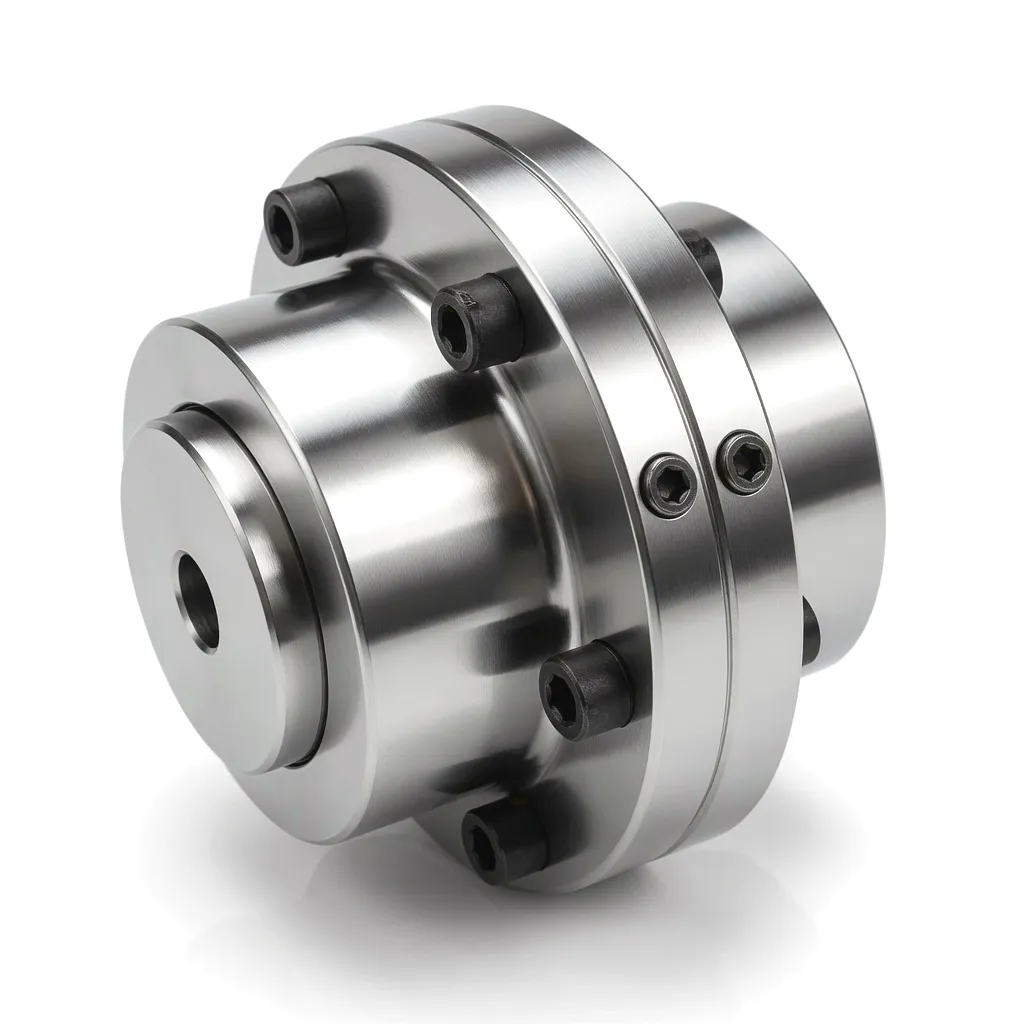
Draw-Works Winch Drive — Dynamic Load Coupling
APPLICATION 04
Diesel Generator Sets — Engine-to-Alternator Coupling
Marine platform drilling rigs are effectively self-contained power stations. The six to ten diesel generator sets that form the platform power supply system run continuously throughout the operational life of the rig, each pair typically rated at 2–5 MW. The coupling connecting each diesel engine to its alternator is among the most safety-critical components on the rig, since generator failure during a critical drilling phase — such as during well control operations or when the BOP is being function tested — can directly compromise rig safety. The coupling in this application must transmit rated torque continuously for up to 12,000 hours between major overhauls, withstand the torsional vibration excitation generated by the engine combustion cycle (which varies in frequency with load), and protect the alternator stator from the bending moments that would arise if engine and alternator shafts were rigidly connected and subject to differential thermal expansion. Torsionally flexible disk-pack and serpentine spring couplings are widely preferred in generator set applications because they detune the system’s natural torsional frequency away from engine firing frequency harmonics. Several Aberdeen-based rig maintenance contractors have adopted JSA series spring couplings as their preferred generator coupling specification following extended comparative trials on platforms in the Moray Firth area, citing consistent 6,000-hour service intervals without grease replenishment as a key operational advantage over conventional gear couplings in this specific application.
APPLICATION 05
Dynamic Positioning Thruster Drive — Azimuth Coupling
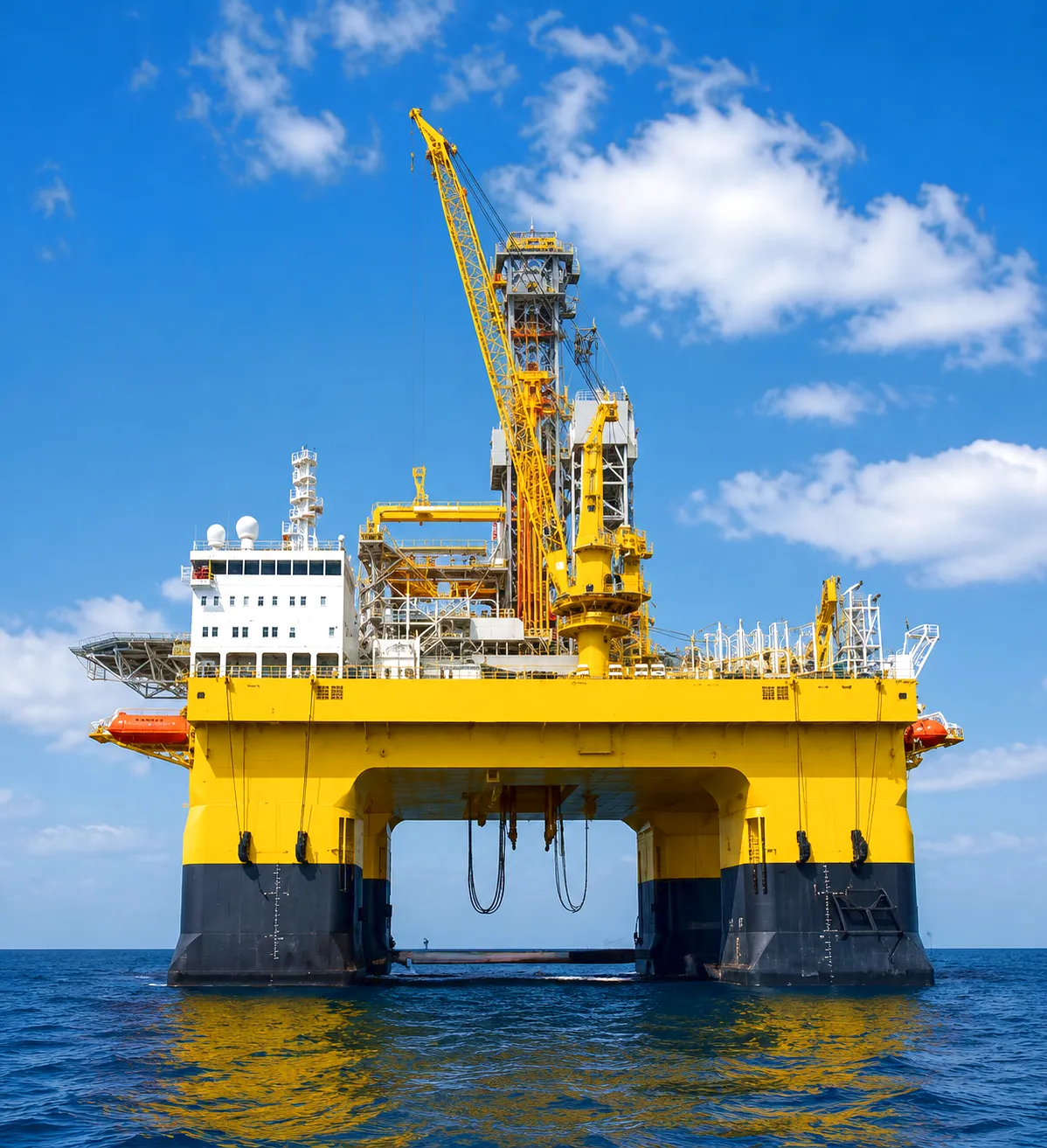 Dynamic positioning (DP) semi-submersibles and drillships operating on deepwater sites in the Atlantic Margin and west of Shetland rely on multiple azimuthing thrusters — each driven by a 3–7 MW electric motor through a right-angle gearbox — to maintain precise station keeping without anchors. The couplings in these thruster drive trains must accommodate continuous service under widely varying load conditions as the DP control system modulates thrust in response to current, wind, and wave loading. Equally important is the capacity to handle axial loads imposed by hull hogging and sagging under wave action, which creates relative motion between the motor frame and the thruster pod structure. High-capacity gear couplings with disc springs to accommodate axial displacement, combined with flanged connection designs that allow rapid in-situ inspection without draining the thruster pod, have become the industry standard for this application. The demanding environmental conditions — with thrusters exposed directly to seawater and operating in the C5M corrosivity category — require ISO 12944 C5M coating systems on all external surfaces, with fastener selection specifying duplex stainless steel or Inconel alloys where conventional stainless grades show crevice corrosion risks.
Ever Power Industrial Coupling Products
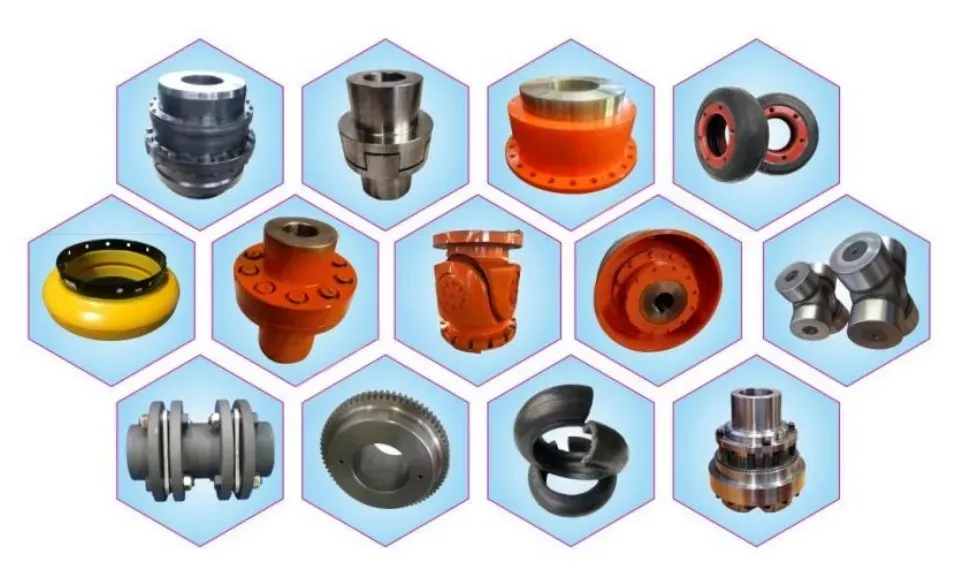
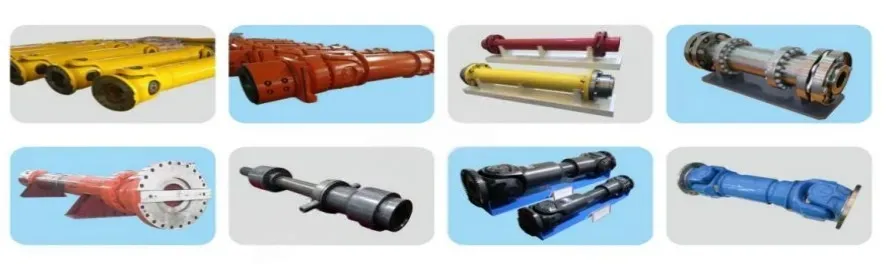
Featured Coupling Products for Marine Drilling Applications
Selected Product Lines from Ever Power
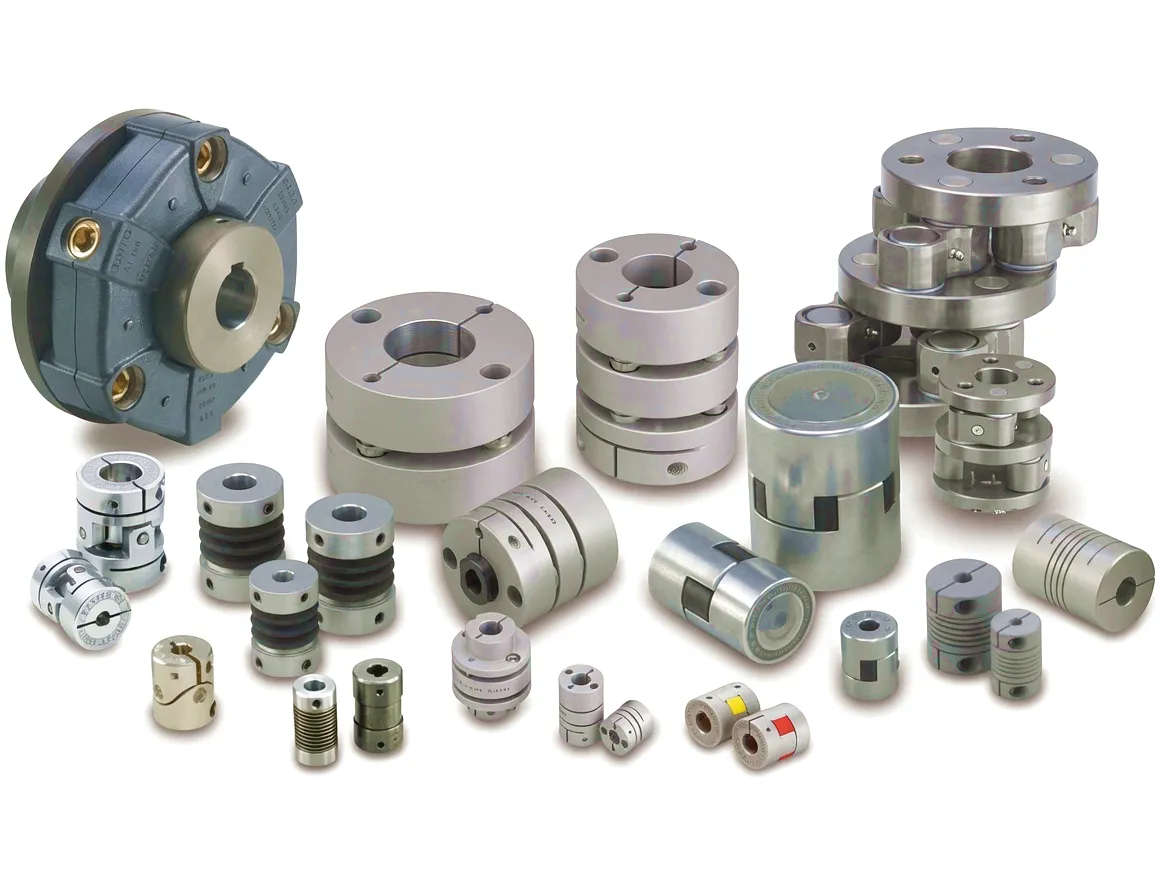
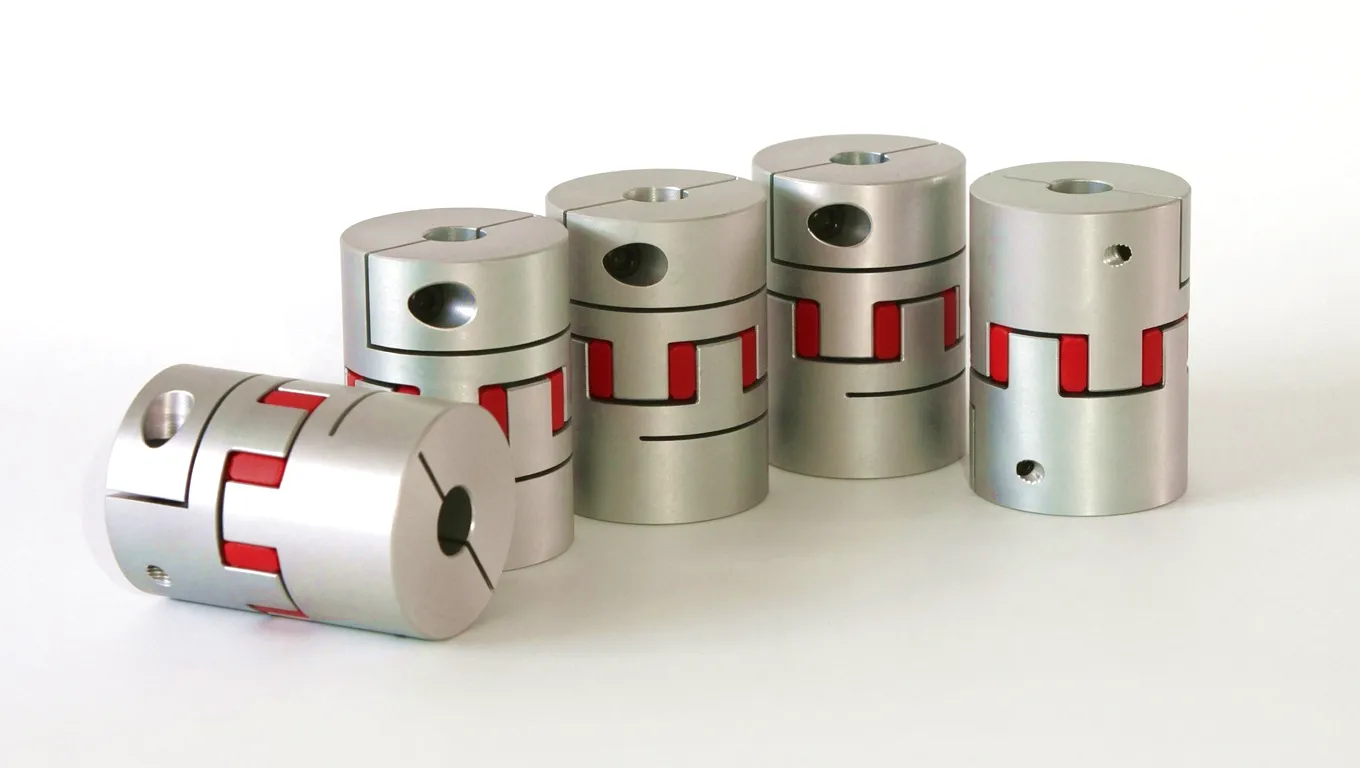
Ever Power: Precision Manufacturing & Custom Engineering
Factory Capability · Customisation · Supply Chain
🏭
Custom Coupling Design Service
Ever Power operates a dedicated engineering team for non-standard coupling specification. Customers in the UK offshore sector routinely submit application data — torque, speed, misalignment envelope, shaft geometry, and environmental class — and receive a fully engineered drawing package within five working days. Reverse engineering from worn coupling components recovered from rigs is also available, eliminating obsolescence problems on ageing platforms.
⚙
Precision Gear Tooth Manufacturing
All gear teeth in Ever Power gear couplings are machined on CNC gear hobbing and grinding machines to AGMA 12 quality or better, with gear tooth lead crowning profile generated to matched design drawings for each coupling torque rating. Surface hardness is achieved through induction hardening to 55–62 HRC contact depth, verified by Vickers hardness testing at five points on each hub lot.
📋
Full Material Traceability & Certification
Every coupling supplied for UK offshore application is accompanied by a full material data report (MDR), including EN 10204 3.1 mill certificates for hub and sleeve forgings, heat treatment records, dimensional inspection reports to ISO 9001:2015 procedures, and, where required, DNVGL or Lloyd’s Register third-party inspection certificate. The documentation trail satisfies HSE safety case requirements for safety-critical component traceability.
🚢
Supply Chain to UK Offshore Sector
Ever Power maintains an active supply relationship with UK offshore operators and drilling contractors, with logistical routing through Aberdeen, Dundee, and Great Yarmouth port facilities for North Sea and Irish Sea platform supply vessels. Standard stocked coupling sizes ship within 5–7 days to Aberdeen. Custom-engineered items for rig maintenance shutdowns are expedited with defined lead times agreed at order placement, supporting the tight schedule constraints of planned rig maintenance windows.
Ready to specify couplings for your offshore drilling project? Our engineering team is available for technical consultation.
Історія успіху клієнта
Aberdeen, Scotland · North Sea Semi-Submersible Drilling Contractor
“Cutting Unplanned Downtime by 72% on the Thistle Alpha Platform Mud Pump Trains”
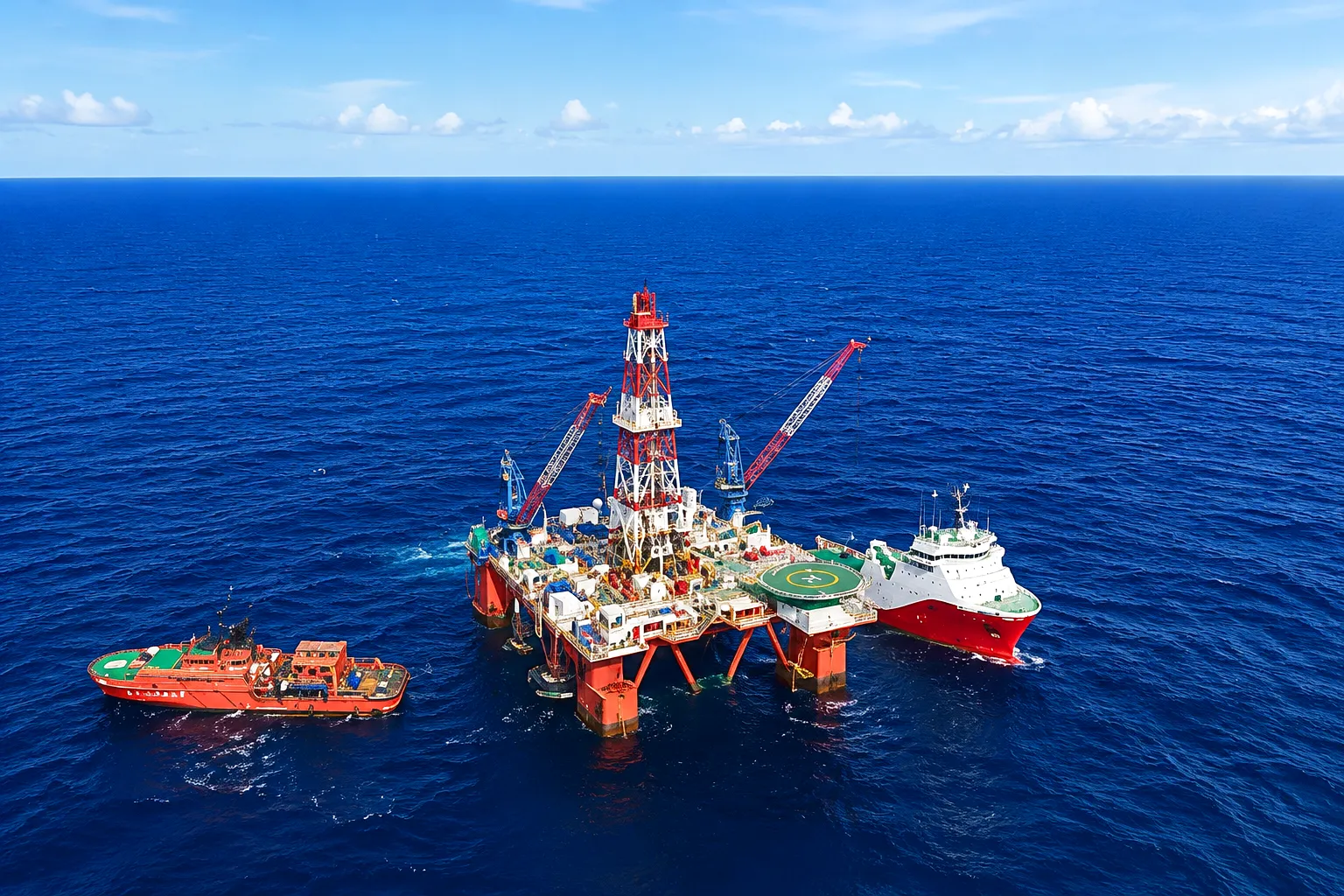 Northern Depths Drilling Ltd., a mid-tier contract drilling company headquartered in Aberdeen, had been experiencing a persistent pattern of mud pump coupling failures across three semi-submersible rigs operating in the Northern North Sea. The original equipment gear couplings, specified over fifteen years earlier during rig construction, were suffering accelerated wear as the mud pump reciprocating loads had increased following upgrades to higher-pressure drilling fluid systems needed for deeper, higher-pressure well targets in the Clair Ridge development area west of Shetland. Coupling replacement had become a recurring maintenance event, typically requiring 14–18 hours of rig downtime each cycle as the coupling housings were inaccessible without partial dismantling of the adjacent pipe manifold arrangement.
The Northern Depths mechanical engineering team contacted Ever Power with a comprehensive application data package covering the three 2,200 HP triplex pump drives, including torque spectra recorded during drilling operations across different formation types and a detailed analysis of the coupling bore geometry constraints imposed by the existing shaft arrangements. After a two-week engineering review, Ever Power proposed a custom JSA series spring coupling with an uprated spring element in 65SiMn spring steel rather than the standard 65Mn grade, combined with a sealed lubrication chamber eliminating the requirement to drain the coupling before inspection. The bore machining was modified to fit the existing shaft keyways exactly, removing the need for any shaft modification work.
Following installation on all three rigs during a coordinated summer maintenance window managed from Aberdeen, the results over the following eighteen months demonstrated a 72% reduction in mud pump coupling-related downtime. Inspection at the 6,000-hour service interval — the first such inspection since installation — found tooth wear within the designed acceptance limits, with no evidence of the micro-pitting that had characterised the previous coupling failures. Northern Depths’ maintenance manager calculated that the reduction in unplanned maintenance events across the three rigs had generated a cost saving equivalent to 11 days of rig time over the period, substantially exceeding the procurement cost of the new coupling sets.
What Our Clients Say
“The custom bore specification and sealed grease chamber design Ever Power engineered for our triplex pump drives have completely changed how we plan mud pump maintenance. We went from tracking every 2,000 hours to a genuine 6,000-hour inspection interval without a single unscheduled failure. The torque capacity at peak drilling loads is well within the coupling’s rating — there’s real engineering margin built in.”
James Hartley — Senior Mechanical Engineer, Northern Depths Drilling Ltd., Aberdeen
“We specified Ever Power SWC series couplings for the draw-works drive shaft modification on a life extension project covering a fixed platform in the Moray Firth. The material certification package was exactly what our third-party inspection contractor needed for the safety case submission — full 3.1 mill certs, heat treatment records, dimensional reports. Documentation quality matched a tier-one supplier at a substantially more competitive price.”
Sarah Okafor — Project Engineer, Offshore Life Extension Group, Aberdeen
“Our generator set coupling failure on the evening shift was creating real schedule pressure during a critical well completion phase. Ever Power had an equivalent-rated coupling in stock — correctly dimensioned for our bore and keyway — and it arrived at Aberdeen Airport the following morning via their emergency logistics route. Having a supplier who can genuinely respond to an offshore breakdown with that kind of speed changes your risk calculation on sourcing.”
Tom Bradley — Rig Superintendent, Caledonian Well Services, Dundee
Часті запитання
Voice-Search Optimised · Technical & Commercial Queries
What type of shaft coupling is best suited for a North Sea offshore drilling rig top drive system and why?
Crowned-tooth gear couplings rated at 80,000 Nm and above are the standard selection for North Sea top drive main shaft connections. They combine the highest torque density of any flexible coupling type with simultaneous accommodation of angular, parallel, and axial misalignment, remain torsionally stiff enough for stable VFD control loop performance, and operate reliably through the wide temperature swings encountered between standby cold-soak conditions and sustained heavy drilling operation. Their all-steel construction also eliminates the elastomeric degradation risk in the oil-and-gas-rich environment of a drilling floor.
How much does a custom offshore-rated gear coupling cost from a UK supplier, and what factors affect the price?
The cost of a custom offshore-rated gear coupling varies significantly based on torque rating, bore diameter, material specification, and certification requirements. Standard gear couplings in the 5,000–50,000 Nm range typically represent a modest investment, while large-bore assemblies rated above 200,000 Nm with full EN 10204 3.1 certification and third-party inspection reflect the engineering complexity involved. Contact Ever Power for a detailed quote tailored to your specific application data — our engineering team can provide pricing within 24–48 hours of receiving your specification sheet.
Which shaft coupling type can handle the largest angular misalignment angle in offshore drilling rig drivetrains operating in the UK Continental Shelf?
The SWC Series universal coupling handles the largest angular misalignment of any industrial coupling type used in drilling applications, accommodating up to ±35° between driving and driven shafts. This makes it indispensable for drive shaft arrangements in draw-works systems, crane slewing rings, and auxiliary winch drives where the motor and load are mounted on different structural frames with significant angular offset. No other flexible coupling type approaches this angular capacity at equivalent torque ratings.
Where can I find a reliable UK supplier who provides industrial shaft couplings with full material traceability certificates for HSE-regulated offshore platforms?
Ever Power supplies industrial shaft couplings with full EN 10204 3.1 material certification, heat treatment records, and dimensional inspection reports to ISO 9001:2015 procedures. Our documentation package satisfies HSE safety case requirements for safety-critical component traceability on UK Continental Shelf platforms. Couplings are available with optional DNVGL or Lloyd’s Register third-party inspection for classification society compliance. Logistics to Aberdeen, Dundee, and Great Yarmouth supply base facilities are supported for platform supply vessel loading.
How do I calculate the correct torque rating when selecting a gear coupling for a triplex mud pump drive system on an Aberdeen-based drilling rig?
Coupling torque rating for a triplex mud pump drive is calculated by multiplying the nominal rated torque of the prime mover by a service factor that accounts for the impulsive loading character of reciprocating pump drives. For triplex pumps, a service factor of 2.0–2.5 is typical, meaning a pump driven by a motor generating 5,000 Nm at rated power should use a coupling rated at 10,000–12,500 Nm minimum. Additional factors for start-up torque, peak formation loading, and altitude should also be considered — Ever Power’s engineering team provides free torque rating calculations as part of the quotation process.
When should I replace an industrial shaft coupling on a marine drilling rig operating year-round in North Sea conditions to avoid unplanned downtime?
Replacement intervals depend on coupling type, loading severity, and maintenance regime. For sealed gear couplings in mud pump drives, an inspection at 6,000 operating hours and replacement decision based on gear tooth wear measurement is the recommended approach. For spring-type couplings on generator sets, spring element fatigue is the limiting factor — Ever Power recommends a precautionary spring element replacement at 12,000 hours regardless of visible condition, as spring fatigue cracking can propagate rapidly once initiated. Condition-monitoring programmes using vibration analysis can extend replacement intervals where data supports it.
Who should I contact to get a competitive quote for custom-engineered shaft couplings for a semi-submersible rig refurbishment project based in Aberdeen?
Contact Ever Power’s technical sales team directly at [email protected] with your application data — torque rating, shaft diameter, bore tolerance, keyway specification, and any certification requirements. Our engineering team responds to all UK offshore enquiries within one working day. For urgent rig breakdown situations, we maintain priority response procedures with expedited logistics through Aberdeen and Dundee supply chain facilities. Detailed coupling selection consultation is available at no charge as part of the quotation process.
Specify with Confidence — Ever Power Industrial Couplings
Custom engineering · Full UK traceability certification · Aberdeen-ready logistics
редагування від gzl