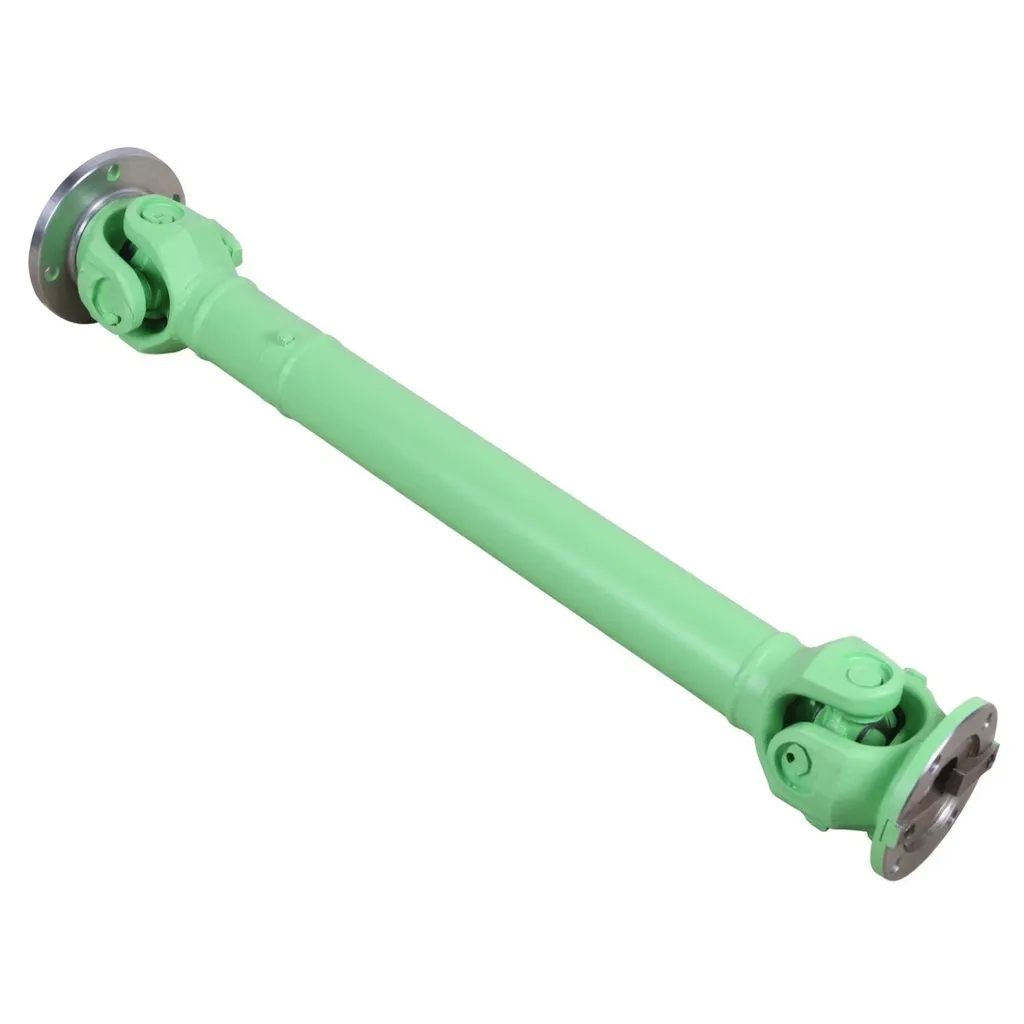
Beschreibung
◆ Industrial Transmission Components | United Kingdom Supply
SWC-WH Without Flex Welding Type
Universalgelenkkupplung
Rated from 1.25 KN·m to 710 KN·m — engineered for demanding heavy industrial drive lines across the UK, including steel mills, quarries, paper plants, and port handling systems.
⚙ What Is the SWC-WH Universal Joint Coupling?
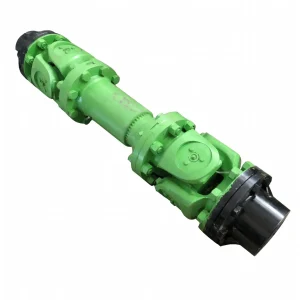
The SWC-WH without flex welding type universal joint coupling is a precision-engineered power transmission component designed to connect two rotating shafts operating at angular misalignments of up to 25 degrees. Unlike bolted flanged couplings, the SWC-WH is a welded type, meaning each shaft is permanently fused to the coupling body through full-penetration welding procedures. This produces a joint that is structurally more rigid, substantially more resistant to fretting under vibration, and better suited to the shock-load cycles inherent in heavy industrial machinery. For UK engineers specifying drive-line components in rolling mills, conveyors, or port handling equipment, this rigidity translates directly into reduced maintenance interventions and longer service campaigns.
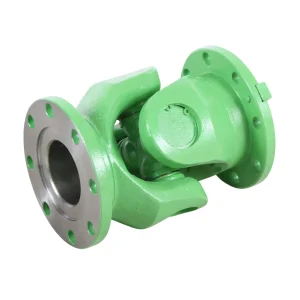
At its mechanical core, the SWC-WH universal joint coupling operates on the Cardan principle: two hardened steel yoke assemblies, each welded to their respective shaft ends, are connected by a precision cross-trunnion bearing unit with the two hinge planes offset by 90 degrees. As the driving shaft rotates, torque is transmitted through the cross-trunnion to the driven shaft, accommodating the angular deviation between shaft centrelines. The product range spans 14 model sizes — from the compact SWC100WH with a 100 mm gyration diameter and 1.25 KN·m nominal torque, to the heavy-duty SWC550WH with a 550 mm gyration diameter and 710 KN·m nominal torque — giving procurement and mechanical engineers in the United Kingdom a single, proven product family to cover the full spectrum of light through ultra-heavy drive applications.
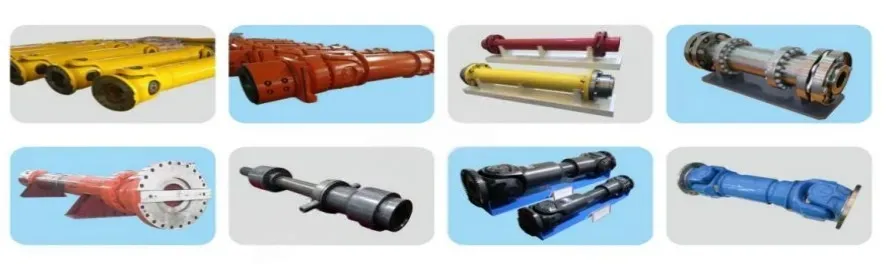
📏 Coupling Dimensional Reference Drawing
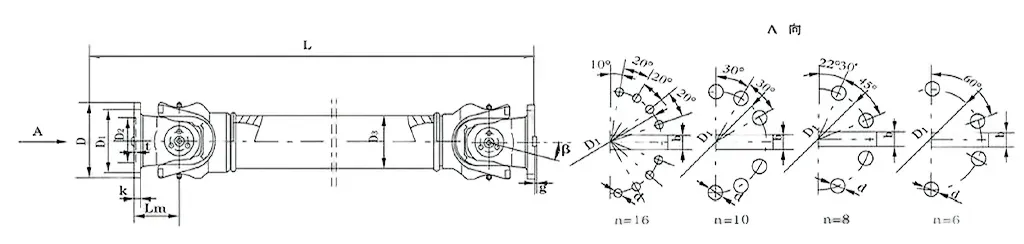
⚡ Working Principle, Materials & Operating Environment
The SWC-WH universal joint coupling operates on the Cardan joint mechanism. The two hardened steel yoke assemblies — each fully welded to their respective shaft — are linked by a central cross-trunnion bearing assembly. The driving yoke rotates and transfers motion through the cross-trunnion to the driven yoke, absorbing the angular deviation between shaft centrelines in the process. Because the two hinge planes are mutually perpendicular, the coupling can handle misalignment in any plane. One important operational characteristic is that it is not a constant velocity joint: a small cyclical speed variation per revolution occurs, proportional to the operating angle. For rolling mills, conveyors, and hoisting drives in the UK — where precise speed uniformity is not typically a primary requirement — this characteristic is rarely a limiting factor.
Material selection is critical to the coupling’s long-term durability. Yoke bodies are manufactured from medium-carbon alloy steels such as 45# steel or 40Cr, providing the tensile strength and toughness required to withstand sustained torsional loads and dynamic shock. Cross-trunnion journals are precision-ground and surface-induction-hardened to a depth and hardness optimised for wear resistance under continuous rotation. The needle roller bearing cups in the trunnion assembly are sealed with contact lip seals, retaining grease lubrication and excluding dust and moisture. In the coal yards, aggregate quarries, and steel processing plants common in Northern England, Yorkshire, and South Wales, this sealing performance is particularly valuable — environments with heavy airborne particulate can rapidly degrade inadequately sealed bearing assemblies.
All welded joints are manufactured to full-penetration weld specifications with ultrasonic or magnetic particle inspection applied to critical connection zones. This quality protocol ensures the weld zone integrity matches or exceeds the parent material strength, giving maintenance engineers in UK facilities confidence that the coupling will not fail at the weld interface under rated load. Periodic greasing through the cross-trunnion grease nipples — typically at intervals of 500 to 1,000 operating hours depending on load and environment — is the primary routine maintenance requirement.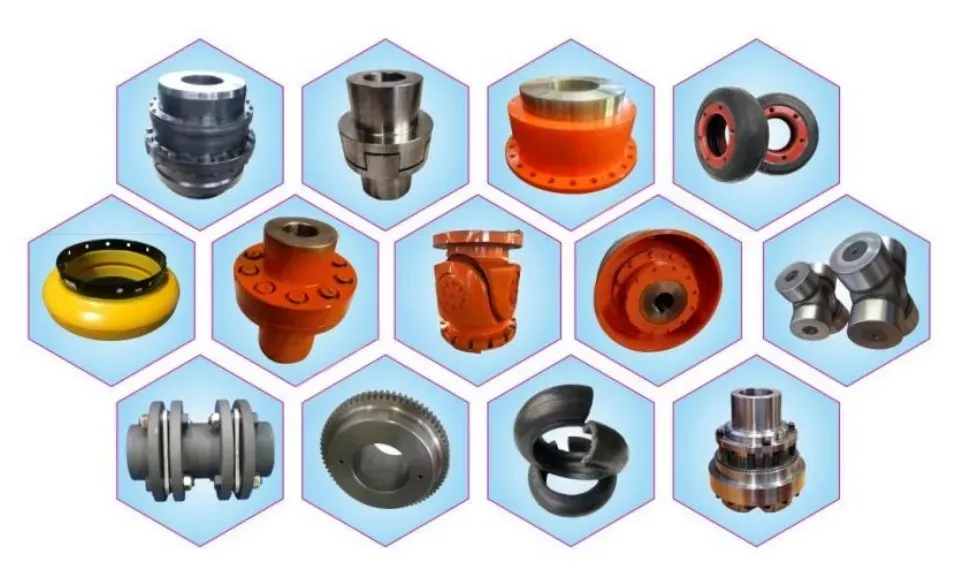
✓ Engineering Advantages for UK Industrial Applications
Permanent Weld Connection Eliminates Fastener Failures
Bolted flanged couplings fitted on heavy rolling mill drives or crusher head shafts frequently suffer fretting corrosion and bolt loosening under cyclic shock loads. The SWC-WH welded interface removes this failure mechanism entirely, delivering a connection that becomes permanently stronger over service life rather than progressively weaker. Plant managers in Sheffield and Scunthorpe steel facilities report measurable reductions in emergency coupling-related shutdowns after switching from flanged to SWC-WH welded designs.
Up to 25° Angular Misalignment Capacity
Smaller SWC-WH models support 25 degrees of shaft angular misalignment; larger sizes accommodate 15 degrees. This flexibility gives installation teams across UK manufacturing plants the ability to work with real-world shaft positioning tolerances, avoiding the time-consuming precision alignment work that rigid coupling designs demand. Where foundation settlement is a recurring issue — common in older industrial buildings in the Midlands and Northern England — this accommodation capacity is particularly valuable.
Extended Service Intervals Reduce Total Ownership Cost
Surface-hardened cross-trunnion journals combined with effective bearing seals allow the SWC-WH universal joint coupling to accumulate tens of thousands of operating hours before bearing replacement becomes necessary. In double-shift quarrying or aggregate operations across Wales and Northern England, this translates to a two-to-three-fold service life advantage over standard-grade universal couplings, meaningfully reducing the total maintenance cost per operating hour over a plant’s lifespan.
🏭 Where the SWC-WH Universal Joint Coupling Is Deployed in the UK
Across British industry, this coupling is recognised as the go-to welded universal joint solution where high torque, vibration resistance, and long service life are non-negotiable requirements.
Steel Rolling Mills
Drive shaft to rolling stand connections at plants in Sheffield, Scunthorpe, and Port Talbot, where shock torque impulses and elevated temperatures are routine operating conditions.
Conveyor & Bulk Handling
Drive head shaft connections in quarries, aggregate plants, and bulk material terminals across Wales, Yorkshire, and Northern England where angular misalignment is persistent.
Hoisting & Crane Systems
Motor-to-drum drive connections in overhead cranes, grab cranes, and container handling equipment at port facilities including Tilbury, Felixstowe, and Southampton.
Machine Tools
Motor-to-spindle interfaces in heavy CNC turning centres and boring mills where a vibration-dampening yet rigid connection is required for surface finish consistency.
Mining & Aggregates
Crusher, screen, and feeder drive shafts in open-cast and underground mining operations in the Midlands, Yorkshire, and Scotland.
Paper & Pulp Manufacturing
Paper machine drive-line couplings in Scottish and Midlands paper mills requiring consistent torque delivery over extended production runs with minimal maintenance access.
🏆 Customer Success Stories
Engineers and procurement managers across the United Kingdom and mainland Europe have deployed the SWC-WH universal joint coupling to solve persistent drive-line challenges. The three case studies below illustrate the kind of results that proper coupling selection delivers in real industrial settings.
▼ Steel Rolling Mill — Sheffield, United Kingdom
“Our rolling stand drive shaft couplings had been a persistent maintenance headache. Flange bolt loosening was occurring roughly every four months under the shock torque cycles of our primary roughing mill. After specifying SWC315WH welded universal joint couplings across three drive lines, we completed a full 20-month rolling campaign without a single coupling-related production stop. The payback came within the very first avoided maintenance shutdown and the associated scrap and roll change costs.”
— James Hartley, Senior Mechanical Engineer — South Yorkshire Steel Products Ltd., Sheffield
▼ Bulk Conveyor Drive — West Midlands, United Kingdom
“Slow ground subsidence in our aggregate plant had created a persistent 11-degree angular offset between the conveyor drive motors and the head shaft centrelines on two of our six belt lines. Standard rigid couplings kept failing at the hub. We fitted SWC225WH universal joint couplings and they have handled the angular offset without complaint through two full years of double-shift operation. Stone dust exposure has had no visible effect on the seal performance. We are now fitting the same specification across the remaining four lines.”
— Claire Fenwick, Plant Operations Manager — Midland Aggregates (UK) Ltd., West Midlands
▼ Container Crane Drive Upgrade — Tilbury, Essex, United Kingdom
“Finding a reliable SWC-WH coupling supplier with both the technical knowledge and the delivery capability to support a live port infrastructure project was our primary concern. The team at gear-type-coupling.top provided a full drawing review for the SWC390WH specification within 24 hours and delivered all units ahead of our installation window at Tilbury. Twelve months in, zero issues. We have already budgeted the same specification for our Phase 2 crane upgrade next year and will not be looking at alternative suppliers.”
— David Osei, Procurement Director — Thames Logistics Engineering Ltd., Essex
🏭 Manufacturing Capability & Custom Universal Joint Coupling Service
Our manufacturing facility operates dedicated CNC turning centres, precision welding bays, and controlled heat treatment lines for universal joint Kupplung production. With over 18 years of application engineering experience, we serve clients across the United Kingdom, Germany, France, the Netherlands, and Scandinavia with both standard catalogue items and fully customised coupling assemblies. The 14 standard SWC-WH models cover the majority of industrial drive specifications, but our engineering team offers a comprehensive customisation service for those applications that fall outside standard parameters or require OEM direct replacement parts:
▸ Non-Standard Shaft Lengths
Telescopic intermediate shafts and extended Lmin values for variable-centre-distance or long-span drive applications, including mining and port handling equipment.
▸ Custom Bore Configurations
D2 bore machined to customer drawing, including stepped bores, involute spline bores, parallel key or Woodruff key profiles for direct OEM replacement supply to UK maintenance teams.
▸ Material Upgrades
High-alloy or stainless steel yoke construction for corrosive chemical plant drives, offshore applications, or food processing facilities requiring enhanced corrosion resistance.
▸ Surface Treatment Options
Hot-dip galvanising, epoxy primer, phosphate-and-oil, or zinc-rich primer coating for outdoor, marine, or high-humidity environments common in UK port and coastal industrial sites.
❓ Häufig gestellte Fragen
Questions most commonly raised by UK mechanical engineers, plant managers, and procurement specialists.
Universal Joint Coupling Specialists — Serving the United Kingdom
Ready to Specify Your SWC-WH Universal Joint Coupling?
Provide your torque requirement, operating angle, and shaft diameter and our application engineers will confirm the correct model, verify custom dimensional feasibility if required, and return a competitive quotation within one working day.

SWC-WH Without Flex Welding Type Universal Joint Coupling — Supplied to the United Kingdom & Europe
bearbeitet von gzl