Σύνδεσμος τύπου γραναζιού για συστήματα κίνησης φυσητήρα υψικαμίνου: Η μηχανική περίπτωση για αξιόπιστη μετάδοση υψηλής ισχύος
Published by Ever Power Transmission · UK Industrial Applications · Estimated read: 12 min
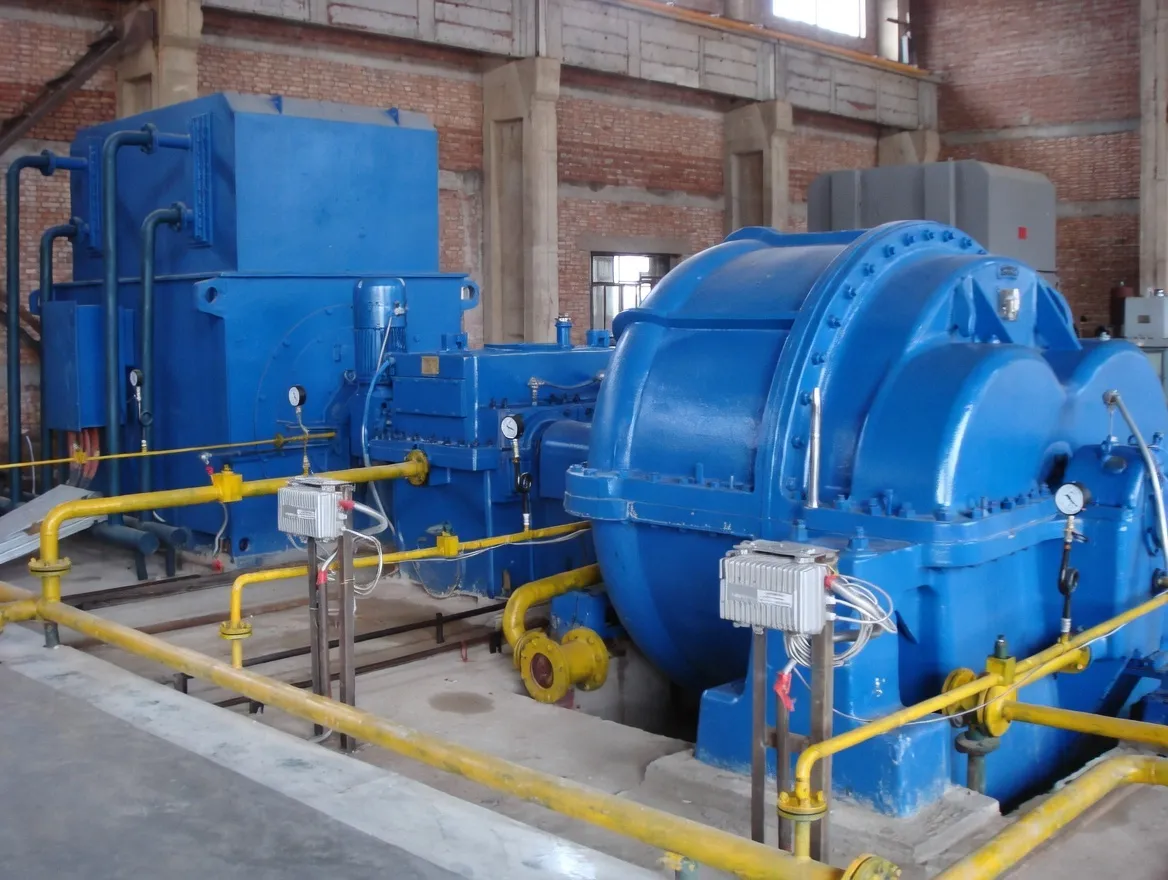
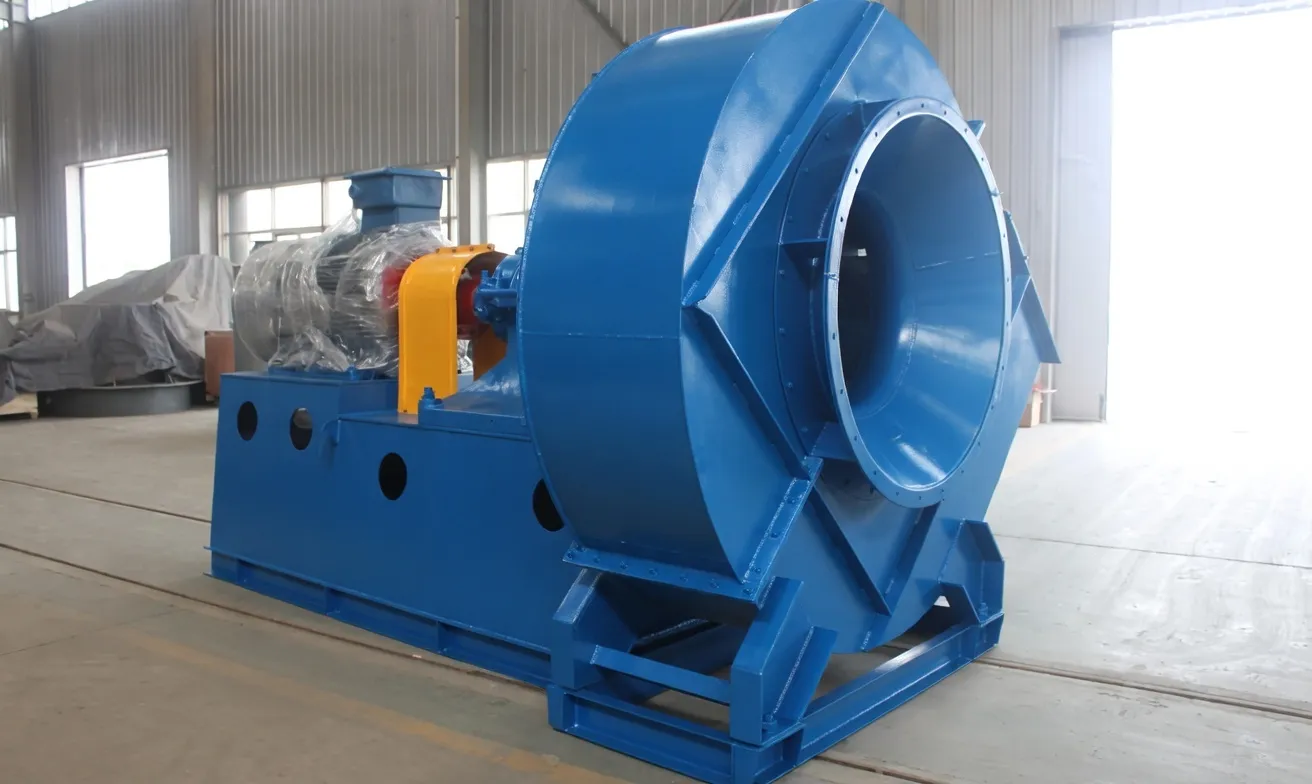 In the heart of an integrated steelworks — whether in Sheffield, Scunthorpe, or South Wales — the blast furnace blower train represents one of the most unforgiving mechanical environments in modern heavy industry. These machines operate continuously, often around the clock for months at a stretch, pushing millions of cubic metres of compressed hot air into furnaces that consume ore, coke, and limestone at rates no human workforce could manage manually. Every kilowatt of power transferred through the drivetrain is money, productivity, and molten iron. And at the very centre of that power transfer sits a component that most visitors to the plant would walk straight past: the gear type coupling.
This article draws on over 18 years of hands-on application engineering experience — from initial drivetrain audits on ageing blast furnace trains to full coupling replacement programmes during scheduled shutdowns — to explain why the gear type coupling is not simply a convenient connector between motor and blower, but a precision-engineered solution to a genuinely difficult mechanical problem. We will cover the physics of the application, material and design considerations, lubrication strategy, real-world performance data, and the specific value that a properly specified gear coupling brings to UK steel and minerals processing operations.
Why Blast Furnace Blower Trains Push Every Coupling to Its Limit
 A blast furnace blower train is not simply a large fan. The centrifugal or axial-flow compressors used in modern blast furnace practice operate at shaft powers ranging from 3,000 kW up to 20,000 kW or beyond on the largest installations. Shaft speeds vary considerably depending on whether a gearbox is interposed between motor and compressor — direct-drive arrangements may see coupling speeds from 1,500 to 3,000 rpm, while high-speed output shafts on geared trains can exceed 6,000 rpm. At these power and speed combinations, even a small angular or parallel misalignment between motor and compressor shaft centrelines generates enormous cyclic bending moments at the coupling interface.
The thermal environment compounds every mechanical challenge. The blower casing and associated pipework reach significant operating temperatures, causing differential thermal expansion between the motor baseframe and the compressor mounting structure. On a concrete-mounted train occupying eight to twelve metres of floor space, a temperature difference of as little as 40°C across the train length can produce shaft misalignment of several tenths of a millimetre. Any coupling unable to accommodate this movement without transmitting large restoring forces back into the bearings will cause accelerated bearing wear — and eventually a forced shutdown that, in blast furnace operation, has consequences measured not in hours of lost production but in significant structural risk to the furnace itself.
The dynamic loads are equally challenging. Start-up of a large induction motor driving a centrifugal blower produces a torque transient that can reach three to four times the full-load torque in the first few seconds of acceleration. The coupling must absorb or transmit this torque spike without plastic deformation of any tooth surface, and it must do so reliably across thousands of start-stop cycles over a service life measured in years. A gear type coupling, when correctly designed and lubricated, meets all of these demands in a single compact envelope — which is why it has remained the coupling of choice for blast furnace blower drives in UK and European steelworks for several decades.
How a Gear Type Coupling Works: The Mechanics of Misalignment Accommodation
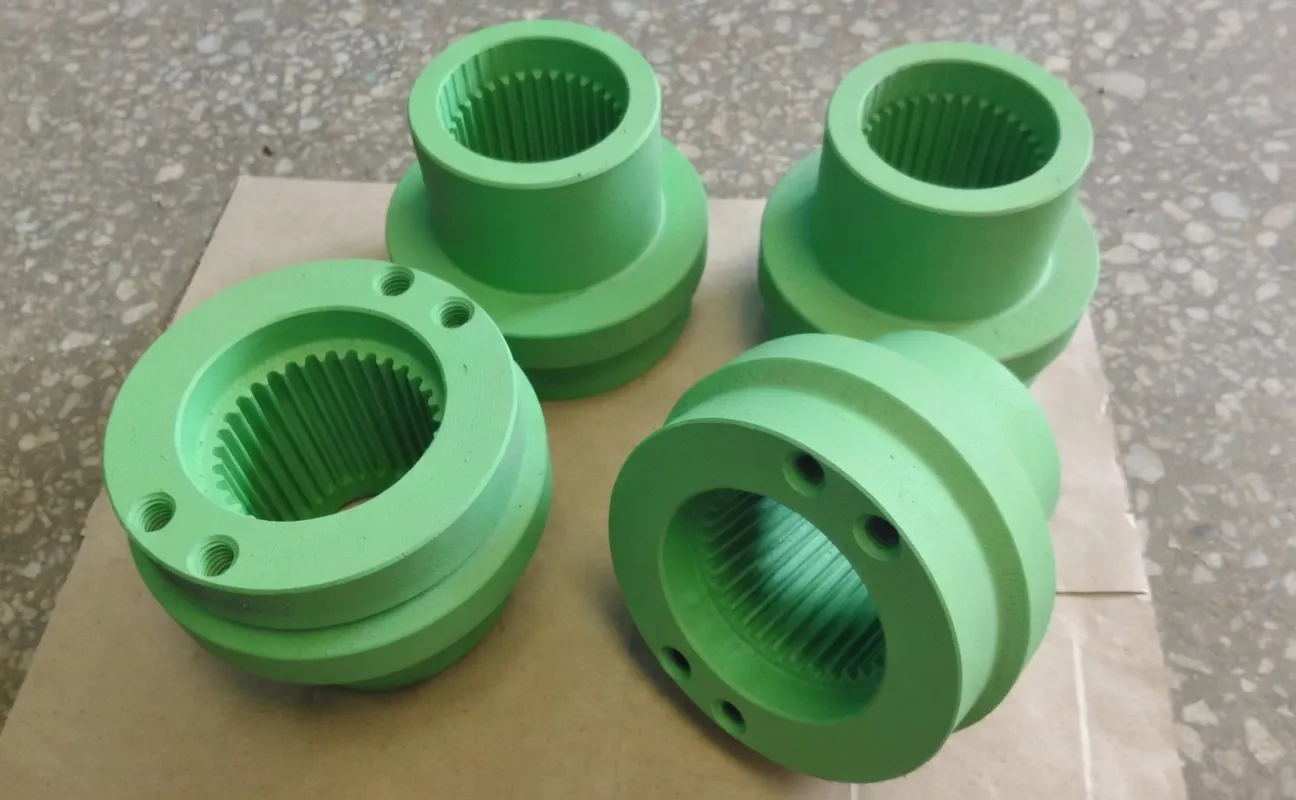
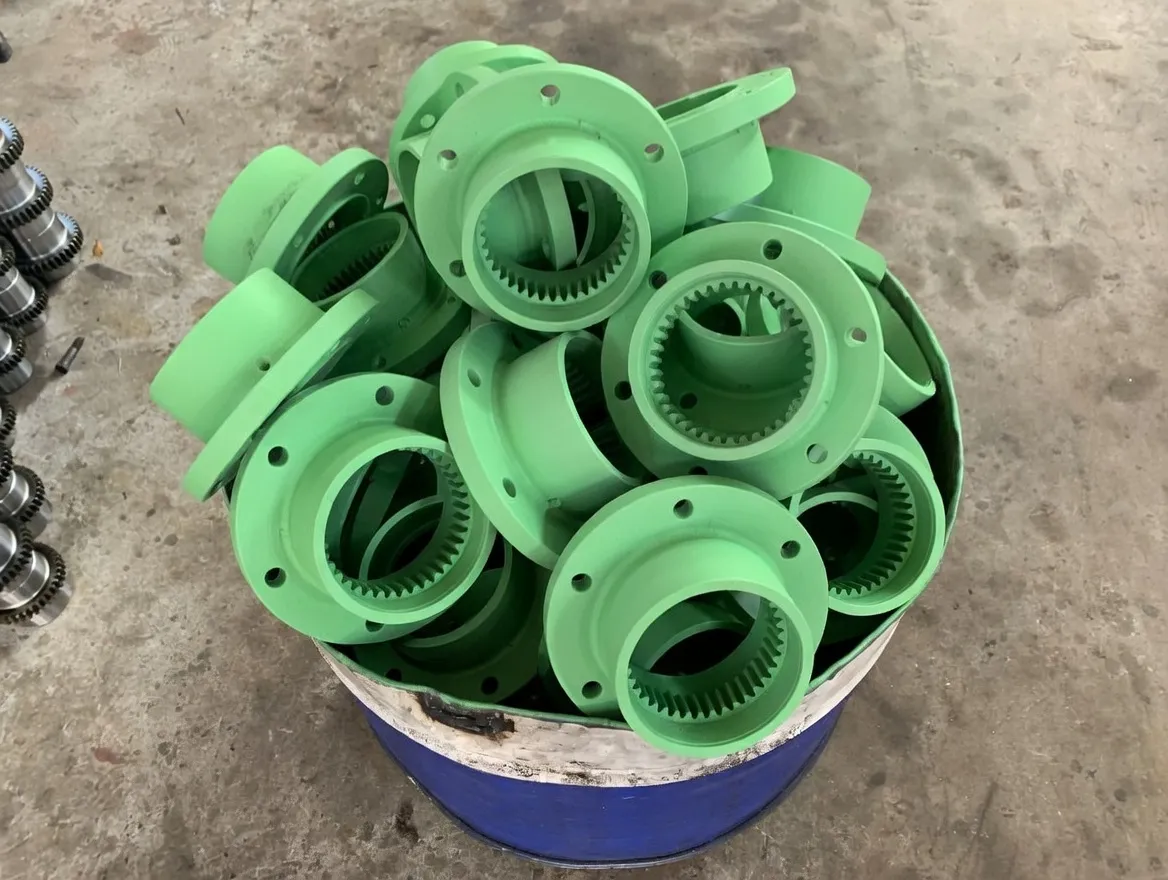
 The gear type coupling belongs to the family of rigid-flexible couplings — a description that sounds contradictory but perfectly captures its operating principle. Power is transmitted through interlocking external and internal gear teeth machined to close tolerances, giving the coupling a torsional stiffness comparable to a solid shaft section. Yet the crowned profile ground or hobbed onto the external gear teeth allows each hub to rock slightly within its sleeve, accommodating angular misalignment of up to 1.5 degrees per gear mesh without generating any significant axial or radial load on the connected machine shafts.
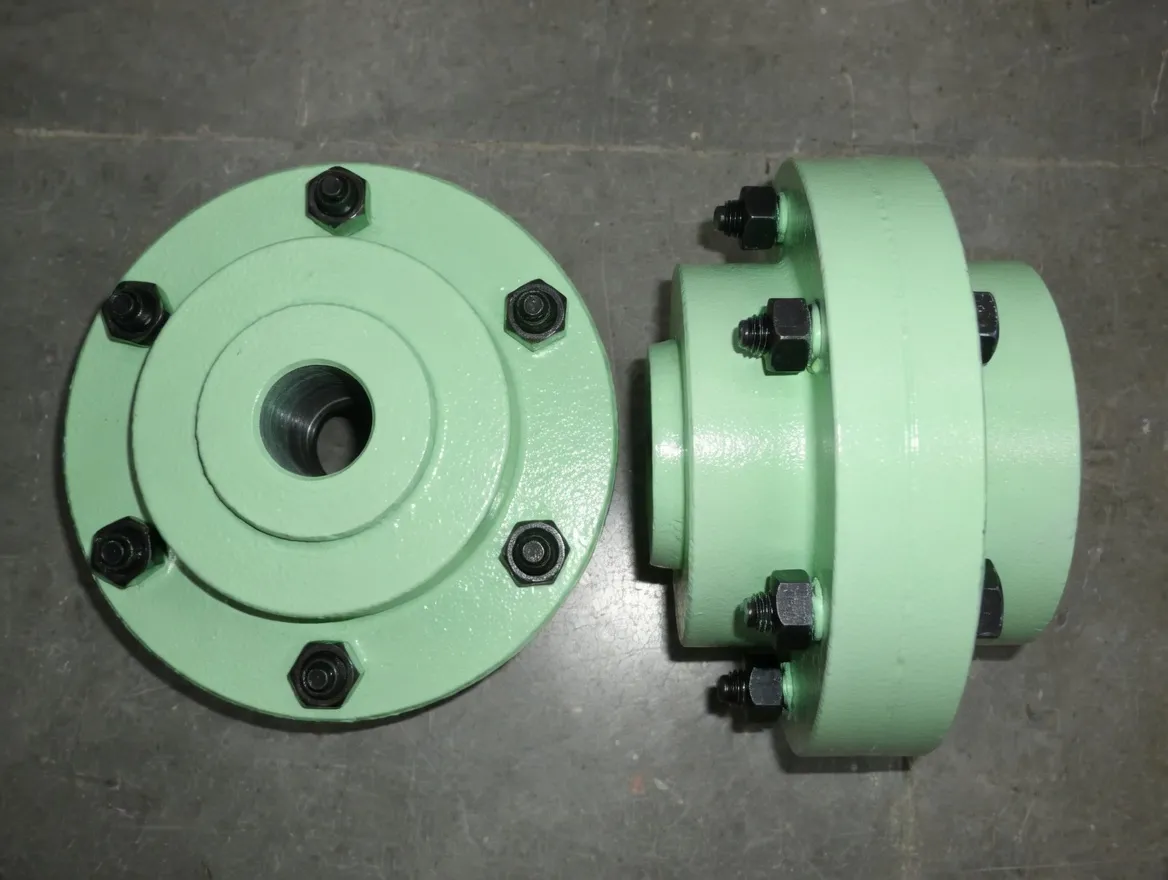
A standard single-engagement gear type coupling consists of two hubs, each carrying external crowned teeth, and a flanged sleeve assembly whose internal teeth mesh with each hub. The sleeve halves are bolted together at a central flange — a flange that can be separated during maintenance without disturbing the hub-to-shaft interference fits. In high-speed blast furnace blower applications, this single-engagement design is often extended to a double-engagement configuration, where two gear meshes in series accommodate axial float and more complex spatial misalignment, particularly useful where the motor and compressor are mounted on separate frames with independent thermal behaviour.
The crowning geometry — the subtle barrel shape machined into the external tooth flanks — is the most technically critical element of the entire coupling. Too little crown and the coupling becomes sensitive to misalignment, loading only the tooth tips and causing rapid pitting fatigue. Too much crown and the effective tooth contact length is reduced, concentrating stress at the centre of the mesh and reducing torque capacity. In Ever Power’s manufacturing process, crown profile is generated and verified using CNC gear-grinding equipment calibrated to sub-micron tolerances, ensuring that every coupling leaves the factory with a contact pattern optimised for the rated operating conditions of the specific blower application.
Technical Parameters: Gear Type Coupling for Blast Furnace Blower Service
The table below summarises the primary performance parameters for Ever Power gear type couplings in blast furnace blower drive service. Values represent standard product ranges; custom engineered solutions can exceed these figures on request.
| Παράμετρος | Τυπικό εύρος | High-Duty Blower Series | Μονάδα |
|---|---|---|---|
| Rated Torque Capacity | 500 – 500,000 | 50,000 – 800,000 | N·m |
| Μέγιστη ταχύτητα | Up to 3,600 | Up to 6,500 | στροφές/λεπτό |
| Angular Misalignment (per mesh) | Έως 1,0 | Έως 1,5 | βαθμούς |
| Axial Float (single engagement) | ±3 – ±15 | ±5 – ±25 | χιλ. |
| Tooth Material (hub) | 42CrMo4 / 20CrMnTi | 17CrNiMo6 / 18CrNiMo7-6 | – |
| Σκληρότητα επιφάνειας δοντιού | 58 – 62 | 60 – 64 | HRC |
| Dynamic Balance Grade | G6.3 | G2.5 / G1.0 | ISO 21940 |
| Μέθοδος λίπανσης | Grease-packed | Forced oil / splash oil | – |
| Εύρος γεώτρησης | 20 – 200 | 120 – 500 | χιλ. |
| Design Standard | GB/T 5272 / JB/T 8854 | AGMA 9009 / BS 3550 | – |
Lubrication Strategy: Why Getting This Right Defines Service Life
 No single factor has a greater influence on gear type coupling service life in blast furnace blower service than lubrication management. At the gear mesh, contact pressures can approach or exceed 1,000 MPa during peak torque events, and even under normal running conditions the combination of high contact stress, relative sliding motion between crowned teeth and sleeve, and elevated temperature demands a lubricant capable of maintaining a coherent film under extreme pressure. When lubrication fails — even briefly — the consequences progress rapidly from light surface polishing through adhesive wear to catastrophic tooth fracture, and the coupling becomes scrap metal during a shutdown whose cost per hour in a UK blast furnace context can reach tens of thousands of pounds.
For blower couplings operating at moderate speeds and moderate temperatures, high-quality gear coupling grease — typically a lithium complex or polyurea-based grease of NLGI Grade 1 or 2, formulated with EP additives and an operating range extending to at least 120°C — provides a satisfactory solution. The coupling housing is sealed with lip seals or labyrinth seals to retain the grease charge, and regreasing intervals are scheduled in line with operating hours and confirmed by vibration monitoring trends. The grease approach is simple, requires no external infrastructure, and has proven effective on thousands of industrial coupling installations across UK manufacturing sites.
For large, high-speed blast furnace blower couplings — particularly those exceeding 5,000 kW or 4,000 rpm — the preferred lubricant system is forced circulation oil lubrication, typically integrated with the gearbox or bearing oil supply. A continuous flow of filtered, cooled ISO VG 220 or ISO VG 320 turbine oil is directed into the coupling housing through a dedicated port, flows through the gear mesh, and returns to the sump via a drain connection. This approach removes heat continuously, maintains consistent viscosity, and allows real-time monitoring of oil quality and particle count. From our project experience with UK steelmakers and minerals processors, forced oil lubricated gear couplings on blast furnace blower trains routinely achieve three-to-five-year maintenance intervals between tooth inspections — a figure that validates the investment in the more complex lubrication system.
Material Selection and Heat Treatment for Demanding Service
The gear type coupling’s capacity to handle the torque and speed conditions of a blast furnace blower ultimately rests on the material and heat treatment of the gear teeth. Hub blanks for high-duty applications are forged from low-alloy case-hardening steels — typically 17CrNiMo6 or 18CrNiMo7-6 in European grades — chosen for their combination of a tough, ductile core capable of absorbing shock loads and a hard case capable of resisting contact fatigue. The case-hardening cycle involves carburising to achieve a case depth of 1.0 to 2.0 mm depending on module, followed by quench and temper to achieve case hardness of 60 to 64 HRC with a core hardness of 30 to 38 HRC.
After heat treatment, the tooth flanks are finish-ground on CNC gear-grinding machines to achieve tooth profile and lead tolerances conforming to AGMA Quality Class 11 or better — equivalent to ISO accuracy grade 5. This level of accuracy is not merely cosmetic. The contact pattern verification carried out on every Ever Power high-duty coupling before despatch confirms that at least 70% of the active tooth face is engaged under simulated rated load conditions, providing the load distribution essential to long fatigue life. Sleeve components are typically manufactured in medium-carbon or alloy steel, induction hardened on the internal tooth flanks to achieve 50 to 55 HRC, providing a hardness differential against the hub that promotes preferential wear on the more accessible and less expensive sleeve rather than the hub itself.
Balance is the final critical material-related consideration. At the shaft speeds typical of blast furnace blower applications, an assembled coupling with poor dynamic balance introduces a centrifugal force that rotates with the shaft, exciting the natural frequencies of the shaft-bearing system and producing vibration that accumulates damage in bearings, seals, and structural connections. Ever Power’s high-speed coupling assemblies are dynamically balanced to ISO 21940 Grade G2.5 as standard, with Grade G1.0 balance available on request for the most demanding high-speed applications. Balance correction is carried out on the assembled coupling including both hubs and sleeve, eliminating residual couple imbalance that component-by-component balancing cannot address.
Six Reasons UK Heavy Industry Specifies Gear Type Couplings on Blower Drives
Εξαιρετική πυκνότητα ροπής
Gear tooth contact transmits torque over a broad cylindrical surface, achieving torque capacity per unit weight that jaw or disc couplings cannot match at equivalent bore sizes.
Angular and Axial Flexibility
The crowned tooth geometry accommodates angular misalignment up to 1.5° per mesh and free axial movement, protecting bearings from induced loads caused by thermal growth.
Precision Balance Grades
Assembly-balanced to G2.5 or G1.0 per ISO 21940, minimising vibration excitation on sensitive compressor-bearing systems and extending rotor component life.
Case-Hardened Alloy Steel Teeth
17CrNiMo6 and 18CrNiMo7-6 steel, carburised and ground to AGMA Q11, delivers a hard contact surface over a ductile core — resisting both fatigue and shock simultaneously.
Maintainability During Planned Shutdowns
Split-sleeve construction allows tooth inspection and sleeve replacement without disturbing hub-to-shaft interference fits, cutting maintenance time significantly on tight shutdown schedules.
Compatible with Forced Oil Lubrication
Integral oil ports and drain connections allow integration with existing gearbox oil supplies, enabling continuous cooling and filtration — critical for 24/7 blower operations.
Application Scenarios Across UK Heavy Industry
While the blast furnace blower drive is the primary focus of this article, the gear type coupling’s combination of high torque capacity, flexibility, and reliability makes it the natural choice across a broad range of demanding industrial applications throughout the United Kingdom. From the steelworks of Teesside and South Wales to the cement kilns of the East Midlands, engineers routinely select the gear type coupling wherever power density and dependability are the overriding requirements.
Τρένα φυσητήρα υψικαμίνου
Motor-to-blower direct and geared drives, 3,000–20,000 kW, continuous operation, forced oil lubrication preferred.
Rolling Mill Main Drives
Slab and billet mills, reversing drives with shock loading, AGMA service factor 2.0+, cardan-gear hybrid arrangements.
Cement Kiln Drives
Large girth gear drives with slow-speed high-torque pinion shafts, compensating for kiln shell deflection and thermal crown changes.
Power Station Boiler Feed Pumps
Motor-to-pump drives in coal and gas plants, high-temperature environments requiring thermal expansion compensation.
Offshore Platform Compressors
Gas injection and gas lift compressors, weight-critical with API 671 compliance requirements, North Sea operating profiles.
Mining Ventilation Fans
Large axial and centrifugal fans in UK potash and coal operations, remote site maintenance requirements, multi-year service intervals.
In each of these environments, the selection logic mirrors that of the blast furnace blower: high continuous torque, potentially difficult alignment conditions, and a maintenance philosophy that demands long service intervals interrupted only by planned shutdowns. The gear type coupling is not a universal answer to every drivetrain problem — flexible jaw couplings, disc pack couplings, and torsionally soft rubber couplings each have their place — but where the power density is high and the reliability requirement is uncompromising, the σύνδεσμος τύπου γραναζιού remains the preferred engineering solution.
Ever Power: Custom Engineering Capability for UK Blower Applications
Ever Power operates a dedicated heavy-duty coupling manufacturing facility equipped with CNC gear-grinding, carburising furnaces, CMM inspection, and dynamic balancing machines capable of handling assemblies up to 2,500 kg. Our engineering team works directly with UK plant engineers and maintenance managers to develop coupling solutions that fit existing shaft arrangements, integrate with current lubrication infrastructure, and meet the specific duty cycle requirements of each blower application — whether that means a direct replacement for a competitor product or a ground-up custom design for a new plant installation.
Custom services include non-standard bore configurations, keyway and interference fit optimisation, special seal arrangements for contaminated environments, coupling-specific balance certification documentation for API 671 submissions, and short lead-time emergency supply for unplanned failures. We maintain a stock of standard-range hubs and sleeves that allows rapid assembly of intermediate sizes, typically reducing lead time from 16 weeks to 4–6 weeks for urgent replacement projects. For UK customers, we provide full dimensional drawings, material certification to EN 10204 3.1, and hardness test reports as standard documentation with every order.
Customer Success: South Wales Integrated Steelworks Blower Coupling Upgrade
Client
Εφαρμογή
Challenge
The steelworks engineering team had experienced four coupling failures on the No.3 blower train over a six-year period, each causing an unplanned shutdown and requiring emergency coupling replacement at significant cost. Root cause analysis identified two contributing factors: the original coupling specification had insufficient misalignment capacity for the thermal growth pattern of the specific train layout, and the grease lubrication system was not adequately replenished between shutdowns, leading to lubricant starvation in the upper half of the coupling at operating speed.
Ever Power’s application team conducted a full drivetrain audit during a planned maintenance window, including thermal imaging of the motor and blower bearing housings at operating temperature, laser alignment measurement of shaft centrelines under running conditions, and vibration spectral analysis to characterise the existing dynamic behaviour. Based on this data, a replacement gear type coupling was specified with 20% additional misalignment capacity, a redesigned housing incorporating forced oil lubrication ports connected to the existing gearbox oil supply, and balance upgraded to G1.0 grade assembly-balanced to match the sensitive compressor bearing system.
The replacement coupling was installed during a six-week scheduled campaign shutdown. At the time of writing, the coupling has been in continuous service for 38 months without any unplanned intervention. Bearing temperature on the compressor outboard bearing dropped by 12°C after the coupling upgrade, and the overall vibration level at the coupling span fell by 35% compared to pre-upgrade measurements. The client’s maintenance manager estimates the coupling programme has avoided two forced shutdown events, representing a saving comfortably exceeding the total project investment.
What UK Engineers Say About Ever Power Gear Type Couplings
“We had persistent bearing temperature issues on our primary blower train that we had tried to solve through alignment improvements alone. Switching to the Ever Power gear type coupling with forced oil lubrication resolved the problem completely within the first operating quarter. The engineering support we received was exactly what you’d expect from people who really understand how blower trains behave in service.”
“Lead time was the critical factor for us — we needed a replacement coupling after an unplanned failure with only three weeks before the scheduled restart. Ever Power had a coupling matched to our shaft arrangement and balanced to G2.5 on our dock within 18 days. That kind of response is what keeps a blast furnace running on schedule.”
“We specified Ever Power gear type couplings on two new blower trains during a major capital project. The API 671 documentation package was complete and accurate first time, which avoided considerable re-work with our certifying authority. The couplings have now accumulated over 24,000 running hours each with no maintenance interventions. We will be specifying them again on the next phase.”
Frequently Asked Questions: Gear Type Coupling for Blast Furnace Blower Applications in the UK
Ready to Specify a Gear Type Coupling for Your Blower Drive?
Send your drivetrain specifications to our engineering team for a same-day selection and quotation.
επεξεργασία από gzl