Industrial Application Series · UK Edition
Couplings in Malt Grinder Applications:
Engineering Precision for the Brewing & Distilling Industry
A deep-dive technical and commercial guide for UK manufacturers, breweries, and distilleries sourcing industrial couplings for malt grinding systems.
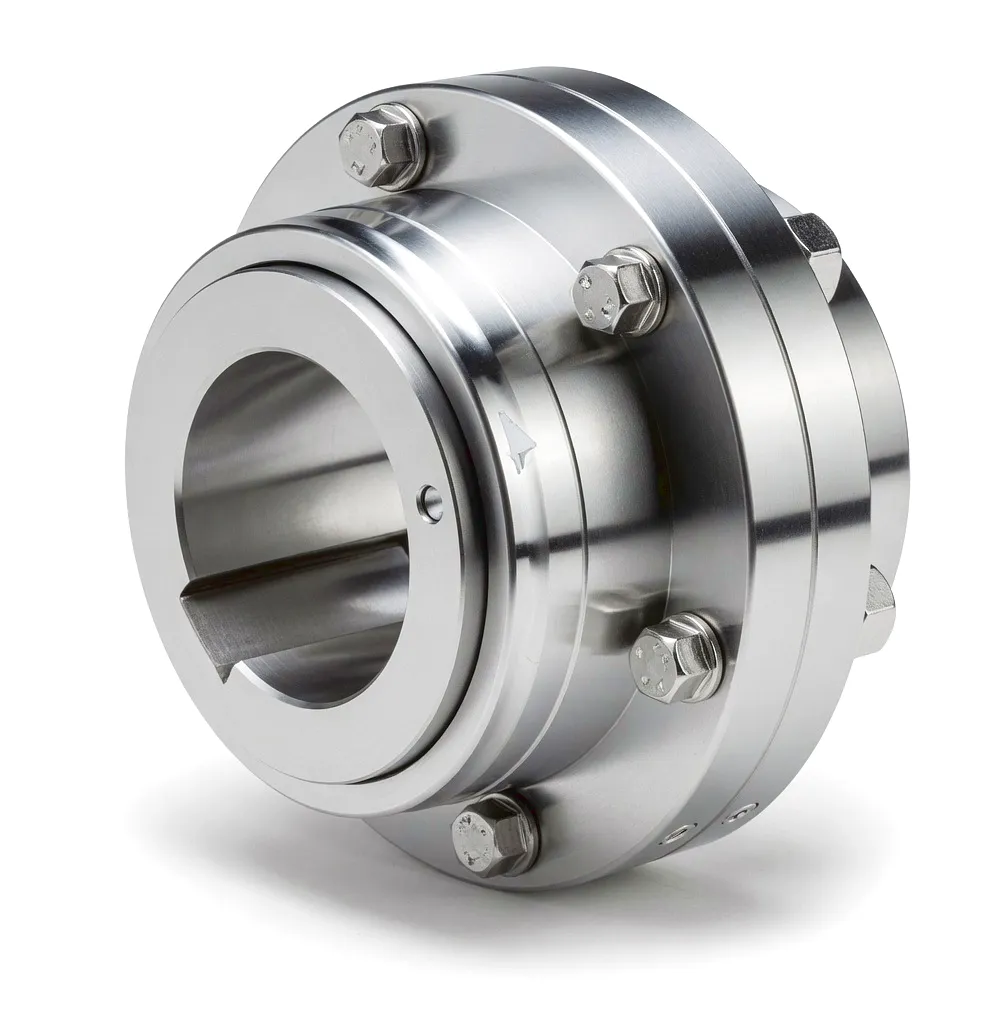
In the heart of Britain’s centuries-old brewing and distilling tradition — from the craft ale taprooms of Sheffield to the industrial-scale malthouses of Burton-on-Trent — one mechanical component quietly determines whether a grain processing operation runs at peak profitability or loses thousands of pounds to unscheduled downtime: the coupling. Malt grinding is a uniquely demanding process. Raw barley, wheat, or rye must be crushed or milled to a precise grist consistency that directly influences mashing efficiency, extract yields, and ultimately, the flavour profile of the finished beer or spirit. The machinery tasked with this job — roller mills, hammer mills, and disc grinders — operates under continuous cyclic loading, exposes drivetrain components to grain dust contamination, and demands shaft-to-shaft alignment tolerances that most general-purpose couplings simply cannot maintain across a production shift.
The coupling connecting the drive motor to the grinder’s main shaft sits at the intersection of all these stresses. It must transmit torque reliably across a range of operational speeds, absorb the shock loads generated when hard grain kernels enter the crushing zone, accommodate minor shaft misalignment caused by thermal expansion or foundation settlement, and do all of this while resisting ingress from fine malt dust — a substance that, when combined with bearing grease or moisture, becomes an abrasive paste capable of destroying surface finishes within weeks. Engineering teams across Birmingham, Leeds, and the Scottish Highlands have learned through costly experience that selecting the wrong coupling category leads to premature fatigue failure, accelerated bearing wear, and production interruptions that ripple across the entire brew-house schedule.
What Is a Coupling and Why Does It Matter in Malt Grinding?
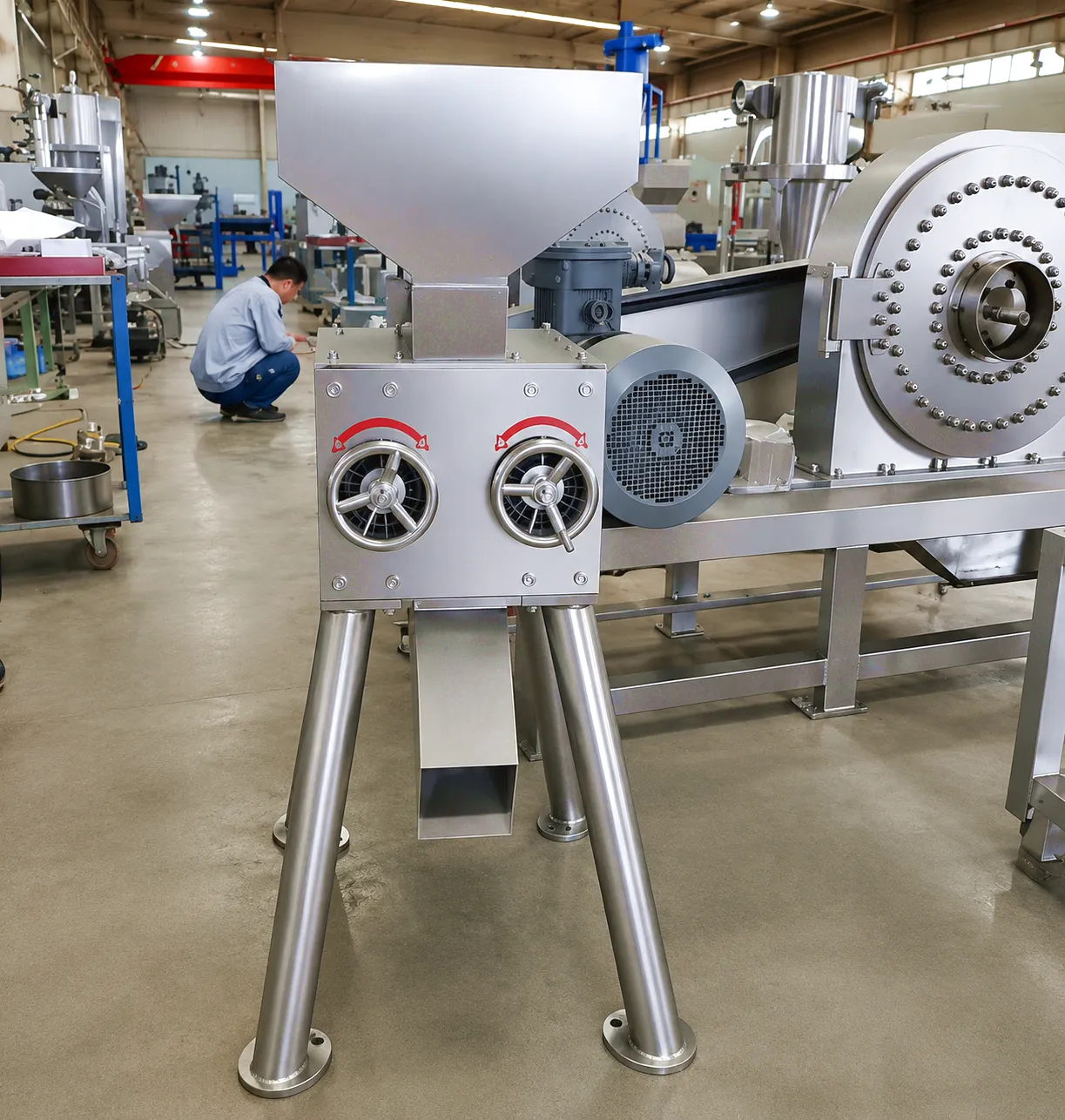 A coupling is a mechanical device designed to connect two rotating shafts — typically a prime mover such as an electric motor or gearbox output — to a driven machine element such as a mill roller or hammer rotor. Its job sounds deceptively simple: transfer rotational torque from one shaft to the other. In practice, however, a well-engineered coupling does considerably more than this. It absorbs torsional shock, compensates for angular and parallel misalignment between shaft centerlines, damps vibrations that would otherwise travel into precision bearings, and provides a mechanical fuse function — a designed weak point that sacrifices itself before a torque spike can destroy a gearbox worth tens of thousands of pounds.
In malt grinder applications specifically, these functions are not theoretical niceties but operational necessities. A roller mill processing 10 tonnes of barley per hour generates repeated impulsive loading whenever particularly hard or oversized kernels enter the nip zone between rollers. Torque spikes of two to three times nominal load are common. Without a coupling that accommodates this shock loading — whether through elastomeric damping elements, flexible disc packs, or gear-tooth compliance — the energy transfers directly into the gearbox, motor shaft keyways, and roller bearings. The cumulative fatigue damage from thousands of such events per hour accelerates component wear by a factor that production engineers frequently underestimate until the maintenance bill arrives.
Working Principle of Couplings in Malt Grinder Drive Systems
⚙️
Torque Transmission
Couplings transmit rated torque from the motor shaft to the mill shaft through direct mechanical engagement — whether via gear teeth, flexible disc packs, beam spring elements, or elastomeric inserts. The torque path is engineered to remain consistent across the operational speed range without slip or backlash that would compromise grind consistency.
📐
Indemnisation pour désalignement
Real-world mill installations rarely achieve perfect shaft-to-shaft alignment. Thermal growth of motor housings, foundation vibration settling, and roller replacement procedures all introduce angular and parallel offset. Flexible couplings absorb these deviations elastically — typically accommodating angular misalignment up to 5° and parallel offset up to several millimetres — preventing bearing side-loading that would otherwise slash service life dramatically.
🛡️
Shock Load Absorption
When malt grain strikes the crushing rollers, instantaneous torque peaks of 200–300% of rated load are transmitted through the drivetrain. Elastomeric or disc-type couplings store a portion of this energy as elastic deformation and release it smoothly over several milliseconds, dramatically reducing the peak load that reaches the motor and gearbox. This shock-damping function alone justifies the use of a correctly specified flexible coupling over a rigid alternative in virtually every malt milling application.
🔔
Vibration Isolation
Roller mills inherently generate torsional vibration at frequencies linked to roller rotational speed, grain feed rate, and drive motor pole-passing frequency. Without vibration isolation, these frequencies can excite resonance in connected machinery frames, instrumentation mounts, and pipework, generating noise levels that breach UK Noise at Work Regulations and accelerating fatigue cracking in weld joints. A well-specified coupling introduces a torsional compliance element that shifts the system’s natural frequency away from excitation sources.
Application Scenario: Malt Grinder Drive Systems in UK Brewing and Distilling
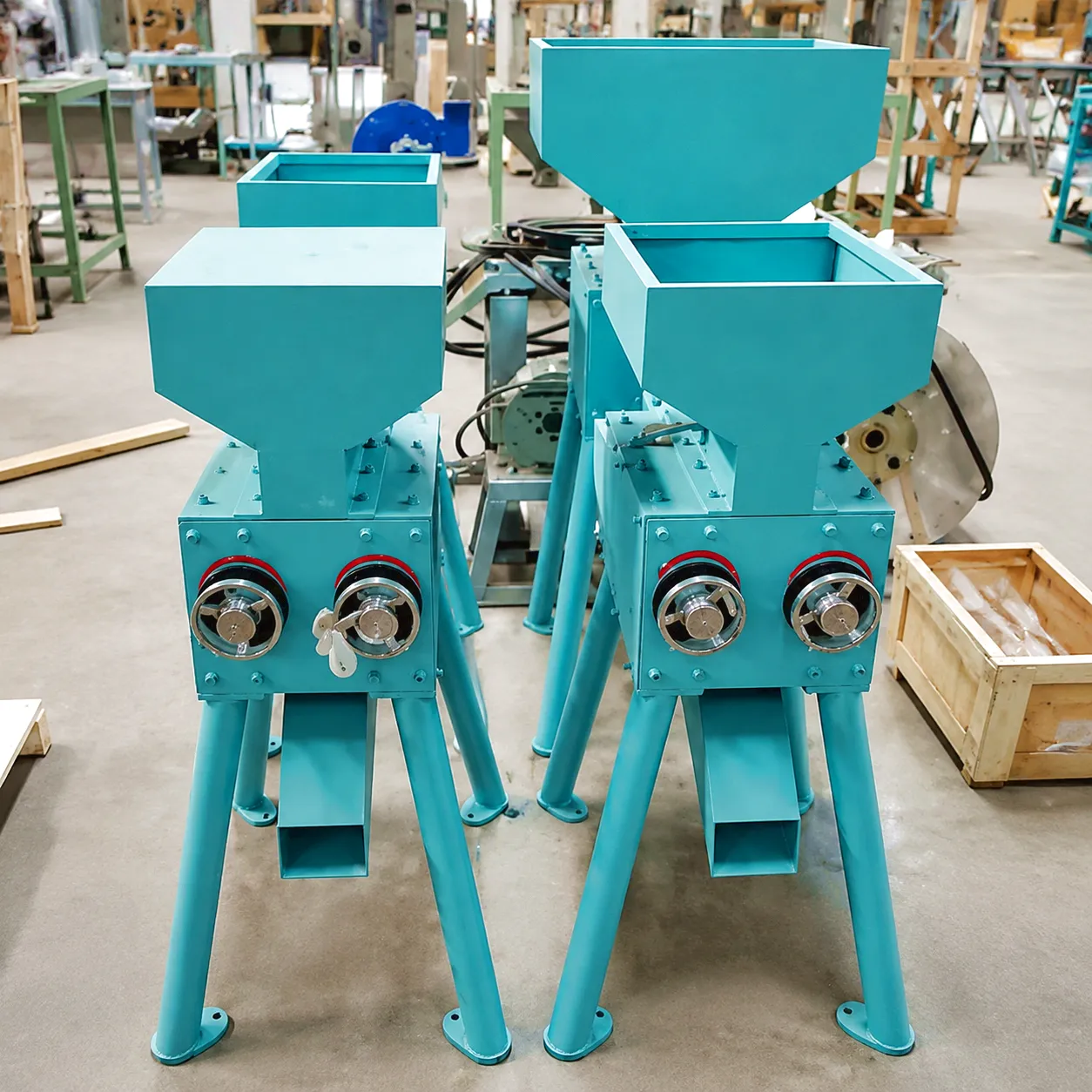 Britain’s food and drink manufacturing sector represents one of the country’s most significant industrial output streams, with the brewing industry alone contributing over seven billion pounds to the national economy annually. Malt grinding equipment sits at the start of this entire value chain. Whether a craft brewery in Birmingham is running a two-roller mill processing a few hundred kilograms per hour, or a large-scale commercial maltster in East Anglia is operating a six-roller mill system turning over multiple tonnes per hour continuously, the coupling selection directly governs operational reliability, maintenance intervals, and energy consumption at the point of power transfer.
In a typical malt roller mill, an electric motor — most commonly an IE3 or IE4 efficiency-class induction motor rated between 7.5 kW and 55 kW — drives the main roll shaft through a V-belt or gear reducer arrangement. The coupling between the gearbox output shaft and the mill roll shaft is the component that must reconcile the smooth rotational output of an induction motor with the impulsive, grain-impacted loading of the mill rolls. In hammer mills, which are common in distillery malt processing because they produce a finer, more uniform grist, the impeller-type rotor creates additional torsional excitation that flexible couplings must accommodate without transmitting back to the motor winding end shield.
Seasonal demand patterns in UK brewing — where production peaks sharply ahead of festive periods — mean that malt grinders frequently run extended overtime shifts during October through December. Equipment that has been operating at nominal duty cycle for ten months is suddenly pushed to higher throughput rates just when it is most likely to exhibit wear-related issues. A coupling that was marginal in its selection can fail during this critical period, causing losses that far exceed the cost difference between an adequately specified and an over-specified component. This is one reason why brewing equipment engineers increasingly specify couplings with a service factor of 1.5 to 2.0 above theoretical torque requirements.
Core Materials Used in Coupling Manufacturing for Malt Industry Applications
🔩
High-Strength Carbon Steel
Used for hubs, flanges, and shaft sleeves. Grades such as C45 or 42CrMo4 provide the yield strength needed to withstand repeated shock torque cycles without permanent deformation. In malt mill applications, carbon steel hubs are typically surface treated — zinc phosphated or nickel plated — to resist the humid, grain-dust environment characteristic of UK malthouse floors.
⚡
Alloy Steel (Case-Hardened)
Gear-type coupling teeth and disc coupling hubs in high-torque mill drives are manufactured from case-hardened alloy steel — typically 20CrMnTi or 18CrNiMo7-6 — providing a hard, wear-resistant tooth surface over a tough, impact-resistant core. The combination is critical in malt grinding drives where torque reversals on startup and shutdown cycle the tooth flank contacts repeatedly.
🌿
Polyurethane / NBR Elastomers
Elastomeric coupling inserts — the flexible spiders, tyre elements, or jaw inserts — are typically moulded from nitrile butadiene rubber (NBR) or polyurethane (PU). Shore hardnesses from 64A (high compliance, high damping) to 98A (stiffer, higher torque rating) allow engineers to tune system response. PU elements offer better oil and chemical resistance, advantageous in breweries where CIP cleaning agents may contaminate the drive area.
🛸
Stainless Steel (316L / 17-4PH)
Disc packs in disc couplings used in food-grade or hygienic-zoned areas of malting plants are manufactured from austenitic or precipitation-hardened stainless steel. This is particularly relevant for Scottish distilleries operating under strict hygiene codes, where AISI 316L resists the corrosive cleaning regimes applied to production equipment. Beam couplings for encoder and sensor shafts in automated mill controllers are typically milled from solid 303 stainless bar stock.
Core Technical Advantages of Industrial Couplings in Malt Grinding Drives
Precision Torque Transmission
Modern gear-type and disc couplings deliver torque with near-zero backlash, essential for maintaining consistent roller gap settings in precision malt mills. Even a few arc-minutes of drivetrain play can translate into visible inconsistency in grist particle size distribution, affecting mash extract efficiency measurably.
Durée de vie prolongée
A properly rated coupling reduces the secondary loads transmitted into motor and gearbox bearings by absorbing misalignment elastically. Field data from malting plant maintenance records consistently show that bearing service life increases by 30–60% following coupling upgrades from rigid to flexible variants, reducing the total annual maintenance spend on consumable bearings significantly.
Rapid Installation and Alignment
Split-body designs and radially insertable flexible elements allow coupling replacement without moving connected machinery — a critical advantage in confined malthouse plant rooms where shaft-pulling space is limited. This reduces scheduled maintenance duration from several hours to under thirty minutes, minimising production downtime during planned shutdowns.
Overload Protection
Shear-pin and torque-limiting coupling variants provide a deliberate sacrificial failure point that protects expensive gearbox and motor components from catastrophic overload damage. In malt grinding operations where foreign material — stones, metal fragments, oversized grain clusters — can jam the rolls, this safety function prevents damage costing tens of thousands of pounds in repair costs and weeks of production delay.
Energy Efficiency Contribution
Lubricant-free elastomeric couplings eliminate the parasitic friction losses associated with chain or toothed gear couplings requiring lubrication. In continuous-duty malt mill operations running twenty hours per day, this translates to measurable reductions in motor input power — typically 1–3% — which accumulates to meaningful energy cost savings over a year of operation, relevant to UK businesses navigating elevated energy tariffs.
Contamination Resistance
Modern sealed elastomeric and disc-type couplings require no lubricant, eliminating the risk of grease contamination of malt grain streams. In breweries where product contamination carries regulatory and reputational consequences, the dry-running nature of these coupling types provides a genuine process safety benefit alongside the mechanical advantages of flexible drivetrain connections.
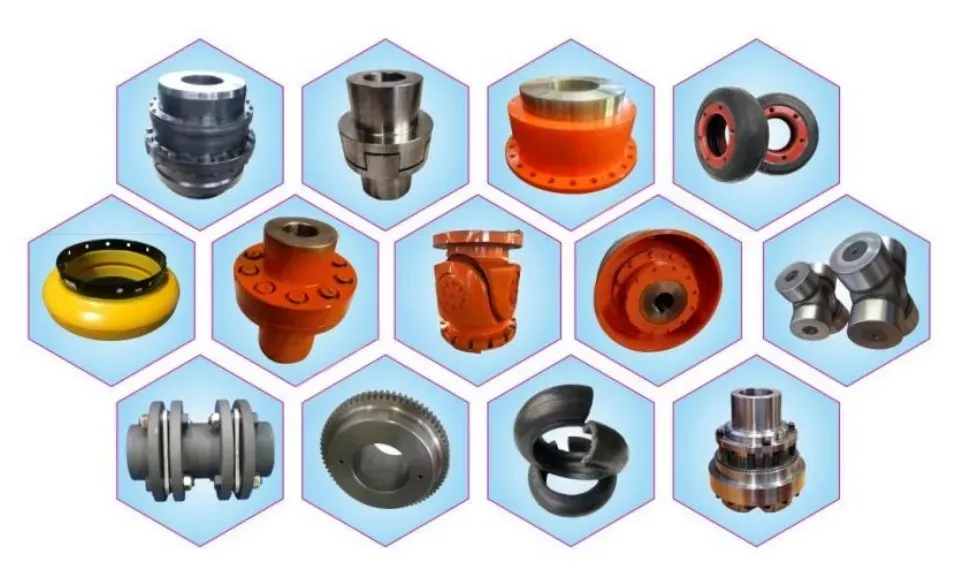
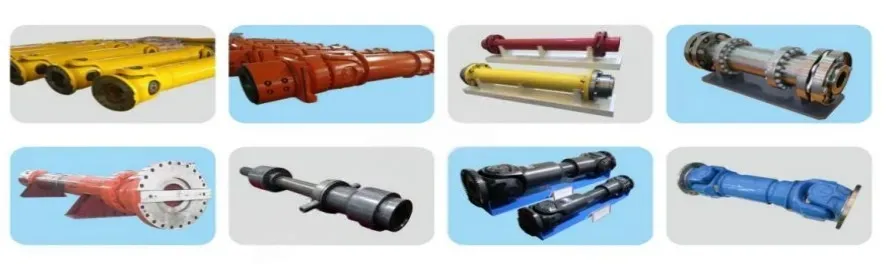
Product Technical and Performance Parameters — Coupling Selection for Malt Grinders
| Paramètre | Accouplement de poutre flexible | Accouplement à disque | Mâchoire / Élastomère | Gear Coupling |
|---|
| Rated Torque Range | 0.4 – 30 Nm | 50 – 250,000 Nm | 5 – 35,000 Nm | 200 – 5,000,000 Nm |
| Angular Misalignment (max) | 3° – 7° | 0.5° – 1.5° per disc pack | 1° – 2° | up to 6° (tooth crowned) |
| Parallel Offset (max) | 0.1 – 3.2 mm | 0.2 – 0.5 mm | 0.2 – 4.0 mm | up to 0.5 mm (lubricated) |
| Vitesse de fonctionnement maximale | up to 10,000 rpm | up to 20,000 rpm | up to 6,000 rpm | up to 4,000 rpm |
| Hub Material Options | Aluminium alloy, SS 303 | C45, 42CrMo4, SS 316L | Aluminium, GGG50, Steel | 20CrMnTi, 42CrMo4 |
| Flexible Element Material | Spring steel (integral) | SS 301, 17-4PH | PU 64A–98A, NBR | N/A (lubricated teeth) |
| Lubrication Required? | Non | Non | Non | Yes (grease packed) |
| Shock Load Absorption | Moderate | Low–Moderate | High | Low |
| Bore Size Range | 3 – 28 mm | 15 – 250 mm | 6 – 180 mm | 25 – 650 mm |
| Axial Movement Capacity | +/- 0.3 – 2.5 mm | +/- 0.5 – 2 mm | +/- 0.5 – 5 mm | +/- 2 – 8 mm |
| Typical Malt Mill Application | Encoder / sensor shaft drives | High-speed roller drives, servos | Main roll shaft, hammer mill | Heavy-duty industrial maltsters |
Detailed Application Scenarios: Coupling Types Matched to Malt Grinder Equipment
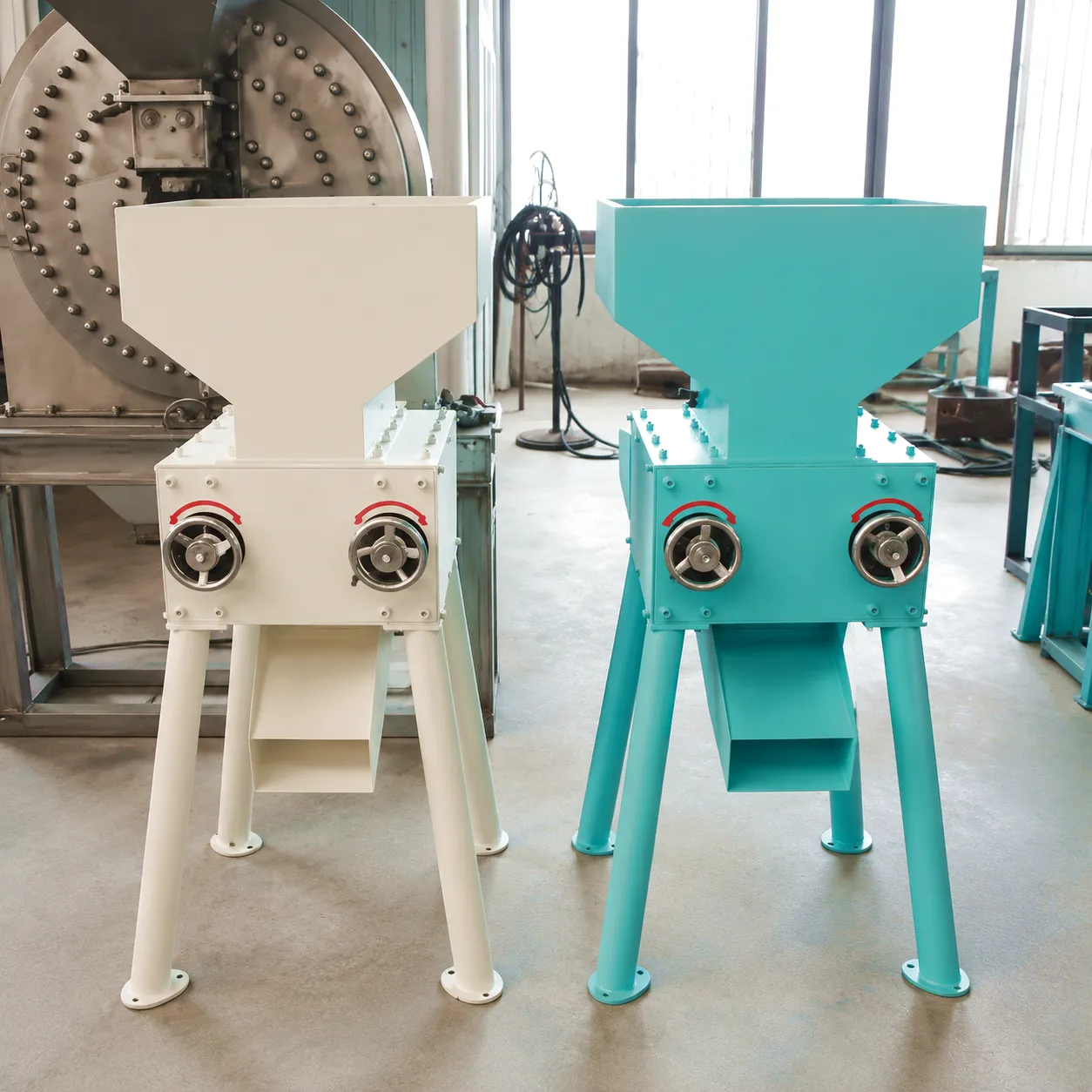
 Different stages and configurations of malt grinding equipment create distinct coupling selection challenges. The main roll drive shaft in a two-roller or four-roller malting mill operates at relatively low rotational speeds — typically 200 to 800 rpm for the rolls themselves — but at high torque outputs, because the grinding process requires substantial tangential force at the roll surface. This combination points toward jaw-type elastomeric or gear-type couplings with robust torque capacity and meaningful shock absorption. Sheffield-based brewing equipment manufacturers frequently specify elastomeric jaw couplings for these drives because the polyurethane inserts are available in multiple Shore hardness grades, allowing tuning of system torsional stiffness to match the specific motor and gearbox combination.
The differential speed drive in a roller mill — where adjacent rolls rotate at different speeds to create a shearing action on grain kernels — requires particularly careful coupling selection. Differential gear assemblies introduce additional torsional excitation at beat frequencies between the two roll speeds. Coupling specifications for these drives must account for this additional excitation source, and elastomeric variants with high damping coefficients generally outperform stiffer metallic coupling types in this service. Some advanced malt mill designs use variable-speed drives (VFDs) to adjust roll speed during operation, which introduces additional consideration of coupling suitability across a wide speed range.
Disc couplings are the preferred choice for high-speed, precision applications in malt processing, including the main drive shaft of centrifugal separators used to remove malt husks from the crushed grist, and the drive connections to high-speed blowers that convey grist pneumatically through the malthouse. These couplings provide the near-zero backlash and torsional stiffness required for stable operation at speeds above 3,000 rpm, while accommodating the axial thermal growth of rotating shafts as equipment reaches operating temperature from a cold start. In distillery environments from the Scottish Highlands to Welsh craft spirit producers, disc couplings in AISI 316L stainless are increasingly specified to satisfy site hygiene standards without sacrificing mechanical performance.
Coupling Selection by Malt Grinder Type — Scenario Breakdown
SCENARIO 01
Two-Roller Mill — Craft Brewery
Small-to-medium craft breweries across the UK — from Burton-on-Trent to Bristol — typically operate a single two-roller mill processing 200–500 kg per hour. The drive arrangement is usually a direct-coupled IEC motor through a helical gearbox at a 4:1 to 6:1 reduction ratio. For these applications, a jaw-type elastomeric coupling with a PU 80A insert provides excellent shock damping and allows angular misalignment of up to 1° without generating bearing side-loads. The compact envelope fits within tight brewery plant room dimensions, and the insert can be replaced without shaft removal — a major maintenance convenience for small operations without dedicated engineering staff.
SCENARIO 02
Six-Roller Mill — Industrial Maltster
Commercial scale maltsters operating in areas such as East Anglia or Norfolk process several tonnes of barley per hour continuously. Six-roller mills arrange rolls in three pairs, each driven by independent motor-gearbox units, with differential speed control. The coupling specification for these machines demands high torque capacity (often exceeding 2,000 Nm), reliable misalignment tolerance despite the multiple bearing locations in a long shaft train, and minimal maintenance requirement over production campaigns lasting several months without planned shutdown. Gear couplings with grease-packed sleeves are traditional choices, though modern disc couplings are increasingly replacing them where zero-maintenance operation is prioritised.
SCENARIO 03
Hammer Mill — Distillery Malt Processing
Scotch whisky distilleries, particularly in Speyside and the Highlands, traditionally process their own malted barley using hammer mills before mashing. Hammer mills operate at significantly higher rotor speeds than roller mills — typically 1,500 to 3,000 rpm at the rotor — and generate high-frequency impulsive loading as hammers strike grain particles. Disc couplings are favoured for these drives because they combine high torque capacity at speed with the torsional stiffness needed to maintain precise speed regulation, while the all-metal, dry-running design is compatible with the hygiene standards applied in distillery production areas. Stainless steel disc packs are specified where washdown water exposure is anticipated.
SCENARIO 04
Disc Mill — Specialty Grain Processing
Specialty grain processors in the UK’s growing craft food and ingredient sector use disc mills to produce precision-milled flour, flaked oats, and specialty malt extracts. These disc mills operate at moderate speeds with high radial forces between the stationary and rotating mill discs. The coupling connecting the motor to the rotating disc must handle the continuous tangential loading without introducing eccentricity that would cause uneven gap between the mill discs — a fault that immediately degrades particle size consistency. Beam couplings are used on the sensor and adjustment shaft positions, while the main disc shaft drive typically uses a disc coupling for its zero-backlash characteristic that translates directly to stable disc gap control.
Serving the UK Market — Regional Manufacturing Hubs and Delivery
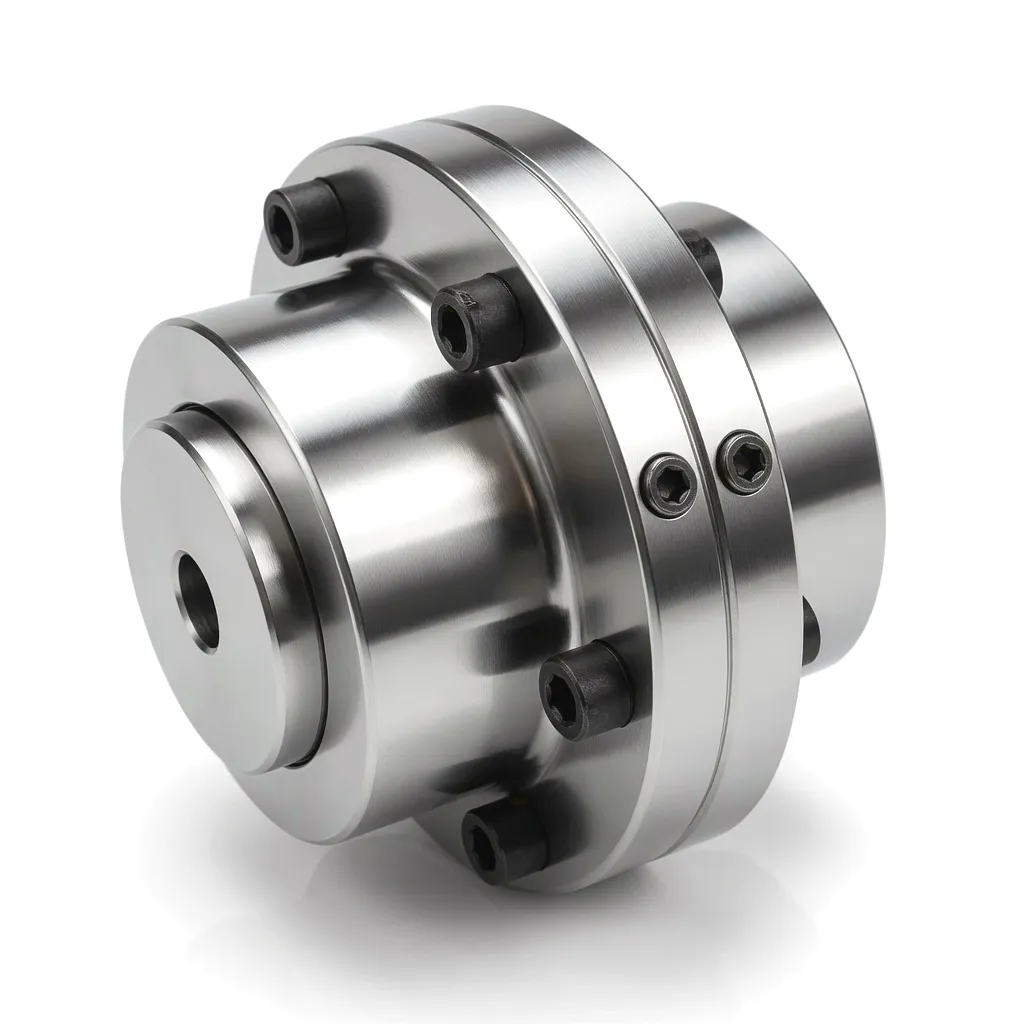 Britain’s brewing and distilling geography creates distinct regional clusters of demand for malt grinding equipment and its associated drivetrain components. Birmingham and the West Midlands remain home to a concentration of brewing equipment fabricators and food processing machinery manufacturers who source couplings as OEM components for mills exported across the UK and to European markets. Sheffield’s engineering heritage — still alive in precision component manufacture — hosts specialist suppliers who understand the exacting tolerances required for high-performance mill drives. In the Scottish Highlands and Speyside corridor, the distilling industry’s unique requirements for hygiene-compatible, stainless-construction drivetrain components create a distinct procurement specification that differs from standard industrial coupling catalogues.
UK procurement teams sourcing couplings for malt grinder applications face a specific challenge: many coupling distributors stock standard range products that cover the majority of industrial applications but cannot offer the rapid customisation required when a roller mill shaft bore dimension, keyway specification, or flange pattern does not match catalogue dimensions. Production delays caused by waiting for bespoke machining from domestic sources — or by navigating the lead times of international freight for non-standard components — can cost UK breweries significantly when a mill is out of service during peak production periods. This is precisely the commercial context in which working with a manufacturing partner offering both standard stock and custom engineering capability becomes a competitive advantage.
Logistics within the UK benefit from well-developed express freight services connecting all major manufacturing regions — same-day or next-day delivery from central England warehousing is achievable for stocked items. For custom or modified couplings, air freight from manufacturing partners with short production lead times can deliver components from overseas manufacturing to a Birmingham, Leeds, or Edinburgh facility within four to seven working days — a timeline that fits comfortably within planned maintenance windows for most malt processing operations.
Featured Coupling Products for Malt Grinder Applications
🔧
Accouplement de poutre flexible
The Flexible Beam Coupling is machined from a single piece of aluminium alloy or stainless steel bar stock, with helical cuts forming the flexible beam spring element. This single-body construction eliminates assembly joints and provides smooth, predictable torsional compliance without hysteresis. In malt grinder applications, beam couplings are the preferred choice for encoder mounting shafts, mill gap adjustment mechanisms, and instrumentation connections where zero-backlash and compact dimensions are critical. Their inherently clean design — no separate flexible elements to retain grain dust or moisture — makes them well suited to malthouse environments. Available in bore diameters from 3 mm to 28 mm with multiple beam configurations to tune stiffness.
💿
Accouplement à disque
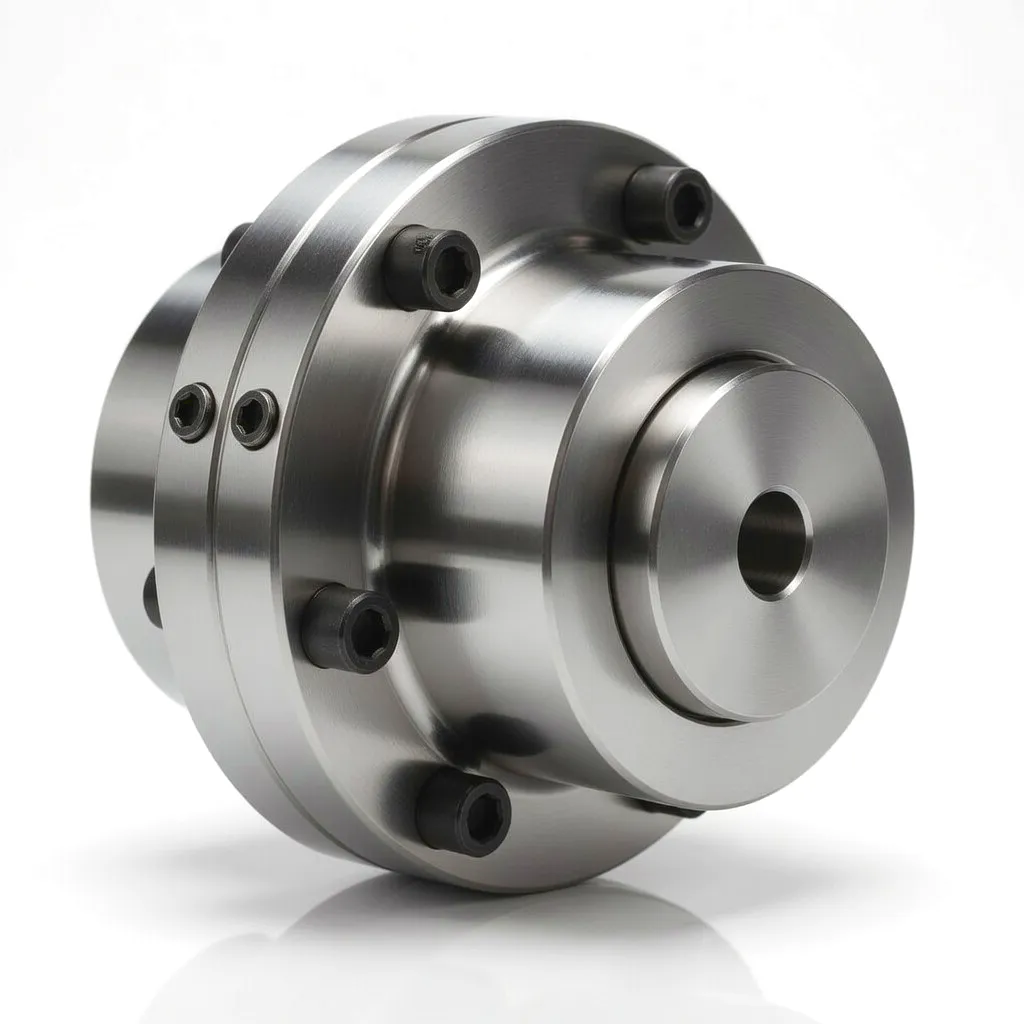
The Disc Coupling transmits torque through a stack of thin metallic disc elements bolted alternately to driving and driven flanges. This all-metal design requires no lubrication, tolerates moderate angular and axial misalignment, and delivers near-zero backlash torque transmission at speeds up to 20,000 rpm. For malt mill applications, disc couplings are ideal for hammer mill main shafts, high-speed centrifugal separators, and pneumatic conveying blower drives. Available in single and double disc configurations, with disc packs in stainless steel for hygienic applications. Torque capacity from 50 Nm to 250,000 Nm across the range, with custom flange bolt circles and bore sizes to match most mill manufacturers’ shaft specifications.
EVER POWER
Precision Coupling Manufacturer — Custom Engineering & Global Supply
🏭
15+
Années d'expérience dans le secteur manufacturier
⚙️
200+
Coupling Product Configurations
🌍
60+
Countries Served Including UK
📋
ISO
9001 Certified Quality Management
Ever Power — Custom Coupling Engineering for Malt Processing Applications
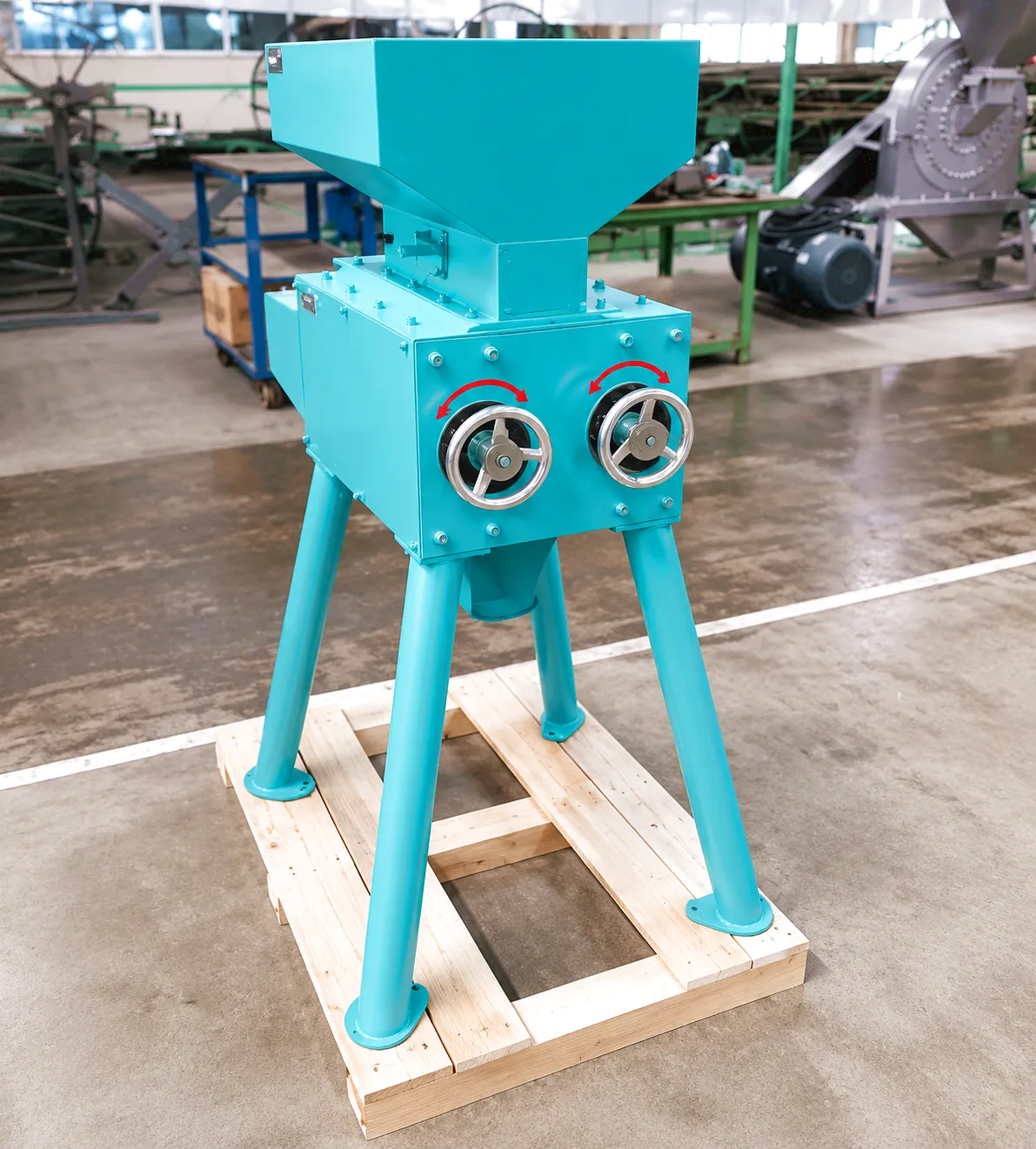 Ever Power’s manufacturing facilities operate CNC turning centres, multi-axis machining centres, and precision gear grinding equipment capable of producing coupling components to customer-specific dimensional drawings within lead times measured in days rather than weeks. The company’s engineering team works directly with procurement and maintenance engineers from UK brewing equipment manufacturers and malthouses to translate drivetrain requirements into coupling specifications — covering torque capacity, bore dimensions, shaft keyway geometry, surface finish, and material certification requirements — before issuing production-ready drawings for customer approval.
The customisation capabilities at Ever Power extend well beyond simple bore resizing. The engineering team regularly modifies coupling hub flange bolt circle diameters and bolt sizes to match non-standard mill flange patterns, machines coupling sleeves with integrated shaft retention features such as locking screws or shrink disc interfaces, and produces coupling assemblies with mixed material specifications — for example, steel hubs with stainless disc packs for applications requiring partial corrosion resistance without the full cost penalty of all-stainless construction. This depth of engineering engagement, combined with a supply chain that holds strategic stock of coupling raw materials in bar and tube form, allows Ever Power to respond to urgent replacement requests that would otherwise cause extended production outages for UK customers.
Quality assurance across Ever Power’s coupling production includes 100% dimensional inspection on critical features, dynamic balance certification for high-speed coupling assemblies, and material traceability documentation in accordance with EN 10204 3.1 requirements. For UK customers operating under machinery directive 2006/42/EC compliance frameworks, Ever Power can supply couplings with CE marking documentation and calculation reports demonstrating conformity with transmitted torque and safety factor requirements.
Customer Success Story: Malthouse Drive Upgrade — Burton-on-Trent, Staffordshire
Case Study | Burton-on-Trent, Staffordshire, UK
Independent Regional Brewer — Four-Roller Mill Drivetrain Refurbishment
Emplacement
Burton-on-Trent, UK
Industrie
Commercial Brewing / Malting
Application
Malt Roller Mill Drives
Coupling Supplied
Jaw Elastomeric + Disc Type
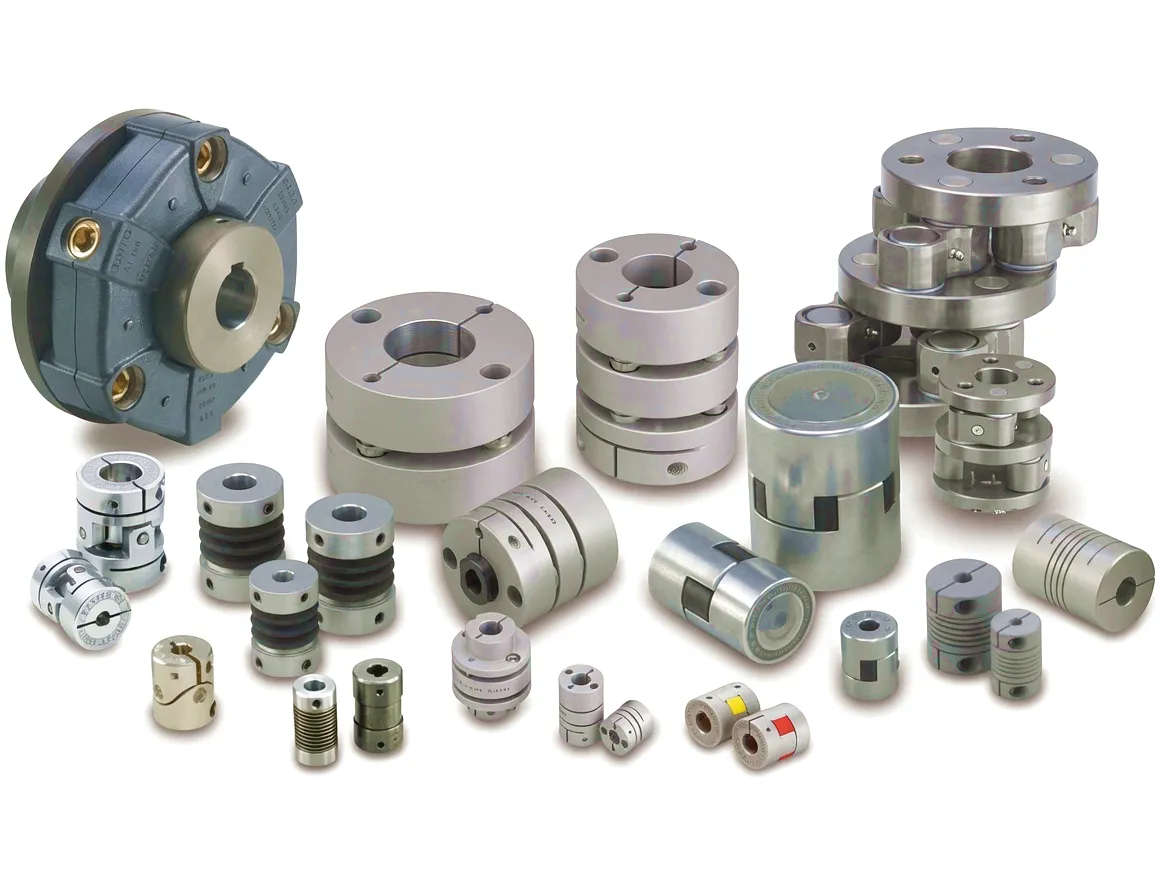 A well-established independent brewer operating in Burton-on-Trent — a town synonymous with British brewing for over three centuries — had been experiencing recurring bearing failures on the main roll shaft of their four-roller malt mill. The mill processed approximately 800 kilograms of pale malt per hour, running two brewing sessions per day, five days per week. Maintenance records showed that the roller shaft bearings were requiring replacement every four to six months, at a total annual cost — parts and labour — that the production manager estimated at over eight thousand pounds, without accounting for the lost production time during changeouts.
An engineering review identified the root cause: the original coupling connecting the gearbox output to the mill shaft was a rigid flanged coupling that had been specified for a different mill configuration two machinery generations earlier. As the current gearbox was mounted on a baseplate slightly offset from the original design, the rigid coupling was transmitting a continuous misalignment-induced bending load into both the gearbox output bearing and the mill roll shaft bearing. This load, combined with the cyclic shock loading from grain grinding, was accelerating fatigue-induced spalling of the bearing raceways.
After reviewing the application requirements, the engineering team selected Ever Power jaw-type elastomeric couplings with Shore 80A polyurethane inserts for the two main roll shaft drive positions, and Ever Power disc couplings for the differential speed drive connection. The custom bore dimensions — 48mm H7 on the gearbox side and 42mm H7 on the mill shaft side, with 14mm parallel keyways — were machined to drawing by Ever Power’s facility and delivered in seven working days from order placement, arriving well within the planned fortnight maintenance window.
Following installation and a laser alignment check on all shaft connections, the mill re-entered service. A twelve-month follow-up review showed that bearing replacement intervals had extended to beyond fourteen months, with no failures in the intervening period. The maintenance cost saving was estimated at over six thousand pounds in the first year alone, providing full payback on the coupling procurement and installation costs within the first three months of operation.
What UK Customers Say About Ever Power Couplings
★★★★★
“We switched our malt mill drives to Ever Power disc couplings twelve months ago and the reliability improvement has been remarkable. The custom bore machining matched our existing shaft dimensions exactly, and the engineering documentation they supplied satisfied our site compliance requirements without any back-and-forth. Bearing life has more than doubled.”
— Plant Engineering Manager
Burton-on-Trent Brewery, Staffordshire
★★★★★
“When our hammer mill coupling failed three days before a major production run, Ever Power had a replacement to our facility in Sheffield within five working days from an emergency order. The polyurethane insert hardness they recommended proved spot-on for our drive system — noticeably smoother startup and less vibration transmitted to the mill frame compared to what we had before.”
— Production Director
Craft Distillery, Sheffield, South Yorkshire
★★★★★
“Ever Power quoted a competitive price on stainless disc couplings for our Speyside distillery expansion project, but more importantly they could supply full EN 10204 3.1 material certs and a torsional calculation report on request. For a hygienic production environment operating under audit, that level of documentation makes procurement straightforward. The couplings themselves have been performing without any issue through our first full production season.”
— Engineering Project Lead
Malt Whisky Distillery, Speyside, Scotland
Specifying the Right Coupling: Key Selection Criteria for Malt Mill Engineers
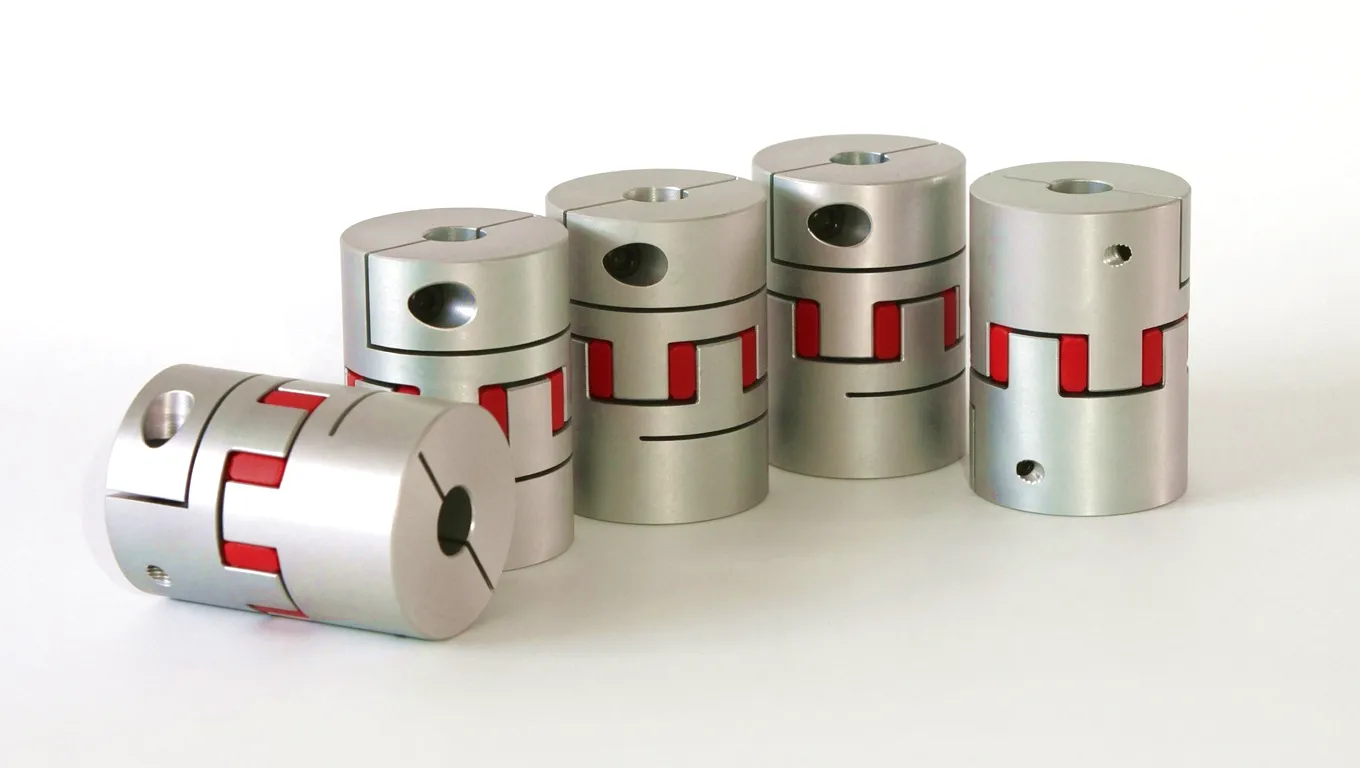 The starting point for any coupling selection in a malt grinder application is an accurate understanding of the transmitted torque requirement. This means not merely the motor rated torque, but the product of that torque multiplied by an application service factor that accounts for the driven machine’s shock loading characteristic, duty cycle, and any start-stop frequency. For a malt roller mill operating continuously on an IE3 motor through a 5:1 helical gearbox, a service factor of 1.75 to 2.0 is typically appropriate, meaning the coupling must be rated for nearly twice the motor nominal torque output.
Shaft bore and keyway dimensions must be verified against both the drive and driven shafts before ordering, as machining errors or variations between equipment generations can mean that a coupling specified from a catalogue bore range does not match either shaft without modification. Coupling selection should also consider the space envelope available — particularly the distance between shaft ends and the radial clearance around the coupling — as tight plant rooms in UK brewing facilities frequently impose dimensional constraints that limit coupling outside diameter or overall length regardless of torque requirements.
Frequently Asked Questions — Couplings for Malt Grinder Applications in the UK
What type of coupling is best for connecting a motor to a malt roller mill drive shaft in a UK brewery?
Click to expand answer
For most craft and commercial brewing applications in the UK, a jaw-type elastomeric coupling with a polyurethane insert rated at Shore 80A to 98A is the most practical choice for connecting a motor gearbox to the main roll shaft. This type provides excellent shock load absorption when grain enters the crushing zone, accommodates the angular and parallel misalignment that is typical of brewery plant installations, and requires no lubrication — eliminating contamination risk. For higher-speed or servo-controlled mill applications, disc couplings provide superior torsional precision. Ever Power offers both types with custom bore machining to match your existing shaft dimensions, with delivery to UK addresses typically within five to ten working days depending on specification complexity.
How much does a custom-machined coupling for a malt grinder application typically cost, and can I get a supplier quote in the UK?
Click to expand answer
Coupling prices for malt grinder applications vary significantly depending on size, material, and customisation requirement. Standard bore jaw-type couplings for small brewery drives typically range from £30 to £200 per unit, while custom-machined disc or gear couplings for commercial scale mill applications with non-standard bore dimensions and material certification can range from £200 to over £2,000 depending on torque capacity and specification. Ever Power provides detailed quotes with pricing, material certifications, and delivery timeline within 24 to 48 hours of receiving a complete specification enquiry. UK customers can request a quote by contacting the sales team directly with shaft dimensions, required torque capacity, and operating speed, and receive a detailed proposal including engineering selection rationale.
Which coupling supplier in the UK or internationally can provide stainless steel disc couplings for a Scottish distillery hammer mill application?
Click to expand answer
Stainless steel disc couplings suitable for Scottish distillery hammer mill drives are available from international manufacturers with direct UK supply capability. Ever Power offers disc couplings with AISI 316L stainless steel disc packs and hub options, complete with EN 10204 3.1 material certificates and torsional calculation reports — documentation typically required by distillery site compliance and audit teams. Delivery to Scottish locations including Speyside, Islay, and the Highlands is achievable within seven to twelve working days for custom-specified components. When selecting a supplier, prioritise those who can provide engineering support in determining the correct disc pack stiffness and coupling size for your specific mill drive arrangement, rather than those supplying purely from catalogue selection.
When should I replace the flexible insert in a jaw coupling on my malt mill drive, and what warning signs indicate coupling failure is imminent?
Click to expand answer
The elastomeric insert in a jaw coupling serving a malt mill drive typically has a service life of one to three years depending on operating duty, torque levels, and the severity of shock loading from grain grinding. Early warning signs that the insert requires replacement include: increased vibration or noise during mill startup or operation, visible cracking or chunking of the elastomeric element when inspected during planned shutdowns, a perceptible rattle or clonk on direction change or startup that was not previously present, and elevated temperatures at the coupling location. A standard maintenance practice for breweries and malthouses is to inspect the insert at each planned maintenance shutdown — visually checking for surface cracking and measuring any visible compression set in the element — and to replace the insert preventatively at the first signs of degradation rather than running to failure, which risks hub and shaft damage that far exceeds the cost of a new insert.
How do I calculate the correct coupling size and torque rating for a malt grinder drive in a Birmingham brewing equipment application?
Click to expand answer
Coupling sizing for a malt grinder drive begins with calculating the nominal transmitted torque: T (Nm) = (P x 9550) / n, where P is motor power in kilowatts and n is shaft speed in rpm at the coupling location. For a 15 kW motor driving a coupling at 200 rpm through a 5:1 gearbox, the coupling nominal torque is approximately 716 Nm. This nominal value is then multiplied by an application service factor — for malt grinding with moderate shock loading on a continuously operating mill, a factor of 1.75 to 2.0 is appropriate, giving a minimum coupling rating of 1,250 to 1,430 Nm for this example. Bore diameter selection follows from shaft dimensions, and the coupling outside diameter must fit within the available installation envelope. Ever Power’s engineering team in Birmingham-serving sales operations can perform this calculation and recommend specific coupling types and sizes when provided with motor data, gearbox specification, and shaft dimensions.
What is the price difference between a standard catalogue coupling and a custom-engineered coupling for a non-standard malt mill shaft bore in the UK market?
Click to expand answer
Custom bore machining typically adds 30–80% to the base coupling cost depending on the degree of modification required. A standard jaw coupling hub with a catalogue bore and keyway might cost £40 to £80 in smaller sizes; having the same hub re-bored to a non-standard dimension with a specific tolerance and keyway geometry adds a machining cost of £25 to £150 per hub depending on complexity. For applications where the total coupling cost represents a small fraction of a larger drivetrain refurbishment, this premium is easily justified by the assurance that the coupling will fit correctly first time. When requesting a quote from Ever Power, providing the precise bore diameter, tolerance class, keyway dimensions, and any face register or flange bolt pattern requirements at the outset allows accurate pricing without revision rounds that delay the project.
Where can I source a reliable coupling supplier for emergency replacement of a failed malt mill drive coupling at a Sheffield food manufacturing plant?
Click to expand answer
For emergency replacement of a failed coupling at a Sheffield food or malting plant, the fastest route is to contact manufacturers like Ever Power who hold raw material stock and can machine a bespoke coupling hub within three to five working days, with international air freight to Sheffield within two additional days if UK warehouse stock of the required size is exhausted. Providing a detailed dimensional sketch or photograph of the failed coupling — showing bore size, keyway dimensions, flange outer diameter, bolt circle, and overall length — immediately upon first contact allows the manufacturer’s engineering team to identify the correct replacement without delay. Ever Power operates a responsive technical sales process specifically to support urgent UK industrial requirements of this nature, and can confirm whether a component can be sourced from stock or requires manufacturing upon same-day enquiry.
Industrial Coupling Specialists
Ready to Optimise Your Malt Grinder Drivetrain?
Ever Power engineers are available to review your malt mill coupling application and recommend the optimal product specification. Get a detailed technical quote today.
édité par gzl