 The cement rotary kiln is among the most mechanically demanding pieces of equipment in any industrial manufacturing operation. Spanning lengths of 50 to 230 metres and rotating under enormous radial loads at very low speeds — typically between 0.5 and 5 rpm — these massive cylindrical vessels must transfer colossal torques reliably, twenty-four hours a day, across decades of service life. At the mechanical heart of this drive system sits a component that rarely receives the attention it deserves: the coupling. In British cement plants scattered across Derbyshire limestone belts, the Welsh hills of South Wales, and the chalk quarries of the South East, the coupling connecting the gearbox output shaft to the kiln pinion shaft must endure thermal cycling, shaft misalignment caused by thermal expansion of the kiln shell, vibration from the tumbling raw material charge, and the unrelenting fatigue of near-continuous operation. Selecting the wrong coupling in this environment does not merely cause inconvenience — it precipitates catastrophic unplanned shutdowns that cost tens of thousands of pounds per hour in lost production, wasted energy, and emergency maintenance labour.
Cement Rotary Kiln Drive: The Engineering Environment That Defines Coupling Demands
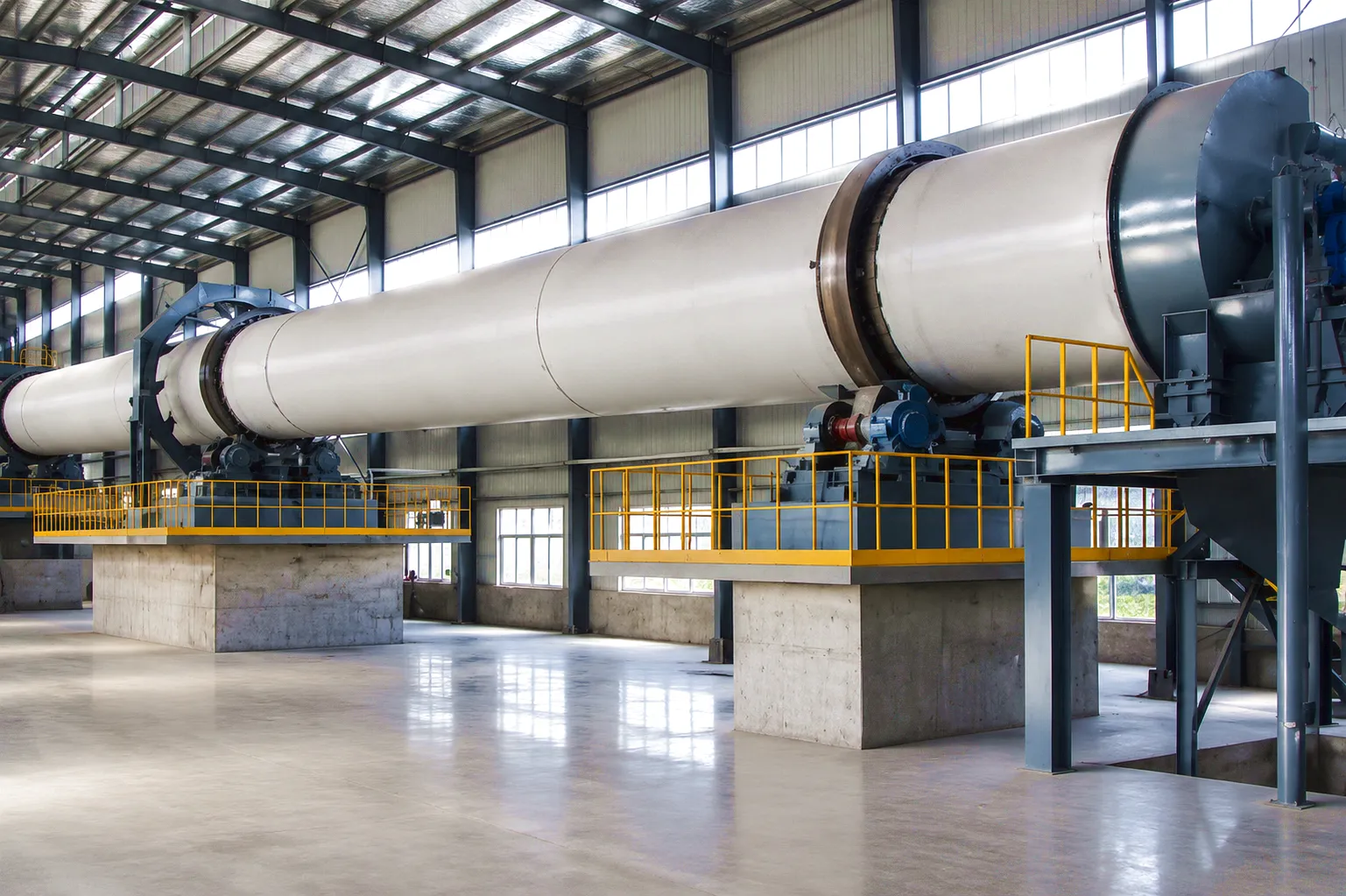 A cement rotary kiln is a pyroprocessing device that converts raw limestone and clay into clinker at temperatures approaching 1,500°C. The kiln shell itself is a steel cylinder mounted on tyres that roll on support rollers, inclined at a shallow angle between 2.5° and 5° to the horizontal so that raw material advances along its length as the kiln rotates. The drive arrangement comprises an electric motor, a primary high-speed gearbox, a low-speed coupling, a secondary reduction gearbox or direct drive, and finally the open gear transmission — the large ring gear encircling the kiln shell meshing with the pinion shaft. It is within this low-speed, high-torque zone, between gearbox output and pinion shaft, that coupling selection has its greatest consequence.
How Couplings Function Within the Cement Rotary Kiln Drive Train
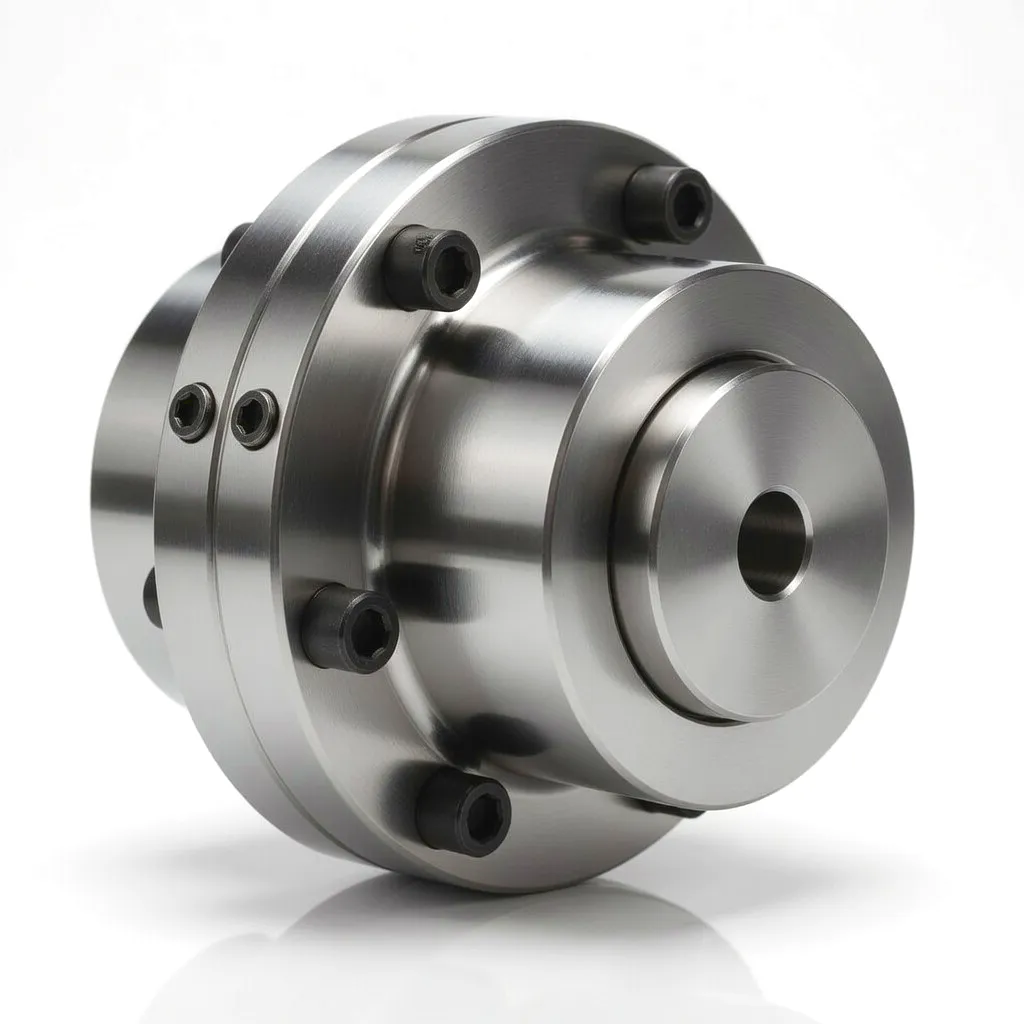 A coupling operates as the mechanical interface between two rotating shafts, transmitting torque while accommodating the relative motions — angular, axial and parallel — that exist between those shafts under real operating conditions. In the kiln drive context, the coupling performs this function under conditions where the two shaft centrelines are never perfectly aligned, where axial float is a designed feature of the system, and where the transmitted torque fluctuates with the load variations caused by the tumbling cement charge inside the kiln. The coupling must therefore simultaneously transmit rated torque with high efficiency, absorb and dampen torsional shock loads during kiln start-up and clinker boulder events, accommodate multi-directional shaft displacements within defined limits, and do so without imposing harmful radial or axial forces on the bearings of either the gearbox output or the pinion shaft.
Core Materials That Define Coupling Reliability in High-Temperature, High-Torque Environments
Hub bodies for kiln duty gear couplings are machined from medium-carbon alloy steels such as 42CrMo4 or 34CrNiMo6, quenched and tempered to achieve tensile strengths in the range of 900–1,100 MPa. The through-hardened microstructure provides the fatigue resistance needed to survive decades of cyclic torque loading. Gear teeth are case-hardened to approximately HRC 58–62 to resist the wear and surface fatigue that would otherwise degrade the crowned tooth profile and reduce the coupling’s misalignment capacity over time. UK-supplied couplings meeting BS EN 10083 standards for alloy steel heat treatment provide a documented materials traceability chain that procurement and quality teams at cement companies can audit with confidence.
Disc coupling flexible elements are fabricated from precipitation-hardened stainless steel grades such as 17-4PH or 15-5PH, selected for their exceptional combination of high fatigue strength, corrosion resistance, and dimensional stability across the operating temperature range encountered in cement plant environments. Individual disc thickness is typically 0.25–1.2 mm, with packs comprising six to twelve discs per flexible element. The stainless grade also provides immunity to the caustic and mildly acidic dust environment that pervades cement plant structures, an important consideration in the context of the UK cement industry’s push toward longer planned maintenance intervals. Surface finishes are controlled to eliminate stress concentration points that would initiate fatigue cracks under cyclic flexure loading.
Coupling flanges in kiln-duty assemblies are produced from closed-die forgings rather than castings to ensure grain flow alignment with the principal stress directions and eliminate the porosity and shrinkage risks inherent in large cast components. Forged carbon steel grades conforming to BS EN 10250 or equivalent standards are normalised and stress-relieved before precision machining to ensure dimensional stability through the thermal cycles of heat treatment. The forged body provides a high safety margin against the sudden overloads that occur when kiln charge collapses or when a large clinker nodule causes a momentary torque spike far above the steady-state design value. Flanges are balanced to ISO 1940 G6.3 or better to meet the vibration requirements of cement plant gearbox manufacturers.
Sealed gear coupling designs for kiln applications utilise PTFE or fluorocarbon (FKM) lip seals rather than conventional nitrile rubber, because continuous operating temperatures above 80°C at the drive end of the kiln will cause nitrile compounds to harden and lose their sealing function within months. FKM seals maintain pliability and sealing force to above 200°C and resist the lubricant degradation products that accumulate in gear coupling cavities during long campaigns. In combination with a high-viscosity lithium-complex or polyurea grease formulated for high-temperature stability, this sealing arrangement supports the five-year lubrication-free operation intervals that are increasingly specified by UK cement plant operators seeking to reduce planned maintenance activities during kiln campaigns.
Technical Advantages of Modern Couplings in Cement Rotary Kiln Service
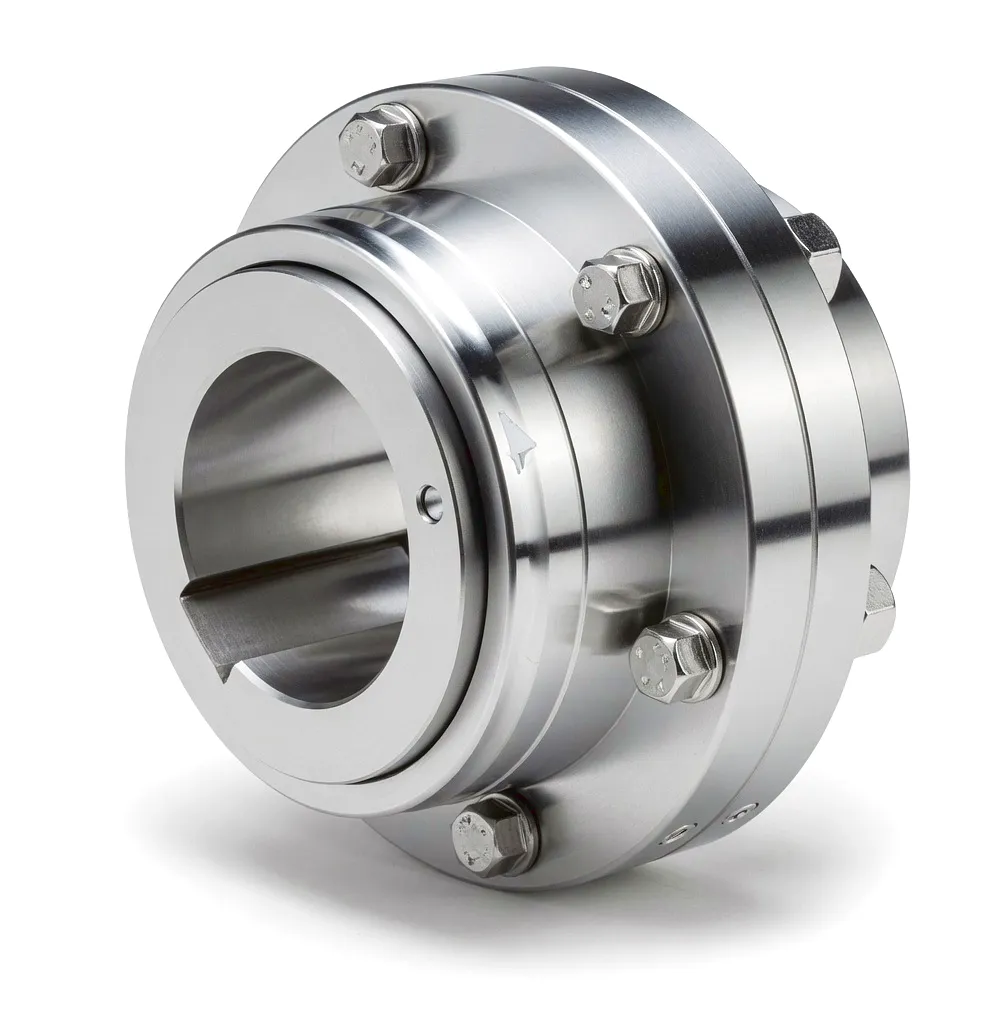
Gear couplings provide the highest torque-to-diameter ratio of any flexible coupling type, enabling high-power kiln drives to be accommodated within the tight spatial envelope of the kiln drive platform without requiring oversized coupling housings that create additional installation and alignment challenges. The compact form factor is particularly valued in UK cement plants where original plant layouts leave limited space for drive component upgrades.
Crowned gear tooth geometry accommodates angular misalignment of 0.5° to 1.5° per gear mesh — sufficient to absorb the shaft angular displacements encountered in kiln drives affected by thermal growth and foundation movement. Double-engagement gear coupling designs double the available misalignment capacity by incorporating two independent gear meshes in series, making them the preferred choice for older UK kilns with significant alignment uncertainty in the drive train.
When correctly specified and installed, modern sealed gear couplings for kiln service deliver operational lives of fifteen to twenty-five years, outlasting multiple gearbox overhauls and kiln tyre replacement programmes. The hardened and ground tooth profile maintains its geometry far beyond the service intervals seen with earlier through-hardened designs, and the elimination of periodic relubrication removes the primary failure mode associated with earlier open-flange gear coupling designs still found in older British cement plants.
The inherent torsional compliance of gear tooth mesh and the backlash within the gear coupling provides a degree of shock load buffering during kiln start-up torque surges and charge avalanche events. Where additional torsional compliance is required to protect gearbox components from peak load spikes, a combined gear-and-torsionally-flexible coupling design incorporating elastomeric inserts in series with the gear mesh can be specified to provide a defined torsional stiffness profile calibrated to the drive system’s resonant characteristics.
The gear coupling’s inherent ability to slide axially within the sleeve assembly — governed by the tooth face width and the gear contact ratio — makes it naturally suited to accommodating the axial expansion and contraction of the kiln shell drive end without transmitting axial loads into the gearbox thrust bearings. This axial float capacity, typically 10–50 mm in kiln-duty coupling designs, is a fundamental functional requirement that eliminates one of the most common failure mechanisms affecting rigid coupling installations in thermal process equipment across UK manufacturing industries.
For precision position-controlled auxiliary kiln drives and cooler fan applications where drive train backlash introduces positioning errors, disc coupling designs provide torsionally rigid, zero-backlash torque transmission with full accommodation of shaft misalignment through elastic deformation of the disc pack. This characteristic makes disc couplings particularly valuable in the auxiliary kiln drive systems used during kiln shell coating and inspection, where precise rotational positioning of the kiln shell is required for safe working on internal refractory.
Product Technical and Performance Parameter Reference Table
The following reference table summarises the principal performance parameters for gear-type and disc-type couplings as typically supplied for cement rotary kiln drive applications. Actual values are confirmed at the design review stage and may vary with specific bore sizes, shaft interface configurations and customer-specified service factors.
| Parametr | Gear Coupling (Kiln Duty) | Disc Coupling (High-Precision) | Jednostka |
|---|---|---|---|
| Zakres znamionowego momentu obrotowego | 200 – 2,500 | 50 – 800 | kNm |
| Peak Torque Capacity (×Rated) | 2.5 – 3.5 | 2.0 – 3.0 | × TN |
| Maksymalne odchylenie kątowe | 0.5° – 1.5° per mesh | 0.3° – 1.0° | stopnie |
| Axial Float Capacity | 10 – 50 | ±2 – ±10 | mm |
| Parallel Offset Tolerance | 0.3 – 1.5 | 0.1 – 0.6 | mm |
| Continuous Operating Speed | 0 – 1500 | 0 – 6,000 | obr./min |
| Max Continuous Operating Temp. | 120 (sealed grease) | 200 | °C |
| Materiał piasty | 42CrMo4 / 34CrNiMo6 alloy steel | 42CrMo4 / 316L SS option | — |
| Flexible Element Material | Case-hardened alloy steel teeth | 17-4PH / 15-5PH SS discs | — |
| Twardość powierzchni zęba | HRC 58 – 62 | N/A (disc flexure) | — |
| Ocena równowagi | ISO 1940 G6.3 / G2.5 | ISO 1940 G2.5 / G1.0 | — |
| Lubrication Interval (sealed) | 60 months (kiln campaign) | Lubrication-free (life) | — |
| Typical Service Life | 15 – 25 years | 10 – 20 years | years |
| Zakres średnic otworu | 80 – 600 | 20 – 300 | mm |
Where Couplings Are Applied Across the Cement Rotary Kiln Process
Application Scenario 1 — Main Kiln Drive Coupling Between Gearbox Output and Pinion Shaft
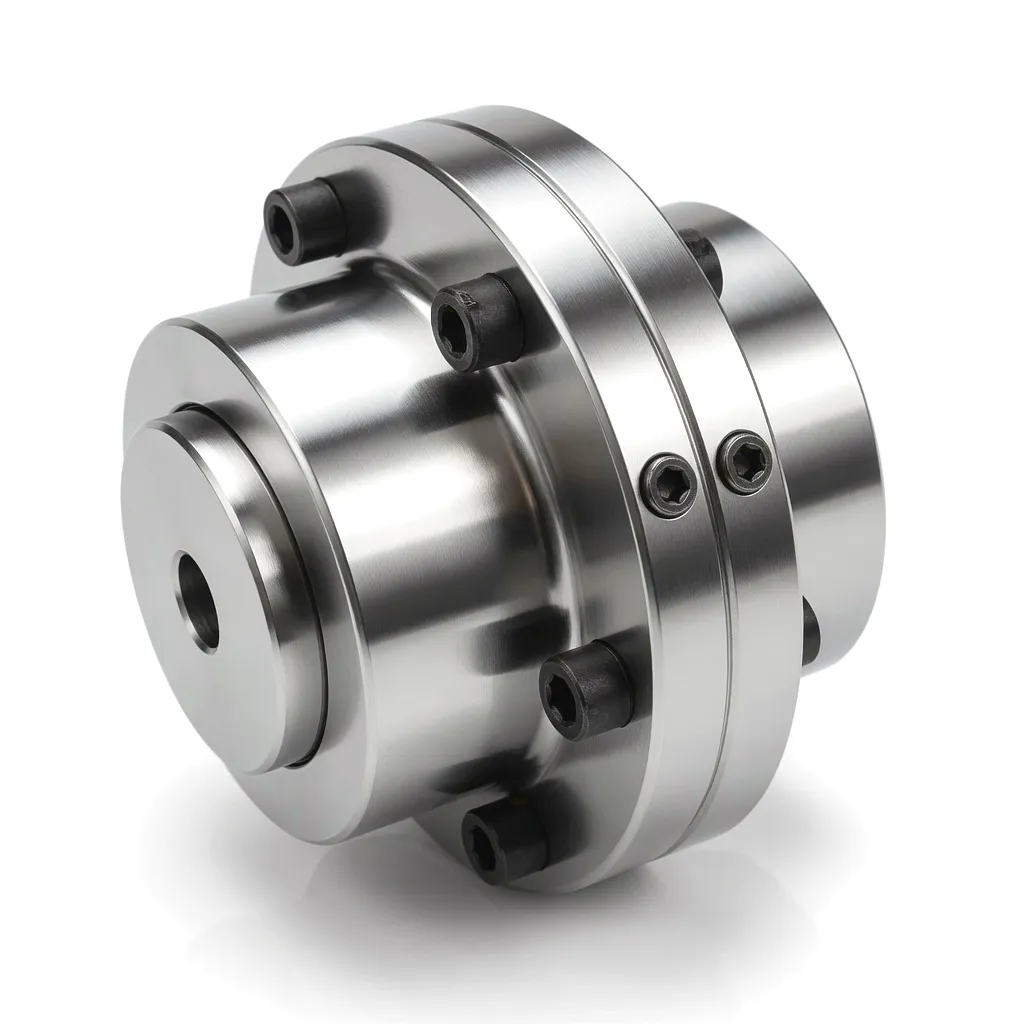 The main drive coupling is the highest-stakes component in the cement kiln drive train. Positioned between the output shaft of the primary gearbox and the input shaft of the pinion bearing housing, it must continuously transmit full rated torque at the specified operating speed — typically between 0.5 and 1.5 rpm at the pinion — while accommodating the combined effects of thermal growth, foundation settlement, and the dynamic load variations imposed by the rotating charge. British cement plants, including those operated in the limestone districts of Derbyshire and the chalk-based operations in Kent and Essex, generally operate kilns with main drive power ranging from 1.5 MW to over 5 MW, producing output torques that demand coupling designs with very high structural integrity and a generous service factor against peak load events.
Application Scenario 2 — Kiln Auxiliary Drive (Inching Drive) Coupling
The auxiliary or inching drive system enables the kiln to be rotated slowly — typically at one-fifth to one-tenth of normal operating speed — during start-up, shutdown, and maintenance activities, including refractory inspection and clinker coating operations. In Birmingham-based industrial equipment servicing companies and in the specialist kiln maintenance contractors working throughout the UK cement industry, the inching drive coupling is recognised as a component that must perform reliably under conditions quite different from the main drive coupling. Inching operations often occur under adverse conditions — the kiln is cold, alignment is at its most inaccurate relative to the hot-condition design point, and the operation may be intermittent with multiple start-stop cycles over a short period.
A disc coupling is typically preferred in this position because it provides precise shaft positioning control without backlash, important when incrementally rotating the kiln shell to achieve accurate positioning of access manholes or refractory inspection zones. The maintenance-free nature of the disc coupling is also particularly appropriate for a component that will experience only occasional duty but must perform reliably after extended standby periods. Where the inching drive coupling also serves as the torsional overload protection device for the main drive system — isolating the main gearbox from excessive back-torque during normal operation — a torque-limiting coupling incorporating shear pin or friction-based overload release mechanism may be incorporated into the assembly.
Application Scenario 3 — Preheater Tower Fan and ID Fan Drive Couplings
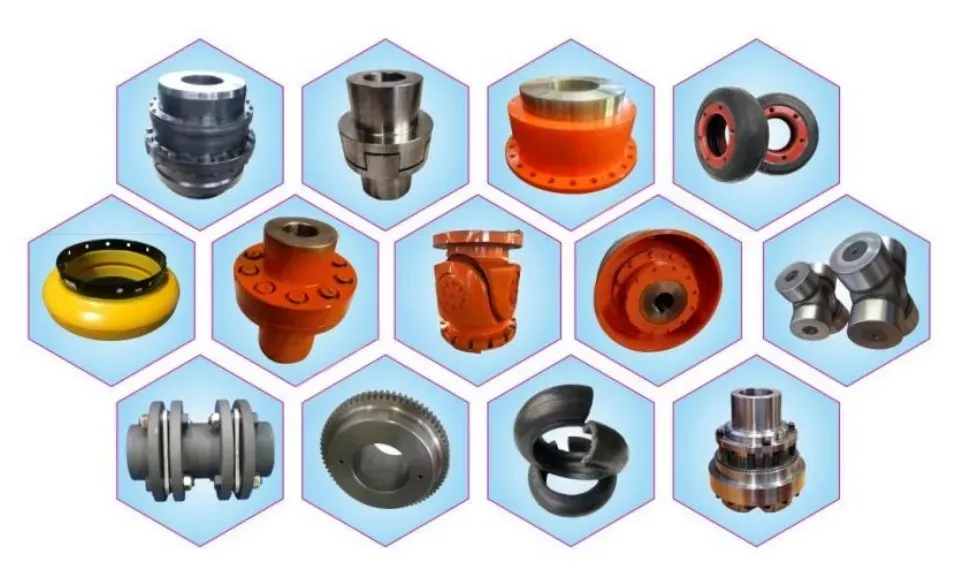
The induced draught fan systems serving the cyclone preheater tower and the kiln ID fan create some of the most demanding coupling duty cycles anywhere in the cement plant. These large centrifugal fans — with impeller diameters of 2–5 metres and motor powers of 0.5–3 MW — must start and accelerate against substantial inertia loads, often through variable-frequency drives, and then operate continuously for months between scheduled shutdowns. The coupling between the fan impeller shaft and its motor or belt-drive input must accommodate the thermal growth of the fan casing and shaft assembly as the process gas temperature rises from cold start to steady-state operating conditions of 250–350°C for the preheater ID fan.
In this application, the coupling must also tolerate the unbalance forces that develop when cement dust accumulates asymmetrically on the fan impeller between cleaning cycles — a phenomenon that generates cyclic radial loads at blade-passing frequency. The combination of thermal displacement, cyclic unbalance loading, and high-speed rotation makes precision balancing of the coupling assembly to ISO 1940 G2.5 or better a mandatory specification item. Sheffield-based fan manufacturers supplying preheater systems to UK cement producers routinely specify gear couplings with extended tooth face widths in this position to maximise the axial float and angular misalignment capacity without sacrificing the torque rating needed for reliable heavy start-up duty.
Application Scenario 4 — Clinker Cooler Drive Couplings
The clinker cooler, positioned immediately downstream of the kiln exit, is responsible for rapidly reducing the clinker temperature from approximately 1,200°C to below 100°C using air blown through the clinker bed. Reciprocating grate coolers, rotary tube coolers, and satellite coolers each impose distinct mechanical requirements on their drive coupling systems. Reciprocating grate coolers utilise hydraulic cylinders or eccentric drive mechanisms to move the grate plates, with couplings in the drive connecting the hydraulic power unit motor shafts to the pump assemblies.
Rotary satellite coolers — a design still operating in several older UK cement plants — attach directly to the kiln shell and rotate with it, imposing a duty on the rotary joint and associated coupling arrangements that is effectively continuous twenty-four hours per day. The combination of elevated ambient temperature from the hot clinker, vibratory loading from the cooler tube contents, and the need for maintenance-free operation over multi-year campaigns makes gear coupling selection in satellite cooler applications one of the technically demanding subspecialties of cement plant mechanical engineering. Couplings in this position must be specified for the full kiln shell rotation speed and the torque imposed by the cooler charge, with materials selected to resist the thermal and chemical environment at the kiln exit end.
Recommended Coupling Products for Cement Kiln Applications
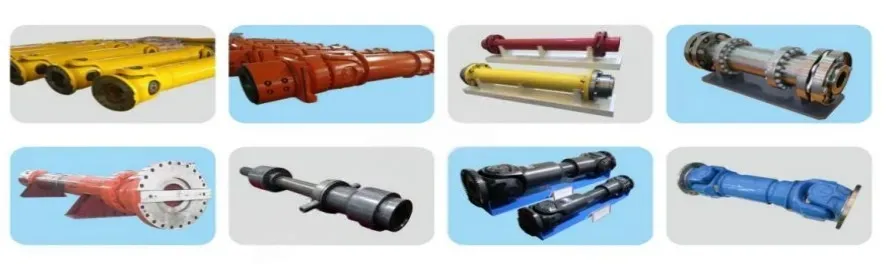
Two proven coupling solutions from our product range, engineered for the demands of heavy-duty industrial drive systems.
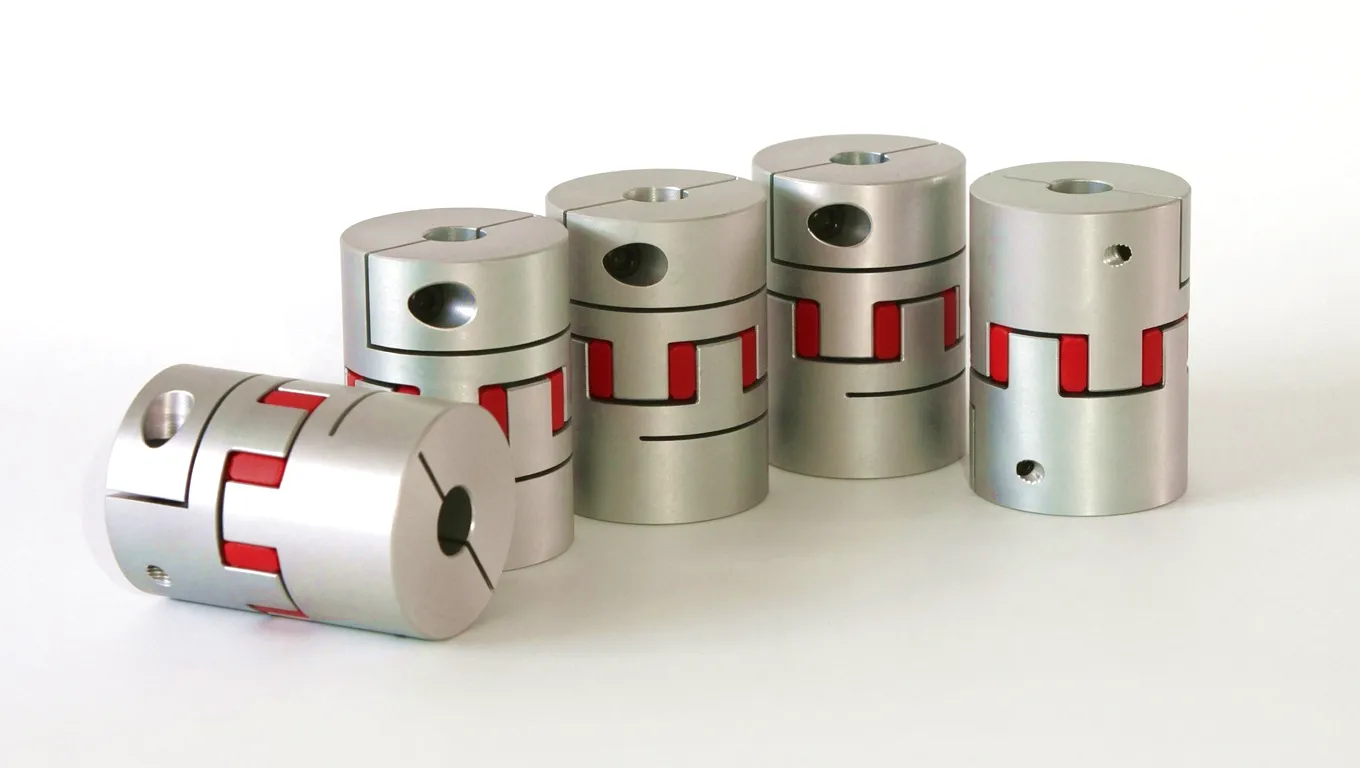
Designed for applications requiring zero-backlash torque transmission with accommodation of angular, parallel, and axial misalignments. The helical cut pattern in the single-piece body provides torsional compliance while maintaining exceptional stiffness in the radial direction. Suitable for servo motor drives, precise position-controlled auxiliary kiln drives, and instrumentation drive systems where positional accuracy is paramount.
A maintenance-free, torsionally rigid coupling incorporating stainless steel disc packs that accommodate shaft misalignment through elastic flexure without lubrication. The disc coupling’s combination of high torque capacity, low mass, and temperature resistance up to 200°C makes it the preferred choice for fan drives, pump drives, and auxiliary kiln drive systems where maintenance access during campaigns is restricted or hazardous. Available in spacer and close-coupled configurations.
Ever Power: Precision Manufacturing and Customisation Capabilities for Cement Kiln Couplings
 Ever Power is an established manufacturer of precision industrial couplings and power transmission components with a manufacturing and engineering capability specifically configured for the demands of heavy process industries. With a manufacturing facility spanning over 60,000 square metres, equipped with precision CNC turning, grinding, gear hobbing and gear grinding machine centres, Ever Power produces coupling assemblies to tolerances and surface finish standards that support reliable long-term operation in the most demanding cement plant environments. The production floor operates under a quality management system certified to ISO 9001, with in-process inspection protocols covering dimensional verification, hardness testing, surface integrity assessment and dynamic balance measurement on every coupling assembly before despatch.
For UK cement plant operators and their engineering contractors, Ever Power’s customisation capability provides a route to coupling designs that precisely match the dimensional envelope, misalignment capacity, torque rating and service condition requirements of each specific kiln drive application. Unlike catalogue-standard couplings that require compromises in bore size, shaft interface or hub geometry, Ever Power’s custom design service produces coupling assemblies engineered to the actual shaft dimensions of the existing gearbox and pinion shaft, including non-standard keyway configurations, hydraulic interference fit bores, and tapered bore arrangements. This capability is particularly valued in the UK market when replacing couplings on older kilns where the original manufacturer’s catalogue is no longer current and direct dimensional equivalents are unavailable as standard items from common supply channels.
Ready to discuss your cement kiln coupling requirements with Ever Power’s engineering team? We provide full dimensional review, material specification, and torque analysis as part of the quotation process — at no obligation.
Midlands Cement Plant, Derbyshire — Kiln Drive Coupling Upgrade Programme
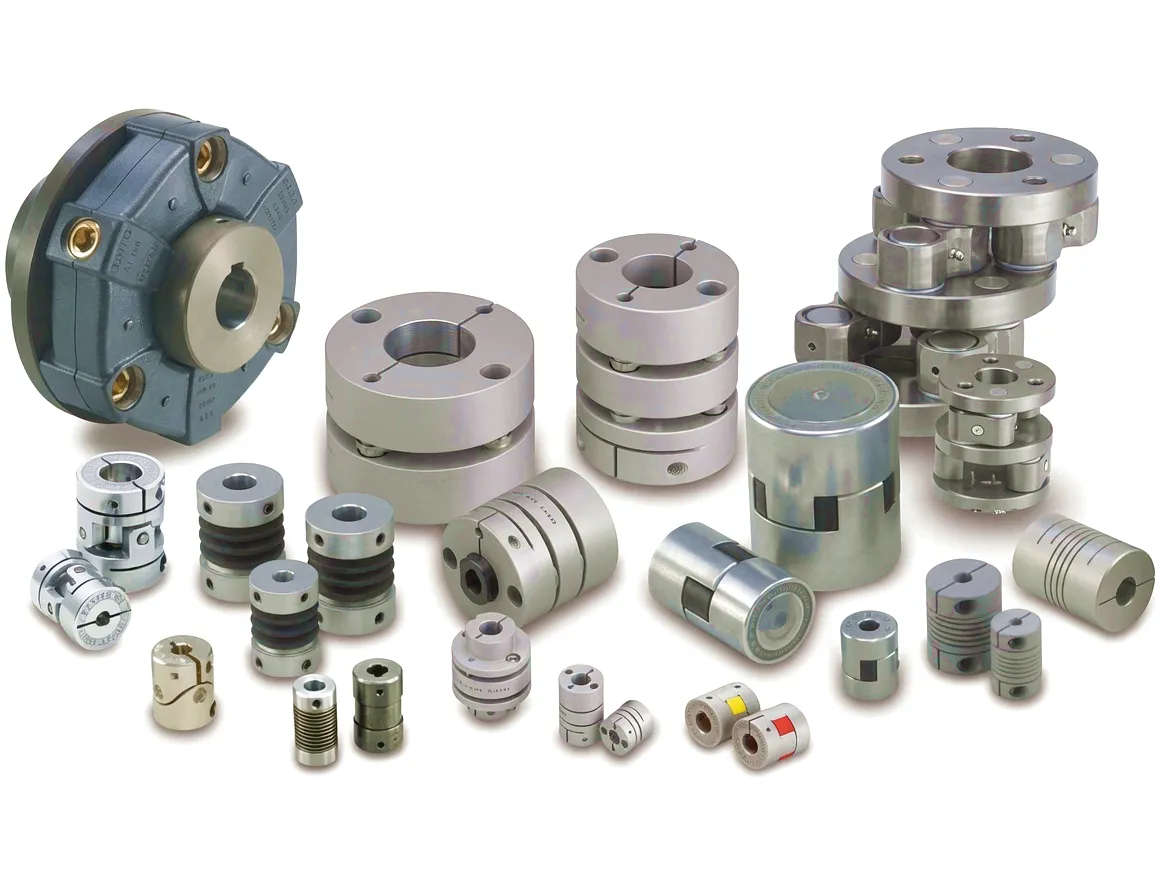 A cement manufacturing facility in Derbyshire, operating two long dry-process rotary kilns with original drive systems dating from the late 1980s, approached Ever Power in early 2023 following a pair of unplanned kiln stops within a single twelve-month period, both attributable to gear coupling failures on Kiln 2’s main drive. The plant’s maintenance manager, responsible for an operation producing 1.2 million tonnes of clinker per year, was facing mounting pressure from the operations director to improve drive reliability ahead of the plant’s planned five-year investment cycle. A coupling failure during peak production in the run-up to a major infrastructure contract had resulted in a 38-hour unplanned shutdown — a loss that the site’s operations accountant estimated at approximately £180,000 in direct production cost and contractual penalties.
Ever Power’s engineering team conducted a site visit and drive system review, collecting shaft run-out measurements, alignment survey data, gearbox output bearing temperature logs, and coupling wear records. The analysis identified that the existing coupling had been installed with an angular misalignment exceeding its rated capacity, compounded by a lubrication failure attributable to the original open-flange design’s inability to retain grease in the high-temperature, high-vibration environment near the kiln drive end. The tooth wear pattern on the failed coupling was consistent with chronic misalignment operation in a lubrication-starved condition — a combination that had progressively eroded the crowned tooth geometry until the coupling was effectively operating as a rigid link, transmitting full dynamic load fluctuations into the gearbox output bearings.
Ever Power proposed a sealed gear coupling design with extended tooth face width, FKM lip seals, and a high-viscosity polyurea grease fill rated for five-year sealed service, along with a recommendation for laser alignment verification during the next scheduled shutdown. The replacement coupling, manufactured to custom bore dimensions matching the existing gearbox output shaft and pinion shaft without modification to either, was installed in September 2023. As of the time of writing, Kiln 2 has completed eighteen months of continuous operation without a coupling-related stop event, and the next scheduled maintenance interval has been extended by six months on the basis of gearbox bearing temperature trending data showing significantly reduced dynamic loading at the output shaft.
What Customers Say About Ever Power Coupling Solutions
“The sealed gear coupling Ever Power supplied for our Kiln 2 main drive has transformed our drive reliability picture. After the chronic failures with our previous supplier’s product, the eighteen months of trouble-free operation we have achieved since installation represents a step change in plant availability. The custom bore specification meant zero machining rework on installation — a massive practical benefit during a tight shutdown window.”
“We were facing a very awkward situation — our original drive coupling was from a manufacturer whose product line has since been discontinued, and we needed a dimensional match to the existing gearbox output shaft that no standard catalogue item could provide. Ever Power’s engineering team turned around a custom proposal within 48 hours of receiving our shaft drawings, including a full torque analysis that gave our own engineering team the confidence to specify the upgrade with confidence. The coupling itself was delivered within the lead time promised — critical for our planned shutdown schedule.”
“The disc couplings Ever Power manufactured for our preheater ID fan drives have been running flawlessly since installation three years ago. The material certificate package they provided — covering full mill certification for the 17-4PH disc material, hardness survey results, and dynamic balance test records — was exactly what our procurement quality audit required. When we needed to discuss a slight modification to the spacer length on the second order to accommodate a fan shaft modification, the technical support response was knowledgeable and came back within the same business day.”
Frequently Asked Questions About Couplings for Cement Rotary Kilns
Ready to specify the right coupling for your cement kiln drive?
Contact Ever Power for engineering-led coupling selection, custom manufacturing and fast quotation for UK cement plant projects.
📧 Contact Ever Power Engineering
edytuj przez gzl