Gear Type Coupling in Marine Main Propulsion Systems:Engineering Reliability Into Every Voyage
From offshore supply vessels working the North Sea to bulk carriers crossing the Atlantic, the gear type coupling sits at the mechanical heart of every diesel-driven propulsion train — absorbing misalignment, transmitting enormous torque, and outlasting the harshest conditions the ocean can deliver.
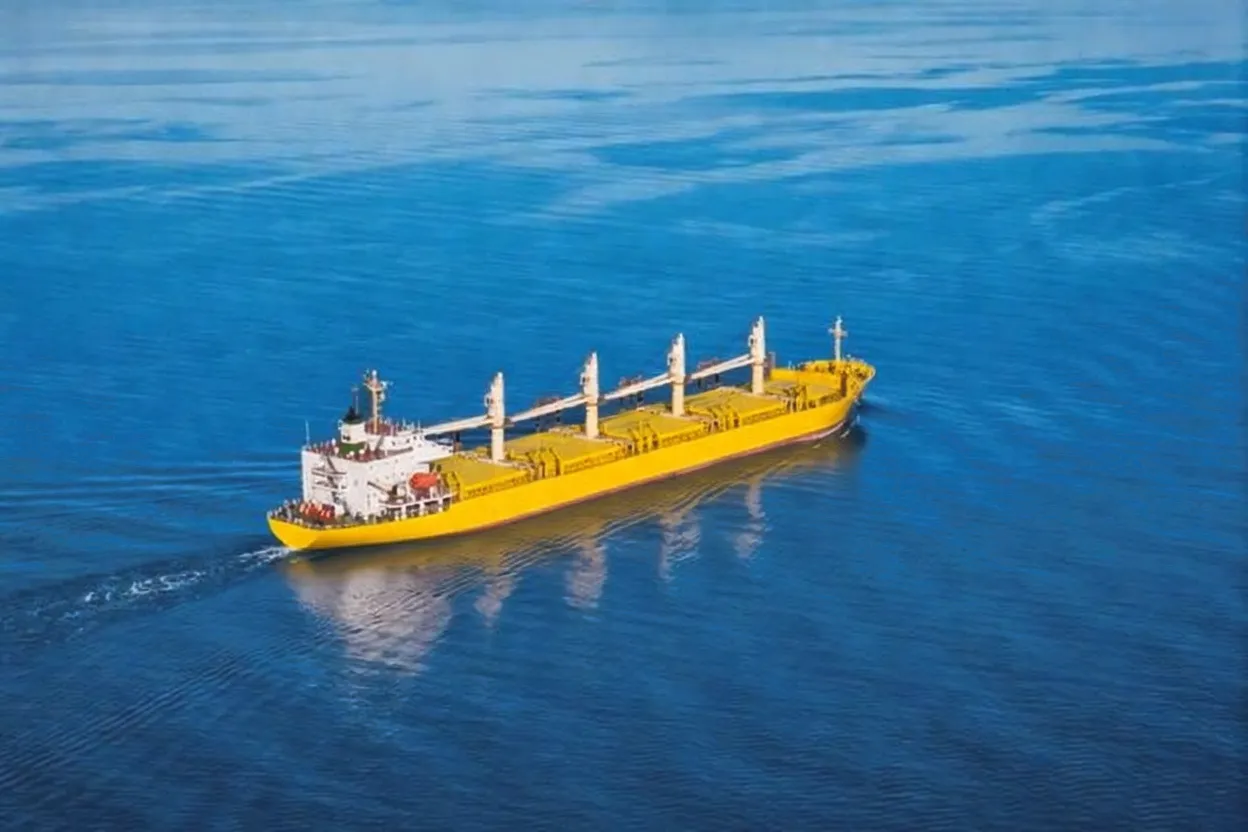 Marine main propulsion engineering places extraordinary demands on every mechanical component in the drivetrain. The gear type coupling — the transmission element connecting the prime mover to the reduction gearbox or intermediate shafting — must perform continuously under conditions that would destroy lesser equipment. It handles rated torques that can exceed hundreds of thousands of newton-metres, compensates for angular misalignment generated by hull flexure at sea, and does all of this inside an engine room saturated with salt air, condensation, and mechanical vibration that never stops. For naval architects, fleet engineers, and ship repair managers specifying drivetrain components, selecting the right gear type coupling is one of the most consequential decisions in the entire propulsion system design.
This article explores in real engineering depth how gear type couplings are applied in marine main propulsion systems — covering working principles, material science, critical design parameters, certification requirements, and the measurable operational advantages they deliver to vessel operators and fleet managers across the UK maritime sector. Whether you manage a North Sea offshore fleet from Aberdeen, operate short-sea shipping routes from Southampton, or specify components for ferry newbuilds from Glasgow, understanding the engineering behind the gear type coupling will help you make better procurement decisions and reduce costly unscheduled dry-dockings.
Why Marine Propulsion Makes Unique Demands on Gear Type Couplings
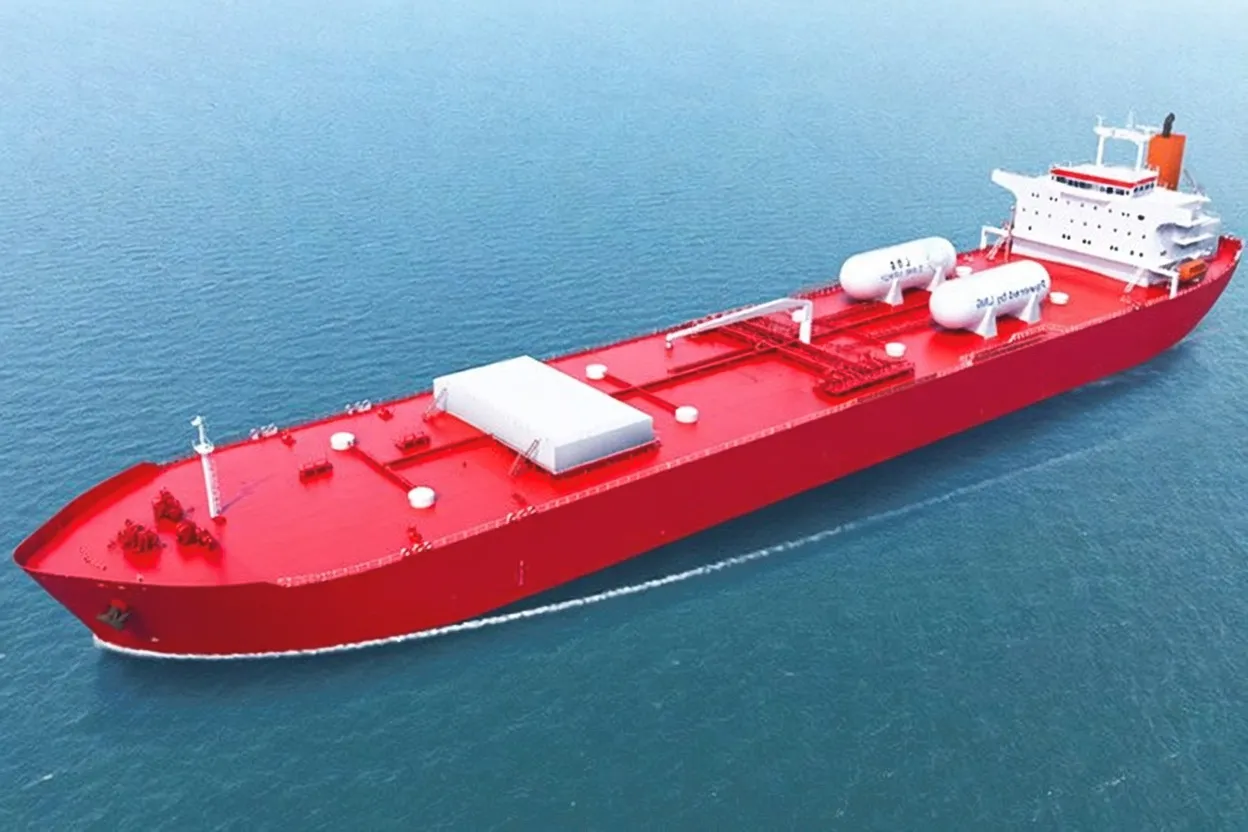 The propulsion shafting of a diesel-powered ship is not a rigid, static system. A vessel operating at sea is subjected to continuous wave-induced motion — pitch, roll, heave, and yaw — all of which flex the hull structure. This structural flexure translates directly into misalignment between the crankshaft centreline, the gearbox input shaft, and the propeller shaft. In a laden bulk carrier, the measured shaft centreline deflection between the engine room and the stern tube can reach several millimetres under heavy weather. When this dynamic misalignment is not properly accommodated, the resulting induced forces cause premature bearing failure, shaft fatigue cracking, seal deterioration, and expensive unscheduled dry-dockings that interrupt charter revenue and disrupt vessel schedules.
A properly engineered gear type coupling absorbs angular misalignment of up to 1.5° per tooth mesh through the inherent geometry of its crowned external teeth engaging within the straight internal teeth of the outer sleeve. The crown radius machined onto the hub tooth flanks is the key design variable: it allows the hub to tilt relative to the sleeve while maintaining distributed tooth contact across the full face width. Critically, this misalignment compensation is achieved without inducing bending moments into the connected shafts — a feature that distinguishes the gear type coupling from rigid flanged connections and from elastomeric couplings, which introduce torsional compliance but cannot match the gear coupling’s torque capacity.
Beyond misalignment, the marine environment itself is arguably the harshest industrial operating context on the planet. Engine room temperatures cycle from near-ambient in port to above 50°C at full sea speed. Relative humidity regularly exceeds 95%. Salt particles carried in ventilation air attack unprotected steel surfaces within weeks. Add to this the constant mechanical vibration from the diesel engine, the propeller’s periodic blade-rate forces, and the requirement for 30,000-hour service lives between planned maintenance windows, and you have a set of demands that rules out all but the most carefully engineered coupling solutions. The gear type coupling, when correctly specified and manufactured, meets every one of these demands — which is why it has remained the dominant coupling technology in marine main propulsion for over half a century.
พารามิเตอร์ประสิทธิภาพทางเทคนิค
Representative engineering parameters for marine main propulsion gear type couplings. All values are application-specific and fully customisable to vessel requirements.
| พารามิเตอร์ | Typical Range | Engineering Notes |
|---|---|---|
| แรงบิดที่กำหนด | 5,000 – 2,500,000 N·m | Scalable by bore diameter and sleeve face width |
| เส้นผ่านศูนย์กลางภายนอก | 120 mm – 1,200 mm | Large vessels may require split-sleeve or flanged designs |
| การเยื้องศูนย์เชิงมุม | Up to 1.5° per tooth mesh | Governed by hub tooth crown radius |
| การเคลื่อนที่ตามแนวแกน | ±5 mm – ±30 mm | Accommodates thermal expansion of the diesel block |
| Rotational Speed | Up to 3,600 RPM | High-speed variants require dynamic balancing to G2.5 |
| วัสดุศูนย์กลาง | 42CrMo4 / 34CrNiMo6 | Quenched and tempered; yield strength >900 MPa |
| Sleeve / Outer Ring | Forged steel / GGG60 ductile iron | Tooth flanks case-hardened to HRC 58–62 |
| Corrosion Protection | Hot-dip galvanising / epoxy coating / phosphating | Marine grade, ISO 12944 C5-M rated systems available |
| การหล่อลื่น | Sealed grease-packed / oil-bath circulating | Marine NLGI 2 lithium complex grease standard |
| Service Life Target | 30,000 – 100,000+ hours | Subject to correct installation and planned maintenance |
| Weight Range | 8 kg – 850 kg+ | Large naval and merchant vessel propulsion units |
| Manufacturing Tolerance | ISO 1328-1 Quality Grade 5 or better | Tooth profile tolerance ±3 µm on high-power variants |
How a Gear Type Coupling Works: Principle and Material Science
Crowned Tooth Engagement
The core operating mechanism relies on barrel-shaped (crowned) external teeth machined onto the hub engaging with straight internal teeth cut into the outer sleeve. The crown radius on the hub flanks is the key geometric parameter — it allows the hub to tilt relative to the sleeve while maintaining distributed contact across the tooth face width. This geometry enables angular misalignment compensation without transmitting bending moments into the connected shafts, which would otherwise induce fatigue loading in bearings and shaft journals. In marine service, where shaft centrelines deviate continuously during hull flexure, this property is not a convenience but an engineering necessity.
High-Strength Alloy Steel
Marine-duty gear type coupling hubs are manufactured from alloy steels such as 42CrMo4 (EN 1.7225) or the higher-grade 34CrNiMo6. After quenching and tempering, these materials achieve yield strengths exceeding 900 MPa, providing the torsional rigidity needed under peak transient torque events — particularly the impulse loads generated by diesel engine combustion cycles. The outer sleeve is produced from forged steel or ductile iron GGG60, combining strength with machinability for precision internal spline cutting. Tooth flanks are case-hardened to HRC 58–62 to achieve the surface hardness required for long-term wear resistance under lubricated sliding contact at the tooth mesh interface.
Marine Corrosion Protection
Corrosion protection for marine gear type couplings goes far beyond standard factory paint. External surfaces receive either hot-dip galvanising to a minimum 85 µm zinc coating, phosphating followed by marine epoxy primer and finish coat, or zinc-rich cold spray systems rated to ISO 12944 corrosivity class C5-M. Inside the tooth mesh cavity, marine-grade NLGI 2 lithium complex grease retained by precision-machined double-lip neoprene seals prevents both grease loss and salt water ingress — a balance that is particularly challenging to maintain in the vibration-rich environment of an engine room at sea. The seal design, material selection, and gland geometry must all be validated for the specific rotational speed and misalignment cycle of the application.
Classification Society Precision
Marine class societies — Lloyd’s Register, Bureau Veritas, DNV GL, ClassNK, and ABS — require that propulsion coupling components meet quality standards referenced in ISO 1328-1 for cylindrical gear accuracy and ISO 286 for shaft fits. Gear type couplings for main propulsion duty are machined to quality grade 5 or better, with tooth profile tolerances held within ±3 µm on high-power applications. Completed assemblies are dynamically balanced to G2.5 or better at rated speed, and each unit undergoes hydrostatic seal testing and full material certification — including heat treatment records, ultrasonic inspection results, and dimensional inspection reports — before despatch from the factory.
Key Operational Advantages
Why marine engineers worldwide specify gear type couplings for propulsion-critical positions
Marine Application Scenarios: Where Gear Type Couplings Serve Best
The range of marine applications for gear type couplings extends well beyond the straightforward main engine-to-gearbox connection. As vessels become more mechanically complex — integrating shaft generators, azimuth thrusters, power take-off units, and hybrid electric drives — the coupling’s ability to transmit high torque while absorbing dynamic misalignment finds new and critical roles throughout the drivetrain. Understanding where and why a gear type coupling is the right choice at each installation position helps both the naval architect and the fleet engineer select correctly and avoid the costly specification errors that lead to premature component failure.
1. Main Engine to Reduction Gearbox
This is the primary and most demanding position. The gear type coupling connects the slow-speed or medium-speed diesel directly to the gearbox input shaft, transmitting the engine’s full rated power. At this location, the coupling must also absorb torsional impulse loads from diesel combustion cycles without transmitting them downstream into the gearbox internals, where they can cause gear flank micropitting, bearing overloading, and shaft fretting wear. On twin-engine vessels, precise matching of the coupling’s torsional stiffness between the two drives is important for load-sharing balance.
2. Gearbox Output to Intermediate Shaft
Between the gearbox output flange and the intermediate propeller shaft, a gear type coupling provides the flexibility needed to maintain operational integrity as shaft alignment shifts due to hull deformation under varying sea states, cargo load distributions, and thermal gradients. In long-shafted vessels — bulk carriers, oil tankers, container ships — the thermal gradient between the engine room and the cold stern tube section produces measurable centreline displacement during a sea voyage. Without a gear type coupling to absorb this movement, the forces transmitted through rigid connections cause accelerated bearing wear and crankshaft seal failures.
3. Shaft Generator and PTO Drives
Modern merchant vessels increasingly mount a shaft generator or power take-off (PTO) unit driven from the main propulsion gearbox to supply the vessel’s hotel electrical load. This arrangement requires a secondary gear type coupling to connect the PTO output shaft to the generator shaft. The coupling must accommodate the different thermal expansion behaviour of the generator frame relative to the gearbox casing while transmitting sufficient torque to generate the vessel’s hotel load — typically 500 kW to 2,000 kW on larger vessels. Correct sizing of this position is often underestimated in the procurement specification phase.
4. Azimuth Thrusters and DP Vessels
Offshore support vessels, platform supply ships, and cable-laying vessels operating in the North Sea routinely use azimuth thrusters or retractable bow thrusters for dynamic positioning. The vertical or angled drive shafts within these units use compact gear type couplings to connect the electric drive motor to the thruster gearbox, managing alignment variations caused by the thruster unit’s independent mounting and suspension. In dynamic positioning mode, these couplings operate at varying speeds and load conditions as the DP system continuously adjusts thrust output, placing demands on the coupling’s wear resistance at partial load conditions.
Each installation position demands a specifically engineered characterisation. A coupling at the engine-to-gearbox interface is sized for peak transient torque and torsional damping, while one serving a shaft generator application is sized for continuous rated torque with a higher temperature-rise allowance. A coupling in a bow thruster unit must be compact enough to fit within the thruster housing envelope while surviving the stop-start duty cycles of dynamic positioning operations. This is why working with a manufacturer that genuinely understands marine drivetrain engineering — not simply one that offers a catalogue selection table — produces the best long-term outcomes for vessel operators.
Customer Success: North Sea Platform Supply Vessel Fleet Retrofit
🇬🇧 United Kingdom — North Sea Offshore
Challenge: Recurring Gear Coupling Failures on Aberdeen-Based PSV Fleet
A Scottish-based offshore shipping operator managing a fleet of six platform supply vessels (PSVs) operating year-round between the port of Aberdeen and North Sea oil platforms was experiencing recurring gear type coupling failures at the main engine-to-gearbox interface. The vessels — each powered by twin Wärtsilä 8L32 medium-speed diesel engines producing approximately 3,200 kW per unit — were originally fitted with couplings from a European supplier that proved unable to sustain the extreme operational conditions characteristic of North Sea service: heavy weather station-keeping, frequent dynamic positioning cycles, and significant shaft misalignment resulting from the vessels’ characteristically flexible hull forms.
Coupling failures were recurring at intervals of only 14–18 months, each requiring an unplanned dry-docking event costing the operator approximately £180,000 per vessel, including lost charter revenue during the off-hire period. Detailed root cause analysis identified three concurrent failure modes developing simultaneously: fretting corrosion on the tooth flanks caused by insufficient crown radius for the measured misalignment range, seal extrusion driven by angular deflection cycling beyond the original seal design envelope, and stress corrosion cracking initiating in the hub bore under combined torsional and bending loading in the marine environment.
Solution: Fully Custom Marine Gear Type Couplings from Ever Power
Ever Power supplied a redesigned gear type coupling solution incorporating targeted engineering improvements at each failure mode. Hub material was upgraded from standard 42CrMo4 to the higher-nickel 34CrNiMo6 grade, providing improved resistance to stress corrosion cracking in the salt-humid engine room environment. The tooth crown radius was increased to accommodate up to 1.2° angular misalignment per mesh — exceeding the measured operational deflection of the PSV hulls by a comfortable margin of 30%. A double-lip seal arrangement using a specifically compounded marine-grade nitrile rubber replaced the original single-lip design, eliminating grease loss under repeated angular misalignment cycling. Complete material test certificates, heat treatment records, and dimensional inspection reports were provided to satisfy the surveyor requirements for the vessels’ DNV GL class renewal.
All six vessels were retrofitted during scheduled class renewal dry-dockings carried out over a 14-month programme. At time of reporting, the new gear type couplings have accumulated 38 months of continuous North Sea service across the entire fleet without a single recorded coupling-related defect. The operator confirmed that planned maintenance intervals were extended from 12 months to 30 months based on condition monitoring evidence, generating estimated annual maintenance cost savings of £420,000 across the fleet — a return on investment that repaid the coupling upgrade programme cost several times over in the first operating year alone.
What Marine Engineers Say
“We have operated offshore vessels from Aberdeen for over twenty years and have purchased gear type couplings from several European and Asian manufacturers. The Ever Power units we installed on our latest PSV are running toward the 30,000-hour service target without showing measurable tooth wear. The documentation package provided for the Lloyd’s Register survey was comprehensive and accepted without query.”
“Our bulk carrier fleet needed heavy-duty gear type couplings with specific bore dimensions and keyway configurations that no off-the-shelf product could accommodate. Ever Power delivered fully custom units with material certifications, dynamic balance reports, and Lloyd’s Register third-party inspection within the agreed production lead time. We have since ordered four additional sets for our upcoming newbuild programme.”
“As a marine engineering consultancy based in Glasgow, we specify drivetrain components for a wide range of vessel types. When we needed a compact gear type coupling solution for a passenger ferry newbuild on Scottish mainland routes, Ever Power’s application engineers provided a thorough selection analysis and a bespoke sleeve design that met our space envelope precisely. Delivery was on schedule and the price was genuinely competitive against European alternatives.”
Ever Power Manufacturing: Custom Gear Type Coupling Production
Ever Power operates a dedicated heavy-industry manufacturing facility with the equipment and process capability to produce marine-grade gear type ข้อต่อ from individual prototype units through to multi-vessel fleet supply programmes. Our application engineering team works directly with naval architects, classification society surveyors, and fleet operators to develop coupling solutions that are genuinely engineered to the mechanical requirements of specific propulsion systems — not simply resized versions of a standard catalogue item. Every marine gear type coupling we manufacture is designed from its material specification, through its geometry and tolerance stack, to its surface treatment and sealing system, with the operational environment of the specific vessel in mind.
Our product customisation capability is comprehensive: shaft bore diameters from 20 mm to 600 mm, any standard or non-standard keyway profile, flanged or plain-bore sleeve configurations, split-sleeve designs for retrofits where shaft removal during dry-docking is restricted or impractical, and full marine coating systems applied in-house. We also manufacture replacement sleeve and hub components as individual items, enabling operators to replace worn elements without the cost of sourcing a complete new assembly — an important consideration for fleet operators managing lifecycle maintenance budgets on vessels built to different original specifications. Our production team has handled special requests ranging from emergency one-off replacements required within five working days to multi-year supply agreements covering entire newbuild programmes of twelve or more vessels.
Ready to specify a gear type coupling for your marine propulsion project?
Supplying the UK Maritime Industry: North Sea to the English Channel
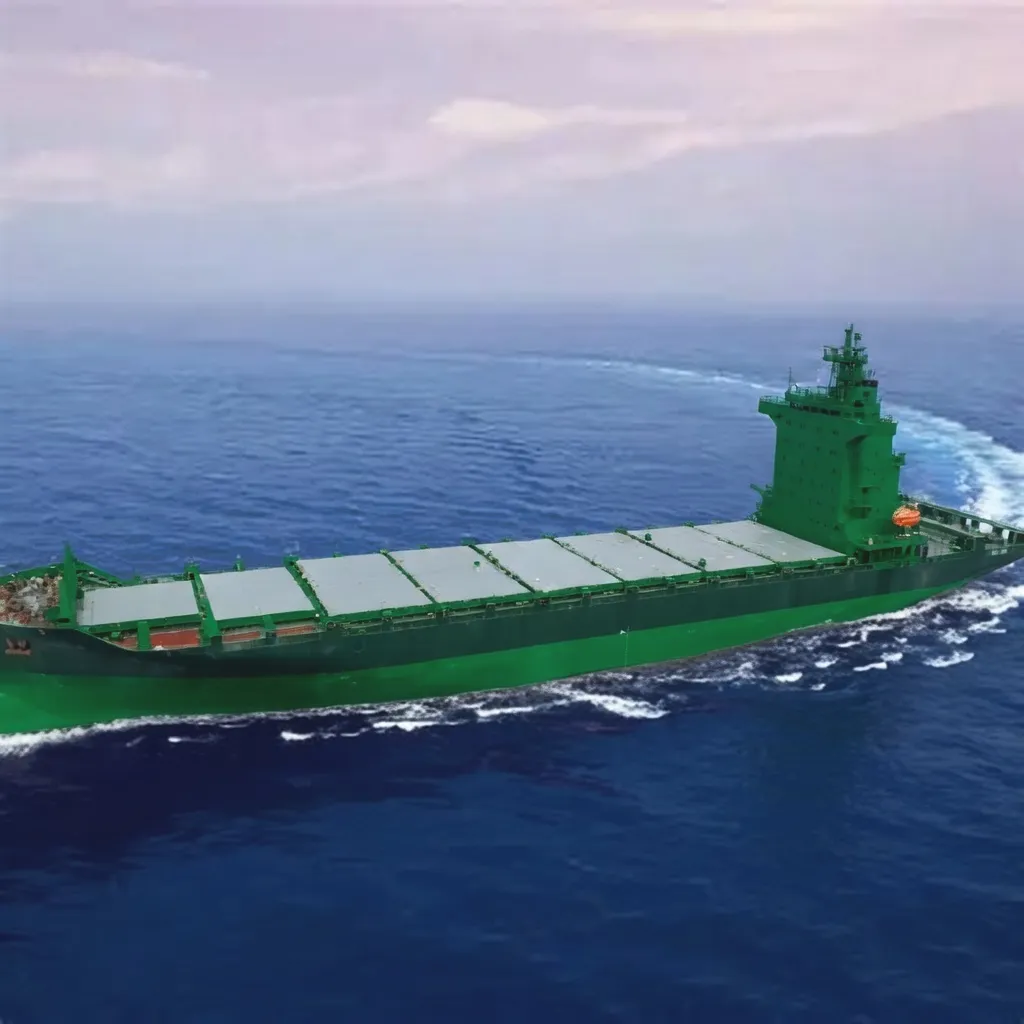 The United Kingdom’s maritime sector remains one of the most technically demanding and commercially significant in the world. From the North Sea’s offshore energy supply chain — encompassing platform supply vessels, anchor handling tugs, well stimulation vessels, and subsea support ships operating out of Aberdeen, Peterhead, and Great Yarmouth — to the short-sea shipping routes linking Immingham, Tilbury, Felixstowe, and Southampton with European freight ports, and the Royal Fleet Auxiliary vessels supporting UK defence operations from Devonport and Portsmouth, demand for high-performance marine gear type couplings is continuous and technically diverse.
Vessel operators and ship repair yards based throughout the UK — from the commercial shipping clusters of Southampton and Bristol to the offshore energy hubs of Aberdeen and Lowestoft, and the naval and ferry operations centred on Portsmouth, Liverpool, and Holyhead — regularly source replacement and newbuild coupling components. Ever Power maintains responsive commercial communication with UK-based technical contacts, providing rapid quotation turnaround — typically within 24 hours for standard enquiries — backed by application engineering support from engineers who understand the operational realities of British maritime service: MCA survey requirements, North Sea weather conditions, and the commercial pressures of charter contracts with off-hire clauses.
We have supplied gear type couplings for vessels operating under Maritime and Coastguard Agency (MCA) certification, class-society-classed merchant vessels trading from UK ports, specialist offshore wind installation and service vessels serving the rapidly expanding UK wind sector in the Irish Sea and the North Sea, and ferry operators running routes between mainland Britain, the Scottish islands, and Northern Ireland. Whether you are a ship management company in London or Glasgow seeking to establish a preferred gear type coupling supplier for your UK-flagged fleet, a ship repair yard in South Wales handling an emergency bearing and coupling change-out, or a naval architect in Southampton specifying components for a passenger ferry newbuild, Ever Power delivers the combination of technical engineering depth and commercial responsiveness that the UK maritime industry demands.
คำถามที่พบบ่อย
(FAQPage + Speakable Schema — add via Yoast SEO / RankMath plugin or paste the JSON-LD block from the code comment above into your site’s <head> section)
Ever Power — Marine Gear Type Coupling Manufacturer & Custom Engineering Specialist
แก้ไขโดย gzl