Industrial Drive Solutions · UK Market
ข้อต่อในระบบขับเคลื่อนของโรงงานปูนซีเมนต์: ความแม่นยำทางวิศวกรรมสำหรับสภาพแวดล้อมทางอุตสาหกรรมที่ต้องการความแม่นยำสูงที่สุดในสหราชอาณาจักร
An in-depth technical and commercial guide covering gear couplings, snake spring couplings, and universal couplings for cement grinding applications across the United Kingdom.
 Cement production stands as one of the most mechanically intensive industries operating throughout the United Kingdom. From the sprawling grinding halls of Buxton Lime Industries in Derbyshire to the Portland cement plants near Dunbar in East Lothian, the machinery involved in reducing raw limestone, clinker, and additives to fine powder operates under conditions that test every component in the drive train. At the heart of these systems, connecting the enormous induction motors to the reduction gearboxes and then to the grinding mill itself, sits the coupling — a component whose selection and specification can determine whether a plant runs profitably or suffers costly unplanned shutdowns. Understanding what couplings do in a cement mill context, which variants suit which roles, and how modern precision manufacturing has elevated their performance is therefore not simply an engineering exercise. It carries direct consequences for plant throughput, maintenance budgets, and the competitiveness of UK cement producers in a challenging global market.
How Couplings Work in Cement Mill Drive Systems
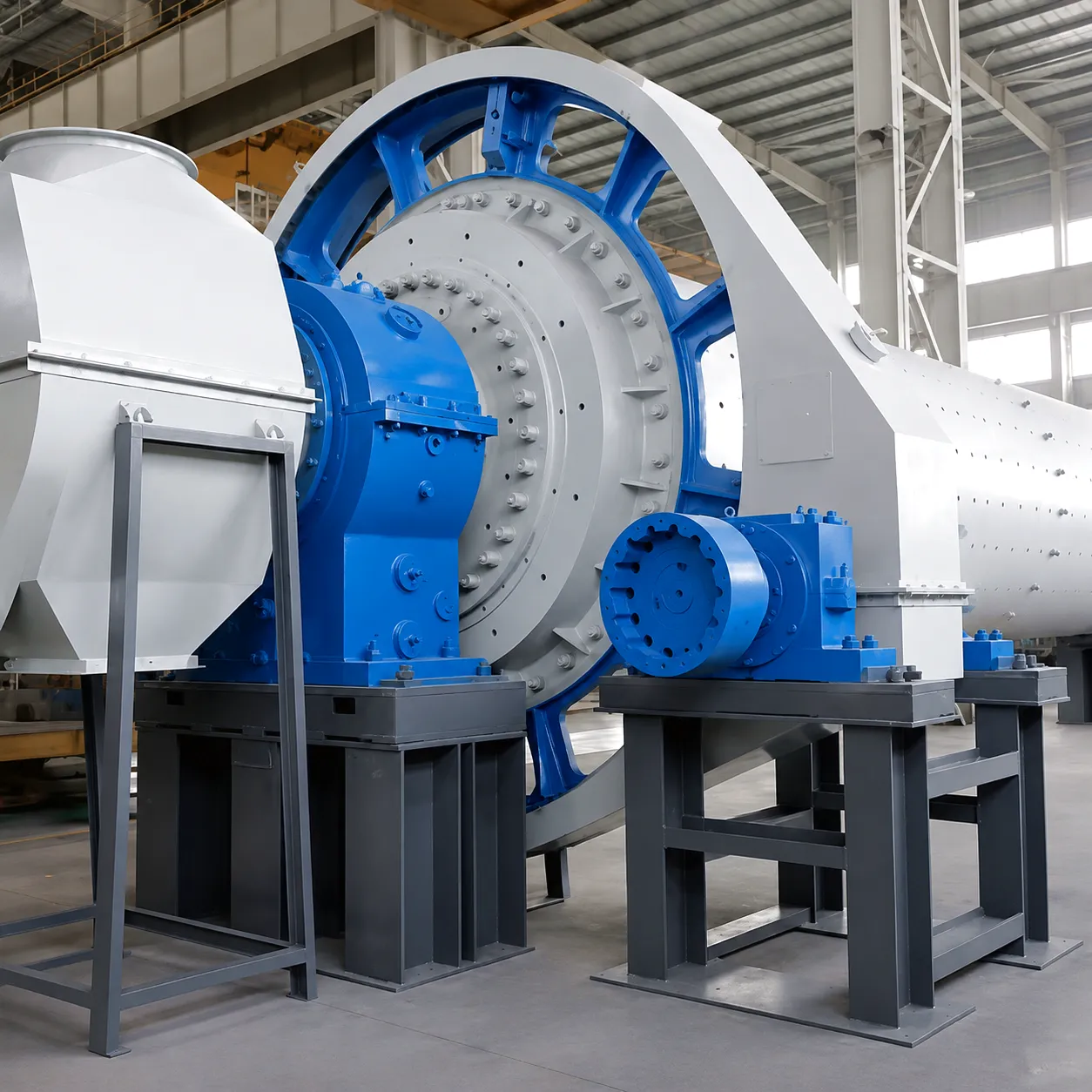 A cement grinding circuit typically comprises three mechanically distinct zones: the primary motor stage, the intermediate gearbox or reducer, and the mill body itself. In a conventional ball mill arrangement, the drive motor — which can develop output torques exceeding 500 kNm in larger installations — transfers power first through a high-speed coupling connecting it to the input shaft of the main gearbox, then through a low-speed coupling or gear coupling linking the reducer output to the central trunnion or ring gear of the mill. Each of these coupling positions experiences fundamentally different operating conditions. The high-speed position demands precise alignment tolerance management, because even slight angular or parallel misalignment at 1,000 rpm translates into substantial dynamic forces. The low-speed position, by contrast, must handle enormously high torque at comparatively low rotational speeds, often in the range of 15 to 25 rpm for the final stage, while simultaneously accommodating the thermal expansion of the mill shell and the progressive wear settlement of the mill foundation.
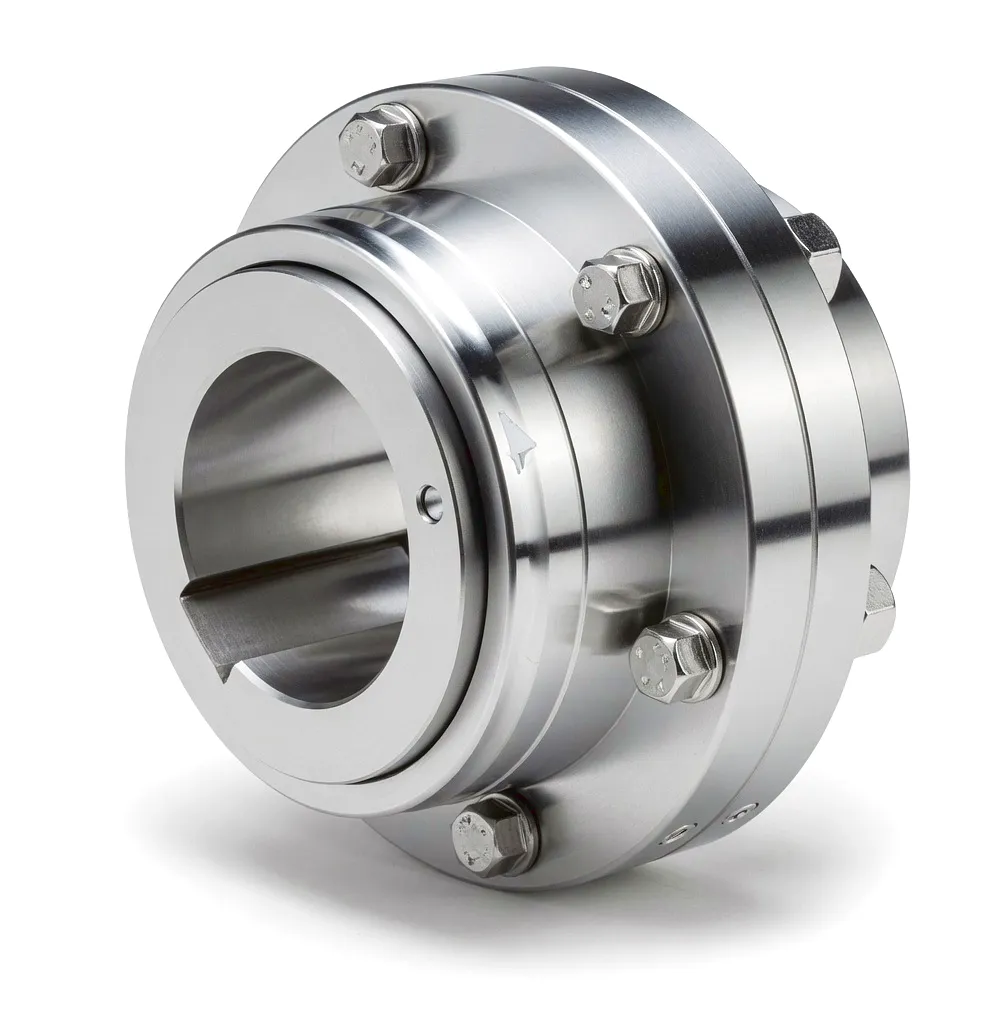
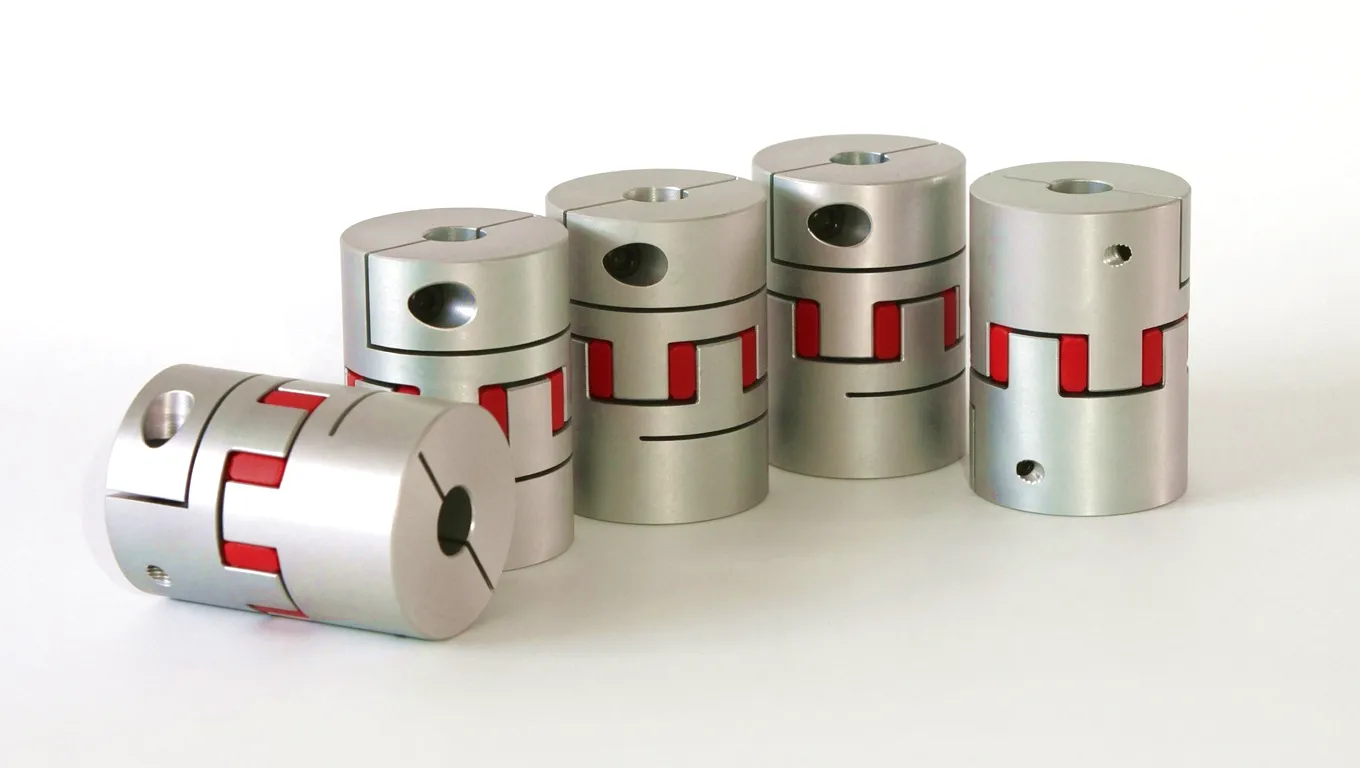
Gear couplings in the cement mill environment transmit torque through an internally toothed outer sleeve meshing with an externally toothed hub. The crowned tooth profile of the hub — slightly convex along the tooth face — is the critical geometric feature that allows the coupling to tolerate both angular misalignment up to approximately 1.5 degrees and axial displacement of several millimetres without generating harmful radial forces on the connected shaft bearings. This tooth crowning geometry, when manufactured with sufficient precision, ensures that the contact pressure distributes across the full tooth width rather than concentrating at one edge, which would cause accelerated wear. Lubrication — typically a high-viscosity mineral grease or synthetic lubricant held within a sealed chamber between the sleeve and the hub — reduces metal-to-metal contact under the cyclic loading that characterises each revolution of the mill. Snake spring couplings, which transmit torque through a sinusoidal steel spring element seated in mating grooves of two half-couplings, operate on a different mechanical principle but achieve a similar end result: they absorb torsional shock, dampen vibration, and provide a degree of misalignment compensation, making them attractive for applications where the drive motor is subjected to frequent starts or where the load spectrum includes significant fluctuations in resistance torque.
Core Materials Used in Cement Mill Couplings
⚙️
เหล็กกล้าผสม (42CrMo4)
The workhorse material for gear coupling hubs and sleeves. Chromium-molybdenum alloy steel offers tensile strength in the 900–1,100 MPa range after quenching and tempering, providing the fatigue resistance needed to endure millions of torque reversal cycles across a planned service life of 5–10 years between major overhauls. Its machinability allows the precision tooth grinding operations essential to achieving controlled backlash and crowned tooth profiles.
🔩
Ductile Cast Iron (EN-GJS-600)
Widely used for coupling flanges and housings where weight reduction and cost efficiency are priorities without sacrificing mechanical integrity. Spheroidal graphite iron delivers yield strengths exceeding 370 MPa combined with substantially better impact toughness than conventional grey iron, which is critical in environments subject to start-up shocks — a characteristic feature of cement mill operation given the enormous rotational inertia of a fully charged grinding mill.
🛡️
High-Carbon Spring Steel
The distinctive serpentine spring element at the core of snake spring couplings is cold-formed from high-carbon spring steel strip, typically with a carbon content in the 0.60–0.75% range and surface hardness achieved through controlled heat treatment. This alloy selection optimises the elastic energy storage and release characteristics that define the coupling’s torsional flexibility, allowing it to absorb transient overloads without permanent deformation while returning to its original geometry once the overload passes.
🔬
PTFE & Polyurethane Seals
Given the cement plant environment’s aggressive dust loading, the sealing materials on any lubricated coupling must resist ingress by clinker dust, raw meal particles, and abrasive fly ash. Polytetrafluoroethylene lip seals combined with labyrinth passages create the multi-stage barrier needed to keep contaminants out and lubricant in across the plant’s annual maintenance cycle, avoiding the abrasive wear mode that has historically been a primary failure mechanism in inadequately sealed gear couplings at facilities such as those operating in the Hope Valley area of Derbyshire.
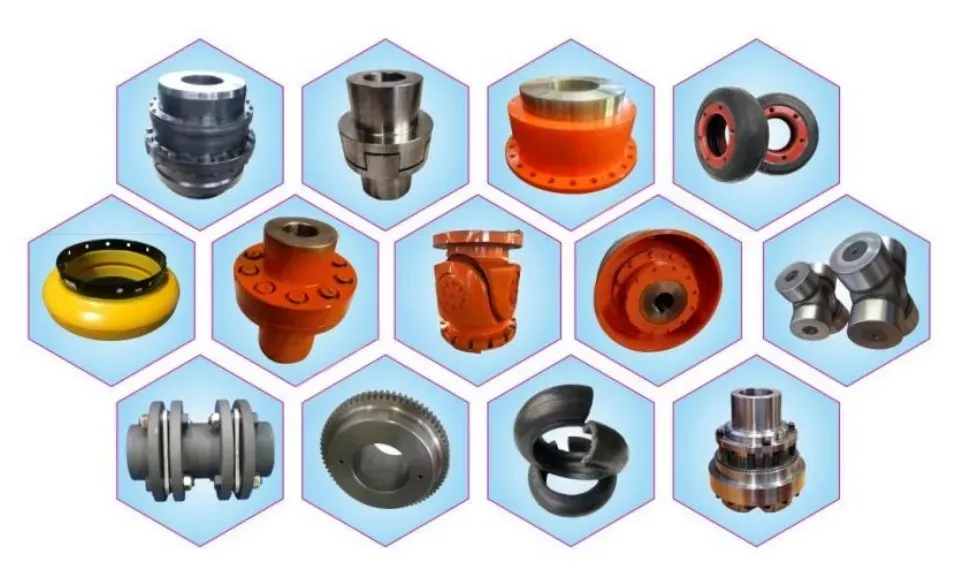
Ever Power coupling product range — precision-engineered for heavy industrial drive systems
Technical Advantages of Gear-Type Couplings in Cement Mill Applications
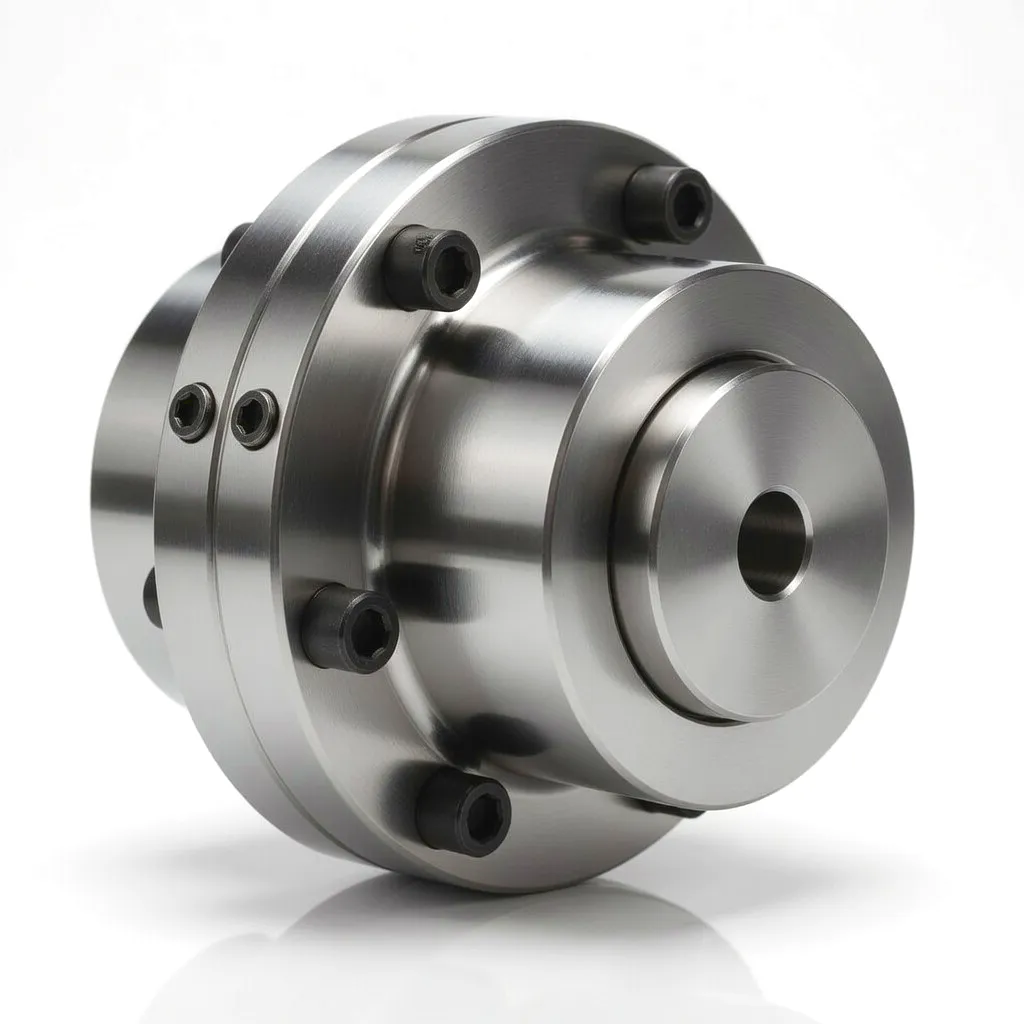 The competitive selection of gear couplings for cement mill drives over alternative coupling types — including disc pack couplings, jaw couplings, and fluid couplings — rests on a combination of performance characteristics that together address the specific demands of continuous high-torque grinding service. These characteristics have been validated across decades of deployment in UK cement plants and are directly relevant to procurement engineers assessing replacement or new-build specifications.
● High Torque Density
Gear couplings transmit the highest torque per unit of outside diameter of any flexible coupling category, making them uniquely suited to the space-constrained coupling housings found in existing mill drive arrangements where upgrading a jaw or pin-and-bush coupling to match modern motor outputs would otherwise require structural modifications to the bedplate and guards.
● Misalignment Tolerance
Crowned tooth geometry provides angular misalignment capacity of 0.5–1.5° and parallel offset accommodation of 0.5–2.0 mm depending on coupling size, allowing the coupling to continue operating effectively as the mill foundation experiences the gradual settlement that is inevitable in the heavy-clay substrates typical of many UK industrial sites, without inducing bearing overload.
● Overload Protection
The high rotational inertia of a ball mill charged with steel grinding media means that start-up torque spikes can reach two to three times the nominal running torque. Gear couplings with adequate service factor ratings — typically 1.5 to 2.0 for cement mill service — absorb these transient overloads without component failure, while snake spring coupling variants provide an inherent torsional compliance that smooths the shock transmission to the gearbox input shaft.
● Low Maintenance Requirements
Cement plant maintenance scheduling typically operates on annual or bi-annual major inspection cycles. A properly specified and initially greased gear coupling requires only periodic grease replenishment via nipple, which in sealed designs can be extended to match the plant turnaround schedule. This characteristic sharply differentiates gear couplings from elastomeric alternatives that require element replacement at shorter intervals when exposed to the temperature cycling and chemical contamination present in cement production environments.
● Dust Exclusion Sealing
The cement manufacturing environment generates airborne particulate concentrations that can challenge even robust industrial sealing systems. Precision-machined PTFE lip seals combined with positively pressurised grease chambers prevent clinker dust — which has Mohs hardness in the 5–6 range — from infiltrating the tooth mesh area where it would function as a lapping compound and rapidly accelerate wear. Correct seal selection adds meaningful years to coupling service life in Birmingham or Sheffield-area cement processing operations.
● Compact Axial Profile
Modern gear couplings for cement mill service achieve the necessary torque rating in a notably compact axial envelope compared to equivalent flanged-disc or gear reducer coupling arrangements. This compactness has practical consequences for maintenance access in the confined drive room areas common in older UK cement plant buildings, many of which were constructed in the post-war period and were not designed with generous equipment clearances.
พารามิเตอร์ทางเทคนิคและประสิทธิภาพของผลิตภัณฑ์
The table below provides representative parameter ranges for gear couplings and snake spring couplings as deployed in cement mill drive systems. Values vary by coupling size, material grade, and customer-specific design service factors. Contact Ever Power for detailed dimensional drawings and torque certification documentation to support your project specification.
| พารามิเตอร์ | Gear Coupling (GTC Series) | Snake Spring Coupling (JSA Series) | SWC Universal Coupling |
|---|
| Nominal Torque Range | 250 Nm – 2,500,000 Nm | 160 Nm – 1,800,000 Nm | 500 Nm – 3,150,000 Nm |
| Max Rotational Speed (rpm) | Up to 3,600 | Up to 2,500 | Up to 1,500 |
| Angular Misalignment (max) | 1.5° | 1.0° | Up to 45° |
| Parallel Offset (max) | 0.5 – 2.0 mm | 0.5 – 1.5 mm | 0 mm (angular only) |
| Hub / Sleeve Material | 42CrMo4, C45E | 42CrMo4 / EN-GJS-600 | 34CrNiMo6, 42CrMo4 |
| Spring / Tooth Hardness | 58–62 HRC (tooth surface) | 48–55 HRC (spring) | 50–58 HRC (yoke) |
| Operating Temperature Range | -30°C to +130°C | -25°C to +90°C | -40°C to +120°C |
| Seal Type | PTFE lip + labyrinth | Cover plate + O-ring | Grease nipple, no housing seal |
| Service Factor (cement mill) | 1.5 – 2.5 | 1.8 – 2.5 | 1.5 – 2.0 |
| ช่วงเวลาการหล่อลื่น | Annual (sealed design) | 6–12 months | 500–1,000 operating hours |
Application Scenario: Cement Mill Drive Systems
Ball Mill Primary Drive — High-Speed Coupling Position
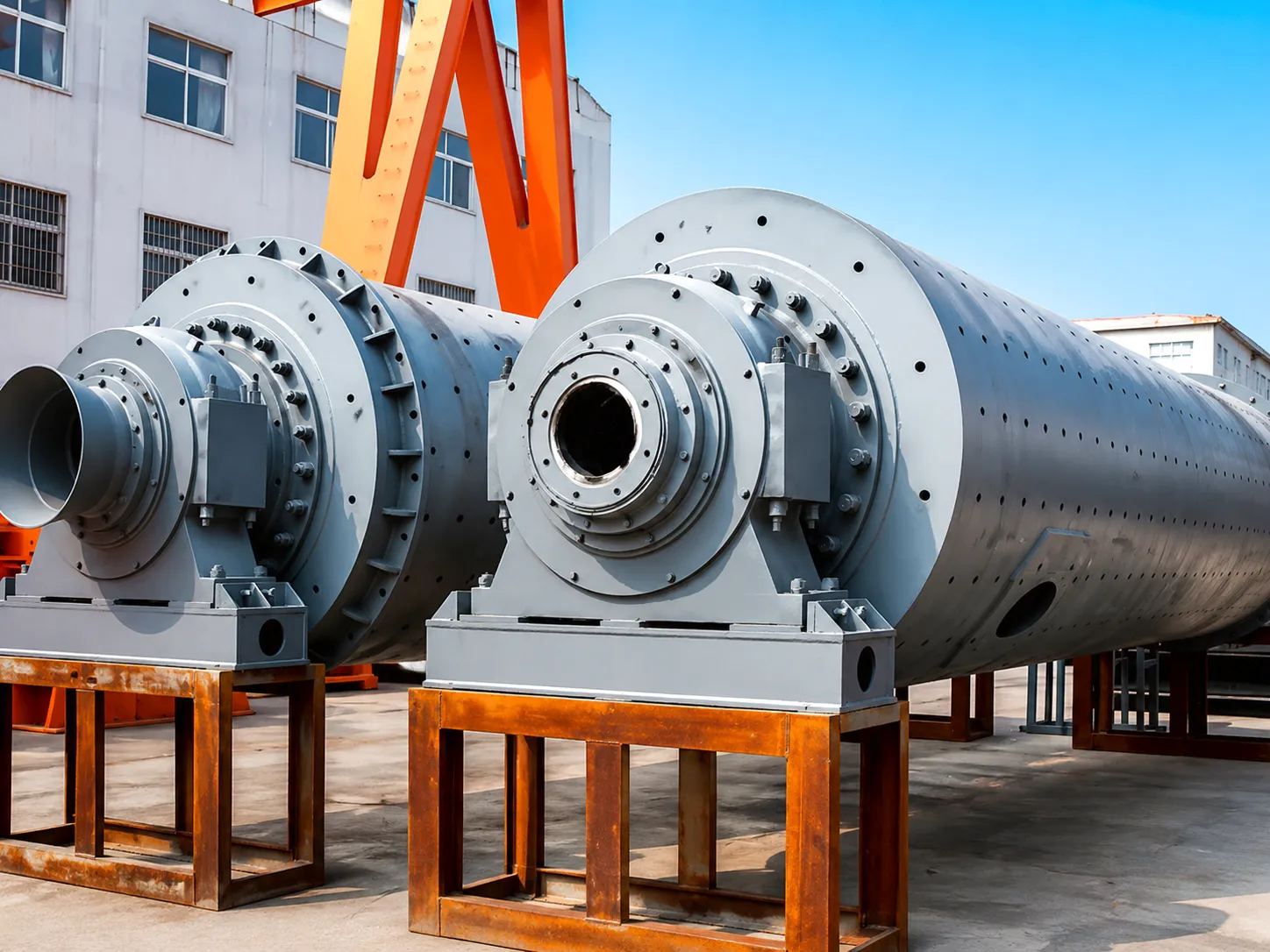 In a conventional cement ball mill installation, the primary drive coupling connects the main induction motor output shaft to the high-speed input of the mill reduction gearbox. This position is characterised by relatively high rotational speed — typically 740 to 1,480 rpm depending on motor pole configuration — combined with moderate torque levels compared to the low-speed stage. The key performance demands at this position are precision dynamic balancing (to avoid adding vibration to a machinery train already subject to mill-induced excitations), compact physical envelope compatible with standard gearbox input housing dimensions, and reliable torsional flexibility to prevent direct transmission of motor electrical torque spikes during direct-on-line starting events. Gear couplings configured for this position commonly employ a half-coupling design on each end, connected by a central spacer tube whose length is determined by the motor-to-gearbox centreline dimension on the individual plant layout. Several UK cement operations in the Mendip Hills quarrying and processing cluster have adopted gear couplings with spacer configurations specifically to allow withdrawal of the motor rotor for rewinding without disturbing the gearbox alignment.
Gearbox Output to Mill Trunnion — Extreme-Torque Low-Speed Coupling
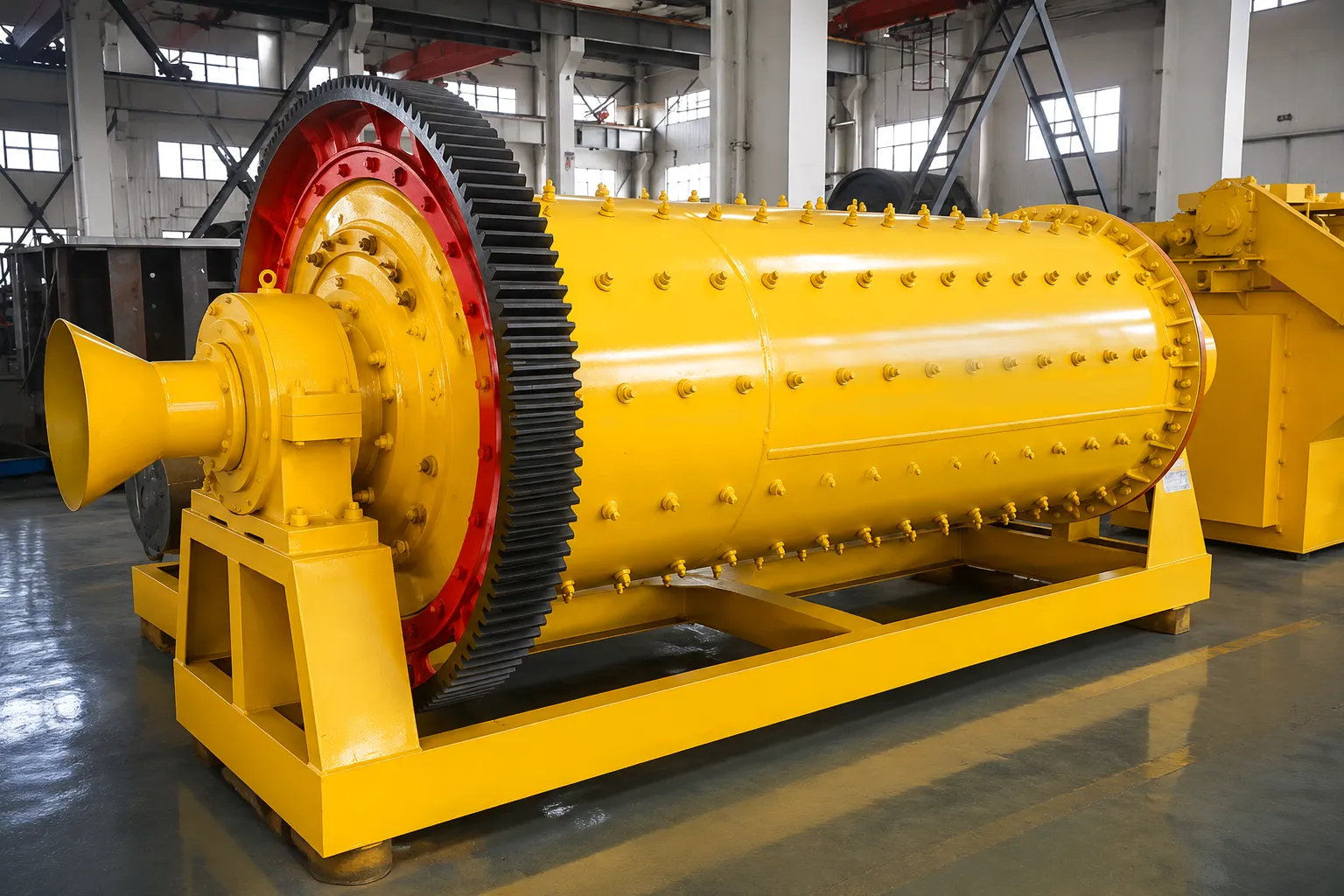 The low-speed coupling connecting the gearbox output shaft to the central pinion or trunnion drive of a cement ball mill represents perhaps the most demanding coupling application in the entire cement production process. Output torques at this position routinely exceed 500,000 Nm in mills with internal diameters above 4 metres, and in the largest installations used in integrated clinker-to-cement production facilities — such as those operated by major UK producers in the Thames Estuary region — torques approaching 2,000,000 Nm are not uncommon. At these torque levels, even marginal misalignment becomes a serious concern because the resultant bearing forces can cause premature failure of the mill trunnion bearings, which are extremely expensive and time-consuming to replace. The gear coupling at this position therefore serves a dual role: transmitting enormous mechanical power with maximum efficiency while simultaneously acting as a precision isolation element that prevents the gearbox from transmitting its own thermal expansion and foundation movement into the mill bearing housing. The crowned tooth profile geometry, manufactured to tolerances measured in microns, is what makes this dual functionality achievable in a single compact mechanical assembly.
Vertical Roller Mill (VRM) — Universal Coupling for Angular Drive
Vertical roller mills, which have progressively displaced ball mills in raw meal and increasingly in finish grinding circuits at UK cement plants seeking improved specific energy consumption, introduce a distinct coupling challenge. The drive arrangement in a VRM passes power from a horizontal motor through a right-angle bevel-helical reducer and then down a vertical shaft to the grinding table. In installations where the motor axis and reducer input axis are not perfectly aligned — a common situation in retrofitted plant configurations — SWC series universal couplings provide the angular flexibility necessary to bridge the misalignment while transmitting the full drive torque. Universal couplings in this application operate with permanent angular deflection rather than the intermittent misalignment compensation of a gear coupling in a nominally aligned drive train. The cross-journal bearing assemblies in well-designed universal couplings are therefore specified with extended lubrication intervals and enhanced needle roller bearing capacity to sustain the continuous Hertzian contact loads imposed by operating under constant angular deflection. Plants in Yorkshire and the East Midlands that have installed VRM grinding circuits report that careful selection of universal coupling specifications — particularly journal bearing area and cross-bore geometry — has been a significant factor in achieving target annual availability rates above 8,500 operating hours.
Roller Press Pre-grinder Drive — Snake Spring Coupling Vibration Damping
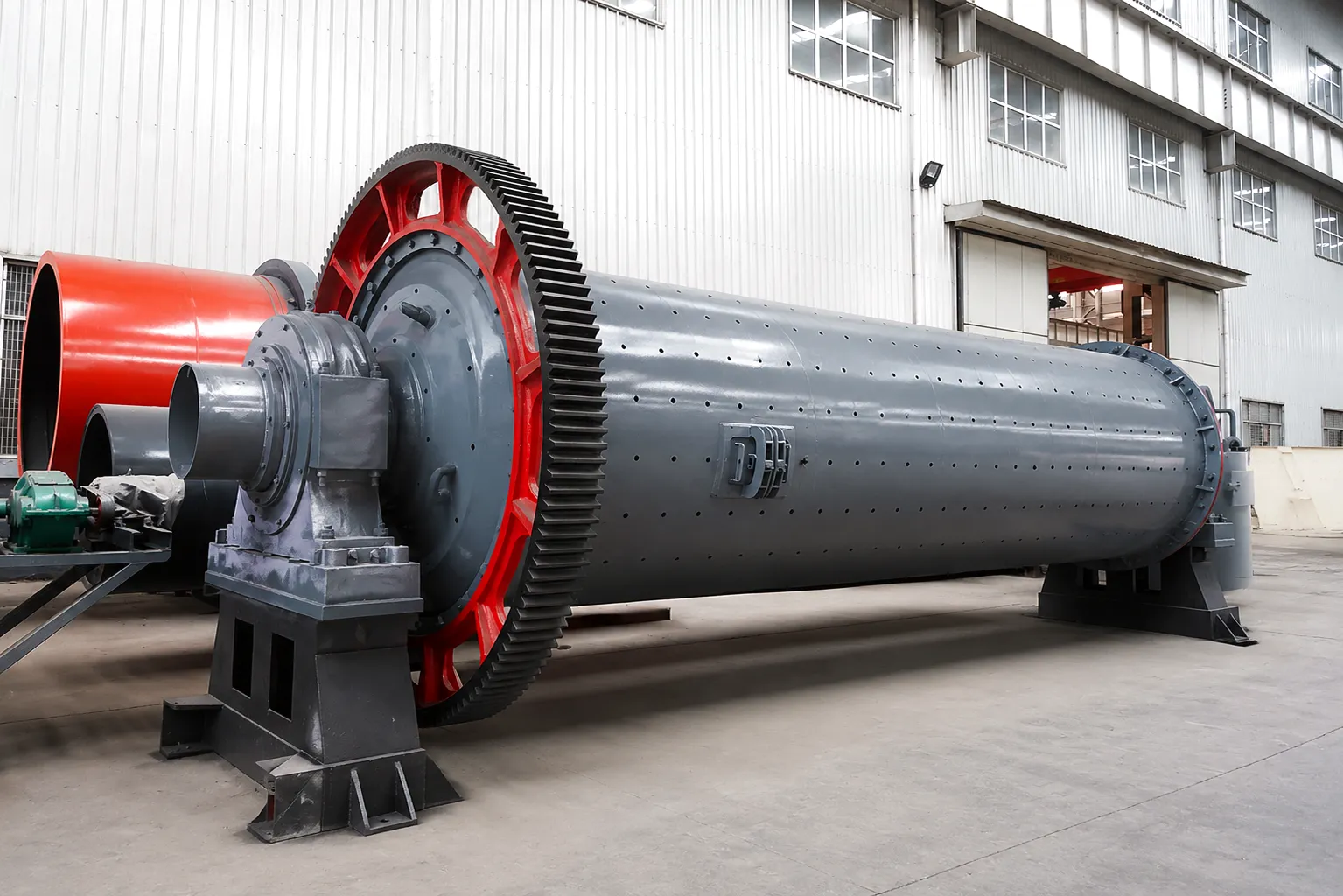 Roller presses used in combi-grinding circuits upstream of a conventional ball mill generate a highly irregular torque profile as the material bed between the counter-rotating rollers undergoes compressive particle fracture. This pulsating torque — which can vary by 30 to 50 percent of mean value within each revolution — makes the roller press drive an ideal application for snake spring coupling technology. The spring element within a JSA series snake spring coupling stores energy during torque peaks and releases it during troughs, effectively smoothing the torque input seen by the gearbox and motor and reducing the cyclic stress range experienced by all connected drive components. UK cement manufacturers operating roller press pre-grinder circuits in the West Midlands and South Wales regions have documented measurable reductions in gearbox internal gear flank pitting rates after switching from rigid flange couplings to snake spring couplings in the roller press drive position, with consequent extension of gearbox overhaul intervals by factors of 1.4 to 1.8 times.
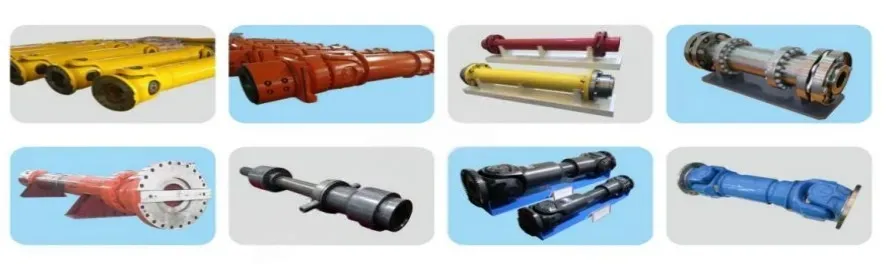
Ever Power precision coupling collection — engineered for demanding UK industrial environments
Featured Coupling Products for Cement & Heavy Industry
Ever Power’s product portfolio addresses the full spectrum of cement mill drive coupling requirements. The following two product series are most frequently specified for grinding circuit applications and are available with full application engineering consultation and custom dimensional specifications to suit your exact shaft configuration.
🐍
ข้อต่อสปริงงูซีรีส์ JSA
The JSA series utilises a high-carbon serpentine spring element seated in precision-machined half-coupling grooves. It provides outstanding torsional damping characteristics that protect gearboxes and motors from the shock loads inherent in heavy grinding applications, including cement ball mills and roller presses. Available in torque ratings from 160 Nm to 1,800,000 Nm, with custom bore dimensions, keyway specifications, and surface treatment options to suit OEM and retrofit installation requirements across the UK cement industry.
View JSA Series Snake Spring Coupling →
🔗
ข้อต่ออเนกประสงค์ SWC ซีรีส์
The SWC series provides high angular flexibility — up to 45 degrees — making it the preferred solution wherever significant permanent angular offset exists between drive and driven shafts, as commonly encountered in vertical roller mill installations and retrofitted drive train configurations at UK plants where the original building layout constrains motor and gearbox positioning. The series covers torque ratings up to 3,150,000 Nm and is available in welded-yoke and forged-yoke configurations for the highest-duty applications, with full material certification and dimensional inspection documentation available to support CE marking and UK PSSR compliance.
View SWC Series Universal Coupling →
Ever Power: Precision Manufacturing & Deep Customisation for the UK Market
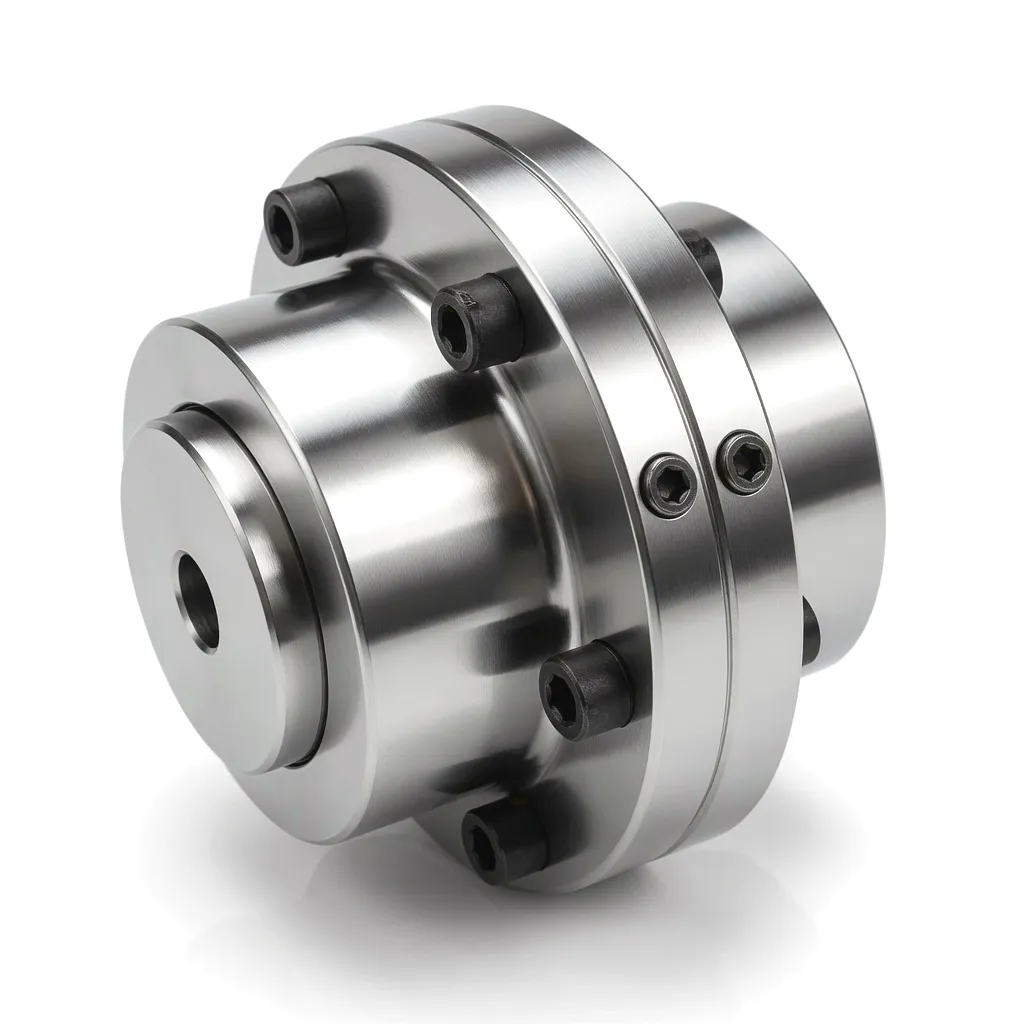 Ever Power operates from a modern manufacturing complex equipped with precision CNC gear grinding centres, coordinate measurement machines calibrated to international standards, and dedicated heat treatment facilities capable of producing the case-hardened tooth profiles that give industrial couplings their characteristic fatigue life. The engineering team draws on decades of application experience spanning cement, mining, steel rolling, power generation, and marine propulsion — sectors where the consequences of coupling failure are measured not merely in component replacement cost but in production loss, safety exposure, and reputational damage for plant operators. For UK cement producers, this depth of sector knowledge translates into coupling specifications that are correctly sized from the outset rather than requiring iterative adjustment after installation.
Ever Power’s customisation capabilities extend from straightforward bore and keyway modifications — machining non-standard shaft diameters from 25 mm to beyond 600 mm — through to complete coupling system redesign when a customer’s application falls outside the standard product range. For cement mill drives with non-standard centreline distances, atypical shaft configurations arising from partial gearbox replacement, or installations requiring special corrosion protection coatings for coastal industrial sites (including several UK cement terminals on the Thames Estuary and the Humber), Ever Power’s applications engineers can develop and validate bespoke coupling designs within a compressed project timeline to meet planned shutdown schedules.
🏭
Precision CNC Manufacturing
Sub-micron gear tooth grinding, full CMM dimensional reporting
📐
Bespoke Bore & Keyway
Non-standard dimensions, splined bores, DIN/ISO/BS keyway options
🧪
Material Certification
EN 10204 3.1 material test reports, heat treatment records
🚚
Supply Chain Reliability
DDP UK delivery, short lead times, full export documentation
🔧
After-Sales Engineering
Installation guidance, alignment tools, technical support hotline
Ready to specify a custom coupling for your cement mill project?
Our applications engineers will review your drive train data and provide a fully engineered coupling recommendation with torque safety factors and dimensional drawings — no obligation.
📧 ขอรับใบเสนอราคาจาก Ever Power
Customer Success Story: Sheffield Cement Processing Plant
 A building materials processing group operating a grinding facility on the eastern edge of Sheffield — supplying blended cement and supplementary cementitious materials to construction projects across South Yorkshire — contacted Ever Power in early 2024 facing a recurring reliability problem with the drive coupling on their 3.8-metre diameter ball mill. The existing coupling, a flanged elastomeric disc pack type installed during a 2017 refurbishment, had experienced three disc pack fatigue failures in eighteen months. Each failure required an unplanned shutdown of approximately 72 hours including cooling time, investigation, procurement of replacement elements, and reassembly — at an estimated production loss cost of £28,000 per incident.
Ever Power’s applications team reviewed the drive train data provided by the Sheffield plant: a 2,200 kW motor at 990 rpm, a single-reduction helical gearbox with an output speed of 18.5 rpm and nominal output torque of approximately 1,130 kNm, and a mill with a documented starting torque factor of 2.3 times running torque. The analysis identified that the disc pack coupling had been originally specified without adequately accounting for the inertia-related starting torque multiplier, leaving it operating at approximately 88 percent of its rated fatigue limit under regular start-up conditions — an insufficient margin given the mill’s 15 starts per month operating pattern. Ever Power recommended replacement with a custom-dimensioned GTC gear coupling with a nominal rating of 1,600 kNm, a service factor of 2.8, and a sealed grease cavity with PTFE lip seals matched to the plant’s annual maintenance turnaround schedule.
Installation was completed during the plant’s planned winter shutdown in December 2024, with Ever Power supplying a pre-assembled and pre-greased coupling ready for direct mounting — reducing the total installation time to eleven hours. In the seven months since commissioning, the Sheffield facility has reported zero coupling-related stoppages. The plant engineering manager has confirmed that vibration readings at the gearbox input bearing have also shown a measurable improvement, attributed to the slightly more uniform torque transmission characteristics of the gear coupling replacing the worn and fatigued disc pack assembly.
What UK Customers Say About Ever Power Couplings
★★★★★
“The GTC gear coupling Ever Power supplied for our Sheffield plant has performed without a single issue through seven months of continuous operation including 15–18 cold starts per month. The torque margin they specified gives us confidence the component will see out at least four or five years without replacement. The pre-assembly service also cut our installation time by roughly 40 percent versus our previous coupling change.”
— Plant Engineering Manager, Sheffield Building Materials Processing
★★★★★
“We purchased JSA series snake spring couplings from Ever Power for the roller press drives at our West Midlands cement preparation facility. The customised bore dimensions and DIN keyway specification were machined exactly to our drawings. Since installation the gearbox vibration levels on both press units have reduced noticeably, and we have not had a single scheduled maintenance intervention required between our six-monthly inspection shutdowns.”
— Maintenance Director, West Midlands Cement Preparation Facility
★★★★★
“What set Ever Power apart from the other suppliers we approached was the willingness to produce full EN 10204 3.1 material certificates and dimensional inspection reports on standard lead times — no premium charge for documentation that any serious engineer specifying pressure-system-adjacent drive components needs. The SWC universal coupling for our VRM installation in East Yorkshire arrived on schedule, dimensionally perfect, and with documentation that satisfied both our internal QA and the OEM gearbox supplier’s installation requirements.”
— Procurement Lead, East Yorkshire Vertical Roller Mill Retrofit Project
คำถามที่พบบ่อย
Commonly asked questions from UK procurement engineers, plant managers, and maintenance teams.
➤ What type of coupling is most commonly used in cement ball mill drive systems across UK manufacturing plants?
Gear couplings dominate cement ball mill primary drive applications in the UK, primarily because they combine the highest available torque density with the misalignment compensation capacity needed to manage foundation movement and thermal expansion across annual plant operation cycles. For applications where torsional shock damping is a priority — particularly roller press pre-grinder circuits — snake spring couplings such as the JSA series are increasingly preferred. Universal couplings are the standard solution wherever significant angular misalignment exists between motor and gearbox, as in many vertical roller mill installations.
➤ How much does a custom gear coupling for a cement mill drive cost, and where can I get a competitive price from a reliable UK supplier?
Pricing for heavy-duty gear couplings for cement mill applications varies considerably based on torque rating, material specification, dimensional customisation requirements, and required documentation package. For medium-duty applications in the 500–2,000 kNm range, indicative prices from quality manufacturers range broadly. For the highest-torque low-speed mill coupling positions, bespoke engineering is typically required. Ever Power offers obligation-free quotations — send your drive train data and shaft dimensional drawings to
[email protected] for a response within one working day.
➤ Which coupling supplier in the UK can provide EN 10204 3.1 material certification for heavy industrial cement mill drive couplings?
Ever Power supplies EN 10204 3.1 material test reports as a standard documentation offering — not an upgrade option — for all gear coupling and snake spring coupling orders intended for heavy industrial applications. This includes full traceability from mill certificate to finished component, heat treatment records, hardness test results, and dimensional inspection reports generated on calibrated CMM equipment. Documentation is provided in English to support installation audits and insurance requirements at UK industrial sites.
➤ How do I know when a gear coupling on my cement mill drive needs to be replaced or is showing signs of wear in a Birmingham or Sheffield facility?
Primary indicators of gear coupling wear on a cement mill drive include: progressive increase in vibration amplitude measured at the gearbox input bearing (typically detected by online monitoring systems or handheld instruments at shutdown inspections); elevated temperature on the coupling housing compared to baseline commissioning readings; grease leakage past the lip seals indicating seal deterioration or overloading; audible tooth knock at start-up or coast-down when the coupling passes through low-torque phase; and visual evidence of tooth flank pitting, spalling, or fretting corrosion when the coupling is opened during shutdown. Any combination of these symptoms warrants engineering evaluation before the next planned run period.
➤ What is the typical lead time for a custom-designed gear coupling for a cement mill application when ordering from an international supplier to a UK delivery address?
Lead times depend on the complexity of the customisation required and the coupling size. Standard series couplings with bore modifications generally ship within 3–6 weeks. For fully engineered bespoke couplings at the extreme end of the torque range — those requiring special forgings and extended machining cycles — lead times of 10–14 weeks are realistic. Ever Power maintains a stock of semi-finished blanks for the most common frame sizes, which can reduce lead times for urgent replacement situations. DDP delivery to UK destinations is available, with all customs, import duty, and freight documentation handled by Ever Power’s logistics team.
➤ Where can I find a reliable quote for a snake spring coupling designed for a roller press drive in a UK cement or aggregate processing operation?
Ever Power’s JSA series snake spring couplings are specifically engineered for the torsional shock and vibration damping demands of roller press and high-inertia grinding mill drives. To obtain a competitive quote, send your nominal torque requirement, motor rated power and speed, gearbox input shaft diameter and keyway dimensions, and any specific service factor or documentation requirements to
[email protected]. The sales engineering team will respond with a preliminary selection, price, and lead time within 24 hours on UK working days.
➤ Which service factor should I use when specifying a coupling for a cement ball mill application with a high-inertia starting load profile?
For cement ball mills with direct-on-line motor starting, a minimum service factor of 2.0 on the coupling nominal torque rating is widely regarded as the industry baseline. Where the mill operates with frequent starts — more than 8–10 per day in grinding circuit control scenarios — or where the motor starting torque factor exceeds 2.0 times rated torque, a service factor of 2.5 to 3.0 is appropriate. Ever Power’s application engineers apply the ISO 14691 and AGMA 9000 recommended service factor tables as the basis for their selection, then cross-check against the specific inertia and start frequency data provided by the customer to arrive at a final recommendation supported by documented calculations.
This article was produced by the Ever Power technical content team for informational and commercial reference purposes. All torque values, material specifications, and performance figures are indicative; always consult Ever Power’s application engineers for project-specific selection and sizing. | edit by gzl